[Women and Prohibition]Biblio.com

96 résultats
188239763Middletown 1882. Elephant folio broadside 15-7/8" x 22." Beneath the quoted title eight columns of printed women's names each column containing about one hundred names. Old folds shallow blank margin tear. Very Good.<br /> <br /> Beneath the lists of names is the announcement: "A COUNTY TEMPERANCE CONVENTION! Will be held in the large Dining Hall at FENWICK This Week SATURDAY Sept. 30 1882." Transportation instructions are printed.<br /> Not located on OCLC as of December 2023 or online sites of AAS Yale unknown
20112090202120415058Published by the National Congress Against Atomic and Hydrogen Bombs 2011. Soft Cover. Fine. Number of books: 1 Published by the National Congress Against Atomic and Hydrogen Bombs paperback
In this survey of crime films the author explains their particular significance and relates them to the public consciousness of crime at the times they were made. With numerous photographs. This book is extra heavy, and may involve extra shipping charges to some countries
16077The first five letters from London Forest Hill and Catford; the rest from Pennsylvania with 15 from 621 Kelly Avenue Wilkinsburg Pittsburgh. Between 1 March 1926. A total of 140pp. i.e. 98pp. 12mo; 40pp. 8vo; 2pp. 4to. One letter possibly incomplete unsigned the other 24 signed 'Dundas' with postscripts sometimes signed 'Das'. The three letters before the last addressed to 'Meredith' the other 22 addressed to 'Smut'. Of the 25 letters: 7 from 1926; 4 from 1927; 10 from 1928; 4 from 1929. The first five letters to 19 November 1926 from London three from 143 Como Road Forest Hill SE23; two from 406 Stanstead Road Catford SE6; the rest from Pennsylvania with 15 from 621 Kelly Avenue Wilkinsburg Pittsburgh and one each from 411 Pitt Street Wilkinsburg; 510 Mifflin Avenue Wilkinsburg; 839 E. Hutchinson Avenue Edgewood Pittsburgh; and letterheads of the Penn Albert Hotel Greensburg and the Penn Grove Hotel Grove City. Between 1 March 1926 and 6 June 1929. An interesting correspondence emphatically materialistic and enthused with the youthful good humour and bullishness of a young Englishman who is attempting to make his way as an accountant training with Price Waterhouse in the 'Land of Opportunity'. Dundas adopts American mannerisms 'Gee boy!' and 'O.K.!' and exhibits puerile humour 'We have been having an air polluting competition in the office this evening the chap next to me has won easily but I've cheated him for having a cold I couldn't smell him' and the characteristic casual racism of the period from New York he writes 'And the Hutoo. I've never seen so many at once in my natural.'. References in the correspondence reveal that 'Dundas' is an'Old Erithian' a former students of West Street School Erith Kent and of Scottish extraction and that at the start of the correspondence he works in an office in London. The recipient with whom Dundas was at school is in England training to be an actuary. Topics include: the passage over; New York 'the chap we're staying with took us downtown in his Dodge'; Prohibition; prices clothing rent chewing gum; Dundas's extensive amorous activities including 'heavy necking' with a number of 'girls' 'Gee boy! We've got a nice little girl in this house. . She is by no means slow In the pictures & in the car - Oh! Boy!!! - xxx'; hotels; his work travelling around the area surrounding Pittsburgh as an auditor; jazz; his studying at the Pittsburgh School of Accountancy; festivities in America; his acquistion of a piano; the climate; the relative qualities of American and English men and 'girls'; sports and recreations 'I am going to join the Minnetoska Club here. It is a canoe club tennis Baseball & swimming'; the motor car and 'autoists'; an account of a trip to Sligo 'a town so small that although it is only 100 miles away most Pittsburghers have never heard of it'; his efforts as a photographer 'I have now completed an album containing all the fellows pictures . I have orders for 14 of them now & will probably have orders for 20 or so more . For once photography is paying me'; radio broadcasting 'Did you ever listen to the "Gold Spot Pals" that was the broadcast of the Gold Spot Shoe Company'; road taxes. The correspondence begins with news of a dance with some clues towards the author's identity: 'There weren't very many of our old crowd there mainly people who left before we did. Have you see sic Woollatt just lately Gee! he has grown. . Bob Horlock Bell Harry Cameron Lilian Rayner Doris Knott & one or two others were there.' With the third letter 26 April 1926 comes an announcement: 'now hold tight - Dad & I are trying to get to America we have our names down for the next Quota and expect to go about Sept or Oct but of course there is nothing settled yet and there are many slips twixt the cup and the lip.' On 11 November he reports that 'we got through our Medical Exam O.K. & that we have booked our passage on the Carmania sailing on the 27th inst'. A month later on 14 December he writes from Wilkinsburg to describe the passage over 'On Saturday night we ran into a gale. Gee boy! didn't she rock! I'll say she did. Some of the people had the wind up. One chap at the table next to us got up dressed & put his life belt on.'. By 20 November 1927 his mother and 'Peggy' sister have arrived and he has already dumped a girlfriend 'She kept me waiting for 1 ½ hours one night because she had something to do & we were going to a dance.' enrolled on a course at the Pittsburgh School of Accounting and been to '5 dances in the last 6 weeks'. At the end of 1927 12 December he reports that he is 'still with Price Waterhouse accountants & working hard'. On 16 January 1928 he writes that 'Prohibition here is a big farce & in my opinion is doing more harm than good. It is very much like the "under 16" smoking in the old country. You know how many kids will start smoking at 10 & 12 just to feel big. Well here the high school & college people drink just because they are told they mustn't. Anyone who wants it can get as much as they want - and what stuff gee its poison. I smelled some stuff that was supposed to be whiskey if that was whiskey I'm dutch it smelled more like methylated spirits to me. Of course the good stuff can be bought but one would have to pay $5.00 & up a pint. . I saw one fellow being carried out of the movies on new years night he had been drinking bad liquor & he was all drawn up into a terrible shape.' On 15 April 1928 he reports that he is 'still with P. W. & Co. The boss hasn't officially confirmed that I am permanent but all the seniors seem to think I am. Added to that there are only six out of 35 temporary men left.' On 2 December 1928: 'I too am anxiously waiting the R100. Boy I hope she knocks the Grafs time into a cocked hat. I'd just love the opportunity to say "there see thats what the old country can do!"' On 24 February 1929 he can report that 'Things have broken pretty good for me in the office this year. I am now a ranking senior - that is for the busy season. Right after I came back from Huntington I received my first "In Charge" assignment. It was a large Department store & Mail Order House with 8000000 Capitalization. This entailed 2 stores in New York & 3 in Pittsburgh. . one heck of a lot of hard work for me for the three fellows they gave me were green I even had to teach them how to make a check mark'. The same letter carries a reference to 'Marion Robertshaw' who is 'now with the B.B.C.' On 3 March 1929 he reports that 'Dad is in the experimental Dept of the Hudson Motor works in Detroit and doing very well.' and asks: 'Who are you for in the General Election. Ramsay McDonald has all my wishes with Lloyd George running him a close second. I understand Ll. G. has a new idea for wiping out unemployment. I think if those two men could work together they could put England back in her place. I don't know whether you have realized it but England is certainly slipping badly and something drastic will have to be done for her to regain her place in the worlds affairs. Of course I am relying on American statistics for my assertion.' By the time of the last letter 6 June 1929 he is living a bachelor existence at 839 E. Hutchison Avenue Edgewood 'very comfortably situated in my room & liking it not so bad. At times it gets a little lonesome . life has just been one exam after another . By the way since Dad went to Detroit hes been getting on fine. He got into the experimental dept of Hudson Motor Co on some kind of special exhibition work they were doing & got them to adopt some ideas of his for saving them time & money & he has been made foreman. I was glad to see Ramsay McDonald went into power. Its tough luck he didn't get a working majority. All the papers here are watching the Labor Party closely to see what happens. Here's wishing them all the best. I think the best thing that could happen in England would be for the Liberal Party to be abandoned & join with the Labor.' The first five letters from London (Forest Hill and Catford); the rest from Pennsylvania, with 15 from 621 Kelly Avenue, Wilkins hardcover
1986152221986 Editions Tallandier - 1986 - In-8, broché couverture illustrée - 271 pages
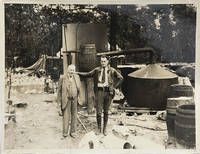
1932181780East Hartford CT & Palm Beach County FL: 1932-c.1933. A collection of photographs documenting the seizure of illegal moonshine stills in Connecticut and Florida during Prohibition and following its repeal. The photographs are from the library of Ralph A. Johnson a revenue agent for the Bureau of Prohibition and its successor the Bureau of Alcohol Tax Unit. Moonshining flourished under Prohibition and even after its repeal its cheapness - and to some its taste - ensured it continued. Across the New England countryside farms housed industrial-sized moonshine operations. The first nine images show an immense moonshine still with vats and equipment inside a Connecticut barn raided by the Bureau of Prohibition on 14 July 1932. Johnson is shown standing next to an unidentified well-dressed man perhaps the moonshiner. The remaining five images depict a large still in Florida seized by the Alcohol Tax Unit in 1933 showing large copper stills connected to barrels above cooking fires glass carboys for the product and barrels with stove-in tops. Taken by Ernest Kirbell signed in the negative a crime photographer with the Connecticut State Police Department these images document the continued profitability of moonshining after Prohibition's repeal. Recent blue leatherette album front cover lettered in silver enclosing 14 silver gelatin photographs preserved in archival sleeves 5 measuring 216 × 279 mm with photographer's signature in negative sequence numbered in blank margin at upper fore edge; 8 measuring 203 × 254 mm; 1 measuring 89 × 140 mm. Sepia toning to photographs minor creasing and edgewear at extremities. In very good condition. hardcover
19272381ABBerlin, Verlag Die Schmiede, (1927). Kl. 8°. Üs. Paul Cohen-Portheim. Vorwort L. L. (d.i. Leo Lania). 70 S. 1 Bl. Farb. OPp. (Georg Salter). (= Berichte aus der Wirklichkeit, hrsg. Eduard Trautner, Bd. 3).
19762090502113717793Not Available 1976. Soft Cover. Fine. The book is in fine condition. Not Available paperback
152766659X.Gpaperback. Good. Access codes and supplements are not guaranteed with used items. May be an ex-library book. paperback
230 pages. Index and bibliography. "...Traces the history of the antipotlatch law, the government's attempts to enforce it and the widespread native opposition to the repressive legislation, shedding new light on a crucial chapter in the history of native peoples in Canada over the past two centuries." - from dust jacket. Former library copy with usual markings and only light wear. A sound copy. Book
372p., illus. Hardcover Good condition; boards soiled
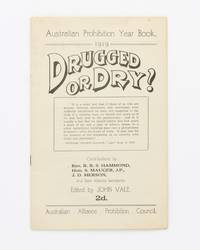
1919102605Melbourne: Australian Alliance Prohibition Council 1919. Very Good. Melbourne Australian Alliance Prohibition Council 1919. Octavo 32 pages including title-wrappers. Saddle-stapled; minimal signs of use and age; an excellent copy. The third year book issued by the Council. Australian Alliance Prohibition Council unknown
33 pages. Features: Bibles and Booze - Prohibition in Chilliwack in the late 1800s. The Depression in Matsqui, 1930-1937; Willard Ernest Ireland, 1914-1979; Old Trails and Routes in British Columbia: The Boston Bar Trail, 1859-1860 - Fort Hope to Boston Bar; plus 15 book reviews. Book
1964207850Couverture souple. Broché. 350 pages. Couverture défraîchie. Rousseurs.
A study of white racism on the notoriously racist Middle Border between the years 1833 and 1880 and its evolution into outspoken egalitarianism. With Index. 348 pages. Dust jacket has small tears to sides at top of spine, and light shelfwear.
58 pages. Features: Nice color ad for General Electric radios inside front cover; Hudson Essex car ad shows mother dropping kids at school; Nice full-page ad for Mimeograph; They'll Come Shooting (short story); Power and Glory - the gutsy story of Boies Penrose, one of the most prodigious figures in American political life - article with photos; Wild Geese (short story); A Lady of Resource (short story); Naughty Girl - Lenore Ulric serves allure in generous portions - article with photos; The Meanest Beast - battle between black leopard and shark; The Road Back (part VI of short story); You Couldn't Hate Patrick (short story); Thoughts that Win - Advice by champion golfer Jerome D. Travers - article with photo; Nice full-page color ad for Seald Sweet grapefruits; Full-page ad for Canada Dry ginger ales; The Scotty Dog (short story); Fantastic centerfold two-colour ad for Colorado tourism; Louisville & Nashville (L&N) Railroad full-page ad; Full-page ad for Philco radios features photos of Gary Cooper; Nice Chrysler ad; Full-page Fleischmann's Yeast ad encourages readers to eat three cakes per day (!); Back page article on prohibition; Attractive color Ford ad inside back cover shows doctor making housecall in the evening snow; Color Ipana ad on back cover. Average wear. Unmarked. A sound vintage copy. Book
19947202CBSolothurn/Löhrbach, Nachtschatten-Verlag/Pieper's MedienXperimente (= der grüne Zweig 147), 1994. 8°, 94 S. mit s/w-Abbildungen, illustr. original Kartonage (Paperback), Erstausgabe schönes, sauberes Exemplar.
192423615New York: League for Public Discussion 1924. First edition. 74 pages followed by 4 pages advertisements or notices 1 plate with a portrait of each of the contenders. 1 vols. 8vo. Original green stiff wrappers notice about the League on inside back cover. Some light wear and discoloration front cover detached. First edition. 74 pages followed by 4 pages advertisements or notices 1 plate with a portrait of each of the contenders. 1 vols. 8vo. League for Public Discussion unknown
188878719New York NY.: The National Temperance Society and Publication House. Very Good. 1888. Softcover. Soft-bound in tan wrappers with black printing. The spine is chipped and torn with the covers loose but present. The covers show light soiling and wear/chipping to the edges and corners with loss to the top outer corner of the lower cover. The text-block is worn with the title-page loose but present. The contents are bright and clean. . The National Temperance Society and Publication House paperback
188930728New York: The National Temperance Society and Publication House 1889. Original printed wrappers some edge and spine chipping rear wrapper detached but present and original staples. 36pp. Clean text. Except as noted Very Good.<br /> <br /> In 1881 Kansas enacted a constitutional amendment prohibiting the manufacture or sale of alcoholic beverages. Doing so was a misdemeanor punishable by fine or imprisonment. The amendment effectively rendered Peter Mugler who operated a brewery unemployed. He brought suit claiming that Kansas had unconstitutionally deprived him of his property in violation of the Fourteenth Amendment to the U.S. Constitution. Writing for the Court Justice Harlan-- who would issue a powerful dissent several years later in the notorious case of Plessy vs. Ferguson-- held that the amendment was a permissible exercise of the State's police powers which have always been reserved to the States as an attribute of their sovereignty. <br /> The rear wrapper advertises works sponsored by the National Temperance Society.<br /> OCLC locates eleven copies under two accession numbers as of November 2013. The National Temperance Society and Publication House unknown
1976Ge1095New York, Norton, 1976. Broschur. Ebd. leicht nachgedunkelt & etw. berieben. 8° Buch Softcover
218 pages. Index. Footnotes. "The first systematic examination of government control of liquor in Canada. As the first province in English Canada to choose government control, British Columbia stood out as a North American experiment in the post-prohibition world of alcohol regulation. Analyzes liquor control from a variety of viewpoints: attitudes and access to alcohol; federal-provincial relations; cartels and patronage; and social reform. Reveals much about he intricacies of the state in economic life, particularly the apparent contradiction between promotion and regulation." - Preface. Former library copy with usual markings and front free endpaper removed. Dust jacket not included. Above-average wear to navy blue boards. Binding intact. A worthy reference copy of this 1991 first printing. Book
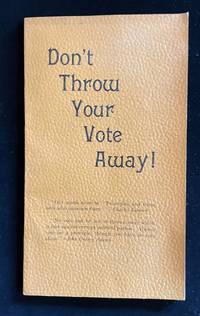
1892013064Hartford: Press of New England Home 1892. 1st Edition. Soft cover. Near Fine. Scarce 1892 campaign booklet for the Prohibition Party's Presidential candidate General John Bidwell its Vice Presidential candidate James Cranfill electors at large congressional candidates and canddiates for Connecticut Governor Ltnt Giovernor. Secretary of State and other state officers - all temperance advocates. Mustard textured paper covers titles printed in black measures approx 4.5x 7.5" 58pages with acceptance speech of Bidwell and full biographies and images from plates of all candidates. In the election of 1892 the Prohibition Party came in 4th place with about 2% of the national vote. OCLC lists no library holdings with this specific title though a search for it by title reveals that one library -Yale - sources "Collection of late 19th century minor political pamphlets" dated 1892 but we cannot confirm if this title is among them. Press of New England Home unknown
19702083002117402882Yale Publishing Company 1970. Soft Cover. Fine. Volume: 1 Yale Publishing Company paperback
1932R0840-01Bln.,Universitas (1932). 230,(2) S. Vlgsanz. Mit 8 phot. Abb. auf Taf. Ohln., leicht schiefgelesen, Schnitt min. angestaubt u. fleckig, innen ganz vereinzelt min. fingerfleckig, gutes Expl.