118 résultats
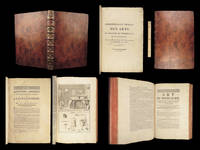
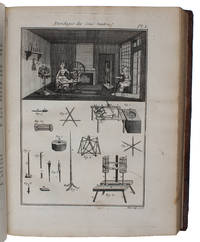
177156289Neuchatel L'Imprimerie de la Société Typographique 1771-83. 4to. Bound in 19 contemp. uniform full mottled calf. Raised bands. Gilt spines. Title-and tomelabels with gilt lettering. Spine-ends on nearly all volumes strenghtened. Stamp on title-pages. Each volume around 650 pp. With 508 fine engraved plates. <br/><br/><em>Second edition and the first 4to-edition was published in 19 volumes plus an additional volume by Jean Elie Bertrand where vol. 20 is an additional volume published much later 1799 - not present here - dealing with the art of printing. This importent collection of books on crafts was published by between 1761 and 1788. The full series comprises 113 parts cahiers in 27 folio volumes along with three supplements and "provide detailed accounts of a wide range of handcraft and manufacturing processes carried out in France at that time. The volumes are well-illustrated with precise engravings by Jean Elie Bertrand 1737-1779 a noted typographer from Neuchâtel where the printing was done. Many of them provide the background for shorter articles in Diderot's Encyclopedia which was appearing at much the same time. The project had its origin in request from Colbert in 1675 to the Academy Royal des Sciences for detailed accounts of various mechanic arts to be prepared and for new machines to be reported upon. This led to the formation of the Bignon Commission under Abbé Bignon. René-Antoine Ferchault de Réaumur 1683-1757 became editor soon after he joined the Academy. He inherited number of drawings the earliest prepared in 1693 and an illustrated manuscript on printing type and book binding which had been prepared in 1704. It was left to Réaumur's successor Duhamel du Monceau to bring about the publication of the series probably as the result of the competition from the Encyclopedia." Wikipedia.Brunet II618 ff. - Graesse II 367. </em> hardcover
176256316Königsberg und Leipzig Kanter Berlin Stettin Leipzig Rüdigern 1762-75. 4to. Bound in 13 uniform contemp. full calf. Raised bands. Richly gilt spines. Titlelabels with gilt lettering. On all boards the gilt monogram on red background of King Christian VII. A stamp on title-pages. Around 6000 pp. 4 folded tables and 366 folded engraved plates 1 plate in xerox-copy. Occassionally a few minor brownspots but fine and clean. <br/><br/><em>First German edition of this importent collection of books on crafts which is a translation of "Descriptions des Arts et Métiers." published in French between 1761 and 1788. The full French series comprises 113 parts cahiers in 27 folio volumes along with three supplements and "provide detailed accounts of a wide range of handcraft and manufacturing processes carried out in France at that time. The volumes are well-illustrated with precise engravings by Jean Elie Bertrand 1737-1779 a noted typographer from Neuchâtel where the printing was done. Many of them provide the background for shorter articles in Diderot's Encyclopedia which was appearing at much the same time. The project had its origin in request from Colbert in 1675 to the Academy Royal des Sciences for detailed accounts of various mechanic arts to be prepared and for new machines to be reported upon. This led to the formation of the Bignon Commission under Abbé Bignon. René-Antoine Ferchault de Réaumur 1683-1757 became editor soon after he joined the Academy. He inherited number of drawings the earliest prepared in 1693 and an illustrated manuscript on printing type and book binding which had been prepared in 1704. It was left to Réaumur's successor Duhamel du Monceau to bring about the publication of the series probably as the result of the competition from the Encyclopedia." Wikipedia.Brunet II618 ff. only French editions - Graesse II 367 only the French editions. - Fromm 7040. </em> hardcover
176226629Berlin Stettin und Leipzig Johann Heinrich Rüdigern 1762-75. 4to. Bound in 13 fine uniform full calf raised bands gilt backs. Remains of paperlabels on backs. Top of spine on one volume frayed. Small rubber stamp on titles. A few brownspots. A good copy. Having in all 374 of 585 fine engraved plates 1 plate supplied in xerox-copy. Plates measure around 37x24cm. <br/><br/><em>First German edition of one of the main works of the 18th century in the fields of crafts and technology as it is a translation of the famous series "Description des Arts et Metiers" issued by Academie Royale des Sciences 1760-75. The French edition was published in folio. Band 1: Kohlenbrennen Lichtziehen Ankerschmieden Nadler Papiermacher. 31 plates and 1 table;Band 2: Eisenhämmer. Teil 1-2 Wachsziehen Pergamentmachen Leder-Vergoldung Schieferbrüche. 22 plates; Band 3: Eisenhämmer. Teil 3-4 Spielkartenherstellung Seidenfärberei Pappenmacher. 29 plates 1 plate supplied in xerox-copy; Band 4: Böttcherkunst Weißgerber Ziegelstreichen Zuckersieden Silber affinieren. 30 plates; Band 5: Messingherstellung Tuchmacherkunst Lohgerberei. 33 plates. Band 6: Tuchfrisierkunst Saffianleder-Herstellung Leder auf ungarische Art Weißgerber Hutmacher Dachdecker. 19 plates; Band Band 7: Tapetenweberei Kalkbrennerkunst Ziegelstreichen in Holland Ziegelhütten Ball- und Raquettenmacher. 30 plates and 1 table; Band 8: Perückenmacherkunst Müller Nudelmacher und Bäcker. 15 plates; Band 9: Schuster Schlösserkunst. 48 plates; Band 10: Steinkohlenbergbau Indigobereiter. 22 plates; Band 11: Eisenbergwerke und Hüttenwerke in der Steiermark Leimsiederei Fischerei Teil 1. 25 plates and 1 table; Band 12: Fischerei Teil 2. 50 plates; Band 13: Fischerei Teil 3 Porzellanherstellung. 23 plates and 1 engr. frontisp.; Band 14: Glasmalerei und Glasarbeiten. Mit 13 von 14 Tafeln; Band 15: Wollenzeugfabrikant. 17 plates; Band 16: Seifensider Leinwandhandel Schneiderhandwerk Leinenmanufaktur Tabaksmanufaktur. 27 plates; Band 17: Bleiarbeiter mathematische und astronomische Instrumente Baumwoll-Samtfabrikation. 38 plates; Band 18: Stickerkunst Siebmacher Riemer und Sattler mit Kutschenbau Drahtzieherei Stahlblattmacher. 51 plates Band 19: Schiffbaukunst. 18 plates and 1 engr. frontisp.;Band 20: Zinngießerkunst. 32 plates; Band 21: der Strumpfwirkerstuhl und sein Gebrauch. 14 plates. </em> hardcover
1773019039London: Printed for the author 1773. Second edition "corrected and enlarged". Folio pp iv ii 716 with an engraved frontispiece 60 engraved plates plates 66 - 80 in the appendix i.e. LACKING five plates in the appendix some age-toning internally the odd blemish here and there the frontispiece with two earlier minor repairs a partly unpressed copy which has resulted in a horizontal crease to the last sixty pages or so see illustration and a slight depression to earlier ones bound in a recent half calf with very slight signs of use with marbled endpapers. Plate 31 is bound slightly out of order and plate 59 has a small ink scribble in the margin and has the plate number corrected in ink. Blanche Henrey 805 mentioning a portrait as well as an allegorical frontispiece; the portrait is not present in our copy. Sir John Hill was an English composer actor author and botanist. He contributed to contemporary periodicals and engaged in literary battles with poets playwrights and scientists. A controversial figure John Hill's often provocative and scurrilous writings involved him in many quarrels both in the field of science and that of literature. Nevertheless his general approval of Linnaeus resulted in many of Hill's publications using the Linnean system for the first time. Second edition. Full Leather. Good. Printed for the author Hardcover
1734D4425Paris: Par La Compagnie des Libraires 1734. Hardcover. Very Good. Three volumes comprising Vol. III parts I to III of Memoires de lAcadémie Royale des Sciences depuis 1666 jusquà 1699. Paris: Par La Compagnie des Libraires 1733-1734. Part I: 231pp.; Part II: 294pp.; Part III: 215pp. 97 engraved folding plates depicting animals and skeletal diagrams. Engraved portrait frontispiece of Claude Perrault in first volume. Contemporary French calf spines gilt edges red; some occasional browning; repairs to joints some rubbing. Unidentified armorial bookplate to front pastedown beneath monogrammed bookplate D.P. with chipmunk and two mice. A later reduced format edition of Perraults Memoires of 1671-1676 Perraults study of this nature was first published in 1669 with the results of investigations of five animals and later expanded with studies of over forty animals. Prior to 1670 most descriptions of animals paid little attention to their internal structure and there were very few images in natural history encyclopedias that depicted skeletons or muscles. That changed with the establishment of the Académie des Sciences in Paris in 1666 by Jean-Baptiste Colbert with the approval of King Louis XIV. The Academy functioned with neither statutes nor regulations until 1699. At that time the Academy used the term mathématique to encompass the fields that are now called astronomy mathematics and physics and the term physique to encompass the fields that are now called anatomy botany zoology and chemistry. In January 1699 Louis reorganized the Academy giving it first regulations. The effect was to give the King more control over their activities in exchange for becoming an official institution under his protection with the new name Académie Royale des Sciences. One of the original academicians the physician Claude Perrault organized regular sessions at which participants could dissect deceased animals from Louis XIVs royal menagerie and record all they observed. Lions chameleons bears gazelles wolves ostriches crocodiles monkeys eagles tigers porcupines and salamanders among some were all laid open by the academics scalpels. These superb folding plates record in great detail the pioneering work at the Academy. These three volumes in three parts focus on the transformative and foundational years of the French Royal Academy of Sciences and Claude Perraults efforts which had made comparative anatomy a vital tool for the classifying naturalist. <br/><br/> Par La Compagnie des Libraires hardcover
174014160Paris: de L’Imprimerie Royale 1740. Complete with errata’s and original blank leaves two of three finely engraved frontispieces chapter vignettes ornamental head and tail pieces and 82 folding plates. Full mottled calf rebacked the corners a bit worn. Interior is lightly toned with some browning on the preliminaries and last leaves. Generally this is an excellent set. First editions of these three volumes from a series published by the Academy of Sciences. It is a summary of the activities and inventions that have been made and contains the most important discoveries of the time. These periodicals which were at the forefront of scientific development during the Enlightenment contain works produced by an elite class of French scientist for the years 1722 1731 and 1740. Each volume provided an overview of advancements in math and science for each year and the writings therein shaped the world’s understanding of physics mathematics astronomy anatomy and other fields of science. They further provide invaluable historical data such as meteorological and astrological records for each year. <br /> <br /> The memoirs for 1722 include data recorded on both a lunar and solar eclipse as well as other astronomical observations by Jacques Cassini 1677-1756 best know for completing his fathers work on determining the meridian of Paris. The distinguished astronomer provided further research on lunar eclipses in the memoirs of 1731 where he is in great company alongside distinguished mathematicians Alexis-Claude Clairaut 1713-1765 Pierre Bouguer 1698-1758 known for his work in physics photometry and hydrography and the foremost proponent of the Newtonian movement in France Pierre de Maupertuis 1698-1759. Of special note in the 1731 memoirs is Maupertuis’s ballistic arithmetic which was used to try to better understand the movement of the earth and its gravity. Too an article by Clairaut on new formulas for finding the center of gravity. These articles contributed greatly to a better understanding of the earth’s shape and the mechanics of its rotation particularly Bouguer’s essay on the tendency of objects set in motion to move in a curvilinear fashion. The 1740 edition contains Cassini De Thury’s De la Maridienne de Paris. which was an important step in the process of mapping the shape of the earth. Cassini 1714-1784 representing the third generation of the distinguished family of astronomers was the first to question <br /> <br /> <br /> Picard’s measurements which had been used to map the Maridian of Paris. Clairaut’s essay on integral calculus in the same volume which established the existence of an integrating factor for linear differential equations was an important step in the history of mathematics and Mairan’s treatise on reflection and refraction of light and the human eye was essential to the advancement of optics. Mairan 1678-1771 would set the foundation for optical theory with this treatise. de L’Imprimerie Royale unknown
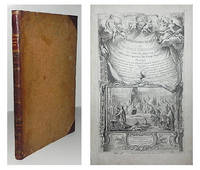
1784000285Etienne Charpentier 1784. Hardcover. See Description. Tall folio 385 mm. The entire book including the text was printed from engraved copper plates 60 plates an illustrated title page plate 29 anatomical plates and 30 calligraphic letterpress plates. Bound in a contemporary or near contemporary binding with calf spine and decorative paste paper boards - rubbed edges shelf worn old ink stain on rear cover. Both the upper portion of the spine and the tail cap are carefully restored. Board corners are neatly repaired. Interior contains an occasional minor spots of marginal foxing; a couple of tiny holes or paper defects are present on the text plate opposite plate 20. The leaves are otherwise generally clean. Francois-Michel Disdier 1708-1781 was a professor of surgery and a drawing master at the Academy of Painting in Paris. His "Tableaux anatomiques" a deluxe anatomy book for physicians was first published in 1758. Many of the plates were done by Crepy and Charpentier some after the style of Vesalius and others following Eustachi. The engraved title page designed by François Bouchet depicts students in an anatomy class studying a cadaver. The whole scene is framed in ornate baroque style. Blake NLM p. 122; Heirs of Hippocrates 894 listing 1778 edition; Hirsch II p. 190. <br/> <br/> Etienne Charpentier hardcover
17481641Amsterdam: Chez l'honore et fils libraires 1748. First Edition. Hardcover. Very good. 2 vols. in one. 8vo. I: 10 cxix 7 208 pp. 1 f. "Errata" for Tom. 1. II: 2 231 pp. 1 f. "Addition" 1 f. "Errata" for Tom 1 sic. First title page with unobtrusive paper defect on lower margin not affecting text; this copy is lacking half-title and Errata leaf for Tom. 2. Very attractive 19th-century French red glazed boards red morocco spine lettered in gilt directly two insignificant worm-holes on lower hinge leading nowhere; trifle wear to binding extremities. Completely unsophisticated. First printing of "Telliamed" in every way a remarkable book. Disguised as an Oriental fantasy it contains perhaps the earliest appearance of one of the most important of all evolution speculations namely the so-called ultra-neptunian theory: that the entire Earth was and is a marine deposit and that all life on land originated from creatures of the sea. Maillet hypothesized that the earth was once entirely covered with water and that the water gradually evaporated into space causing land masses to appear. Maillet also created an ingenious methodology to calculate the age of the Earth: he concluded that the Earth is 2 billion years old evolutionists today consider this figure to be more like 4.5 billion. It is known that Buffon Lamark Cuvier and Darwin read this book and that they were very much influenced by Maillet's unorthodox "heretical" views. Well aware that such an immense figure would incur the wrath of the Church de Maillet presented his conclusions in the guise of a dialogue between a French missionary and an Eastern mystic named Telliamed an anagram for the author's last name i.e. de Maillet spelled backwards. The manuscript remained unpublished until a decade after Maillet's death. In order to present his radical conclusions in the guise of an Oriental tale Maillet interspersed monsters and mythological creatures into his text. Overtly anti-Christian "Telliamed" dismisses the Flood of the Old Testament as a fable because rainfall that lasted forty days would have been insignificant to submerge entire mountains. Maillet asserted that the Earth's history could not be read from the Bible but through the rocks themselves. <br /> <br /> ¶ With uncanny prescience Maillet describes how species have overlapping physical characteristics that suggested a common life origin namely the sea. Through a Oriental mystic we are told that: "The little Wings had under their Belly and which like their Fins helped them to walk in the Sea became Feet and served them to walk on Land." <br /> <br /> ¶ REFERENCES: Caillet No. 7009. Versins Utopie p. 640. LITERATURE: "Charles Darwin et ses Precurseurs francais Paris 1870 Chapter 1: "the moss-grown fragments from the ruins of another world." See also Albert Carozzi "De Maillet's 'Telliamed' 1748: An Ultra-Neptunian Theory of the Earth" in: Toward a History of Geology; Proceedings of the New Hampshire Inter-Disciplinary Conference on the History of Geology Sept. 7-12 1967. Mary Efrosini Gregory "Evolutionism in Eighteenth-century French Thought" Chapter 1. See also the article on Maillet in DSB IX pp. 26 et seq: "Maillet's ideas unquestionably influenced many leading naturalists for almost a century notably Buffon and Cuvier. Chez l'honore et fils, libraires hardcover
174851397Breslau Johann Jacob Korn 1748-51. Large 8vo. Uncut in mounted orig. marbled wrappers all 6 volumes later clotbacked. Wear to wrappers. Stamps on titlepages. Ca. 5000 pp. each vol. separately paginated. Textillustrations and 104 engraved plates some folding.Title-pages browned and brownspotted. Some browning and brownspots throughout. <br/><br/><em>Scarce first German translation of the pysical memoirs from the "Mémoires de l'Academie des Sciences" containing many importent papers by the leading French scientists: Amontons Cassini Bernoulli Homberg Lemery la Hire Reaumur Tournefort Maraldi Delisle etc. etc.Of special importence are GOTTFRIED WILHELM LEIBNIZ: "Erklärung der Arithmetica binaria die sich nur der Charakteren 0 und I bedienet nebst Anmerkungen von ihrem Nutzen und dem verstande den sie den alten chinesischen Figuren des Fohi giebt." pp. 88-93 Bd. II. Leibniz' BINARY NUMBER SYSTEM first published 1703. And JACOB JACQUES CASSINI "Abhandlung von der Grösse und Figur der Erde" pp. 431-756 and 14 engraved plates and maps.Poggendorff II 1000 </em> unknown
1742SS13441London:: Printed for John and Paul Knapton. . . 1742-53. 1742. 5 volumes. 8vo. Vol.1: 4 x 11-456 16; Vol.2: 2 407 15 10; Vol.3: 2 422 16; Vol.4: 2 410 14 11-26; Vol.5: 2 426 14 pp. The first 10 pages of the "Addenda" are bound at the end of vol.2 pp.11-26 are bound at the end of vol.4. 44 of 45 engraved plates mostly folding I: 17; II: 6; III: 6; IV: 6; V: 9 of 10 plates pl. 10 supplied in facs. see p. 422 TOTAL: 44 2 folding tables vol. I tables some folding addenda indexes; 2nd wasp plate vol. V with small scrape effecting some of the image. Original speckled calf; rebacked and with later endleaves vols. I III & V with joints gently mended with kozo. PROVENANCE: Bookplates of Henry and Carol Faul mounted on top of the following engraved bookplate for the American Academy of Arts & Sciences: "Sub libertate Florent" dated 1780 "The Gift of . . ." -- also with their gilt-stamp applied to the foot of the later spines "American Academy"; Rubber stamps discarded of the Linda Hall Library Kansas City MO. Very good. HENRY FAUL'S COPY -- WORKED FOR ENRICO FERMI & BIKINI ATOLL TEST. A collection of early scientific papers from leading figures all belonging to the Royal Academy of Sciences at Paris the French equivalent to the Royal Society of London. The abridged papers all appeared between 1699 and 1720 and include diverse topics such as anatomy apiculture astronomy incl. Moon chemistry electricity entomology gases geography geology herpetology invertebrates magnetism medicine meteorology mineralogy monsters music mollusks natural history optics physics scientific instruments including the barometer microscope zoology and more. / AMONG THE NUMEROUS CONTRIBUTORS OR NOTABLES MENTIONED: Agricola Amontons Baert Juan de Barros Bernoulli Bignon Borelli Bouvet Robert Boyle Carre Cassini Chazelles Chevalier Coronelli Dampier Descartes Dodart Fermat Fontenay Fontenelle Galileo Gandolphe Gassendi Gesner Gouye Halley Van Helmont de la Hire du Hamel Huygens Jeaugeon Kepler Kircher Leibnitz Lemery Leuwenhoek Malpighi de Marca Mariotte Mollard Gregory Nazianzen Isaac Newton de Nointel Ortelius Parent Picard Renau Riccioli Sanctorius Strabo Tournefort Varignon etc. PROVENANCE: 1 American Academy of Arts & Sciences bookplate: The Academy seal features Minerva the goddess of wisdom science and trade and the arts. Her temple on the Aventine Hill was a meeting place for skilled craftsman writers and actors. She is also depicted as a warrior a symbol appropriate for an organization created in the midst of the American Revolution. Around Minerva are representations of the new country—on her right a field of Indian corn a stand of oaks and the outline of a town; at her feet a hoe a plow and a sickle; on her left a quadrant and a telescope a ship heading for shore and the sun completely risen above the cloud. Over the whole is the motto SUB LIBERTATE FLORENT which suggests that arts and sciences flourish best in. -- 2 Rubber stamps discarded of the Linda Hall Library Kansas City MO. -- 3 Henry and Carol Faul. Henry Faul was a geologist working on Enrico Fermi's team at the University of Chicago. He was responsible for prospecting uranium ore in Colorado and Utah. He also travelled to Manhattan Project sites at Los Alamos and in Washington DC. Following the war Faul continued to work on nuclear projects and participated in the Bikini Atoll test. He received his M.S. from the University of Chicago during the war and went on to get his Ph.D. from the Massachusetts Institute of Technology. ESTC T131275. Printed for John and Paul Knapton. . . , 1742-53. unknown
17341507160043Amsterdam : Pierre Mortier 1734-01-01. Hardcover. Good. Bound in contemporary mottled calf. Gilt spine. 5 raised bands. Marbled endpapers. Page ends washed red. Good binding and cover. Wear to extremities. Black staining to 3rd 5th compartments. Chipping and loss to head and 6th compartment of spine. Library stamps from the University of Georgia. Unmarked pages with some toning and foxing spots. Ships daily. <br> This volume contains De la Resistance cause'e dans les Machines tant par les frottemens des parties qui les composent que par la roideur des Cordes qu'on y employe & la maniere de calculer l'un & l'autre which published Amontons rediscovery of the laws of friction tribology first put forward by Leonardo da Vinci. Though they were received with some scepticism the laws were verified by Charles-Augustin de Coulomb in 1781. DSB I p. 138. Also contains Moyen de substituer Commodement L'Action du Feu a la Force des Hommes et des Chevaux pour mouvoir les Machines also by Amontons with the engraving of Moulin a Feu which is the first appearance of the thermic motor hot air engine historically called an air engine or caloric engine. "As early as 1699 Amontons proposed a thermic motor: a machine using hot air and external combustion with direct rotation. The experiments carried on in connection with this machine led him to note that ordinary air going from the temperature of ice to that of boiling water increases in volume by about one third."DSB I p. 139 Amsterdam : Pierre Mortier hardcover
1784biblio48vo 190 x 120mm. pp. 18 511 with 3 engraved plates. Original calf gilt spine; lightly rubbed else fine. First edition. Marks of previous owner. Pictures on demand. Please contact me ramrozzi@yahoo.fr<br /> Cuchet
1790018728The Architectural Library: I. & J. Taylor 1790. Illustrated with an engraved frontispiece 28 engraved plates octavo pp 14 two-page publisher's catalogue at the rear age-toning and some signs of use internally though this is usually restricted to the margins with the contemporary signature of V. Owen Smythe of Condover Park and loosely inserted is the later armorial bookplate of Reginald Cholmondeley of Condover Hall also loosely inserted is a further publishers' catalogue of 16 pages uncut and partially unopened the first page of which is detached; finely bound in full red crushed morocco with ornate gilt decoration on both covers the spine gilt with raised bands and a small black morocco label contained in a custom-made box of marbled paper over boards a red calf spine and cloth lined; the binder is not known but the inked initials "T.A.B. 1974" on the rear endpaper may identify them. From the library of the gardening historian Anthony Huxley with his stamp on the front endpaper. RARE. First published in 1767 the Sir John Soane Library suggests this is probably the third edition of this pattern book although the second could also be possible. Apparently highly influential though nothing seems to be known of its author. New Edition. Full morocco in box. Very Good. I. & J. Taylor Hardcover
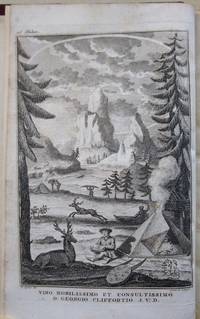
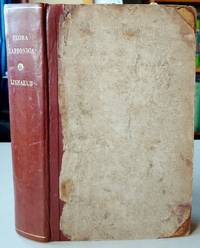
1792018826London: J. Davis for B. White et Filiorum 1792. Engraved frontispiece twelve folding plates with slight offsetting but otherwise good octavo pp l 390 16 light age-toning and occasional light foxing bound in twentieth century brown morocco with red cloth sides slight fading and very slight wear. With the bookplate of Kenneth Lazenby a founding father of the Alpine Garden Society. In the first edition of Flora Lapponica 1737 Linnaeus's ideas about nomenclature and classification were first used in a practical way making that the first proto-modern flora. This upddate by Smith cites Linnaeus as the main author and uses Linnaeus' binomial nomenclature. Second edition. Half-Leather. Very Good. J. Davis for B. White et Filiorum Hardcover
1792018827London: J. Davis for B. White et Filiorum 1792. Engraved frontispiece a little browned as is ithe title page twelve folding plates with slight offsetting and more age-toning and three with a little staining but otherwise good octavo pp l 390 16 light age-toning and occasional light foxing the hinge after the title page slightly open but absolutely no weakness quite a few interesting early neat marginal notes bound in contemporary boards a bit worn and marked a recent brown leather spine slightly scuffed. With the armorial bookplate of George Augustus Thursby; it is likely that he contributed the manuscript notes. In the first edition of Flora Lapponica 1737 Linnaeus's ideas about nomenclature and classification were first used in a practical way making that the first proto-modern flora. This upddate by Smith cites Linnaeus as the main author and uses Linnaeus' binomial nomenclature. Second edition. Quarter leather. Very Good. J. Davis for B. White et Filiorum Hardcover
1773015679London: S. Hooper 25 Ludgate-Hill 1773. Second edition greatly improved. Illustrated with one plate foxed octavo pp xxxii 298 2 136 slight age-toning and blemishes heavier spotting and foxing between pages 77 and 98 possibly caused by the different paper of the plate otherwise very sound and tight contemporary half calf and marbled boards rubbed and slightly worn rebacked at some point with the old spine laid down the spine now slightly worn at head and foot. With armorial bookplate of Peter Clutterbuck and a slightly odd offset on the facing blank. RARE. Weston was originally a thread-hosier of Leicester but in some of his anonymous works describes himself as "a country gentleman". In 1773 he was living at Kensington Gore but later was living at Leicester where he was secretary of the local agricultural society. From the number of his published works it is evident he had a very wide knowledge of plants and plant literature. Blanche Henrey 1490 - "Richard Weston 1733-1806 appears to have had an excellent knowledge of nursery gardening and nurserymen's sale catalogues. He was interested in agriculture and all forms of horticulture and he also made a study of horticultural and botanical literature.Weston's first important published work appeared in 1769 anonymously. This was his Tracts on practical agriculture and gardening. At the end of this volume and in subsequent editions of the work is a very useful 'Catalogue of English authors.on husbandry gardening botany and subjects relative thereto''. This catalogue is greatly extended in this rare second edition. Second edition. Half-Leather. Good. S. Hooper, 25 Ludgate-Hill Hardcover
1720g5752Padua: Typis Seminarii Apud Joannem Manfre. Joints cracking. Plates clean. Binding tight. 1720. First Edition. Contemporary calf with raised bands and gilt titles. 250mm x 190mm 10" x 7". 296pp 8 23 23. 12 engraved folding Botanical plates. Heavy item - shipping supplement may apply for overseas. . Typis Seminarii, Apud Joannem Manfre hardcover
1760047649Paris: Chez Charles-Antoine Jombert Libraire du Roi pour le Genie & l'Artillerie a l'image Notre Dame 1760. Fourth Edition . Hardcover. Very Good/No Jacket. Folio - over 12 - 15" tall. Quarto. 8 482 6 pages. Hardcover bound in original speckled calf with raised bands on the spine. The binding is worn but sound. Splitting to the front hinge running up about 3 inches from the foot to the lowest band. Spine a bit dry with some flaking and nicks to the leather. The binding is rubbed and has some scuffs. A sound copy. All edges red. Marbled endpapers. Text is generally clean. Collates complete with 49 copperplate engravings most which are folding. A decent example. First published in 1709 this is the Fourth edition and is the most expansive and heavily illustrated editions of this work. Text is in French. <br/> <br/> Chez Charles-Antoine Jombert, Libraire du Roi pour le Genie & l'Artillerie, a l'image Notre Dame hardcover
17231507160013Amsterdam : Pierre de Coup 1723-01-01. Hardcover. Good. 2 Volumes. 1692: 10 458 3 pp 13 plates 12 folding & 1 frontis. For 1693: 4 497 1 pp 11 plates 10 folding & 1 frontis. Bound in contemporary mottled calf. Gilt spine. 5 raised bands. Page ends washed red. Marbled page ends. Good binding and cover. Wear to extremities. Joints cracked to 1692 volume. Library stamps from University of Georgia. Black staining to 3rd 5th and 6th compartments. Chipping loss to head and tail of spines. Small loss to page ends. Unmarked pages with toning. <br><br> The 1692 volume contains Cassini's remarks on the upcoming eclipse on the 28th of July 1692 that includes a smaller engraving of Cassini's Map of the Moon with 40 numbers and 8 letters of marks that were not engraving on the 1679 map to signifying the features of the moon. This version map would be the one that would be reprinted for over a century in textbooks dictionaries and encyclopedias. Both volumes contain various works by Cassini and de Le HIre. Folding maps are Carte d'une Partie de L'Inde en Deca du Gange; Cours de la Riviere D'Ava Amsterdam : Pierre de Coup hardcover
1764015115Holmiae: Laurentii Salvii 1764. Title page printed in red and black pp xx 580 42 1 leaf of errata & emendada a little general age-toning of the pages but remarkably clean and sound internally marbled endpapers contemporary speckled calf lined in gilt dentelles in gilt a litlte worn mainly at the corners spine ornate gilt with raised bands rubbed and a bit more worn black leather title label lacking a corner joints cracking but still holding well. With the large folding portrait a bit creased which Soulsby mentions is only found in some copies. Soulsby 305. Full-Leather. Good. Laurentii Salvii Hardcover
1778021546Paris: L'Imprimerie Royale 1778. First edition. Three volumes pp cxx 132 xxix; iv 660; 654 xx i eight folding engraved plates a folding table very clean internally contemporary binding of an unusual full calf gilt-lined on the covers full gilt spines each with a red and a black label slightly rubbed and slight surface wrinkles but overall very attractive marbled endpapers marbled edges. With a stamp on the title pages of the Bibliothek Graf Spangensche an unidentified contemporary signature in the verso of the endpaper and the bookseller's label on the front paste-down endpqper of the first volume - "Cet Ouvrage se trouve ainsi que beaucoup d'autres chez La veuve Mangot Libraire sur le Hof im blauen Haus N. 312 im 3 ten Stock" "This work can be found along with many others at La veuve Mangot bookseller on the Hof im blauen Haus N. 312 im 3 ten Stock". With the bookplate in each volume of Kenneth Lazenby on of the founding members of the Alpine Garden Society. Flore française is a book by Jean-Baptiste Lamarck and Augustin Pyramus de Candolle that was published in 1815 in Paris. It is a work on botany classification and the plants of France. Lamarck designed the book to help identify plants using dichotomous keys which are classification tools that help users choose between opposing pairs of morphological characters. Lamarck was a botanist who became a prominent figure in French science after studying with de Jussieu and the publishing this work. He was mentored by Georges-Louis Leclerc Comte de Buffon a leading French scientist at the time. Lamarck's work was well-respected by scholars and helped him gain membership to the French Academy of Sciences in 1779. He later became a founding professor at the Musee National d'Histoire Naturelle where he was an expert on invertebrates. First Edition. Full-Leather. Very Good. L'Imprimerie Royale Hardcover
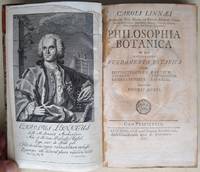
1751017563Stockholmiae & Amstelodami: Kiesewetter Godofr & Chatelain Z 1751. Latin text. Engraved frontispiece But see notes below octavo title page dedication page lectori botanico page 362 pages 9 engraved plates 2 full page engravings a little age-toning the occasional blemish or small mark the title page is a bit creased and stained in the gutter margin and there is offsetting from the frontispiece. which is chipped and with a closed tear repaired and mounted on a paper stub. Bound in possibly original marbled paper and more recent half calf slightly worn. Soulsby 437. The frontispiece is often lacking but the one we have here is not the usual frontispiece ! It is possibly a little smaller than the page size though this is not certain as it has been repaired and mounted; the offsetting to the title page which is obviously of some antiquity is definitely from the plate currently bound in. So - is it a variant or has it been added by a previous owner Interestingly I can only find one copy of this particular image online in the Wellcome Collection R. Burgess Portraits of doctors & scientists in the Wellcome Institute London 1973 no. 1778.10 ; listed as by Gustav Lundberg. It is "the first textbook of descriptive systematic botany and botanical Latin". It also contains Linnaeus's first published description of his binomial nomenclature. Philosophia Botanica represents a maturing of Linnaeus's thinking on botany and its theoretical foundations being an elaboration of ideas first published in his Fundamenta Botanica 1736 and Critica Botanica 1737 and set out in a similar way as a series of stark and uncompromising principles aphorismen. The book also establishes a basic botanical terminology. RARE. First Edition. Half Leather. Good. Kiesewetter, Godofr & Chatelain, Z Hardcover
1798g6145Edinburgh: William Creech. VG : in very good condition. Rebound with new eps. Some browning and offsetting. 1798. First Edition. Modern Quarter Calf with marbled boards. 240mm x 150mm 9" x 6". xiv 202pp. Fold out frontispiece map; single page map and copper plates. . William Creech hardcover
176726614<p><strong>1767 ARTS & Science BAKING Breads Cooking Recipes Illustrated Farming Millers</strong></p><p>An exceedingly rare and desirable 18th-century arts and sciences study by the Acadmie Royale des Sciences. This enormous tome focuses primarily on sciences relating to baking and food preparation – planting crops and farming irrigation details on millers and milling vermicelli and noodle making baking and cooking. Also includes milling wig-making hat-making and growing/processing indigo. It includes recipes and techniques for making soups baking breads and so much more!</p><p>Item number: #26614</p><p>Price: $795</p><p>Academie Royale des Sciences</p><p><strong><em>Description des arts et meÌtiers</em></strong></p><p>Paris: 1767. 1st edition</p><p><u>Details</u>: </p><p><!-- if !supportLists-->· <!--endif-->Collation: Complete with all pages; </p><p><!-- if !supportLists-->o <!--endif-->Meunier – iv 340</p><p><!-- if !supportLists-->o <!--endif-->Perruquier – vi 44</p><p><!-- if !supportLists-->o <!--endif-->Faire des Chapeaux – 2 94</p><p><!-- if !supportLists-->o <!--endif-->L'Indigotier – 2 118</p><p><!-- if !supportLists-->o <!--endif-->32 engraved plates</p><p><!-- if !supportLists-->· <!--endif-->Language: French</p><p><!-- if !supportLists-->· <!--endif-->Binding: Leather; tight and secure</p><p><!-- if !supportLists-->· <!--endif--><strong>Size: </strong><strong>~17.25in X 11.75in 44cm x 30cm</strong></p><p>Our Guarantee:</p><p>Very Fast. Very Safe. Free Shipping Worldwide.</p><p>Customer satisfaction is our priority! Notify us with 7 days of receiving and we will offer a full refund without reservation!</p><p>26614</p><p>Photos available upon request. </p> hardcover
176759133Paris L'Imprimerie Royale 1767. 4to. Contemp. hvellum. Handwritten titlwe on spine. 8206579 pp. 15 partly folded engraved plates 1 table. Internally clean and fine. <br/><br/><em>With original memoirs by: Buache le Monnier Haller d'Alembert Nouvelle Recherches sur les Verres optiques. pp. 75-146 de Séjour Tillet Morand le fils Fougeroux de Bondaroy Pingré Bailly le Cardinal du Luynes & Bailly Bezout Recherches sur le degré des Équations résultantes de l'évanouissement des inconnues & sur les moyens qu'il convient d'employer pour trouver ces Équations now called the Bezoutiant Cassini de Thury Chappe d'Auteroche Tenon l'Abbe Nollet Memoire sur les effets du Tonnerre comparés à ceux de l'Électricité. pp. 408-453 Deparcieux le Monnier Guettard Troisieme Memoir sur la Mineralogie des environs de Paris & de Corps marins qui s'y trouvent. Pp. 492-526 du Hamel de la Lande Daubenton Montet. </em> hardcover