Joseph OlivierLivre Rare Book
982 résultats
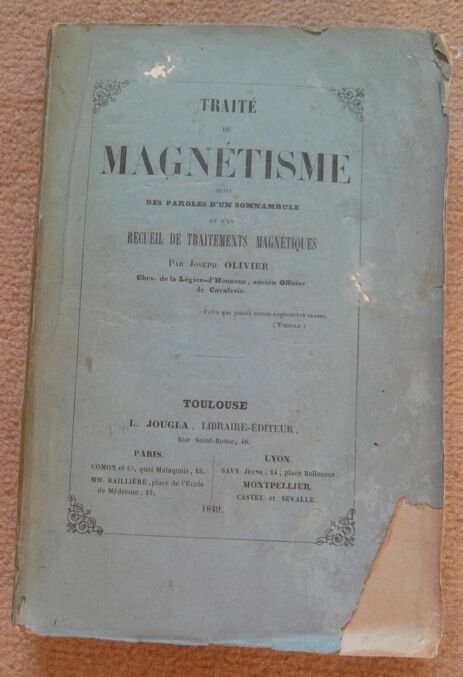
184962051849. Toulouse Paris Lyon et Montpellier éditions Jougla Comon et Cie Baillère Savy Jeune Castel et Sevane 1849 - Broché 15 cm x 23 cm 519 pages - Texte de Joseph Olivier - 1 petit manque sur la couv. taches sur la 1ère et 4e de couv. dos restauré sinon bon état intérieur
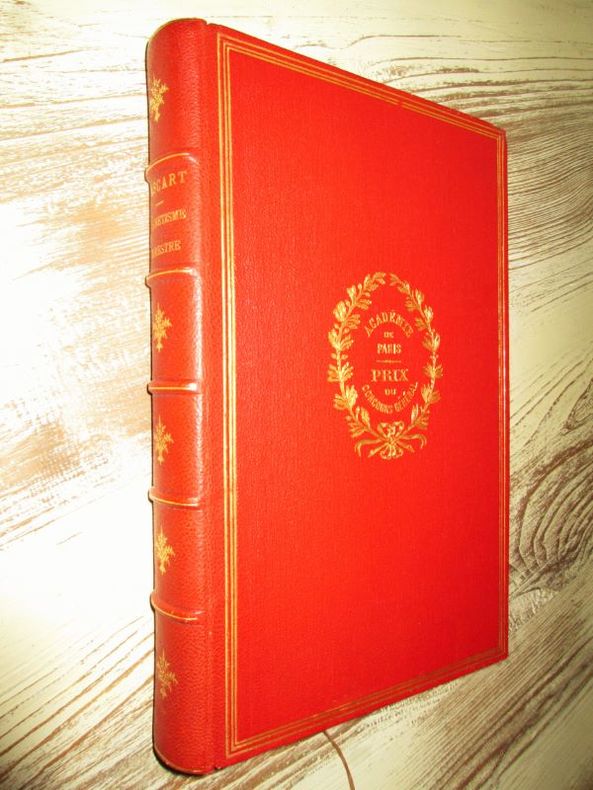
190025144Gauthier-Villars, paris 1900. In-8 relié 24 x 16,5 cm, cartonnage demi-maroquin rouge, palmes académiques de la ville de Paris (prix du Concours général). Titre doré et fleurons sur le dos à nerfs, toutes tranches dorées, 441 pages, illustré de 94 figures gravées.- Éleuthère Élie Nicolas Mascart, 20 février 1837- mort à Paris le 24 août 1908, est un physicien français. Professeur titulaire de la chaire de physique générale et expérimentale au Collège de France durant 36 ans, il dirigea le Bureau central météorologique, et installa une station d'observation au sommet de la tour Eiffel-1050g.C. - Intérieur particulièrement frais, reliure solide et en très bon état, très bel exemplaire.
9035P., Gauthier-Villars, 1885/1889, 2 fort volumes in 8 reliés en demi-chagrin noir (reliures de l'époque), T.1 : 20pp., 578pp., T.2 : (2), 651pp., nombreuses figures dans le texte, nombreuses planches comprises dans la pagination et 2 PLANCHES HORS TEXTE en couleurs
184115367Paris, Germer Baillière, 1841 ; in-8 ; pleine percaline vert foncé, dos muet (reliure fin XIXe) ; XII, 556 pp.
184114210Paris Germer Baillière 1841 In-8 XI+556 pp, (.) Ou méthode facile pour apprendre à magnétiser. Rousseurs, manques en marges extérieures des dernières pages, dernière page réparée au scotch ( table des matières ). Plats muets, décors romantiques sur dos épidermé, avec coupures et légers manques de cuir sur les coiffes. Coins et coupes émousssés.
1988RO30362687Dangles. 1988. In-8. Broché. Etat passable, Coins frottés, Dos fané, Papier jauni. 186 pages. Quelques rousseurs. Coins frottés. Dos frotté. Ex-libris à l'encre en 1er contre-plat.. . . . Classification Dewey : 538-Magnétisme
1974RO80004246DANGLES. 3ème édition. 1974. In-12. Broché. Bon état, Couv. légèrement passée, Dos satisfaisant, Intérieur frais. 186 pages. Quelques figures dans le texte. Planche dépliante en fin d'ouvrage.. . . . Classification Dewey : 538-Magnétisme
In-8 p., tela mod., tit. oro al dorso, pp. (4),539, con vignetta silograf. al frontespizio. Pagine con lievi fioriture o arross., ma complessivamente ben conservato.
Broché. 215 pages.
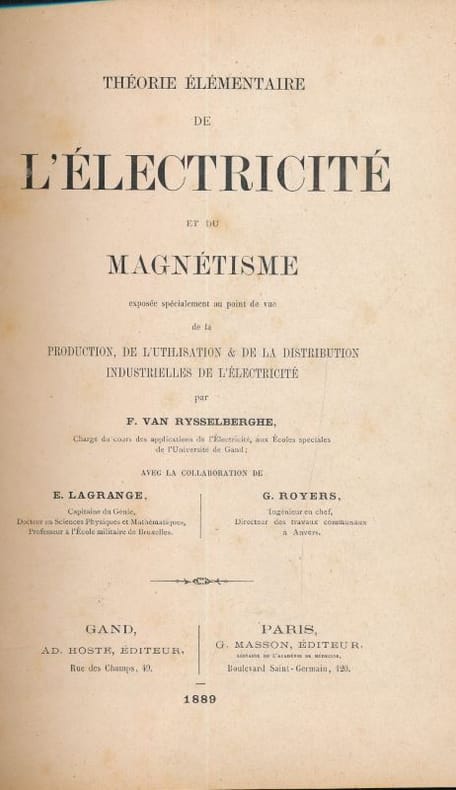
Paris, G. Masson, 1889. In-8 relié demi-basane marron, dos à nerfs et fleurons dorés, gardes de papier marbré, XVI + 310 pages, avec un index. Très bon exemplaire, bien relié.
1900105923Paris, Librairie du Magnétisme 1900 In-18 14,5 x 9 cm. Broché, dos muet, couverture grise imprimée en noir, 144 pp.,figures dans le texte, table des matières. Couverture poussiéreuse.
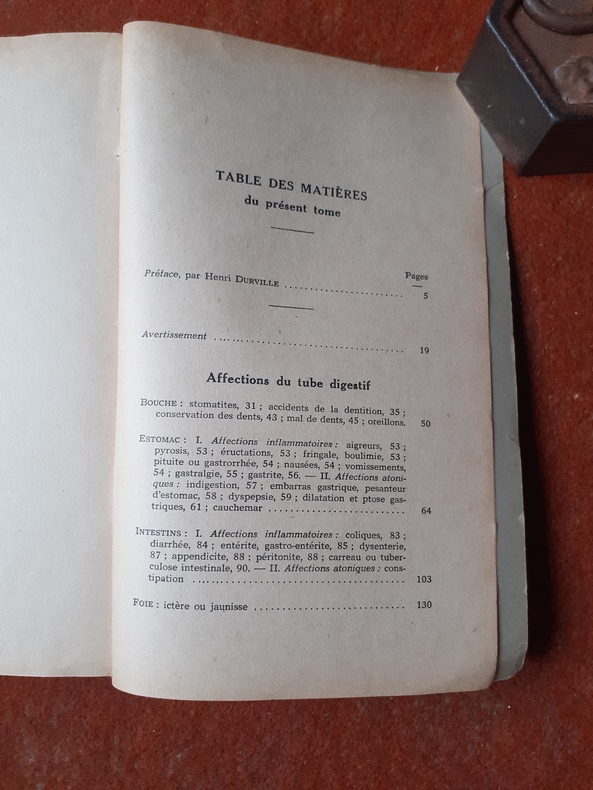
QWA-15982Henri Durville Editeur, in-8 br. (13,5 x 21,5), 399 p., 1ère édition, sans date (c. 1950), préface par Henri Durville, coll. "Bibliothèque Eudiaque", 2 planches h.-t., 8 figures, bon état.
1937ROD0000390DANGLES. 1937. In-8. Broché. Bon état, Couv. partiel. décollorée, Dos plié, Quelques rousseurs. 196 pp. - dédicace. . . . Classification Dewey : 538-Magnétisme
1951R260270403Hermann & Cie. 1951. In-8. Broché. Bon état, Couv. convenable, Dos satisfaisant, Intérieur frais. 126 pages.. . . . Classification Dewey : 538-Magnétisme
1889158439Masson Paris, G. Masson, 1889. In-8 relié demi-basane marron, dos à nerfs et fleurons dorés, gardes de papier marbré, XVI + 310 pages, avec un index. Très bon exemplaire, bien relié.
Volume in 4° antico, legatura coeva in cartonato alla bodoniana, frontespizio (piccola mancanza per elidere un nome a pennino), al verso grande vignetta incisa in rame con armi nobiliari (verosimilmente del casato di Ignatius Handel), qualche finalino di grandi dimensioni. Le carte iniziali contengono una lettera di Joannes J.A. Reibelt (editore della Disputatio) a I. Handel e la Praefatio ad lectorem. 4 cc., 24, 108, 63, 1 pp.. Studio accuratissimo sui magneti, il magnetismo, l'influenza d'esso nella fisica, in astronomia, nella navigazione e quant'altro. Particolare e sorprendente una certa propensione dell’autore per la disciplina astrologica (aliena rispetto al contenuto della tesi, che è squisitamente scientifico) infatti nel punto xxxix Pfenning afferma che la praedeterminatio physica est superflua & inutilis e videtur laedere libertatem humanam. Ancor più nel punto lxvii, precisa che la cometa, stella crinita vel barbata, Ex sua natura non semper aliquid fatale portendit: assumitur tamen plerumque à divina justitia in prodromum futurarum calamitatum: che è affermazione di chiara portata astrologica. Infine, nell’ultima parte (una sorta di dizionario astronomico-geografico), l’autore dedica 4 pagine (pagine 30-34) alle Case in cui lo Zodiaco è diviso figuratamente e agli aspetti tra i Pianeti. Opera davvero molto rara (da anni assente dai cataloghi di vendita) ed interessante. Uno fra i primi studi sul fenomeno. In Italia presente una sola copia alla biblioteca Galileo di Firenze (che è corredata di 13 tavole in rame in fondo al volume, assenti invece nella presente copia). Mende e piccole mancanze alla brossura, cerniere fragili, qualche foglio in parte slegato. Edizione originale, stampata ad ampi margini su bella carta forte, quasi del tutto esente da bruniture, tranne che per le citate mende alla brossura, in buone condizioni. Di notevolissima importanza ed interesse ed estremamente rara.
In-8 (cm. 21.60), 2 volumi, brossura illustrata, pp. 768 (numerazione continua), con illustrazioni in bianco e nero nel testo ed alcune fuori testo. Texte en français. Preface par Henri Durville. Timbro ai piatti posteriori. Aloni alle prime e ultime carte, pagine leggermente ingiallite per la qualità della carta, peraltro testo in buono stato (text in good condition).
183719474Philadelphia: Printed and Published by Merrihew & Gunn 1837. First edition. Boards soiled and spotted and the edges rubbed; spine split nearly the length of the joint and front board loose; some light foxing throughout; a good sound copy only. 12mo original rose linen spine printed drab boards 84 pages. Poe enthusiast Joseph Jackson was fresh off his triumphant 1920 attribution to Poe of the uncommon pseudonymous anti-Dickens English Notes Boston 1842 by "Quarles Quickens" when in Jackson's own words "the publicity given that discovery set a good many booksellers delving for copies. One Philadelphia bookseller who had not been fortunate enough to uncover a copy . . . did run across an anonymous little book which seemed to him to have a Poesque touch although he could not exactly explain why he was thus impressed. He had no knowledge of the copy which came into his possession but when I was looking over his stock he handed it to me with the remark: 'This looks as if it was written by Poe.'" From this characteristic bookseller remark--a certain offhand scholarly optimism cloaked in the guise of expertise with enough of modesty to serve as a disclaimer and nothing so vulgar here as the mention of a profit--there of course soon burst a moderate boom for this title. In the foreword to the new edition of the Philosophy of Animal Magnetism Philadelphia 1928 which inevitably followed Jackson makes a show of professing a suitably demure initial skepticism before launching into a series of confident assertions regarding Poe's identity as the author--Poe must have visited Philadelphia in 1837 as he had nothing else much better to do; the address of the printers in Carter's Alley puts them on the same block as the editor Samuel Atkinson which "would suggest that Poe had called on Atkinson and that the latter had referred him to the printers as likely to publish the book;" the use of italics and small capitals for emphasis is particularly characteristic of Poe "It is true that his publishers in later years dispensed with the use of small capitals but the printers of 'Animal Magnetism' Merrihew and Gunn Philadelphia were a new firm and did not remain long in business. They evidently followed the author's copy literally"; the appearance of the word "Literati" in the dedication to the receptive mind inevitably suggests Poe etc. etc. Jackson's case was sufficiently convincing to collector J. K. Lilly who reportedly paid $2500 for a copy of the first edition of The Philosophy of Animal Magnetism and--given the well-known difficulties of proving a negative allied to the book trade's understandable reluctance to give up a profitable attribution--later bibliographers have seemed equivocal about showing Jackson's claims the door. BAL vol. 7 page 150 notes "Jackson attributes this piece . . . to Poe" thus leaving outside the Poe canon while bibliographer of animal magnetism Adam Crabtree remarks "Although there is no general agreement on the matter this book has been attributed to Edgar Allan Poe." Scribner in 1941 offered a copy of the first edition for the then-substantial sum of $175 under the fig leaf of "Attributed by some authorities to the pen of Poe." Only Merle Johnson seems to have sufficient temerity to note as early as 1936 that this title "is now definitely established as not the work of Poe." All this having been said still an interesting early American work on the subject including instructions on how to induce magnetic somnambulism. Crabtree 385. Printed and Published by Merrihew & Gunn, unknown books
Features: Mr. Macmillan visits Ghana; London Conference on Cyprus; Primitive Peoples of the McMahon Line Country Tribal Life in a Territory now claimed by China; 2-page photo of the aircraft carrier H.M.S. Centaur refueling at 20 knots; The Earth... Motion, Magnetism, part 12 of a scientific series; Cutaway drawing of the fastest fighting vessel in the world, the Brave Borderer, capable of 50 knots; Aswan Dam Project begins; and more. Moderate wear. Unmarked. Sound copy. Magazine
1969R260270692Academic press. 1969. In-8. Relié. Bon état, Couv. convenable, Dos satisfaisant, Intérieur frais. 666 pages augmentées de quelques figures en noir et blanc dans texte.. . . . Classification Dewey : 538-Magnétisme
In-8 p., brossura muta coeva, pp. 144. Esempl. con barbe, alone marginale solo su cc., altrimenti ben conservato.
In 4° (23,8×19 cm); (16), XLVIII, (12), 193, 192, (14) pp. e 32 tavv. f.t. ripiegate e una tabella. 2 parti in un volume. Bella legatura coeva in tutta pergamena rigida con titolo parlato al dorso. First edition, good copy. Frontespizio in rosso e nero. Prima edizione in ottime condizioni di conservazione di questa raccolta illustrata di esperimenti relativi alla misurazione di umidità, pressione atmosferica, la struttura del ghiaccio, caldo e freddo, capillarità, ottica, il movimento del suono, il magnete, ecc. Esemplare con leggerissima ed uniforme brunitura dovuta alla tipica qualità della carta utilizzata a Leida ma non fastidiosa e meno intense che nelle altre copie conosciute e nel complesso bellissimo esemplare. Opera di estrema importanza per la storia della fisica moderna. Qui è presente anche la prima descrizione del pirometro (Pyrometer chiamato così da Musschenbroek), uno strumento per misurare la dilatazione dei corpi solidi quando esposti al calore. Pieter van Musschenbroek (1692-1761), professore di fisica a Leida, fu un grande ammiratore di Newton e Desaguliers. Iniziatore della fisica sperimentale in Olanda, il suo insegnamento fu particolarmente apprezzato per la qualità dei suoi esperimenti. L’eccellenza delle sue lezioni aiutò a mantenere la reputazione che l’Università di Leida aveva acquisito sotto Boerhaave e Gravesande, continuando ad attrarre studenti provenienti da tutta Europa, tra i quali Jean Antoine Nollet che divenne poi il primo professore di fisica sperimentale presso l’Università di Parigi. Il suo nome rimane legato all’invenzione della così detta “bottiglia di Leida” che ebbe un’importanza cruciale sulle ricerche riguardanti l’elettricità. La bottiglia di Leida costituisce la forma più antica di condensatore. Fu utilizzata per condurre molti dei primi esperimenti sull’elettricità durante la seconda metà del XVIII secolo. In questo libro, l’autore, raccoglie e presenta con commenti, integrazioni e spiegazioni diversi esperimenti fisici portati avanti nell’Accademia del Cimento. Il tutto è preceduto da un discorso sulla storia e i fondamenti della fisica sperimentale. L’opera contiene anche la prima traduzione in latino dell’opera del Magalotti “Saggi di naturali esperienze”, fatta dallo stesso Petrus van Musschenbroek che aggiunse ad essa le sue “Oratio de methodo instituendi experimenta physica” i “Commentarii” (o “Additamenta”) e “Nova Experimenta” che contengono importantissime aggiunte e nuove esperienze pratiche mai prima provate. Tra gli esperimenti effettuati molti “deal with the mechanics of rigid bodies, air pressure, heat, cohesion, capillarity, phosphorescence, magnetism, and electricity. Many of these experiments have become classics in elementary instruction. One of the better-known apparatuses is the pyrometer (the name was given by Musschenbroek) first described in the Tentamina of 1731…” (Dict. of Scientific Biogr., vol. 9, pp. 594-6). Prima non comune edizione in ottime condizioni di conservazione. Rare. A good copy. Bibl.: Wellcome Vol. 4 p. 23; Graesse IV, 637 e VI, 218; Wheeler Gift Cat. 276.
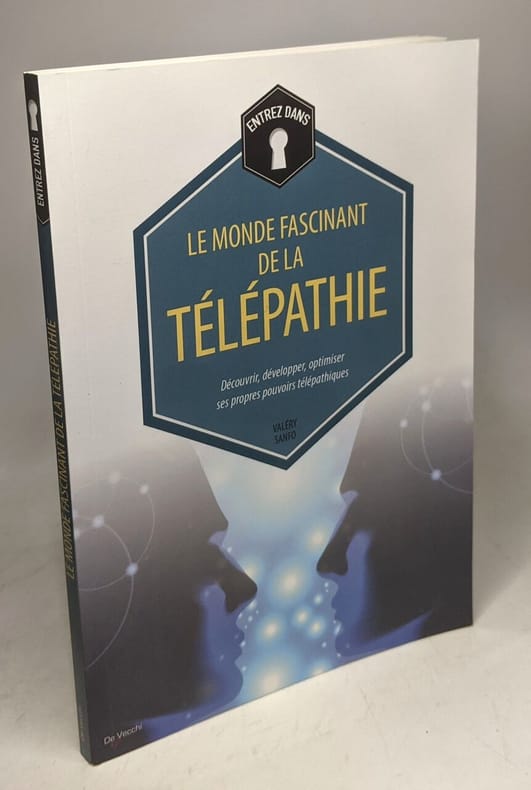
2017100114886De Vecchi Livre 2017 14 4x20 4x1cm. 2017. Broché.
1879c1806140594xbvkJena, Hermann Costenoble, 1879. XIII, (1) 576 Seiten, mit einigen Abbildungen und graphischen Darstellungen. - Halbledereinband der Zeit mit marmorierten Buchdeckeln und Lederecken, dezenter Rückenvergoldung und goldgeprägtem Rückentitel; 8vo.(ca. 22 x 17 x 3,5 cm; ca. 1 kg.).
1947R260270384McGraw - Hill book company. 1947. In-8. Relié. Très bon état, Couv. convenable, Dos satisfaisant, Intérieur frais. 939 pages augmentées de quelques figures en noir et blanc dans texte.. . . . Classification Dewey : 538-Magnétisme