Clark StuartMareMagnum

805 résultats
br. Con uno stile coinvolgente e un ritmo incalzante, l'astrofisico Stuart Clark racconta la tormentata e appassionante storia della ricerca di pianeti simili alla Terra fuori dal Sistema Solare. Dopo innumerevoli falsi allarmi, il primo esopianeta in orbita attorno a una stella diversa dal Sole è stato scoperto nel 1995. Oggi, poco più di due decenni dopo, i pianeti extrasolari scovati dai ricercatori sono centinaia. Alcuni sono più neri del carbone, altri sono paesaggi infernali ricoperti di lava ardente; alcuni sono perennemente devastati da venti simili a uragani, altri ruotano intorno non a una sola stella, bensì a due. Anche quando hanno dimensioni analoghe alla Terra, la maggior parte dei mondi scoperti è davvero aliena, molto diversa dal nostro pianeta blu. Gli astronomi, però, hanno individuato decine di pianeti simili a Giove, a Nettuno o persino a Mercurio, in orbita attorno a stelle come il Sole. La scoperta di una "nuova Terra", quindi, è incredibilmente vicina. Puntando i riflettori sulle dinamiche dell'esplorazione spaziale, questo libro ci condurrà in un viaggio straordinario nel cosmo, alla ricerca di luoghi capaci di ospitare la vita, o che magari già la ospitano.
Cm. 29,5, cart. edit., pag. 431. Con centinaia di illustrazioni nel testo. Splendido catalogo della mostra tenutasi a Palazzo Grassi nel 2000 sulla ricerca dell'Infinito nell'Arte. Molto interessante. testo in inglese. ottimo esemplare.
5 voll. Folio. viii pp. (incl. frontespizio inciso) + 596 + 607–638; + 252 (ultima carta bianca); + 244 + 84 + 184 (ultima carta bianca); + viii + 340 (ultima carta bianca) + 348 + xx (ultima carta bianca); + viii + 552 + xii + 60 + 244; + xii + 624 (ultima carta bianca) + 124 (ultima carta bianca) + 60 + 20 + 24 pp. Numerosi legni e diagrammi nel testo. Legatura in pelle coeva, dorso dorato. Bruniture omogenee della carta. The evidence of the attempts to leave the Aristotelianism for the modern method and an important proof of the Galileian revolution.Clavius's work includes in addition to commentary on arithmetic and algebra one on Euclid, Teodosio and Sacrobosco; his contribution to the study of trigonometry and astronomy; his work on the calendar. Clavius has been for mathematics in Renaissence a real turning point: “Probably the man who did the most of all the German scholars of the 16th century to extend the knowledge of mathematics… was Cristopher Clavius, a Jesuit, who passed the later years of his life in Rome. He was an excellent teacher… His Algebra appeared in 1608 and was one of the best textbooks on the subject that had been written up to that time… (he was) engaged in the reform of the calendar…” (Smith). Opera Mathematica in his third volume contains the Sphaera in his last editorial, to which Clavius worked during 1610 and which was printed in 1611. Shortly thereafter, in February 1612, Clavius was dying after a period of illness. In March 1610 following his comments on the telescope, Galileo published in Sidereus Nuncius his latest astronomical discoveries. These findings, perhaps only for a lucky snap of dates, are among the topics covered in the review of Sphaera, where Clavius shows to recognize the meaning. Clavius and the Jesuits in those years had to go back to seriously consider the observations of Galileo, and had to acquire the telescope also to repeat the observations and then verify their accuracy. Clavius led directly the observations (especially on the phases of Venus and the moons of Jupiter, but also on the lunar spots) along with a group of young Jesuit mathematicians and astronomers, first of all Grienberger, thus removing, towards the end of his life and following a long friendship with Galileo, his skepticism about the Copernican theory. Galileo himself in a letter to Madame Christina of Lorraine in 1615 wrote that “altri matematici, i quali mossi da gli ultimi miei scoprimenti, hanno confessato essere necessario mutare la già concepita costituzione del mondo, non potendo in conto alcuno più sussistere”. Galilei continues that one of them was just Clavius, and the reference is certainly to the pitch of the Opera Mathematica Tomo III, p. 75, where as the result of the list of Galileo's discoveries, the Jesuit ends “Quae cum ita sint, videant Astronomi quo pacto orbes coelestes constituendi sint ut haec phaenomena possint salvari”. It 's an extraordinary moment in the history of cosmology and Church, which has marked the highlight of the heliocentric theory, which no major scientists, mathematicians and astronomers of the Society of Jesus, thought no more be able to object. As D'Elia notes (pp. 14-15): "The confirmation from him on the discoveries of the astronomer from Pisa and on the copernican interpretation he deduced, had definitive influence and perhaps even dominate, to ensure the discoveries the almost universal acceptance in the intellectual world, even if the disappearance of the old professor and that of several of his closest disciples could not prevent the ecclesiastical Authority’s precept of 1616 and the condemnation of 1633 ". Clavius had even got that Galileo was received at the Roman College, and was himself to "explain" to Cardinal Bellarmine scientific discoveries of Galilei. So while the academic and obviously ecclesiastical circles did not leave officially by the Aristotelian position, a scientist of them, for evidence and intellectual honesty, was preparing the way for the acceptance of Galileo's discoveries, and could do so given the authority of his position, achieved mainly thanks to its capital contribution asked by Gregory XIII to reform the Julian calendar, which led to the drafting of the Gregorian Calendar. Christoph Clavius (Bamberg 1538-1612) Jesuit and mathematician, astronomer, he entered the Jesuit College in Rome in '55 and then went to Coimbra, where he studied mathematics and science; back to Rome to study theology, he remained as a professor for fortyfive years. He became a pivotal figure for the general mathematical and scientific renewal that had in the Compagnia di Gesù a driving force, entering into the main controversies of the time, from the squaring of the circle to the comparison between the Ptolemaic and Copernican theories. He was the master, among other things, of Matteo Ricci, who with the help of his students, translated many works of Clavius in China, including the six books of Euclid's Elements (1574), which had several editions and updates; a work who had an enormous influence, providing a compendium of knowledge on geometry. His other important works were the Commentaries on Sphaera di Sacrobosco, a treatise on spheres’ geometry and astronomy, and work on the astrolabe. He determined the subsequent development of algebra. De Backer & Sommervogel, 2, cols. 1222–3 (with details of contents). DSB, 3, pp. 311–2. D’Elia, Pasquale, Galileo in Cina, Roma, Università Gregoriana, 1947. Jardine, Nicholas. "The Forging of Modern Realism: Clavius and Kepler against the Sceptics." Studies in History and Philosophy of Science 10 (1979): 141-73. Lattis, James M. Between Copernicus and Galileo: Christoph Clavius and the Collapse of Ptolemaic Cosmology. Chicago: University of Chicago Press, 1994 Proceedings of the Symposium on Christoph Clavius (1538–1612), July 21, 2005, University of Notre Dame, Edited by Dennis Snow. D. E. Mungello, Curious land. Jesuit accomodation and the Origins of Sinology, 1985, p. 26. Eberhard Knobloch, Christoph Clavius – Ein astronom zwischen Antike und Kopernikus”, in Cvortrage des ersten Symposions des Bamberger Arbeitskreises Antike Naturwissenschaft und ihre Rezeption, 113-40, Wiesbaden, 1990.
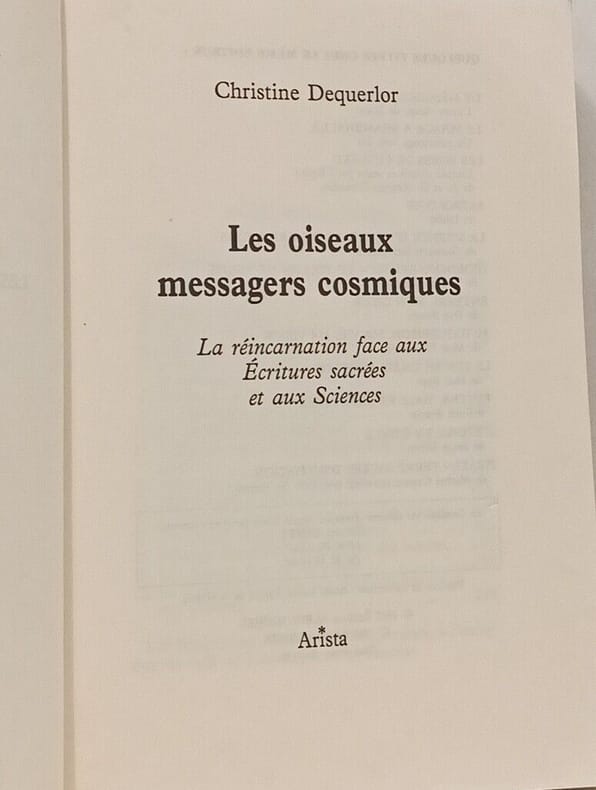
1989100144119Arista 1989 in8. 1989. Broché. Cet ouvrage explore le symbolisme des oiseaux comme messagers divins à travers les traditions du monde entier en examinant particulièrement le concept de réincarnation à la lumière des écritures sacrées et des connaissances scientifiques
Book in as new condition. 309pp. A highly accessible exploration of reality, the nature of the universe and the place of life within it from cosmologist Marcus Chown.
ill., br. Dove sta andando l'umanità? Qual è la vera origine dell'essere umano? Esiste un altro modo per comprendere la realtà oltre a quello frutto della formazione convenzionale impartitaci? Si tratta di domande che sempre più individui, pur non essendo filosofi a tempo pieno, frequentemente si pongono in conseguenza dei tempi che l'umanità sta vivendo con i loro repentini capovolgimenti economici e distruzioni ambientali, con le sincroniche rivoluzioni sociali e con la crescente perdita di identità spirituale. Il testo, frutto di un accurato e rigoroso lavoro di ricerca, si propone di portare alla conoscenza dei lettori non specializzati del settore, in maniera didattica e partendo dalla spiegazione degli elementi basilari ricorrenti nella terminologia tecnica, le più innovative e recenti teorie scientifiche (tra le quali quella elaborata dal fisico italiano Massimo Corbucci) relative a quesiti fondamentali quali l'origine della materia, la natura della gravità, l'interazione tra la coscienza umana ed il Cosmo, l'essenza spirituale dell'Universo...
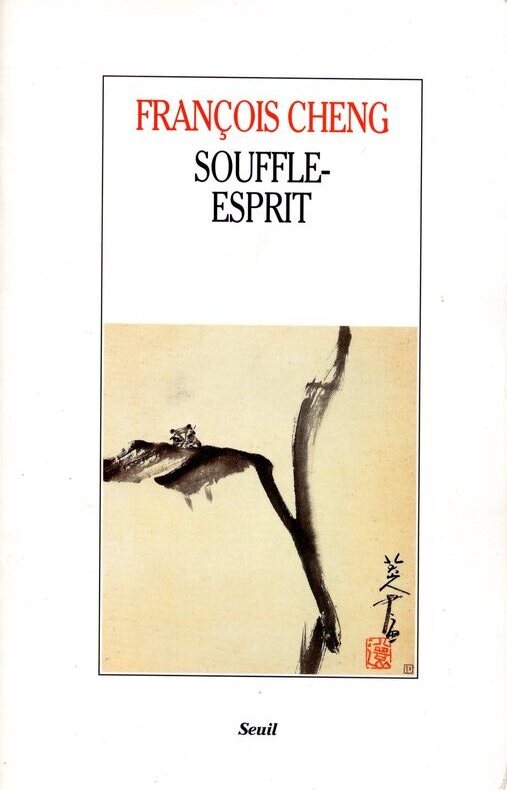
1989L1818Seuil, 1989, 190 p. + 45 ill. nb.
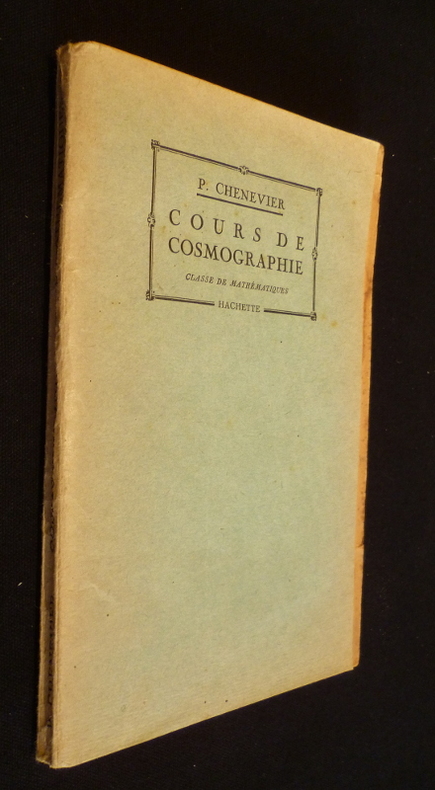
1932za966Hachette Broché 1932 In-8 (13,5 x 21,5 cm.), broché,189 pages, planches photo noir et blanc en fin d'ouvrage ; dos décollé des cahiers, plats défraîchis, état correct. Livraison a domicile (La Poste) ou en Mondial Relay sur simple demande.
in-8, 255 pp., broché, couv. ill.
197000003489McGraw-Hill 1970. Paperback. Fine. r. <br/><br/> McGraw-Hill paperback
in-16, 255 pp., broché, couv. ill.
1980qg1549Stock Plus Dos carré collé 1980 In-12 (11 x 18 cm.), format poche, dos carré collé, 237 pages, nombreuses illustrations in-texte ; couverture un peu jaunie, coiffes à peine frottées, assez bon état. Livraison a domicile (La Poste) ou en Mondial Relay sur simple demande.
51314Editions du Seuil, 1962 14 x 20, 173 pp., 2 figures, broché, Bon état - rares annotations en marge
196255038Editions du Seuil , Rayon de la Science Malicorne sur Sarthe, 72, Pays de la Loire, France 1962 Book condition, Etat : Bon broché In-8 1 vol. - 192 pages
1963660Editions du Seuil , Rayon de la Science Malicorne sur Sarthe, 72, Pays de la Loire, France 1963 Book condition, Etat : Bon broché In-8 1 vol. - 188 pages
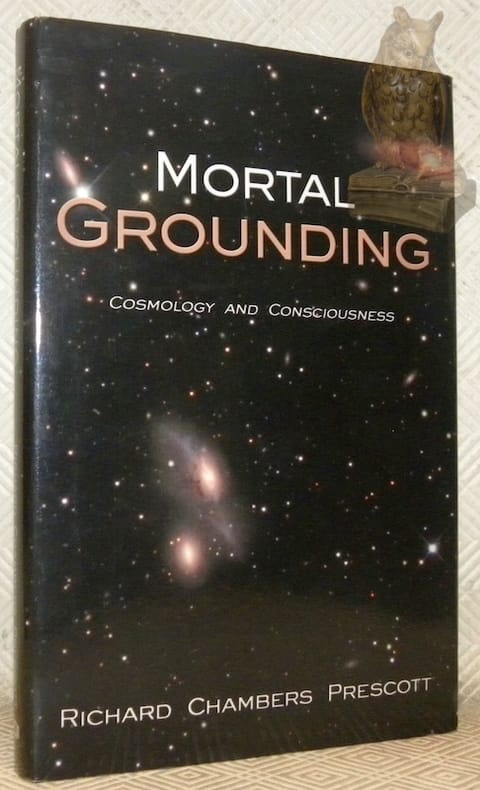
119230Bloomington, AuthorHouse 2008, 235x160mm, XII - 192pages, editor's binding with jacket. With a letter typed and signed by the author. Book in very good condition.
ill., br. Sappiamo davvero poco del mondo in cui viviamo, di come ha avuto inizio, di cosa è fatto e di come finirà. Ci chiediamo da dove vengano lo spazio e il tempo, se siamo soli nell'universo e come funzionano le leggi della fisica quando vengono applicate all'infinitamente piccolo e all'infinitamente grande, ma la verità è che... non ne abbiamo la più pallida idea! Con rigore, ironia e facilità divulgativa gli autori di questo libro - un PhD in robotica a Stanford, creatore di una nota striscia di divulgazione scientifica a fumetti, e un docente di fisica delle particelle che collabora con il Cern - hanno unito le forze per esplorare i più grandi misteri insoluti del cosmo e spiegare come mai siano ancora tanto misteriosi e cosa hanno fatto, finora, gli scienziati per trovare delle risposte (o almeno porsi le domande giuste). Hanno provato insomma a spiegare alcuni argomenti davvero complicati in parole semplici. Dalla materia oscura all'antimateria, dalle onde gravitazionali ai buchi neri, con l'ausilio di infografiche e illustrazioni che accompagnano e semplificano i concetti più complessi, Cham e Whiteson ci accompagnano in un viaggio di scoperta appassionato e divertente, che ci mostrerà l'universo sotto una nuova luce: un'immensa distesa di territori ancora enigmatici e selvaggi, tutti da decifrare.
br. Sappiamo davvero poco del mondo in cui viviamo, di come ha avuto inizio, di cosa è fatto e di come finirà. Ci chiediamo da dove vengano lo spazio e il tempo, se siamo soli nell'universo e come funzionano le leggi della fisica quando vengono applicate all'infinitamente piccolo e all'infinitamente grande, ma la verità è che... non ne abbiamo la più pallida idea! Con rigore, ironia e grande facilità divulgativa gli autori di questo libro - un PhD in robotica a Stanford, creatore di una nota striscia di divulgazione scientifica a fumetti, e un docente di fisica delle particelle che collabora con il Cern - hanno unito le forze per esplorare i più grandi misteri insoluti del cosmo e spiegare come mai siano ancora tanto misteriosi e cosa hanno fatto, finora, gli scienziati per trovare delle risposte (o almeno porsi le domande giuste). Hanno provato insomma a spiegare alcuni argomenti davvero complicati in parole semplici. Dalla materia oscura all'antimateria, dalle onde gravitazionali ai buchi neri, con l'ausilio di infografiche e illustrazioni che accompagnano e semplificano i concetti più complessi, Cham e Whiteson ci accompagnano in un viaggio di scoperta che ci mostrerà l'universo sotto una nuova luce: un'immensa distesa di territori ancora enigmatici e selvaggi, tutti da decifrare.
302pp. 24 cm. Hardcover Very good condition good
Mm 225x285 Volume in copertina rigida, sopracoperta illustrata a colori (disegno di Emanuele Luzzati), 549 pagine con figure in nero, tabelle e disegni nel testo. Volume in perfette condizioni di nuovo, spedizione in 24 ore dalla conferma dell'ordine.
198711259Paris Belfond 1987 Un volume in-12 dos collé, couverture blanche et bleue illustrée, 201 pages. Bon état.
78201Paris, Odile Jacob, 1993. 15 x 24, 314 pp., broché, très bon état.
534pp., 26cm., in the series "Corpus Christianorum. Series apocryphorum" vol.16, editor's cloth with gilt lettering, fine condition, bilingual: Irish-English, ISBN 978-2-503-53075-8, R69759
2009R69759Turnhout, Brepols 2009 534pp., 26cm., in the series "Corpus Christianorum. Series apocryphorum" vol.16, editor's cloth with gilt lettering, fine condition, bilingual: Irish-English, ISBN 978-2-503-53075-8, R69759
Dust-soiling to top of textblock. Some foxing to endpapers and DJ. Small closed tear (1cm) to upper corner of DJ. ; Philosophica, Vol. 3; 521 pages; According to Aristotle, philosophy had come into being in the VIth century with Thales, just as a mere, disinterested pursuit of truth, a curiosity for great problems (those eventually called "metaphysical" ones) which were substantially identical with those which Aristotle himself and his school were now raising. This abstract reading is very similar to that which views Greek poets as inspired by "eternal beauty" or by "art's for art sake" and which is nowadays completely discredited and given up by scholars of the history of literature. Against this view the present text proposes a new reading of the "archaic" presocratic scientists: in fact, it is about those "sages" who lived on the boundaries of the Greek-speaking world before the concentration of such people in Periclean Athens. They were closely linked to their native towns (Miletus, Ephesus, Croto, Vele, Acragas) where they held high office; here there oral teaching and the public reading of their texts were followed closely by their fellow citizens. Thus the picture of the "cosmic republic" arises: to the "cosmic monarchy" of Homer and Hesiod (the mythical world with Zeus as the king, gods as the ministers and nature as the subject) a different mythical world succeeds. Here the earth, the sea, the sky, the human body and, generally, the "existing thing," all behave like isonomic ("republican") towns or like the governing body of these towns. Philosophy will arise later, in Athens of the Vth century.