813 résultats
Milano, Longanesi, 1982, in-8, br., pp. 272.
198711259Paris Belfond 1987 Un volume in-12 dos collé, couverture blanche et bleue illustrée, 201 pages. Bon état.
Trento, 1981, 8vo stralcio con copertina posticcia muta, pp. 99/112 con 9 figure. - !! ATTENZIONE !!: Con il termine estratto (o stralcio) intendiamo riferirci ad un fascicolo contenente un articolo, completo in se, sia che esso sia stato stampato a parte utilizzando la stessa composizione sia che provenga direttamente da una rivista. Le pagine sono indicate come "da/a", ad esempio: 229/231 significa che il testo è composto da tre pagine. Quando la rivista di provenienza non viene indicata é perché ci è sconosciuta. - !! ATTENTION !!: : NOT A BOOK : “extract” or “excerpt” means simply a few pages, original nonetheless, printed in a magazine. Pages are indicated as in "from” “to", for example: 229/231 means the text comprises three pages (229, 230 and 231). If the magazine that contained the pages is not mentioned, it is because it is unknown to us.
50972Hachette, 1959 14 x 22,5, 246 pp., qques figures, planches photos, broché, ill. couleur, Bon état - couverture avant usagée
in-8°, 337 pages, photos hors-texte n&b, broche, couverture illustree à rabats. Bon etat. [DV-19][MA-2] A la recherche de vie intelligente dans d'autres mondes.
ril. L'evoluzione cosmica di quattordici miliardi di anni, articolata in cinque stadi, dal Big Bang a oggi, è una semplificazione per uno sguardo alla storia dell'Universo. Noi tra il mondo degli atomi (il microcosmo), e le Galassie (il macrocosmo) abbiamo capito una parte dell'architettura dell'Universo, grazie a Einstein, alla squadra di fisici capeggiata da Niels Bohr, all'astronomo Edwin Hubble e al fisico Richard Feynman. Dal lavorio delle Stelle sono emersi gli atomi, dai quali è partita la formazione delle prime sostanze tra cui l'acqua (H2O). Solo dopo qualche miliardo di anni si è formato il Sistema Solare con il Sole al centro, e otto Pianeti in orbite sempre più distanti. L'affermare che la Terra è il pianeta gioiello del Sistema Solare su cui, grazie all'acqua, hanno trovato albergo la Vita e poi l'Essere Intelligente, è la conferma che noi siamo parte del progetto Universo. Si dà per certo l'esistenza di civiltà extraterrestri. Si pensa all'incontro con una di queste civiltà, ma le distanze interstellari sono talmente grandi da renderlo impossibile per molto, molto tempo. Il sapere, che la nostra Galassia, la Via Lattea, contiene più di 100 miliardi di stelle e che l'Universo contiene più di 1000 miliardi di galassie, è mettere a dura prova la nostra capacità di capire l'Universo Intero.
Cosmetic science and technology series/Volume 19 Used.
1955100148985Éditions du Seuil 1955 in8. 1955. Broché. 3 volume(s). Le Phénomène humain est un essai philosophique et théologique de Pierre Teilhard de Chardin publié à titre posthume en 1955. L'ouvrage propose une vision synthétique de l'évolution cherchant à réconcilier la science et la spiritualité en retraçant l'émergence de la conscience humaine depuis les origines de l'univers
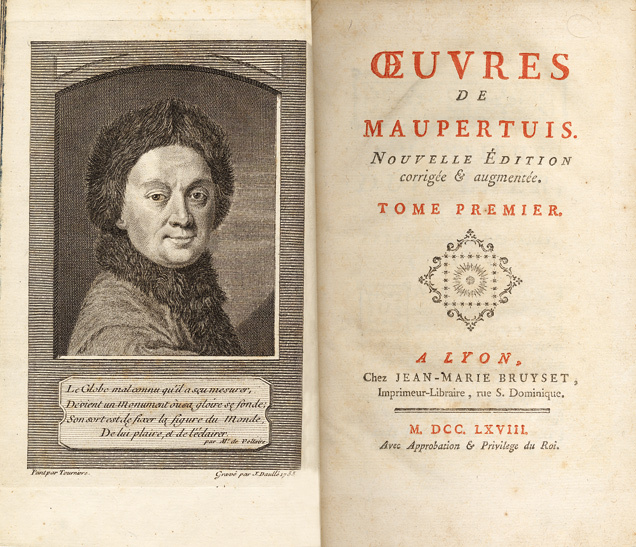
176815501Lyon, Jean-Marie Bruyset, 1768 ; 4 tomes in-8 ; veau fauve marbré, dos à faux-nerfs, décorés et dorés, pièces de titre et de tomaison grenat, filet doré sur les coupes, tranches marbrées (rel. de l'époque) ; (4) faux-titre et titre en rouge et noir à chaque tome ; XXXVI, 309, (3) pp. ; IV, 431 pp., (1 bl.), (1) f. blanc ; IV, 468, (4) pp. ; VIII, (12), 346, (4) pp., nombreuses figures ; portrait en frontispice gravé par J. Daullé d'après Tournière et carte hors-texte de l'arc méridien mesuré au cercle polaire au Tome 3.
br. Black holes are among the strangest denizens of the physicist's world. Jacob Bekenstein tells here the story of how the thermodynamics of a black hole was discovered by him and Stephen Hawking, following John A. Wheeler's question about what would happen if a cup of hot tea were dumped into a black hole. He further describes ramifications of these thermodynamics, such as the mysterious information paradox and the holographic bound, which have deeply influenced theoretical physics in the last twenty years. These subjects are just some of the many adventures in physics which the author has witnessed and participated in. He describes the genesis and development of some of them in this book.
154pp., 25cm., publisher's hardcover in black cloth with gilt lettering, dustwrapper, text and interior clean and bright, good condition, F105443
1973F105443Assen, Van Gorcum 1973 154pp., 25cm., publisher's hardcover in black cloth with gilt lettering, dustwrapper, text and interior clean and bright, good condition, F105443
Spine sunned. Includes letter from author tipped in. Slight mottling to boards. ; Bijdragen Tot De Filosofie 3; 162 pages
188042401London Harrison and Sons 1880. 4to. No wrappers as extracted from "Philosophical Transactions" Vol. 171 - Part II. Pp. 713-891. A few textilustr. Clean and fine. <br/><br/><em>First printing of a main work by the "Father of Geophysics" in which he set up the hypothesis that the results from his earlier investigations on the relations between the tidal frictions on the earth and the motion of the moon away from the earth could be used to explain the formation of satellites of the other planets and their movements in relation to the sun. In DSB it is called "a monumental paper"."Darwin's most significant contribution to the history of science lies in his pioneering work in the application of detailled dynamical analysis to cosmological and geological problems. That many of his conclusions are now out of date should in no way diminish the historical interest in his experiments nor the importent service thet he rendered cosmogony by the example he gave of putting various hypotheses to the test of actual calculations. Darwin's method remains a milestone in the development of cosmogony and subsequent investigators have favored it over the merely qualitative arguments prevalent until that time."DSB. </em> unknown
188042401(London, Harrison and Sons, 1880). 4to. No wrappers as extracted from ""Philosophical Transactions"", Vol. 171 - Part II. Pp. 713-891. A few textilustr. Clean and fine.
5 voll. Folio. viii pp. (incl. frontespizio inciso) + 596 + 607–638; + 252 (ultima carta bianca); + 244 + 84 + 184 (ultima carta bianca); + viii + 340 (ultima carta bianca) + 348 + xx (ultima carta bianca); + viii + 552 + xii + 60 + 244; + xii + 624 (ultima carta bianca) + 124 (ultima carta bianca) + 60 + 20 + 24 pp. Numerosi legni e diagrammi nel testo. Legatura in pelle coeva, dorso dorato. Bruniture omogenee della carta. The evidence of the attempts to leave the Aristotelianism for the modern method and an important proof of the Galileian revolution.Clavius's work includes in addition to commentary on arithmetic and algebra one on Euclid, Teodosio and Sacrobosco; his contribution to the study of trigonometry and astronomy; his work on the calendar. Clavius has been for mathematics in Renaissence a real turning point: “Probably the man who did the most of all the German scholars of the 16th century to extend the knowledge of mathematics… was Cristopher Clavius, a Jesuit, who passed the later years of his life in Rome. He was an excellent teacher… His Algebra appeared in 1608 and was one of the best textbooks on the subject that had been written up to that time… (he was) engaged in the reform of the calendar…” (Smith). Opera Mathematica in his third volume contains the Sphaera in his last editorial, to which Clavius worked during 1610 and which was printed in 1611. Shortly thereafter, in February 1612, Clavius was dying after a period of illness. In March 1610 following his comments on the telescope, Galileo published in Sidereus Nuncius his latest astronomical discoveries. These findings, perhaps only for a lucky snap of dates, are among the topics covered in the review of Sphaera, where Clavius shows to recognize the meaning. Clavius and the Jesuits in those years had to go back to seriously consider the observations of Galileo, and had to acquire the telescope also to repeat the observations and then verify their accuracy. Clavius led directly the observations (especially on the phases of Venus and the moons of Jupiter, but also on the lunar spots) along with a group of young Jesuit mathematicians and astronomers, first of all Grienberger, thus removing, towards the end of his life and following a long friendship with Galileo, his skepticism about the Copernican theory. Galileo himself in a letter to Madame Christina of Lorraine in 1615 wrote that “altri matematici, i quali mossi da gli ultimi miei scoprimenti, hanno confessato essere necessario mutare la già concepita costituzione del mondo, non potendo in conto alcuno più sussistere”. Galilei continues that one of them was just Clavius, and the reference is certainly to the pitch of the Opera Mathematica Tomo III, p. 75, where as the result of the list of Galileo's discoveries, the Jesuit ends “Quae cum ita sint, videant Astronomi quo pacto orbes coelestes constituendi sint ut haec phaenomena possint salvari”. It 's an extraordinary moment in the history of cosmology and Church, which has marked the highlight of the heliocentric theory, which no major scientists, mathematicians and astronomers of the Society of Jesus, thought no more be able to object. As D'Elia notes (pp. 14-15): "The confirmation from him on the discoveries of the astronomer from Pisa and on the copernican interpretation he deduced, had definitive influence and perhaps even dominate, to ensure the discoveries the almost universal acceptance in the intellectual world, even if the disappearance of the old professor and that of several of his closest disciples could not prevent the ecclesiastical Authority’s precept of 1616 and the condemnation of 1633 ". Clavius had even got that Galileo was received at the Roman College, and was himself to "explain" to Cardinal Bellarmine scientific discoveries of Galilei. So while the academic and obviously ecclesiastical circles did not leave officially by the Aristotelian position, a scientist of them, for evidence and intellectual honesty, was preparing the way for the acceptance of Galileo's discoveries, and could do so given the authority of his position, achieved mainly thanks to its capital contribution asked by Gregory XIII to reform the Julian calendar, which led to the drafting of the Gregorian Calendar. Christoph Clavius (Bamberg 1538-1612) Jesuit and mathematician, astronomer, he entered the Jesuit College in Rome in '55 and then went to Coimbra, where he studied mathematics and science; back to Rome to study theology, he remained as a professor for fortyfive years. He became a pivotal figure for the general mathematical and scientific renewal that had in the Compagnia di Gesù a driving force, entering into the main controversies of the time, from the squaring of the circle to the comparison between the Ptolemaic and Copernican theories. He was the master, among other things, of Matteo Ricci, who with the help of his students, translated many works of Clavius in China, including the six books of Euclid's Elements (1574), which had several editions and updates; a work who had an enormous influence, providing a compendium of knowledge on geometry. His other important works were the Commentaries on Sphaera di Sacrobosco, a treatise on spheres’ geometry and astronomy, and work on the astrolabe. He determined the subsequent development of algebra. De Backer & Sommervogel, 2, cols. 1222–3 (with details of contents). DSB, 3, pp. 311–2. D’Elia, Pasquale, Galileo in Cina, Roma, Università Gregoriana, 1947. Jardine, Nicholas. "The Forging of Modern Realism: Clavius and Kepler against the Sceptics." Studies in History and Philosophy of Science 10 (1979): 141-73. Lattis, James M. Between Copernicus and Galileo: Christoph Clavius and the Collapse of Ptolemaic Cosmology. Chicago: University of Chicago Press, 1994 Proceedings of the Symposium on Christoph Clavius (1538–1612), July 21, 2005, University of Notre Dame, Edited by Dennis Snow. D. E. Mungello, Curious land. Jesuit accomodation and the Origins of Sinology, 1985, p. 26. Eberhard Knobloch, Christoph Clavius – Ein astronom zwischen Antike und Kopernikus”, in Cvortrage des ersten Symposions des Bamberger Arbeitskreises Antike Naturwissenschaft und ihre Rezeption, 113-40, Wiesbaden, 1990.
J. A. Coleman Origine e divenire del cosmo. , Feltrinelli 1964, Copertina cartonata sporca lievemente. Tagli impolverati e ingialliti. Pagine ingiallite. Collana: "Universale economica" n. 472. Buono (Good) . <br> <br> <br> <br>
195712641Albin Michel , Sciences d'Aujourd'hui Malicorne sur Sarthe, 72, Pays de la Loire, France 1957 Book condition, Etat : Moyen broché In-8 1 vol. - 404 pages
In 8°, br. edit. ill., pp. 324,(4), con num. ill. e cartine b.n. nel t.; prima ed. "Saggi", copia molto buona. (p005)
Biblioteca Scientifica, 57.<BR>Traduzione di Isabella C. Blum.<BR>In 8°; pp. 438 con diverse illustrazioni in nero e colore nel testo; brossura editoriale con alette; cucito.<BR>CONDIZIONI OTTIME
N. deGrasse Tyson e D. Goldsmith Origini. Quattordici miliardi di anni di evoluzione cosmica.. , Le Scienze 2009, Ottimo (Fine) . <br> <br> Copertina flessibile <br> 275<br>
No marks or inscriptions. A very clean very tight copy with bright unmarked boards, slightly tanned page edges and no bumping to corners. Dust jacket not price clipped or marked or torn or creased. 205pp. Is the fact that our Universe strangely is hospitable to life providence or coincidence. Sir Martin Rees argues this concept, although we already have intimations of other universes.
8048Paris, Bonne Presse, 1939 12 X 20, 221 pp., illustrations N/B, broché non coupé, bon état
193987920Maison de la Bonne Presse Malicorne sur Sarthe, 72, Pays de la Loire, France 1939 Book condition, Etat : Bon broché, sous couverture imprimée éditeur bleu marine, illustrée d'un dessin de montagne avec une Lune In-8 1 vol. - 221 pages
19212373Maison de la bonne presse , Nouvelle bibliothèque pour tous Malicorne sur Sarthe, 72, Pays de la Loire, France 1921 Book condition, Etat : Bon broché grand In-8 1 vol. - 93 pages