KUTBEDDIN TÜRKMANI (Tokat Nüfus Müdürü).MareMagnum
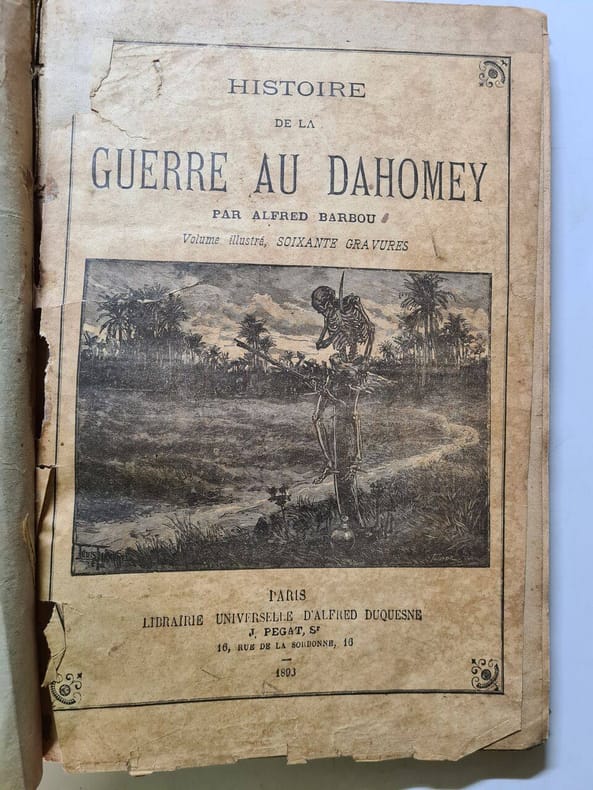
Alfred BarbouLivre Rare Book
Histoire de la guerre au Dahomey
500353809Librairie Universelle d'Alfred Duquesne J. Pegat S° Sans date.
Démons et Merveilles · Joinville, France55,00 €
2 582 résultats
Very Good Turkish Modern cloth bdg. with original covers. Cr. 8vo. (20 x 14 cm). In Turkish. [viii], 112 p., b/w ills. Alevilik. Dogusu, yayilisi ve hususiyetleri. First Edition. A very scarce book in the early Republican Turkey on Alevism.
Very Good Turkish, Ottoman (1500-1928) Modern cloth bdg. Cr. 8vo. (19 x 13i5 cm). In Ottoman script. 45 p. Tear in last page. Partly uncut and untrimmed. Hilye-i Hakanî. AH: 1307 = AD: 1890. The term hilya denotes both a visual form in Ottoman art and a religious genre of Ottoman Turkish literature, each dealing with the physical description of Muhammad. Hilya literally means "ornament". They originate with the discipline of shama'il, the study of Muhammad's appearance and character, based on hadith accounts, most notably Tirmidhi's al-Shama'il al-Muhamadiyyah wa al-Khasa'il al-Mustafawiyyah ("The Sublime Characteristics of Muhammad"). In Ottoman-era folk Islam, there was a belief that reading and possessing Muhammad's description protects the person from trouble in this world and the next, it became customary to carry such descriptions, rendered in fine calligraphy and illuminated, as amulets. In 17th-century Ottoman Turkey, hilyes developed into an art form with a standard layout, often framed and used as a wall decoration. Later hilyes were also written for the first four Caliphs, the companions of Muhammad, Muhammad's grandchildren (Hasan and Hussein) and Islamic saints (walis). Mehmed Hakani Beg's 'Hilye' is one of the first example of the 'hilye' literature in the Turkish / Ottoman world. Özege 7631.; Not in TBTK (It has earlier and later editions).
Fine Turkish Paperback. 25 x 18 cm, [4], [ii], 200 p. Divan siirinde insan I: Dinî kisilikler. TURKISH LITERATURE Traditional Ottoman literature Divan poetry Tasavvuf Sufism Biography.
Fine English In modern cloth bdg. Roy. 8vo. (24 x 17 cm). In Turkish and facsimile in Ottoman script. 460 p. Turkish text, and plus facsimile in Ottoman script. Marzubân-nâme tercümesi. Inceleme, metin, sözlük, tipkibasim). Prep. by Zeynep Korkmaz.
Fine Turkish Paperback. Roy. 8vo. (24 x 18 cm). In Turkish. [Lii], 606 p. Mevhûb-i mahbûb. Inceleme - metin - sözlük - indeks. Prep. by Ahmet Kartal. 500 copies were printed.
500353809Librairie Universelle d'Alfred Duquesne J. Pegat S° Sans date.
1979606774Pantin Les Textes Essentiels 1979 Fort in-8, rel. d'éditeur pleine toile crème illustrée, 603 pp., figures dans le texte, 8 planches en coul., bibliographie.
495414x22,5 cm, broché, 206 pages, état moyen, couverture souple déchirée, dos partiel ou scotché, rousseurs et taches sur la pagination, nombreuses traces de scotch au verso, corps d'ouvrage préservé, troisième édition, sceau cruciforme de type cartouche sur le deuxième plat, rare édition
Fine English Paperback. Pbo. Roy. 8vo. (24 x 17 cm). In Turkish. 520 p. Seyyid Abdülkâdir Belhi'nin Farsça-Türkçe dîvâni. Divan in Turkish and Persian of Seyyid Abdülkadir Muhtâr Belhi, (1873-1933). TURKISH LITERATURE Ottoman culture Divan poetry Traditional literature.
Very Good English Paperback. Pbo. Roy. 8vo. (24 x 17 cm). In Turkish. [4], [iii], [1], 400 p. Cevrî. Hayâti, edebî kisiligi, eserleri ve divaninin tenkidli metni. First and Only Edition. Rare. Signed and inscribed by Alkan. OTTMAN LITERATURE Divan poetry Traditional poetry Biography Critic edition.
Very Good Turkish, Ottoman (1500-1928) Paperback. Roy. 8vo (24 x 16 cm). In Ottoman script. 107 p. Divân-i Müstak Baba [Efendi]. [Facsimile]. Facsimile edition of Müstak Baba's divan poetry. Özege: 04198. Müstak Baba was a sufi poet descend from Abdülkadir Geylânî (An Islamic saint). Probably he was Kurdish.
As New As New English Original bdg. Dust wrapper. Mint. 4to. (34 x 24,5 cm). In English and Turkish. 319 p., color ills. Hadrat Mawlana Jalal al-din Rumi and Mawlawiyya culture.= Hz. Pîr Mevlânâ Celâleddîn-i Rûmî ve Mevlevîlik kültürü.
New English Paperback. Pbo. Roy. 8vo. (24 x 17 cm). In English. 526 p. Life, love and laughter: In search of the Ottoman's lost poetic language. A collective volume in memory of Arne A. Ambros. Part I: Ways and means of searching 1. Na? re, the will-o' -the-wisp of Ottoman Divan Poetry. 2. Ottoman modulations: ?azel-i musammas, murabba', sarqi. 3. Osmanli Gazelinin Uzunlugunda Görülen Gelismeler: 16. Yüzyilda Durum. 4. A Call for More Quantification: The Utility of a Simple Statistical Test. 5. With participants of a seminar of the author: Viyana'dan Muhibbî Divanina Ufak bir Ek ile Imali Övgü Sanatina Ilginç Bir Örnek. 6. Apollinaire'e "öncülük" eden 16. yy. sairi Meâlî: Agaç seklinde bir Osmanli figür-siiri veya tescîri. 7. Vulgärer Wortschatz und syntaktische Ambiguität in den satirischen Ge-dichten des osmanischen Dichters Kegf (m. 945/1538-9). Part II: Life 8. Beans for a cough, lion's gall for a laugh: The poet and physician A?med 's materia medica as a mirror of the state of the art around 1400 in Anatolia. 9. With participants of a seminar of the author : Ignorante Ärzte und die Bändigung der Gelüste: Veranschaulichende Gleichnisse in einem türkeitürkischen medizinischen Ms. aus dem Jahre 1460. 10. A Mosaic of Medical Information on the Child in Fifteenth Cen-tury Anatolia. 11. Variatio Delectat: An Ottoman Collection of Medicinal and Dyeing Recipes. 12. One does not speak ill of the dead - or does one? Ottoman chronograms on death. 13. Of Cranes and Ducks: Kagizmanli Hifzi in the Wake of Karacaoglan. 14. "O Mohammed, sie sagen wir sind mangel-haft!" - Osmanische Dichterinnen nicht auf den Mund ge-fallen? 15. With co-author Jan Schmidt: A Cossack Adopted by the Forty Saints: An Original Ottoman Story in the Leiden Uni-versity Library. 16. With co-author Jan Schmidt: A Rhymed Pe-tition of 1587 by a Deli: A Unique Document Kept in the Gron-ingen University Library (Hs. 486). Part III: Love, be it relig-ious or worldly 17. With the collaboration of Stefan Lombard: Die religiöse Dichtung des osmanischen Gouverneurs Ferhad Pa a (m. 1798). 18. Candid Penstrokes: The lyrics of Me'al , an Ottoman poet of the 16th century. 19. Turkish Delights. 20. The "Language of Flowers" and Ottoman Don Juans (zenperes). Part IV: Laughter 21. The Lese'if of Faq r , Ottoman poet of the 16th century. 22. An Ottoman Las fe of the 16th Century. 23. Six lampoons out of Faq r 's Risale-i tasrifat. 24. The Image in the 16th Century of Representatives of Science and Technology: Cameos by the Ottoman Poet . 25. With participants of a seminar of the author: Von Dichtern, Elefanten und Oliven. 26. "O Asinine, Vile Cur of a Fool Called "®t !": An Attempt to Show that Unabashed Language is Part and Parcel of an Otto-man "Idiom of Satire". 27. On a Conventional Dimension of 16th Century Scurrilous Ottoman Satire: Kegfi's (d. 945/1538-9) hicviyyet. TURKISH LITERATURE Traditional Ottoman poetry Divan poetry Arûz wezni - Aruz prosody Literary history Poet 14th - 15th - 16th - 17th - 18th - 19th Century.
New Persian Original bdg. HC. Roy. 8vo. (24 x 17 cm). In Persian. 216 p. Mirsâd ul-'ebâd. Razi was a 13th-century Persian Sufi from Khwarezmia. Hamid Algar, translator of the Persian Mer?ad to English, states the application of "wetnurse" to the author of the Mer?ad derives from the idea of the initiate on the Path being a newborn infant who needs suckling to survive. Daya followed the Sufi order, Kubrawiyya, established by one of his greatest influences, Najm al-Din Kubra. Daya traveled to Karazm and soon became a morid (pupil, one who follows the shaykh master and learns from him, undergoing spiritual training of Najm al-Din Kubra. Kubra then appointed Shaikh Majd al-Din Bagdadi as the spiritual trainer who also became Daya's biggest influence. Daya constantly refers to al-Din Bagdadi as "our shaikh." When his master, Najm al-Din Kubra, was murdered in 618/1221, Daya fled to Hamadan, then to Ardabil, and then to Anatolia where he finally settled with a fellow contemporary master Rumi. There he put the teachings of his master Najmeddin Kubra into a writing in Persian called by the Arabic title Mir?ad al-'ibad min al-mabda' ila'l-ma'ad which is shortly known as Mer?ad al-?ebad, and has gained prominence as a major reference text on Sufism and Islamic theology. Daya was born in Rey, then one of the major centers of urban life and culture in pre-Mongol Iran, in 1117. At the age of 26, Razi travelled through Syria, Egypt, ?ejaz, Iraq, and Azerbaijan. He finally settled in Karazm and soon become a morid to Najm al-Din Kubra, a mystical Sufi and founder of the Kubrawiyya Order. Razi was then tutored by Shaikh Majd al-Din Ba?dadi, who Razi often refers to as "our shaikh." Razi then flees Karazm due to Kubra's prophecy of a Mongol invasion. Finally, Razi fled Rey as well, willingly abandoning his family to the Mongol invasion. Traveling via Hamadan, Erbil, and Diyarbekir, he reached Kayseri in central Anatolia in Ramadan 618/October 1221. Thanks to Seljuq patronage, Anatolia was a center for the cultivation of Persian literature. At Malatya, Razi met Shaikh Sehab al-Din Abu Hafs 'Omar al-Sohravardi, nephew of the founder of the Sohravardi order. In October 1221 he reached Kayseri. He completed the Merad at Sivas in August 1223. The term Mer?ad refers to the path from Qur'anic verse 89:14; "Verily thy Lord watches over the path". The divine vigilance implied here is generally taken as referring to God's omniscience of men's deeds, but it is plain that Daya takes it in a slightly different sense, that of a protective and guarding vigilance. The second part of the title, men al-mabda' ela' l-ma'ad ("from origin to return") is to be found in the titles of many works that purport to treat in comprehensive fashion both cosmogony and eschatology and all that lies between. The comprehensiveness promised in this title of the work is amply fulfilled in its text. It deals, in a systematic manner, with the origins of the various realms and orders of creation, prophethood and the different dimensions of religion, the ritual practices, mores, and institutions of Sufism, the destinations that await different classes of men in the hereafter, and the fashion in which different professions and trades may come to yield spiritual benefit and heavenly reward. A particular virtue of the book is its clear demonstration of the Qur'anic origins of Sufism. The numerous quotations from the Qur'an are not to be regarded as mere ornament, nor even as scriptural proofs adduced in support of various statements. Rather, they bear witness to the fact that for Daya, as for other Sufis, the Qur'an constitutes a well-structured, seamless, and coherent universe. The Qur'anic verses encountered throughout the book are the loom on which it is woven, a particular sense for each verse being implied by the context in which it occurs. Another prominent feature of the book is the frequency with which it draws parallels between the inner and the outer worlds, particularly with references t
New English Original bdg. HC. Roy. 8vo. (24 x 17 cm). In Turkish and facsimile in Arabic. 634 p. A very heavy volume. Hikmetü'l-isrâk. Translated by Eyüp Bekiryazici, Üsmetullah Sami. Facsimile and Turkish translation of manuscript Topkapi Palace Museum Library, III. Ahmed Collection, No. 3267. ISLAM Tasavvuf Sufism Anatolian Islam Isrâkiyye - Ishrakiyya school Islamic philosophy Criticism Critics Logic Aristoteles Messâi Mead Epistemology Cosmology Psychology Ontology Fi'l-Envâri'l-ilâhiyye ve nûrü'l-envâr ve mebâdi'ü'l-vücûd ve tertîbühâ Heterodoxy.
New Turkish Original bdg. HC. Roy. 8vo. (24 x 17 cm). In Turkish and facsimile in Ottoman manuscript. 1341, [1] p. Tazarru'nâma. Tazarru'nâme: Yakarislar kitabi. Inceleme, metin, tipkibasim. Prep. by Mertol Tulum.
Gr. In-8, 533p. Nouvelle édition revue et augmentée d'une introduction. Bel exemplaire.
192313779Paris Armand Colin 1923 Grand in-4° 75 pp, préface de André Michel, nombreuses illustrations, un pastel hors-texte en couleur, une vignette contrecollée sur la 1ère de couverture. Couvertures rempliée, exemplaire non coupé.
85385Paris, Imprimerie Nationale, s.d. (1794) in-8, 16 pp.
237043Paris, Imprimerie Nationale, s.d. (1794) in-8, 16 pp. broché, couv. papier bleu postérieur.
1881155441881. Paris Bruxelles et Genève Éditions Victor Palmé J. Albanel et Henri Trembley 1881 - Broché 12 cm x 18 5 cm pages - Texte de l'Abbé Tholon - Restauré au ruban adhésif état moyen
IXY-398Traduit de l’américain par Caroline Ragon-Ganovelli. Coll. «Le fil rouge», Presses universitaires de France (PUF), 1re édition, 1994, 307 p. + un cahier central hors texte de 16 p. ill. n&b, bibliographie, index. Broché, couverture à rabats, 13,2 x 21,8 cm.
1990lr1585Editions rosicruciennes Broché 1990 In-8 (14.5 x 21.5 cm), broché, 664 pages ; pliures au dos et dans le coin supérieur du premier plat, dos et bords des plats insolés, frottements et pelliculage décollé par endroits aux plats, par ailleurs intérieur frais, état moyen. Livraison a domicile (La Poste) ou en Mondial Relay sur simple demande.
1983190961983 Paris, Bibliothèque Beauchesne, religions - société - politique, 1983. Études présentées à la société d'ethnologie française, réunies par Jean-Claude Schmitt. In-8 broché de 297 pp., avec quelques illustrations. Très bon état.
In-16 gr., brossura editoriale, pp. 251,(5). Prefazione Annie Besant. Contiene “formes et représentation - chiffres et cryptographies”. Alc. lievi fioritue, altrimenti ben conservato.