Barringer, Judith M.MareMagnum
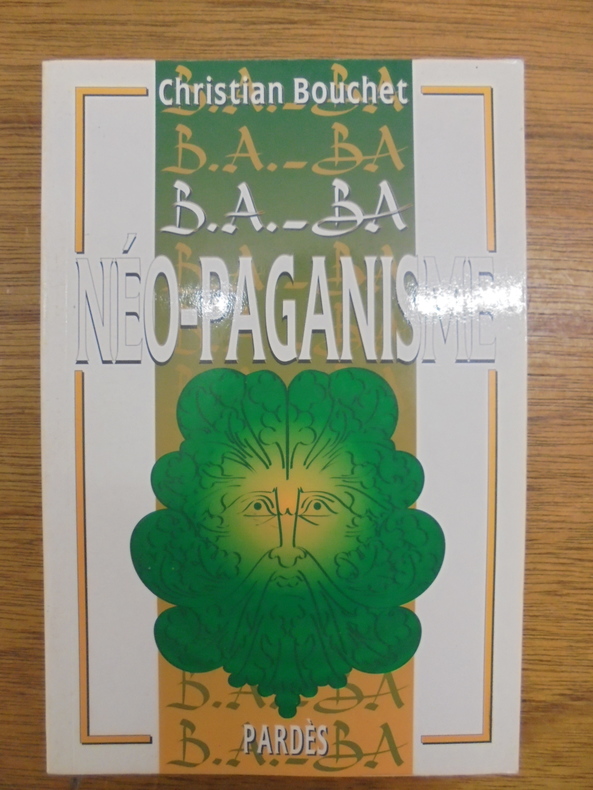
Christian BouchetLivre Rare Book
B.A.-BA du néo-paganisme
2003REL1102MPardès, 2003.Broché, 127pp. In-12°
Librairie du Levant · Bayonne, France8,00 €
773 résultats
Minor indents to upper edges of wraps. Else minor shelfwear. ; What do Greek myths mean and how was meaning created for the ancient viewer? In Art, Myth and Ritual in Classical Greece, Judith Barringer considers the use of myth on monuments at several key sites – Olympia, Athens, Delphi, Bassai, and Trysa – showing that myth was neither randomly selected nor purely decorative. The mythic scenes on these monuments had meaning, the interpretation of which depends on context. Barringer explains how the same myth can possess different meanings and how, in a monumental context, the mythological image relates to the site and often to other monuments surrounding it, which redouble, resonate, or create variation on a theme. The architectural sculpture examined here is discussed in a series of five case studies, which are chronologically arranged and offer a range of physical settings, historical and social circumstances, and interpretive problems. Providing new interpretations of familiar monuments, this volume also offers a comprehensive way of seeing and understanding Greek art and culture as an integrated whole. ; 8vo 8" - 9" tall; 284 pages
Very minor shelfwear. Creasing to spine. Light shelfwear and tanning to wraps. ; French translation; Bibliothèque Des Textes Philosophiques; 299 pages
Both volumes are fine. Slipcase is in NF condition with light wear and rubbing. ; Asclepius: 306 pp; Corpus Hermeticum: 206 pp. Includes slipcase. ; 2 Volume Set COMPLETE in Slipcase. Pimander: Texts and Studies Published by the Bibliotheca Philosophica Hermetica, 2 + 6
Scholars' bookplate and former owner's name to inner cover. Top of spine and corners slightly bumped. Minor edgewear to extremities. Light soiling to back board. ; Contents: Part I. The Rise and Triumph of Astrology in the Latin world: I. Rise of Astrology in the hellenistic world; II. Conversion of republican Rome to astrology (250-44 BC) ; III. Astrologers - the power behind the throne, from Augustus to Domitian; IV. Astrology in Rome from Nerva to the death of Severus Alexander (96-235) ; Part II. Astrology in Roman Law until the End of the Principate: V. Expulsion of astrologers from Rome and Italy; VI. Empire wide legal restrictions of astrology and other divination during the principate. ; 291 pages
Scholar's initial to inner cover (Jenifer Neils). Else minor shelfwear. ; 9.5 X 6.3 X 1.4 inches; 476 pages
Pages slightly tanned. Else book is fine. DJ has minor shelfwear. ; 229pp. This book analyzes the relationships between Athenian myths and the institutions that informed them. In particular, it examines how myths encode thoughts on ritual, the code of the warrior, marriage, and politics. Combining traditional historical and literary criticism with the approaches of anthropologists, feminist critics, and cultural historians, the authors study specific examples of the epic and tragedy, as well as funeral orations and the Parthenon marbles, to illuminate the ways mythic media exploited the beliefs, concepts, and practices of fifth-century Athens, simultaneously exemplifying and shaping that culture. ; 229 pages
Pencil notes and underlining to some pages (by Jenifer Neils). 2 cm tear to top edge of DJ. ; 229pp. This book analyzes the relationships between Athenian myths and the institutions that informed them. In particular, it examines how myths encode thoughts on ritual, the code of the warrior, marriage, and politics. Combining traditional historical and literary criticism with the approaches of anthropologists, feminist critics, and cultural historians, the authors study specific examples of the epic and tragedy, as well as funeral orations and the Parthenon marbles, to illuminate the ways mythic media exploited the beliefs, concepts, and practices of fifth-century Athens, simultaneously exemplifying and shaping that culture. ; 229 pages
Former owner's name deleted to ffep in pen. Else book is fine. Browning to DJ spine. Light sticker residue to front panel. ; 160 pages; Most modern studies of Athenian religion have focused on festivals, cult practices, and individual deities. Jon Mikalson turns instead to the religious beliefs citizens of Athens spoke of and acted upon in everyday life. He uses evidence only from reliable, mostly contemporary sources such as the orators Lysias and Demosthenes, the historian Xenophon, and state decrees, sacred laws, religious dedications, and epitaphs. "This is in no sense a general history of Athenian religion," Mikalson writes, "even within the narrow historical boundaries set. It is rather an investigation of what might be termed the consensus of popular religious belief, a consensus consisting of those beliefs which an Athenian citizen thought he could express publicly and for which he expected fo find general acceptance among his peers." What emerges in Mikalson's study is a remarkable homogeneity of religious beliefs at the popular level. The topics discussed at length in Athenian Popular Religion include the areas of divine intervention in human life, the gods and human justice, gods and oaths, divination, death and the afterlife, the nature of the gods, social aspects of popular religion, and piety and impiety. Mikalson challenges the common opinion that popular religious belief in Athens deteriorated significantly from the mid-fifth to the mid-fourth century B. C. "The error in understanding the development of Athenian religion has arisen, it seems to me, because scholars have failed to distinguish properly between the differing natures of the sources for our knowledge of religious beliefs in the earlier and later periods," Mikalson writes. The difference between those sources "is more than simply one of years. It is a difference between poetry and prose, with all the factors which that difference implies."
Shelfwear and rubbing to boards. Soiling to boards. Former owner's name on ffep. Minor discoloration on back board along middle of spine. ; 1 x 9.75 x 6.75 Inches; 400 pages; Inadequately documented, ancient Greek religion can all too easily be reduced to the dry analysis of archaeological remains and so-called `ritual objects'. This authoritative new work attempts to bridge the gap that usually divides Greek religion from Greek history, setting it firmly in the thick of contemporary events and politics. How did people actually worship the gods? Was Socrates's trial a crisis for religion or the state, or both? These are among the key issues addressed in what promises to be the definitive work on the subject for many years to come.
Minor pencilling to a few pages. Scholar's initial o inner cover (Jenifer Neils). DJ is creased and does not sit square. DJ has a couple of small open tears. ; 1 x 9.75 x 6.75 Inches; 400 pages; Inadequately documented, ancient Greek religion can all too easily be reduced to the dry analysis of archaeological remains and so-called `ritual objects'. This authoritative new work attempts to bridge the gap that usually divides Greek religion from Greek history, setting it firmly in the thick of contemporary events and politics. How did people actually worship the gods? Was Socrates's trial a crisis for religion or the state, or both? These are among the key issues addressed in what promises to be the definitive work on the subject for many years to come.
Minor shelfwear. Scholars' bookplate to inner cover (Slater & Dunbabin). Very faint bumping to a couple of corners. Ffep is creased. DJ has minor shelfwear. ; 1 x 9.75 x 6.75 Inches; 400 pages; Inadequately documented, ancient Greek religion can all too easily be reduced to the dry analysis of archaeological remains and so-called `ritual objects'. This authoritative new work attempts to bridge the gap that usually divides Greek religion from Greek history, setting it firmly in the thick of contemporary events and politics. How did people actually worship the gods? Was Socrates's trial a crisis for religion or the state, or both? These are among the key issues addressed in what promises to be the definitive work on the subject for many years to come.
Digitally reprinted. Very light shelfwear else fine. ; Cambridge Classical Studies; 8.5 X 5.6 X 1.2 inches; 340 pages
Creasing to upper corner of front wrap. Laminate lifting along lower edge. Crease to spine. Minor shelfwear. ; L’histoire de Délos à l’époque classique est indissociable de celle d’Athènes : depuis la fondation de la Ligue de Délos en 478, les Athéniens sont les administrateurs du sanctuaire d’Apollon délien et, si la cité de Délos se maintient au cours des Ve et IVe siècles, ce n’est que dans l’orbite d’Athènes qu’elle peut exister. L’histoire de Délos classique se laisse essentiellement appréhender par les inscriptions et plus particulièrement les actes administratifs athéniens du sanctuaire d’Apollon délien. Convergeant avec les sources littéraires et archéologiques, ces textes épigraphiques permettent de définir précisément le statut de l’île de Délos, mais également de mettre en évidence la progressive élaboration, par l’autorité athénienne, d’un système administratif, financier et économique qui, parallèlement à la construction idéologique et religieuse élaborée par Athènes dans le cadre de sa politique impérialiste, rend compte des innovations introduites en Égée au cours de la période classique. ; Bibliothèque Des Écoles Française D'Athènes Et De Rome. BEFAR 331; 588 pages
Former owner's bookplate & name on ffep. Minor bumping to boards else NF. ; Text in German. Includes 40 black & white plates of pottery and sculpture showing details of festivals. Includes Fold-out 'Festkalendar'. ; 269 pages
Former owner has written additional titles in English related to subject on bibliographical page. Minor pencil marginalia on a few pages. Edgewear to top of spine. ; Text in German. Includes 40 black & white plates of pottery and sculpture showing details of festivals. Includes Fold-out 'Festkalendar'. ; 269 pages
Scholars' bookplate to inner cover (Slater & Dunbabin). Tiny tear to cloth at head of spine. ; Text in German. Includes 40 black & white plates of pottery and sculpture showing details of festivals. Includes Fold-out 'Festkalendar'. ; 269 pages
Dust-soiling to top of textblock. Minor shelfwear. ; Reprint of the 1939 ed. Published by C. W. K. Gleerup, Lund, which was issued as v. 29 of Skrifter utgivna av Kungl. Humanistiska vetenskapssamfundet I Lund. ; Ancient Religion and Mythology; 300 pages
Pages unopened. Very light shelfwear else fine. ; En français and Latin; Collection Latomus Volume XCVI; 177 pages
2003REL1102MPardès, 2003.Broché, 127pp. In-12°
Dustjacket has minor shelfwear and rubbing. Book has minor shelfwear. ; Barbarians and Bishops is concerned with two fundamental themes of Late Antiquity: the barbarization of the Roman army, and the interrelation of Church and secular government. The conspicuous role played by barbarian, particularly German, soldiers in the Late Roman state has always been recognized. It still has not been satisfactorily explained. This is not surprising since the development which compelled the Empire to call on foreigners for its defence is a complex one, related to changes in basic structures and attitudes of Roman society. One of these was the triumph of Christianity which required the abandonment of a civic religion closely integrated with secular government. ; 336 pages; Gift inscription from author: "To Andrew, With best wishes --Wolf" ; Signed by Author
New Persian Original bdg. HC. Roy. 8vo. (24 x 17 cm). Text in Persian with a bilingual title in English and Persian on cover. [14], 220, 410, [5] p. Bibliography of 'Omar Khayyâm.= Kitâbshinâsî-i 'Umar Khayyâm.
1982100141560Morstadt Strasbourg ; Kehl ; Basel 1982 88 pages in4. 1982. Cartonné jaquette. 88 pages.
New Turkish Paperback. Demy 8vo. (21 x 14 cm). In Turkish. 240, [1] p. Bogazköy ve Ugarit çivi yazili belgelerine göre Hitit devletinin siyasi antlasma metinleri.
General shelfwear. ; Thesis in Dutch. ; 293 pages
Slight colour fading to part of rear panel. ; Brill's Companions To Classical Studies; 9.7 X 6.5 X 1.2 inches; 454 pages