773 résultats
55705N° 10 - Mai 1958 - En dépôt à la Société d'Edition "Les Belles Lettres" - in-8 broché - 252 pages
New English Paperback. Pbo. Cr. 8vo. (20 x 14 cm). In Turkish. 192 p. Divinity mentality of Arabs of Ignorance age. Cahiliye Araplarinin ulûhiyet anlayisi.
Ex-library copy with usual stamps, call numbers and pocket. Spine and part of wraps are taped. Highlighting to about 10 pages. Fair to good condition. ; 246 pages; Traces the development of the theme of "Descent into the Underworld," or what the Greeks called "Catabasis," from the Near East through its long career in Greek and Roman literature and cult as a background of Vergil's cumulative and innovative version of the "Descent of Aeneas" in the Sixth Book of the Aeneid and to pinpoint more fully than hitherto Vergil's originality in his use of the theme.
20069038TRAJECTOIRE 2006 468 pages 15 8x3x23cm. 2006. Broché. 468 pages. Cet ouvrage de Jean-Louis Gasc décrit la vie quotidienne de l'Église cathare et retrace les événements tragiques de la croisade albigeoise depuis le massacre de Béziers en 1209 jusqu'au siège de Montségur en 1243. Il aborde également la période de l'Inquisition qui a éradiqué les croyances cathares par une extrême violence en Occitanie en s'appuyant sur des témoignages puisés aux sources les plus complètes
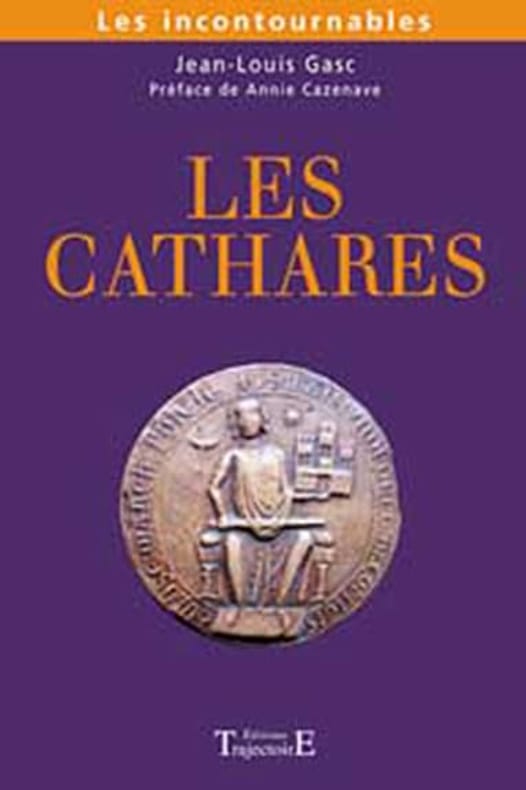
2010GITc397Paris Dualpha 2010. In-8 broché couverture illustrée 467pp. Bel exemplaire.
Scratches to back panel of DJ else fine. ; 192 pages; In the earliest extant works of Greek literature, Zeus reigns supreme in the Olympian hierarchy. However, scattered and scanty though they may be, there are allusions to threats of rebellion which challenge Zeus' supremacy. This book examines these passages, drawn from Homer, Hesiod and the Homeric Hymns, to offer some new interpretations. While focusing on the theme of cosmic/divine strife, it becomes clear that hints of lost legends underlie these texts. Tracing their hidden logic helps to improve our understanding of early Greek poetry.
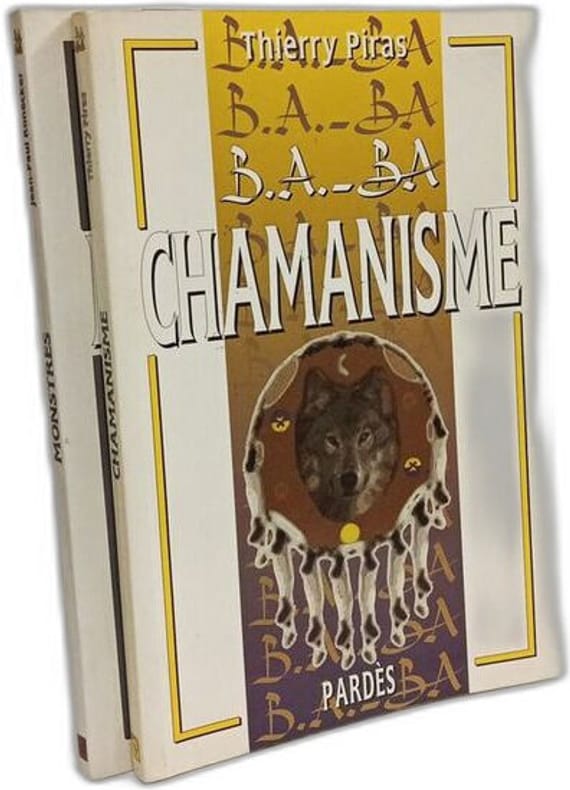
2000100140860Pardes 2000 13 8x1x21 8cm. 2000. Broché. 2 volume(s).
Light discoloration to spine. Very light chipping to wraps at extremities. Minor shelfwear. ; 58 plates. ; Études De Philologie, D'Archéologie Et D'Histoire Ancieenes. Institut Historique Belge De Rome. ; 305 pages
in-8 broché, 374 pp. Bibliographie, index. Très bel exemplaire. [MI-17]
Labor et Fides, Essais bibliques, 2004, 176 pp., broché, bon état.
Light shelfwear to DJ. Scholars' bookplate to inner cover (Slater & Dunbabin). Else book is fine. ; 0.89 x 9.54 x 6.39 Inches; 288 pages; In this book, MacMullen investigates the transition from paganism to Christianity between the fourth and eighth centuries. He reassesses the triumph of Christianity, contending that it was neither tidy nor quick, and he shows that the two religious systems were both vital during an interactive period that lasted far longer than historians have previously believed.
Very light shelfwear. ; Sammlung Vandenhoeck; 295 pages
Some sun fading along the spine and outer edges of wraps. ; Defines Cicero's attitude toward the Roman state Religion. ; 0.5 x 9 x 6.1 Inches; 141 pages
9.1 X 6.1 X 1.1 inches; 413 pages
Bottom edge stamped "Review Copy Not for Resale," else Fine. ; This book makes a strong case for the importance of religious practices in Classical Athens, showing how thoroughly ritual was integrated into the city's democratic institutions and civic life. To this end Nancy Evans takes an in depth look at the cults of Athena, Demeter and Dionysus and the festivals and games associated with them. Writing for the general reader as well as the scholar, she reconstructs the rhythms of Athenian life and the omnipresence of ritual, sacrifice and incantation in both public and private spheres. Building on this picture of the broad institutional importance of religion, she goes on to provide detail of the religious backdrop to many of the key events of the Athenian Classical age, including Alcibiades' profaning of the Eleusinian Mysteries, and most notoriously, the trial of Socrates. ; 272 pages
This book provides an exploration of the Oracle of Apollo at Delphi, where the god Apollo was believed to speak to inquirers through his priestesses. In particular, it examines Athens' use of the oracle c. 500-300 BC. Demonstrating the importance of communication with the gods, and doing their will, in classical Athenian society, Hugh Bowden concludes that ancient Athens was not a secular Westernized democracy as we understand the term today. ; 8.4 X 5.4 X 0.6 inches; 206 pages
Very minor shelfwear. ; Contents: Quintus of Smyrna and Siege of Troy; Weaver's Life in Oxyrhynchus; Some Ancient Analogues of Consideration; Sources of Aristotle's Poetics; History of the Name of the Temple of Castor in the Forum; Sophocles' Place in Greek Tragedy; "No Trespass" in Latin Linguistics; Leonardo Bruni's Translation of Act I of Plutus of Aristophanes; From Monte Gianicolo; Ancient wit and humor; Cliens in the time of Martial; Papyrus 1804 in the Michigan collection; Aniconic worship Among the Early Romans; Epigraphica; age of Roman Sacrificial Victims. ; 1 x 9.25 x 6.25 Inches
Scholar's name to ffep (Jenifer Neils). Very light pencilling to a couple of pages. Minor creasing along upper edge of DJ. ; The supreme god of the ancient Athenian pantheon, Zeus was often the subject of Athenian art, especially in vase painting and sculpture, as well as a dominant figure in Greek myths and legends. This book presents a detailed study of the depiction of Zeus in one particular classical Athenian art for--the red-figured vase. Offering a close comparison of the artistic and literary versions of the myths surrounding Zeus, including the Gigantomachy, births of the other gods, libations and offerings to the gods, and the Judgement of Paris, Arafat here examines the narrative technique of allusion against the artistic portrayals of Zeus in a contemporary religious and political context. Juxtaposing vase painting with other art forms, Arafat distinguishes the function of the different social contexts in which Zeus appears, exploring the role that the study of vase painting plays in the reconstruction of lost sculpture. ; Oxford Monographs On Classical Archaeology; 9.3 X 6.3 X 1.0 inches; 286 pages
in-8, 280 pp., broche, couv. Bel exemplaire. [NV-12]
Original Publishers Cloth. 8vo. Xxvii, 285 p. Ages. [1] leaf of plates. Illus. 24 cm. Series: International studies of the Committee on International Relations, University of Notre Dame. Contents: Introduction. ; Philip E. Mosely's contribution to the comparative study of family /; Margaret Mead. ; Philip E. Mosely and his work, analyses of Mosley. ; Philip E. Mosely /; Leonard B. Schapiro --; Mosely on the zadruga /; Stavro Skendi. ; Philip E. Mosely and his work, Mosely on the family, especially the zadruga. ; The peasant family : the zadruga, or, communal joint-family in the Balkans and its recent evolution ; ; Adaptation for survival : the Varzic zadruga ; ; The distribution of the zadruga within southeastern Europe ; ; The Russian family, old style and new /; Philip E. Mosely. ; Philip E. Mosely and his work, the published work of Philip E. Mosely. ; Bibliography of books and articles. ; Historical and sociological studies of the zadruga. ; Some medieval evidence on the Servian zadruga : a preliminary analysis of the chrysobulls of Decani /; Eugene A. Hammel --; The zadruga and the contemporary family in Yugoslavia /; Olivera Buric --; The Romanian communal village : an alternative to the zadruga /; Daniel Chirot. ; The zadruga, past and present : some illustrations. ; A zadruga in Bileca Rudine /; Wayne Vucinich --; The Tomasevic extended family on the peninsula of Peljesac /; Jozo Tomasvich --; The democratice spirit of the Poljica commune /; Ante Kadic --; Time and form : contemporary Macedonian households and the zadruga controversy /; David B. Rheubottom --; The cultural ecology of Albanian extended family households in Yugoslav Macedonia /; C. J. Grossmith --; The last big zadrugas : Albanian extended families in the Kosovo Region /; Vera St. Erlich --; The zadruga community : a phase in the volution of property and family in an Agrarian Milieu /; Emile Sicard. Nice, clean copy in very good condition. (SEF39-13)
17681213651768 A Paris, Chez la Veuve Savoye, libraire - M. DCC. LXVIII. (1768) - In-12 (environ 17 x 10,5 cm), plein veau brun de l'époque; dos à 5 nerfs avec pièce de titre, caissons et fleurons dorés; toutes tranches rouges - 516 pp.
Dustjacket has minor shelfwear and rubbing. Light Bumping to bottom of spine. ; Ancient Society and History; 1.68 x 8.76 x 8.78 Inches; 632 pages; Historians who viewed imperial Rome in terms of a conflict between pagans and Christians have often regarded the emperor Constantine's conversion as the triumph of Christianity over paganism. But in Constantine and the Bishops, historian H. A. Drake offers a fresh and more nuanced understanding of Constantine's rule and, especially, of his relations with Christians. Constantine, Drake suggests, was looking not only for a god in whom to believe but also a policy he could adopt. Uncovering the political motivations behind Constantine's policies, Drake shows how those policies were constructed to ensure the stability of the empire and fulfill Constantine's imperial duty in securing the favor of heaven. Despite the emperor's conversion to Christianity, Drake concludes, Rome remained a world filled with gods and with men seeking to depose rivals from power. A book for students and scholars of ancient history and religion, Constantine and the Bishops shows how Christian belief motivated and gave shape to imperial rule.
Scholar's bookplate to inner cover (G. P. Goold). Foxing/dustsoiling to top of textblock. DJ spine sunned. Minor chipping to DJ. DJ is price-clipped. ; 384 pages; This book, published in 1979 , surveys religious attitudes reflected in Latin literature from the late Republic to the time of Constantine. Liebeschuetz focuses on the development of the Roman public religion, particularly the relation between Roman religion and morality.
Small library stamp to bibliography page. No other ex-lib markings. Creasing to corners of wraps and some edgewear. Else VG. ; F. Marcattili: Un tempio di Esculapio a Pompei: 1. La scoperta e gli studi; 2. L' edificio di culto; 3. Il culto; 4. La Casa dello Scultore e la domus viii 7, 26 27; Appendice; Bibliografia; L. Romizzi: La casa dei Dioscuri di Pompei (vi 9, 6.7) : una nuova lettura: Premessa; Introduzione; 1. Inquadramento topografico e analisi planimetrica; 2. L' allestimento decorativo; 3. I materiali; 4. Catalogo: I quadri parietali a soggetto mitologico e teatrale; 5. Il programma figurativo della domus: un percorso per immagini; 6. Per l' identificazione della committenza: una nuova ipotesi; 7. Il rapporto con il Macellum ed il ruolo di Alleia Maia; Tabella comparativa delle decorazioni parietali e pavimentali della Casa dei Dioscuri; Abbreviazioni bibliografiche; M. -O. Laforge-Charles: Le complexe des rites magiques et le culte de Sabazios à Pompéi; La Maison ii, i, 12 ou complesso dei riti magici; Les mains panthees; Le culte de Sabazios; Les vases magiques; Comment interpréter le complexe des rites magiques ?; Le complexe des rites magiques: un lieu de culte Sabaziaque ?; Le complexe des rites magiques: un lieu de culte privé; Bibliographie; W. Van Andringa: Sacrifices et marché de la viande à Pompéi; Bibliographie. ; Studi Della Soprintendenza Archeologica Di Pompei 18; 202 pages
Sandpiper Reprint of 1948 edition. Contents: The Antecedents of the Conversion of Constantine; The Vision of Constantine; The Moving Forces in the Religious Policy of Constantine and its Initial Difficulties; The First Period of Constantine' s Independent Religious Policy from the Battle of the Mulvian Bridge to the Second Period of Tension with Licinius: The Attitude of Constantine to Christianity. The Attitude of Constantine to the Pagans; The Religious Policy of Constantine from the Beginning of the Period of Tension with Licinius to the Dedication of Constantinople; Constantine's Last Contacts and Frictions with Rome Before the Dedication of the New Capital; The Triumph of Intolerance in the Religious Policy of Constantine; The Old Rome and the New. ; 140 pages