625 résultats
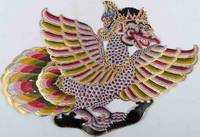
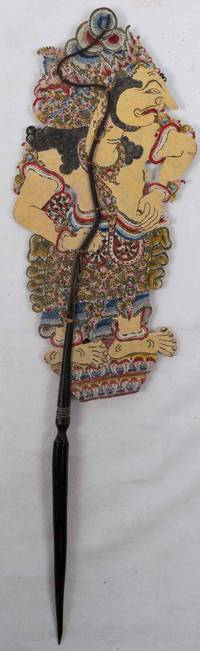
1970216719Indonesia. Before1970s. Water buffalo hide gilt and pigment chiselled and cut out 34 x 54 cms fully extended painted both sides two jointed arms affixed to horn batons another spliced horn baton holding the body some minor loss of pigment. This puppet represents the goddess Dewi Naganini in the Javanese 'wayang kulit' or leather shadow puppet theatre tradition. She is the daughter of the serpent god Antaboga and is known for her virtues of loyalty love and devotion to her fellow creatures. <br> <br>Purchased in Java in the early 1970s. <br> <br>See: Joko Susilo Eisler Shadow-Puppet Collection Catalogue Bates College Lewiston Maine . hardcover
1970216677Indonesia. Before1970s. Water buffalo hide and pigment elaborately gilt 38 x 56 cms painted both sides minor surface wear and loss of pigment without the baton in very good condition. Figure of Jatayu a demi-god who takes the form of a vulture or an eagle used in the Javanese and Balinese 'wayang kulit' or leather shadow puppet theatre tradition. According to the Ramayana epic Jatayu died while trying to thwart the kidnapping of Dewi Sinta by Rahwana the king of Alengka. A very attractive example. <br> <br>Purchased in Java in the early 1970s. . hardcover
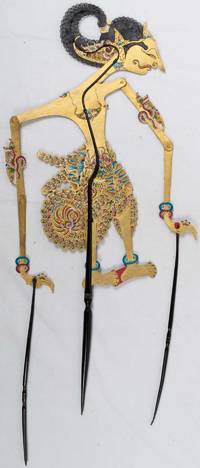
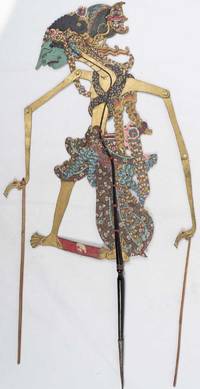
1970216715Indonesia. Before1970s. Water buffalo hide gilt and pigment elaborately chiselled and cut out 43 x 69 cms arms fully extended painted both sides jointed arms each affixed to horn batons and another spliced horn baton holding the body. This puppet represents Suryatmaja or Suryaputra son of Dewi Kunti in the Javanese 'wayang kulit' or leather shadow puppet theatre tradition. <br> <br>A particularly fine example. Purchased in Java in the early 1970s. <br> <br>Also see: Joko Susilo Eisler Shadow-Puppet Collection Catalogue Bates College Lewiston Maine . hardcover
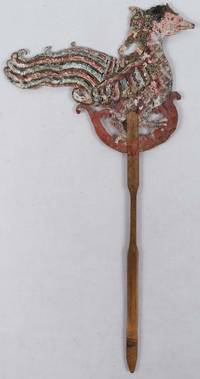
1970216726Indonesia. Before1970s. Water buffalo hide and pigment chiselled and cut out 17 x 22 figure only affixed to a bamboo baton worn with noticeable loss of pigment. This puppet represents the animal character of Kate Kancana or golden rooster a form assumed by Prince Arjuna in the Javanese Wayang Kulit tradition. <br> <br>Purchased in Indonesia in the early 1970s. <br> <br>See : Joko Susilo Eisler Shadow-Puppet Collection Catalogue Bates College Lewiston Maine . unknown
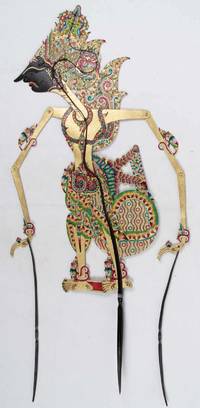
1970216707Indonesia. Before1970s. Water buffalo hide gilt and pigment elaborately chiselled and cut out 54 x 69 cms arms fully extended painted both sides jointed arms each affixed to horn batons and another spliced horn baton holding the body. This Javanese 'wayang kulit' or leather shadow puppet represents Kresna Krishna in the Hindu epic the Mahabharata. His importance and the reasons for his great regard is that he is considered the 8th avatar of the god Wisnu Visnu the protector and preserver of good and destroyer of evil. The 7th avatar is Rama. <br>In Soeharto’s New Order regime this “lineage” of avatars –particularly Rama--became significant in their own mythical presentation to themselves of the regime. It is in the Ramayana—not Mahabharata—that the final battle against evil forces was to be fought and the dharma upheld. <br> <br>"Kresna is part God an incarnation of the mighty Wisnu. He is the consummate politician diplomat and strategist of war. By far the most intellectually brilliant of the Pendawa sic faction it is Kresna who makes their final victory possible. On the other hand he is the conscienceless liar and an unscrupulous schemer who never hesitates to break the rules when he feels it necessary" Benedict R. O'G. Anderson "Mythology and the Tolerance of the Javanese" Cornell 1965. <br> <br>Also see: Joko Susilo Eisler Shadow-Puppet Collection Catalogue Bates College Lewiston Maine. <br> <br>A particularly fine example. Purchased in Java in the early 1970s. . hardcover
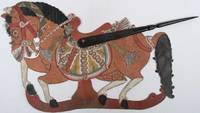
1970216155Indonesia. Before1970s. Water buffalo hide and pigment 48 x 78.5 cms with tail fully extended painted both sides affixed to an ebonized baton with cotton 51 cms head and tail articulated with string. A Javanese folk puppet depicting a saddled Kuda horse possibly representing the character of Jaran. In traditional all-night shadow puppet performances Jaran appears during the budhalan scene army leaving the kingdom. Purchased in Java in the early 1970s. . unknown
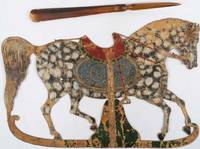
1970216167Indonesia. Before1970s. Water buffalo hide and pigment 37 x 54 cms the original spliced horn baton present but detached tail attached with thread surface wear and abrasion with significant loss to the pigment. A Javanese folk puppet depicting a saddled Kuda horse possibly representing the character of Jaran. In traditional all-night shadow puppet performances Jaran appears during the budhalan scene army leaving the kingdom. This example has older style colouring the horse with a dappled black and white coat. <br>Purchased in Java in the early 1970s. . unknown
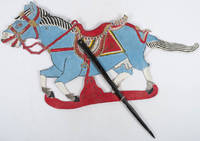
1970216156Indonesia. Before1970s. Water buffalo hide and pigment 36 x 59 cms painted both sides affixed to an ebonized baton with cotton 43 cms. A Javanese folk puppet depicting a saddled Kuda horse possibly representing the character of Jaran. In traditional all-night shadow puppet performances Jaran appears during the budhalan scene army leaving the kingdom. Purchased in Java in the early 1970s. . unknown
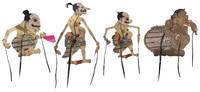
1970216219Indonesia. Before1970s. Water buffalo hide pigment gilt fabric and hair three of the four figures all with jointed arms painted both sides the arms and bodies affixed to spliced horn batons three for each puppet some abrasion and wear with some loss to the pigment but the set in very good condition: <br>Semar body: 35 x 35 cms; Gareng: 36 x 16 cms; Petruk: 53 x 20 cms; Bagong: 41 x 23 cms. A set of four comedic Punakawan figures. Chief of these is Semar one of the most well-loved figures in Wayang both a humble servant and powerful god. "Semar is usually accompanied by his three adopted sons Gareng Petruk and Bagong and together they are known as the Punakawan 'knowing friends or attendants'." Gregory Churchill et al "Semar ever so smartly" Winayangan 2009. <br> <br>In this set Gareng is the eldest son who limps and has a crippled arm; Petruk is the middle child depicted as tall and lanky who has a distinctive long nose; Bagong is the youngest of the three: a chubby figure with big round eyes thick lips and naïve behaviour. <br> <br>".the scene where Semar traditionally emerges is called the goro-goro “world in chaos”. The narration of the puppeteer speaks of earthquakes and storms that beset the cosmos but then announces Semar who appears like a shaft of light piercing the dark. Semar’s cosmic and comic humour promises the audience both laughs and wisdom. He is a clown who connects the cosmic and everyday. All opposites and contradictions dissolve in his wisdom and mythos." World Encyclopedia of Puppetry Arts <br> <br>Purchased in Java in the early 1970s. <br> <br>See: Joko Susilo Eisler Shadow-Puppet Collection Catalogue Bates College Lewiston Maine . unknown
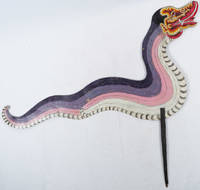
1970216676Indonesia. Before1970s. Water buffalo hide and pigment 37 x 76 cms painted both sides some surface wear and loss of pigment mounted on the original spliced bamboo baton in very good condition. Figure of a Naga or sea serpent used in the Javanese and Balinese 'wayang kulit' or leather shadow puppet theatre tradition. This puppet appears in many different stories in the Mahabharata epic and in the Javanese tradition can also represent the god and king of all snakes Bathara Naga. <br> <br>Purchased in Java in the early 1970s. . hardcover
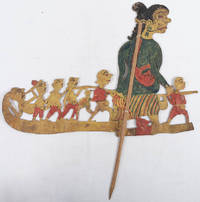
1970216154Indonesia. Before1970s. Water buffalo hide and pigment 29 x 44.5 cms affixed with cotton to a baton 41 cms. A folk puppet depicting Nyi Brayut and her husband Ki Brayut the small lead figure in red jacket and pants who have a great many children. Kyi Brayut is carrying on his shoulder a support which connnects the children to the basket like base on which the children are being carried. The term "brayut" comes from the word "brayat" meaning offspring. <br> <br>Of ancient origin this shadow puppet was traditionally used for the ritual ceremony held at the 7th month of pregnancy to safeguard the mother and baby during its birth. The display of the puppet would symbolically "bring down" Nyi and Ki Brayut and so magically intervene to assist in a safe birth. <br> <br>This puppet was often used from the early 1970s onwards in government campaigns urging the use of birth control to limit family size. <br> <br>Purchased in Java in the early 1970s. . unknown
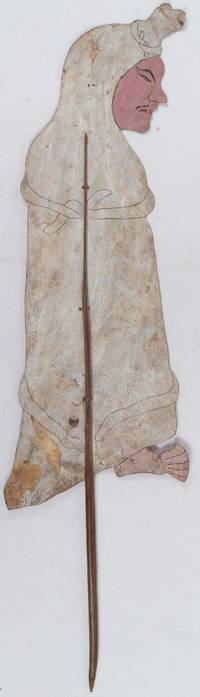
1970216170Indonesia. Before1970s. Water buffalo hide and pigment 42 x 16 cms painted both sides affixed to a spliced horn baton some surface wear and loss of pigment overall in good condition. Figure of a Pocong used in the Javanese and Balinese 'wayang kulit' or leather shadow puppet theatre tradition. <br> <br>A pocong is a ghost in the form of a corpse wrapped in its burial shroud. The deceased are typically wrapped in a white cloth which is tied at several places including feet torso and neck. Burial is often without a casket. Before closure of a grave the ties must be loosed so that the spirit of the person is released. If not they are doomed to wander the world haunting the living and places at will. Belief has it that they sometimes haunt bamboo or bannana tree groves in order to befriend the living. <br> <br>During early Covid lockdown in Java neighbourhoods would block road access to enforce curfew with one or two people dressed as pocongan as a warning to trespassers. <br> <br>Purchased in Java in the early 1970s. . hardcover
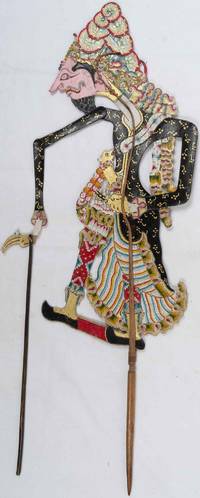
1970216717Indonesia. Before1970s. Water buffalo hide gilt and pigment elaborately chiselled and cut out 49 x 72 cms arms fully extended painted both sides jointed arms each affixed to bamboo batons and another spliced horn baton holding the body; some fading and loss of pigment; stamped "H N" at the base of the puppet. This puppet represents the King/Knight Raden Astadarma in the Javanese 'wayang kulit' or leather shadow puppet theatre tradition. <br> <br>This character appears in the Wayang Madya stories. These stories were originally sponsored by the princely poet Mangkunegara IV 1811–1881 the fourth ruler of Mangkunegaran a principality based in Surakarta Java ruling from 1853 to his death in 1881. In recent times these stories are intended to retell 19th century heroic poems reflecting on 20th Century events linking Wayang Purwa with Wayang Gedog. <br> <br>Purchased in Java in the early 1970s. <br> <br>See: Joko Susilo Eisler Shadow-Puppet Collection Catalogue Bates College Lewiston Maine . hardcover
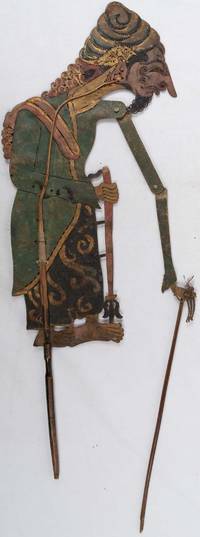
1970216711Indonesia. Before1970s. Water buffalo hide gilt and pigment chiselled and cut out 40 x 39 cms fully extended painted both sides one arm jointed and affixed to a bamboo baton the other arm stationary holding a staff another spliced bamboo baton holding the body some fading and loss of pigment. This puppet represents the seer or sage Durwasa in the Javanese 'wayang kulit' or leather shadow puppet theatre tradition. <br> <br>Resi Durwasa Durvasa in the Indian Mahabharata was known as a bestower both of curses and boons. He invested Krishna with partial invulnerability. To Dewi Kunti he bestowed a mantra to invoke gods by whom she could beget sons. Unwisely trying this out she became pregnant by the Sun God Surya. Resi Druwasa enabled the birth of her son Karna via her ear and the infant was put into a basket and floated down a river to be found and adopted by others. In modern Wayang this story has reputedly been employed to address issues of gender equality. <br> <br>Purchased in Java in the early 1970s. <br> <br>See: Joko Susilo Eisler Shadow-Puppet Collection Catalogue Bates College Lewiston Maine . hardcover
1970216718Indonesia. Before1970s. Water buffalo hide gilt and pigment chiselled and cut out 50 x 41 cms fully extended painted both sides one arm jointed and affixed to a bamboo baton the other arm stationary another spliced bamboo baton holding the body some minor loss of pigment. This puppet represents the priestly hermit Resi Gotama or Gotama Rishi in the Javanese 'wayang kulit' or leather shadow puppet theatre tradition. In this tradition Resi Gotama is married to a beautiful angel Dewi Indradi and despite his royal heritage spurns kingship for life as a hermit. <br> <br>A particularly attractive example. Purchased in Java in the early 1970s. <br> <br>See: Joko Susilo Eisler Shadow-Puppet Collection Catalogue Bates College Lewiston Maine . hardcover
1970216720Indonesia. Before1970s. Water buffalo hide gilt and pigment chiselled and cut out 34 x 54 cms fully extended painted both sides affixed to a spliced horn baton some fading and minor loss of pigment. This puppet represents the supreme being Sang Hyang Wenang power holder of all gods in the Javanese 'wayang kulit' or leather shadow puppet theatre tradition. In Old Javanese the term Hyang means "god" "goddess" "deified being" or "divinity". <br> <br>Purchased in Java in the early 1970s. <br> <br>See: Joko Susilo Eisler Shadow-Puppet Collection Catalogue Bates College Lewiston Maine . hardcover
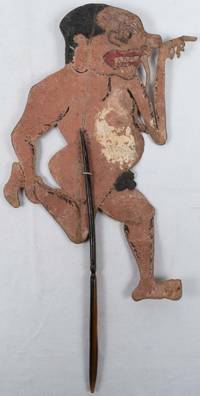
1970216171Indonesia. Before1970s. Water buffalo hide and pigment 33 x 18 cms painted both sides affixed to a spliced horn baton loss at the head surface wear and loss of pigment overall in good condition. A naked devil figure or “Satanan” used in the Javanese and Balinese 'wayang kulit' or leather shadow puppet theatre tradition. Unsurprisingly a menacing and malign figure the puppet is depicted naked with blackened genitals with bared teeth and fangs. <br> <br>Purchased in Java in the early 1970s. . hardcover
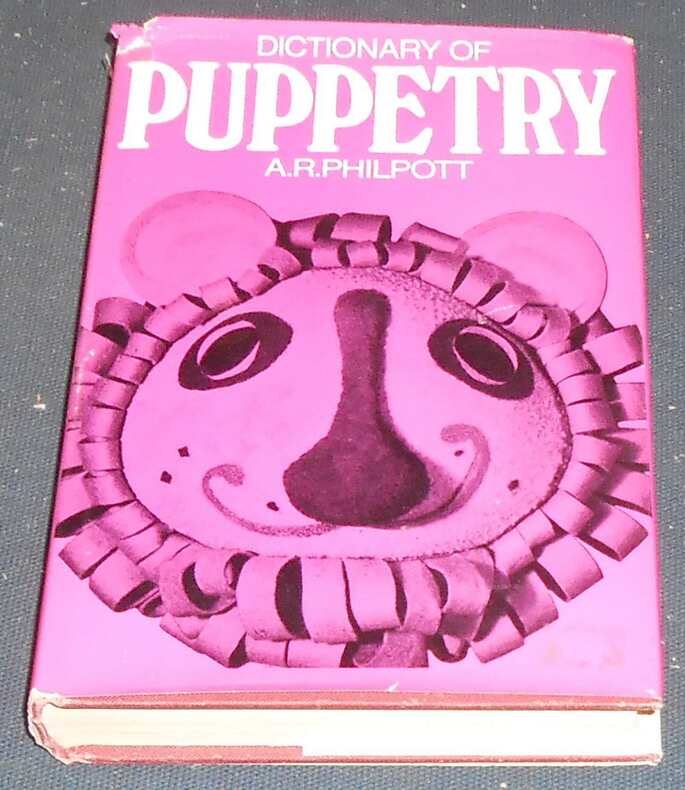
1969100074224Boston. 14 5 cm x 22 5 cm. 1969. Cartonné. 286 pages. Boston Plays Incorporated 1969. Cartonné bien complet de la jaquette 14 5 cm x 22 5 cm 286 pages photos noir & blanc hors-texte. Texte en anglais de A. R. Philpott. Tampon de Foz L'Art de la Marionnette - Caen léger accroc sur la jaquette sinon très bon état léger accroc sur la jaquette sinon très bon état
Mm 160x225 cartella editoriale contenente 4 tavole a colori e una scheda in lingua italiana e inglese di Pupi Avati sull'oper artistica di Daria Ganassini e le sue marionette artistiche. mancano le note editoriali. Buono. SPEDIZIONE IN 24 ORE DALLA CONFERMA DELL'ORDINE.
in 8° quadrato, bross. edit. ill. con bandelle, lievi tracce d'uso in cop., dorso muto - volume in tedesco, spagnolo e esperanto - riccamente illustrato in b.n. e a colori
testo in francese e inglese in 4°, fascicolo di 24 pp., bross. edit. ill., minime tracce d'uso
bross. edit. ill.
Cm. 24, cart. edit., pag. 87 (9). Interessante repertorio iconografico di bambole antiche da collezione. Buon esemplare.
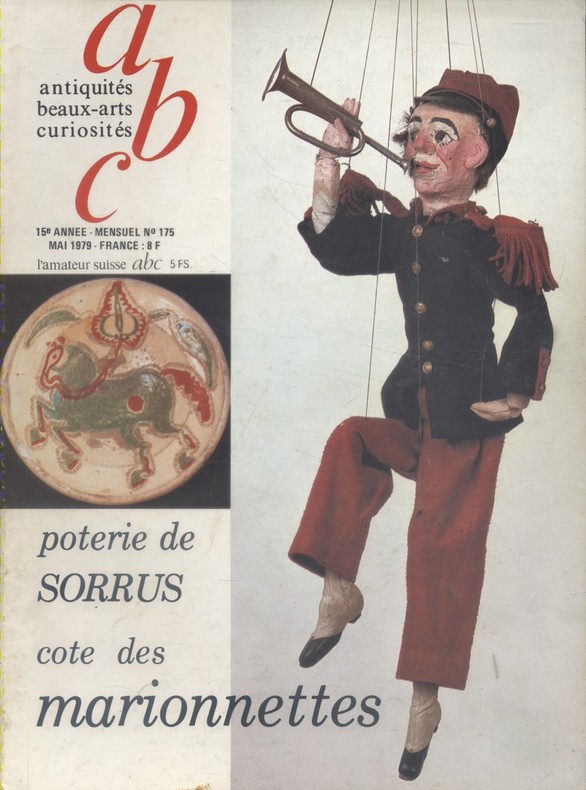
1979127951Couverture souple. Revue. 70 pages.
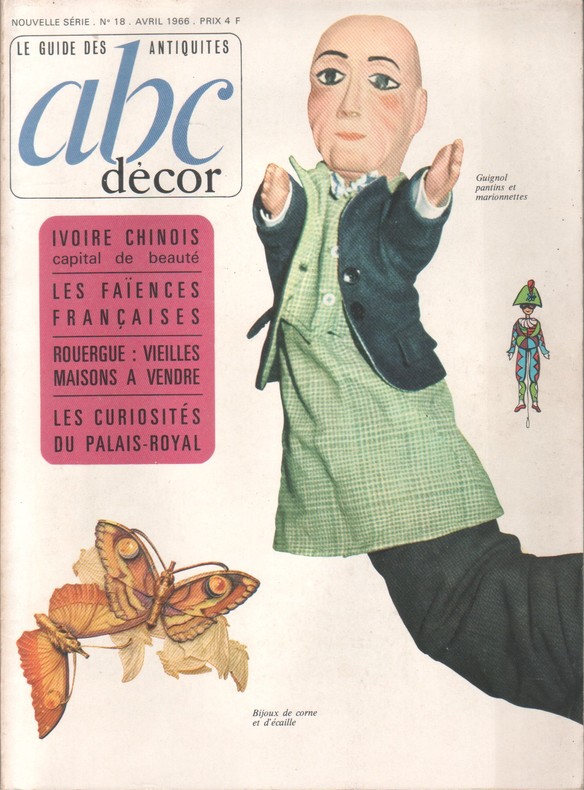
1966120908Couverture souple. Revue brochée. 94 pages.