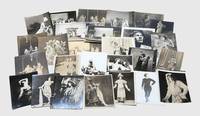
Col W de Basil's Ballets RussesBiblio.com
43 résultats
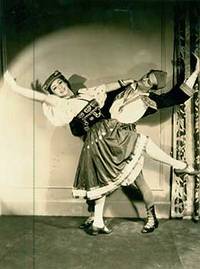
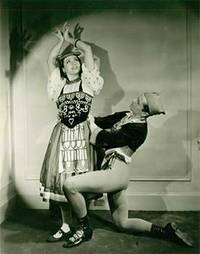
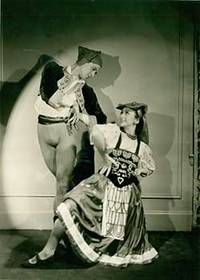
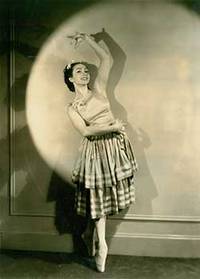
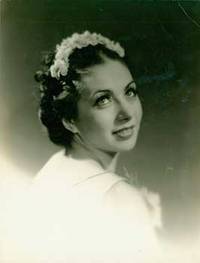
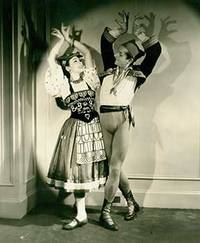
16-2878London: Royal Opera House Covent Garden circa 1935. Platinium photograph. Stamped and autograph annotations verso. 10 x 8 inches.From the collection of Frederic Gale Ruffner Jr. the founder of Gale Research Detroit. London: Royal Opera House, Covent Garden, circa 1935 unknown
16-2877London: Royal Opera House Covent Garden circa 1935. Platinum photograph. Annotated press release pasted on verso. 10 x 8 inches. From the collection of Frederic Gale Ruffner Jr. the founder of Gale Research Detroit. London: Royal Opera House, Covent Garden, circa 1935 unknown
16-2881London: Royal Opera House Covent Garden circa 1935. Platinum photograph. Stamped and autograph annotations verso. 10 x 8 inches. From the collection of Frederic Gale Ruffner Jr. the founder of Gale Research Detroit. London: Royal Opera House, Covent Garden, circa 1935 unknown
16-2880London: Royal Opera House Covent Garden circa 1935. Platinium photograph. Stamped and autograph annotations verso. 10 x 8 inches.From the collection of Frederic Gale Ruffner Jr. the founder of Gale Research Detroit. London: Royal Opera House, Covent Garden, circa 1935 unknown
16-2883London: Royal Opera House Covent Garden circa 1935. Platinum photograph. Annotated press release pasted on verso. 10 x 8 inches. From the collection of Frederic Gale Ruffner Jr. the founder of Gale Research Detroit. London: Royal Opera House, Covent Garden, circa 1935 unknown
16-2893London: Royal Opera House Covent Garden circa 1935. Platinum photograph. Annotated press release pasted on verso. 10 x 8 inches. From the collection of Frederic Gale Ruffner Jr. the founder of Gale Research Detroit. London: Royal Opera House, Covent Garden, circa 1935 unknown
1997H-350-263Cité de la musique 1997. Paperback. Good. Different cover. Edition 1997. Ammareal gives back up to 15% of this item's net price to charity organizations. Cité de la musique paperback
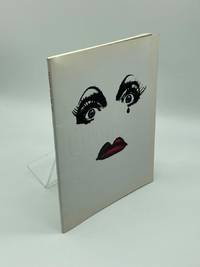
2006HVD-51941-OS-0Very Good-. 2006. Paperback. minor rubbing and fading to the covers. Signed by many dancers on their respective pages! Minor ripples not water damage but minor dampness exposure to the top inner edge of of textblock. Very Good condition otherwise. No other noteworthy defects. ; - Your satisfaction is our priority. We offer free returns and respond promptly to all inquiries. Your item will be carefully cushioned in bubble wrap and securely boxed. All orders ship on the same or next business day. Buy with confidence. . paperback
25055No place or date but reference to "Lakmé" suggests 1883. Calling Card 9.5 x 5.5cm some staining but text clear. See Images. Printed text recto is as follows: "Léo Delibes Membre de l'Institut" 220 rue de Rivoli. He has written the following; "Mille remerciements bien affectueux cher collaborateur. Vous permettez ce titre sinon a l'auteur du Roi l'a dit underlined du moins a celui de 'Lakmé'! L.D." No place or date, but reference to "Lakmé" suggests 1883. unknown
Bengt HägerIn Pristine Condition. unknown
2006BN109886ANWB 2006. 2006. ANWB Goud: Rijn Eifel Moezel: Landschap natuur kunst cultuur kaarten plattegronden - Losse overzichtskaart met alle hoogtepunten <br/><br/>ANWB Goud: Rijn Eifel Moezel: Landschap natuur kunst cultuur kaarten plattegronden - Losse overzichtskaart met alle hoogtepunten ANWB unknown
1862KC10862Paris: Baillieu Libraire Quai des Grands-Augustins No. 43 1862. Paperback. Fair. 'La Grande Danse Macabre Paris edition of 1862 in original uncut wrappers 4to 265 x 200mm. 66 pages misnumbered 67. 56 woodcuts reprinted from the blocks of the 1641 Troyes edition. Original printed wrappers with printers device of Baillieu of pair of skeletons supporting a shield inscribed with B. Title page repeating Baillieus device and with skeletal lettering forming the words Danse Macabre. Spine perished edges lightly chipped and wraps are loose but present; stains on pages 20 and 21. Sold as is. <br/><br/>This edition was issued in Paris in about 1862 although it is undated. It is the re-edition of the La Grand Danse Macabre Des Hommes et Des Femmes with designs printed from the wood blocks of the Troyes edition of 1641. The text is reproduced from the original 1486 Marchant edition. Facsimile copies of the medieval Dance of Death tale were highly popular in the 19th century. The macabre spirit and fateful themes of the book have been appreciated for their artistry and poetry since the late Middle Ages. Baillieu, Libraire, Quai des Grands-Augustins, No. 43 paperback
BN105701Cité de la musique. Softcover. Guide de la danse et de l'action culturelle <br/><br/>Guide de la danse et de l'action culturelle Cité de la musique paperback
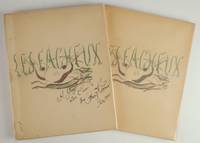
192439586Paris: Éditions des Quatre Chemins 1924. 2 volumes. Quarto. Original publisher's heavy ivory wrappers with illustration in color by Braque to uppers. In publisher's slipcase with dark ivory title label printed in dark brown to upper.<br /> <br /> Vol. I:<br /> 1f. recto half-title verso blank1f. recto title verso blank 1f. recto "Jean Cocteau" verso blank 3ff. text 1f. portrait of Cocteau 1f. recto "Louis Laloy" verso blank 7ff. text 1f. recto facsimile of music by Auric verso blank <br /> 1f. recto "Georges Braque" verso blank 23 hand-colored set and costume designs iv text including colophon 1f blank The hand-colored designs by Braque: La Naïde; Esquisse du décor; Décor manquette; Éraste; La Montagne; Lysandre; Orphise; L'Élegante; Joueuse de volant; Joueuse de volant dos; Première bavarde; Deuxième bavarde; Deuxième bavarde dos; Joueur de boules; Joueur de cartes; Le Tuteur; Premier valet; Deuxième valet; Policier; Premier masque; Premier masque dos; Deuxième masque; and Deuxième masque dos.<br /> <br /> Vol. II: <br /> 1f. recto half-title verso blank 1f. recto blank verso reproduction of photograph of Braque by Man Ray 1f. recto title "Réalisation Scénique" verso blank 1f. contents 1f. recto "Argument" verso blank 1f. recto part title verso blank 22 full-page photographic illustrations of dancers L. Krassovska; Nicolas Zverew; Antoine Wilzak; La Nijinska 2; Lubov Tchernicheva 3; Antoine Doline; N. Devalois 2; Ludmila Cholar L. Choliar et A. Wilzak; Alice Nikitin; L. Chollar A. Nikitina and A. Wilzak; Thadée Slavinsky 2; Th. Slavinsky E. Lapitsky et C. Tcherkas; Léon Woizikovsky; J. Jazvinsky et M. Pavlow; M. Federow; and S. Lifar in role portraits.<br /> <br /> All plates with tissue guards.<br /> <br /> With an autograph inscription in black ink from Boris Kochno 1904-1990 dated June 1934 to George Hoyningen- Huene to upper glassine cover of Vol. I and with a subsequent presentation inscription dated Los Angeles June 1954 in blue ink from Hoyningen-Huene to Oreste Pucciani to half title in Vol. I; Hoyningen-Huene's bookplate below inscription. With printed note to final leaf of Vol. I: "Publié sous la direction de M. Boris Kochno."<br /> <br /> Wrappers slightly worn and soiled; slipcase worn and taped at edges. Minor internal wear; a few signatures split or partially split; some tissue guards worn creased and foxed; several plates with minor marginal staining. First Edition. Limited to 500 copies this no. 347 of only 385 copies on Vélin d'Arches with limitation statements at conclusion of each volume. Magriel p. 187. Niles & Leslie I p. 75. Derra de Moroda 1503. <br /> <br /> Les Facheux a ballet in one act with music by Georges Auric; choreography by Bronislava Nijinska; scenario by Boris Kochno after Moliere's comedy-ballet; and curtain scenery and costumes by Georges Braque was first performed by Diaghilev's Ballets Russes in Monte Carlo on 19 January 1924 with principal dancers Lubov Tchernicheva Anatole Vilzak and Anton Dolin.<br /> <br /> "By the time Auric found himself a member of Les Six Auric Durey Honegger Milhaud Poulenc and Tailleferre the style of his music - brilliant and often acidly aggressive - had become well established and works such as the Huit poèmes de Jean Cocteau 1919 or the foxtrot Adieu New York! 1919 show how he can be considered along with Poulenc the group's most typical representative. On hearing his 1921 incidental music for Molière's comédie-ballet Les fâcheux Diaghilev asked him to transform it into a ballet. First performed in Monte Carlo . it shows a facility for mood creation and a virtuosity in the manipulation of highly varied material that presages his film music. Other successful ballets followed: Les matelots 1924 and La pastorale 1925 for Diaghilev Les enchantements de la fée d'Alcine 1928 for Ida Rubinstein ." Jeremy Drake in Grove Music Online.<br /> <br /> Kochno "was a Russian-born writer and ballet librettist who collaborated with ballet impresario Serge Diaghilev during the last years of the Ballets Russes then became a major influence on post-World War II French ballet. Kochno met Diaghilev in 1921 and immediately became his secretary. His first libretto for Diaghilev was the text of Igor Stravinsky's chamber opera Mavra 1922; he followed it with scenarios for such ballets as Les Fâcheux 1924 Les Matelots 1925 Ode 1928 and Le Fils prodigue The Prodigal Son 1929.<br /> <br /> After Diaghilev's death in 1929 Kochno continued advising on ballets. He collaborated on Cotillon and Jeux d'enfants 1932 for the new Ballet Russe de Monte Carlo then with choreographer George Balanchine founded the short-lived Les Ballets in 1933. He returned to the Ballet Russe advising the company's management until 1937. With his longtime friend Christian Bérard a painter and choreographer Roland Petit he collaborated on the ballet Les Forains 1945 which led to the founding of Les Ballets des Champs-Elysées and the renaissance of French ballet; he remained with that company until 1951. He was the author of the books Le Ballet 1954 and Diaghilev et les Ballets Russes 1970." Britannica Online<br /> <br /> "Hoyningen-Huene 1900-1968 is acknowledged as an iconic pioneer in the genre of fashion photography. His elegant pared-down style has had a dramatic impact on photographers around the world and his work continues to have relevance today as an artist who created some of the most striking photographic portraits and compositions of the twentieth century." Artist's website<br /> <br /> "Oreste Francesco Pucciani 1916 - 1999 was a pioneer teacher of Jean-Paul Sartre's philosophy at UCLA. He was the last partner of Rudi Gernreich fashion designer and at the latter's death established the ACLU Rudi Gernreich-Oreste Pucciani Endowment Fund to support the fight for LGBT rights." Wikipedia<br /> <br /> An interesting association copy. Éditions des Quatre Chemins unknown
116867Paris Brunoff Comoedia Illustre Paris 1912. . Folio 31.7 x 24.8 cm. 68 pp. illustrated with photographic reproductions and illustrations in colour the latter mostly after Bakst gilt and silver borders; original wrappers printed in gilt minor wear to edges a very good copy.<br /> A luxurious programme produced by the French publisher Brunoff together with Diaghilev presenting Nijinsky and others in their colourful costumes by Bakst all framed within gilt or silver borders. <br /><br />During the seventh season Diaghilev presented four new productions: Daphnis et Chloé Thamar Le Dieu Bleu and L'après-midi d'un Faune which was inspired by Claude Debussy's languorous and shimmering score and choreographed by Nijinsky himself.<br /> Paris, Brunoff, Comoedia Illustre, Paris, 1912. unknown
1619170555c.1916-1920s. A collection of photographs of Ballets Russes dancers including images of the principal dancer and choreographer Adolph Bolm his daughter Kyra Alanova the prima ballerina Tamara Karsavina and a single photo of Nijinsky as Albrecht in Giselle. Fifteen were taken by Emil Otto Hoppé 1878-1972 one of the most sought-after photographers of the 1920s and 1930s. He photographed the Ballets Russes from 1911 to 1923; these images are predominantly from their only American tours in 1916 and 1917. Karsavina appears in five and Bolm in twelve including two images of them together in costume for Le Pavillon d'Armide one of them together in Thamar and two in L'Oiseau de Feu. Adolph Bolm 1884-1951 was a pioneer of ballet in the United States. From 1909 to 1916 he was a principal dancer and choreographer for the Ballets Russes. During their American tour Bolm injured himself while dancing Thamar. He stayed in the USA and quickly established himself as a coveted choreographer. There were no American ballet companies and dancers performed with opera companies until Bolm established Chicago Allied Arts the first repertory ballet company in the USA. He later founded the San Francisco Opera Ballet and was one of five choreographers involved in the 1940 founding season for New York's Ballet Theatre. Tamara Karsavina 1885-1978 was a principal artist of the Imperial Russian Ballet before joining Diaghilev's Ballets Russes. She is perhaps most famous for creating the title role in Mikhail Fokine's L'Oiseau de Feu. Seventeen photographs are unattributed. One showing Bolm and Karsavina in Scheherazade is from the same Ballets Russes season. Another shows Bolm as the Golden Slave in Scheherazade post-1929 while a third shows Bolm as Amoun in Cleopatra undated but perhaps 1910. A further three are portraits of Bolm's daughter the ballerina Kyra Alanova two as the princess in A Kiss in Xanadu and one in unidentified costume. She danced with the Ballets Russes between 1918 and 1924 but these photos are likely later: one is dated in pencil "London 1925" on the verso and another has the ink stamp of Vaughan & Freeman on the verso London photographers who were active from 1928. The remaining 11 photographs are all dress rehearsals from an unidentified ballet with an "oriental" theme which does not appear to be any of the six ballets of that kind that the Ballets Russes debuted in Paris. Pencil annotations on the verso of nine images suggest "Adolf Bolm Kyra Deakin Alanova" and two images are annotated in a different hand with Alanova's name weight height hair and eye colour and New York address. These are likely from ballets choreographed by Bolm once he had parted with the Ballets Russes and established himself as one of the most important figures in American ballet. Together 32 photographic prints of varying mediums including carbon and silver gelatin from approx. 170 x 122 mm to 260 x 203 mm the photograph of Kyra Alanova as the princess in A Kiss in Xanadu mounted on card 260 x 198 mm. Edges rubbed occasional chips a few photographs overexposed or lightly silvered at edges remnants of adhesive to verso of two photographs two short closed tears to Adolph Bolm in Le Pavillon d'Armide one with tape repair to verso. A well-preserved collection. Andrew Foster "A Directory of Diaghilev Dancers" Dance Research: The Journal of the Society for Dance Research vol. 37 no. 2 2019 pp. 181-205. unknown
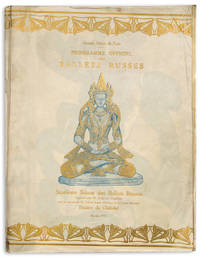
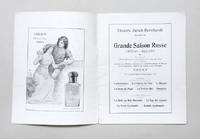
1911190134Paris & New York: various publishers 1911-39. Highly desirable collection of elusive and superbly produced ephemeral publications offering a rich panorama of the two decades of the Ballets Russes and featuring the leading lights of the company - Bakst Rubinstein Nijinsky; the whole reflecting the very highest standards of Diaghilev himself who in the words of his highly acclaimed biographer "would never allow quality to suffer" Sjeng Scheijen Diaghilev: A Life 2009 p. 405. Souvenir programme: Théâtre Sarah-Bernhardt Mai-Juin 1911. Grande Saison Russe: Opéras et Ballets. Organisée par "L'Association pour la Propagation de la Musique Slave" avec le concours d'Artistes des Théâtres Impériaux de Saint-Pétersbourg et Moscou et des principaux Théâtres de France et de 'Etranger. Paris: Publications Willy Fischer 1911 Square quarto pp. 32. Original pictorial wrappers designed by Jean Portalez wire-stitched. Portraits from photographs and adverts throughout. Light creasing and signs of handling to wrappers otherwise very good. Eye-catching souvenir programme clearly inspired by the enormous impact of the first two seasons of the Ballet Russes in Paris 1909-10 when "audiences were dazzled by the dancing and striking designs" V&A its title echoing Diaghilev's original billing of a "Saison Russe". The repertoire for the season at the Théâtre Sarah-Bernhardt comprised five operas including Dargomyzhsky's Rusalka Eugene Onegin and Anton Rubinstein's Le Démon and "sketches" from four ballets including La Forêt enchantée by Riccardo Drigo. The striking cover design is by Jean Portalez who did much stylish work for the French humour magazines Le Rire and Journal Amusant and was a frequent contributor to La Nouvelle Mode. One copy only located on Library Hub at New York Public Library. Comdia Illustré - Numero Special. Les Russes au Châtelet. Paris: Comdia Illustré 1911 Quarto. Original pictorial wrappers front cover with colour design by Bakst for the ballet Narcisse premiered in 1911 wire-stitched. With the translucent paper wrapper. Monochrome illustrations and adverts throughout one colour plate costume design by Bakst.One 4-page section loose light signs of handling otherwise very good. Attractive special number of the Comdia Illustré dedicated to Le Martyre de saint Sébastien a five-act mystery play by Gabriele D'Annunzio with incidental music by Debussy and scenery and costumes by Bakst designed as a vehicle for the inspirational Ida Rubinstein. Comdia Illustré - Théatre du Châtelet Grande Saison de Paris. du 4 Mai au 10 Mai 1912 Six Représentations de Gala: Hélène de Sparte. du 10 Juin au 20 Juin 1912 Six Représentations de Gala: Salomé. Paris: Comdia Illustré 1912 Quarto. Original pictorial wrappers front cover printed in silver and blue showing costume design by Bakst for Ida Rubinstein as Hélène wire-stitched. With the translucent paper cover wrapper printed in gold and green with copper-coloured cord. Colour and monochrome illustrations and adverts throughout all printed within gold borders. Light signs of handling to cover wrapper a few short closed-tears to periphery otherwise very good. Beautifully produced special issue of the Comdia Illustré dedicated to two productions Hélène de Sparte Verhaeren's tragedy music by Deodat de Severac decorations and costumes by Bakst mise en scène by Sanine and Wilde's Salomé music by Glazunov mise en scène by Sanine Dance of Salome choreographed by Fokine. Illustrations include colour plates of Bakst's costume and scenery portraits of the leading participants. One copy only located on Library Hub at BnF. Comdia Illustré - Grande Saison de Paris. Programme official des Ballets Russes. Septieme Saison de Ballets Russes. Mai-Juin 1912. Paris: Comdia Illustré 1912 Quarto. Original pictorial wrappers front cover with colour design by Bakst showing Nijinksy in L'Apres-Midi d'un Faune wire-stitched. With the translucent paper cover wrapper printed in blue and gold art nouveau border pearl-coloured cord. Colour and monochrome illustrations and adverts throughout all printed within gold borders. An excellent copy. Spectacular special number commemorating the seventh season of the Ballets Russes covering four spectacles and including Le Spectre de la Rose The Firebird Petrushka Prince Igor L'Apres Midi Daphnis et Chloé with excellent colour reproductions of Bakst's stunning costume and scenery designs. One copy only located on Library Hub at BnF. Souvenir - Serge De Diaghileff's Ballet Russe: With Originals by Leon Bakst and Others. 1916 American Tour Programme. New York: Metropolitan Ballet Company Inc. 1916 Quarto pp. 38. Original mottled brown hammer-finish card wrappers green silk cord tie cover image of Nijinsky in Scheherezade by Robert Montenegro in brown with embossed gilt work title lettering similarly embossed. Sepia frontispiece from a photograph Nijinsky in Spectre de la Rose and 8 other similar full-page illustrations including one of Lydia Lopokova 15 full-page colour illustrations one double-page the majority costume designs by Bakst among them the famous image of Nijinsky as the Faun in L'Après Midi. Minor nicks to periphery of wrappers. An excellent copy. An important piece of ballet history: the original souvenir programme from the first American tour of the Ballet Russes with full-colour illustrations of the sumptuous costumes designs of Leon Bakst. The programme includes brief ballet synopses an itinerary and two pages of illustrated advertisements. This is an unusual and highly desirable variant in that it features the superb Nijinsky illustration on the cover. Souvenir - Serge de Diaghileff's Ballet Russe. New York: Metropolitan Ballet Company Inc. 1916 Quarto pp. 36. Original cord-tied embossed grey card hammer-finish wrappers. Colour and sepia illustrations throughout. Minor nicks to wrappers. An excellent copy. Sumptuous souvenir program published by the Metropolitan Ballet Company for the first and only American tour of the Ballets Russes superbly illustrated and containing brief introductions to the repertoire: Le Pavillon D'Armide; L'Oiseau De Feu; Les Sylphides and Papillons; Le Spectre de la Rose; Narcisse; Schéhérazade; Sadko; Thamar; Le Carnaval of Schumann; Prince Igor; Petrouchka; Snégourotchka; Daphnis et Chloé;'L'Après-Midi d'un Faune; Le Dieu Bleu; and Cléopâtre. This differs in many respects to the version above. Souvenir programme: Ballets Russes de M. Serge de Diaghilew. Paris: Printed by L'Edition Artistique for Les Publications Willy Fischer 1925 Quarto. Original pictorial wrappers front cover with colour design by Pedro Pruna wire-stitched. With the glassine paper cover wrapper. Monochrome illustrations and adverts throughout. Glassine a little creased and tattered general light signs of handling. A very good copy. Attractive art deco souvenir programme the repertoire including Pulcinella La Boutique fantasque Les Matelots Les Biches and Train Bleu. The young Catalan artist Pedro Pruna was recommended to Cocteau by Picasso and a meeting with Diaghilev and Boris Kochno was arranged; they "immediately commissioned him to design Les Matelots" being impressed by his "limpid poetic theatrical work" cited in Alexander Schouvaloff The Art of Ballets Russes Yale UP 1997 p.279. Included here are a publisher's slip issued by Editions des Quatre Chemins advertising as "just published" Les Biches and Les Facheux; also the single page programme for 18 June Pulcinella Les Matelots La Boutique fantasque. Just a handful of copies on Library Hub. Ballets Russes de Diaghilew 1909 a 1929. Exposition organisée par Serge Lifar Mars a Juin 1939. Paris: Jacques de Brunhoff printed by Imprimerie Crété 1939 Quarto. Original printed wrappers with design by Bakst on gold paper inset to front cover wire-stitched. Monochrome illustrations throughout. Small stain at fore-edge of front cover light vertical crease. A very good copy. Attractive resume of productions spanning the first two decades of the Ballets Russes and illustrating costume designs by Bakst Gontcharova Sert Marie Laurencin Juan Gris and Benois scenery and curtain designs by Roerich Federovsky Picasso Braque Matisse Derain de Chirico Rouault Larionov Utrillo and Tchelichew. 8 works quarto. Original variously illustrated wrappers cord-tied or wire stitched as issued. Illustrated throughout in colour and monochrome. unknown
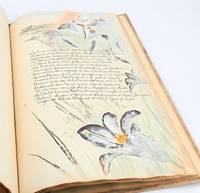
188788480No Location: s. n. 1887. Fine. s. n. No Location 1887 20 x 32 cm 1 portrait-frontispice 1 titre à l'encre 83 p. manuscrites qq. feuillets vierges Exceptional illuminated manuscript of 35 poems by Stéphane Mallarmé probably copied by Joris-Karl Huysmans on watermarked Hollande laid paper after pre-first editions of the poems published in journals. Most of the poems are preceded by a separate title-page noting the source from which it is taken. The manuscript includes a fine charcoal portrait of Mallarmé as a frontispiece by Charles Tichon after a photographic portrait by Van Bosch. The portrait was published in the Mallarmé issue of Empreintes Bruxelles LÉcran du Monde n° 10-11. Another version was published in 1889 Caprice Revue 2e année n° 60. two floral compositions in gouache and watercolor illustrating the poems Les Fleurs and Apparition as well the calligraphed author's name as a title-page. Although unsigned the illutrations are attributed to Louise or Marie Danse. Bradel binding contemporary cream silk boards with floral motif two embroidered green silk markers with floral motif gilt semis patternerd flyleaves and pastedowns slightly faded red edges. Dampstains on the lower part of the lower board rubbed corners a few silk threads loosened on the spine rubbed boards. Outstanding manuscript of 35 poems by Stéphane Mallarmé written shortly before the first collected edition of his poetry of which only 47 copies were ever printed Poésies photolithographed Revue indépendante 1887. This carefully calligraphed collection is attributed to the hand of writer Joris-Karl Huysmans a great admirer of the poet who is said to have given the manuscripts to his friend Jules Destrée. This scribal manuscript which includes some of Mallarmés most celebrated pieces such as Hérodiade L'Après-midi d'un faune Le tombeau d'Edgar Poe Prose pour des Esseintes Le vierge le vivace et le bel aujourd'hui appeared for the first time in the posthumous sale of the Belgian politician and writer Jules Destrée in 1936 at the Galerie Leopold in Brussels. A pencil note on the title page of the collection reads: According to Mr. Simonson expert at the Destrée sale this manuscript was sent by J.K. Huysmans to Jul. Destrée who wanted to read Mallarmé's poems which remained unpublished at the time. Verified through Huysmans' correspondence sold on the same day as this manuscript. As evidenced in their letters Destrée did seek out the help of his friend Huysmans to obtain Mallarmé poems as his work was not readily accessible being for the most part published in journals L'Artiste Les Lettres et les Arts La République des lettres etc. and in the collections of Le Parnasse contemporain. In a letter to Destrée Huysmans wrote You ask me where Mallarmé's poems can be found. They are untraceable but they are in this envelope. Published in 1876 in La République des Lettres they were copied at least the best ones by Le Chat Noir in 1886. I bought two issues which allows me to send them to you. You will see that they are superb written in clear incisive and very strange language. 30 November 1887. It is possible that the poems in this envelope mentioned by Huysmans are the ones Destrée later had bound in this manuscript collection. Huysmans may have copied for Destrée the poems from the journals he only had one copy of and sent him his extra copy of Le Chat Noir from 1886 which included the prose poems Plaintes d'automne Frisson d'hiver I et II and Le Phénomène futur. The writing style of the poems in the collection is indeed very similar to Huysmans' own handwriting his manuscript of his poem collection Le Drageoir à épices displays the same rounded curling style. However Huysmans' handwriting varies considerably depending on the circumstances: novel manuscripts letters first drafts etc. The excessively neat calligraphy of the poems contrasts with the hasty tall and cramped handwriting of sever s. n. hardcover