4 336 résultats
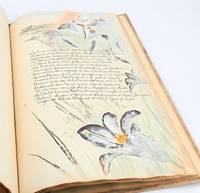
188788480No Location: s. n. 1887. Fine. s. n. No Location 1887 20 x 32 cm 1 portrait-frontispice 1 titre à l'encre 83 p. manuscrites qq. feuillets vierges Exceptional illuminated manuscript of 35 poems by Stéphane Mallarmé probably copied by Joris-Karl Huysmans on watermarked Hollande laid paper after pre-first editions of the poems published in journals. Most of the poems are preceded by a separate title-page noting the source from which it is taken. The manuscript includes a fine charcoal portrait of Mallarmé as a frontispiece by Charles Tichon after a photographic portrait by Van Bosch. The portrait was published in the Mallarmé issue of Empreintes Bruxelles LÉcran du Monde n° 10-11. Another version was published in 1889 Caprice Revue 2e année n° 60. two floral compositions in gouache and watercolor illustrating the poems Les Fleurs and Apparition as well the calligraphed author's name as a title-page. Although unsigned the illutrations are attributed to Louise or Marie Danse. Bradel binding contemporary cream silk boards with floral motif two embroidered green silk markers with floral motif gilt semis patternerd flyleaves and pastedowns slightly faded red edges. Dampstains on the lower part of the lower board rubbed corners a few silk threads loosened on the spine rubbed boards. Outstanding manuscript of 35 poems by Stéphane Mallarmé written shortly before the first collected edition of his poetry of which only 47 copies were ever printed Poésies photolithographed Revue indépendante 1887. This carefully calligraphed collection is attributed to the hand of writer Joris-Karl Huysmans a great admirer of the poet who is said to have given the manuscripts to his friend Jules Destrée. This scribal manuscript which includes some of Mallarmés most celebrated pieces such as Hérodiade L'Après-midi d'un faune Le tombeau d'Edgar Poe Prose pour des Esseintes Le vierge le vivace et le bel aujourd'hui appeared for the first time in the posthumous sale of the Belgian politician and writer Jules Destrée in 1936 at the Galerie Leopold in Brussels. A pencil note on the title page of the collection reads: According to Mr. Simonson expert at the Destrée sale this manuscript was sent by J.K. Huysmans to Jul. Destrée who wanted to read Mallarmé's poems which remained unpublished at the time. Verified through Huysmans' correspondence sold on the same day as this manuscript. As evidenced in their letters Destrée did seek out the help of his friend Huysmans to obtain Mallarmé poems as his work was not readily accessible being for the most part published in journals L'Artiste Les Lettres et les Arts La République des lettres etc. and in the collections of Le Parnasse contemporain. In a letter to Destrée Huysmans wrote You ask me where Mallarmé's poems can be found. They are untraceable but they are in this envelope. Published in 1876 in La République des Lettres they were copied at least the best ones by Le Chat Noir in 1886. I bought two issues which allows me to send them to you. You will see that they are superb written in clear incisive and very strange language. 30 November 1887. It is possible that the poems in this envelope mentioned by Huysmans are the ones Destrée later had bound in this manuscript collection. Huysmans may have copied for Destrée the poems from the journals he only had one copy of and sent him his extra copy of Le Chat Noir from 1886 which included the prose poems Plaintes d'automne Frisson d'hiver I et II and Le Phénomène futur. The writing style of the poems in the collection is indeed very similar to Huysmans' own handwriting his manuscript of his poem collection Le Drageoir à épices displays the same rounded curling style. However Huysmans' handwriting varies considerably depending on the circumstances: novel manuscripts letters first drafts etc. The excessively neat calligraphy of the poems contrasts with the hasty tall and cramped handwriting of sever s. n. hardcover
188788480s. n. | s. l. [1887 ?] | 20 x 32 cm | 1 portrait-frontispice, 1 titre à l'encre, 83 p. manuscrites, qq. feuillets vierges
18294Used; Like New/Used; Like New. Bound collection of 6 concertinos for 4 violins viola cello and basso continuo in score copied from a manuscript at the Conservatoire de Paris as prepared for and subsequently inscribed by Sergei Diaghilev. Long attributed to Italian Baroque composer Pergolesi these pieces are a famous case of reattribution within the canon of classical music having been identified in recent decades as the work of the Dutch composer and statesman Count Unico Wilhelm van Wassenaer. Half a century before this musicological consensus had been established Diaghilev wrote his opinion in an inscription on the cover of the present manuscript translated as follows from the French:<br style="">"In my opinion only the sixth last concertino was composed by Pergolesi. The others are of different authors who have nothing in common with him. I believe the autograph score does not exist and that the copy at the Conservatoire de Paris is the sole known copy that belongs to <lacuna>. These works are found in no library in Italy. It is especially strange that they are not to be found in Naples. The quality of the music of these three concertini is very unequal and one recognizes Pergolesi solely in the last part of the last concertino which was composed wholly by him the Adagio movement recalling his serenades etc. S. Diaghilev 1918."<br style="">"à mon avis il n'y a que le 6me dernier Concertino qui est composé par Pergolesi. Les autres sont de différents auteurs qui n'ont rien de commun avec lui. Je crois que le partition autographe n'existe pas et que l'exemplaire du Conservatoire de Paris est la copie de l'unique exemplaire connu qui appartient à <lacuna>. Dans aucune Bibliothèque d'Italie ces oeuvres ne se trouvent pas. Il est étrange surtout qu'on ne les trouve pas à Naples. La qualité de musique de ces concertini est très inégale et l'on reconnait Pergolesi seulement dans la dernière partie du dernier concertino qui fait être tout entier composé par lui mouvement d'Adagio rappelant ses serenades etc. S. Diaghilev. 1918."<br style="">24 pages bound in a single gathering 10 1/2 à 13 3/4 inches 27 à 35 cm closed. Each page ruled neatly in 16 staves. Notation neatly penned in the hand of the copyist L. Mathieu who has stamped lower right corner of cover: "'Copie musicale et littéraire' L. Mathieu 30 rue Legendre Paris." Diaghilev himself has further inscribed at the base of the page "Copiés d'après le manuscrit se trouvant au Conservatoire de Musique de Paris / 1917. SergeiDIaghilev" Purple ownership stamp in lower right corner of cover of Serge Lifar obtained at the sale of his library. Outer sheets cover and last page of music ever so slightly darker than openings else very fine throughout. <br style="">Diaghilev the great impresario of the Ballets Russes is best known for his prescient assemblage of extraordinarily promising composers artists choreographers and dancers. Perhaps Diaghilev's most famous musical innovation was his suggestion to Stravinsky that he set some themes by Giovanni Pergolesi or at least some music as here that was then believed to be by Pergolesi. The result was Pulcinella making Diaghilev at least partly responsible for the transition from Igor Stravinsky's Russian period to his Neoclassical period and the subsequent broader 1920s fascination with neo-classicism.  The present manuscript offers a glimpse into Diaghilev's central own role in evaluating projects for his ensemble since his inscriptions of 1917 and 1918 two/three years before the Ballets Russes production of Pulcinella so clearly demonstrate his interest in Pergolesi and the commedia dell'arte. unknown books
- 1920-1922, oeuvres : 23x30cm ; cadres : 38,4x48,6cm, trois feuilles sous cadres. - Three original gouaches around dance by Loïs Hutton. 1. Original gouache with dancers May 16th 1920 | work: 23 x 30 cm frame: 38,4 x 48,6 cm | framed leaf This early composition, one of the rare ones still preserved, attests to her modernism and total symbiosis with her choreography. The dominant curves of the bodies in this Gouache with dancers, dated "May 16th 1920" evokes the androgynous silhouettes of Matisse's round dance (La Danse, 1910), as does the choice of vibrant blue and dark ochre tints. A Cubist aesthetic appears in the movement of the dancers with their unrelenting symmetrical balance - while the boldly contoured kaleidoscopic designs betray the influence of Vorticism, whose members during the same period assiduously frequented the underground club of Loïs' lover, Margaret Morris. This work from the London era will find its fulfilment the following year in the choreographies created in France where the Margaret Morris School settle in the summer. The photographs of these sensational performances from Dinard to Cap d'Antibes show very similar compositions, notably one of the scenes of Hutton's ballet, entitled Étincelles, created in 1922 to music by Maurice Ravel. 2. Signed original gouache "Background design, 1922" 1922 | work: 26,5 x 36 cm frame: 40 x 50 cm one framed leaf One of the only original preserved stage decor sketches by Loïs Hutton, also one of the first of her career. This abstract composition reflects the artist's incredible versatility. She flourished both as a principal dancer at her lover's school, the Margaret Morris School as well as a choreographer, set and costume designer. These painted sets on large fabrics served as the backdrop to the school's dance troupe productions and solo dances by Loïs who had previously painted a design on canvas based on a sketch by her mentor the Fauvist painter John Duncan Fergusson. Trying her hand here at a radically new and ambitious style, her design joinsthe angular movements of her dances and is inspired by the teachings of Cézanne: "Everything in nature is modelled on the sphere, the cone and the cylinder" (letter to Emile Bernard). This vital attention paid to volumes goes hand in hand with a fragmentation of motives close to Edward Wadsworth's Vorticism. Hutton visited at that time Wadsworth and the group of Vorticists in Morris' Chelsea underground club, a laboratory of modern dance where the set in its large-format version may have been displayed in December 1921 or the following year as suggested by the two dates on the lower part of the composition and on the back. 3. Signed original gouache "Composition - Ground design of dance, fool's dance" may 22 1919 | work: 20 x 25,5 cm; frame: 30 x 40 cm | one leaf One of Loïs Hutton's rare abstract works, a horizontal and graphic exploration (entitled "Ground design") of her Fool's Dance choreography. A hypnotic solo dance that she performed for the first time in January 1920 to music by Edvard Grieg. In this interesting and innovative vision of dance, Loïs Hutton lays down the products of the force of her choreographic movements on paper: a ballet of lines and curves filled with vivid colours. This fluid and dynamic composition is marked out by a square with asserted outlines, acting as both a physical support for the painting and a material surface for the scene where its movements unfold - an essential space of creation to be compared with the "original plan" theorised several years later by Kandinsky in Point et ligne sur plan (1926). Presented at the Margaret Morris Club in Chelsea where her very first creations were born, Fool's Dance will be performed again at the Château des Deux Rives in Dinard in July of the same year. It earned Hutton one of her first mentions as a performer and choreographer in the French press, in the newspaper Comoedia on 20 July 1920, and marks the beginning of her notoriety in France.
187087776novembre 1870 | 33.20 x 24.50 cm | un bifeuillet
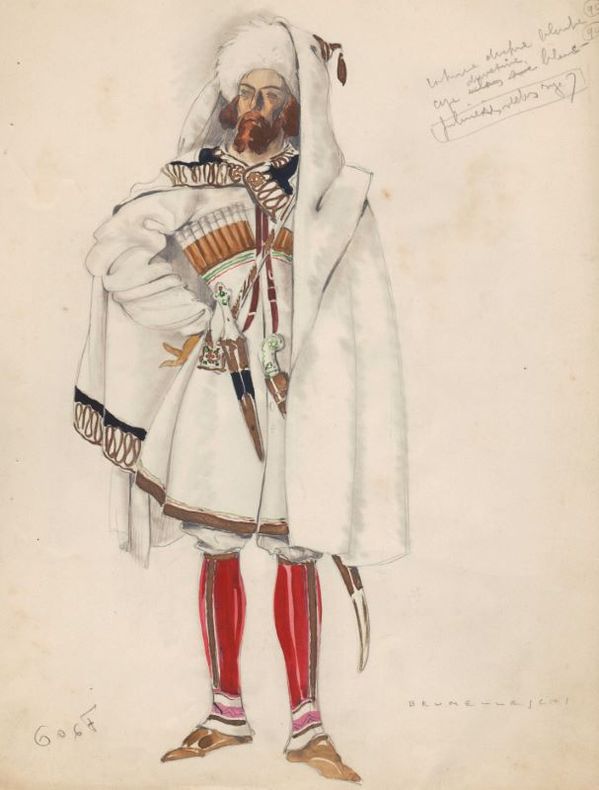
1938193831938 22 aquarelles pour le spectacle-opérette de Mogador, sur papier cartonné beige, 21 signées en bas à droite, 4 datées (1938), rehauts d'or et de blanc, mine de plomb, feuilles de 32 x 25 environ, dessins de 30 x 15 cm. environ.
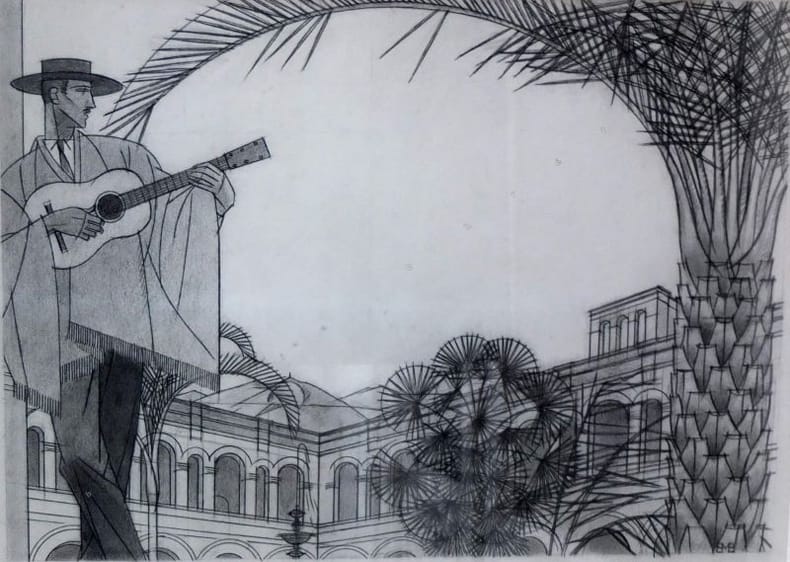
1930125381930 1 Mine de plomb signée du monogramme de l'artiste en bas à droite, 1930, 32 x 45 cm, encadrée.
- 1969, 16,8x21,6cm, carnet en spirales. - Handwritten personal diary for the year 1969 1969 | 16.8 x 21.6 cm | spiral-bound notebook Personal diary handwritten by Maurice Béjart, written in a 1969 diary celebrating the centenary of the birth of Mahatma Gandhi. 52 handwritten leaves, written in red and blue pen in a spiral-bound notebook. This diary features amongst Béjart's very rare, privately owned manuscripts, the choreographer's archives being shared between his house in Brussels, the Béjart foundation in Lausanne and the Théâtre Royal de la Monnaie. The choreographer Maurice Béjart's diary written during the year 1969. An extremely rare collection of thoughts, questions and introspections from the point of view of Hinduism and Buddhist wisdom, which Béjart adopts following his first trip to India in 1967. The diary is an emblematic testimony of the indo-hippie era of the 1960s, spiritual and artistic renaissance that inspired numerous ballets of the choreographer (Messe pour le temps présent, Bhakti, Les Vainqueurs). A selection from this diary was published by Maurice Béjart in the second volume of his memoirs (La Vie de Qui ? Flammarion, 1996). During the year 1969, Béjart wrote daily notes in a diary published in memory of Mahatma Gandhi. Fascinated by Hindu mysticism since his trip to India in 1967, he filled in this spiritual journal with numerous mantras and prayers ("Krishna guide my chariot, the light is at the end of the path. OM"; "Buddha is everywhere"; "Let God enter, but how to open the door") and he calls upon the Hindu deities as well as the Bodhisattvas Mañju?r? et T?r? - soothing figures of the Buddhist pantheon. Béjart's "Indian period" was particularly rich in choreographic masterpieces, the progress of which can be followed in his diary (Baudelaire at the beginning of the year, the first performance of the Vainqueurs in Brussels and the Quatre fils Aymon in Avignon, as well as the filming and screening of his Indian ballet Bhakti). At the crossroads of New Age and the hippie movement, Béjart's "conversion" is symptomatic of an era that refuses progress and has a thirst for spirituality: "Calcutta is not India, but our western face. It is not religion or traditional thinking that is to blame, but capitalism. India, a rich country before colonisation." The Beatle's visit to the guru Maharishi's ?shram and Ravi Shankar's concert at Woodstock in 1969 marks the beginning of a real western passion for Indian music and culture, which was decisive in Béjart's ballets at the time. In Béjart's eyes, India presents itself as a place where art and ancestral traditions have not suffered the perversions of positivity. In his creations he seeks to express the spirit of a culture that intimately links the body and the spirit, and in which dance plays a major cosmic and spiritual role. Included in his ballets were Indian dance systems and Vedic songs that were discovered thanks to Alain Daniélou - in 1968 he opened the Messe pour temps présent with a long vînâ solo that lasted fifteen minutes: "Béjart is in his Hindu quarter-hour. And over there, Hindu quarter hours, can last for hours..." commented Jean Vilar, director of the Avignon festival. A wave of Indian fashion also passes through the costumes of the Ballet du XXe siècle company: large silk trousers, tunics, jewellery and oriental eyes. In the diary, Béjart states that there is "no truth without yoga," an art discovered from an Indian master that can be found in many of his ballets in the form of dance exercises on the barre. He also decides to make Bhakti "an act of Faith" by filming himself the ballet choreographer, and during the summer he prepares the Vainqueurs, an unusual meeting between Wagner and traditional Indian ragas. Beyond the prolific artist, we also discover the choreographer's troubled personality in the diary, in the grips of doubt and melancholy: "vague state of physical weightlessness and moral emptiness. Lethargy or laziness. Weakness.
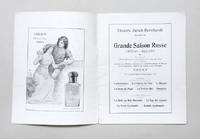
1911190134Paris & New York: various publishers 1911-39. Highly desirable collection of elusive and superbly produced ephemeral publications offering a rich panorama of the two decades of the Ballets Russes and featuring the leading lights of the company - Bakst Rubinstein Nijinsky; the whole reflecting the very highest standards of Diaghilev himself who in the words of his highly acclaimed biographer "would never allow quality to suffer" Sjeng Scheijen Diaghilev: A Life 2009 p. 405. Souvenir programme: Théâtre Sarah-Bernhardt Mai-Juin 1911. Grande Saison Russe: Opéras et Ballets. Organisée par "L'Association pour la Propagation de la Musique Slave" avec le concours d'Artistes des Théâtres Impériaux de Saint-Pétersbourg et Moscou et des principaux Théâtres de France et de 'Etranger. Paris: Publications Willy Fischer 1911 Square quarto pp. 32. Original pictorial wrappers designed by Jean Portalez wire-stitched. Portraits from photographs and adverts throughout. Light creasing and signs of handling to wrappers otherwise very good. Eye-catching souvenir programme clearly inspired by the enormous impact of the first two seasons of the Ballet Russes in Paris 1909-10 when "audiences were dazzled by the dancing and striking designs" V&A its title echoing Diaghilev's original billing of a "Saison Russe". The repertoire for the season at the Théâtre Sarah-Bernhardt comprised five operas including Dargomyzhsky's Rusalka Eugene Onegin and Anton Rubinstein's Le Démon and "sketches" from four ballets including La Forêt enchantée by Riccardo Drigo. The striking cover design is by Jean Portalez who did much stylish work for the French humour magazines Le Rire and Journal Amusant and was a frequent contributor to La Nouvelle Mode. One copy only located on Library Hub at New York Public Library. Comdia Illustré - Numero Special. Les Russes au Châtelet. Paris: Comdia Illustré 1911 Quarto. Original pictorial wrappers front cover with colour design by Bakst for the ballet Narcisse premiered in 1911 wire-stitched. With the translucent paper wrapper. Monochrome illustrations and adverts throughout one colour plate costume design by Bakst.One 4-page section loose light signs of handling otherwise very good. Attractive special number of the Comdia Illustré dedicated to Le Martyre de saint Sébastien a five-act mystery play by Gabriele D'Annunzio with incidental music by Debussy and scenery and costumes by Bakst designed as a vehicle for the inspirational Ida Rubinstein. Comdia Illustré - Théatre du Châtelet Grande Saison de Paris. du 4 Mai au 10 Mai 1912 Six Représentations de Gala: Hélène de Sparte. du 10 Juin au 20 Juin 1912 Six Représentations de Gala: Salomé. Paris: Comdia Illustré 1912 Quarto. Original pictorial wrappers front cover printed in silver and blue showing costume design by Bakst for Ida Rubinstein as Hélène wire-stitched. With the translucent paper cover wrapper printed in gold and green with copper-coloured cord. Colour and monochrome illustrations and adverts throughout all printed within gold borders. Light signs of handling to cover wrapper a few short closed-tears to periphery otherwise very good. Beautifully produced special issue of the Comdia Illustré dedicated to two productions Hélène de Sparte Verhaeren's tragedy music by Deodat de Severac decorations and costumes by Bakst mise en scène by Sanine and Wilde's Salomé music by Glazunov mise en scène by Sanine Dance of Salome choreographed by Fokine. Illustrations include colour plates of Bakst's costume and scenery portraits of the leading participants. One copy only located on Library Hub at BnF. Comdia Illustré - Grande Saison de Paris. Programme official des Ballets Russes. Septieme Saison de Ballets Russes. Mai-Juin 1912. Paris: Comdia Illustré 1912 Quarto. Original pictorial wrappers front cover with colour design by Bakst showing Nijinksy in L'Apres-Midi d'un Faune wire-stitched. With the translucent paper cover wrapper printed in blue and gold art nouveau border pearl-coloured cord. Colour and monochrome illustrations and adverts throughout all printed within gold borders. An excellent copy. Spectacular special number commemorating the seventh season of the Ballets Russes covering four spectacles and including Le Spectre de la Rose The Firebird Petrushka Prince Igor L'Apres Midi Daphnis et Chloé with excellent colour reproductions of Bakst's stunning costume and scenery designs. One copy only located on Library Hub at BnF. Souvenir - Serge De Diaghileff's Ballet Russe: With Originals by Leon Bakst and Others. 1916 American Tour Programme. New York: Metropolitan Ballet Company Inc. 1916 Quarto pp. 38. Original mottled brown hammer-finish card wrappers green silk cord tie cover image of Nijinsky in Scheherezade by Robert Montenegro in brown with embossed gilt work title lettering similarly embossed. Sepia frontispiece from a photograph Nijinsky in Spectre de la Rose and 8 other similar full-page illustrations including one of Lydia Lopokova 15 full-page colour illustrations one double-page the majority costume designs by Bakst among them the famous image of Nijinsky as the Faun in L'Après Midi. Minor nicks to periphery of wrappers. An excellent copy. An important piece of ballet history: the original souvenir programme from the first American tour of the Ballet Russes with full-colour illustrations of the sumptuous costumes designs of Leon Bakst. The programme includes brief ballet synopses an itinerary and two pages of illustrated advertisements. This is an unusual and highly desirable variant in that it features the superb Nijinsky illustration on the cover. Souvenir - Serge de Diaghileff's Ballet Russe. New York: Metropolitan Ballet Company Inc. 1916 Quarto pp. 36. Original cord-tied embossed grey card hammer-finish wrappers. Colour and sepia illustrations throughout. Minor nicks to wrappers. An excellent copy. Sumptuous souvenir program published by the Metropolitan Ballet Company for the first and only American tour of the Ballets Russes superbly illustrated and containing brief introductions to the repertoire: Le Pavillon D'Armide; L'Oiseau De Feu; Les Sylphides and Papillons; Le Spectre de la Rose; Narcisse; Schéhérazade; Sadko; Thamar; Le Carnaval of Schumann; Prince Igor; Petrouchka; Snégourotchka; Daphnis et Chloé;'L'Après-Midi d'un Faune; Le Dieu Bleu; and Cléopâtre. This differs in many respects to the version above. Souvenir programme: Ballets Russes de M. Serge de Diaghilew. Paris: Printed by L'Edition Artistique for Les Publications Willy Fischer 1925 Quarto. Original pictorial wrappers front cover with colour design by Pedro Pruna wire-stitched. With the glassine paper cover wrapper. Monochrome illustrations and adverts throughout. Glassine a little creased and tattered general light signs of handling. A very good copy. Attractive art deco souvenir programme the repertoire including Pulcinella La Boutique fantasque Les Matelots Les Biches and Train Bleu. The young Catalan artist Pedro Pruna was recommended to Cocteau by Picasso and a meeting with Diaghilev and Boris Kochno was arranged; they "immediately commissioned him to design Les Matelots" being impressed by his "limpid poetic theatrical work" cited in Alexander Schouvaloff The Art of Ballets Russes Yale UP 1997 p.279. Included here are a publisher's slip issued by Editions des Quatre Chemins advertising as "just published" Les Biches and Les Facheux; also the single page programme for 18 June Pulcinella Les Matelots La Boutique fantasque. Just a handful of copies on Library Hub. Ballets Russes de Diaghilew 1909 a 1929. Exposition organisée par Serge Lifar Mars a Juin 1939. Paris: Jacques de Brunhoff printed by Imprimerie Crété 1939 Quarto. Original printed wrappers with design by Bakst on gold paper inset to front cover wire-stitched. Monochrome illustrations throughout. Small stain at fore-edge of front cover light vertical crease. A very good copy. Attractive resume of productions spanning the first two decades of the Ballets Russes and illustrating costume designs by Bakst Gontcharova Sert Marie Laurencin Juan Gris and Benois scenery and curtain designs by Roerich Federovsky Picasso Braque Matisse Derain de Chirico Rouault Larionov Utrillo and Tchelichew. 8 works quarto. Original variously illustrated wrappers cord-tied or wire stitched as issued. Illustrated throughout in colour and monochrome. unknown
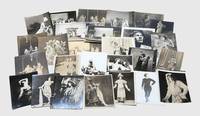
1619170555c.1916-1920s. A collection of photographs of Ballets Russes dancers including images of the principal dancer and choreographer Adolph Bolm his daughter Kyra Alanova the prima ballerina Tamara Karsavina and a single photo of Nijinsky as Albrecht in Giselle. Fifteen were taken by Emil Otto Hoppé 1878-1972 one of the most sought-after photographers of the 1920s and 1930s. He photographed the Ballets Russes from 1911 to 1923; these images are predominantly from their only American tours in 1916 and 1917. Karsavina appears in five and Bolm in twelve including two images of them together in costume for Le Pavillon d'Armide one of them together in Thamar and two in L'Oiseau de Feu. Adolph Bolm 1884-1951 was a pioneer of ballet in the United States. From 1909 to 1916 he was a principal dancer and choreographer for the Ballets Russes. During their American tour Bolm injured himself while dancing Thamar. He stayed in the USA and quickly established himself as a coveted choreographer. There were no American ballet companies and dancers performed with opera companies until Bolm established Chicago Allied Arts the first repertory ballet company in the USA. He later founded the San Francisco Opera Ballet and was one of five choreographers involved in the 1940 founding season for New York's Ballet Theatre. Tamara Karsavina 1885-1978 was a principal artist of the Imperial Russian Ballet before joining Diaghilev's Ballets Russes. She is perhaps most famous for creating the title role in Mikhail Fokine's L'Oiseau de Feu. Seventeen photographs are unattributed. One showing Bolm and Karsavina in Scheherazade is from the same Ballets Russes season. Another shows Bolm as the Golden Slave in Scheherazade post-1929 while a third shows Bolm as Amoun in Cleopatra undated but perhaps 1910. A further three are portraits of Bolm's daughter the ballerina Kyra Alanova two as the princess in A Kiss in Xanadu and one in unidentified costume. She danced with the Ballets Russes between 1918 and 1924 but these photos are likely later: one is dated in pencil "London 1925" on the verso and another has the ink stamp of Vaughan & Freeman on the verso London photographers who were active from 1928. The remaining 11 photographs are all dress rehearsals from an unidentified ballet with an "oriental" theme which does not appear to be any of the six ballets of that kind that the Ballets Russes debuted in Paris. Pencil annotations on the verso of nine images suggest "Adolf Bolm Kyra Deakin Alanova" and two images are annotated in a different hand with Alanova's name weight height hair and eye colour and New York address. These are likely from ballets choreographed by Bolm once he had parted with the Ballets Russes and established himself as one of the most important figures in American ballet. Together 32 photographic prints of varying mediums including carbon and silver gelatin from approx. 170 x 122 mm to 260 x 203 mm the photograph of Kyra Alanova as the princess in A Kiss in Xanadu mounted on card 260 x 198 mm. Edges rubbed occasional chips a few photographs overexposed or lightly silvered at edges remnants of adhesive to verso of two photographs two short closed tears to Adolph Bolm in Le Pavillon d'Armide one with tape repair to verso. A well-preserved collection. Andrew Foster "A Directory of Diaghilev Dancers" Dance Research: The Journal of the Society for Dance Research vol. 37 no. 2 2019 pp. 181-205. unknown
- Michel Lévy Frères, Paris 1862, 12,5x19cm, relié. - Édition originale. Reliure en demi chagrin, dos à cinq nerfs orné de fleurons dorés, date en queue, plats de papier marbré à motifs il-de-chat, premier plat de couverture conservé. Rare et précieux envoi autographe signé du compositeur?: «?à mon ami Seligmann - Hector Berlioz.?» Hippolyte-Prosper Seligmann (1817-1882), violoncelliste et compositeur, fut un membre actif de la Société philharmonique qu'avait créée Berlioz en 1849. Provenance : bibliothèque R. & B. L. avec son ex-libris encollé au dos de la première garde. [ENGLISH DESCRIPTION ON DEMAND]
- A. Bourdilliat & Cie, Paris 1859, 11,5x18cm, reliure de l'éditeur. - Les Grotesques de la musique [The Musical Madhouse] A. Bourdilliat & Cie | Paris 1859 | 11.5 x 18 cm | publisher's original binding First edition. Publisher's green cloth, blindruled frame to boards, yellow endpapers and pastedowns, pastedowns soiled, edges spotted. A little light foxing. A rare and handsome autograph inscription signed by Hector Berlioz in pencil to title: «à mon ami Théodore Ritter, souvenirs affectueux.» Théodore Ritter, son of the composer Eugène Prévost, was Berlioz's student, producing a piano arrangement of L'Enfance du Christ. Inscriptions by Berlioz are rare and highly sought-after. [FRENCH VERSION FOLLOWS] Édition originale. Reliure de l'éditeur en pleine toile verte, dos lisse orné de caissons à froid, encadrement de filets à froid sur les plats, gardes et contreplats de papier jaune, contreplats salis, tranches mouchetées. Quelques petites rousseurs. Rare et précieux envoi autographe signé d'Hector Berlioz au crayon de papier sur la page de titre?: «?à mon ami Théodore Ritter, souvenirs affectueux.?» Théodore Ritter, fils du compositeur Eugène Prévost, fut l'élève de Berlioz pour lequel il réalisa une version pour piano de L'Enfance du Christ.
191289381Sans nom d'éditeur | Sans lieu d'édition 1912 | 20.9 x 28.5 cm | Agrafé
186271549Michel Lévy frères | Paris 1862 | 12.50 x 19 cm | relié
185968513A. Bourdilliat & Cie | Paris 1859 | 11.50 x 18 cm | reliure de l'éditeur
221843S.l., (ca 1770) 44 x 56 cm, dessin ancien au pastel sur papier fort, sous verre, cadre de bois doré ancien, petite tache au centre du tableau.
175214354Aux dépens de l'Académie, A Paris, Delormel et fils, 1752. In-4 de 56 pp., maroquin rouge fleurdelisé, dos orné à nerfs, frise et roulette dorées d'encadrement sur les plats, armes sur les plats, fleur de lys en écoinçons, tranches dorées (reliure de l'époque).
19151519Paris, Imprimé pour Charles Meunier, 1915. In-folio (37,5 x 27,8 cm), reliure maroquin bordeaux, listel d'encadrement à froid, dos à quatre nerfs titré or, encadrement intérieur orné de listels à froid se croisant aux angles avec jeu de petits carrés dorés, doublure bord à bord de même maroquin, gardes de moire aubergine, tranches dorées sur témoins, couverture, étui (Gruel). TRÈS RARE ÉDITION TIRÉE À 30 EXEMPLAIRES SEULEMENT, illustrée de compositions dans le texte et de 10 EAUX-FORTES DE LOBEL-RICHE EN 5 ÉTATS ET À PLEINE PAGE. Un des 25 exemplaires sur vélin teinté (n° 19) contenant 5 états des gravures hors texte sur papier vélin, papier japon et parchemin, une suite de 11 petites remarques d'artistes gravées à l'eau-forte. Cet exemplaire est enrichi de 8 épreuves d'essais de ces vignettes en états signés, 30 épreuves d'essais et d'artiste toutes signées et annotées des 10 hors-texte, et 15 DESSINS ORIGINAUX de l'artiste au crayon ou en sanguine sur vélin ou calque, généralement très aboutis et signés. EXEMPLAIRE DE MAURICE CHEVALIER portant cet envoi de Lobel-Riche : "Un jour, j'ai compris pourquoi Maurice Chevalier était un artiste et un poète : il avait le secret des grands coeurs qui s'imposent. Et c'est avec plaisir que je lui dédie cet ouvrage en mémoire de notre commun sentiment [...]. PARFAITE ET SOBRE RELIURE ART-DÉCO EN MAROQUIN DOUBLÉ DE GRUEL.
19141477Imprimé pour Charles Meunier, La Maison du Livre, Paris 1914. 1 volume in-folio (370 x 280 mm) entièrement monté sur onglets, couverture muette de papier marbré gaufré, portefeuille à rabats, dos et coins de percaline bleue, pièce de titre (de l'éditeur). 10 EAUX-FORTES ORIGINALES EN COULEURS HORS-TEXTE DE LOBEL-RICHE dont un frontispice, une vignette gravée sur le titre, 10 illustrations dans le texte et nombreux ornements. Édition de luxe tirée à 30 exemplaires seulement. EXEMPLAIRE SUR JAPON IMPÉRIAL contenant 5 ÉTATS DES EAUX-FORTES dont un état sur parchemin signé à la mine de plomb (1e, 2e, 3e épreuves en états d'eau-forte, 4e état terminé sur parchemin, signé pour chacune au crayon par l'artiste, 5e état en couleurs à la poupée sur vélin blanc), une suite sur Japon de 12 petites eaux-fortes reprenant les vignettes in-texte, la gravure de titre avant la lettre et 2 très jolis DESSINS ORIGINAUX signés au crayon en noir et bistre sur le faux-titre. English description: LES BARS. Size plate or paper : 37 x 28 cm, 10 original etchings in 5 states : 1rst state (eau-forte pure), second state in black, state in black signed and printed on parchemin, in black with aquatint, and final state in color (à la poupée). cumulatively 50 plates. Also 20 pages of text with small drawings printed in red. All these drawings are reinterpreted in original etching (pointe-sèche) : 12 (tltle + 11), and printed on Japan paper. 2 ORIGINAL DRAWINGS signed on the half-title page.
1969655281969 | 16.80 x 21.60 cm | carnet en spirales
1923192281923 11 gouaches, sur papier cartonné (feuilles 49 x 30 cm, dessins 45 x 27 environ), deux dessins datés et signés, en bas à gauche, 1923, encadré.
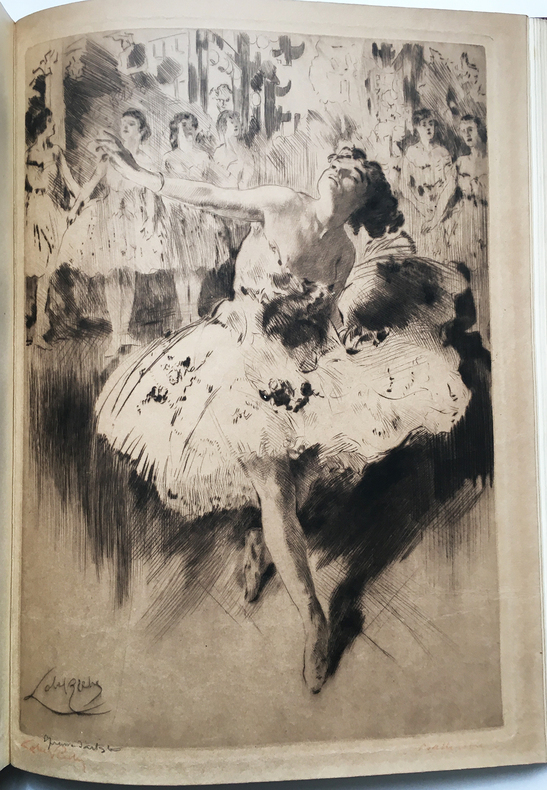
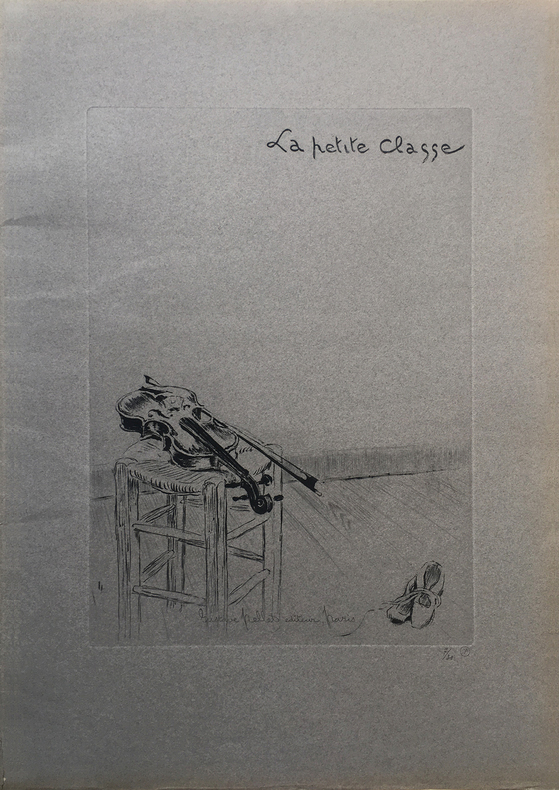
19081849G. Pellet éd., Paris, 1908. Album In-folio (400 x 580 mm), en feuilles, couverture générale de vélin gris illustrée d'une eau-forte, portefeuille de l'éditeur. 12 EAUX-FORTES, AQUATINTE ET POINTE-SÈCHE, chaque épreuve signée au crayon par l'artiste. L'une des très rares 30 suites avec remarques et avant réduction des cuivres. Très belles épreuves, d'une exceptionnelle fraîcheur, avec remarques, signées à la mine de plomb et revêtues du timbre de l'éditeur (L. 1191). Très grandes marges. Chaque planche est signée au crayon par Louis Legrand et justifiée 7/30, portant le cachet de l'éditeur et paraphée GP par lui au crayon. La gravure répétée de la couverture est justifiée et paraphée par Pellet mais non signée par l'artiste comme habituellement. Suite complète. Parfait état de conservation avec le portefeuille original très beau. Photographies supplémentaires sur demande. Album “La petite classe”. Paris, Pellet 1908. Aquatint, etching and drypoint (12 plates 410 x 590 mm) 1/30 on Japan paper with remarques and before plate reduction. Each print is numbered 7/30, signed by Louis Legrand and with the blind stamp of Pellet editor with his paraph. More pictures on request. Références : Arwas 358 à 370 ; Lugt 1191. Sur l'artiste : Louis Legrand est né à Dijon en 1863. Son désir de devenir artiste est tel qu'il étudie à l'école des Beaux-Arts de Dijon en soirées et pendant ses heures de loisirs, tout en travaillant comme employé de banque. En 1883, il obtient le Prix Desvoge. En 1884, il part pour Paris où peu de temps après son arrivée, il s'initie aux techniques de gravure avec Félicien Rops qui dira de lui : Quel homme, ce Legrand, il trouverait des angles dans une boule de billards. Sa technique préférée est l'aquatinte monochrome ou en couleurs. Ses débuts sont assez difficiles et marqués par une certaine maladresse et une inexpérience. Pendant les quelques années qui suivent, Louis Legrand gagne essentiellement sa vie en réalisant des dessins pour des journaux d'enfant. Dès 1887, Louis Legrand collabore au journal Le Courrier français pour lequel il remet chaque semaine un dessin qui met souvent l'accent sur la déchéance et la mort qui attendent la prostituée et son client, plutôt que sur les plaisirs et les jeux. Poursuivi pour obscénité et après avoir purgé une courte peine de prison, Legrand abandonne sa carrière d'illustrateur satirique. En 1891, il participe, avec une série d'illustrations en couleurs, au Gil Blas illustré consacré à un reportage sur le cancan et ses principaux interprètes écrit par Erastène Ramiro et décrivant l'entraînement sévère auquel les danseurs se soumettent. Vendu à 6000 exemplaires, le magazine fait connaître le nom de Legrand à travers la France. Fort de ce succès, l'éditeur Dentu persuade Louis Legrand de réaliser des eaux-fortes de ses mêmes aquarelles afin de les publier l'année suivante sous le titre Le Cours de Danse Fin de Siècle avec un texte révisé de Ramiro. Après avoir terminé sa série sur le cancan, Legrand s'intéresse au monde de la danse et fréquente les coulisses et salles de répétition. C'est le travail avant la scène qui retient l'intérêt de l'artiste. Outre de nombreuses aquatintes, dessins et pastels, il réalise deux albums consacrés à ce monde de la danse. Le premier intitulé "Les Petites du Ballet" (1893) se compose de douze aquatintes et retrace l'évolution des futures ballerines. Le second "La Petite Classe" (1908) composé de douze grandes gravures et aquatintes traite des danseuses professionnelles. C'est le plus accompli du point de vue artistique et technique. En 1896, la galerie " L'Art Nouveau " de Samuel Bing expose près de deux cents gravures de Louis Legrand retraçant ainsi l'ensemble de son œuvre. En 1900, Legrand obtient une médaille d'argent à l'Exposition universelle de Paris. En 1906, il reçoit la Légion d'Honneur. Il meurt en 1951, dans un oubli complet. Les sujets de prédilection de l'artiste sont la vie nocturne parisienne, les bars, les maisons closes, les cabarets. Il a précédé Henri de Toulouse-Lautrec et d'autres dans la représentation du cancan et des demi-mondaines de Montmartre. L'exposition au Musée provincial Félicien Rops présente tous ces thèmes en mettant l'accent sur l'art gravé de l'artiste. (Exposition au Musée Félicien Rops de Namur en 2006 : "Louis Legrand. Entre femmes et remous"). Italien : Portfolio (mm 590x410) contenente 12 incisioni ad acquatinta e puntasecca, ognuna firmata a matita e col timbro di Pellet. Brossura editoriale figurata grigia con un'incisione al piatto recante il titolo della suite e il nome dell'editore. Raro e prezioso esemplare fuori numerazione corrispondente ai 30 su carta Japon con remarques (gli altri 100 su simil-Japon erano senza remarques). Gustave Pellet era uno dei più grandi editori parigini tra '800 e '900: pubblicò le più importanti litografie a colori di Toulouse-Lautrec, opere grafiche dei divisionisti Signac e Luce, oltre ai simbolisti Rops e Redon. Aveva una particolare passione per Legrand di cui pubblicò circa 300 incisioni e acquistò la collezione dei suoi pastelli originali. Gli album di Legrand, specialmente quelli sulla danza, sono ormai rari a trovarsi completi perché spesso smembrati per vendere le singole incisioni.
- Choudens, Paris S.d (1867), 19x28cm, relié. - Roméo et Juliette - Opera score in 5 acts by J. Barbier et M. Carré Choudens, Paris n.d (1867), 19x28cm, bound. First edition. Opera in five acts based on the play Romeo and Juliet by William Shakespeare, music by Charles Gounod for voice and piano and libretto by Jules Barbier and Michel Carré. Bound in half red chagrin (retinted), gilt spine, glazed calico boards with double gilt fillets, central gilt initials of Ernest Beulé on the first board, moiré silk endpapers with some spotting and staining to the margins, first original cover preserved, all edges gilt, strictly contemporary binding. Rare inscription signed by Charles Gounod to the archaeologist E(rnest) Beulé. [FRENCH VERSION FOLLOWS] Edition originale de cette partition de l'opéra en cinq actes tiré de l'oeuvre de William Shakespeare, composition musicale de Charles Gounod pour chant et piano et livret par Jules Barbier et Michel Carré. Reliure en demi chagrin rouge avec reprise de teinte, dos à cinq nerfs orné de doubles caissons et de pointillés dorés, plats de percaline grainée avec double filet doré en encadrement, initiales d'Ernest Beulé estampées à l'or au centre du premier plat, contreplats et gardes de papier moiré comportant quelques salissures et brunissures marginales, premier plat de couverture conservé, toutes tranches dorées, reliure strictement de l'époque. Précieux envoi autographe signé de Charles Gounod à à l'archéologue E(rnest) Beulé sur la page de dédicace.
1895206631895 Photographies en noir et blanc signées pour la plupart, certaines sont montées sur carton, (1895-1937), formats allant de 14 x 10 à 32 x 40 cm.
- 1999, Photographies : 29,7x25cm / Cadres : 62x52cm, deux planches-contact encadrées sous passe-partout. - Diptych of twenty original photographic portraits front and back of Michael Jackson with the golden cape embroidered 1999 | Photograph: 29.7 x 25 cm / Frames: 62 x 52 cm | two contact-sheets framed under a mount Unique original prints of these color photographs, presented like contact sheets, signed by the artist, numbered 1/1 and dated 2010 - date of sale of these unpublished shots by Pierre Bergé et Associés. Original photographs of Michael Jackson by Arno Bani It is in 1999 during a stay in London that Michael Jackson noticed Arno Bani's work in an issue of the Sunday Times magazine. Fascinated by his fashion shots, he brought the young 23 year old photographer to New York and asked him not only to photograph him, but also to define his look for the next ten years. This meeting will be followed by several working meetings and finally a three-day photoshoot at the Malakoff studios in the southern suburbs of Paris. These photographs, supposed to serve as an illustration for the Invincible album cover, were claimed by Michael Jackson's record company and were not revealed to the public until 2010, the year after the King of Pop's death. «This collaboration will finish Arno Bani's installation as one of the most talented photographers of his generation. Subsequently, he was contacted by fashion and luxury institutions such as Lacroix, Givenchy and Cartier and by musicians such as the duo Air, David Guetta and Bob Sinclar. At 25 years old, Arno Bani is a photographer recognised beyond the borders of fashion. Made of oppositions, mixing classicism and modernity, his monochrome approach to image is now inescapable and is seen on the pages of Citizen K, Spoon, Visionaire and Jalouse. He also photographed Monica Bellucci, Mélanie Thierry and Noémie Lenoir.» (Pierre Bergé et Associés sales catalogue, December 2010) Ten original photographic portraits of Michael Jackson with the embroidered golden cape [FRENCH VERSION FOLLOWS] Tirage original unique de cette double série photographique en couleursprésentée comme deux planche-contact, numérotées, datées et signées au verso par l'artiste à l'encre noire: "1/1, sept 2010, Arno Bani". Septembre 2010 est la date de la vente de ces clichés inédits chez Pierre Bergé et Associés. C'est en 1999 lors d'un séjour à Londres que Michael Jackson remarque le travail d'Arno Bani dans un numéro du Sunday Times magazine. Fasciné par ses clichés de mode, il fait venir le jeune photographe de 23 ans à New York et lui demande non seulement de le photographier, mais aussi de définir son look pour les dix prochaines années. Cette rencontre sera suivie de plusieurs réunions de travail et enfin d'une séance photo de trois jours dans des studios de Malakoff, en banlieue sud de Paris. Ces photographies, supposées servir d'illustration à la pochette de l'album Invincible furent revendiquées par la maison de disques de Michael Jackson et ne furent révélées au public qu'en 2010, année suivant la disparition du king of pop. « Cette collaboration achèvera d'installer Arno Bani comme l'un des photographes les plus doués de sa génération. Par la suite, il est sollicité par des institutions de la mode et du luxe comme Lacroix, Givenchy et Cartier ou par les musiciens du duo air, David Guetta et Bob Sinclar. À vingt-cinq ans, Arno Bani est un photographe reconnu au-delà des frontières de la mode. Faite d'oppositions, mélangeant classicisme et modernité, son approche monochromique de l'image est désormais incontournable et s'exprime dans les pages de Citizen K, Spoon, Visionaire ou Jalouse. Il photographie ainsi Monica Bellucci, Mélanie Thierry ou Noémie Lenoir. » (Catalogue de la vente Pierre Bergé et Associés, décembre 2010)