[CHINESE VAUDEVILLE AND PEKING OPERA].Biblio.com
3 résultats
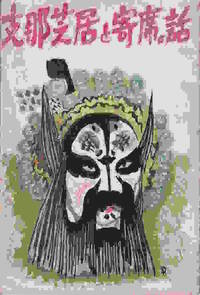
1419219549奉天. Mukden.: 滿鐵鐵道總局營業局旅客課. Mantetsutetsudōsōkyokueigyōkyokuryokakuka Hōten. Showa 14 1939. Black and white photographic illustrations 18.7 x 12.7cm 33pp original wrappers upper cover pictorial. Minor wear and light browning. Good copy. This charming tourist booklet with its delightful pictorial cover offers a comprehensive introduction to Peking Opera and Chinese vaudeville. It outlines the rules governing movement and costume in opera and describes the range of story types and productions a visitor might expect to see. The vaudeville section explains the various forms of oral entertainment performed for audiences together with the customs and rules observed in the theatre. Published in Mukden the booklet provides an accessible and informative overview of the region’s popular entertainments. . 滿鐵鐵道總局營業局旅客課. [Mantetsutetsudōsō unknown
1491915<p>Terviso or Venice: Michael Manzolus 1491. First Edition with the commentary of Acron and Pomponius Porphyrio. Bound in modern marbled gilt calf. A very large and clean copy with marginal indexing on a few signatures in red others in brown ink. A very Large copy of a very very rare edition of Horace https://data.cerl.org/istc/ih00451000 GW 13457; Goff H451; BMC V 315 IB. 21815; Bod-inc H-203; CIBN H-275. Located copies:The Walters Art Museum Bancroft Library Yale Free Library of Philadelphia Princeton Univ. Brown University Pauline Fore Moffitt Library University of California General Library. The unique charm of Horace's lyric poetry arises from his combination of the metre and style of the distant past—the world of the Archaic Greek lyric poets—with descriptions of his personal experience and the important moments of Roman life. He creates an intermediate space between the real world and the world of his imagination populated with fauns nymphs and other divinities.<br />He denounces corrupt morals praises the integrity of the people of Italy and shows a ruler who carries on his shoulders the burden of power. Other Augustan themes that appear in Horace's lyric verse include the idea of the universal character and eternity of Roman political dominion and the affirmation of the continuity of the republican tradition with the Augustan principate. At some stage Augustus offered Horace the post of his private secretary but the poet declined on the plea of ill health. Not withstanding Augustus did not resent his refusal and indeed their relationship became closer.<br />"Horace's success as a poet can be measured partly by how difficult he is to imitate and translate and by how many admirers have sought to do both. Readers in the Middle Ages looked to Horace as a moralist and as a literary critic and appreciated the Satires and Epistles more than the more difficult Odes. The enthusiasm of the Italian Renaissance poets Petrarch 14th century Landinio and Politian late 15th century for the Odes encouraged the popularity of Horace's lyric. Horace was one of Montaigne's 16th century favorite poets. The themes and poetics of both the lyrics and the satires greatly influenced Ben Jonson late 16th early 17th century Robert Herrick Andrew Marvell Milton and Dryden 17th century. The Odescontinued to be springboards for much of both public and private 17th-century English lyrics. Pope was the leading Horatian poet writing in English during the 18th century the Age of Augustanism especially imitating Horace's hexameter poetry while Alfred Lord Tennyson Matthew Arnold Byron and Rudyard Kipling were among Horace's enthusiasts in the 19th century. Horace continued to inspire modern poets among them Ezra Pound. <br /><br />While the different genres of his work have specific qualities they all share in being Horatian a quality that many have tried to define. In Nietzsche's view Horace's peerless artistry separates him from all other poets. Compared to Horace's Odes "All the rest of poetry becomes in contrast something too popular—a mere garrulity of feelings" "What I owe to the ancients" Twilight of the Idols 1 https://www.poetryfoundation.org/poets/horace . Folio 30 x 20cm Signatures: A8B10C8D4E8F-G6a–q8r6. 184 leaves First Edition of Horace with both of his ancient commentators Acron and Porphyrio. Bound in modern marbled gilt calf. A very large and clean copy with marginal indexing on a few signatures in red others in brown ink.<br /><br />The history of the printing of editions of Horace and his commentators.<br /><br />First printed in Venice about 1471-2 then in Milan about 1475 14761477 Venice again 1478 &1479. The next edition was Leipzig 1492 All of these editions are without commentary. Acron's commentary was Published with out the Opera in Milan in 1479. At Florence in 1482 there is an edition of the Opera with the Landinus commentary then again in Venice 1483-86. The Edition offered here is the FIRST to have the commentary of Helenius Acron and Pomponius Porphyrion who are both said to have flourished in the third century these commentaries are revised by Raphael Rgius ƒl. 1480-1500 and Ludovicus de Strazarolis which make up the first 50 pages of this book.</p> Michael Manzolus
149047651Venedig, Bernardinus de Choris u. Simon de Luere, 5. Oktober 1490. Fol. 3 nn., 147; 65 num., 1 weißes (= 216) Bll. (Rom. Type, 62 Zeilen; Min. f. Initialen), Mod. Pgmt. unter Verwendung einer lateinischen Handschrift des 15. Jhds. mit zahlr. roten u. blauen Fleuronné-Initialen.

