DEBUCOURT Louis-PhilibertLivre Rare Book
13 résultats
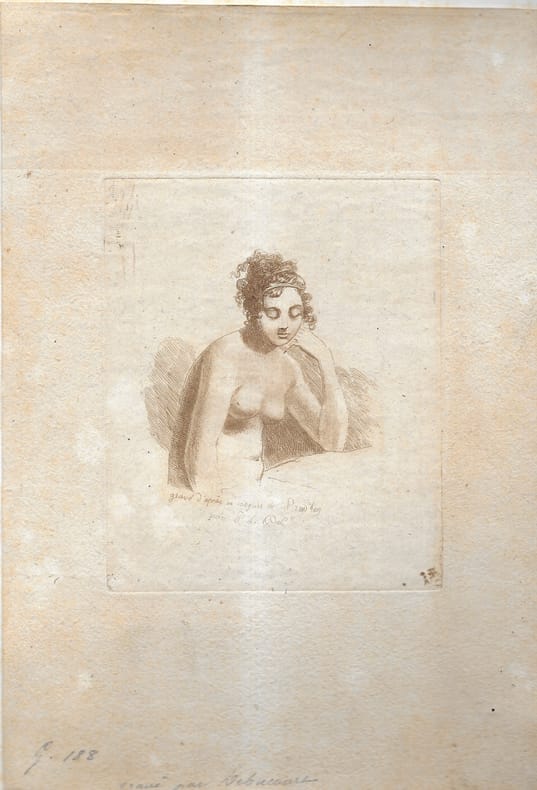
18005652Gravé à l’eau-forte d’après un croquis de Prud’hon. Une jeune femme nue, baissant les yeux, coiffée en papillotes, est représentée à mi-corps, la joue appuyée sur sa main gauche. Signature en bas à la pointe. Eau-forte imprimée en bistre, décrite dans le catalogue de Prud’hon (n° 188, page 296) par E. et J. de Goncourt. Fenaille n° 132. Très belle épreuve, grande de marges ( 27,3 x 19,2). Rare. 14,4 x 11,8 Bon circa 1800
17985449Retirage par Goupil à la fin du XIXè de cette fameuse planche. Elle est coloriée aux pochoirs. (Fenaille ) Cadre moderne et passe-partout. 520 x 385 1798
1787015962Paris: Louis-Philibert Deboucourt 1787. Early Printing . Single Sheet. Very Good . 18 1/2" x 12 3/4. Color Engraving. An Important Eighteenth Century Engraving One Of The First To Be Printed In Color By The Use Of Several Different Impressions Each Precisely Aligned. Laid Paper. Complete With Full Margins As Issued With Plate Mark 11" X 15" Overall Size 18 3/8" X 12 3/4". This State Of The Plates Has The Stone Beneath The Lamb Colored Blue With The Three Stones To The Right Colored Successively Brown Blue And Brown. Text Is "Peint Et Grave Par De Bucourt Peitre Du Roy 1727 Sic" To Left With Text At Center "Heur Et Malheur / Ou / La Cruce Cassee / A Paris Chez L'auteur Cour Du Louvre La 5Eme Porte Agauche En Entrant Par La Colonade Au 1Er." Plate Mark On All Four Sides With Adjustment Reference Marks. Philibert-Louis Debucourt 1755 - 1832 Was A French Painter And Engraver. Debucourt Was Born In Paris In 1755 And Became A Pupil Of Vien. He Executed A Few Plates In Mezzotint Such As The Heureuse Famille The Benediction De La Mariée And The Cruche Cassée After His Own Designs. Most Of His Work Was However In Aquatint. He Became The Leading Maker Of Multi-Plate Colour Prints Combining Washes Of Aquatint With Line-Engraving.2 He Used A Number Of Different Techniques But Most Involved Three Colour Plates And A Fourth Key Plate Outlining The Design In Black. Debucourt's Father-In-Law Was The Sculptor Louis-Philippe Mouchy. In The Marriage Contract Mouchy Generously Offered To Provide A Three-Room Apartment At The Louvre Where Debucourt Lived For Twelve And A Half Years. The Address Of This Apartment Is Often Given On His Prints. Some Of His Work Was Satirical Such As La Promenade Publique An Aquatint Of 1792 Showing A Crowd In The Gardens The Palais-Royal. As Well As Work From His Own Designs He Made Aquatints After Carle Vernet Including The Horse Frightened By A Lion The Horse Frightened By Lightning And The Strayed Huntsman. Debucourt Was Assisted For Some Years By His Pupil And Nephew Jean-Pierre-Marie Jazet. <br/> <br/> Louis-Philibert Deboucourt unknown
17870159631787. Original Art Work . Single Sheet. Very Good . 18 1/2" x 12 3/4. Color Engraving. An Important Eighteenth Century Color Engraving One Of The First To Be Produced In Color By Plates. Laid Paper. Complete With Full Margins As Issued With Plate Mark 11" X 15". This State Of The Plates Has The Stone Beneath The Lamb Colored Brown With The Three Stones To The Right Colored Successively Blue Brown And Part Blue/Part Brown. Text Is "Peint Et Grave Par De Bucourt Peitre Du Roy 1727 Sic" To Left With Text At Center "Heur Et Malheur / Ou / La Cruce Cassee / A Paris Chez L'auteur Cour Du Louvre La 5Eme Porte Agauche En Entrant Par La Colonade Au 1Er." Plate Mark On All Four Sides With Adjustment Reference Marks. Philibert-Louis Debucourt 1755 - 1832 Was A French Painter And Engraver. Debucourt Was Born In Paris In 1755 And Became A Pupil Of Vien. He Executed A Few Plates In Mezzotint Such As The Heureuse Famille The Benediction De La Mariée And The Cruche Cassée After His Own Designs. Most Of His Work Was However In Aquatint. He Became The Leading Maker Of Multi-Plate Colour Prints Combining Washes Of Aquatint With Line-Engraving.2 He Used A Number Of Different Techniques But Most Involved Three Colour Plates And A Fourth Key Plate Outlining The Design In Black. Debucourt's Father-In-Law Was The Sculptor Louis-Philippe Mouchy. In The Marriage Contract Mouchy Generously Offered To Provide A Three-Room Apartment At The Louvre Where Debucourt Lived For Twelve And A Half Years. The Address Of This Apartment Is Often Given On His Prints. Some Of His Work Was Satirical Such As La Promenade Publique An Aquatint Of 1792 Showing A Crowd In The Gardens The Palais-Royal. As Well As Work From His Own Designs He Made Aquatints After Carle Vernet Including The Horse Frightened By A Lion The Horse Frightened By Lightning And The Strayed Huntsman. Debucourt Was Assisted For Some Years By His Pupil And Nephew Jean-Pierre-Marie Jazet. <br/> <br/> unknown
180012763Paris: Charles Bance & Aumont 1800. Aquatint engraving printed in colour à la poupée on wove paper. Very good condition apart from some overall light soiling and minor foxing. Trimmed close to plate mark on all sides. A striking beautifully coloured engraving after the renowned 16th-century Venetian Mannerist Tintoretto. A representation of the Italian painter's enigmatic mistress this plate is part of a series of three aquatints Debucourt completed after paintings by Tintoretto Rubens and Raphael depicting their respective mistresses.<br/> <br/> This print is a stunning example of the single plate colour printing technique used in France beginning in the 18th century. The effect is achieved by inking a single plate with several different colours by using a rag stump a process known as à la poupée. The outcome achieved by this laborious method of inking has a wonderful painterly effect and creates a delicacy of image which is charming to behold. Although a painter by training Philibert-Louis Debucourt is primarily renowned as one of the most innovative colour printmakers of the eighteenth century. Born in 1781 he studied with Joseph Marie Vien at the French Academy. After several years of exhibiting his paintings at the Salon he turned to printmaking in 1781. During the mid 1780s he began experimenting with the complicated multiple-plate colour printing process a technique that was refined and revolutionized by Jean-François Janinet. Debucourt found success with his colour intaglio prints of Parisian high society and he quickly earned a reputation as a skilled and prolific engraver. The bulk of his prints however were based on paintings by other artists and completed after the turn of the century. Despite his intense focus on printmaking he continued to exhibit his paintings alongside his engravings at the Salon throughout his life.<br/> <br/> Cf. Benezit Dictionnaire des Peintres Sculpteurs Dessinateurs et Graveurs vol. 4 p. 323; cf. Regency to Empire: French Printmaking 1715-1814 p. 346; Fenaille L'oeuvre gravé de P.-L. Debucourt 1755-1832 pp. 257-8. Charles Bance & Aumont unknown
180012765Paris: Charles Bance & Aumont 1800. Aquatint engraving printed in colour à la poupée on wove paper. Very good condition apart from some overall light soiling minor foxing and a skillfully repaired small loss in the left margin. Trimmed close to plate mark on all sides. A striking beautifully coloured engraving after the renowned 17th-century Flemish painter Peter Paul Rubens. A representation of Rubens' sister-in-law Susanna Lunden this plate is part of a series of three aquatints Debucourt completed after paintings by Tintoretto Rubens and Raphael.<br/> <br/> Susan Lunden was the daughter of the Antwerp silk merchant Daniel Fourment and the sister of Rubens' second wife Helena. Originally titled 'Le Chapeau de Paille' The Straw Hat the painting after which this plate is engraved dates from around 1622-25 and may have been a marriage portrait intended for Lunden's second husband Arnold. This print is a stunning example of the single plate colour printing technique used in France beginning in the 18th century. The effect is achieved by inking a single plate with several different colours by using a rag stump a process known as à la poupée. The outcome achieved by this laborious method of inking has a wonderful painterly effect and creates a delicacy of image which is charming to behold. Although a painter by training Philibert-Louis Debucourt is primarily renowned as one of the most innovative colour printmakers of the eighteenth century. Born in 1781 he studied with Joseph Marie Vien at the French Academy. After several years of exhibiting his paintings at the Salon he turned to printmaking in 1781. During the mid 1780s he began experimenting with the complicated multiple-plate colour printing process a technique that was refined and revolutionized by Jean-François Janinet. Debucourt found success with his colour intaglio prints of Parisian high society and he quickly earned a reputation as a skilled and prolific engraver. The bulk of his prints however were based on paintings by other artists and completed after the turn of the century. Despite his intense focus on printmaking he continued to exhibit his paintings alongside his engravings at the Salon throughout his life.<br/> <br/> Cf. Benezit Dictionnaire des Peintres Sculpteurs Dessinateurs et Graveurs vol. 4 p. 323; cf. Regency to Empire: French Printmaking 1715-1814 p. 346; Fenaille L'oeuvre gravé de P.-L. Debucourt 1755-1832 pp. 257-8. Charles Bance & Aumont unknown
180012763Paris: Charles Bance & Aumont 1800. Aquatint engraving printed in colour à la poupée on wove paper. Very good condition apart from some overall light soiling and minor foxing. Trimmed close to plate mark on all sides. A striking beautifully coloured engraving after the renowned 16th-century Venetian Mannerist Tintoretto. A representation of the Italian painter's enigmatic mistress this plate is part of a series of three aquatints Debucourt completed after paintings by Tintoretto Rubens and Raphael depicting their respective mistresses.<br/> <br/>This print is a stunning example of the single plate colour printing technique used in France beginning in the 18th century. The effect is achieved by inking a single plate with several different colours by using a rag stump a process known as à la poupée. The outcome achieved by this laborious method of inking has a wonderful painterly effect and creates a delicacy of image which is charming to behold. Although a painter by training Philibert-Louis Debucourt is primarily renowned as one of the most innovative colour printmakers of the eighteenth century. Born in 1781 he studied with Joseph Marie Vien at the French Academy. After several years of exhibiting his paintings at the Salon he turned to printmaking in 1781. During the mid 1780s he began experimenting with the complicated multiple-plate colour printing process a technique that was refined and revolutionized by Jean-François Janinet. Debucourt found success with his colour intaglio prints of Parisian high society and he quickly earned a reputation as a skilled and prolific engraver. The bulk of his prints however were based on paintings by other artists and completed after the turn of the century. Despite his intense focus on printmaking he continued to exhibit his paintings alongside his engravings at the Salon throughout his life.<br/> <br/>Cf. Benezit Dictionnaire des Peintres Sculpteurs Dessinateurs et Graveurs vol. 4 p. 323; cf. Regency to Empire: French Printmaking 1715-1814 p. 346; Fenaille L'oeuvre gravé de P.-L. Debucourt 1755-1832 pp. 257-8. Charles Bance & Aumont unknown books
180012765Paris: Charles Bance & Aumont 1800. Aquatint engraving printed in colour à la poupée on wove paper. Very good condition apart from some overall light soiling minor foxing and a skillfully repaired small loss in the left margin. Trimmed close to plate mark on all sides. A striking beautifully coloured engraving after the renowned 17th-century Flemish painter Peter Paul Rubens. A representation of Rubens' sister-in-law Susanna Lunden this plate is part of a series of three aquatints Debucourt completed after paintings by Tintoretto Rubens and Raphael.<br/> <br/>Susan Lunden was the daughter of the Antwerp silk merchant Daniel Fourment and the sister of Rubens' second wife Helena. Originally titled 'Le Chapeau de Paille' The Straw Hat the painting after which this plate is engraved dates from around 1622-25 and may have been a marriage portrait intended for Lunden's second husband Arnold. This print is a stunning example of the single plate colour printing technique used in France beginning in the 18th century. The effect is achieved by inking a single plate with several different colours by using a rag stump a process known as à la poupée. The outcome achieved by this laborious method of inking has a wonderful painterly effect and creates a delicacy of image which is charming to behold. Although a painter by training Philibert-Louis Debucourt is primarily renowned as one of the most innovative colour printmakers of the eighteenth century. Born in 1781 he studied with Joseph Marie Vien at the French Academy. After several years of exhibiting his paintings at the Salon he turned to printmaking in 1781. During the mid 1780s he began experimenting with the complicated multiple-plate colour printing process a technique that was refined and revolutionized by Jean-François Janinet. Debucourt found success with his colour intaglio prints of Parisian high society and he quickly earned a reputation as a skilled and prolific engraver. The bulk of his prints however were based on paintings by other artists and completed after the turn of the century. Despite his intense focus on printmaking he continued to exhibit his paintings alongside his engravings at the Salon throughout his life.<br/> <br/>Cf. Benezit Dictionnaire des Peintres Sculpteurs Dessinateurs et Graveurs vol. 4 p. 323; cf. Regency to Empire: French Printmaking 1715-1814 p. 346; Fenaille L'oeuvre gravé de P.-L. Debucourt 1755-1832 pp. 257-8. Charles Bance & Aumont unknown books
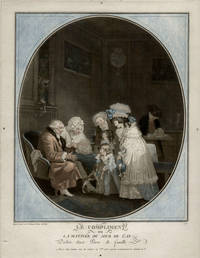
178821161788. Aquatints printed in colours. 390mm by 290mm platemark 545mm by 440mm mounted. <p>'Le Compliment ou La Matinee du Jour de L'an Dediee aux Peres de Famille' The Compliment or New Year's Morning Dedicated to the Fathers of the Family and it's pair 'Les Bouquets ou La Fete de la Grand-Maman Dedies aux Meres de Famille' The Bouquets or Grandmother's Party Dedicated to the Mothers of The Family. Published by the artist in Paris 1787 and 1788. Debucourt was a true peintre-graveur a painter who turned to making colour prints following the methods of Janinet and Descourtis but unlike them he made many prints from his own designs. He started making colour prints using multiple - methods and later turned to stipple engraving with single plates inked a la poupee. A pair of separately issued Louis XVI period portrait scenes depicting wealthy French families spending time together dressed in period clothing. One is dedicated to fathers the other to mothers. Each scene is set within an oval rendered in a wash manner. These prints were both exhibited at the National Gallery of Art Washington D.C. in the show Colorful Impressions: The Printmaking Revolution in Eighteenth-Century France 2003 - 2004. Acid free mounts.</p> <br /> <p> </p> unknown
1787015884Paris 1787. Early Printing . Single Sheet. Very Good. 25 1/2" x 18. Color Engraving. Laid Paper. Printed In Color Not With Later Coloring. Complete With Full Margins As Issued With Title In English And French Below The Image Which Is Approximately 21" X 11". This State Of The Plates Has The Third Large Female Figure From The Left In A Grey Dress With A Pink Waist. Philibert-Louis Debucourt 1755 - 1832 Was A French Painter And Engraver. Debucourt Was Born In Paris In 1755 And Became A Pupil Of Vien. He Executed A Few Plates In Mezzotint Such As The Heureuse Famille The Benediction De La Mariée And The Cruche Cassée After His Own Designs. Most Of His Work Was However In Aquatint. He Became The Leading Maker Of Multi-Plate Colour Prints Combining Washes Of Aquatint With Line-Engraving.2 He Used A Number Of Different Techniques But Most Involved Three Colour Plates And A Fourth Key Plate Outlining The Design In Black. Debucourt's Father-In-Law Was The Sculptor Louis-Philippe Mouchy. In The Marriage Contract Mouchy Generously Offered To Provide A Three-Room Apartment At The Louvre Where Debucourt Lived For Twelve And A Half Years. The Address Of This Apartment Is Often Given On His Prints. Some Of His Work Was Satirical Such As La Promenade Publique An Aquatint Of 1792 Showing A Crowd In The Gardens The Palais-Royal. As Well As Work From His Own Designs He Made Aquatints After Carle Vernet Including The Horse Frightened By A Lion The Horse Frightened By Lightning And The Strayed Huntsman. Debucourt Was Assisted For Some Years By His Pupil And Nephew Jean-Pierre-Marie Jazet. <br/> <br/> unknown
1787015885Paris 1787. Early Printing . Single Sheet. Very Good. 25 1/2" x 18. Color Engraving. Laid Paper. Printed In Color Not Colored Later. Complete With Full Margins As Issued With Title In English And French Below The Image Which Is Approximately 21" X 11". This State Of The Plates Has The Third Large Female Figure From The Left In A Greenish-Blue Dress With A Blue Waist. Philibert-Louis Debucourt 1755 - 1832 Was A French Painter And Engraver. Debucourt Was Born In Paris In 1755 And Became A Pupil Of Vien. He Executed A Few Plates In Mezzotint Such As The Heureuse Famille The Benediction De La Mariée And The Cruche Cassée After His Own Designs. Most Of His Work Was However In Aquatint. He Became The Leading Maker Of Multi-Plate Colour Prints Combining Washes Of Aquatint With Line-Engraving.2 He Used A Number Of Different Techniques But Most Involved Three Colour Plates And A Fourth Key Plate Outlining The Design In Black. Debucourt's Father-In-Law Was The Sculptor Louis-Philippe Mouchy. In The Marriage Contract Mouchy Generously Offered To Provide A Three-Room Apartment At The Louvre Where Debucourt Lived For Twelve And A Half Years. The Address Of This Apartment Is Often Given On His Prints. Some Of His Work Was Satirical Such As La Promenade Publique An Aquatint Of 1792 Showing A Crowd In The Gardens The Palais-Royal. As Well As Work From His Own Designs He Made Aquatints After Carle Vernet Including The Horse Frightened By A Lion The Horse Frightened By Lightning And The Strayed Huntsman. Debucourt Was Assisted For Some Years By His Pupil And Nephew Jean-Pierre-Marie Jazet. <br/> <br/> unknown
179887502Au Bureau du Journal des Dames, Rue Montmartre, N° 183, au coin du Boulevart | A Paris s.d. (1798-1808) | 10.80 x 17.60 cm | 52 planches en feuilles montées sous marie-louise, en étui
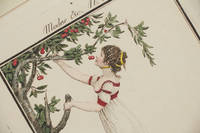
179887502A Paris: Au Bureau du Journal des Dames Rue Montmartre N° 183 au coin du Boulevart 1798. Fine. Au Bureau du Journal des Dames Rue Montmartre N° 183 au coin du Boulevart A Paris s.d. 1798-1808 10.80 x 17.60 cm 52 planches en feuilles montées sous marie-louise en étui Set of 52 original plates etched and enhanced with watercolours at the time numbered 1 to 52 mounted in pairs under mats. Leaves in red half calf slipcase early 20th century red shagreen boards. The plates vary in size 10.8 x 17.6 cm to 28.1 x 18.8 cm and paper stock as was often the case with La Mésangère's publications. Unbound engraved title on a bifolium printed separately absent from most copies. It is replaced here by its identical reprint by Gosselin 1893-1903 on antique watermarked paper and bears the publisher's 'G' mark characteristic of this reprint a century later. All the plates however are in their first edition without the G mark added by Gosselin to the lower corners of the engravings in the figure or the bowl occasionally accompanied by a date. Some foxing a few rare engravings showing traces of pasted tabs on the reverse. Plate 42 restored without missing. A green stain in plate 11 probably due to the watercolour of the landscape. Twelve plates are trimmed to the plate mark: pl. 12 12.7 x 19.2 cm pl. 15 12.4 x 18.7 cm pl. 19 11.9 x 19.8 cm pl. 29 11.9 x 19 cm pl. 30 12.5 x 19 cm pl. 39 12.1 x 18.4 cm pl. 41 12.5 x 19.1 cm pl. 42 12.5 x 19.1 cm pl. 48 11.9 x 18.3 cm pl. 49 12.9 x 19.9 cm pl. 51 12.5 x 18.4 cm and pl. 52 12 x 18.1 cm. Plate 37 is trimmed around the black border 10.8 x 17.6 cm. More pronounced foxing in the margins of plates 4 28 30 31 35 44 45 and 47. A rare and precious complete suite of 52 original costume prints from the Directoire and First Empire periods. Deemed ""unfindable"" by Gaudriault in his study of women's fashion engravings in France this is the only complete set of first editions currently available. This series of elegant silhouettes was published on the initiative of the bookseller Sellèque and Pierre La Mésangère a clergyman who returned to the press after the turmoil of the Revolution. In 1800 La Mésangère took over the management of the renowned Journal des Dames et des Modes a pioneering publication in the history of the women's press and produced a few standalone series such as this one aimed at 'a category of connoisseurs with an interest in a more refined and luxurious interpretation of fashion than that offered by the plates in the newspapers' Philippe Séguy Histoire des modes sous l'Empire. The plates are the work of Philippe-Louis Debucourt a painter of French elegance since 1787 and a regular contributor to the Journal des Modes. The first 38 date from Year VIII the next 12 from Year IX and the last two from 1808. Through these 52 costumes unfolds a veritable grammar of dress a precious alphabet of the gown and hat - a language in which Parisian women were particularly well versed. Shepherdesses sultanas Etruscan princesses. the trend leaned towards exoticism even eroticism with the occasional bare breast. We find the fashions brought to the fore by the Merveilleuses following the Revolution inspired by Antiquity and mythology - gowns of iridescent muslin light and form-fitting alongside coats bandeau hairstyles and Grecian tunics. The captions accompanying the etchings often provide detailed descriptions of the attire hairstyles and headwear meticulously enhanced with watercolour. Some figures even double as biting social commentary verging on caricature featuring characters such as the ludicrously pretentious Turcaret a recurring theatrical figure since the early 18th century or genre scenes teeming with amorous intrigues. The significance of this series in the history of colour engraving is noteworthy albeit underappreciated by bibliographers. Some plates bear tiny black dots in the margins indicating the process of colour engraving by superimposing intaglio plates. These mark Au Bureau du Journal des Dames, Rue Montmartre, N° 183, au coin du Boulevart hardcover