129 résultats
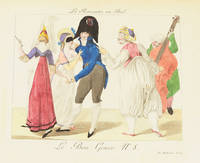
182787629Paris: chez l'éditeur boulevard Montmartre no 1Vassalet EsslingImprimeurs 1827. Fine. Princess Murat's copy chez l'éditeur boulevard Montmartre no 1 Vassal et EsslingImprimeurs Paris 1801-1827 ; 1827 pour le texte 41.20 x 27.80 cm relié Complete set of 115 copper-engraved plates with an additional plate 116 plates all printed on either laid or wove paper all hand-colored with watercolor. Two entirely different plates 39 follow each other in first issue: ""Les Titus et les cache-folies"" was published in the 1817 and 1822 sets and the other ""La Politicomanie"" appeared in 1827. This is the most complete series which also includes the 11 new plates published from 1818 to 1822 numbered 105 to 115. According to Vicaire the plates were probably all printed between 1801 and 1822 and only the text preceding the plates was reprinted in 1827. 3/4 long-grained cherry half-morocco smooth spine elaborately framed in gilt lentghwise gilt tooled center of spine gilt lettered title at head of spine framed in gilt marbled boards marbled paper endpapers and flyleaves. Minor brown spots are mainly confined to the 24 pp. of text with very few on the plates mainly on the margins and versos. A rare and famous collection of costumes genre and entertainment scenes from the French First Empire and Restoration eras with very wide margins and magnificently hand-colored at the time. A veritable encyclopedia of thrills pleasures and pageantry published by Pierre de la Mésangère leading fashion editor at the turn of the century. This copy includes two versions of plate 39 both of which are extremely scarce. These magnificent copper-engraved prints by Georges Jacques Gatine Schenker and others were based on drawings by the greatest painters of Parisian fashion: Carle Vernet Philippe-Louis Debucourt Jean-Baptiste Isabey Louis-Marie Lanté Dutailly. They were initially sold as a supplement to the successful magazine Le Journal des Modes before being published as a collection. Some plates bear the engraver's name and several the draftsmen's. This gallery of figures is singularly representative of a period of upheaval in French history in terms material but also moral and intellectual values - depicting a frivolous and daring part of feminine society eager to please and well-versed in the games of love. The ensemble perfectly combines social satire with the refinement expected of fashion engravings. It includes the famous portraits of the extravagantly dressed Directoire women called ""Merveilleuses"" and ""Incroyables"" - representations that have henceforth served as a reference. From beautiful silhouettes reclining on Greek-style beds to provocative and undressed courtesans everything is designed to illustrate the finery of these pretty coquettes often followed by a host of suitors and servants. Dresses hats and furs rub shoulders with elegant male figures in frock coats and even a few transvestites Trois grâces parisiennes no. 16. Many of the scenes have a clear erotic connotation especially the salon games featuring suggestive embraces and positions. Dancing takes pride of place: no fewer than twenty plates feature fashionable ballroom dances ""Danse du Schall"" named after the popular scarf quadrille figures such as ""La Poule"" ""La Trénis"" or more daring ones like ""La Sauteuse"" ballets or even the famous tightrope dancers Ravel and Forioso. The movement of the characters is reflected in the drapery of the large Empire muslin gowns and hair flowing in the wind. Among the dozens of hand-colored plates a great many are devoted to leisure and entertainment activities available at the beginning of the 19th century. Gastronomy games of skill sports acrobatics circus tricks music and even real sensational attractions: several plates depict the very first Parisian roller coaster installed in Belleville then at the Odeon for the 1817 Carnival. Clowns pierrots and masked figures are seen dancing in front of the structures and hurtling down steep slopes on small carriages. Anothe chez l'éditeur, boulevard Montmartre, no 1Vassalet EsslingImprimeurs hardcover
182787629chez l'éditeur, boulevard Montmartre, no 1 Vassal et EsslingImprimeurs | Paris [1801-1827] ; 1827 (pour le texte) | 41.20 x 27.80 cm | relié
05714Paris: Chez l'Editeur 1827. The Rarely Seen Parisian Scene <br /> The Rise of the Post-Revolution French Middle Class<br /> Its Customs Costumes and Leisure Activities<br /> <br /> BON GENRE LE. Observations sur les Modes et les Usages de Paris pour Servir d'Explication aux 115 Caricatures Publiées Sous le Titre De Bon Genre Depuis le Commencement du Dix-Neuvième Siècle. Paris: Chez L'Éditeur Pierre de la Mésangère 1827. <br /> <br /> Third edition with eleven additional plates not found in the first edition of 1817. <br /> <br /> Large folio 14 7/8 x 10 7/8 in; 378 x 277 mm. 4 24 pp. of descriptive text 115 hand-colored plates. Engraved by Georges-Jacques Gatine. Printed by Vassal et Essling. With a duplicate of plate no. 16 loosely inserted. Some light foxing which is mainly confined to the blank margins. <br /> <br /> Contemporary half crimson straight-grain morocco over marbled boards smooth spine elaborately tooled and lettered in gilt. Some light wear to top and bottom of spine. An excellent example of one of the rarest suites of fashion and caricature.<br /> <br /> OCLC/KVK note only four copies of this edition in library holdings worldwide no copies of the first edition and only two copies of the 1822 edition.<br /> <br /> One of the rarest suites of fashion and caricature featuring superbly colored plates. In addition to satirizing the extravagances of contemporary fashion and society the finely rendered illustrations portray a range of public entertainers-including the rope-dancing troupes of Forioso and Ravel a magic lantern show two performing dog acts Indian jugglers acrobats and four distinct aerial runways.<br /> <br /> Le Bon Genre was one of the earliest series of prints to record the social trends and leisure activities of contemporary Parisians. It is the most important fashion portfolio of its time documenting through its caricatures the rise of the modern city of Paris and the emerging middle-class bourgeois its fashions recreations and dating customs. It also has fun at visitors' expense particularly the English whose customs and fashions the French found incomprehensible and unfashionable; the years of hostility between France and England did nothing to improve relations and the French lost few opportunities to ridicule the British. Le Bon Genre's popularity influenced most of the later fashion illustrators and journals as well as the satirical albums so typical of mid-19th century France and remains a key record of French social history. Overall Le Bon Genre bears witness to the colorful post-Revolution period of Parisian society as it evolves into the early Republican era.<br /> <br /> Of particular interest is the descriptive text preceding the plates that details the content of each caricature. One is astonished and charmed by images of a trio enjoying a magic lantern show #31; three women rapturously eating sorbets #4; a trained and costumed dog act #35; a circus balancing act #91; a man who eats anything #93; a huge amusement park slide #97; and so many more enchanting engravings delicately and vividly hand-colored.<br /> <br /> "Le Bon Genre.was first published in 1817 and went through several editions. This is a record of English and French fashions since the beginning of the nineteenth century; the English fashions are more in the nature of caricatures to show how badly Englishwomen dress as compared with the Parisiennes" Vyvyan Holland Hand Coloured Fashion Plates 1770 to 1899 p. 51.<br /> <br /> "The 'Bon Genre's' first edition 104 plates appeared in 1817. The 1822 edition included eleven additional plates; a third edition was published in 1827. Its illustrations are lively and witty statements of the life of Paris since the beginning of XIXc. with a text of explanatory paragraphs rather than fashion plates" Millia Davenport The Book of Costume II p. 814.<br /> <br /> "Georges-Jacques Gatine was the leading costume engraver of his time. For many years he supplied plates for the Journal des dames. He engraved the 115 designs which make up Le bon genre a lively mélange caricaturing people and scenes of contemporary interest" Ray The Art of the French Illustrated Book p. 141.<br /> <br /> <br /> <br /> <br /> <br /> <br /> <br /> <br /> <br /> Le Bon Genre's publisher and editor Pierre Joseph Antoine Le Bouc of Mésangère 1761-1830 better known by the name of Le Mésangère was a fascinating character whose eclectic career covered a very wide period from the French Revolution 1789 up to the Second Restoration 1815 -1830. First an eccleslastlc philosopher and writer then fashion journalist he was for more than thirty years editor-in-chief of Le Journal des Dames a periodical that had an enormous influence upon contemporary French standards of elegance and taste. Born in Anjou 1761 to a middle-class family Mésangère entered the order Congregation of the Brothers in 1784 and held the philosophie belles lettres Chair at the College de la Fleche. In hiding during the Terror 1793-1794 after Robesplerre's death July 28 1794 he began to be known as a writer for Parisian literary journals. He wrote Le Voyageur a Paris ou Tableau pittoresque et moral de cette capitale 1797 a book that gained a certain notoriety. In 1799 he became editor of Le Journal des Dames a magazine founded two years earlier. It reigned supreme amongst the women's magazines of the epoch. With engraver Gatine executing the designs Mésangère was the pre-eminent writer editor and publisher of works devoted to French women's fashion of his era.<br /> <br /> The contributing artists to Le Bon Genre included George Dutailly François Joseph Bosio Louis Marie Lante Horace Vernet and others but it is Mésangère the editor and publisher who guided them and Gatine the engraver who executed their designs who were and remain the stars here.<br /> <br /> Colas 2240. Vicaire I 839-842. Rahir 332. Davenport 2280A-2281. Paris: Chez l'Editeur, 1827 unknown
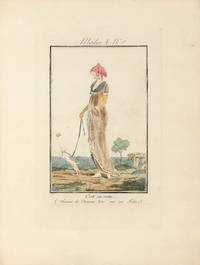
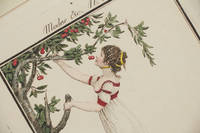
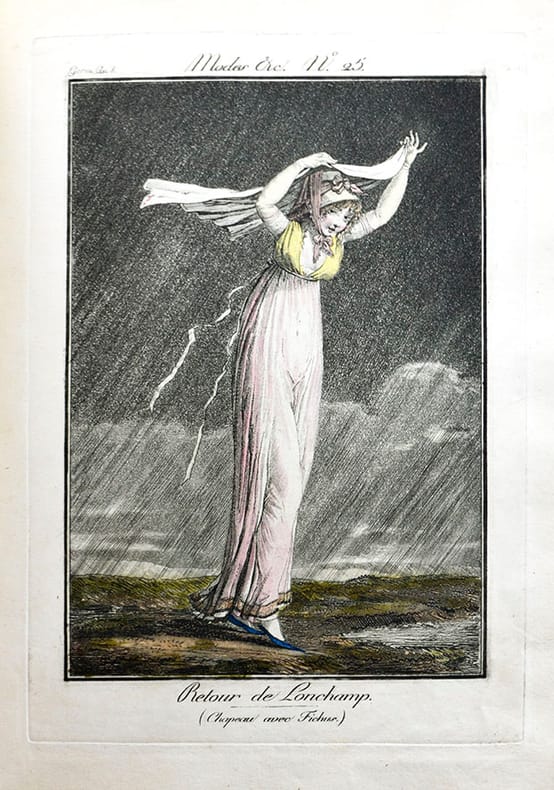
NY32<p>Paris Bureau du Journal des Dames 1798-1808.</p><p>4to 295 x 235 mm of 1 engraved title l. in lieu of cover 52 etched plates out of pagination and enchanced with watercolor numbered from 1 to 52.</p><p>Red quarter-morocco flat spine decorated with gilt and blind-tooled motifs front cover engraved and restored. Slipcase. <i>Later binding.</i></p><p><b>First edition of this "charming collection that became very rare" </b>Vinet 2248.</p><p>Colas 814; Hiler p. 223; not in Lipperheide.</p><p><i>"It is the most interesting and also the rarest collection of fashion so characteristic from the beginning of the 19th century"</i> Colas <i>Bibliographie des costumes et de la mode</i> n°814.</p><p>This precious suite has been sold up to 15 000 Gold fr. at the Montgermont's sale of 1913 the equivalent of 150 000 current euros.</p><p>The first plate bears on the upper part: <i>Modes et manières du jour</i>; the second: <i>Manières et modes;</i> the others: <i>modes</i> etc. except for the last two whose title is: <i>Modes et manières</i>.</p><p>Here is the plates list:</p><p>1. le prétexte : tunique courte jupe transparente.</p><p>2. Turcaret du jour prenant une leçon de tournure.</p><p>3. la promenade grand Schall avec bande à jour.</p><p>4. Chaise vacante Bonnet du matin schal transparent.</p><p>5. C'est en vain Tresses de cheveux liées sur un fichu</p><p>6. la petite coquette Toquet orné de plumes. Chapeau à cotes brodé.</p><p>7. la rencontre Coiffure avec guirlande en spirale. Shall garni de dentelle.</p><p>8. les cerises Coiffure en cheveux et perles.</p><p>9. l'escarpolette Chapeau de paille brodé sans ruban.</p><p>10. A ce soir Shall de gaze noire en échiquier.</p><p>11. l'agression Bonnet chapeau de gaze.</p><p>12. Correspondance furtive coiffure antique. Schall en écharpe.</p><p>13. Il va l'apaiser Robe avec canezon à col.</p><p>14. La phrase changée robe croisée. D. B.</p><p>15. N'allez pas vous perdre robe boutonée cornette à fond ouvert D B.</p><p>16. Ah quel vent ! fichu. noir. Tablier de gaze.</p><p>17. le messager fidèle fichu canezou. Robe avec nœuds de Comettes.</p><p>18. la robe déchirée Bonnet à un papillon.</p><p>19. l'écolière craintive fichu avec efilé Palatine Niv. an 8.</p><p>20. la chute capotte spencer garni de poil Niv an 8.</p><p>21. Elle le suit. Pluv. an 8.</p><p>22. le billet doux cheveux retroussés Spencer de velours. An 8.</p><p>23 Réponse au billet Chapeau blanc à petit bord.</p><p>24. Prends vite Coiffure en cheveux.</p><p>25. Retour de Longchamp Chapeau avec fichu Germ. an 8.</p><p>26. le Lilas Capotte ornée d'épis et de coquelicos Floréal an 8.</p><p>27. Il va fleurir cheveux et fichus. Robe de gaze Floréal an 8</p><p>28. Elle est prête à cueillir Capotte ornée de jacinthe. Floréal an VIII.</p><p>29. Que lui conte-t-il Chapeau en coquille. Large pantalon de Nankin</p><p>30 Ne laissai-je rien Robe en organdis de couleur.</p><p>31. Venez vous reposer Pantalon du matin. Capotte en crêpe. Prair. an 8.</p><p>32. la lecture Chapeau à petit bord. Spencer sans manches.</p><p>33. le voila Robe à manches et franges noires. Mess. an 8.</p><p>34. Il a plu Chapeau à boucles. Therm. an 8.</p><p>35. Il ne vient pas ! Coiffure étrusque. Ceinture en X Therm. an 8.</p><p>36. Ah qu'il fait saud ! Caraco garni de dentelles Thermid. An 8.</p><p>37. les deux amies Capotte à boucles. Tunique de crêpe Fructid. an V III.</p><p>38. Adieu Foquet. Schall long. robe garnie de dentelle Fructid. an 8.</p><p>39. La réflexion coiffure formée de 3 bandes de dentelle.</p><p>40. Tenez vous droit Capotte à fond ouvert Vend an IX.</p><p>41. Elle y pense Paysane avec barbes liées sous le menton.</p><p>42. Baisez Maman Capotte de velours avec bande zébrée Brum an 9.</p><p>43. M. N. et Mme Large redingote à grand collet de velours. Schal d'hiver.</p><p>44. les aprets du bal coiffure étrusque costume grec.</p><p>45. la signature Coiffure en fichu et tresses de cheveux. Tunique à pointes.</p><p>46. Elle le boude Chapeau ovale. Voile froncé Floréal an 9.</p><p>47. Il ne m'a pas vu Coiffure arec un voile. Tunique de crêpe noir.</p><p>48. Plus posément Toquet noué sous le menton. Schall quarré.</p><p>49. la solitude Fichu posé en Marmotte. Corsage bouffant. Manches longues et larges.</p><p>50. la conversation mistérieuse voile formant coiffure. Robe boutonee Manches à l'anglaise.</p><p>51. Lui a-t-il tout rendu D. B. 1808.</p><p>52. Me trompe-t-i1 1808. </p><p>This collection not only gives garment models but even more "the spirit of the time" with funny captions sometimes laconic and yet very expressive.</p><p><i>"Very rare series of 52 figures drawn and etched by Debucourt".</i>Fenaille <i>L'oeuvre gravé de P.-L. Debucourt</i> pp. 71-122.</p><p>"<i>In his prime…Debucourt 1755-1832 ranked as the supreme master of engravings printed in color. He was already an accomplished genre painter in 1785 when he perfected his process of printing in color with five successive coppers which enabled him to achieve in his prints the delicacy the suavity and the freshness of painting itself</i>" Ray <i>The Art of the French Illustrated Book</i> p. 146.</p><p><b>Precious copy of this rare and lovely suite of 52 costumes from the Empire delicately enhanced with watercolor at the time.</b></p><p>OCLC/KVK locate only 1 complete copy of the first edition at the <i>Morgan Library</i>.</p><p><br /></p><p><u>Français</u><br /></p><p>Paris Bureau du Journal des Dames 1798-1808.</p><p>In-4 de 1 f. de titre gravé tenant lieu de couverture 52 planches hors-texte gravées à l'eau-forte et rehaussées à l'aquarelle chiffrées 1 à 52. </p><p>Demi-maroquin grenat à coins dos lisse orné de motifs dorés et à froid premier plat de couverture gravé et restauré. Etui. <i>Reliure postérieure.</i></p><p>295 x 235 mm.</p><p><b>Edition originale de ce " charmant recueil devenu fort rare " </b>Vinet 2248.</p><p>Colas 814 ; Hiler p. 223 ; pas dans Lipperheide.</p><p>" <i>C'est le plus intéressant et aussi le plus rare des recueils de modes si caractéristiques du commencement du XIXe siècle</i> " Colas <i>Bibliographie des costumes et de la mode</i> n°814.</p><p>Cette suite précieuse a été vendue jusqu'à 15 000 F OR à la vente Montgermont de 1913 soit l'équivalent de 150 000 € actuels.</p><p>La première planche porte en haut : <i>Modes et manières du jour</i> ; la seconde : <i>Manières et modes </i>; les autres : <i>modes</i>etc. sauf les deux dernières dont le titre est : <i>Modes et manières</i>.</p><p>Voici la liste des planches :</p><p>1. le prétexte : tunique courte jupe transparente.</p><p>2. Turcaret du jour prenant une leçon de tournure.</p><p>3. la promenade grand Schall avec bande à jour.</p><p>4. Chaise vacante Bonnet du matin schal transparent.</p><p>5. C'est en vain Tresses de cheveux liées sur un fichu</p><p>6. la petite coquette Toquet orné de plumes. Chapeau à cotes brodé.</p><p>7. la rencontre Coiffure avec guirlande en spirale. Shall garni de dentelle.</p><p>8. les cerises Coiffure en cheveux et perles.</p><p>9. l'escarpolette Chapeau de paille brodé sans ruban.</p><p>10. A ce soir Shall de gaze noire en échiquier.</p><p>11. l'agression Bonnet chapeau de gaze.</p><p>12. Correspondance furtive coiffure antique. Schall en écharpe.</p><p>13. Il va l'apaiser Robe avec canezon à col.</p><p>14. La phrase changée robe croisée. D. B.</p><p>15. N'allez pas vous perdre robe boutonée cornette à fond ouvert D B.</p><p>16. Ah quel vent ! fichu. noir. Tablier de gaze.</p><p>17. le messager fidèle fichu canezou. Robe avec nœuds de Comettes.</p><p>18. la robe déchirée Bonnet à un papillon.</p><p>19. l'écolière craintive fichu avec efilé Palatine Niv. an 8.</p><p>20. la chute capotte spencer garni de poil Niv an 8.</p><p>21. Elle le suit. Pluv. an 8.</p><p>22. le billet doux cheveux retroussés Spencer de velours. An 8.</p><p>23 Réponse au billet Chapeau blanc à petit bord.</p><p>24. Prends vite Coiffure en cheveux.</p><p>25. Retour de Longchamp Chapeau avec fichu Germ. an 8.</p><p>26. le Lilas Capotte ornée d'épis et de coquelicos Floréal an 8.</p><p>27. Il va fleurir cheveux et fichus. Robe de gaze Floréal an 8</p><p>28. Elle est prête à cueillir Capotte ornée de jacinthe. Floréal an VIII.</p><p>29. Que lui conte-t-il Chapeau en coquille. Large pantalon de Nankin</p><p>30 Ne laissai-je rien Robe en organdis de couleur.</p><p>31. Venez vous reposer Pantalon du matin. Capotte en crêpe. Prair. an 8.</p><p>32. la lecture Chapeau à petit bord. Spencer sans manches.</p><p>33. le voila Robe à manches et franges noires. Mess. an 8.</p><p>34. Il a plu Chapeau à boucles. Therm. an 8.</p><p>35. Il ne vient pas ! Coiffure étrusque. Ceinture en X Therm. an 8.</p><p>36. Ah qu'il fait saud ! Caraco garni de dentelles Thermid. An 8.</p><p>37. les deux amies Capotte à boucles. Tunique de crêpe Fructid. an V III.</p><p>38. Adieu Foquet. Schall long. robe garnie de dentelle Fructid. an 8.</p><p>39. La réflexion coiffure formée de 3 bandes de dentelle.</p><p>40. Tenez vous droit Capotte à fond ouvert Vend an IX.</p><p>41. Elle y pense Paysane avec barbes liées sous le menton.</p><p>42. Baisez Maman Capotte de velours avec bande zébrée Brum an 9.</p><p>43. M. N. et Mme Large redingote à grand collet de velours. Schal d'hiver.</p><p>44. les aprets du bal coiffure étrusque costume grec.</p><p>45. la signature Coiffure en fichu et tresses de cheveux. Tunique à pointes.</p><p>46. Elle le boude Chapeau ovale. Voile froncé Floréal an 9.</p><p>47. Il ne m'a pas vu Coiffure arec un voile. Tunique de crêpe noir.</p><p>48. Plus posément Toquet noué sous le menton. Schall quarré.</p><p>49. la solitude Fichu posé en Marmotte. Corsage bouffant. Manches longues et larges.</p><p>50. la conversation mistérieuse voile formant coiffure. Robe boutonee Manches à l'anglaise.</p><p>51. Lui a-t-il tout rendu D. B. 1808.</p><p>52. Me trompe-t-i1 1808. </p><p>Ce recueil donne non seulement des modèles de vêtements mais plus encore " l'esprit du temps " avec des légendes amusantes parfois laconiques et cependant très expressives.</p><p>" <i>Série très rare de 52 pièces dessinées et gravées à l'eau-forte par Debucourt</i> ". Fenaille<i>L'oeuvre gravé de P.-L. Debucourt</i> pp. 71-122.</p><p>"<i>In his prime…Debucourt 1755-1832 ranked as the supreme master of engravings printed in color. He was already an accomplished genre painter in 1785 when he perfected his process of printing in color with five successive coppers which enabled him to achieve in his prints the delicacy the suavity and the freshness of painting itself</i>" Ray<i>The Art of the French Illustrated Book</i> p. 146.</p><p><b>Précieux exemplaire de cette rare et ravissante suite de 52 costumes de l'Empire finement rehaussés à l'aquarelle à l'époque.</b></p><p>OCLC/KVK localisent seulement 1 exemplaire complet de l'édition originale à la <i>Morgan Library</i>.</p> hardcover
179887502A Paris: Au Bureau du Journal des Dames Rue Montmartre N° 183 au coin du Boulevart 1798. Fine. Au Bureau du Journal des Dames Rue Montmartre N° 183 au coin du Boulevart A Paris s.d. 1798-1808 10.80 x 17.60 cm 52 planches en feuilles montées sous marie-louise en étui Set of 52 original plates etched and enhanced with watercolours at the time numbered 1 to 52 mounted in pairs under mats. Leaves in red half calf slipcase early 20th century red shagreen boards. The plates vary in size 10.8 x 17.6 cm to 28.1 x 18.8 cm and paper stock as was often the case with La Mésangère's publications. Unbound engraved title on a bifolium printed separately absent from most copies. It is replaced here by its identical reprint by Gosselin 1893-1903 on antique watermarked paper and bears the publisher's 'G' mark characteristic of this reprint a century later. All the plates however are in their first edition without the G mark added by Gosselin to the lower corners of the engravings in the figure or the bowl occasionally accompanied by a date. Some foxing a few rare engravings showing traces of pasted tabs on the reverse. Plate 42 restored without missing. A green stain in plate 11 probably due to the watercolour of the landscape. Twelve plates are trimmed to the plate mark: pl. 12 12.7 x 19.2 cm pl. 15 12.4 x 18.7 cm pl. 19 11.9 x 19.8 cm pl. 29 11.9 x 19 cm pl. 30 12.5 x 19 cm pl. 39 12.1 x 18.4 cm pl. 41 12.5 x 19.1 cm pl. 42 12.5 x 19.1 cm pl. 48 11.9 x 18.3 cm pl. 49 12.9 x 19.9 cm pl. 51 12.5 x 18.4 cm and pl. 52 12 x 18.1 cm. Plate 37 is trimmed around the black border 10.8 x 17.6 cm. More pronounced foxing in the margins of plates 4 28 30 31 35 44 45 and 47. A rare and precious complete suite of 52 original costume prints from the Directoire and First Empire periods. Deemed ""unfindable"" by Gaudriault in his study of women's fashion engravings in France this is the only complete set of first editions currently available. This series of elegant silhouettes was published on the initiative of the bookseller Sellèque and Pierre La Mésangère a clergyman who returned to the press after the turmoil of the Revolution. In 1800 La Mésangère took over the management of the renowned Journal des Dames et des Modes a pioneering publication in the history of the women's press and produced a few standalone series such as this one aimed at 'a category of connoisseurs with an interest in a more refined and luxurious interpretation of fashion than that offered by the plates in the newspapers' Philippe Séguy Histoire des modes sous l'Empire. The plates are the work of Philippe-Louis Debucourt a painter of French elegance since 1787 and a regular contributor to the Journal des Modes. The first 38 date from Year VIII the next 12 from Year IX and the last two from 1808. Through these 52 costumes unfolds a veritable grammar of dress a precious alphabet of the gown and hat - a language in which Parisian women were particularly well versed. Shepherdesses sultanas Etruscan princesses. the trend leaned towards exoticism even eroticism with the occasional bare breast. We find the fashions brought to the fore by the Merveilleuses following the Revolution inspired by Antiquity and mythology - gowns of iridescent muslin light and form-fitting alongside coats bandeau hairstyles and Grecian tunics. The captions accompanying the etchings often provide detailed descriptions of the attire hairstyles and headwear meticulously enhanced with watercolour. Some figures even double as biting social commentary verging on caricature featuring characters such as the ludicrously pretentious Turcaret a recurring theatrical figure since the early 18th century or genre scenes teeming with amorous intrigues. The significance of this series in the history of colour engraving is noteworthy albeit underappreciated by bibliographers. Some plates bear tiny black dots in the margins indicating the process of colour engraving by superimposing intaglio plates. These mark Au Bureau du Journal des Dames, Rue Montmartre, N° 183, au coin du Boulevart hardcover
179887502Au Bureau du Journal des Dames, Rue Montmartre, N° 183, au coin du Boulevart | A Paris s.d. (1798-1808) | 10.80 x 17.60 cm | 52 planches en feuilles montées sous marie-louise, en étui
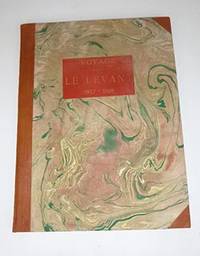
51-4752Paris: Imprimerie royale 1819. Large folio. New full calf by the artisan bookbinder Sasha Mosalov. Part of original spine and front cover title preserved Complete with 80 plates.Colas 1089; Brunet II 1337; not in OCLC.Nicolas Nicolaides: Baron Louis Nicolas Philippe Auguste de Forbin later count de Forbin la Roque-d'Anthéron 1777 – ΠαÏίσι 1841 was a French painter author and antiquarian. He was also a pupil of painter Jacques-Louis David. During the Bourbon restauration Forbin served as general director of the Louvre Museum and other museums of France.Inspired by the travels of François-René de Chateaubriand Forbin sailed out from Toulon on 22 August 1817 to tour the eastern Mediterranean. Like Chateaubriand Forbin travelled on his own initiative without an order from the French government; however since the aim of his journey was to discover Greek and Roman antiquities and to draw landscapes of the places he would visit he was able to travel on the ships of the French fleet of the Levant Flotte du Levant.In his venture Forbin was accompanied by painters Pierre Prevost and Léon Matthieu Cochereau also a pupil of David and a nephew of Prévost as well as architect Jean-Nicolas Huyot. Abbé de Forbin-Janson later bishop of Nancy was also a member of the company for the first part of the journey while Huyot had to retire when he fractured his leg on Milos island. In addition twenty-four year old Cochereau died of dysentery off the coast of Cythera and was replaced by Linant de Bellefonds who at the time was a mate on "Cleopatra" the mission's ship. De Bellefonds resigned from his position on the ship and participated in the expedition as a painter and chartographer. When the expedition ended in December of 1817 de Bellefonds decided to stay on in Egypt and explored its territory as member of several missions. From 1831 to 1869 he served the kingdom of Egypt as chief engineer of several public works including the Suez Canal.The expedition sailed to Acre Galilee and thenceforth travelled by land. While in Palestine the travellers visited the Dead Sea and Jordan river reached Cairo and sailed the Nile down to Upper Egypt. The main places they visited includde Milos island Athens Constantinople Ephesus Acre Jerusalem Gaza Damietta Cairo Luxor Thebes Rosetta and Alexandria. When the expedition returned to France in April 1818 Forbin had spent approximately 28.000 francs on the purchase and transportation of antiquities some of which ended up in the Louvre collections at the time Royal Museum of France. Prevost drew panoramic views of Jerusalem and Athens but succumbed to pneumonia in 1823 without completing his panorama of Constantinople.The descriptions of Forbin show him to be a mature observer in possession of deep humanistic culture. Forbin also travelled to Sicily in 1820 and published his travel account as he had done with his expedition of 1817.Moyen-Orient - FORBIN Claude Comte de. Voyage dans le Levant. Paris Imprimerie Royale 1819.Atlas seul in-folio 74 x 55 cm ; demi-maroquin rouge à coins dos lisse orné. 3 ff. 110 pp. 1 f. pp. 111-132 80 planches numérotées 1-78 dont 70 lithographies par Baltard Bourgeois Fragonard Lecomte Vernet… d’après Forbin Vernet Isabey et Fragonard 8 aquatintes par Debucourt et 2 plans in fine.L'atlas in-folio qui accompagne l'édition originale du Voyage dans le Levant en 1817 et 1818 de Forbin ne fut tiré qu'à 325 exemplaires.Peintre et archéologue élève de David le Comte de Forbin fut nommé par Louis XVIII directeur du Musée du Louvre. Il entreprit ce voyage en Grèce en Asie Mineure en Palestine et en Égypte en 1817 et 1818 sur une frégate de l'escadre du Levant. Sa mission était d'acheter des antiquités pour le Louvre.De la bibliothèque Paul Lagrave avec son ex-libris au contreplat et de la bibliothèque du Comte François Chandon de Briailles 1892-1953 descendant des fondateurs de la fameuse maison de Champagne avec son ex-libris sur la première garde. Paris: Imprimerie royale, 1819. unknown
11856Paris, au Bureau du journal des dames, 1798 s. d. (1798 - 1808). 1 vol. in-8. Cartonnage brun d’époque, pièce de titre de maroquin rouge.
51-3962Paris: Imprimerie royale 1819. Large folio. 67 x 50 cm. New half Sakora goatskin with marbled boards preserving the original label by the artisan binder Sasha Mosalov. Plate volume only with 71 of 80 plates lacking plates 3 15 17 25 40 52 55 73. Lacking the title page. Some stains in the margins. Very good.Colas 1089; Brunet II 1337; not in OCLC.Written by Nicolas Nicolaides: Baron Louis Nicolas Philippe Auguste de Forbin later count de Forbin la Roque-d'Anthéron 1777 – ΠαÏίσι 1841 was a French painter author and antiquarian. He was also a pupil of painter Jacques-Louis David. During the Bourbon restauration Forbin served as general director of the Louvre Museum and other museums of France.Inspired by the travels of François-René de Chateaubriand Forbin sailed out from Toulon on 22 August 1817 to tour the eastern Mediterranean. Like Chateaubriand Forbin travelled on his own initiative without an order from the French government; however since the aim of his journey was to discover Greek and Roman antiquities and to draw landscapes of the places he would visit he was able to travel on the ships of the French fleet of the Levant Flotte du Levant.In his venture Forbin was accompanied by painters Pierre Prevost and Léon Matthieu Cochereau also a pupil of David and a nephew of Prévost as well as architect Jean-Nicolas Huyot. Abbé de Forbin-Janson later bishop of Nancy was also a member of the company for the first part of the journey while Huyot had to retire when he fractured his leg on Milos island. In addition twenty-four year old Cochereau died of dysentery off the coast of Cythera and was replaced by Linant de Bellefonds who at the time was a mate on "Cleopatra" the mission's ship. De Bellefonds resigned from his position on the ship and participated in the expedition as a painter and chartographer. When the expedition ended in December of 1817 de Bellefonds decided to stay on in Egypt and explored its territory as member of several missions. From 1831 to 1869 he served the kingdom of Egypt as chief engineer of several public works including the Suez Canal. The expedition sailed to Acre Galilee and thenceforth travelled by land. While in Palestine the travellers visited the Dead Sea and Jordan river reached Cairo and sailed the Nile down to Upper Egypt. The main places they visited includde Milos island Athens Constantinople Ephesus Acre Jerusalem Gaza Damietta Cairo Luxor Thebes Rosetta and Alexandria. When the expedition returned to France in April 1818 Forbin had spent approximately 28.000 francs on the purchase and transportation of antiquities some of which ended up in the Louvre collections at the time Royal Museum of France. Prevost drew panoramic views of Jerusalem and Athens but succumbed to pneumonia in 1823 without completing his panorama of Constantinople.The descriptions of Forbin show him to be a mature observer in possession of deep humanistic culture. His style sometimes resembles a clumsy imitation of Chateaubriand's "Journey to the Holy Land" 1806. However as Forbin was not a professional author but a painter his descriptions are way more exact than those of Chateaubriand.Forbin also travelled to Sicily in 1820 and published his travel account as he had done with his expedition of 1817. Paris: Imprimerie royale, 1819. hardcover
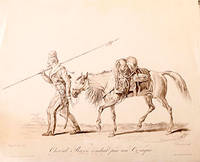
181718811Paris: chez l'Auteur & chez Ch. Bance 1817. Oblong folio. 15 3/8 x 20 1/2 inches. 4 hand-coloured aquatint plates by Debucourt after Vernet. Light foxing to one plate. Provenance: A. B. contemporary ink initials in the upper right corner of each plate<br/> <br/>A fine large-scale series of hand-coloured plates exhibiting Debucourt and Vernet's mastery of the genre print.<br/> <br/>The series consists of four views of scenes glimpsed "on the road." As usual with Vernet the human figures are slightly caricatured whilst the horses in three of the prints are beautifully observed. The plates are titled: Les Aveugles The Beggars. Fenaille 407; Route de St. Cloud The St. Cloud Road. Fenaille 405; Route de Poissy The Poissy Road. Fenaille 404; and Route de Poste The Post Road. Fenaille 406. According to Fenaille the series was eventually extended to include 12 large caricatures published by Bance & Aumont between 1816 and 1823.<br/> <br/>Fenaille Catalogue de l'oeuvre gravé de Debucourt 404-407. chez l'Auteur & chez Ch. Bance unknown books
1787015884Paris 1787. Early Printing . Single Sheet. Very Good. 25 1/2" x 18. Color Engraving. Laid Paper. Printed In Color Not With Later Coloring. Complete With Full Margins As Issued With Title In English And French Below The Image Which Is Approximately 21" X 11". This State Of The Plates Has The Third Large Female Figure From The Left In A Grey Dress With A Pink Waist. Philibert-Louis Debucourt 1755 - 1832 Was A French Painter And Engraver. Debucourt Was Born In Paris In 1755 And Became A Pupil Of Vien. He Executed A Few Plates In Mezzotint Such As The Heureuse Famille The Benediction De La Mariée And The Cruche Cassée After His Own Designs. Most Of His Work Was However In Aquatint. He Became The Leading Maker Of Multi-Plate Colour Prints Combining Washes Of Aquatint With Line-Engraving.2 He Used A Number Of Different Techniques But Most Involved Three Colour Plates And A Fourth Key Plate Outlining The Design In Black. Debucourt's Father-In-Law Was The Sculptor Louis-Philippe Mouchy. In The Marriage Contract Mouchy Generously Offered To Provide A Three-Room Apartment At The Louvre Where Debucourt Lived For Twelve And A Half Years. The Address Of This Apartment Is Often Given On His Prints. Some Of His Work Was Satirical Such As La Promenade Publique An Aquatint Of 1792 Showing A Crowd In The Gardens The Palais-Royal. As Well As Work From His Own Designs He Made Aquatints After Carle Vernet Including The Horse Frightened By A Lion The Horse Frightened By Lightning And The Strayed Huntsman. Debucourt Was Assisted For Some Years By His Pupil And Nephew Jean-Pierre-Marie Jazet. <br/> <br/> unknown
1787015885Paris 1787. Early Printing . Single Sheet. Very Good. 25 1/2" x 18. Color Engraving. Laid Paper. Printed In Color Not Colored Later. Complete With Full Margins As Issued With Title In English And French Below The Image Which Is Approximately 21" X 11". This State Of The Plates Has The Third Large Female Figure From The Left In A Greenish-Blue Dress With A Blue Waist. Philibert-Louis Debucourt 1755 - 1832 Was A French Painter And Engraver. Debucourt Was Born In Paris In 1755 And Became A Pupil Of Vien. He Executed A Few Plates In Mezzotint Such As The Heureuse Famille The Benediction De La Mariée And The Cruche Cassée After His Own Designs. Most Of His Work Was However In Aquatint. He Became The Leading Maker Of Multi-Plate Colour Prints Combining Washes Of Aquatint With Line-Engraving.2 He Used A Number Of Different Techniques But Most Involved Three Colour Plates And A Fourth Key Plate Outlining The Design In Black. Debucourt's Father-In-Law Was The Sculptor Louis-Philippe Mouchy. In The Marriage Contract Mouchy Generously Offered To Provide A Three-Room Apartment At The Louvre Where Debucourt Lived For Twelve And A Half Years. The Address Of This Apartment Is Often Given On His Prints. Some Of His Work Was Satirical Such As La Promenade Publique An Aquatint Of 1792 Showing A Crowd In The Gardens The Palais-Royal. As Well As Work From His Own Designs He Made Aquatints After Carle Vernet Including The Horse Frightened By A Lion The Horse Frightened By Lightning And The Strayed Huntsman. Debucourt Was Assisted For Some Years By His Pupil And Nephew Jean-Pierre-Marie Jazet. <br/> <br/> unknown
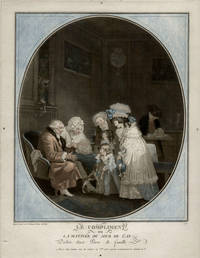
178821161788. Aquatints printed in colours. 390mm by 290mm platemark 545mm by 440mm mounted. <p>'Le Compliment ou La Matinee du Jour de L'an Dediee aux Peres de Famille' The Compliment or New Year's Morning Dedicated to the Fathers of the Family and it's pair 'Les Bouquets ou La Fete de la Grand-Maman Dedies aux Meres de Famille' The Bouquets or Grandmother's Party Dedicated to the Mothers of The Family. Published by the artist in Paris 1787 and 1788. Debucourt was a true peintre-graveur a painter who turned to making colour prints following the methods of Janinet and Descourtis but unlike them he made many prints from his own designs. He started making colour prints using multiple - methods and later turned to stipple engraving with single plates inked a la poupee. A pair of separately issued Louis XVI period portrait scenes depicting wealthy French families spending time together dressed in period clothing. One is dedicated to fathers the other to mothers. Each scene is set within an oval rendered in a wash manner. These prints were both exhibited at the National Gallery of Art Washington D.C. in the show Colorful Impressions: The Printmaking Revolution in Eighteenth-Century France 2003 - 2004. Acid free mounts.</p> <br /> <p> </p> unknown
181718811Paris: chez l'Auteur & chez Ch. Bance 1817. Oblong folio. 15 3/8 x 20 1/2 inches. 4 hand-coloured aquatint plates by Debucourt after Vernet. Light foxing to one plate. Provenance: A. B. contemporary ink initials in the upper right corner of each plate<br/> <br/> A fine large-scale series of hand-coloured plates exhibiting Debucourt and Vernet's mastery of the genre print.<br/> <br/> The series consists of four views of scenes glimpsed "on the road." As usual with Vernet the human figures are slightly caricatured whilst the horses in three of the prints are beautifully observed. The plates are titled: Les Aveugles The Beggars. Fenaille 407; Route de St. Cloud The St. Cloud Road. Fenaille 405; Route de Poissy The Poissy Road. Fenaille 404; and Route de Poste The Post Road. Fenaille 406. According to Fenaille the series was eventually extended to include 12 large caricatures published by Bance & Aumont between 1816 and 1823.<br/> <br/> Fenaille Catalogue de l'oeuvre gravé de Debucourt 404-407. chez l'Auteur & chez Ch. Bance unknown
1805015891Paris: Louis-Philibert Debucourt 1805. Early Printing . Single Sheet. Very Good . 22 3/4" x 15. Color Engraving. A Fine Engraving By Debucourt. Laid Paper. Complete With Full Margins As Issued With Lettering Below "Desine Et Grave Par P. L. D. B.Rt / Les Courses Du Matin / Ou / La Porte Dun Riche / Depose A La Bib.Que Nat.Ale Ventose An 13 1805. " Image Is Approximately 18" X 11". Philibert-Louis Debucourt 1755 - 1832 Was A French Painter And Engraver. Debucourt Was Born In Paris In 1755 And Became A Pupil Of Vien. He Executed A Few Plates In Mezzotint Such As The Heureuse Famille The Benediction De La Mariée And The Cruche Cassée After His Own Designs. Most Of His Work Was However In Aquatint. He Became The Leading Maker Of Multi-Plate Colour Prints Combining Washes Of Aquatint With Line-Engraving.2 He Used A Number Of Different Techniques But Most Involved Three Colour Plates And A Fourth Key Plate Outlining The Design In Black. Debucourt's Father-In-Law Was The Sculptor Louis-Philippe Mouchy. In The Marriage Contract Mouchy Generously Offered To Provide A Three-Room Apartment At The Louvre Where Debucourt Lived For Twelve And A Half Years. The Address Of This Apartment Is Often Given On His Prints. Some Of His Work Was Satirical Such As La Promenade Publique An Aquatint Of 1792 Showing A Crowd In The Gardens The Palais-Royal. As Well As Work From His Own Designs He Made Aquatints After Carle Vernet Including The Horse Frightened By A Lion The Horse Frightened By Lightning And The Strayed Huntsman. Debucourt Was Assisted For Some Years By His Pupil And Nephew Jean-Pierre-Marie Jazet. <br/> <br/> Louis-Philibert Debucourt unknown
180012763Paris: Charles Bance & Aumont 1800. Aquatint engraving printed in colour à la poupée on wove paper. Very good condition apart from some overall light soiling and minor foxing. Trimmed close to plate mark on all sides. A striking beautifully coloured engraving after the renowned 16th-century Venetian Mannerist Tintoretto. A representation of the Italian painter's enigmatic mistress this plate is part of a series of three aquatints Debucourt completed after paintings by Tintoretto Rubens and Raphael depicting their respective mistresses.<br/> <br/>This print is a stunning example of the single plate colour printing technique used in France beginning in the 18th century. The effect is achieved by inking a single plate with several different colours by using a rag stump a process known as à la poupée. The outcome achieved by this laborious method of inking has a wonderful painterly effect and creates a delicacy of image which is charming to behold. Although a painter by training Philibert-Louis Debucourt is primarily renowned as one of the most innovative colour printmakers of the eighteenth century. Born in 1781 he studied with Joseph Marie Vien at the French Academy. After several years of exhibiting his paintings at the Salon he turned to printmaking in 1781. During the mid 1780s he began experimenting with the complicated multiple-plate colour printing process a technique that was refined and revolutionized by Jean-François Janinet. Debucourt found success with his colour intaglio prints of Parisian high society and he quickly earned a reputation as a skilled and prolific engraver. The bulk of his prints however were based on paintings by other artists and completed after the turn of the century. Despite his intense focus on printmaking he continued to exhibit his paintings alongside his engravings at the Salon throughout his life.<br/> <br/>Cf. Benezit Dictionnaire des Peintres Sculpteurs Dessinateurs et Graveurs vol. 4 p. 323; cf. Regency to Empire: French Printmaking 1715-1814 p. 346; Fenaille L'oeuvre gravé de P.-L. Debucourt 1755-1832 pp. 257-8. Charles Bance & Aumont unknown books
180012765Paris: Charles Bance & Aumont 1800. Aquatint engraving printed in colour à la poupée on wove paper. Very good condition apart from some overall light soiling minor foxing and a skillfully repaired small loss in the left margin. Trimmed close to plate mark on all sides. A striking beautifully coloured engraving after the renowned 17th-century Flemish painter Peter Paul Rubens. A representation of Rubens' sister-in-law Susanna Lunden this plate is part of a series of three aquatints Debucourt completed after paintings by Tintoretto Rubens and Raphael.<br/> <br/>Susan Lunden was the daughter of the Antwerp silk merchant Daniel Fourment and the sister of Rubens' second wife Helena. Originally titled 'Le Chapeau de Paille' The Straw Hat the painting after which this plate is engraved dates from around 1622-25 and may have been a marriage portrait intended for Lunden's second husband Arnold. This print is a stunning example of the single plate colour printing technique used in France beginning in the 18th century. The effect is achieved by inking a single plate with several different colours by using a rag stump a process known as à la poupée. The outcome achieved by this laborious method of inking has a wonderful painterly effect and creates a delicacy of image which is charming to behold. Although a painter by training Philibert-Louis Debucourt is primarily renowned as one of the most innovative colour printmakers of the eighteenth century. Born in 1781 he studied with Joseph Marie Vien at the French Academy. After several years of exhibiting his paintings at the Salon he turned to printmaking in 1781. During the mid 1780s he began experimenting with the complicated multiple-plate colour printing process a technique that was refined and revolutionized by Jean-François Janinet. Debucourt found success with his colour intaglio prints of Parisian high society and he quickly earned a reputation as a skilled and prolific engraver. The bulk of his prints however were based on paintings by other artists and completed after the turn of the century. Despite his intense focus on printmaking he continued to exhibit his paintings alongside his engravings at the Salon throughout his life.<br/> <br/>Cf. Benezit Dictionnaire des Peintres Sculpteurs Dessinateurs et Graveurs vol. 4 p. 323; cf. Regency to Empire: French Printmaking 1715-1814 p. 346; Fenaille L'oeuvre gravé de P.-L. Debucourt 1755-1832 pp. 257-8. Charles Bance & Aumont unknown books
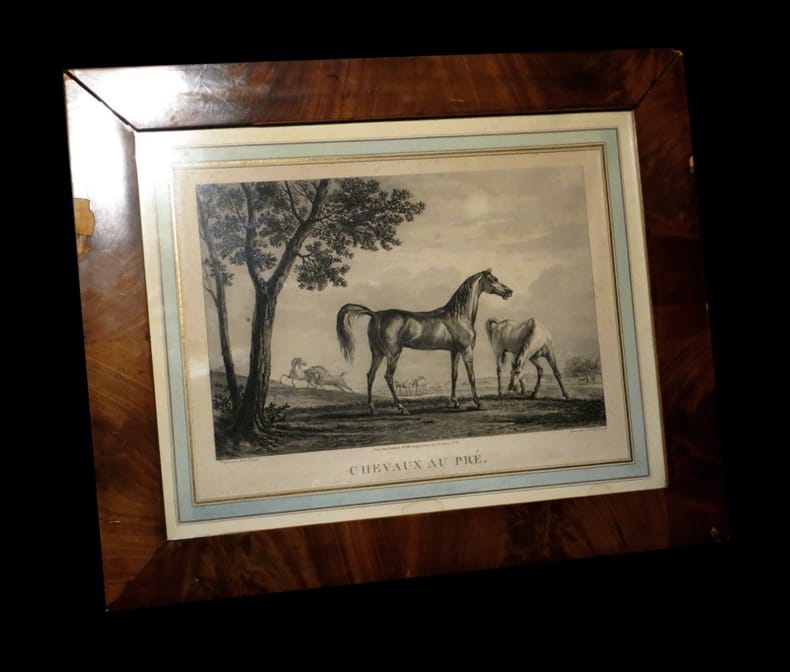
1820240991820. A Paris chez Rolland s.d. circa 1800. Dimensions ˆ vue : 444 x 328 mm passe-partout cadre. Rare et superbe ÂŽpreuve gravÂŽe par Louis-Philibert Debucour sic d'aprÂs un dessin de Carle Vernet ; ici proposÂŽe en premier tirage. Etiquette d'exposition contrecollÂŽe au revers L'Art et l'ÂŽquitation en 1936 ˆ Bruxelles. ''Fils de Joseph Vernet Carle montra trÂs t™t de grandes aptitudes pour le dessin et la peinture. Pour utiliser sa connaissance profonde des chevaux il va devenir peintre de batailles. Ses oeuvres sont vivantes et exactes. La plus cÂŽlÂbre d'entre elles est La Bataille de Marengo dans laquelle le dessein du peintre est de reprÂŽsenter une bataille vraisemblable o chacun des personnages participent ˆ une action logique et ordonnÂŽe suivant un plan stratÂŽgique rigoureux .''. in BÂŽnÂŽzit. ''Debucour renonÂa dÂs 1785 ˆ la peinture pour se consacrer exclusivement ˆ la gravure ˆ l'aquatinte. Sa vogue fut considÂŽrable en ce genre et lui valut une rÂŽputation ÂŽnorme ˆ son ÂŽpoque. MomentanÂŽment oubliÂŽ au cours du XIXÂme Debucourt a reconquis aujourd'hui toute sa gloire d'antan'' in BÂŽnÂŽzit. PrÂŽsentÂŽe sous cadre. BÂŽnÂŽzit X Dictionnaire des peintres p. 464 puis III p. 409 - Osterwalder I Dictionnaire des illustrateurs p. 1086. Papier lÂŽgÂrement oxydÂŽ. Claires rousseurs affectant la composition. Laquelle prÂŽsente en outre une petite dÂŽchirure en marge gauche sans doute restaurÂŽe au revers. AltÂŽrations ÂŽparses affectant le cadre. b42961 unknown
182024099A Paris, chez Rolland, s.d. [circa 1800]. Dimensions à vue : 444 x 328 mm + passe-partout + cadre.
51-1937Paris: Basset circa 1820. Aquatine on rag paper. 27 x 42 cm. on sheet size 38.5 x 46 cm. Dayot 99b. 2nd state of 2 with lettering. Paris: Basset, circa 1820. unknown
18994519Tirage à 315 exemplaires : un des 300 sur papier vélin à la forme. Superbe ouvrage. 1/2 chagrin violet, dos à nerfs orné, filets dorés sur les mors, covertures conservées. Reliure Seigneur Paris Morgand 1899 1 volume grand in-4°
180012763Paris: Charles Bance & Aumont 1800. Aquatint engraving printed in colour à la poupée on wove paper. Very good condition apart from some overall light soiling and minor foxing. Trimmed close to plate mark on all sides. A striking beautifully coloured engraving after the renowned 16th-century Venetian Mannerist Tintoretto. A representation of the Italian painter's enigmatic mistress this plate is part of a series of three aquatints Debucourt completed after paintings by Tintoretto Rubens and Raphael depicting their respective mistresses.<br/> <br/> This print is a stunning example of the single plate colour printing technique used in France beginning in the 18th century. The effect is achieved by inking a single plate with several different colours by using a rag stump a process known as à la poupée. The outcome achieved by this laborious method of inking has a wonderful painterly effect and creates a delicacy of image which is charming to behold. Although a painter by training Philibert-Louis Debucourt is primarily renowned as one of the most innovative colour printmakers of the eighteenth century. Born in 1781 he studied with Joseph Marie Vien at the French Academy. After several years of exhibiting his paintings at the Salon he turned to printmaking in 1781. During the mid 1780s he began experimenting with the complicated multiple-plate colour printing process a technique that was refined and revolutionized by Jean-François Janinet. Debucourt found success with his colour intaglio prints of Parisian high society and he quickly earned a reputation as a skilled and prolific engraver. The bulk of his prints however were based on paintings by other artists and completed after the turn of the century. Despite his intense focus on printmaking he continued to exhibit his paintings alongside his engravings at the Salon throughout his life.<br/> <br/> Cf. Benezit Dictionnaire des Peintres Sculpteurs Dessinateurs et Graveurs vol. 4 p. 323; cf. Regency to Empire: French Printmaking 1715-1814 p. 346; Fenaille L'oeuvre gravé de P.-L. Debucourt 1755-1832 pp. 257-8. Charles Bance & Aumont unknown
180012765Paris: Charles Bance & Aumont 1800. Aquatint engraving printed in colour à la poupée on wove paper. Very good condition apart from some overall light soiling minor foxing and a skillfully repaired small loss in the left margin. Trimmed close to plate mark on all sides. A striking beautifully coloured engraving after the renowned 17th-century Flemish painter Peter Paul Rubens. A representation of Rubens' sister-in-law Susanna Lunden this plate is part of a series of three aquatints Debucourt completed after paintings by Tintoretto Rubens and Raphael.<br/> <br/> Susan Lunden was the daughter of the Antwerp silk merchant Daniel Fourment and the sister of Rubens' second wife Helena. Originally titled 'Le Chapeau de Paille' The Straw Hat the painting after which this plate is engraved dates from around 1622-25 and may have been a marriage portrait intended for Lunden's second husband Arnold. This print is a stunning example of the single plate colour printing technique used in France beginning in the 18th century. The effect is achieved by inking a single plate with several different colours by using a rag stump a process known as à la poupée. The outcome achieved by this laborious method of inking has a wonderful painterly effect and creates a delicacy of image which is charming to behold. Although a painter by training Philibert-Louis Debucourt is primarily renowned as one of the most innovative colour printmakers of the eighteenth century. Born in 1781 he studied with Joseph Marie Vien at the French Academy. After several years of exhibiting his paintings at the Salon he turned to printmaking in 1781. During the mid 1780s he began experimenting with the complicated multiple-plate colour printing process a technique that was refined and revolutionized by Jean-François Janinet. Debucourt found success with his colour intaglio prints of Parisian high society and he quickly earned a reputation as a skilled and prolific engraver. The bulk of his prints however were based on paintings by other artists and completed after the turn of the century. Despite his intense focus on printmaking he continued to exhibit his paintings alongside his engravings at the Salon throughout his life.<br/> <br/> Cf. Benezit Dictionnaire des Peintres Sculpteurs Dessinateurs et Graveurs vol. 4 p. 323; cf. Regency to Empire: French Printmaking 1715-1814 p. 346; Fenaille L'oeuvre gravé de P.-L. Debucourt 1755-1832 pp. 257-8. Charles Bance & Aumont unknown
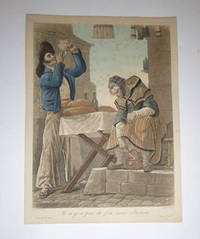
51-4815Paris: Charles Bance 1818. Handcolored aquatint on laid paper 37 x 27.1 cm. sheet size. Subdued colors; foxing verso. Series: Series: Collection de costumes dessinés d'après nature.Charbonnier se faisant raser la barbe.Description from the British Museum:A street with a woman wearing green blouse and brown striped skirt seated on a bench and stirring embers in an earthen pot placed between her legs; nearby wine bottles and bread on a trestle table; on the left a man in blue jacket lighting a pipe. 1818.Bibliographic referencesFenaille 1899 / L'Oeuvre gravé de P.L. Debucourt 1755-1832 382IFF / Inventaire du Fonds Français: Bibliothèque Nationale Département des Estampes 72Dayot 1925 / Carle Vernet étude sur l'artiste suivie d'un catalogue de l'oeuvre gravé et lithographié et du catalogue de l'exposition rétrospective de 1925 81.6 Paris: Charles Bance, [1818] unknown
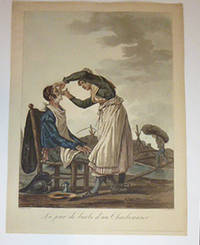
51-4813Paris: Charles Bance Bance jeune 1818. Handcolored aquatint on laid paper. 36.6 x 27.3 cm. sheet size. Bright colors. Series: Series: Collection de costumes dessinés d'après nature.Charbonnier se faisant raser la barbe.Description from the British Museum:Coalman seated on a chair and woman standing before him and shaving him.Bibliographic referencesFenaille 1899 / L'Oeuvre gravé de P.L. Debucourt 1755-1832 377IFF / Inventaire du Fonds Français: Bibliothèque Nationale Département des Estampes 67Dayot 1925 / Carle Vernet étude sur l'artiste suivie d'un catalogue de l'oeuvre gravé et lithographié et du catalogue de l'exposition rétrospective de 1925 81.1 [Paris: Charles Bance (Bance jeune), 1818] unknown