Benjamin ben Jonah of TudelaBiblio.com
44 résultats
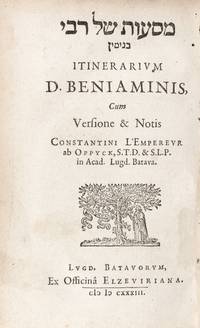
16336497Leiden: Elzevir 1633. First bilingual edition. Very Good. Octavo 16 cm.; 48 234 22 pages. Woodblock initials and vignettes. In marbled boards circa 1900 renewed endleaves spine artlessly reinforced in cloth worn at edges. Paper label apparently original. Provenance: Salomon Jakob Florsheim exlibris. Some light foxing. Reference: Willems 377; Blackmer 120. <br /><br />Hebrew text of "Ma'asot shel rabi Benjamin" accompanied by a Latin translation. This "travelogue" first published in Hebrew in 1543 and in Latin in 1575 recounts the author's journey through the Middle East and Central Asia in the 12th century. Da Tudela traveled from Spain through southern France Italy Greece Constantinople Cyprus Palestine Egypt on to Baghdad and visited many of the local Jewish communities. He is remembered as the most important traveler of Jewish origin in the Middle Ages. The narrative is an prime source for the history of the Jewish traditions in the Mediterranean area. He even described the lighthouse of Alexandria collapsed in 1326 one of the seven wonders of the ancient world. Elzevir hardcover
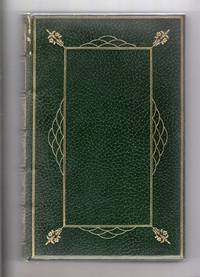
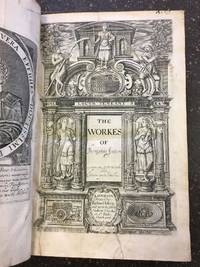
16169030996London: William Stansby 1616. 1st. Hardcover. Fine. Compiled and edited by Johnson published in two sizes. This is the small-paper edition originally 7 x 11 1/4 inches trimmed here to 6 1/2 x 9 7/8 inches with no loss of text. Rebound in dark green morocco with five raised bands on spine; spine and covers stamped in gilt. Contains 842 of roughly 1025 original pages including all plays: Every Man in his Humour Every Man out of his Humour Cynthias Revels Poetaster Seianus Volpone or The Fox Epicœne or The Silent Woman The Alchemist and Catiline as well as epigrams and Jonson's poetry collection "The Forrest." Missing engraved portrait title and contents page along with five of seven introductory dedication pages. Missing engraved title pages to all plays but "Poetaster" along with the Entertainments Panegyre Masques and Barriers which comprised the last 173 pages of the book. Two pages of introductory dedication have been rebound as final leaf. <br/><br/> William Stansby hardcover
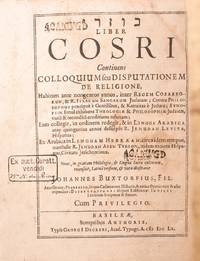
166066808Basileae Bâle Basel: Sumptibus authoris l'auteurtypis Georgi Deckeri 1660. Fine. Sumptibus authoris l'auteur typis Georgi Deckeri Basileae Bâle Basel 1660 16 x 20.50 cm relié Sumptibus authoris. Typis Georgi Deckeri Basileae Basel 1660 4to 16 x 20.5 cm 50 pp. 455 pp. 29 pp. modern vellum First edition of the Latin translation by Johannes Buxtorf The Younger of the first translation into Hebrew by Juda ibn Tibbon Juda Halevi's Arabic text not being rediscovered till 1887 today in the Bodleian. Modern vellum binding flaps. Skillful restoration to inside margin of final third of work without loss to text. A few small wormtracks filled in to lower margins of pastedowns as well as first and final endpapers. A few dampstains to lower portion and some pages browned. Stamp of the University Library at Leiden «Acad. Lugd.» to edges and title. Stamp of the restorer Willem Nicolaas du Rieu «Ex auct. Curatt. vendidi W. N. du Rieu» indicating its deaccession. A very rare copy of this classic of Medieval Jewish philosophy presenting the fears of Spanish Jews faced with two powerful religions Christianity and Islam. Written in 1140 in Arabic the Kuzari is couched in the form of a dialogue in five books. Charles Touati in his 1994 preface to the text summarizes the narrative thread of the work thus: «The king of the Khazars or Kuzari tormented by the religious question interrogates in turn a philosopher a Christian theologian and a Muslim one. Disappointed in their answers he feels he must turn to a learned man of the mocked and vilified minority a Rabbi who ends up convincing him at which the king converts to Judaism and continues his studies with the aid of this teacher.» This apologia allowed Juda Halevi to critique the appeal of philosophy Christianity and Islam for his contemporaries. According to him «philosophy denies all possibility of dialogue between Man and God and does not understand the religious phenomenon» ibid. Right from his starting point a proof of the existence of God he believes that we need only look to history and the revelation of God on Mount Sinai witnessed by thousands. Christianity and Islam are for him nothing but forgeries of Judaism: «they jeer at the humiliations and suffering of the Jews without realizing that they exalt in the founder of their own religions precisely that humiliation and suffering» ibid. The Kuzari is an emblematic text in the sense that it calls for the exiled community to return to Zion rather than submit. «It is better to leave everything and go back to Zion and there regain Divine favor instead of wearing ourselves out winning the favor of gentiles which in any case we will never have» ibid. Sumptibus authoris [l'auteur]typis Georgi Deckeri hardcover
169555262Amsterdam: Be-veit ha-meshutafim Asher Anshil ben Eliezer ve-Yisakhar Ber ben Avraham Eliezer/ Moses Wiesel 1695. First edition. Hardcover. fair. Small folio 29 by 18.5 cm. Collation: aleph-vav4 zayin2 = 26 numbered leaves. Additional engraved title page engraved folding map at rear; main title with woodcut vignette; 14 half-page engraved illustrations in the text. Contemporary quarter calf over dark brown pastepaper boards skilfully rebacked. Images of Moses and Aaron at engraved title excised the seven small engraved vignettes along with letterpress text of engraved title and imprint mounted on old paper. Old marginal repairs at main title resulting in slight loss of initial letters along right margin and several leaves; slight strictly marginal worming and occasional tears. Stained throughout sometimes heavily though not impairing legibility. Map mounted to reinforce tears with virtually no loss of text or engraved imagery apart from printed border at right side. A fair copy at best; despite all defects the half-page engraved illustrations have survived intact with minimal staining. Housed in new maroon buckram slipcase.<br /> <br /> First edition of this gorgeously illustrated work now referred to simply as the Amsterdam Haggadah. The first such work to be illustrated with copperplate engravings it ranks among the most imitated of the Jewish manuals for the Passover seder. The popularity of these illustrations can be attested by the huge number of reprint editions over the centuries. Fourteen finely printed half-page engravings appear throughout the text. Some of these images illustrate the traditional content of the Passover seder or the Exodus story while others reference other biblical tales. Images include: the Rabbis of Bene Brak discussing the Passover story the four sons Abraham smashing the idols of his father Abraham welcoming the three angels Moses slaying the Egyptian overseer the rescuing Moses from the river Moses and Aaron coming to Pharaoh w/ staves turning to snakes the ten plagues the Egyptian army drowning in the Red Sea the Exodus the receiving of the Ten Commandments at Mt. Sinai the eating of the Pascal Lamb King David composing his psalms and finally an exterior view of the Jewish Temple with the cityscape of Jerusalem in the background. All images are captioned with relevant passages in Hebrew. The engravings were all created by Abraham ben Jacob a German convert to Judaism who had moved to Amsterdam although some sources over the years misattributed them to financier Moses Wiesel 6 of which were adaptations and/or modifications of previous images by Swiss artist Matthäus Merian 1593-1650 from his original work "Icones Biblicae" 1625-30.<br /> <br /> In addition to the in text engravings there is famously fold-out engraved biblical map of the Holy Land in a notable format. Measuring a total of 19.5 by 11.5" the map shows the land of Israel the Wilderness of Sinai and Egypt in landscape orientation looking eastward towards the top of the map. It traces the journey of the Israelites starting with the Exodus from Egypt through the Sinai and into the Land of Israel. The map is detailed showing the areas of the twelve tribes important locations and cities as well as geographic features including the Red Sea Mount Sinai the Dead Sea the Sea of Galilee and many others. Additional illustrations appear near the bottom along with a legend. This beautiful work also by Abraham ben Jacob is considered among the earliest if not the first map of its kind to be printed within a Hebrew publication. It is now known to have been heavily based on the previously printed 1620 map in Hebrew by Jacob ben Abraham Zaddiq and Abraham Goos 1590 - ca. 1643 which itself was based on the map of 1590 by Christian Kruik van Adrichom Adrichem printed in Latin.<br /> <br /> Text throughout is printed in Hebrew with smaller text in Rashi script underneath containing famous commentary on the Passover Haggadah by acclaimed Portuguese Rabbi and scholar Isaac ben Judah Abarbanel 1437-1508. The verso of the title page contains the order of the Passover seder with brief instructions in both Ladino Judeo-Spanish and Yiddish Judeo-German a nod to the subtitle which references both the Ashkenazi and Sephardi traditions.<br /> <br /> Provenance and annotations: Full page of text appx. 1500 words in neat Hebrew cursive at front endleaf which discusses aspects of the Haggadah text; inscription in German at front endleaf by Isidor Adler who mentions his friend Hermann Mechlenburg dated March 1906; old annotations throughout in at least two hands. In one notable instance the Hebrew phrase l'shana ha-ba'ah be-hamburg next year in Hamburg! has been added in fine block characters above the traditional phrase l'shana ha-ba'ah bi-yerushalayim next year in Jerusalem. Hebrew title: סדר הגדה של פסח ×›×ž× ×”×’ ××©×›× ×– וספרד <br /> Alternate transliterations: Seder Hagadah shel Pesah Seder Hagadah sel Pesah<br /> <br /> References: Friedberg 278 Fuks HTN II 521; Yudlov Haggadah 93; Vinograd Amsterdam 627; Ya'ari no. 59; Laor 876 Map; Nebenzahl pp.138-1389 Map; Yerushalmi plate 59-62; Rosenau "Vision of the Temple" p.135 146-7. Be-veit ha-meshutafim [Asher Anshil ben Eliezer ve-Yisakhar Ber ben Avraham Eliezer]/ Moses Wiesel hardcover
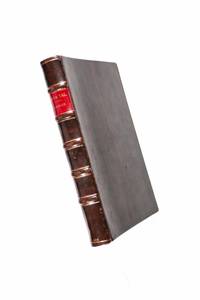
161249853Hannoviyah Hanau: Hans Yakop Hena 1612. First edition. Hardcover. vg- to vg. Quarto. 9 92 leaves. Rebound in modern dark brown leather boards with gilt lettering red label and raised bands on the spine. Title page illustrated with historiated woodblock lettering at the top and encircled by text borders. Missing the final unnumbered initial leaf containing approbations and the final two leaves index. <br /> <br /> First edition of this compendium of Kabblistic topics by Prague rabbi Shabtai Sheftel ben Akiva Horowitz 1565-1619. Illustrated throughout with a total of 15 prominent and intriguing Kabbalistic woodblock diagrams and charts in black as well as some small tables. Among the specific subjects the work provides commentary and analysis of the work of previous Kabbalists including "Iggeret ha-Te'amim" Letter on the Accents by 16th century rabbi Aaron Abraham ben Baruch Simeon ha-Levi the writings of Rabbi Moses ben Jacob Cordovero aka the RAMAK 1522–1570 Sefer Yetzirah and the Zohar.<br /> <br /> Text throughout in Hebrew printed in two and three-column formats in multiple size fonts and some of the text in Rashi script.<br /> <br /> Binding with some light scratches to the covers. Title page with some staining some small worm holes reinforcement along the gutter and most notably a repaired tear along the left margin resulting in some loss of border text and text on the verso. Repaired marginal tears also on the 2nd and 3rd unnumbered initial leaves with no loss of text. The large diagram on the leaf 8 has been trimmed in the margin resulting in minor loss of the image on the left side. Closed tear to leaf 18. Pages throughout with some age toning occasion minor chipping to the edges and some sporadic water stains and smudges. Binding in very good interior in very good- condition overall. Hebrew title: ספר שפה טל<br /> Author: שבתי שפטל בן ×¢×§×™×‘× ×”×œ×•×™ הורוביץ<br /> Publication: ×”×× ×© ×™×קופ ×”×¢× ×”<br /> Alternate transliteration: Shabtai Sheftel ben Akiva ha-Levi Horowitz<br /> <br /> Bibliographic References: Vinograd p.162 Hanau 13; Steinschneider col. 2241; Cowley 630. Hans Yakop Hena hardcover
163191764Robert ALLOT John BEALE | Londres 1631 | 20 x 32 cm | Relié
163518006Amsterdam 1635. the author 2 works in 1 volume. 8vo. Contemporary calf rebacked with the original backstrip laid down. With a letterpress decoration on title-page Hebrew text of Psalm 85.11 in a frame a so-called "magical square" in which the the text can be read both horizontally as well as vertically some woodcut initials and some Hebrew passages in the text. 16 156 2 2 blank; 40 346 6 pp. Ad 1: First edition of a work on God's creation of Earth by the well-known Portuguese rabbi writer and printer Menasseh Ben Israel 1604-1657 who established the first Jewish printing office in the Netherlands. The work presents 30 questions or "problems" concerning God's creation of the Earth which Menasseh tries to answer and explain citing or referring to passages of the Tenach. Problems include "on which day were demons created" and "was there another world or earth before God created this one". The preliminaries including an important poem by Caspar Barlaeus which caused the Amsterdam authorities to consider the reintroduction of censorship for Jewish publications. As this didn't happen Barlaeus's poem can be seen as an indicator of the relationship between Jews and Christians and the religious tolerance in Amsterdam during the Golden Age.Ad 2: First edition of a work on the resurrection of the dead by the same author. The work is divided into three "books" and opens with several dedicatory letters an index of the chapters and 3 laudatory poems. The last page of the preliminaries gives a short list is of books translated from Hebrew into Spanish. The main text deals with the Last Judgment the resurrection of the dead and the immortality of the soul.With a bookseller's ticket and bookplate. Title-page of ad 1 slightly smudged browned throughout some water stains and small spots but still in good condition. Binding rubbed along the extremities and sides somewhat scratched rebacked with the original backstrip laid down.l Ad 1: Fuks & Fuks-Mansfeld p. 107; STCN 843242612 7 copies; ad 2: STCN 084840250 9 copies; for Menasseh in general: Fuks & Fuks-Mansfeld pp. 99-135; NNBW X cols. 604-613. unknown
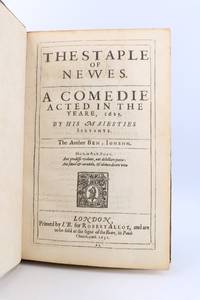
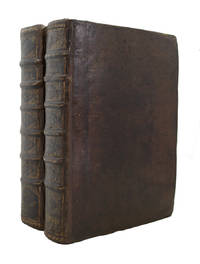
16401315045London: Printed by Richard Bishop and Robert Young and are to be sold by Andrew Crooke in St. Paules Church-yard 1640/1641. Second Folio Printing. Hardcover. Folios Three Volumes bound in two books. In Very Good condition. Rebacked with new calf spines and burgundy labels with gilt lettering with previous boards preserved. Both volumes have previous owners name and information on second free end page. Marbled endpapers.<br /> <br> <br /> <br> <br /> In the first book which contains only Volume 1 the subsidiary plays each have separate dated title pages. "Epigrammes" begins a new pagination and register; otherwise pagination and register are continuous. Most of the parts have special title pages with imprint: London Printed by R. Bishop 1640. "Poëtaster" has title page with imprint: "London Printed by Robert Young M.DC.XL." The title page is engraved and signed "Gulielmus Hole fecit". Signatures: A-Kkk6 Lll4; 2A-2T6. <br /> <br> <br /> <br> <br /> The second book contains Volumes 2 and 3. Volume 2 was edited by Jonson himself but Volume 3 was edited by by Sir Kenelm Digby. The three plays comprising Volume 2 "Bartholmew sic Fayre" "The Diuell is an asse" and "The staple of nevves" each have separate title page with imprint ". printed by Iohn. Beale. for Robert Allot . 1631." Signatures: A6 B-M4 Aa-Cc4 2D-H4 2I6 N-Y4 Vol. 3 B-Q4 R2 S-X4 Y2 Z4 Aa-Oo4 Pp2 Qq4 2A-K4 2L2 2M-R4 3A-P4 3Q2 3R-V4. Closed tear to L4. JK Consignment. Shelved in Case 0.<br /> <br> <br /> <br> <br /> Oversized books. Additional postage necessary for expedited/international orders. Economy International shipping unavailable due to size/weight restrictions. For international/expedited customers please inquire for rates. The first volume printed by Richard Bishop for Andrew Crooke was a 1640 reprint of the 1616 folio with corrections and emendations; it has sometimes been termed "the second edition of the first folio." The second volume was printed by James Dawson for Thomas Walkley in 1641 lacks a general title page and the order of the parts varies in published editions. This volume contains later works most of them unpublished or uncollected previously. ESTC S112456 ESTC S111824. 1315045. Shelved Dupont Bookstore. Printed by Richard Bishop [and Robert Young], and are to be sold by Andrew Crooke, in St. Paules, Church-yard hardcover
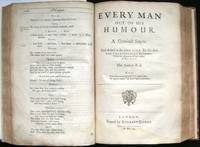
1640OB317<p>London Printed by Richard Bishop. M. DC. XL 1640. Hard Cover. Folio: 226 63-668 pages headpieces initials marginal notes. A-S6 T5 G2-G6 H-Z6 Aa-Zz6 Aaa-Kkk6 Lll4; 29.5 cm. Each part has separate title-page and the above imprint except for "Poetaster" London Printed by Robert Young. M. DC. XL. Contents: Epigrammes. I. Booke. The Author B. J.; Part Of The Kings Entertainment In Passing To His Coronation. The Author B. J.; A Panegyre On The Happy Entrance Of Iames our Soveraigne to His first high Session of Parliament in this his Kingdome the 19 of March 1603. The Author B. J.; A Particular Entertainment Of The Queene And Prince their Highnesse at Althrope At The Right Honourable the Lord Spencers on Saturday being the 25. of Iune 1603. as they came first into the Kingdom; The Author B. J.; Masques At Court. The Author B. J. incomplete: ends with catchword 'Till'; Every Man Out Of His Humour. A Comicall Satyre. First Acted in the yeere 1599. By the then Lord Chamberlaine his Servants: With the allowance of the Master of Revells. The Author B. I.; Cynthias Revels. Or The Fovntaine Of Selfe-Love. A Comicall Satyre. First Acted in the yeere 1600. By the then Children of Queen Elizabeths Chappell. With the allowance of the Master of Revells. The Author B. I.; Poëtaster Or His Arraignement. A Comicall Satyre. First Acted in the yeere 1601. By the then Children of Queene Elizabeths Chappell. With the allowance of the Master of Revels. The Author B. J.; Seianus His Fall. A Tragedie. First Acted in the yeere 1603. By the Kings Maiesties Servants. With the allowance of the Master of Revells. The Author B. J.; Volpone Or The Fox. A Comedy. First Acted in the yeere 1605. By the Kings Maiesties Servants. With the allowance of the Master of Revells. The Author B. J.; Epicine Or The Silent Woman. A Comedy. First Acted in the yeere 1609. By the Children of her Maiesties Revells. With the allowance of the Master of Revells. The Author B. J.; The Alchemist. A Comedy. Acted in the yeere 1610. By the Kings Maiesties Servants. With the allowance of the Master of Revells. The Author B. J.; Catiline His Conspiracy. A Tragedy. Acted in the years 1611. Detailed collations on request. Faded dampstain through much of lower margin; outer bottom corner of p. 187/188 torn with partial loss of catchword; closed tears at inner tops of pp. 189/190 and 523/524; ink note on p. 600 with ink smear on inner margin. Expertly rebound by Dragonfly Bindery in red mottled calf gilt spine decoration red leather spine label. A very good and handsome copy. Stock#OB317.</p> Printed by Richard Bishop. , and are to be sold by Andrew Crooke in St. Paules Church-yard. M. DC. XL hardcover
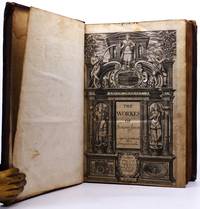
1640743L20London: Richard Bishop and Robert Young 1640 1641. Fine Binding. Very Good Indeed. 12" by 7.5" . None. A beautifully bound scarce collected edition of Ben Jonson's works. In a fantastic recent binding with a custom slipcase. From the library of Allen and Beryl Freer. The Freers were avid art collectors and acquired quite the selection over the twentieth century of works mostly bought from the artists. Allen organised many exhibitions of artists he admired and published several works on art. With Allen Freer's bookplate to the front pastedown. Freer's handwriting to the front free endpaper 'Ex collection H J Massingham'. ESTC reference no: S112456. Greg 1073; STC 14753Collated lacking A8 further celebrations of Ben Jonson and B1 Title page to 'Every Man in His Humour.'. With the title page engraved and signed 'Gulielmus Hole fecit' and the frontispiece signed 'Ro: Vaughan fecit' provided in a very good facsimile on laid paper. Collated using The BL's copy. With the signatures: A3-A7 B2-B6 C-2K6 2L4 A-T6.This second collected edition of Jonson's works was entered to R. Bishop on the 4th March 1639. Separate title page for 'Every Man Out of His Humour' dated 1640; 'Cynthias Revels' dated 1640; 'Poetaster' dated 1640; 'Seianus His Fall' dated 1640; 'Volpone or The Fox a Comedy' dated 1640; 'Epicoene or The Silent Woman' dated 1640. Part 2 begins with 'Epigrammes. I. Booke' dated 1640. Separate title page to 'Part of the Kings.' dated 1640; 'Masques At Court' dated 1640; To the verso of title page is a hand-written verse which begins 'O She is wilder & more hard with all/ then bird or beast or tree or stony wall./' It is monogrammed 'W: S:'. This verse was likely written in 1660 as the excised signature at the top of the verso is dated 1660. Contemporary inscription to the tail of B4r 'John Noble His Book'. Prior owner's inscription to the title page of 'The Alchemist a Comedy' 'The Fox the alchemist and the silent woman Elizabeth Congreve'. Excised contemporary inscription to the final leaf. Recently rebound in a full morocco binding. Externally excellent with minor shelfwear. Bookplate to the front pastedown. Recent ownership inscriptions to A3 A4 B4 Y4 and T6. Internally firmly bound. Repair to the fore-edge of L6 and M1 not affecting text. Minor repair to the top corner of R4-S6 not affecting any text. Repair to 2P2 to the bottom six lines of the leaf affecting half of several words. Repair to 2P4 affecting three lines fourteen from the bottom. Lacking A8 B1 and the title page and frontispiece are provided in facsimile. Pages are bright. Scattered spots from A-E of part II. Very Good Indeed Richard Bishop [and Robert Young] unknown
163191764London: Robert ALLOT John BEALE 1631. Fine. Two plays by the ""greatest of Shakespeare's contemporaries""Ian Donaldson Robert ALLOT John BEALE London 1631 20 x 32 cm Relié First edition. Binding inspired by Seventeenth century Cambridge panelled boards spine with five raised bands framed by double fillets in blind boards framed by double fillets in blind outer corners of central frame decorated with small fleurons tools in blind decorated roll inside central frame decorated roll in blind on edges all edges gilt a corner and edge and lower spine-end slightly rubbed some chafing on boards a small hole p. 8 affecting part of a letter. Very scarce first editions of The Staple of News and The Devil is an Ass by Ben Jonson master of comedy and satire who appears alongside Shakespeare as the most celebrated playwright of the English Renaissance. These two delightful satires of the modern world were performed by the Kings Men respectively in 1626 and 1616. As Jean-Christophe Mayer observes Shakespeare and Jonson had clearly understood that the present was beginning to take on a quite particular importance for their contemporaries who would as the years went by become avid consumers of current events. in Modernité représentation de lhistoire et présentisme dans le théâtre shakespearien. The printed press was barely in its infancy when Jonson wrote The Staple of News: the first play mocking the feverish appetite for information among readers staging games of speculation and inflation around news of every kind. He then continued his sharp description of his contemporaries in The Devil is an Ass: Satan sends one of his demons to London to recruit new souls. But this poor devil finds himself so thoroughly outpaced in every old vice and every old trick of hell by modern usurers ruffians and swindlers of high and low degree alike that he no longer knows where he stands allows himself to be duped and returns to the dark empire reviled and mocked by all. Ernest Lafond. These rare imprints follow Jonsons First Folio 1616 a landmark in English literary history as the first printed edition of an authors works supervised by the author himself. Jonson was moreover instrumental in the publishing of Shakespeares First Folio which opens with his verses To the Reader and also contains his eloquent tribute To the Memory of My Beloved the Author Master William Shakespeare and What He Hath Left Us. The two plays in the present volume were published simultaneously with a third Bartholomew Fair to form a collection that never came to fruition: The lack of a general title page on this collection has led scholars to offer several theories seeking to explain how and if it was ever sold to readers see Greg 3:1075-76; Creaser 2014. One theory is that copies of the edition may have been sold as a supplement to Jonsons 1616 Works DEEP 5074-5075. Alternatively copies of the collection but also of the individual plays in it may have been distributed as private gifts by Jonson. . It is also possible that the plays were intended to be sold separately despite the use of continuous signatures in the collection and the use of continuous pagination in Bartholomew Fair and The Devil is an Ass. Another possibility is that Jonson prevented copies from being sold by the publisher Robert Allott and likewise prevented other works from being printed for the collection in 1631 because of Jonsons dissatisfaction with John Beales printing of the three plays in it. The three plays in the collection were issued again in 1640 Database of Early English Playbooks. A fine association of two Jonsonian comedies issued by Allot who would go on to publish the celebrated Shakespeare Second Folio the following year. ESTC ; STC 14753.5. A bibliography of the English printed drama to the Restoration 456. 1631 ; 457. 1631. Robert ALLOT John BEALE hardcover
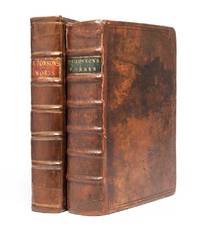
1616010148London: Printed by W. Stansby and to be Sold by Rich. Meighen 1616. Book. Very Good. Full Calf. First Edition. 4to - over 9¾" - 12" tall. 12 1015 1 blank with engraved allegorical title by William Hole Pforzheimer state A. Lacking the rare initial blank as with Pforzheimer's copy. Volume 1 1616 pages measure 10 3/8" by 7". a small-paper copy. The title to Every Man Out of his Humour has no border and reads LONDON: Printed by WILLIAM STANSBY for Iohn Smithwicke rule M. DC. XVI. The Dedication recto G2 is signed "By your true honorer Ben Jonson". Line 6 verso reads "PVNTERVOLO.; the catchword on recto G5 is "Naked" on verso "Where"; recto G6 begins "Where I want arte" ; and eighth line from bottom on versoG6 reads "But why enforce I this as fainting no". The title to Cynthia's Revels is in compartment with LONDON printed by W. Stansby 1616. The tirle for Poetaster p. 277 is in compartment and reads LONDON printed by W. Stansby for M. Lownes 1616. Bound in contemporary calf the late 18th c. bookplate of S.P PeachTockington at front paste down. About Very Good front cover separarting yet held by cords boards rubbed with a peeling lacquer at spine not quite obscuring the label. Internally tight and clean without foxing and with only a few spots of scattered browning. An unsophisticated copy of the earliest edition of Jonson's Works later volumes were published in 1640-41. Pforzheimer 560. Printed by W. Stansby and to be Sold by Rich. Meighen Hardcover
16141313997London: printed by William Stansby for Walter Burre and are to be sold at his shop in Paules Church-yard at the signe of the Crane 1614. First Edition. Hardcover. Folio; G; bound in early diced brown calf newly rebacked with new spine and corners paneled with gilt lettering; housed in a custom brown buckram covered clamshell; With the Poem and the engraved title page. Both have been trimmed and inlaid possibly having been married to this copy from another.; With 5 folding maps Lacking 3 maps: the Arabian Desert pages 414/415 Troy 452/453 and Troy 454/455. Maps trimmed incredibly close with map of the Middle East impacted just slightly.; Lacking blank leaf 3K4 and terminal blank 7C6; 4G3r has the woodcut initial hand-colored with the color bleeding over to the facing page; with the Errata leaf at the end; Printer's name and bookseller's address from colophon.; "The first part of the historie of the vvorld . The third booke" caption title begins new pagination on 4A1r.; LD consignment; shelved case 4. Written during his imprisonment in the Tower of London the History of the World consists of a million words spanning from the biblical creation of the world to 146 BCE. The work was intended to serve as an educational tool for Henry Prince of Wales 1594-1612 and includes numerous references to warfare law and kingship.<br /> <br><br /> <br><br /> It was entered 15 April 1611 in the Stationers' Register but not published until 29 March 1614 due to the death of Prince Henry.<br /> <br><br /> <br><br /> Once published James had it immediately suppressed and subsequently issued with no title page and therefore no authorial acknowledgement.;<br /> <br><br /> <br><br /> "In the century that followed the publication it was vastly influential.The book went through eleven editions in the 17th century outselling even Shakespeare's collected works. It was not until 5 January 1615 that a letter from Archbishop Abbot reached The Stationers Company telling them that he had express orders from His Majesty that the book should be suppressed and withdrawn from shops. By this time the book had nearly sold out and it does appear from the letter that the Archbishop may once have praised it." Raleigh Trevelyan;<br /> <br><br /> <br><br /> "Sir Walter Raleigh's book is called in by the king's commandment for divers exceptions but especially for being too saucy in censuring princes. I hear he takes it much to heart for he thought he had won his spurs and pleased the king extraordinarily." Letter from John Chamberlain Esq to Sir Dudley Carleton;<br /> <br><br /> <br><br /> ESTC S116300;. 1313997. Shelved Dupont Bookstore. printed [by William Stansby] for Walter Burre [and are to be sold at his shop in Paules Church-yard at the signe of the Crane] hardcover books
169555736Amsterdam: Be-veit ha-meshutafim Asher Anshil ben Eliezer ve-Yisakhar Ber ben Avraham Eliezer/ Moses Wiesel 1695. First edition. Hardcover. g to near fine. Small folio 30 by 18.8 cm. Collation: aleph-vav4 zayin2 = 26 numbered leaves. Full period brown paper boards re-backed with a brown leather spine with raised bands.<br /> <br /> Letterpress title-page with ornate floral woodcut device; additional engraved title-page mounted depicting Moses and Aaron along with six small biblical scenes within round borders all against an architectural background. Engraved folding map at rear mounted; main title with woodcut vignette; 14 half-page engraved illustrations in the text.<br /> <br /> This gorgeously illustrated work is the first edition of the famous and highly influential Passover Haggadah printed in Amsterdam in 1695. Simply known as the Amsterdam Haggadah this edition stands as among the most imitated and copied haggadahs in history and was the first to be illustrated with copperplate engravings. Previous illustrated haggadahs had used woodcuts. The popularity of these illustrations can be attested by the huge numbers of reprint editions over the centuries. There are 14 finely printed large in-text engravings plus the full page engraved title page showing Moses Aaron and Adam in the Garden of Eden. Some of these images illustrate the traditional content of the Passover seder and/or the exodus story while some are other biblical stories less directly related. Images include: the Rabbis of Bene Brak discussing the Passover story the four sons Abraham smashing the idols of his father Abraham welcoming the three angels Moses slaying the Egyptian overseer the rescuing Moses from the river Moses and Aaron coming to Pharaoh w/ staves turning to snakes the ten plagues the Egyptian army drowning in the Red Sea the Exodus the receiving of the Ten Commandments at Mt. Sinai the eating of the Pascal Lamb King David composing his psalms and finally an exterior view of the Holy Temple with the cityscape of Jerusalem in the background. All images are captioned underneath with relevant passages in Hebrew. The engravings were all created by Abraham ben Jacob a German convert to Judaism who had moved to Amsterdam although some sources over the years misattributed them to financier Moses Wiesel 6 of which were adaptations and/or modifications of previous images by Swiss artist Matthäus Merian 1593-1650 from his original work "Icones Biblicae" 1625-30.<br /> <br /> In addition to the in text engravings there is famously a phenomenal fold-out engraved biblical map of the holy land. Measuring a total of 19.5x11.5" the map shows the land of Israel the Sinai desert and Egypt in landscape orientation looking eastward towards the top of the map. It traces the journey of the Israelites starting with the Exodus from Egypt through the desert and into the Land of Israel. The map is detailed showing the areas of the twelve tribes important locations and cities as well as geographic features including the Red Sea Mount Sinai the Dead Sea the Sea of Galilee and many others. The map is decorated with additional illustrations near the bottom and includes a key. This beautiful work also by Abraham ben Jacob is considered among the earliest if not the first map of its kind to be printed within a Hebrew publication. It is now known to have been heavily based on the previously printed 1620 map in Hebrew by Jacob ben Abraham Zaddiq and Abraham Goos 1590 - ca. 1643 which itself was based on the map of 1590 by Christian Kruik van Adrichom Adrichem printed in Latin.<br /> <br /> Text throughout is printed in Hebrew with smaller text in Rashi script underneath containing famous commentary on the Passover Haggadah by acclaimed Portuguese Rabbi and scholar Isaac ben Judah Abarbanel 1437-1508. The verso of the title page contains the order of the Passover seder with brief instructions in both Ladino Judeo-Spanish and Yiddish Judeo-German a nod to the subtitle of Haggadah which references the both Ashkenazi and Sephardic traditions.<br /> <br /> This copy with binding in beautiful condition with being professionally restored includining spine re-backed to style. Book block tight. Interior with some staining to pages throughout from use. Binding in very good to near fine inteiror in good condition overall. Hebrew title: סדר הגדה של פסח ×›×ž× ×”×’ ××©×›× ×– וספרד <br /> Alternate transliterations: Seder Hagadah shel Pesah Seder Hagadah sel Pesah<br /> <br /> References: Friedberg 278 Fuks HTN II 521; Yudlov Haggadah 93; Vinograd Amsterdam 627; Ya'ari no. 59; Laor 876 Map; Nebenzahl pp.138-1389 Map; Yerushalmi plate 59-62; Rosenau "Vision of the Temple" p.135 146-7. Be-veit ha-meshutafim [Asher Anshil ben Eliezer ve-Yisakhar Ber ben Avraham Eliezer]/ Moses Wiesel hardcover
16401315045London: Printed by Richard Bishop and Robert Young and are to be sold by Andrew Crooke in St. Paules Church-yard 1640/1641. Second Folio Printing. Hardcover. Folios 2 volumes; VG; rebacked with new calf spines burgundy labels with gilt lettering previous boards preserved; marbled endpapers; both volumes have previous owners name and information on sfep; <br /> <br><br /> <br><br /> For volume 1 the subsidiary plays each have separate dated title pages. That to "Poëtaster" has imprint "London printed by Robert Young. M.DC.XL.". "Epigrammes" begins new pagination and register; otherwise pagination and register are continuous. Most of the parts have special title page with imprint: London Printed by R. Bishop 1640. "Poëtaster" has title page with imprint: "London Printed by Robert Young M.DC.XL.".; The title page is engraved and signed "Gulielmus Hole fecit".; Signatures: A-Kkk6 Lll4; 2A-2T6.; <br /> <br><br /> <br><br /> For volume 2 it consists of two volumes 2 and 3 the former intended as a continuation of the first volume published in 1615. Vol. 2 was edited by the author vol. 3 by Sir Kenelm Digby. The three plays comprising volume 2 "Bartholmew sic Fayre" "The Diuell is an asse" and "The staple of nevves" each have separate title page with imprint ". printed by Iohn. Beale. for Robert Allot . 1631"; "; Signatures: A6 B-M4 Aa-Cc4 2D-H4 2I6 N-Y4 Vol. 3 B-Q4 R2 S-X4 Y2 Z4 Aa-Oo4 Pp2 Qq4 2A-K4 2L2 2M-R4 3A-P4 3Q2 3R-V4. Closed tear to L4;<br /> <br><br /> <br><br /> CK consignment; shelved case 0. The first printed by Richard Bishop for Andrew Crooke was a 1640 reprint of the 1616 folio with corrections and emendations; it has sometimes been termed "the second edition of the first folio." The second volume was printed by James Dawson for Thomas Walkley in 1641 lacks a general title page and the order of the parts varies in published editions. This volume contains later works most of them unpublished or uncollected previously.;<br /> <br><br /> <br><br /> ESTC Citation No. S112456 ESTC Citation No. S111824. 1315045. Shelved Dupont Bookstore. Printed by Richard Bishop [and Robert Young], and are to be sold by Andrew Crooke, in St. Paules, Church-yard hardcover books
164069113London: Richard Bishop for Andrew Crooke & for Richard Meighen 1640. Full Description:<br> <br> JONSON Ben. The Workes of Benjamin Jonson. London: Richard Bishop for Andrew Crooke & for Richard Meighen 1640 1631.<br> <br> First edition of both parts one and two of the second volume containing the first appearance of the first three plays; Bartholomew Fayre The Staple of Newes The Divell is an Asse and second edition of the first volume. Part I of the second volume was originally printed in 1631 as a continuation of the 1616 Workes. With Pforzheimer's issue "f" of the second volume in which all parts are without the general title the first three plays are dated 1631 and Divell is an Asse with the 1641 imprint. The final page of Mortimer reads: "Left unfinished".<br> <br> It is also of note that William Shakespeare is listed as an actor in two plays of Volume I Everyman in his humor and Seianus His Fall.<br> <br> Three folio volumes in two 10 7/8 x 7 1/8 inches; 277 x 181 mm. Second volume slightly larger. Volume I with engraved title-page by William Hole and engraved portrait. Both volumes with woodcut initials and head- and tailpieces. First volume lacking A1 a blank and second volume is lacking A1 general title.<br> <br> Uniformly bound in contemporary dark brown acid-treated calf rebacked with original spines laid down. Spines elaborately stamped in gilt in compartments. Red morocco spine labels lettered in gilt. Some mild toning and occasional light spotting throughout both volumes. Volume II with a closed lateral tear to leaves Cc-Cc3 which has been neatly repaired with no loss. Overall a very good copy.<br> <br> Pforzheimer credits the failure of The New Inn as the reason work on the second volume ceased until after Jonson's death. The first leaf in the first signature in this part was left blank in anticipation of a general title but since the plans were cancelled the plays were sold as printed with only their individual titles all dated 1631. A general title-page was created for the 1640 first edition of the Workes and the unsold 1631 printings were included as the first of four parts.<br> <br> "The three plays of Volume Il were all that Jonson saw through the press of a projected continuation of his 1616 volume. His failure to complete the collection was probably due to the damning by the town of The New Inn which was published 1631 the same year as this volume. Because of Jonson's supervision of this part the text here given may be considered authoritative. As first printed Sig A was a blank there being no general-title. In 1640 a number of these 1631 plays still remaining unsold sheet AI and 6 was again passed the press this time of Bernard Alsop and Thomas Fawcett and the general-title. printed on recto A. This title refers only to the three plays printed in 1631 and describes them as 'The fecond Volume'. However bound with these three 1631 plays are normally found the three parts containing the masques plays and miscellany dated 1640 or 1641 which have no general-title nor any other preliminary matter. The fact that over a period of years the 1631 plays may have been sold as a supplementary volume to the 1616 Workes. would easily account for their being described as the second volume quite aside from the explicit statement of the 1640 general-title. Pforzheimer 560<br> <br> Greg III p. 1073-1076. Pforzheimer 560 the second volume. STC 14753 and 14754.<br> <br> HBS 69113.<br> <br> $15000. Richard Bishop for Andrew Crooke & for Richard Meighen unknown
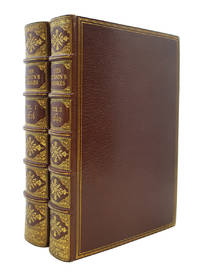
161668586London: Printed by William Stansby 1616. Together with: The Workes of Benjamin Jonson. The second Volume.London: Printed for Richard Meighen 1631-1640-1641.<br> <br> First folio edition and first collected edition. Small-paper copy which precedes the large paper. Three folio volumes bound in two Volume II divided into four parts originally issued in two volumes. 10 3/4 x 7 inches; 272 x 177 mm.; 10 1015 1 blank; 12 88 2 93-170 75 1 79 70-122 133-155 1 blank 292 132 pp. Volume I with engraved allegorical title by William Hole Pforzheimer state A. Volume I without the rare initial blank same as Pforzheimer. Decorative woodcut head-and-tail pieces and initials. This set is complete with the exception to it being bound without the extremely rare initial blank in volume I. Volume I collates according to Pforzheimer and while Volume II differs in parts order than Pforzheimer all leaves are present.<br> <br> Volume I- In this copy the section title to Every Man out of His Humour p. 73 is within a woodcut border McKerrow and Ferguson 224 and has the imprint "Printed by W. Stansby for I. Smithwicke;" the section title to Cynthias Revels p. 177 is within the same woodcut border and has the imprint: "Printed by W. Stansby;" the section title to Poëtaster p. 271 is without the border and has the imprint: "Printed by William Stansby." With dedication leaf G2 in first state signed with "By your true honorer Ben Jonson." line 6 on G2 verso reads "PUNTERVOLO"; the catchword on G5 recto is "Naked"; on G5 verso "Where"; G6 recto begins "Where I want arte"; and the eighth line from the bottom on G6 verso reads: "But why enforce I this as fainting no."<br> <br> Volume II- Issue D with the 1640 general title-page the first three plays with the imprint dated 1631 same a Pforzheimer. The end of Mortimer reads: "Hee dy'd and left it unfinished".<br> <br> Both volumes uniformly bound by Riviere in full brown levant morocco. Boards triple-ruled in gilt. Spines elaborately stamped and lettered in gilt. Gilt dentelles. Board edges double-ruled in gilt. All edges gilt. Occasional light toning to pages. Marbled endpapers. Title-page and first few pages toned. Previous owner's light signature on title-page. Occasional toning throughout both volumes. Some browning to pages 273-280 in Volume I. Minor repair to upper margin of leaf B in Volume II not affecting text. Overall a beautiful copy of this set. Housed together in a cloth slipcase.<br> <br> "This book. is a handsome specimen of typography. It reflects great credit upon its printer Stansby who was an apprentice and then successor to John Windet and himself a master printer. Such work entitles him to a front rank among the printers of the reign of James I. Jonson is said to have prepared the plays for the press himself and one or two matters of editing. certainly appear to show the author's hand. At the end of each play for instance is a statement telling when it was first acted and by whom whether the king's or the queen's servants. The names of the actors are also given. All of the works not included in the first were intended for a second volume which however did not appear until after Jonson's death in 1640" Grolier 100 English.<br> <br> Grolier 100 English 17. Pforzheimer 559. Pforzheimer 560. STC 14751.<br> <br> HBS 68586.<br> <br> $19500. Printed by William Stansby unknown
16412403London: Printed by William Stansby and Printed for Richard Meighen 1641. First edition. First volume printed 1616 second volume printed 1640 but dated 1631 1640 and 1641. Three folio volumes in two 290 x 190 mm. Contemporary brown calf with black and red morocco gilt lettered labels. Both volumes expertly rebacked retaining original spines. Collates complete according to Pforzheimer with the exception of initial and final blanks lacking in Volume I. Volume II with The Staple Newes bound before The Divell is an Asse Part IV bound before Part III and D3 bound before D2. Moderate soiling wear and signs of use throughout. Title page and first two leaves of Vol I with slight loss of upper corner slightly affecting image on title page lower corners absent from 401 439 539 and 779 not affecting text. Long marginal tears to C3 and D3 of Volume II. Cosmetic blemishes aside a very good and well margined copy in a contemporary binding.<br/><br/>"This book. is a handsome specimen of typography. It reflects great credit upon its printer Stansby who was an apprentice and then successor to John Windet and himself a master printer. Such work entitles him to a front rank among the printers of the reign of James I. Jonson is said to have prepared the plays for the press himself and one or two matters of editing. certainly appear to show the author's hand. At the end of each play for instance is a statement telling when it was first acted and by whom whether the king's or the queen's servants. The names of the actors are also given. All of the works not included in the first were intended for a second volume which however did not appear until after Jonson's death in 1640" Grolier 100 English.<br/><br/>Grolier 100 English 17. Pforzheimer 559. Pforzheimer 560. STC 14751. Printed by William Stansby [and] Printed for Richard Meighen unknown books
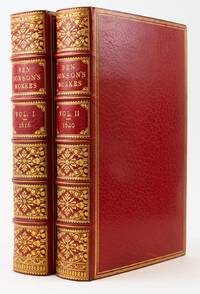
1616ST18707London: Will Stansby 1616; volume II printed for Richard Meighen and volume III printed for Thomas Walkey 1640 but 1641. FIRST COLLECTED EDITION of Each of the Three Parts. "Poetaster" with letterpress issue of the part title; Second Issue of part II with letterpress general title dated 1640; early state of "The Diviell is an Asse" part title. 280 x 175 mm. 11 x 6 7/8". Parts II and III with contents bound in a variant order but complete. Three parts bound in two volumes. <br/> HANDSOME SCARLET CRUSHED MOROCCO GILT BY RIVIERE & SON stamp-signed on front turn-in covers with French fillet border raised bands spine compartments with large lozenge centerpiece formed by flower and lancet ornaments curling vines bearing fruit at corners gilt lettering turn-ins with ornate gilt floral roll marbled endpapers all edges gilt. Engraved title by William Hole Pforzheimer's third state in first volume with part title to Every Man out of his Humour in woodcut border Pforzheimer's first state and part title to Cynthia's Revels with woodcut border. Front pastedowns with engraved bookplate of Doris Benz. Greg III 1070-73 1076-78 Pforzheimer 559 560 d; STC 14751 14754; ESTC S111817 S111824. First title leaf and likely the one beginning volume II carefully washed the text perhaps pressed--but crisp in any case--the bottom half of one page soiled occasional trivial smudges rust spots or other negligible imperfections elsewhere but the text still fine and IN A GORGEOUS BINDING IN PERFECT CONDITION.<br/> <br/> This first collected edition of Jonson's works—and of any collected dramatic works in English—comes in a very beautiful binding and with distinguished provenance. Excepting only Shakespeare Ben Jonson 1572-1637 was the most important literary figure of his age and in 1616 the year Shakespeare died he became England's first though unofficial Poet Laureate. In that same year he became the first playwright to publish his collected dramatic works when he issued the earlier volume in our set which was also the first printing of English drama in a folio-size book. The second collection here printed in two separate volumes but almost always bound as one appeared after Jonson's death in 1641. For the 21 years that he lived after Shakespeare Jonson was the unquestioned ruler in all things literary; unlike Shakespeare who borrowed heavily he was a fertile source for memorable plots and nobody before or after him has ever displayed the fascinating characters of London so vividly on the stage. As Pforzheimer tells us about the 1616 printing "Jonson began the preparation of this definitive edition in 1612. He used the quarto texts whenever available but scrupulously and systematically revised them cutting out many marginal notes altering the spelling typography and punctuation in accordance with a consistent . . . plan introducing considerable editorial matter." The playwright's hands-on approach to the printing of this text established it as the authoritative edition. <br /> <br /> As Pforzheimer notes this work appears with a number of bibliographic variants due to the fact that it was printed and issued over a number of years. Our set collates as in Pforzheimer with the exception of the bound order of the second and third parts. In part II which begins the second volume here "The Devil is an Ass" is bound between "Bartholomew Fair" and "The Staple of News" rather than after them. Part III leads off with "The Magnetic Lady" "Tale of a Tub" and "The Sad Shepherd" followed by the "Masques" and the "Diverse Poems." Greg notes that "the volume was printed in three sections the order of which is not altogether certain and differs in different copies." <br /> <br /> The tasteful binding was executed by the preeminent London workshop of Riviere & Son which supplied discriminating bibliophiles for more than a century. Robert Riviere began as a bookseller and binder in Bath in 1829 then set up shop as a binder in London in 1840; in 1881 he took his grandson Percival Calkin into partnership at which time the firm became known as Riviere & Son and the bindery continued to do business until 1939. Our set is in the superior condition typical of the books from the library of Doris Louise Benz 1907-84 who collected fine bindings the best of the private presses major English authors and manuscripts. Dickinson says that because she had acquired things very privately the book world was shocked at the richness of her collection when it came on the market in 1984. According to the Dartmouth College Library which was the sole beneficiary of the proceeds from the sale "Miss Benz was a quiet collector almost unknown to other collectors and to dealers except to Col. Marston Drake of the firm of James F. Drake of New York and to Maggs and Quaritch in London." She wanted her collection broken up and sold so that "others could enjoy the pleasures of identifying locating and acquiring books for their own collections" just as she had. Will Stansby unknown