2 590 résultats
192223466REILLY & LEE Chicago 1922. HARDBACK NODustJacket 1922 1st Edition VG/GOOD NOJACKET This is an imperfect copy at best with much tracking white spots and rubbing on covers. Sold AS-IS which is a First Edition of a very scarce period piece of that time. SmAll Stains & Scuff Marks Along Cover Edges & Back Blue Decorated Cloth with Black Lines Cover with Black Lettering Interior Nice tight Clean few pg edge Tears Light FoX Wear 224 pgs. First Edition. Hard Cover. REILLY & LEE , Chicago hardcover
185149596Paris Bachelier 1851. 4to. No wrappers. In: "Comptes Rendus Hebdomadaires des Séances de L'Academie des Sciences" Tome 33 No 13. With htitle and titlepage to tome 33. Pp. 329- 360 entire issue offered. Fizeau's paper: pp. 349-355. A stamp on upper right corner of title-page and a perforated stamp in lower margin of title-page. Clean and fine. <br/><br/><em>First appearance of this paper the first announcment of Fizeau's results of his experiments with the velocity of light."It the paper is less famous for some reason than the failure of Michelson and Morley to detect the aether drag but NO LESS SIGNIFICANT. For it showed that the velocity of light increases in a medium according to the formula v 1 - 1/n2 where v is the velocity of the medium and n is the refractive index"Gillespie in "The Edge of Objecticity" p. 427. Fizeau shows that the velocity of light is higher in water flowing in the direction of the beam than that of light propagating in the direction opposite the direction of flow. The paper offered is the shorter announcement of the research the paper in full was published later in 1859 in "Annales de Chimie et de Physique". Albert Einstein later pointed out the IMPORTENCE OF THE EXPERIMENT FOR SPECIAL RELATIVITY.Fizeau's result was replicated by Albert Michelson and Edward Morley in 1886 repeated the experiment on a larger scale and confirmed Fizeau's results. and in 1914 it was confirmed by Pieter Zeeman. It was Arago in 1838 who suggested this "crucial experiment" to decide between the corpuscular and undulatory theories of light by comparing the speed of light in water and in air. It vindicated the undulatory position.It was shown by Hendrik Lorentz 1892 1895 that the experiment can be explained by the reaction of the moving water upon the interfering waves without the need of any aether entrainment. On this occasion Lorentz introduced a different time coordinate for moving bodies within the aether the so called Local time an early form of the Lorentz transformation for small velocities compared to the speed of light. In 1895 Lorentz went a step further and explained the coefficient by local time alone and without mentioning any interaction of light and matter. </em> unknown
186249458Paris Mallet-Bachelier 1862. 4to. No wrappers. In: "Comptes rendus hebdomadaires des séances de l’Académie des sciences" Vol. 55 No 12 a. 21. Pp. 481--519 a. pp. 781-803. Entire issues offered. With title-page to vol. 55. Foucault's papers: pp. 501-503 a. pp. 792-796. Clean and fine. <br/><br/><em>First printing of Foucault's famous experiments on the velocity of light with the description of his improved equipment the rotating mirror. Foucault's method was later developed by Michelson and Morley in their famous experiment in 1887."Foucault’s first experiment carried out in 1850 and written up in full in his doctoral thesis of 1853 was purely comparative; he announced no numerical values until 1862. Then with an improved apparatus he was able to measure precisely the velocity of light in air. This result significantly smaller than Fizeau’s of 1849 changed the accepted value of solar parallax and vindicated the higher value which Le Verrier had calculated from astronomical data. Foucault’s turning-mirror apparatus was the basis for the later determinations of the velocity of light by A. A. Michelson and Simon Newcomb."DSB.Leon Foucault used a similar method to Fizeau. He shone a light to a rotating mirror then it bounced back to a remote fixed mirror and then back to the first rotating mirror. But because the first mirror was rotating the light from the rotating mirror finally bounced back at an angle slightly different from the angle it initially hit the mirror with. By measuring this angle it was possible to measure the speed of the light. Foucault continually increased the accuracy of this method over the years. His final measurement in 1862 determined that light traveled at 299796 Km/s. Magee "A Source Book in Physics" p. 342 ff. and "Source Book in Astronomy" p. 282 ff. </em> unknown
1911145731Adelaide: Royal Geographical Society of Australasia South Australian Branch and printed by R.E.E. Rogers Government Printer 1911. First Edition. Hardcover. Fine/Fine. Adelaide Royal Geographical Society of Australasia South Australian Branch and printed by R.E.E. Rogers Government Printer 1911 enlarged edition. Octavo viii 108 vi 84 pages printed on handmade paper plus 16 pages of plates 2 folding maps and 2 folding facsimile documents. Gilt-pictorial vellum top edge gilt others uncut and unopened; one opening slightly tanned from the ribbon marker; a fine copy in the original plain paper dustwrapper a little sunned and torn with the title added later in ink on the spine. Number 190 of only 200 copies numbered and signed by Thomas Gill. This is a deluxe enlarged edition of a work first published as the Supplement to Volume 11 of the Proceedings of the RGSSA in the same year. The extra material includes text maps and facsimile documents. <p>We have only encountered the dustwrapper once before and the small oval label of the 'Government Printing Office Adelaide S.A.' gilt on red cloth mounted on the rear pastedown is uncommon in our experience. Loosely inserted are two interesting pieces of ephemera indicating that this was one of several copies offered for sale by ballot to members of the Royal Geographical Society of Australasia South Australian Branch in 1978. The Society was the original publisher and it purchased the author's collection after his death in 1923 so these retained copies - released nearly 70 years after the work was published - could have come from either source. Royal Geographical Society of Australasia, South Australian Branch (and printed by R.E.E. Rogers, Government Printer) hardcover
185147033Paris Bachelier 1851. 4to. No wrappers. In: "Comptes Rendus Hebdomadaires des Séances de L'Academie des Sciences" Tome 33 No 13. With htitle and titlepage to tome 33. Pp. 329-360 entire issue offered. Fizeau's paper: pp. 349-355. A stamp on erso of titlepage. Titlepage with faint brownspots. <br/><br/><em>First appearance of this paper the first announcment of Fizeau's results of his experiments with the velocity of light."It the paper is less famous for some reason than the failure of Michelson and Morley to detect the aether drag but NO LESS SIGNIFICANT. For it showed that the velocity of light increases in a medium according to the formula v 1 - 1/n2 where v is the velocity of the medium and n is the refractive index"Gillespie in "The Edge of Objecticity" p. 427. Fizeau shows that the velocity of light is higher in water flowing in the direction of the beam than that of light propagating in the direction opposite the direction of flow. The paper offered is the shorter announcement of the research the paper in full was published later in 1859 in "Annales de Chimie et de Physique". Albert Einstein later pointed out the IMPORTENCE OF THE EXPERIMENT FOR SPECIAL RELATIVITY.Fizeau's result was replicated by Albert Michelson and Edward Morley in 1886 repeated the experiment on a larger scale and confirmed Fizeau's results. and in 1914 it was confirmed by Pieter Zeeman. It was Arago in 1838 who suggested this "crucial experiment" to decide between the corpuscular and undulatory theories of light by comparing the speed of light in water and in air. It vindicated the undulatory position.It was shown by Hendrik Lorentz 1892 1895 that the experiment can be explained by the reaction of the moving water upon the interfering waves without the need of any aether entrainment. On this occasion Lorentz introduced a different time coordinate for moving bodies within the aether the so called Local time an early form of the Lorentz transformation for small velocities compared to the speed of light. In 1895 Lorentz went a step further and explained the coefficient by local time alone and without mentioning any interaction of light and matter. </em> unknown
19662082702114604140Shibundo 1966. Soft Cover. Fine. The book is in fine condition. Shibundo paperback
2111902160200387Mohei Suharaya Sahei Yamashiroya Kashichi Okadaya and others N.A. Soft Cover. Fine. Volume: 1 Mohei Suharaya Sahei Yamashiroya Kashichi Okadaya and others paperback
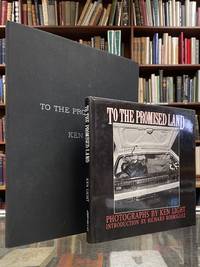
198879554Aperture 1988. Hardcover. Near fine/Very good. Signed by Light and Rodriguez on the half-title page. Limited edition of 45 copies with two original silver prints also signed by Light. Copy #12. The first print is the cover photograph "Indocumentos discovered in the trunk of a car abandoned by their coyote San Ysidro" and the second is the frontispiece "Feet of the Campesino Oazaca Mexico."<br /> <br /> Jacket is lightly shelfworn but book itself is in excellent condition. Binding is tight and inside is clean and unmarked. Aperture hardcover
196322195GROSSET & DUNLAP Publ NY 1963. Illustrated with 5 INTERNALS one of which is on 2 pages Frontispiece HBDJ wraparound Pictorial DustJacket 1963 1st Edition 1st Printing DJ light Rub wear & tiny Creases Tears few Tiny chips Extremities DJ NF/ NF Pre-Text Lists thru This Title 170 Pages Interior Nice Tight Clean Very Light FoXing Back DJ Lists Vicki Barr Thru Mystery of Flight 908 Back Inner Flap DJ list up TO This title ending with Secret Quest #9634 base spine DJ The book and dust jacket are in Near excellent condition. Book: Minor wear to edges and corners. No writing in book; pages clean; no tears binding intact. Dust Jacket: No tape; flaps not clipped; couple of small closed tears and wrinkles; small chips at top of spine; all lettering present at top and bottom of spine; spine not faded and colors clear not murky on covers with minimal surface wear. A very nice addition to your Judy Bolton collection. . with Her Friend Holly Potter they set out after the Green Car & Theft of Her Typewriter & the Voice from The Tree ETC !! First printing per Clarke's Guide to Margaret Sutton's Judy Bolton Mystery Stories by Laurie A. Clarke. This was the last Judy Bolton book to be published with a dust jacket and is very hard to find. First Edition. Hard Cover. GROSSET & DUNLAP Publ , NY hardcover
19362110502150412623Section 12 is Shochiku Co. Ltd. Osaka Branch 1936. Soft Cover. Fine. Number of copies: 14 copies Section 12 is Shochiku Co., Ltd. Osaka Branch paperback
182646535London W.Nicol 1826. 4to. No wrappers as extracted from "Philosophical Transactions" 1826 - Part III. Pp. 324-337 and 1 engraved plate. A faint dampstain to top of plate. <br/><br/><em>First appearance of Drummond's paper in which he described his and Goldsworthy Gurney's invention and coined the word 'limelight'. His apparatus demonstrated on the plate was originally used for surveying as the title of the paper shows. Drummond claimed the light to be 83 times brighter than any previous artificial light.The Scottish engineer Thomas Drummond 1797-1840 saw a demonstration of the effect by Michael Faraday and realized that the light would be useful for surveying. Drummond built a working version in 1826 and the device is sometimes called the Drummond Light after him. Limelight was first used in public in the Covent Garden Theatre in London in 1837 and enjoyed widespread use in theatres around the world in the 1860s and 1870s. Limelights were employed to highlight solo performers in the same manner as modern followspots spotlights. Limelight was replaced by electric arc lighting in the late 19th century. Wikipedia."John Hersehel describes the impression produced when the light was first exhibited in the Tower: "The common Argand burner and parabolic reflector of a British lighthouse were first exhibited the room being darkened and with considerable effect. Fresnel’s superb lamp was next disclosed at whose superior effect the other seemed to dwindle and showed in a manner quite subordinate. But when the gas began to play the lime being brought now to its full ignition and the screen suddenly removed a glare shone forth overpowering and as it were annihilating both its predecessors which appeared by its side the one as a feeble gleam which it required attention to see the other like a mere plate of heated metal. A shout of triumph and of admiration burst from all present."’ DNB.Parkinson "Breakthroughs" 1825 C </em> unknown
185242292London Richard Taylor and William Francis 1852. 4to. No wrappers as extracted from "Philosophical Transactions" 1852 - Part I. Pp. 25-56 textillustr. Clean and fine. <br/><br/><em>First appearance of a historical paper in electromagnetical theory. Faraday in this paper defines his key concept "lines of force" and summarizes in what connections he used it and he shows how it explains the pehenomena of magnetism and electricity. His insistance of the importence of the electromagnetic fields of force was the historical starting point of the electrical side of modern theories of field physics. Maxwell later translated these ideas into mathematical form and developed them into his theory of electromagnetic waves.Especially notable in this paper is: As all space is permeated by lines of force Faraday suggests that light and radiant heat might be tranverse vibrations propagated along these lines of force. In this way he proposed to "dismiss the aether" and to replace it by lines of force between centres the centres together with their lines of force constituting the particles of material substance. If the existance of a luminiferous aether were to be admitted he suggests that it might be the vehicle of magnetic force "for it is not at all unlikely that if there be an aether it should have other uses than simply the conveyance of radiations" section 3075 in this paper offered. This sentece may be regarded as THE ORIGIN OF THE ELECTROMAGNETIC THEORY OF LIGHT Whittaker in: A History of the theories of the Aether and Electricity I: pp. 194-95.From 1831 to 1852 Michael Faraday published his "Experimental Researches in Electricity" in The Philosophical Transactions of the Royal Society. These papers contain not only an impressive series of experimental discoveries but also a collection of heterodox theoretical concepts on the nature of these phenomena expressed in terms of lines of forces and fields. He published 30 papers in all under this general title.They represents Faraday's most importent work are classics in both chemistry and physics and are the experimental foundations for Maxwell's electro-magnetic theory of light using Faraday's concepts of lines of force or tubes of magnetic and electrical forces. His many experiments on the effects of electricity and magnetism presented in these papers lead to the fundamental discoveries of 'induced electricity' the Farday current the electronic state of matter the identity of electricity from different sources equivalents in electro-chemical decomposition electrostatic induction hydro-electricity diamagnetism relation of gravity to electricity atmospheric magnetism and many other."Among experimental philosophers Faraday holds by universal consent the foremost place. The memoirs in which his discoveries are enshrined will never ceaseto be read with admiration and delight; and future generations will preserve with an affection not less enduring the personal records and familiar letters which recall the memory of his humble and unselfish spirit."Edmund Whittaker in A History of the Theories of Aether and Electricity. </em> unknown
185943122Paris Victor Masson Imprimerie de Bachelier 1859. 8vo. Contemp. hcalf raised bands gilt spine. Light wear along edges. Small stamps on verso of titlepage and on verso of plates. In "Annales de Chimie et de Physique" 3me Series - Tome LVII. 512 pp. and 4 plates. The entire volume offered. Fizeau's paper: pp. 385-404. Some scattered brownspots. <br/><br/><em>First printing of a highly importent paper in the history of physics "It is less famous for some reason than the failure of Michelson and Morley to detect the aether drag but NO LESS SIGNIFICANT. For it showed that the velocity of light increases in a medium according to the formula v 1 - 1/n2 where v is the velocity of the medium and n is the refractive index"Gillespie in "The Edge of Objecticity" p. 427. Fizeau shows that the velocity of light is higher in water flowing in the direction of the beam than that of light propagating in the direction opposite the direction of flow. The paper offered is the full text of the research there appeared an extract of it in Comptes Rendus in 1851. Albert Einstein later pointed out the IMPORTENCE OF THE EXPERIMENT FOR SPECIAL RELATIVITY.Fizeau's result was replicated by Albert Michelson and Edward Morley in 1886 repeated the experiment on a larger scale and confirmed Fizeau's results. and in 1914 it was confirmed by Pieter Zeeman. It was Arago in 1838 who suggested this "crucial experiment" to decide between the corpuscular and undulatory theories of light by comparingthe speed of light in water and in air. It vindicated the undulatory position.It was shown by Hendrik Lorentz 1892 1895 that the experiment can be explained by the reaction of the moving water upon the interfering waves without the need of any aether entrainment. On this occasion Lorentz introduced a different time coordinate for moving bodies within the aether the so called Local time an early form of the Lorentz transformation for small velocities compared to the speed of light. In 1895 Lorentz went a step further and explained the coefficient by local time alone and without mentioning any interaction of light and matter. </em> hardcover
184844100Leipzig Johann Ambrosius Barth 1848. Without wrappers. In "Annalen der Physik und Chemie. Hrsg. von J.C. Poggendorff" Ergänzungsbd. Bd. II Stück 2. Titlepage to Erg-Bd. 2. Pp. 193-368. The entire issue offered. Fresnel's papers: pp. 304-331 textillustr. a. pp. 332-355 textillustr. A stamp on titlepage and verso of. Clean and fine. <br/><br/><em>First German editions of two importent memoirs on polarization and reflexion of light by "the founder of the new optics". The French versions of the papers appeared in "Annales de Chimie et de Physique"1846.The first paper takes on a central role in Fresnel's dealing with polarization in general and specially with chromatioc polarization and the explaining the phenomena that arises when light travels through crystals. The paper was read at the Academy on march 30 was not printed at the time as it disappeared and only turned up many years later around 1845 when it was found in the papers of Fresnel's brother. "On croyait ou Mémoire perdu. Il a été retrouvé dans les papiers de M. Léonor Fresnel frère de l'illustre académicien." Thus the offered paper is here PRINTED FOR THE FIRST TIME AND IN ITS FULL LENGHT in the German version.The second paper deals with reflection and explains the different phenomena seen when light is reflected from glassplates having two surfaces parallel or with curvature interference of reflected waves and the measure of their different wavelenghts all explained according to the wave theory of light. The paper offered is for the FIRST TIME PRINTED IN ITS FULL LENGHT in the German version as it only appeared in the résumé-form in 1820 "Résumé d'un Mémoire sur la Réflexion de la lumière" Annales de Chimie et de Physique tome 15 pp. 379-386."As it was Fresnel succeeded fully in attaining his explicit goal the establishment of the wave conception of light. Not long after his death scientific opinion definitely shiftedin favor of waves and opened up the pathway leading to the deeper insight of Maxwell. In broad context Fresnel's work can be viewed as the first successfull assault on the theory of imponderables and a major influence on the development of nineteenth-centurty energetics." DSB V p. 171. </em> unknown
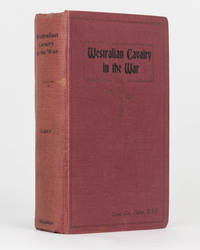
1921122313Melbourne: Alexander McCubbin 1921. First Edition. Hardcover. Very Good. Melbourne Alexander McCubbin 1921. Octavo 343 1 colophon pages plus 3 maps 2 folding 86 plates and 7 folding maps in a rear endpocket. Decorated cloth a little stained on the rear cover and lightly stained and sunned on the spine; endpapers offset; trifling signs of age and use; a very good copy internally excellent. The two-page foreword by Lieutenant-General Sir Harry Chauvel describes the author thus: 'Lieut.-Colonel Olden is well qualified to undertake the work as joining the Regiment on its inception he served with it throughout the War and though twice wounded was never long away from duty. He temporarily commanded it during the absence wounded of Colonel Todd on more than one occasion notably during the 2nd Battle of Gaza and finally succeeded to the command after the death of Colonel Todd'. He was awarded the DSO. <p>Dornbusch 399; Fielding and O'Neill page 233; Trigellis-Smith 280. Alexander McCubbin hardcover
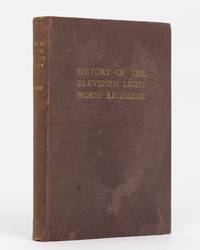
1942129472Brisbane: William Brooks and Co 1942. First Edition. Hardcover. Fair/Fair. Brisbane William Brooks and Co. 1942. Octavo xvi 186 pages with an illustration and 4 maps plus 67 pages of plates containing 108 plates in all; the regimental colour patch is printed in three colours on the title page. Maroon sand-grain cloth lettered in gilt on the spine and front cover; cloth a little stained and rubbed with two small worm holes to the spine and front cover with some short tracks visible on the front pastedown; edges marked; binding a little shaken and cracked between some gatherings; trifling remnants of the original tipped-in plain opaque paper dustwrapper on the leading edges of the pastedowns as often; minimal adhesive residue to one page from an old insert; paper a little tanned; some scattered foxing; overall a decent copy. This is a rare item with provenance from two light horsemen. An inscription on the front free endpaper reads: 'Originally owned by the late 868 Corporal Jack Ledlie but given to me by his widow Olive. Clive Kynaston. 512 - 12th ALH'. A second inscription in the same hand at the head of one of the contents pages indicates that he later presented the book to '2/14 QMI' Queensland Mounted Infantry. <p>The author was Signal Sergeant of the Regiment. <p>Dornbusch 393; Fielding and O'Neill page 233; Trigellis-Smith 282. William Brooks and Co hardcover
192323467REILLY & LEE Chicago 1923. . frOnT endpaper removed ANd frontISpiece has been glued to small piece remaining of front endpaper facing oUT. Shaken but otherwise sound. HARDBACK NODustJacket 1923 1st Edition VG/VG- NOJACKET . AS-IS First Edition of a Very Scarce Period Piece of that time. Light Scuff wear Along Cover Edges & Back Bound Blue Decorated Cloth Cover with Black Lettering Interior Nice tight Clean few pg edge Tears Light FoX stains Wear 224 pgs Light Sun Spine front endpaper removed and frontispiece has been glued to small piece remaining of front endpaper facing out. Shaken but otherwise sound. First Edition. Hard Cover. REILLY & LEE , Chicago hardcover
196322237GROSSET & DUNLAP Publ NY 1963. HBDJ wraparound Pictorial DustJacket 1963 1st Edition 1st Printing DJ light Rub wear & tiny Creases Tears few SMALL chips DJ spine top & bottom NF/VG Pre-Text Lists thru This Title 170 Pages Interior Nice Tight Clean Very Light FoXing & some small dogeared pages & Small corner creases Back DJ Lists Vicki Barr Thru Mystery of Flight 908 Back Inner Flap DJ list up TO This title ending with Secret Quest #9634 base spine DJ The book and dust jacket are in Pretty Nice condition. Book: Minor wear to edges and corners. No writing in book; pages clean; no tears binding intact. Dust Jacket: No tape; flaps not clipped; small chips at top of spine; A very nice addition to your Judy Bolton collection. . with Her Friend Holly Potter they set out after the Green Car & Theft of Her Typewriter & the Voice from The Tree ETC !! First printing per Clarke's Guide to Margaret Sutton's Judy Bolton Mystery Stories by Laurie A. Clarke. This was the last Judy Bolton book to be published with a dust jacket and is very hard to find. First Edition. Hard Cover. GROSSET & DUNLAP Publ , NY hardcover
182354605London: Rodwell & Martin 1823. 4to. Unpaginated. Contemporary maroon half morocco over marbled boards. Raised bands to spine with gilt title lettering. Top edge gilt. Other edges uncut. Boards rubbed with wear to extremities. Marbled endpapers. Early bookplate to front pastedown. Stain to lower edge of some leaves. Scattered foxing and light staining to page edges. Engraved title-page with vignette of 'Crater of mount Etna.' Sixty full-page engravings of scenes of Sicily with tissue-guards. Final vignette of 'Sicilian Cottage.' Plates complete. List of plates bound in. Description of plates in English with text in French on verso. Good margins. Binding firm. In Good to VG condition. . Good. Half Morocco. First Edition. 1823. Rodwell & Martin 1823 unknown
191253705Association Island Henderson Harbor NY: N.E.L.A. General Electric Corporation 1912. Oblong folio. 14.25 x 10.75 in. 40 leaves unnumbered. composed of thick brown paper stock w/ Arts & Crafts motif borders & decorations in mauve. With 101 tipped-in original silver gelatin sepia-tinted photographs ranging in size from 2 in. rounds to 5.5 x 9.95 in. and all are mounted into the albums most with printed text captions. Original brown half-suede over brown softcovers yapp edges stamped gilt N.E.L.A. logo and title on front cover stamped in gilt minor edgewear rubbing still VG exemplar. First edition of this lavishly produced souvenir album filled with original photographs of the antics by participants for the National Electric Lamp Association at their Camp National. Association Island in Henderson Harbor NY was purchased in 1905 from private owners and renamed. This lavishly appointed island contained a town hall dining hall with full staff of waitresses and housekeepers a hospital tent swimming pool areas for tents recreational trap shooting baseball diamonds theatre and marina for sport boating. These photos vividly portray how these mid-summer retreats were filled with conferences but also devoted to the executives reliving the joys of the summer camp retreats of the well-to-do childhoods during the Victorian and Edwardian eras. They created pennants went sport fishing played in tennis tournaments croquet matches poker games baseball games parades costume parties minstrel shows plays parties and more. These Camp National events continued on a more subdued scale after General Electric acquired N.E.L.A. and began using Association Island as a corporate retreat and training center for GE executives customers and employees through the end of the 1950s. The Elfun Society General Electric’s famed think-tank was founded in 1928 on the Island and named in honor of the historic elm tree depicted in the decorative borders. General Electric’s use of Association Island even served as the basis for Kurt Vonnegut’s first novel Player Piano in 1952 a satire of the antics of engineers and managers of a large unnamed corporation on their annual retreat. The National Electric Lamp Association was founded at the end of the 19th century during a great deal of turmoil in the incandescent lamp industry and a number of small lamp manufacturers needed to pool their resources in order to compete with General Electric. Ironically Franklin Terry Burton & Henry Tremaine John & Robert Crouse founded the Company in 1901 with 75% of the needed capital from GE who was to remain a silent partner. A number of the small companies such as Sterling Electric The Economy Electric Co. and many others were able to use the labs set up by N.E.L.A. and within a few years had gained nearly 50% of the total lamp production in the United States. However in 1911 the U.S. Government brought an anti-trust suit against the N.E.L.A. and GE exercised their option to buy the remaining 25% and they officially all became part of General Electric forming the National Quality Lamp Division. See: Association Island’s History 2015; Nela Park: A brief early history -- Terry Management Style and Incandescent Lamp Advances. N.E.L.A., General Electric Corporation, paperback
2016CBS-9781482222500Taylor & Francis Np ExclusiveCbs 2016. New. Taylor & Francis Np Exclusive(Cbs) unknown
1819ZB626382NY 1918-1932. mostly quartos mostly bound some covers retained illustrated ex library else text clean & bindings tight. - If you are reading this this item is actually physically in our stock and ready for shipment once ordered. We are not bookjackers. Buyer is responsible for any additional duties taxes or fees required by recipient's country. Photos available upon request. NY unknown
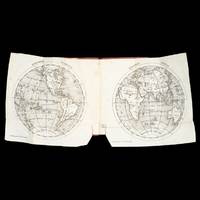
26028Par J. F. Lamp. A Paris : Chez F. G. Levrault libraire rue de la Harpe no. 81 ; Strasbourg : rue des Juifs no. 33 1833. Troisième édition. Duodecimo 165 x 105 mm original pink paper-covered boards printed in black the upper board with vignette illustration of a globe lower board with publisher's advertisements spine lettered in black; front pastedown with original ownership inscription of Antoine Kintz clearly a young scholar 3 1 blank 92 pp with seven lithographic folding maps including a mappe-monde in two hemispheres France and its regions and Palestine; a small marginal stain at top edges of last twenty or so leaves otherwise the contents are immaculate and the boards fresh and unrubbed; an exceptional copy. The first edition of Strasbourg geographer Jean-Frédéric Lamp's work for students Abrégé de Géographie pour les Écoles was published in 1828. The third edition appears virtually unrevised and begins with a short introduction to geography and an explanation of key terms and concepts before covering individual countries and regions. Europe is discussed first the greater part of the text is devoted to France then Asia Africa Palestine and North and Central America; a section titled 'Australie' pp 82-4 deals with Oceania providing brief summaries of the physical geography and facts relevant to European discovery for each region. OCLC locates no copies of the third edition. hardcover
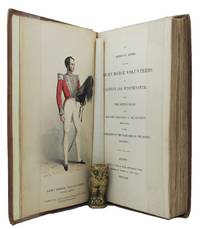
1843149222London: William Nicol Shakspeare Press 1843. with the Muster Rolls from the first formation of the Regiment MDCCLXXIX to the relodgement of the Standards in the Tower MDCCCXXIX. Pp. iivi280last blank108Rollxx frontispiece and 6 coloured lithographed plates 2 coloured plans 2 black & white engravings one heavily foxed all with tissue guards Muster Roll appendix; tan cloth lettered and decorated in gilt & blind the backstrip and hinges expertly reinforced edges of boards lightly worn with slight fraying at fore-corners; uncut; book label of David Levine Sydney on upper pastedown some light foxing; William Nicol Shakespeare Press/Wright London 1843. First edition. White p. 198. William Nicol, Shakspeare Press unknown