BLAKE, William TRIANON PRESSBiblio.com

41 résultats
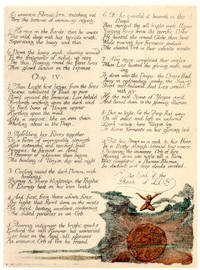
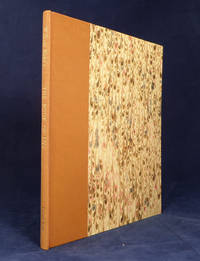
19733550London: Trianon Press 1973. No.243 of 808 copies. 4to 6 colour facsimile plates reproduced in Paris at the Trianon Press using the collotype and hand-stencil process one black and white illustration plus 5 pp. of commentary by Geoffrey Keynes. 4to. original quarter dark blue morocco marbled paper covered boards in the original marbled paper covered slipcase. A very good bright copy. Booklabel of Elaine Klemen.A facsimile of the only known copy of The Book of Ahania which was owned by Lessing Rosenwald. The original frontispiece was supplied for this facsimile by its owner Geoffrey Keynes. <br>The Book of Ahania continues the story of the Book of Urizen. As Keynes writes: “Ahania the feminine Emanation of Urizen signifies Pleasure in Blake’s system.the poem begins with.a new character Fuzon who.signifies Passion.Fuzon attacks Urizen.with a fiery globe.Urizen was sorely wounded in the loins and.in his agony at losing his source of pleasure he seized on Ahania calling her Sin.Urizen seeks vengeance on Fuzon creating in the process the Serpent of Materialismâ€. Bentley <em>Blake Books</em> A15 Trianon Press hardcover
19763552London: Printed at the Trianon Press for the Trustees of The William Blake Trust 1976. No. 156 of 480 ordinary copies in addition there were 32 deluxe copies and 26 copies for the Trustees and publishers. 5 colour facsimile plates made using the collotype and hand-stencil process at the Trianon Press in Paris. Printed on Arches pure rag paper to match the paper used by Blake. 4to. quarter brown morocco marbled paper boards in a marbled paper covered slipcase. Very good.The companion volume to the <em>Book of Ahania </em>printed by Blake in Lambeth in 1795.<em> </em>A facsimile of the only known copy of <em>The Book of Los</em> in the British Museum.<br>In his commentary Geoffrey Keynes writes: “the philosophic message of this small book is hidden in apocalyptic verbiage calculated to puzzle Blake’s small audience. Blake seems to have sensed this obscurity as soon as it was completed and as far as is known he never made another copy.or referred to it.â€<br>Bookplate of Alexander Stone on front pastedown. Bentley <em>Blake Books</em> supplement p. 62. Printed at the Trianon Press for the Trustees of The William Blake Trust hardcover
197655401976. London: Trianon Press 1976. <br /> <br /> 4to 5 color plates and commentary. Quarter brown morocco slipcase. A fine copy.<br /> <br /> § Regular copy #166. Limited to 538 copies including 32 de luxe copies numbered I-XXXII 480 regular copies numbered 1-480 and 26 copies lettered A-Z reserved for the Trustees of the William Blake Trust and the publishers. Bentley BBS p. 62.<br /> <br /> The Book of Los is the companion volume to the Book of Ahania. "The poem opens with a lamentation by "Eno aged Mother" over the loss of Edenic pleasures through Urizenic error and the world it creates. The narrative then centers on Los's anguished responses to that world including his transformation of the void into matter and his binding of Urizen. The five plates of The Book of Los were etched in intaglio and printed in 1795. There is only one complete copy A British Museum plus a separate impression of Plate 4. The designs on Plates 1-3 and 5 were color printed from the surfaces of copperplates bearing only etched outlines of the pictorial motifs." The Blake Archive 6288. unknown
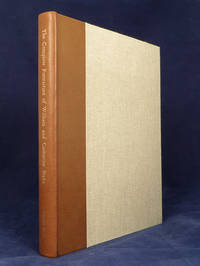
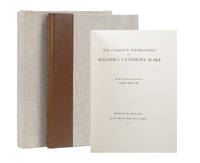
19771073811977. London: Trianon Press: 1977. <br /> <br /> 4to 155 pp. 51 plates. Original full brown morocco slipcase. A fine copy.<br /> <br /> § #5 of 36 de luxe copies signed by Keynes of a total edition of 562 copies. The definitive work about and reproducing all known portraits of Mr. and Mrs. Blake. Not in G.E. Bentley's Blake Books or its supplement. unknown
197753391977. London: Trianon Press: 1977. <br /> <br /> 4to 155 pp. 51 plates. Original quarter brown morocco slipcase. Fine as issued. <br /> <br /> § Limited to 562 copies. This is copy 67. The definitive work on all known portraits of Mr. and Mrs. Blake. Not in Bentley BB or supplement. unknown
19681075951968. London: Trianon Press 1968. <br /> <br /> 4 vols. 8vo and 12mo Vol. I 8vo i-vii-viii 50 4 pp. Vol. II 12mo 2 pp. 22 plates Vol. III 4 pp. 31 plates Vol. IV 12mo 2 pp. 10 plates negative and copper plate. Original tan morocco volume 4 in brown cloth as issued cloth slipcase gilt lettering to backstrips of all three volumes. Backstrips slightly flaked.<br /> <br /> § Copy #14 with the first three volumes bound in morocco. From an edition of 726 total copies including 700 numbered 1 to 700 of which the first 50 have additional material and are in a special binding and 26 reserved copies lettered A-Z. Volume I is an introductory volume followed by three volumes of plates. <br /> <br /> "In about 1818 Blake revised For Children: The Gates of Paradise giving the work the new title of For the Sexes: The Gates of Paradise and adding three new text plates at the end Plates 19-21. All twenty-one plates are intaglio etchings/engravings. Plates 19-20 contain brief interpretive statements keyed by number to the preceding design plates. The final plate is addressed to Satan as the "God of This fallen World." Blake Archive. Bentley BB 48. unknown
19723555London: printed in Paris at the Trianon Press for the William Blake Trust 1972. No. VI of 50 de luxe copies. 21 plates - 20 plates reproduced by colour collotype with water-color washes by hand through stencil and one engraving; together with a set of plates showing progressive stages of the collotype and hand stencil process with guide sheet and stencil. Edition de luxe limited to 50 copies with additional proof sheets progressive plates and original stencil etc. 2 vols. 4to and small 4to. full brown morocco in original marbled paper covered slipcase. Near fine prospectus inserted loose.The text is a clear statement of Blake’s beliefs regarding the nature of man. The full book only came to light in 1953 and this is the first reproduction of the text. Such maxims are included as “Man’s desires are limited by his perceptions none can desire what he has not perciev’d sic†and “If any could desire what he is incapable of possessing despair must be his eternal lotâ€.Bentley <em>Blake Books </em>202. One of only 50 de luxe copies with additional material printed in Paris at the Trianon Press for the William Blake Trust unknown
19726961London: printed in Paris at the Trianon Press for the William Blake Trust 1972. Letter L of 26 copies reserved for the Trustees of the William Blake Trust and teh Publishers. 21 plates - 20 plates reproduced by colour collotype with water-color washes by hand through stencil and one engraving. 2 vols. 4to and small 4to. quarter brown morocco with marbled paper covered boards in original marbled paper covered slipcase. A very good copy.The text is a clear statement of Blake’s beliefs regarding the nature of man. The full book only came to light in 1953 and this is the first reproduction of the text. Such maxims are included as “Man’s desires are limited by his perceptions none can desire what he has not perciev’d sic†and “If any could desire what he is incapable of possessing despair must be his eternal lotâ€.Bentley <em>Blake Books </em>202. printed in Paris at the Trianon Press for the William Blake Trust hardcover
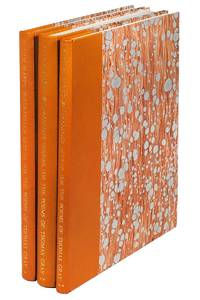
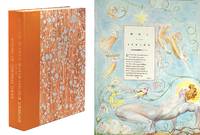
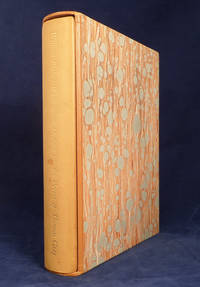
1268401972. London: Trianon Press 1972. <br /> <br /> 3 volumes folio with 116 color facsimile leaves reproduced by collotype and hand-stencil color the text of the poems reproduced from copper-plate with 3 additional printings to reproduce Blake's pencillings and the tone of the paper. Marbled boards morocco backstrips slipcases a fine set as issued.<br /> <br /> § Edition limited to 518 copies in all including 100 copies for Paul Mellon personally of which 12 copies were a super de luxe issue in three volumes with extra material 36 copies were a de luxe issue also with extra material but in sheets unbound18 copies were hors commerce contents unrecorded and 352 copies either bound in 3 volumes in slipcases or as a single set of the loose sheets in a box. This is copy #125.<br /> <br /> The 116 water-color illustrations to Thomas Gray's poems are among Blake's major achievements as an illustrator. They were commissioned in 1797 by Blake's friend the sculptor John Flaxman as a gift for his wife Ann to whom Blake addressed the poem that ends the series. The commission may have been inspired by the Flaxmans' seeing Blake's water-color designs to Edward Young's Night Thoughts begun in 1795. The Gray illustrations follow the same basic format. Blake cut windows in large sheets of the same type of Whatman paper used for the Night Thoughts illustrations and mounted in these windows the texts of Gray's poems from a 1790 octavo edition published by John Murray leaving out some prefatory materials fly-titles the notes and the 7 engraved illustrations. Blake then drew and colored his designs surrounding the letterpress texts. On blank versos near the beginning of each poem and in one case on a separate piece of paper pasted over letterpress text Blake inscribed with pen and ink either titles for each design or quotations from the poem to indicate the passage illustrated. On most text pages Blake also drew a pencil cross left of the first line of the illustrated passage. He numbered most leaves consecutively in pen and ink beginning a new sequence for each of the 13 poems.<br /> <br /> Blake conceived of his work as an illustrated book rather than a series of unbound designs as indicated by his offsetting Gray's texts above and to the right left on versos from the middle of each leaf-then the convention for all letterpress books. Although listed by William Michael Rossetti in his catalogue of Blake's drawings and paintings published in the 1863 and 1880 editions of Alexander Gilchrist's Life of William Blake the Gray illustrations were virtually unknown until their rediscovery by Herbert Grierson in 1919.<br /> <br /> The Trianon Press reproductions are recognized as the finest examples of the art of facsimile reproduction; working from the originals in Paul Mellon's collection each leaf is faithfully hand-colored through stencils to achieve an astonishing exactitude. The Times Literary Supplement stated that nothing like these books had ever been printed before and that it was highly unlikely that they could be printed again. Bentley Blake Books 385. unknown
1077171972. London: Trianon Press 1972. <br /> <br /> Folio with 116 color facsimile leaves reproduced by collotype and hand-stencil color the text of the poems reproduced from copper-plate with 3 additional printings to reproduce Blake's pencillings and the tone of the paper. Original sheets marbled boards morocco backstrip lettered in giltquarter brown morocco box.<br /> <br /> § Edition limited to 518 copies in all including 100 copies for Paul Mellon personally of which 12 copies were a super de luxe issue in three volumes with extra material 36 copies were a de luxe issue also with extra material but in sheets unbound18 copies were hors commerce contents unrecorded and 352 copies either bound in 3 volumes in slipcases or as a single set of the loose sheets in a box. This is copy 387. <br /> <br /> The 116 water-color illustrations to Thomas Gray's poems are among Blake's major achievements as an illustrator. They were commissioned in 1797 by Blake's friend the sculptor John Flaxman as a gift for his wife Ann to whom Blake addressed the poem that ends the series. The commission may have been inspired by the Flaxmans' seeing Blake's water-color designs to Edward Young's Night Thoughts begun in 1795. The Gray illustrations follow the same basic format. Blake cut windows in large sheets of the same type of Whatman paper used for the Night Thoughts illustrations and mounted in these windows the texts of Gray's poems from a 1790 octavo edition published by John Murray leaving out some prefatory materials fly-titles the notes and the 7 engraved illustrations. Blake then drew and colored his designs surrounding the letterpress texts. On blank versos near the beginning of each poem and in one case on a separate piece of paper pasted over letterpress text Blake inscribed with pen and ink either titles for each design or quotations from the poem to indicate the passage illustrated. On most text pages Blake also drew a pencil cross left of the first line of the illustrated passage. He numbered most leaves consecutively in pen and ink beginning a new sequence for each of the 13 poems.<br /> <br /> Blake conceived of his work as an illustrated book rather than a series of unbound designs as indicated by his offsetting Gray's texts above and to the right left on versos from the middle of each leaf-then the convention for all letterpress books. Although listed by William Michael Rossetti in his catalogue of Blake's drawings and paintings published in the 1863 and 1880 editions of Alexander Gilchrist's Life of William Blake the Gray illustrations were virtually unknown until their rediscovery by Herbert Grierson in 1919.<br /> <br /> The Trianon Press reproductions are recognized as the finest examples of the art of facsimile reproduction; working from the originals in Paul Mellon's collection each leaf is faithfully hand-colored through stencils to achieve an astonishing exactitude. The Times Literary Supplement stated that nothing like these books had ever been printed before and that it was highly unlikely that they could be printed again. Bentley Blake Books 385. unknown
1028821971. London: Trianon Press 1971. <br /> <br /> Small folio 72 pages with 16 color facsimile leaves suites of progressive plates and 116 monochrome illustrations. Marbled boards morocco backstrip slipcase. Signed by Keynes. A fine copy as issued.<br /> <br /> § Limited to 28 copies so inscribed and signed by Geoffrey Keynes this particular volume is labeled no. 2. This is the de luxe edition of the trade version of the Gray issued by the Trianon Press in 1972 using 8-color printing. Although the three-volume folio edition is a magnificent piece of book making this version is more accessible and easier to use and enjoy and the quality of the color printing is Trianon Press at its best. <br /> <br /> The 116 water-color illustrations to Thomas Gray's poems are among Blake's major achievements as an illustrator. They were commissioned in 1797 by Blake's friend the sculptor John Flaxman as a gift for his wife Ann to whom Blake addressed the poem that ends the series. The commission may have been inspired by the Flaxmans' seeing Blake's water-color designs to Edward Young's Night Thoughts begun in 1795. The Gray illustrations follow the same basic format. Blake cut windows in large sheets of the same type of Whatman paper used for the Night Thoughts illustrations and mounted in these windows the texts of Gray's poems from a 1790 octavo edition published by John Murray leaving out some prefatory materials fly-titles the notes and the 7 engraved illustrations. Blake then drew and colored his designs surrounding the letterpress texts. On blank versos near the beginning of each poem and in one case on a separate piece of paper pasted over letterpress text Blake inscribed with pen and ink either titles for each design or quotations from the poem to indicate the passage illustrated. On most text pages Blake also drew a pencil cross left of the first line of the illustrated passage. He numbered most leaves consecutively in pen and ink beginning a new sequence for each of the 13 poems.<br /> <br /> Blake conceived of his work as an illustrated book rather than a series of unbound designs as indicated by his offsetting Gray's texts above and to the right left on versos from the middle of each leaf-then the convention for all letterpress books. Although listed by William Michael Rossetti in his catalogue of Blake's drawings and paintings published in the 1863 and 1880 editions of Alexander Gilchrist's Life of William Blake the Gray illustrations were virtually unknown until their rediscovery by Herbert Grierson in 1919.<br /> <br /> The Trianon Press reproductions are recognized as the finest examples of the art of facsimile reproduction; working from the originals in Paul Mellon's collection each leaf is faithfully hand-colored through stencils to achieve an astonishing exactitude. The Times Literary Supplement stated that nothing like these books had ever been printed before and that it was highly unlikely that they could be printed again. Bentley Blake Books 385. unknown
1976BIBLIO-57445Trianon Press Paris first edition 1976. One of 480 numbered ordinary copies from a total edition of 538. Quarter-morocco and marbled boards 4to. 5 facsimile plates 8 pp. From the Commentary: "The Book of Los was the first of the two small books executed by Blake mainly as etchings on copper to be printed as ordinary intaglio plates. The Book of Ahania was the companion volume. The title-pages of both books were dated by Blake 1795 so that they were probably the last ones to be produced in his Lambeth house. Each book exists in only a single copy. For this facsimile direct collotype negatives in the size of the originals were made from the volume in the British Museum. A proof printing was done from these and each plate was then expertly coloured in the Museum to make a faithful replica of the original. The direct collotype negatives were subsequently used again for the printing of the present facsimile the replicas being used as colour-guides for cutting the stencils and for colouring the plates." The book was printed "on Arches pure rag paper made to match the paper used by Blake. Copy no. X a misnumbering as roman numerals were reserved for the 32 special copies this being one of 480 numbered copies from a total edition of 538. Very Good in Very Good slipcase. Trianon Press, Paris, first edition, 1976 hardcover
199839679France: Alain De Gourcuff. New. 1998. Hardcover. 2909838307 . FREE UPGRADE to Courier/Priority Shipping Upon Request IN STOCK AND IMMEDIATELY AVAILABLE FOR SHIPMENT - FLAWLESS COPY PRISTINE - Text in English. 30 color illustrations. -- with a bonus offer-- . Alain De Gourcuff hardcover
19706442London: Trianon Press 1970. First thus. Fine. Limited edition number 9 of 600 numbered copies out of a total edition of 662 copies. A Fine copy. Quarto 11 3/4 x 9 in; 298 x 230 mm. 28 pp. Ten color plates. Original quarter green morocco over marbled boards. In the original marbled board slipcase. <br /> <br /> "Through aphoristic declarations and accompanying emblem-like designs Blake argues for the essential unity of all religions as expressions of the "Poetic Genius" within all human beings." The William Blake Archive. Blake first etched the work in c. 1788 returned to it in 1795 and again in 1818. In this edition the plates were reproduced by the Trianon Press France using the collotype process with some water-color washes added by hand. The editorial matter was printed by the Imprimerie Darantiere Dijon and binding was by Engel Malakoff and the hand-made slip-case by Adine Paris. With a description and bibliographical history by Blake scholar Geoffrey Keynes. Fine. Trianon Press unknown
19776443London: Trianon Press 1977. First thus. Fine. Limited edition number 135 of 600 numbered copies out of a total edition of 662 copies. A Fine copy. Quarto 11 3/8 x 8 1/4 in; 290 x 210 mm. 154 p. Ten color plates. Original quarter brown morocco over cloth boards. In the original cloth slipcase.<br /> <br /> A singular collection of all portraits and related sketches of Blake his wife and places they lived by a range of artists to get at the character of the artist. "This compilation of portraits was a departure for the Trianon Press which had previously focused on facsimiles of Blake's illuminated books and designs. But with a text by Blake scholar Geoffrey Keynes who contributed commentary to the other facsimiles it continued Trianon's incomparable record of bringing all aspects of Blake's work and life to light" Union College. Fine. Trianon Press unknown
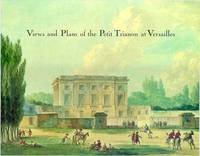
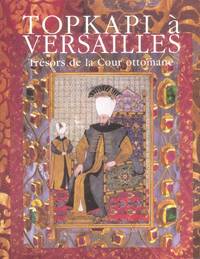
1999PMV501504ZParis: Association française d'action artistique ; Réunion des musées nationaux 1999. Trade paperback. Good/Not issued. 240 x 300 x 20 cm. Paperback • Illustrations en noir et en couleurs couverture illustrée en couleurs • <b><i>French text original</i></b>. Association française d'action artistique ; Réunion des musées nationaux paperback