174 résultats
198995152Stuttgart: Ernst Klett Verlag, 1989. 28 cm ; kart.
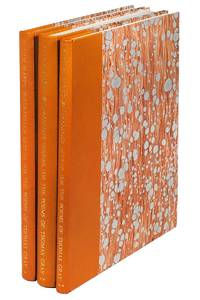
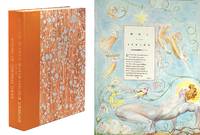
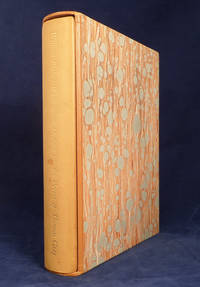
1268401972. London: Trianon Press 1972. <br /> <br /> 3 volumes folio with 116 color facsimile leaves reproduced by collotype and hand-stencil color the text of the poems reproduced from copper-plate with 3 additional printings to reproduce Blake's pencillings and the tone of the paper. Marbled boards morocco backstrips slipcases a fine set as issued.<br /> <br /> § Edition limited to 518 copies in all including 100 copies for Paul Mellon personally of which 12 copies were a super de luxe issue in three volumes with extra material 36 copies were a de luxe issue also with extra material but in sheets unbound18 copies were hors commerce contents unrecorded and 352 copies either bound in 3 volumes in slipcases or as a single set of the loose sheets in a box. This is copy #125.<br /> <br /> The 116 water-color illustrations to Thomas Gray's poems are among Blake's major achievements as an illustrator. They were commissioned in 1797 by Blake's friend the sculptor John Flaxman as a gift for his wife Ann to whom Blake addressed the poem that ends the series. The commission may have been inspired by the Flaxmans' seeing Blake's water-color designs to Edward Young's Night Thoughts begun in 1795. The Gray illustrations follow the same basic format. Blake cut windows in large sheets of the same type of Whatman paper used for the Night Thoughts illustrations and mounted in these windows the texts of Gray's poems from a 1790 octavo edition published by John Murray leaving out some prefatory materials fly-titles the notes and the 7 engraved illustrations. Blake then drew and colored his designs surrounding the letterpress texts. On blank versos near the beginning of each poem and in one case on a separate piece of paper pasted over letterpress text Blake inscribed with pen and ink either titles for each design or quotations from the poem to indicate the passage illustrated. On most text pages Blake also drew a pencil cross left of the first line of the illustrated passage. He numbered most leaves consecutively in pen and ink beginning a new sequence for each of the 13 poems.<br /> <br /> Blake conceived of his work as an illustrated book rather than a series of unbound designs as indicated by his offsetting Gray's texts above and to the right left on versos from the middle of each leaf-then the convention for all letterpress books. Although listed by William Michael Rossetti in his catalogue of Blake's drawings and paintings published in the 1863 and 1880 editions of Alexander Gilchrist's Life of William Blake the Gray illustrations were virtually unknown until their rediscovery by Herbert Grierson in 1919.<br /> <br /> The Trianon Press reproductions are recognized as the finest examples of the art of facsimile reproduction; working from the originals in Paul Mellon's collection each leaf is faithfully hand-colored through stencils to achieve an astonishing exactitude. The Times Literary Supplement stated that nothing like these books had ever been printed before and that it was highly unlikely that they could be printed again. Bentley Blake Books 385. unknown
1077171972. London: Trianon Press 1972. <br /> <br /> Folio with 116 color facsimile leaves reproduced by collotype and hand-stencil color the text of the poems reproduced from copper-plate with 3 additional printings to reproduce Blake's pencillings and the tone of the paper. Original sheets marbled boards morocco backstrip lettered in giltquarter brown morocco box.<br /> <br /> § Edition limited to 518 copies in all including 100 copies for Paul Mellon personally of which 12 copies were a super de luxe issue in three volumes with extra material 36 copies were a de luxe issue also with extra material but in sheets unbound18 copies were hors commerce contents unrecorded and 352 copies either bound in 3 volumes in slipcases or as a single set of the loose sheets in a box. This is copy 387. <br /> <br /> The 116 water-color illustrations to Thomas Gray's poems are among Blake's major achievements as an illustrator. They were commissioned in 1797 by Blake's friend the sculptor John Flaxman as a gift for his wife Ann to whom Blake addressed the poem that ends the series. The commission may have been inspired by the Flaxmans' seeing Blake's water-color designs to Edward Young's Night Thoughts begun in 1795. The Gray illustrations follow the same basic format. Blake cut windows in large sheets of the same type of Whatman paper used for the Night Thoughts illustrations and mounted in these windows the texts of Gray's poems from a 1790 octavo edition published by John Murray leaving out some prefatory materials fly-titles the notes and the 7 engraved illustrations. Blake then drew and colored his designs surrounding the letterpress texts. On blank versos near the beginning of each poem and in one case on a separate piece of paper pasted over letterpress text Blake inscribed with pen and ink either titles for each design or quotations from the poem to indicate the passage illustrated. On most text pages Blake also drew a pencil cross left of the first line of the illustrated passage. He numbered most leaves consecutively in pen and ink beginning a new sequence for each of the 13 poems.<br /> <br /> Blake conceived of his work as an illustrated book rather than a series of unbound designs as indicated by his offsetting Gray's texts above and to the right left on versos from the middle of each leaf-then the convention for all letterpress books. Although listed by William Michael Rossetti in his catalogue of Blake's drawings and paintings published in the 1863 and 1880 editions of Alexander Gilchrist's Life of William Blake the Gray illustrations were virtually unknown until their rediscovery by Herbert Grierson in 1919.<br /> <br /> The Trianon Press reproductions are recognized as the finest examples of the art of facsimile reproduction; working from the originals in Paul Mellon's collection each leaf is faithfully hand-colored through stencils to achieve an astonishing exactitude. The Times Literary Supplement stated that nothing like these books had ever been printed before and that it was highly unlikely that they could be printed again. Bentley Blake Books 385. unknown
1028821971. London: Trianon Press 1971. <br /> <br /> Small folio 72 pages with 16 color facsimile leaves suites of progressive plates and 116 monochrome illustrations. Marbled boards morocco backstrip slipcase. Signed by Keynes. A fine copy as issued.<br /> <br /> § Limited to 28 copies so inscribed and signed by Geoffrey Keynes this particular volume is labeled no. 2. This is the de luxe edition of the trade version of the Gray issued by the Trianon Press in 1972 using 8-color printing. Although the three-volume folio edition is a magnificent piece of book making this version is more accessible and easier to use and enjoy and the quality of the color printing is Trianon Press at its best. <br /> <br /> The 116 water-color illustrations to Thomas Gray's poems are among Blake's major achievements as an illustrator. They were commissioned in 1797 by Blake's friend the sculptor John Flaxman as a gift for his wife Ann to whom Blake addressed the poem that ends the series. The commission may have been inspired by the Flaxmans' seeing Blake's water-color designs to Edward Young's Night Thoughts begun in 1795. The Gray illustrations follow the same basic format. Blake cut windows in large sheets of the same type of Whatman paper used for the Night Thoughts illustrations and mounted in these windows the texts of Gray's poems from a 1790 octavo edition published by John Murray leaving out some prefatory materials fly-titles the notes and the 7 engraved illustrations. Blake then drew and colored his designs surrounding the letterpress texts. On blank versos near the beginning of each poem and in one case on a separate piece of paper pasted over letterpress text Blake inscribed with pen and ink either titles for each design or quotations from the poem to indicate the passage illustrated. On most text pages Blake also drew a pencil cross left of the first line of the illustrated passage. He numbered most leaves consecutively in pen and ink beginning a new sequence for each of the 13 poems.<br /> <br /> Blake conceived of his work as an illustrated book rather than a series of unbound designs as indicated by his offsetting Gray's texts above and to the right left on versos from the middle of each leaf-then the convention for all letterpress books. Although listed by William Michael Rossetti in his catalogue of Blake's drawings and paintings published in the 1863 and 1880 editions of Alexander Gilchrist's Life of William Blake the Gray illustrations were virtually unknown until their rediscovery by Herbert Grierson in 1919.<br /> <br /> The Trianon Press reproductions are recognized as the finest examples of the art of facsimile reproduction; working from the originals in Paul Mellon's collection each leaf is faithfully hand-colored through stencils to achieve an astonishing exactitude. The Times Literary Supplement stated that nothing like these books had ever been printed before and that it was highly unlikely that they could be printed again. Bentley Blake Books 385. unknown
176027691Paris chez Basset 1760 une vue d'optique en couleurs, GRAVÉE A L'EAU-FORTE ET AQUARELLÉE SUR PAPIER DE FORMAT: 34,5 x 51 cm., pli au centre, 1760 Paris chez Basset Editeur,
2006qq1596Art Lys Broché 2006 In-8 (14 x 21 cm), broché, 47 pages, illustrations en couleurs ; très bon état. Livraison a domicile (La Poste) ou en Mondial Relay sur simple demande.
199839679France: Alain De Gourcuff. New. 1998. Hardcover. 2909838307 . FREE UPGRADE to Courier/Priority Shipping Upon Request IN STOCK AND IMMEDIATELY AVAILABLE FOR SHIPMENT - FLAWLESS COPY PRISTINE - Text in English. 30 color illustrations. -- with a bonus offer-- . Alain De Gourcuff hardcover
1999GITc328Paris Editions du Chêne, Hachette Livres 1999. Grand in-8 carré 295pp imprimées sur 2 colonnes. reliure éditeur papier toilé bleu roi bradel, titre doré sur le dos, sous jaquette illustrée. Abondante illustration en couleurs d'après les photographies de Nicholas d'Archambaud. Bel exemplaire.
2006LFA-126710676Le Figaro Collection "L'Esprit des Lieux" n° 6 (Mai 2006) : 146 pages, format 175 x 255 mm, illustré, broché couverture couleurs, très bon état
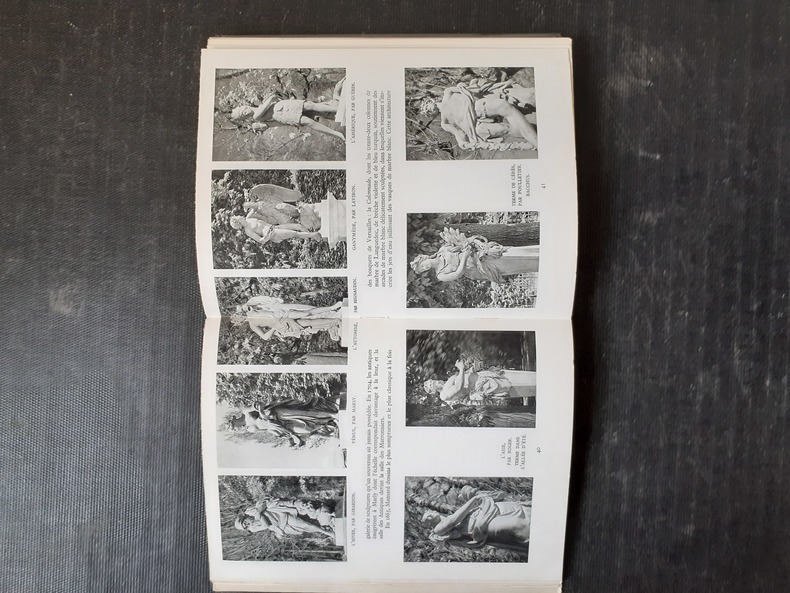
195713901ARTHAUD 1957 237 pages in8. 1957. broché. 237 pages. Ouvrage illustré sur le château de Versailles et ses dépendances (Trianon) publié dans la collection 'Les Beaux pays' par Arthaud. Il contient 184 héliogravures et une couverture de Chapelain-Midy
51304Hachette.1909.In-4 relié.Illustrations en couleurs sous serpentes de René Binet.Reliure postérieure en veau maroquiné noir,avec étui bordé.Feutrine.Reliure et étui parfaits.Tête dorée.Infimes rousseurs in-texte.
QWA-13890Réunion des musées nationaux, 1993, in-8 br., (14,5 x 22), 269 p., avant-propos de Jean-Pierre Babelon, 270 illustrations, couverture à rabats, bon état.
57760Paris, éd. d'Art Lys, 1979, gd; in-8, cartonnage toilé bleu avec décor doré éd., jaquette photos coul; éd., 396 pp., papier glacé, très nb; photos en coul et en noir, plans en noir, en fin de volume un index alphabétique des mythologies et légendes, Très belle visite au château de Versailles et au Trianon. Très bon état
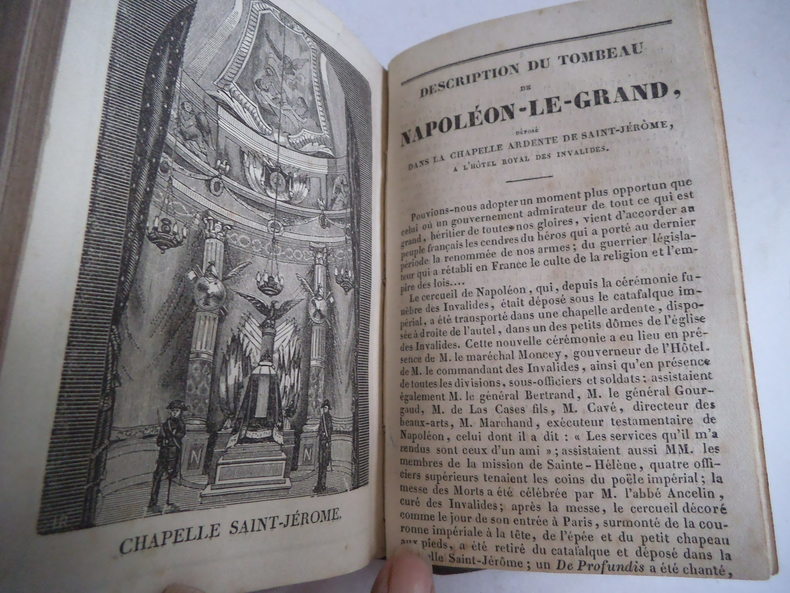
12222Historique, description complète de la ville, du Palais, du musée, des jardins, des deux Trianons, précédée d’un itinéraire de Paris à Versailles, suivie d’une notice historique , par ordre de numéros, de tous les tableaux, portraits, bas reliefs, statues et bustes ornée de plans et vignettes gravés sur acier. Suivi de Un mot sur Napoléon – Description du tombeau de Napoléon le Grand déposé dans la chapelle ardente de Sain t Jérôme, à l’hôtel Royal des invalides. Description du tableau de l’l’Empereur. En un volume in 12 demi-chagrin marron à nerfs, titre, fers, dorés. Frontispice gravé (Palais de Versailles, titre orné d’une vignette, 504 pages, 5 plans dépliants (dont une grande carte générale de Versailles. Ernest Bourdin, sans date. Un mot sur Napoléon –104 pages, sans titre, sans date sans mention d’éditeur. Description du tombeau de Napoléon le Grand déposé dans la chapelle ardente de Sain t Jérôme, à l’hôtel Royal des invalides : titre orné d’une vignette, frontispice chamelle de Saint Jérôme 12pages. Paris chez Gauthier libraire éditeur 1841. Description du tableau de l’l’Empereur : faux-titre, frontispice, titre, précédée d’une notice historique sur l’hôtel des Invalides par J. CHAUTARD et Th. LEJEUNE. Mention de deuxième édition. XVIII, 141 pages, vignettes dans le texte, une grande planche dépliante- tableau de l’Empereur. Paris Dépôt Central Ledoyen & Cie 1853. Un tampon bureau de colportage. Bon état d’ensemble.
in-12, 128 pp., abdt illustre (heliogravures), carte, broche, couverture illustree. Tres bel exemplaire. [GE-4]
1900LFA01380Un document de 30 pages, format 155 x 120 mm, illustré de 12 gravures et plans, broché, publié en 1900, L. Bernard Editeur (Versailles)
Mm 160x130 Album fotografico contenente 24 illustrazioni su dodici tavole a fisarmonica, legatura originale con decorazioni a sbalzo in oro e nero, senza data ma fine Ottocento. Normali segni del tempo. Opera in buone condizioni. SPEDIZIONE IN 24 ORE DALLA CONFERMA DELL'ORDINE.
16681Louis Conard, Libraire-Editeur Paris, 1927, in-8 broché, 309pp.-1f. Illustrations en noir hors-texte. Bon exemplaire sur papier vergé. Un tout petit manque en pied du dos sinon très bon état.
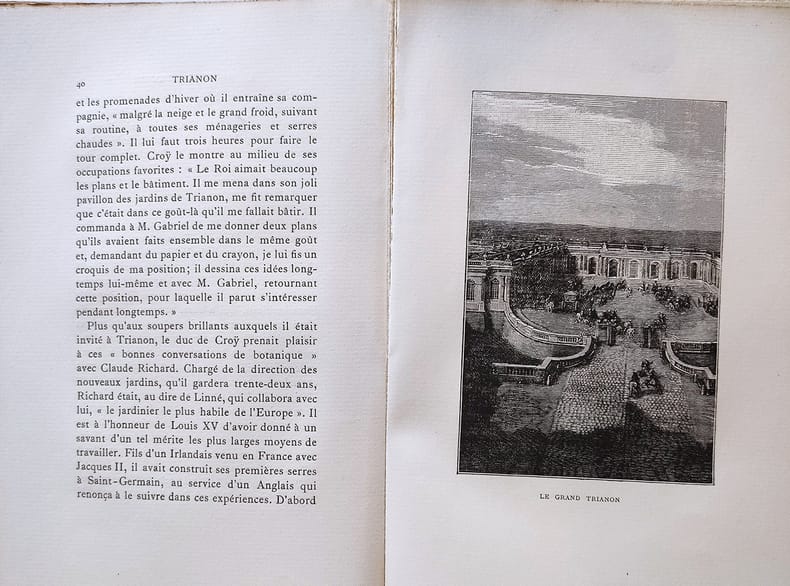
1127210 volumes in 8 demi-chagrin bleu à nerfs et à coins, titre, caissons, filets dorés. Filet à froid sur les plats, tête dorée, non rogné. Les deux plats de couverture et dos conservés. Illustrations à pleine page. Louis CONARD éditeur .Edition originale. 1) La création de Versailles faux titre, titre, 309 pages, 1 page de table 25 mai 1925. 2) Versailles résidence de Louis XIV faux titre, frontispice, titre, 269 pages, 1 page de table des matières 25 octobre 1925. 3) Versailles au XVIIIème siècle faux-titre, titre, 365 pages, 25 octobre 1926. 4) Trianon faux-titre, titre 309 pages, 15 juin 1927. 5) Louis XV et marie Leczinska. Faux-titre, titre, 342 pages, 20 janvier 1928. 6) Louis XV et madame de POMPADOUR. Faux-titre, titre, 333 pages 15 août 1928. 7) Marie Antoinette dauphine. Taux titre, titre, 331 pages, 20 mars 1929. 8) La reine Marie Antoinette 192. 9) Madame POMPADOUR et la politique Faux-titre, titre, 339 pages. 30 septembre 1930. 10) L’art à Versailles Faux-titre, titre, 288 pages, 1 page de table. 15 décembre 1930. Complet, quelques petites traces de manipulation à quelques coiffes, sans gravité, sinon bele ensemble, bien relié, avec les couvertures et dos conservés.
1998LFA-126711378Un ouvrage de 192 pages, format 235 x 305 mm, illustré, broché couverture couleurs, publié en 1998, Editions Art Lys, bon état
1990LFA-126742622Un ouvrage de 192 pages, format 220 x 290 mm, illustré, broché couverture couleurs, publié en 1990, Editions Art Lys, bon état
1996LFA01bd7Un ouvrage de 56 pages, format 140 x 210 mm, illustré, broché couverture couleurs, publié en 1996, Editions d'Art Lys, bon état
QWA-13339Arthaud, 1957, gr. in-8 br. (17,5 x 23), 238 p., coll. "Les beaux pays", couverture rempliée illustré par Chapelain-Midy, 184 photographies, plans dépl., rhodoïd, bon état.
192921473Grenoble, éditions B. Arthaud Succr de J.REY 1929 In-4 relié 27,5 cm sur 26. Bon état d’occasion.
1889MOBILIER22220122Paris, les editions de l'amateur, 1989, 22 x 29, 244 pages sous reliure éditeur toilée et jaquette illustrée. Préface d'Yves Bottineau. Iconographie noir & blanc et couleurs.