1 865 résultats
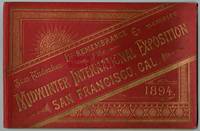
1894305504San Francisco Hergert & Frey Oblong octavo 9 5/8" x 6 1/4". 16 pages of plates from photographs accordion style panorama. Original elaborately gilt stamped red cloth text separated at one fold else very good. No signatures or bookplates. Numerous views of San Francisco Sausalito etc. [San Francisco? Hergert & Frey?, 1894. hardcover
200552494n75New Delhi: Defence Exhibition Organisation : Directorate of Planning and Coordination Dept. of Defence Production Ministry of Defence Govt. of India . 2005. Book. Near Fine. Hardcover. 3rd Edition. Folio - over 12 - 15" tall. Original illustrated hard covers. Includes CD in rear pocket. Clean tight and unmarked. Very neat -- a sound and handsome volume very nearly as new. Illustrated throughout in colour. 298pp. Defence Exhibition Organisation : Directorate of Planning and Coordination, Dept. of Defence Production, Ministry of Defence, Go Hardcover
0365695300.Ghardcover. Good. Access codes and supplements are not guaranteed with used items. May be an ex-library book. hardcover
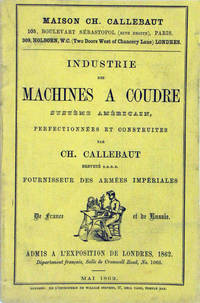
1862100967AParis & London Mai 1862. 8vo. 182 x 120 cm. 31 pp. Illustrated with woodcuts including 2 full-page.<br /><br /><b>Published for the London World Fair 1862 </b>with map of the exibition halls on the inside front cover. The "Expositions Universelles" or World Fairs were intended to show the latest innovations and inventions. The earliest of these fairs were held in France but were national. The first one of 1798 was the start of eleven national fairs. Sewing machines were invented during the first Industrial Revolution to decrease the amount of manual sewing work performed in clothing companies. Callebaut shows different models and explains the technqiue of them. Both full page illustrations of the factory show us what factories looked like at the time. At the 1862 exhibition about 50 types of sewing machine were on show on over 20 stands. M. Callebaut from Paris showed 'several modifications of shuttle sewing machines of the Singer type.' Callebaut was the Singer licencee in France the only occasion on which the Singer Co granted a licence rather than manufacturing itself. Callebaut patented these modifications in France and Britain in his own name. Most of them apply to the Singer No. 2 machine and enabled it to have a reversible wheel feed for finishing seams and to produce a 'herring-bone stitch' zigzag by moving the top feed presser foot from side to side. Another machine had twin needles on the same needle bar for making two lines of stitches on the top side and a zigzag on the underneath with a single shuttle thread. Not content with all these variants M Callebaut exhibited some glove making machines of fearsome complexity using detached lengths of thread!
18621009671862. Paris & London Mai 1862. 8vo. 182 x 120 cm. 31 pp. Illustrated with woodcuts including 2 full-page. Published for the London World Fair 1862 with map of the exibition halls on the inside front cover. The "Expositions Universelles" or World Fairs were intended to show the latest innovations and inventions. The earliest of these fairs were held in France but were national. The first one of 1798 was the start of eleven national fairs. Sewing machines were invented during the first Industrial Revolution to decrease the amount of manual sewing work performed in clothing companies. Callebaut shows different models and explains the technqiue of them. Both full page illustrations of the factory show us what factories looked like at the time. At the 1862 exhibition about 50 types of sewing machine were on show on over 20 stands. M. Callebaut from Paris showed 'several modifications of shuttle sewing machines of the Singer type.' Callebaut was the Singer licencee in France the only occasion on which the Singer Co granted a licence rather than manufacturing itself. Callebaut patented these modifications in France and Britain in his own name. Most of them apply to the Singer No. 2 machine and enabled it to have a reversible wheel feed for finishing seams and to produce a 'herring-bone stitch' zigzag by moving the top feed presser foot from side to side. Another machine had twin needles on the same needle bar for making two lines of stitches on the top side and a zigzag on the underneath with a single shuttle thread. Not content with all these variants M Callebaut exhibited some glove making machines of fearsome complexity using detached lengths of thread! hardcover
0265999189.Ghardcover. Good. Access codes and supplements are not guaranteed with used items. May be an ex-library book. hardcover
0265152119.Ghardcover. Good. Access codes and supplements are not guaranteed with used items. May be an ex-library book. hardcover
20042092902140309282Japan Map Center 2004. Soft Cover. Fine. Number of books: 1 Japan Map Center paperback
2092902143400401Japan Map Center N.A. Soft Cover. Fine. Size: A4 size Japan Map Center paperback
20042090202120101780Not Available 2004. Soft Cover. Fine. Number of pages: 184p Size: A4 size Number of books: 1 Not Available paperback
20042090202120301779Not Available 2004. Soft Cover. Fine. Number of pages: 184p Size: A4 size Number of books: 1 Not Available paperback
181952180Portland OR: n.p. July 18 1902. One panoramic silver gelatin photograph printed on matte finish thick photographic stock sized 8 x 24 in. preserved in the original dark stained wood frame sized 10.25 x 26.5 in. with very faint title inscription in white ink below image in clear cursive hand very minor damage & loss to the very lower right corner of image still VG copy expertly cleaned with new archival backing. This exceedingly scarce original photograph records the site selection inspection by the Lewis & Clark Exposition Board of Directors July 18 1902 the day after the Site Subcommittee had recommended on July 17 1902 that the Board choose City Park for the Exposition site. In fact many different sites were proposed at the meeting including Henry Corbett’s preference for City park while the Ladd interests advocated for a site along Hawthorne Boulevard. Nonetheless the Board adjourned into executive session and as a result of a last minute proposal by Henry Dosch it decided that they would examine the Guild’s Lake site in detail as evidenced by this photograph showing the several board members standing upon the Electric Railway line tracks on the Willamette Heights next to the land proposed for development by the Scottish-American Investment Company. When the Board reconvened after an August hiatus the vote was 6-2 in favor of Guild’s Lake. Robert Livingstone who owned the Scottish-American Investment Company set about with his real estate development partners Russell & Blyth to build a group of Arts & Crafts homes designed by Emil Schacht in the Willamette Heights subdivision which would inspire Portland residential architecture in the decades following the Exposition. Peter Guild 1797-1870 led his family over the Oregon Trail in 1847 lost a herd of cattle to the Oregon Territorial militia during the Cayuse Indian War and eventually homesteaded on Guild’s Lake constructing a large octagon block house which proved to be a very popular Public House and later the site for the 1905 Lewis & Clark Exposition. See: Jim Heuer & Roy Roos The Emil Schacht Houses in Willamette Heights: The Cradle of Arts and Crafts Architecture in Portland 2002 pp. 2-10; Thacher The Site of the Lewis and Clark Exposition The Pacific Monthly Vol. 7 pp. 210-212; Finn J.D. John Long-lost Guild’s Lake was Once Portland’s Water Wonderland Offbeat Oregon October 21 2012. n.p., unknown
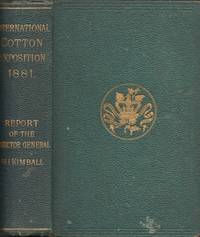
188235602New York: D. Appleton and Company 1882. First Edition. Hardcover. Good. Octavo. 1 vi 610 pages 3 pages advertisements 1. Errata page located between pages 342 343. Green cloth hardcover with illustrated gilt title inside a gilt circle on the front cover. Gilt title on the spine. Some rubbed spots to the cloth covers and spine. Light edge wear to the cloth extremities. The frontispiece is vertically creased and foxed. Pages 7 and 8 are loose. Binding cords visible in several sections but no other loose pages. Hinges are in good condition. Small piece of tape on the edge of pages 321 and 327. Light toning to the text. <br /> <br /> Illustrated with frontispiece engraved portrait of H. I. Kimball 4 plates in text folding "Plat of the Grounds and Buildings International Cotton Exposition Atlanta" engraved plate - "The Compound Tubular Steam Boiler Gold Medal Awarded." 2 more engraved plates a few illustrated advertisements and a folding plan - "Model of the Willimantic Company's Works at Willimantic Conn." Detailed contents make up this comprehensive report including history speeches reports agricultural sections a variety of forms and documents lists of groups awards committee members and much more. <br /> <br /> A nice inscription written on the front blank end sheet from Samuel Inman one of Atlanta's leading citizens of the period Inman Park in Atlanta is named after Samuel Inman. Inscription reads - "Henry S. Cave Compliments of Saml M. Inman Treasurer Atlanta Ga. June 23 1884." H. S. Cave from Atlanta inscription is written on the verso of the frontispiece. Another owners name in pencil on the front paste down "Augusta Wylie King." A later owner's address mailing label located in the upper left corner front paste down. From the New Georgia Encyclopedia:<br /> <br /> Atlanta held its first exposition named the International Cotton Exposition in Oglethorpe Park in 1881. The city then had fewer than 40000 residents and the primary sense in which the first exposition was “international†was the display of cotton plants from around the world. Nevertheless Atlantans were eager to host the 1881 exposition to promote investment and to help the city toward its goal of becoming an industrial center which was a primary component of Grady’s “New South†concept. Although attendance was lower than expected fewer than 200000 in paid attendance during its two-and-a-half-month run city leaders demonstrated that they could work together to host a major event and that Atlanta was serious about its role in textile production at a time when the North was beginning to grow dissatisfied with the efficiency of southern cotton processing. The exposition displayed new crop planters and cotton seed cleaners along with a model of Eli Whitney’s original cotton gin and speakers addressed the crowds about agricultural technology and political reforms. D. Appleton and Company hardcover
187660872Philadelphia: n.p. 1876. Oblong folio. 28.25 x 22.75 in. One woodblock-engraved printed linen scarf decorative borders large lozenge medallions for halls sewn at fore-edges minor age toning some spotting & soiling very slight foxing old pin-holes at corners still a VG exemplar. First edition of this wonderfully woodblock printed souvenir linen scarf for the 1876 Centennial International Exhibition held in Philadelphia that year. The large lozenge medallions feature the Main Exhibition Building which covered 21.5 acres constructed of wood & iron framework on 672 stone piers; the Horticultural Hall epitomized floral achievement in gardening and was designed in a Moorish style to be a permanent tribute to the Crystal Palace of London’s 1851 Great Exhibition -- it survived until severely damaged by Hurricane Hazel in 1954; and finally the Art Gallery now known as Memorial Hall and the only large exhibit building still standing on the Exposition site. President’s Washington & Grant anchored the upper corners with Centennial Medallions in the lower corners. [n.p.], unknown
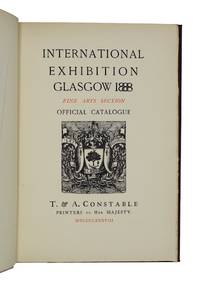
1888AQ33282Glasgow: T. & A. Constable 1888. One of 370 large paper copies. 6 157pp 1. Unopened in original publisher's vellum-backed red cloth boards contrasting red morocco lettering-pieces A.E.G. A trifle rubbed spine dulled. Internally clean and crisp. Letterpress presentation leaf completed in manuscript inscribed to Glaswegian art collector B. B. MacGeorge Esq. The generously margined official catalogue of the fine art collection presented at the International Exhibition of Science Art and Industry Kelvingrove Park Glasgow in 1888. The seven month long event - staged in order to raise fund for the construction of a permanent gallery and museum in the park - attracted in excess for 5.5 million visitors. . First edition. Quarto. T. & A. Constable hardcover
19842111902161003307Nishinomiya City Okoku Memorial Art Museum 1984. Soft Cover. Fine. Size: 30cm Nishinomiya City Okoku Memorial Art Museum paperback
0666258570.Ghardcover. Good. Access codes and supplements are not guaranteed with used items. May be an ex-library book. hardcover
0666063869.Ghardcover. Good. Access codes and supplements are not guaranteed with used items. May be an ex-library book. hardcover
0243145853.Gpaperback. Good. Access codes and supplements are not guaranteed with used items. May be an ex-library book. paperback
18629027602London: Clay & Lea 1862. Hardcover. Very good. Expertly rebacked with original spine pieces. Gilt titling on spine is still bright. New endpapers. <br/><br/> Clay & Lea hardcover
0265011752.Gpaperback. Good. Access codes and supplements are not guaranteed with used items. May be an ex-library book. paperback
0484773372.Ghardcover. Good. Access codes and supplements are not guaranteed with used items. May be an ex-library book. hardcover
0260652245.Ghardcover. Good. Access codes and supplements are not guaranteed with used items. May be an ex-library book. hardcover
1390478955.Gpaperback. Good. Access codes and supplements are not guaranteed with used items. May be an ex-library book. paperback