300 résultats
199523403Easton Press 1995. HardBack NodustJacket ISSUED 1995 1st Edition THUS Bound Genuine Bluish Grey DecOrAted LEATHER with Gold Gilt gold Gilt Edge slight Rub Spine Raised Bands WITH Blue RibbOn Bookmark fINe/finE- NOJACKET Interior Nice tight CLean 359 Pages. First Thus. Full-Leather. Easton Press hardcover
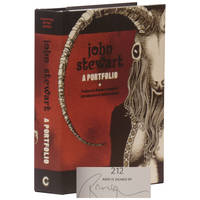
2012361443Lakeview CO: Centipede Press 2012. First Edition. Hardcover. Fine/Fine. A book collecting many intricate drawings of John Stewart including 29 color reproductions. Stewart was a British fantasy horror and science fiction artist.<br /> <br /> Preface by Ramsey Campbell and an introduction by Andrew Smith. This is one of 250 numbered copies signed by Campbell and Smith. <br /> <br /> 6 by 7-3/4 inches. 298 pages. First edition first printing. Slight spine lean else a fine hardcover copy in a fine dust jacket. Centipede Press hardcover
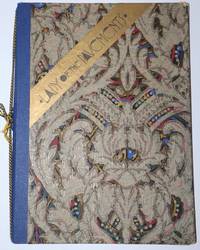
192920390New York: The Longacre Press Inc 1929. First edition. Hardcover. String ties. Paper pastedown. Cloth spine. Near Fine. Promotional souvenir program for a transitional Griftith film -- shot originally as a silent re-shot with some sound including most notably songs by Irving Berlin. 4to. 31 by 22.5 cm. Unpaginated 18 leaves. This Griffith film despite rave reviews was not a success at the box office despite the talent associated with it. It also catapulted Lupe Velez to stardom briefly and a personality whose antics became dependable fodder for the press. The story is one in which the male lead William Boyd is cast aside by his girlfriend and resolves that he could find a more suitable lover off the street which he does when he connects with a singer at a sleazy bar played by Velez. Boyd a popular Silent Era romantic lead would suffer a setback in the early sound era but resurrect his career and fortune in a series of Westerns in which he played Hopalong Cassidy. "Lady of the Pavements" may have been a disappointment commercially but one would not know that from this souvenir which is an object of real beauty with its textured wallpaper-like pastedown on the front cover -- the paper used looks like a premium Japon -- its thick glossy leaves its lavish photos and Art Deco illustrations and decoration. Some photos have touches of tinting although they are from full color. And much of the ornamental decoration on the page is in color. One could say that the souvenir expressed something of the ambition of the film-makers but the constraints of early sound severely constrained what they could have done otherwise temporarily reversing some of the breakthroughs in terms of movement and artistry achieved in the Silents made just a year or two earlier. Condition: edgewear tothe cover with slight loss of the paper pastedown upper front corner. A few leaves have a small corner dampstain which is only really conspicuous on one leaf and a relatively trivial issue even on that leaf. Otherwise clean and bright. And we will also note the color on the pastedown paper is very bright as well which often not the case with this publication. The Longacre Press, Inc hardcover
1929005218New York: The Longacre Press Inc. 1929. First edition. Hardcover. String ties. Paper pastedown. Fine. Promotional souvenir program for a transitional Griftith film -- shot originally as a silent re-shot with some sound including most notably songs by Irving Berlin. 4to. 31 by 22.5 cm. Unpaginated 18 leaves. This Griffith film was not a success at the box office despite the talent associated with it. The story is one in which the male lead William Boyd is cast aside by his girlfriend and resolves that he could find a more suitable lover off the street which he does when he connects with a singer at a sleazy bar played by Lupe Velez. Boyd a popular Silent Era romantic lead would suffer a setback in the early sound era but resurrect his career and fortune in a series of Westerns in which he played Hopalong Cassidy. "Lady of the Pavements" may have been a disappointment commercially but one would not know that from this souvenir which is an object of real beauty with its textured wallpaper-like pastedown on the front cover its thick glossy leaves and its lavish photos and Art Deco illustrations and decoration. <br/><br/> The Longacre Press, Inc. hardcover books
23395Easton Press CONN. 1966. HaRdBAck NODustJacket ISSUED 1966 1st EditioN THuS Bound Beautiful Genuine Blue Decorated LEATHER with Gold Gilt illustration on Front Gold Gilt Edge very slight Rub Spine FOUr Raised Bands WITH Gold Ribbon bOokMARK Fine/Fine- NOJACKET Interior Nice tight clean 303 Pages Octavo 22 kt gold trimmings sewn-in pages It features premium heavy dUty boards with a sewn in Ribbon marker archival paper. First Thus. Full-Leather. Easton Press CONN. hardcover
199665328Burgess Hill: Classic Publications 1996. 1st edition. As New. folio. dust jacket 356pp. col. & b/w pls. maps appends. sources indexes Fine history of GallandÕs JV44 from its inception in February 1945 through to its surrender at Salzburg just before German capitulation Classic Publications unknown
Creator: Hiroshi Hirabayashi. Kamishibai propaganda play / Japanese picture show (kamishibai) illustrating the benefits and immense moral obligation of collaborating with one other for survival. Folio. The complete work, comprising 20 offset full-colour printed illustrative cards which together form a story to educate or indoctrinate the viewer with nationalist concepts during the Second World War, each with printed story text to verso, one of the cards being the title and publishing information. Text is in Japanese. Contained in publisher's original paper portfolio covers, with title label to front. Story cards measure approximately 38 x 26 cm. Portfolio covers measure approximately 39 x 27 x 1 cm. Some age-toning and wear to portfolio, otherwise in very good and original condition, cards retaining vivid impression, a fascinating and scarce Second World War propaganda presentation. Japanese wartime propaganda was distributed through films, magazines and newspapers, radio, books, cartoons and the education system. Publications such as the present illustrative stories, promoted the ideal citizen's nationalistic point of view, indoctrinating civilians to work collectively and in support of their government's actions, even when creating some form of imposition on the citizen himself. Kamishibai are Japanese paper plays that gained popularity among children in the 1930s and were subsequently used as a medium for propaganda during World War II. Also referred to as a "Picture Card Show," they were made for influencing youth with their engaging storylines and vivid imagery. In 1940, elementary schools were renamed "Citizen's Schools." Textbooks became vivid, engaging, and contained militaristic picture-books. During the course of World War II, the Japanese government attempted to indoctrinate Japanese children through education and propaganda. Both methods nationalized youth and encouraged them to support the war effort. Science curriculum, for example education taught children about agriculture so they could better assist in food production for the nation. Youth were expected to volunteer in factories and farms to replace the conscripted labor force. Additionally, "kokutai," meaning the uniqueness of the Japanese people in having a leader with spiritual origins, was officially promulgated by the government, including a text book distributed by the Ministry of Education. The purpose of this instruction was to ensure that every child regarded himself first of all as a Japanese and was grateful for the "family polity" structure of government, with its apex in the emperor. Indeed, little effort was made during the course of the war to explain to the Japanese people what it was fought for; instead, it was presented as a chance to rally about the emperor. This is a dramatic story of collaboration and innovation, its ultimate message being that these virtues are necessary for survival of a society and the individual. Sustenance being the key to survival, the story unfolds as follows. A village in Western Japan suffering a long arid season which led to drought, was unable to support vegetation and was seeing abandonment as many farmers left the region. Evidently this was a large village, having five shoya (village headman), and the latter devised an irrigation plan to restore its agriculture and ultimately preserve the village. In order to instill the urgency of success with the undertaking, the local bugyo (governor) approved the project under the alarming condition that if the project failed, the five headmen who also owned estates in the region, would be burnt alive at the stake. He had five hanging platforms erected in preparation of failure, and also to motivate them to accomplish the task lest they meet a gruesome public fate. Villagers supported the idea and all hands worked diligently to ensure its success. Indeed, working together with a common goal was the key. The water flowed abundantly. The village was saved, and so were the lives of the five headmen. The hanging platforms were set ablaze (without victims) in celebration.
Kamishibai propaganda plays / Japanese picture show (kamishibai) illustrating the importance of taxation, specifically relating to the all-important commodity: rice. Folio. The complete work, comprising 20 offset full-colour printed illustrative cards which together form a story to educate or indoctrinate the viewer with nationalist concepts during the Second World War, each with printed story text to verso, one of the cards being the title and publishing information. Text is in Japanese. Contained in publisher's original paper portfolio covers, with title label to front. Story cards measure approximately 38 x 26 cm. Portfolio covers measure approximately 39 x 27 x 1 cm. Some age-toning and wear to portfolio, otherwise in very good and original condition, cards retaining vivid impression, a fascinating Second World War propaganda presentation. Japanese wartime propaganda was distributed through films, magazines and newspapers, radio, books, cartoons and the education system. Publications such as the present illustrative stories, promoted the ideal citizen's nationalistic point of view, indoctrinating civilians to work collectively and in support of their government's actions, even when creating some form of imposition on the citizen himself. Kamishibai are Japanese paper plays that gained popularity among children in the 1930s and were subsequently used as a medium for propaganda during World War II. Also referred to as a "Picture Card Show," they were made for influencing youth with their engaging storylines and vivid imagery. In 1940, elementary schools were renamed "Citizen's Schools." Textbooks became vivid, engaging, and contained militaristic picture-books. During the course of World War II, the Japanese government attempted to indoctrinate Japanese children through education and propaganda. Both methods nationalized youth and encouraged them to support the war effort. Science curriculum, for example education taught children about agriculture so they could better assist in food production for the nation. Youth were expected to volunteer in factories and farms to replace the conscripted labor force. Additionally, "kokutai," meaning the uniqueness of the Japanese people in having a leader with spiritual origins, was officially promulgated by the government, including a text book distributed by the Ministry of Education. The purpose of this instruction was to ensure that every child regarded himself first of all as a Japanese and was grateful for the "family polity" structure of government, with its apex in the emperor. Indeed, little effort was made during the course of the war to explain to the Japanese people what it was fought for; instead, it was presented as a chance to rally about the emperor. By using the example of the esteemed agrarian reformer and economic savant Ninomiya Kinjiro who was born into peasantry, lost his family and home in a disaster, and overcame all odds to become a notable leader and economic reformer, this story promotes the importance of government taxation, even on basic needs such as rice. Ninomiya Kinjiro (1787-1856) was an important agrarian reformer and economic thinker of the late Edo period. His legendary diligence and studiousness as a child made him a natural exemplar for Japanese schoolchildren. At one time, most every elementary school in Japan displayed a statue depicting Ninomiya as a youth with a bundle of firewood on his back and an open book in his hand.
Kamishibai propaganda play / Japanese picture show (kamishibai) illustrating Samurai warriors plying away in the fields aid in food production for the nation at war. Folio. The complete work, comprising 20 offset full-colour printed illustrative cards which together form a story to educate or indoctrinate the viewer with nationalist concepts during the Second World War, each with printed story text to verso, one of the cards being the title and publishing information. Text is in Japanese. Contained in publisher's original paper portfolio covers, with title label to front. Story cards measure approximately 38 x 26 cm. Portfolio covers measure approximately 39 x 27 x 1 cm. Some age-toning and wear to portfolio, otherwise in very good and original condition, cards retaining vivid impression, a fascinating and scarce Second World War propaganda presentation. Japanese wartime propaganda was distributed through films, magazines and newspapers, radio, books, cartoons and the education system. Publications such as the present illustrative stories, promoted the ideal citizen's nationalistic point of view, indoctrinating civilians to work collectively and in support of their government's actions, even when creating some form of imposition on the citizen himself. Kamishibai are Japanese paper plays that gained popularity among children in the 1930s and were subsequently used as a medium for propaganda during World War II. Also referred to as a "Picture Card Show," they were made for influencing youth with their engaging storylines and vivid imagery. In 1940, elementary schools were renamed "Citizen's Schools." Textbooks became vivid, engaging, and contained militaristic picture-books. During the course of World War II, the Japanese government attempted to indoctrinate Japanese children through education and propaganda. Both methods nationalized youth and encouraged them to support the war effort. Science curriculum, for example education taught children about agriculture so they could better assist in food production for the nation. Youth were expected to volunteer in factories and farms to replace the conscripted labor force. Additionally, "kokutai," meaning the uniqueness of the Japanese people in having a leader with spiritual origins, was officially promulgated by the government, including a text book distributed by the Ministry of Education. The purpose of this instruction was to ensure that every child regarded himself first of all as a Japanese and was grateful for the "family polity" structure of government, with its apex in the emperor. Indeed, little effort was made during the course of the war to explain to the Japanese people what it was fought for; instead, it was presented as a chance to rally about the emperor. This is a story of Samurai warriors working in the fields with ordinary people in order to help grow food, a clever example using the elite class that all look up to, in order to encourage citizens to contribute to Japan's efforts in World War II. It is cleverly named after the famous and revered Uesugi Yozan, who at the young age of 17 became daimyo of the economically failing Yonezawa domain, and through hard work and sacrifice, led his people and feudal land back to prosperity. Uesugi Yozan (1751-1822), the daimyo (feudal baron) who restored the fortunes of the impoverished Yonezawa domain, is famously known as one of Japan's most virtuous lords. Perhaps the most famous words left by Yozan are, "To achieve, one must act. To not act is to not achieve; this is true in all things. The inability to achieve is the result of inaction." Indeed, Yozan is a fitting an influential figure to support this propaganda and motivate citizens to contribute their efforts to winning the war.
19012111902160200411Not Available 1901. Soft Cover. Fine. Volume: 1 Not Available paperback
2090502113711747Not Available N.A. Soft Cover. Fine. The book is in fine condition. Not Available paperback
Japan: Suharaya, and others, Kaei 7 (1854). Fascinating and scarce account of a samurai's son whose personal determination led him to rise above the family's financial poverty, to properly care for his horse, build his own stables, and breed additional horses, all by learning the ancient long-forgotten ways of the ancient samurai. 8vo. 1 volume, 78 pages, including 9 full-page illustrations, two of which are hand coloured. Woodblock print. All text is in Japanese. Postscript records the first edition being published in 1806. Traditional karitoji paper binding string-stitched at spine, fukurotoji style ("bound-pocket" with folded leafs bound into spine), and opening from left to right. Natural paper covers, with manuscript title label to front. Together the volumes measure approximately 18 x 25,5 x 1 cm. Negligible creasing to boards and age-toning to upper margins, otherwise in very good and original condition, a pleasing and uncommon work. Based primarily on contemporary descriptions of the financial distress felt by the long-standing prestigious samurai class, such as the present account, it is accepted, without dissent that the ruling samurai class suffered increasing poverty during the Tokugawa (Edo) period. Seifu Murata (1746-1811) wrote: "For years now, the samurai have suffered from poverty and their minds have been occupied by making a living. ‘Buy this, sell that’ and ‘pawn this to pay for that’ has become all of their lives. Even for those dedicated to their duties, it was inevitable to debase themselves and to engage in unsavory conduct (i.e., engage in trading)". Even the wives of those who were earning as much as 200 koku busied themselves in trading and in shops. This is the hero's journey, imparted firsthand, of a brilliant young samurai born into poverty but wide-eyed and unrelentingly in pursuit of mastering the skills of a samurai and honouring his destined status in this class of nobility. Young Ryuzando Shujin began by learning the equestrian warrior traditions with a borrowed horse, and was eventually able to convince his father to buy him a horse of his own, despite of the family's economic situation. When the cost of caring for the horse became a burden no longer bearable, and he was told the horse would be sold, he fixated on finding a solution. Immediately, he began conducting extensive research into the ancient methods employed when most samurai were farmers who held the role of warrior in the event of a battle. The solution to combating the costs was breeding and selling. He began the process, while being scrutinized, mocked and judged by others, in particular jeering his rudimentary (cost-effective) hand-made stables. But he did not let any outside opinions pierce his confidence. After repeated trial and error, it was not long that he possessed six horses. Surely too, he had solved the challenges of the household finances. Shujin championed horsemanship as a duty of all samurai. With the belief that all samurai should therefore possess their own horse, in part to best perform archery, spearmanship, and swordsmanship, and owing to the fact that this was an era where some samurai families were poor, he published his methods for others to follow, and ultimately uphold their rights and responsibilities that their title suggests. The volume includes instructions for building horse stables by hand, without incurring high costs. He describes the breeding process, his training methodology, and proper feeding. His own experiences with horses falling to sickness and how he treated them back to health are also shared. Clearly a man with a charitable and honest heart, he concludes by stating that all of this aside, the single most important thing for a healthy and happy horse is "aishin" (affection).
48084Nrf.1969.In-8,couv.souple à rabats.322 p. Etat neuf.
49171Nrf.1969.In-8,couv.souple.Photos. BE.
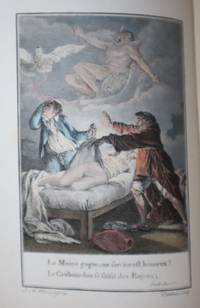
1899007992London: The Lutetian Society 1899. First Edition Thus. Full Straight-Grained Morocco. Fine. An exceptional copy. No. 415 of 500 copies limitation. Also extra-illustrated with 23 hand-colored engraved plates 21 of which depict scenes from the play and are after J. M. Moreau and two portraits one of Joan of Arc the other of Voltaire. There are also 25 b/w engravings these proofs of plates done by Duplessis-Bertaux. Bound beautifully by R. Wallis for Robson & Co. a rare bookseller at the turn-of-the-twentieth century stated in full straight-grained morocco with five raised bands and gilt spine decoration gilt turn-ins and gilt edges. And plates are all printed on a luxuriant and thick vellum paper. 8vo. 22 by 16 cm. 406 pp. Pagination continuous between two volumes. Some of the Moreau plates are dated 1788 or 1789. We can assume all of the Moreau plates are from that time. They were created for an earlier French edition of the poem and most of them have two line captions quoting the poem. The Condition: Light rubbing evident on raised bands and spine extremities. Otherwise binding fresh tight. Overall a fine copy. The Lutetian Society unknown
Woodblock "kawaraban" broadside illustrating the arrival of Commodore Perry's four American vessels at Uraga in 8 July 1853, featuring a prominent stylized portrait of Perry himself and one of his formidable "black ships". All text is in Japanese. Thin hand-made laid paper measuring approximately 35,5 x 27cm. Small tears at folds and margins, some professional repair to verso, otherwise in very good condition, with clear imagery. A pleasing example of an uncommon variant. A contemporary broadside to alert Japanese civilians of the arrival of Commodore Perry's formidable American vessels. News was travelling fast by word of mouth along the coast and trade routes, and also began being illustrated with the "kawaraban" - broadsides with woodblock prints - for distribution. Naturally, Edo commoners were curious to learn about the imposing vessels that suddenly appeared within sight of their city.] The Japanese named the American vessels "kurofune" (black ships) for the colour of the hulls which were covered in tar and for the black smoke from the coal-fired steam engines. four "Black Ships"
D5274c. Paperback. Fine. 8 loose leaves folded once to create 32 pages each page about 7-by-9 inches; contains 16 extraordinary drawings of gorillas rendered in bright blue or black ink frequently in an etched or cross-hatched style reminiscent of woodcuts. With handwritten captions in Russian Latvian and German and dated from 1925-1959. Studies of the animals in the wild or captivity drawn perhaps from life but also copied from other images collected from a variety sources. Though the source of the original image is frequently noted the image itself is never included. All drawings are remarkably bold and adept the bright blue in particular lends an air of pop or modern art while others are more formal or refined. All are surrounded by equally bold perfectly legible handwritten text. Unique and simply wonderful with some haunting images on the faces of the apes. <br/><br/> paperback
201388447Skira 2013 In-8 cartonné 24 cm sur 21,2. 290 pages. Très bon état d’occasion.
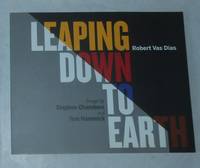
2008TN252018Permanent Press London Pratt Contemporary Art Ightham 2008. 1st Edition. SOFTCOVER. Inscribed and signed by Robert Vas Dias on the front fly-leaf no other marks or inscriptions. One of a total of 525 copies made. Large 4to. in colour printed stiff card covers unpaginated approx 16 leaves on thick art paper with interleaved printed semi-opaque leaves on thinner paper colour plates illustrations in text etc. __CONDITION : A well preserved AS NEW copy. . __We always ship in PROTECTIVE CARD PARCELS Permanent Press, London Pratt Contemporary Art, Ightham paperback
20012081502112502072B5 A-bomb survivor Tsutomu Tsutomu's art business implementation committee 2001. Soft Cover. Fine. Number of books: 1 B5 A-bomb survivor Tsutomu Tsutomu's art business implementation committee paperback
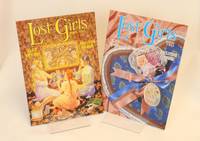
1996CNJL2253Northhampton Massachusetts: Kitchen Sink Press 1996. First Edition. Wraps. Fine. Gebbie Melinda. First printings quarto size 32 pp. in each volume both volumes signed by Melinda Gebbie. Per Wiki: "Lost Girls is a graphic novel written by Alan Moore and illustrated by Melinda Gebbie depicting the sexually explicit adventures of three female fictional characters of the late 19th and early 20th century: Alice from Lewis Carroll's Alice's Adventures in Wonderland and Through the Looking-Glass Dorothy Gale from L. Frank Baum's The Wonderful Wizard of Oz and Wendy Darling from J. M. Barrie's Peter and Wendy. They meet as adults in 1913 and describe and share some of their erotic adventures with each other." <br /> <br /> We offer these two volumes together both are signed by Melinda Gebbie. <br /> <br /> ___DESCRIPTION: Both volumes in pictorial wraps both signed on the inside of the front wrap by Gebbie Book One in silver marker Book Two in black marker; quarto size 10 1/2" by 7 1/2" each volume 32 pp. plus the wraps. <br /> <br /> ___CONDITION: Both volumes fine clean and utterly without wear. <br /> <br /> ___POSTAGE: International customers please note that additional postage may apply as the standard does not always cover costs; please inquire for details.<br /> <br /> ___Swan's Fine Books is pleased to be a member of the ABAA ILAB and IOBA and we stand behind every book we sell. Please contact us with any questions you may have we are here to help. Kitchen Sink Press unknown
193628514<p>NY GROSSET & DUNLAP 1936. Sutton Wrote Judy Bolton Mystery Series & Doane also illustrated those books B/W Frontispiece HBDJ 1936 1st edition GLOSSY COLOR CVR Book has some edgewear VG-/GOOD- wear to the ends of the spine cvr inside pages clean and unmarked. Edgewear CHIPS to the dust jacket tiny edge chips creases edges price clipped ; 8vo 114 pgs Dust jacket/cover torn at ends and edges Bumping at spine ends and tips. Rubbing at extremities. Light age toning of pages. Binding tight and pages remarkably clean for a children's book of this vintage.protected by the BroDart cover; Mary WELCOMES THE LITTLE GIRL MUFFS into their Magic Playland she adds A Spirit of Adventure to their games they Play at being Nursery Rhyme children On this adventure the kids are out to find the Bramble Bush Man in their own land of make believe. Color cover and endpapers plus smaller b&w artwork by Pelagie Doane. 1st Edition. Hardcover. Very Good/Good. Illus. by Pelagie Doane.</p> NY GROSSET & DUNLAP hardcover
2090502113716921Not Available N.A. Soft Cover. Fine. The book is in fine condition. Not Available paperback
Korea's most prestigious Yi Dynasty paintings reproduced and thus preserved in a most elegant single presentation, this is an exceedingly scare work. The famous original paintings are held in private and museum collections throughout Korea. Each painting here is illustrated in colour, most also being the same size as the original artworks. Some of the larger ones are foldout plates. Each is tipped to its own printed carrier folder with a descriptive text printed adjacent on the same large leaf. These four portfolios weigh 30 kg and we will provide free shipping anywhere in the world.
953517Berlin Heidelberg New York Springer Verlag 1976. Corners bumped but an acceptable copy unknown