55 résultats
AQ22324Newcastle: W. Fordyce Printer s.d. c. 1820s Single leaf broadside edges uncut. A trifle creased and browned. An apparently unrecorded late Georgian playbill advertising three evenings of entertainment provided by a travelling troupe of actors in or around Newcastle including a performance of Church of Scotland minister John Home's 1722-1808 drama in blank verse Douglas. The play first performed in Edinburgh on 14th December 1756 found overwhelming approval with the general public despite having been rejected in London by actor and theatre manager David Garrick over concerns of taste. Not all found fault however Scottish philosopher David Hume said of Home; 'you possess the true theatric genius of Shakespeare and Otway refined from the unhappy barbarism of the one and the licentiousness of the other'. . Dimensions 150 x 230 mm. W. Fordyce, Printer, [s.d., c. 1820s] unknown
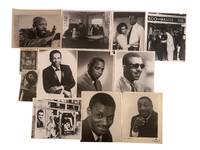
1940225431940. Archive of original publicity and candid photographs of 20th-century Black entertainers ca. 1940s-1970s. 12 silver gelatin prints and half-tone publicity stills various sizes but majority are 8 x 10 in. several with photographer or agency stamps press captions or printed credit on versos or margins. This collection assembles portraits film stills and candid images of major African American performers whose careers spanned stage screen music and comedy during the mid-20th century-a period when Black entertainers broke barriers in Hollywood television and popular music often while confronting systemic racism in the entertainment industry.<br /> <br /> Identified in this group are: Isaac Hayes captured in a close-cropped press portrait with typed caption lauding his career as "composer singer actor black Moses of soul" at the height of his 1970s popularity; Harry Belafonte in a film still depicting him in a tense scene in 1959's film Odds Against Tomorrow; Sidney Poitier pictured in a still embracing Barbara Mcnair in the 1970 movie They Call Me Mister Tibbs; Dick Gregory the pioneering Black comedian and outspoken civil rights activist in a studio portraits; Moses Gunn known for his commanding stage presence and roles in films such as Shaft 1971; and John Marriott a veteran character actor of stage and screen seen in formal portrait.<br /> <br /> Also included are images of additional African American performers: a stylish mid-century nightclub or stage portrait of an unidentified singer in tuxedo; a sharply dressed man standing before a theater facade adorned with posters of entertainers including Kit Kara and Rio; and a candid street scene outside the famed Savoy Ballroom in Harlem showing two men shaking hands beneath the marquee at "600 Savoy 598." Smaller prints depict a saxophonist in performance and a lobby card for comedian Hot Ashes. Together these photographs trace a lineage of African American artistry across genres-popular music jazz theater film and stand-up-during an era when representation in mainstream media was both a political act and a cultural breakthrough. Light handling wear some corner creases and press crop marks; overall very good. unknown
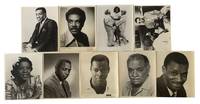
1960224801960. African America Film and Entertainment Photo Archive of Black Entertainers Musicians Actors & Comedy Figures 1950s-1970s including Otis Redding Dinah Washington and Brock Peters. An archive of 9 original gelatin silver and glossy studio prints black and white measuring 10" x 8". Produced for press and promotional use in the United States during the mid 20th century. This archive comprises promotional portraits of major and lesser known Black entertainers. Multiple framed headshots feature blues and soul music legends Otis Redding and Dinah Washington as well as veteran character actors Brock Peters Moses Gunn John Marriott Thomas Anderson and gospel composer Howard A. Roberts. Additional images include a staged comedy scene produced by Laff Records featuring two older Black men in comedic poses surrounding a man in drag and a candid interview style photo of an unidentified Black entertainer at a desk with rotary telephone.<br /> Otis Redding and Dinah Washington headshots capture their poised midcentury publicity style: Washington smiles hair pinned with flower and pearls exuding jazz elegance; Redding presents a three quarter confident gaze in a dark suit. Otis Redding and Dinah Washington were among the most influential African American vocalists of the mid-20th century each achieving extraordinary success in a tragically abbreviated career. Redding hailed as the "King of Soul" became a defining figure of Southern soul with hits like "These Arms of Mine" and "Sittin' On The Dock of the Bay" the latter recorded just days before his death in a 1967 plane crash at the age of 26. His electrifying performance at the Monterey Pop Festival expanded his appeal beyond Black audiences and cemented his place in American music history. Washington known as the "Queen of the Blues" and "Queen of the Jukeboxes" crossed genres from gospel to jazz to pop with chart-topping hits in the 1950s earning a Grammy Award and influencing generations of vocalists with her dramatic phrasing and interpretive command. She died of an accidental overdose in 1963 at just 39 years old. Though their styles differed-Redding's raw emotive soul contrasting with Washington's polished versatility-their shared legacies lie in the groundbreaking commercial and artistic success they achieved in a racially segregated industry and in the profound cultural loss their premature deaths represented.<br /> <br /> The archive also includes studio portraits of lesser-known but notable Black figures: Brock Peters who achieved both stage and screen fame including pivotal roles addressing race in American culture; Moses Gunn a prominent character actor and Shakespearean performer; John Marriott and Thomas Anderson performers whose careers bridged regional theatre and early television. These studio shots display Peters with contemplative expression; Gunn looking directly toward the camera with intensity; Roberts identified by "Howard Roberts" printed beneath his image alongside performing arts agency credit; Thomas Anderson and John Marriott similarly styled in classic studio poses. The Laff Records comedic photograph shows two older men flanking a man in drag. Laff Records was an LA-based imprint which produced raunchy comedy records by Black comic icons such as Richard Pryor and Redd Foxx and was a vital platform which elevated subversive Black expression in a time of segregation and censorship. The final print shows a Black man at a desk holding a telephone receiver-a press snapshot suggestive of an interview or managerial context. Minor toning to margins on two prints; small creases at corners of three; image clarity remains strong; agency or studio credits legible. Overall very good condition. unknown
1993309442NY: DC COMICS. Fine with no dust jacket. 1993. First Edition; First Printing. Paperback. First edition. SIGNED in silver ink on front cover next to their portraits by actors Walter Koenig Mr. Chekov and by James Doohan 'Scotty'. Fine in stapled pictorial printed wrappers. 10" X 6 3/4"; 10" x 6 3/4"; Signed by Actor . DC COMICS. paperback
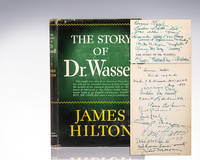
1943148748Boston: Little Brown and Company 1943. First edition early printing of this biographical narrative based on the real-life heroism of Dr. Corydon M. Wassell basis for the classic film. Octavo original publisher's cloth. Presentation copy inscribed by Dr. Corydon M. Wassell at the top of the front free endpaper "To Lorene Welton. Kind regards. Com dr. C. M. Wassell M.C. U.S.N.R. Aug. 1943." Additionally signed on the front free endpaper and half-title page by his wife Madeline Wassell and the cast of the 1944 film adaptation including director Cecil B. DeMille actors Gary Cooper Laraine Day Carol Thurston Paul Kelly Signe Hasso Elliott Reid Dennis O'Keefe Barbara Britton Renny McEvoy Oliver Thorndike and others. Near fine in a very good price-clipped dust jacket. Jacket design by George F. Kelley. A unique example. The Story of Dr. Wassell by James Hilton is a biographical narrative that recounts the remarkable wartime service of Dr. Corydon M. Wassell a U.S. Navy physician who risked his life to save wounded American sailors during the Japanese invasion of Java in World War II. Hilton presents Wassell as a figure of moral courage and quiet heroism whose actions—defying evacuation orders to ensure the safety of his patients—earned him the Navy Cross and widespread national recognition. The story’s compelling themes of sacrifice and duty were further popularized by Cecil B. DeMille’s 1944 film adaptation starring Gary Cooper which brought Wassell’s exploits to an even broader audience and reinforced his legacy as a symbol of American wartime valor. Little, Brown and Company hardcover