Magie, David,Biblio.com
Roman Rule In Asia Minor Volume 2
29047030-nnew. unknown

GreatBookPrices · États-Unis498,62 $US≈ 421,88 €
532 résultats
1935355490721661London: Routledge 1935. First Edition. Hard Cover. Dust Jacket. London: George Routledge & Sons Ltd. 1935. First UK Edition. Introduction by Horace Goldin President of the Magicians' Club. Publisher's salmon pink boards with gilt lettering to the spine. A neat stamp to the front free end-paper withdrawn from circulation otherwise a very fine copy in like dustwrapper priced 7s 6d net to the inside flap as called for. A superlative copy and very scarce in dustwrapper in this condition. Photographs/scans available upon request. Routledge hardcover
29047030-nnew. unknown
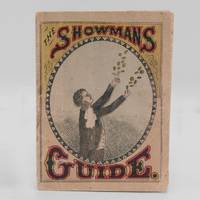
1875373439New York: Hurst & Co 1875. 30 2pp. With the terminal ad leaf. 8vo. Publisher's hand-colored pictorial wrappers. Foxing. 30 2pp. With the terminal ad leaf. 8vo. This early guide to magic tricks is ascribed to Professor Lorento and Francois R. Blitz. Only two examples recorded in OCLC. Hurst & Co unknown
200310522NY: Knopf 2003. First trade edition first prnt. 1st issue dustjacket. Preceded by a self-published paperback edition. Signed and dated "'03" by Paolini on the title page. A 4 x 6 inch color digital photograph of Paolini at the booksigning laid in. One dustjacket corner just touched not immediately apparent; otherwise an unread copy in Fine condition in a Fine dustjacket with an archival cover. Volume 1 in Paolini's Inheritance trilogy. Paolini's first novel. Signed & Dated by Author. First Edition. Hardcovers. Fine/Fine. 8vo - over 7¾" - 9¾" tall. Knopf Hardcover
192962472Philadelphia: Dorrance and Co. 1929. 8vo. 273 3 pp. Photo frontisp. numerous photo plates. Dark green publisher’s cloth gilt lettering front cover & spine slight shelfwear couple leaves at lower corner w/ tear from poorly opened w/ d.j. cover art by WD minor chipping head & foot of spine couple closed tears edgewear still VG/VG- copy. First edition 1st printing of this memoir of the famed early 20th-Century stage magician whose gian production required 40 tons of equipment and entertained millions. Largely overshadowed by Houdini in history in his day Thurston was the best performing incredible tricks including the “Rising Card†with cards rising out of a glass goblet and floating like butterflies across the audience. He popularized the floating woman illusion or “Levitation of Princess Karnac†and even added Ziegfeld-inspired touches to his shows with scantily clad beautiful assistants. He performed and corresponded with D.L. Moody Emperor Franz Josef Sun Yat-Sen John L. Sullvian and Theodore Roosevelt. Very scarce in original dustjacket. Dorrance and Co., hardcover
2016x-0691653399Princeton Univ Pr 2016. Hardcover. New. 746 pages. 9.25x6.12x9.21 inches. Princeton Univ Pr hardcover
BN66233Heilkunde und Hochkultur II: 'Magie und Medizin' und 'Der alte Mensch' in den antiken Zivilisationen des Mittelmeerraumes Karenberg Axel and Leitz Christian <br/><br/> unknown
1956024505NY: HARPER & BROS. two small closed tears to an unclipped dj. owner's label to front paste-down. . VG. Hardcover. First Edition. 1956. HARPER & BROS hardcover
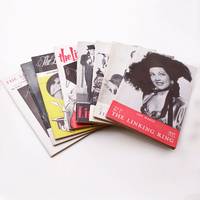
1962374500Kenton Ohio: The International Brotherhood of Magicians 1962. Illustrated throughout with black and white photos and pen and ink sketches. 60 vols. 8vo. Illustrated wrappers. Generally very good to fine. Illustrated throughout with black and white photos and pen and ink sketches. 60 vols. 8vo. 60 monthly volumes of The Linking Ring. Including: January February 1948 2 issues; September-December and March May June 1950 7 issues; the complete year for 1951 12 issues; the complete year for 1952 12 issues; January February 1953 2 issues; March-October and December 1954 9 issues; the complete year for 1955 12 issues; April 1959 1 issue; January May August 1962 3 issues.<br /> <br /> The International Brotherhood of Magicians I.B.M. monthly journal The Linking Ring has been in publication since 1922 and is available exclusively to members of the I.B.M. Our mid-20th century collection includes profiles of the most famed magicians of the day articles from the world of magic revealed magic tricks and pages of vintage advertisements.<br /> <br /> "It has documented the most significant events in our art over the past nine decades traced the rise to fame of the "greats" in magic and enabled magicians all over the world to exchange ideas." International Brotherhood of Magicians. The International Brotherhood of Magicians unknown
1858AQ34883Hartford Connecticut: Calhoun Printing Company 66 State St. 1858. Large single leaf playbill printed within elaborate woodcut border. A fine copy. A finely preserved - and remarkably detailed - blank playbill for the elaborate combination of 'astounding novelties' performed by the showman magician and ventriloquist Albert Walker 1831-1899. Designed - as evidenced by the blank spaces - to be used in multiple locations with the time date and location to be completed in manuscript this broadside nevertheless is not short on detail of the programme involving several card tricks sleight of hand fire- eating Punch and Judy and ventriloquism to be performed: 'The following programme is merely intended as a foundation of Feats to be varied at each entertainment many of which are his own invention and have never before been attempted in America. The Wonderful fear of Santa Claus or the Juvenile Toy Shop. The Spanish Pin and Traveling Philosopher. The Changeable Cash or the Gambler outwitted. The Restored Card.The Flying Grain in which the assistant is frightend out of his mother wit. Suprising dexterity with Cards. The Flight of Rice.Prince Alladin's Glass or Chant of Electric Silver. This is a beautiful fear. -In this glass a piece of silver will dance and keep time with any tune played by the Orchester even when held by one of the audience'. The quotes reprinting 'opinions of the press' to the foot of this playbill provide the date. In 1858 at Worcester a reporter from the Munroe Democrat noted that 'On last saturday and Monday A. Walker favored our citizens with several entertainments consisting of magic ventriloquism music and fun of various sorts'. Rare; OCLC locates copies at just two locations worldwide Connecticut Museum of Culture and History and Michigan. . Dimensions 230 x 585 mm. Calhoun Printing Company, 66 State St. unknown
2017x-0691655030Princeton University Press 2017. Hardcover. New. 944 pages. 9.25x6.12x1.94 inches. Princeton University Press hardcover
355490721537First Edition. London: Kemish and Sons circa 1810. First UK Edition. A softcover. Hand-coloured frontispiece and vignette to the title page. The frontispiece appears to be trimmed at the base but is the same size as the other pages. Mis-paginated but complete. Bound in modern marbled paper wrappers. No copy traced on COPAC. Photographs/scans available upon request. paperback
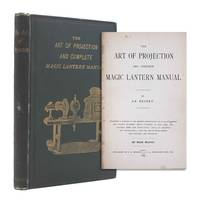
1893326724London: E.A. Beckett 111 & 113 Kingsland Road 1893. First Edition. Two folding plates of the Docwra Triple machine and numerous text illustrations. iv 195pp. 8vo. Original publisher's green cloth. First Edition. Two folding plates of the Docwra Triple machine and numerous text illustrations. iv 195pp. 8vo. E.A. Beckett, 111 & 113 Kingsland Road unknown
77520Amsterdam Gebroeders van Arum 1834. 8vo 22.7 x 14.0 cm. 5 pp.; one large triple-folded engraved plate 14.0 x 36.7 cm in original hand-colouring. Original printed wrappers. = A rarely seen description and illustration of a phenakistiscope an invention dating from 1833 i.e. less than a year before this publication. The author is anonymous indicated by his initials - J. A. - only. However he provides a thorough description of the apparatus and how to build one. "The phenakistiscope also known by the spellings phénakisticope or phenakistoscope was the first widespread animation device that created a fluent illusion of motion. Dubbed Fantascope and Stroboscopische Scheiben 'stroboscopic discs' by its inventors it has been known under many other names until the French product name Phénakisticope became common with alternative spellings. The phenakistiscope is regarded as one of the first forms of moving media entertainment that paved the way for the future motion picture and film industry. . When it was introduced in the French newspaper Le Figaro in June 1833 the term 'phénakisticope' was explained to be from the root Greek word feast phenakistikos or rather from feae phenakizein meaning "deceiving" or "cheating" and meaning 'eye' or 'face' so it was probably intended loosely as 'optical deception' or 'optical illusion'" Wikipedia. The Dutch name tooverschijf now: toverschijf or "magic disc" almost certainly dates from this publication. Contained in: De Mimersbron. Tijdschrift voor Jongelingen 1e Deel. 11 Stuk. First Volume 11th Part with 90 pp. Uncut. Fore edges a bit frayed otherwise very good - clean unmarked. unknown
1766D18456Nuremburg: Wolfgang Schwarzkopf 1766. Hardcover. Very Good. 8vo 172 x 103 mm. 752 pp lengthy register at rear. Engraved frontispiece title page in red and black; an entertaining magic book richly illustrated with numerous woodcut illustrations. Early calf spine gilt in 6 compartments noting Band 1 morocco lettering pieces rubbed upper joint cracked. Contemporary cancelled ink ownership inscriptions on title page. Perhaps a finer magician owner could have made them disappear. <br/><br/> Wolfgang Schwarzkopf hardcover
199838962New York New York U.S.A.: Scholastic Press 1998. 1st US . Hardcover. As New/As New. Grandpre Mary. 1st US Larger book fine green cloth spine dark blue boards with diamond pattern bright silver lettering on spine red inside covers and adjacent end papers 341 pages. DJ heavy paper colorful illustration of Harry with phoenix. DJ beneath mylar and book both As New. <br/> <br/> Scholastic Press hardcover
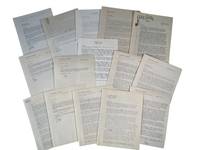
1959214711959. Gloye Eugene E. Archive of Autograph letters on Magic late 1950s to mid 1960s document the working methods technical experimentation and intellectual framework of a mid twentieth century American magician engaged in both performance and psychological analysis of illusion. Written primarily to fellow magician Don Tanner these letters provide direct evidence of how tricks were conceived refined and communicated within professional networks revealing the intersection of apparatus design sleight of hand and audience perception. Gloye's dual role as performer and psychologist situates the correspondence within broader developments in performance theory and applied psychology supporting research into the history of magic entertainment culture and the study of deception. Eugene Gloye authored 23 magic books including "For Magicians Only" "Fantastic Tricks with Plastic Cups" and "Theatrical Magic" <br /> <br /> Archive of sixteen letters spanning approximately the late 1950s through the mid 1960s containing detailed discussions of trick construction performance strategy and experimentation with materials and methods.Throughout the letters Gloye discusses numerous tricks he devised or refined often providing detailed explanations of their mechanics and performance nuances. His correspondence reveals a deep engagement with magical apparatus sleight of hand and psychological deception. One of the more detailed discussions in the letters revolves around Gloye's development of Fan-Ta-Cups which evolved from an earlier trick he had devised Fan-Ta-Bill. On September 5 1961 he describes how the trick was born: "I first got the idea for this cup trick about 14 years ago when I was experimenting with a bill trick which I eventually put on the market. The bill trick also uses a celluloid gimmick and was an adaptation of Liquid Appear. Since I thought of the cup trick at the time of my Fan-Ta-Bill I decided it was fitting to call it 'Fan-Ta-Cups.'" He further explains that while the idea had been percolating in his mind for years he hadn't developed a complete routine for it until recently. Inspired by the classic three-shell game he worked out a performance structure that he believed would make it more engaging.<br /> <br /> In a letter from July 11 1961 Gloye excitedly shares his thoughts on using hollow plastic golf balls for new magic tricks: "I am convinced that this new golf ball will open up many new trick possibilities. The fact that they come in several colors is also interesting." This suggests that Gloye was experimenting with different materials for manipulation tricks possibly related to vanishing or color-changing effects. Gloye also played with magical history concocting a hoax to see how the magic community would react. In the September 5 1961 letter he reveals his plan: "Last December I got an idea for a variation on the Tip-Over Box. It's just a slightly different way of building it. At first I was going to put it in my 'New Look' series but then as we were talking about it I commented that this trick should have been in Hoffmann. This led to the devilish idea of writing it up in Hoffmann style and publishing it in Genii as a lost page from the original book." He notes that Bill Larsen and another friend were in on the plan and they wanted to see if the trick would be accepted as a legitimate discovery.<br /> <br /> Another standout trick mentioned in the letters is Gloye's adaptation of Billy McComb's routine using a flap slate and a force deck. On January 31 1961 he explains: "My version which I tried for the first time several days ago with huge success uses one deck and a flap slate. The deck is made like a peek deck but with two cards only. All faces are the same and all concealed cards are the same. Cards which audience sees are trimmed and glued at one end to a second group of 26 duplicates." This approach ensured that the spectator would believe they had freely chosen a card when in fact the outcome was predetermined.<br /> <br /> Gloye describes modifications he made to a Head Chopper Illusion a prop widely used in stage magic in a February 23 1961 letter: "My version does not retain the Chinese theme. My blade is a simple black affair with a couple of brass stripes across it to make it look more solid. I spent a long time trying to figure out a good lock for the blades Abbott's want you to remove a couple of tacks which hold the blade and this is simply not workable. I ultimately did come up with a practical idea only to abandon it in my current routine." He explains that his routine involved swapping out the real blade for a fake setting up a comedic climax where "carrots fly in all directions" as the blade seemingly falls.<br /> <br /> This archive is a rare window into the intellectual and technical world of a magician who bridged academia and performance. Gloye's detailed notes on illusion mechanics reflections on the state of magic and collaboration with figures like Bill Larsen and Frances Marshall make this a significant collection for magic historians and collectors alike.<br /> <br /> Produced during a period of active exchange among professional magicians through correspondence and publications such as The Linking Ring these letters document how knowledge circulated within specialized communities and how innovation often emerged through incremental modification of established techniques. Gloye's attention to apparatus construction coded deception and audience management reflects broader mid century interest in performance psychology while his references to collaborators and publication strategies illustrate the role of print culture and informal networks in shaping the field. As a cohesive manuscript archive the letters preserve the technical language and creative process underlying stage magic offering a detailed record of mid twentieth century illusion practice. Light wear and handling consistent with age with legible manuscript throughout; overall condition very good. unknown
1801306156London: Printed for G. Kearsley Fleet Street; Bell and Bradfute Edinburgh; and Brash and Reid Glasgow by W. Glendinning 1801. First English edition. xix i errata 397 3 publisher's ads pp. 8vo. Contemporary half leather over gray paper-covered boards. Covers worn joints cracked but sewing sound lacking spine label text block roughly trimmed occasional light soiling along lower blank margins. Remnant of contemporary bookplate. In a custom redpaper slipcase and matching chemise. First English edition. xix i errata 397 3 publisher's ads pp. 8vo. The first English edition of this quite unusual and very entertaining compendium of conundrums problems parlor tricks and "interesting facts" - it is actually much more fun than the title would seem to suggest. The first French edition was published in London in 1799 under the title Choix d' amusements physiques et mathématiques. The work includes tricks with cards magic squares magic lanterns feats of artificial memory and proto-spiritualist conjuring through "palingenesy" by which a performer can make the images of the dead appear in a glass jar plus other optical illusions. A large collection of mathematical and physical curiosities including chapters on arithmetic "To arrange 30 criminals in such a manner as to save 15 of them &c." "A lady lamenting that her age was triple that of her daughter" and amusing "secrets" "To make people in a room have a hideous appearance". Toole Stott 240 Printed for G. Kearsley, Fleet Street; Bell and Bradfute, Edinburgh; and Brash and Reid, Glasgow, by W. Glendinning unknown
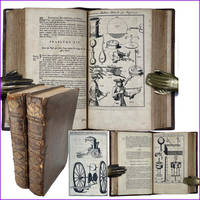
169628<p>the forerunner of mathematical recreations and its use in the art of illusionism and magic</p><p>an early manual for the first "mentalists"</p><p>Ozanam Jacques<strong>.</strong> <em>Recreations mathematiques et physiques VOL I. </em>Amsterdam: Gallet 1696.</p><p>Togheter with</p><p>Ozanam Jacques<strong>.</strong> <em>Recreations mathematiques et physiques VOL II. </em>Paris : Jombert 1696.</p><p>2 volumes in 8vo 188x120 mm contemporary calf with gilt decorations at spine pp. 16 265 1; 266-583 25 the last is blank. Engraved title-page.</p><p>Second edition of the forerunner of modern books on mathematical recreations including illusionism mentalism fireworks conjuring sundials and clocks.</p><p>84 engraved folding plates 45 first Vol. 39 second that support the solution of mathematical arithmetic geometric optical or cosmographic problems or that visualize the mechanism of a clock.</p><p>Scarce second edition 1st published in 1694 of the first work on recreational mathematics. This is one of the most popular books on the subject dealing among the other subjects with fireworks conjuring and presenting in vol. 2 a translation of Domenico Martinelli's treatise on clocks printed in Venice in 1663 p. 473</p><p>The volumes are divided into 9 topics</p><p>Vol 1: 1 Arithmetic 2 Geometry 3 Optics 4 Gnomonics and 5 Cosmography.</p><p>Vol 2 6 Mechanics 7 Pyrotechnics 8 Physics and 9 the translation Martinelli treatise on Watches.</p><p>For each topic Ozanam presents a series of problems with the various possible solutions described and often illustrated</p><p>Among the problems of mechanics Ozanam describes and illustrate a form of transport that foreshadows the automobile: behind the driver who holds reins in his hands stands a valet who activates with his feet two spring-loaded boards giving the carriage its impetus playing the role of a modern engine.</p><p>Most of the chapter about arithmetic is dedicated to the art of illusionism and mathematical games. A long chapter is dedicated to magic squares from pp. 36 on but many are the tricks described always in the form of a problem/solution which today are attributed to a kind of illusionism called <strong><em>mentalism</em></strong> a form of illusionism whose practitioners through techniques such as <em>cold reading</em> or <em>hot reading</em> give the illusion of being able to read others 'minds demonstrating supernatural or at least highly developed mental and intuitive ability.</p><p>In their performances mentalists give the impression of being able to exercise telepathy clairvoyance divination precognition psychokinesis mediumship mind control hypnosis prodigious memory and rapid mental calculation.</p><p>Among the games described in the text that can be accounted under this category we remember for example:</p><p>Problem XII: Thrown two dice how to guess the values on the top two sides without looking at them.</p><p>Problem XIV: Guessing a number that someone has chosen by asking him questions</p><p>Problem XVI: Guessing a number someone has chosen without asking them questions</p><p>problem XX: Guess how many coins a spectator hides in his hands</p><p>Problem XXVIII: Given three known playing cards and three spectators guess which card each one has chosen.</p><p>problem XXXI: Among different cards arranged on three decks how to guess which one the spectator has chosen</p><p>and many others.</p><p>Jacques Ozanam 1640 - 1718 was a French mathematician.</p><p>Although his father pushed him toward an ecclesiastical career he was much more attracted by science and mathematics that continued to study as a self-taught. At the age of 15 he was able to write a treatise on mathematics but his father induced him to enroll in courses in theology despite his little inclination for the priestly life. After four years of theological studies his father died and he returned to scientific studies.</p><p>In 1670 he published trigonometric and logarithmic tables more accurate than the existing Ulacq Pitiscus and Briggs works and numerous and well received mathematical publications.</p><p>In particular he had great success with <em>Dictionnaire mathématique</em> the five volumes of the <em>Cours de mathématiques</em> and <em>Récréations mathématiques et physiques </em>; his manuscript entitled <em>Les six livres de l'Arithmétique de Diophante augmentés et reduits à la spécieuse</em> received commendations from Leibnitz himself.</p><p><em>Récréations mathématiques et physiques</em> was also successful in the English translation and is still well known and looked after today.</p><p>He was elected a member of the <em>Académie Royale des Sciences</em> now <em>Académie des Sciences </em>in 1701. The death of his wife plunged him into deep sorrow and the loss of his foreign pupils through the War of the Spanish Succession reduced him to poverty.</p><p>Conditions: light marks of use at bindng in general very good condotions</p><p>Provenance: Paper ex-libris pasted at title page of both volumes " Engeg. Gio Battisa Carraca.</p>
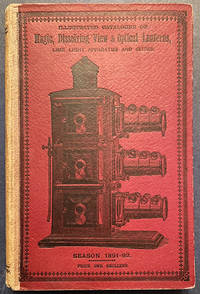
1891BB112<i>Magic Lantern Catalogue<br /></i><br /><b><i>Illustrated Catalogue of Magic</i></b> Dissolving View & Optical Lanterns Lime-light Apparatus and Slides. <br /><br />Rare generic trade catalogue for the entire industry almost certainly <br /><br />London 1891-92 but without imprint. <br /><br /><i>Wood-engraved illustrations of magic lanterns accessories and occasionally the projected image. <br /></i><i><br />8vo. 352 pp. with </i><i>detailed listings of sets of slides all with prices and various types of magic lanterns with optical projections a few pages browned pp 44/45; </i><i>original pictorial cloth lettered in black a little rubbed front cover beginning to warp. </i> No imprint, hardcover
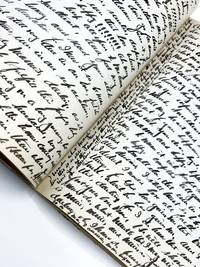
191745784Ithaca NY: n.p. 1917. Very good plus. Original manuscript journal containing the wildly ardent lovelorn musings of "Magie" to "Margie" written while waiting for the finalization of Margie's divorce. To call "Magie's" love for "Margie" superlative would be an understatement: his writing in this journal is comprised of verbose expressions of fondness and adoration for her "the only blessed wonderful loyal fine sweet true adorable lovable precious beautiful altogether lovely incomparable perfect little woman in God's great universe whom I ever have ever can really love!!!!!!!!!" Magie's enthusiasm even bleeds into the margins of some leaves where he has written additional missives around the main text. <br /> <br /> Who is the lovesick "Magie" the author of this manuscript journal that positively oozes with pent-up emotion and who is the "Margie" for whom he so desperately pines Magie's remark that "our marriage . will be so far different from the marriages we knew that they will seem like a bad dream" as well as several references to the day when Margie will be "legally free" to "give and receive" love indicate that both parties had been married previously and that Margie was likely still in the divorce process or the remarriage waiting period when this journal was written. The US divorce rate in 1917 was just 1.2%; this borderline-taboo action often had dire social consequences for the parties involved particularly the women and a state- or self-imposed period of waiting before remarriage was not unusual. Magie apparently spent this separation in varying degrees of agony emptying his evidently very full heart into this journal almost every day from May 28th to July 22nd. <br /> <br /> The lovebirds remain somewhat elusive in official records despite several tantalizing pieces of information nestled within Magie's lovelorn ramblings: references to "this fearful year" which in addition to a mention of a state military census pins the date of this journal pretty convulsively to 1917 which was "three quarters of the way through" by July 19th his occupation as a lawyer and the address 302 N. Cayuga Street a location Magie calls "our office". That address is sometimes listed as the location of a local Ithaca restaurant The City Cafeteria but more frequently as the longtime residence of prominent citizen and noted Wordsworth collector - her collection was donated to Cornell Cynthia Woodward Morgan St. John. Her son Edward Morgan St. John Cornell 1911 Cornell Law 1913 did work as an attorney and in the records of his 1919 marriage to Ruth Cronk he lists at least one and possibly two previous marriages though we find only a 1910 marriage to Lena Marie Smith. Cronk however does not. Which suggests perhaps sadly that "Margie" if she existed at all did not get her happily ever after. Nevertheless a compelling document overall and a vivid vernacular portrait of limerence. 10.25'' x 7.5''. Original cloth-backed marbled boards with printed label to front board hand-lettered "I". 94 manuscript leaves written both recto and verso. Boards with light edgewear. Hinges a touch cracked. Tight and clean. n.p. unknown
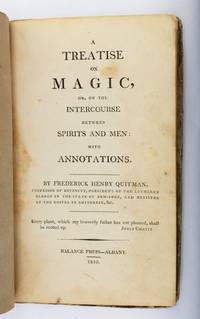
1810ST17557<p>Albany New York: Balance Press 1810. FIRST EDITION. 170 x 103 mm. 6 3/4 x 4". vi 76 pp. Errata slip tipped onto final page. <br />Contemporary marbled boards backed with sheepskin smooth spine divided into panels by single gilt rules. Front free endpaper with bookplate of the Ricky Jay Collection. Front pastedown with neat early owner's signature pencilled initials "M. A." in a juvenile hand adjacent to a rudimentary pencil sketch of two people; rear pastedown with pencilled signature of Sally E. Original errata slip pasted onto bottom half of final page the slip defective at lower left corner. Sabin 67364; Shaw & Shoemaker 21169. Sheepskin a bit rubbed marbled paper boards somewhat chafed stained and quite worn at corners endpaper a bit spotted torn or at back missing other minor defects but the unsophisticated original insubstantial binding still solid. Title page and front flyleaves with light dampstain to gutter and tail margin a little foxing and faint browning other imperfections but the volume still generally clean and surprisingly fresh despite its cheap paper.<br /><br />Written by a Lutheran minister in upstate New York this entertaining treatise gives a brief history of the supernatural from ancient times to the present day and seeks to educate the audience about the dangers and follies of harboring magical beliefs noting that "witchcraft can never take root unless it be supported by credulity." According to the author's preface Frederick Henry Quitman 1760-1832 was motivated to write this work after a neighbor's home was besieged by supposed "supernatural" occurrences that included thrown stones and theft. Even though Quitman a staunch skeptic endeavored to attribute the activity to mischievous entities of the human variety the damage had been done: "Scarcely had the rumour about the forementioned witchcraft a little subsided when we heard the report of the appearance of apparitions in several quarters of the town. And it is really to be feared that during this dull winter all the corners of the town for want of other employment will be infested with demons." The Annotations at the end of the book contain many amusing definitions and descriptions of such things as talismans popular magic gothic novels and ventriloquists. Our copy was owned by the eminent magician actor writer scholar and sleight of hand artist Ricky Jay 1946-2018. In their catalogue Sotheby's notes that "Ricky Jay's accomplishments were as varied as are the formats and subjects of the material in his celebrated Collection . . . . He is one of the very select company of persons who assembled a collection of the very first rank in a field in which he was not only a world-renowned practitioner but also a scholar of considerable note." Our 1810 printing--the only early edition of this work--is rare on the market with RBH recording just four copies at auction in more than 60 years.</p> Balance Press
2000010348New York: Knopf 2000. First American edition of book 3 of the "His Dark Materials" trilogy; A most acceptable copy; 518pp. First U.S. Edition. Hard Cover. VG/VG. Knopf Hardcover
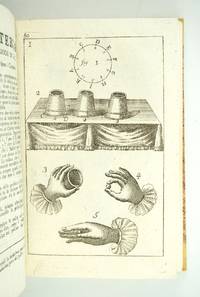
1795ST20614Venice: Giuseppe Orlandelli 1795. Fourth Edition. 180 x 114 mm. 7 x 4 5/8". 154 pp 1 leaf. <br/> Pedestrian 19th century half vellum over pink marbled paper boards smooth spine with old ink lettering. WITH 16 ENGRAVED PLATES SHOWING MAGIC TRICKS and numerous diagrams in the text. Tomash & Williams A56; Riccardi I 15. Marbled paper a little chafed title washed first and last leaf a bit soiled and with repairs at inner and outer margins but no text affected half a dozen other leaves with minor repairs or mounted isolated small smudges or corner creases but still an acceptable copy of a book expected to be found in poor shape--the text clean the impression of the engravings crisp and the binding solid.<br/> <br/> This is a pleasing copy of a rather scarce collection of mathematical puzzles magic tricks and illusions abounding with illustrations and diagrams. Our author Bolognese architect and engineer Giuseppe Antonio Alberti 1712-68 had a varied career which is reflected in his literary output: his publications discuss civil engineering pyrotechnics mathematics and factories among other topics. Described by Tomash and Williams as "the type of book that mischievous uncles like to own" the present work begins with a study of amusing and unusual arithmetic equations and puzzles before discussing magic tricks and illusions including card tricks dice games and even complex stage illusions involving specialized equipment. These are illustrated with a series of delightful copper engravings with labelled mechanisms sometimes operated by lively little figures or disembodied hands with ruffled sleeves. "Giuochi" was first published in Bologna in 1747 and remained in print for a further 20 years after the present edition. Because this is the kind of book that would have been subjected to uncareful use early editions are difficult to find in the attractive condition seen here. Giuseppe Orlandelli unknown
82273No place 19th century. original paste-grain paper-covered stiff wrappers side stitched. Old ink ownership name; ink and pencil drawings on rear endsheet; wrappers chipped and rubbed. 16mo. Illustrated from hand-colored engravings drawn from various published books. See Ricky Jay Magic Magic Book. An Enquiry into the Venerable History & Operation of the Oldest Trick Conjuring Volumes Designated "Blow Books." "Blow books" are among the earliest recorded magic props handmade and artfully constructed with subtle variations along the fore-edge to allow the performer to selectively flip through the leaves in a variety of ways in order to create the illusion that the contents of the book have been transformed. unknown