532 résultats
82258France 19th century. original decorated paper-covered boards with printed paper label on spine and applied illustrations printed in gold on front and rear panels. . Upper joint rubbed; very nice operating condition. 12mo. Illustrated from hand-colored engravings drawn from various published books. See Ricky Jay Magic Magic Book. An Enquiry into the Venerable History & Operation of the Oldest Trick Conjuring Volumes Designated "Blow Books." "Blow books" are among the earliest recorded magic props handmade and artfully constructed with subtle variations along the fore-edge to allow the performer to selectively flip through the leaves in a variety of ways in order to create the illusion that the contents of the book have been transformed. hardcover
1947D10934America 1947. Cloth-covered 3-ring binder American manufactured covers illustrated in black marker with drawings of top-hats an ace of spades an eight ball faces names and maxims "Flunk Early Avoid the Rush" "Here's Your Hat What's Your Hurry". The inside front cover bears our author's name "Budd Leader Sophomore 1st half" as well as a cloud of girls' names Joan Ginger Darlene Sally Betty Roberta et al perhaps referring to his lovely assistants -- women who put birds back in their cages who comforted newly hatless rabbits who were sawn in half or who otherwise gave themselves to magic. This distinctly American binder is bursting with 382 tricks handwritten in ink in tidy script on lined paper most of them accompanied by careful pencil drawings demonstrations of steps and techniques on small leaves of onion skin paper stapled to the trick they describe. Extremities bumped and cloth a bit frayed; boards warped see aforementioned "bursting" I wasn't joking with a few small spots of soiling. Top ring of binder doesn't close all the way ahem bursting so a few pages have come loose but could be easily reinforced if one were so inclined. Contents are bright and clean perfectly legible pleasing to behold and -- one assumes -- hitherto privileged information. <br/><br/>Includes tricks with cards rope dice balloons sleights of hand mind reading break-away cabinets and so much more. Though some of the illusions strike this cataloguer as enticingly practical "How to be Marvelous without Skill" "The Vanishing Alarm Clock" many of the illusions seem quite advanced and particular to the world of magic "Second Sight Extraordinary" "Mind Signals" "You Do As I Do". Though little can be found on Budd Leader now he was clearly a high school student of some talent and considerable dedication. A quintessential distinct volume. Remarkable. hardcover
188634453London: George Redway 1886. Very Rare First Edition. Illustrated within the text with various symbols relating to magic and the genre. 8vo bound in early half-calf over marbled paper covered boards. xliii 1 349 1 pp. A rare survival the text-block quite clean and very well preserved the binding with evidence of use and age with rubbing to the extremities. VERY RARE AND THE TRUE FIRST EDITION VERY SELDOM ENCOUNTERED IN COMMERCE. Perhaps the first truly significant publication of Lévi's work in the English language. R. A. Gilbert tells that Waite was fascinated by the quotes from Lévi that he read in Blavatsky's "Isis Unveiled" 1877 and that Waite promptly acquired a copy of Lévi's major work "Dogme et Rituel de la Haute Magie" which he began translating into English. In 1885 Waite suggested to the prominent Theosophist A. P. Sinnett that an anthology of Lévi's writings based on these translations would make a good book. Sinnett evidently agreed and recommended him to the publisher George Redway who took on the project thus beginning what would turn out to be a lengthy collaboration with Waite. In addition to translating and editing Lévi's essays Waite contributed a Biographical and Critical Essay. Gilbert B1. Weiser <br> In the preface to The History of Magic Waite enumerates what he believed to be the nine key tenets of magic as codified in Levi's earlier work Doctrine and Ritual of Transcendental Magic.<br> They are: 1 There is a potent and real Magic popular exaggerations of which are actually below the truth. 2 There is a formidable secret which constitutes the fatal science of good and evil. 3 It confers on many powers apparently super-human. 4 It is the traditional science of the secrets of Nature which has been transmitted to us from the Magi. 5 Initiation therein gives empire over souls to the sage and full capacity for ruling human wills. 6. Arising apparently from this science there is one infallible indefectible and truly catholic religion which has always existed in the world but it is unadapted for the multitude. 7 For this reason there has come into being the exoteric religion of apologue parable fable and wonder-stories which is all that is possible for the profane : it has undergone various transformations and it is represented at this day by Latin Christianity under the obedience of Rome. 8 Its veils are valid in their symbolism and it may be called valid for the crowd but the doctrine of initiates is tantamount to a negation of any literal truth therein. 9 It is Magic alone which imparts true science. Levi<br> The three chief components of Levi's magical thesis were: Astral Light the Will and the Imagination. <br> "Eliphas Lévi" the name under which he published his books was his attempt to translate or transliterate his given names "Alphonse Louis" into Hebrew .In 1854 Lévi visited England where he met the novelist Edward Bulwer-Lytton who was interested in Rosicrucianism as a literary theme and was the president of a minor Rosicrucian order. With Bulwer-Lytton Lévi conceived the notion of writing a treatise on magic. This appeared in 1855 under the title Dogme et Rituel de la Haute Magie and was translated into English by Arthur Edward Waite as Transcendental Magic its Doctrine and Ritual . Its famous opening lines present the single essential theme of Occultism and gives some of the flavor of its atmosp:Lévi's version of magic became a great success especially after his death. That Spiritualism was popular on both sides of the Atlantic from the 1850s contributed to this success. His magical teachings were free from obvious fanaticisms even if they remained rather murky; he had nothing to sell and did not pretend to be the inititate of some ancient or fictitious secret society . He incorporated the Tarot cards into his magical system and as a result the Tarot has been an important part of the paraphernalia of Western magicians. He had a deep impact on the magic of the Hermetic Order of the Golden Dawn and later on the ex-Golden Dawn member Aleister Crowley . It was largely through the occultists inspired by him that Lévi is remembered as one of the key founders of the twentieth century revival of magic." wiki<br> Arthur Edward Waite was a scholarly mystic who wrote extensively on occult and esoteric matters and was the co-creator of the Rider-Waite Tarot deck. As his biographer R.A. Gilbert described him "Waite's name has survived because he was the first to attempt a systematic study of the history of western occultism — viewed as a spiritual tradition rather than as aspects of proto-science or as the pathology of religion." Waite was a prolific author with many of his works being well received in academic circles. He wrote occult texts on subjects including divination esotericism Rosicrucianism Freemasonry black and ceremonial magic Kabbalism and alchemy ; he also translated and reissued several important mystical and alchemical works. His works on the Holy Grail influenced by his friendship with Arthur Machen were particularly notable. wiki George Redway hardcover
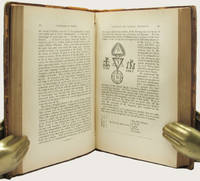
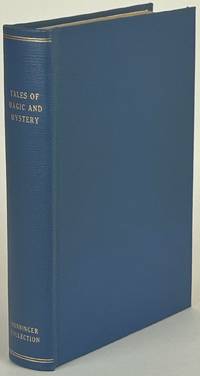
192731906Camden NJ: Personal Arts Company Publishers 1927-1928. Issues slightly trimmed for binding otherwise quite fine with little tanning to text paper mostly cream colored. At the base of the spine is stamped "Dunninger Collection." A lovely presentation. 31906. Octavo five issues pictorial wrappers bound in blue boards with gold stamping to spine. A bound volume of all five issues that were noted magician Joseph Dunningers copy with his signed name and also inscribed and signed by editor/author Walter Gibson to Joe Dunninger. Gibson wrote several books about magic for Dunninger they were lifelong friends. This is likely a presentation volume to Dunninger. Tales of Magic and Mystery was a short lived magazine which published stories and articles about magic and the occult as well as some short fiction. The March 1928 issue published the H. P. Lovecraft short story "Cool Air." Other authors of fiction include Frank Owen Miriam Allen de Ford Archie Binns Robert Leslie Bellem and others. Gibson wrote most non-fiction material under his own name and also using the pseudonyms Alfred Maurice and Bernard Perry. Personal Arts Company, Publishers unknown
1833ST12867New York: N. C. Nafis 1833. 144 x 85 mm. 5 5/8 x 3 3/8". 71 pp. <br/> PUBLISHER'S ORIGINAL GRAY-GREEN PRINTED BOARDS upper cover with titling and an illustration of a gentleman identified as the author lower cover with two amusing woodcuts "The Lawyer and his Client" a bewigged gentleman astride an ass and "Hocus Poke-us" two boys fighting. In a brown cloth chemise and a slightly rubbed matching calf-backed slipcase. With a folding frontispiece depicting a conjurer and his assistant onstage before an amazed crowd. Toole-Stott 724. ◆Small stains at top and bottom of spine covers just slightly grubby endpapers a bit browned text with light inoffensive foxing but for what it is AN UNUSUALLY FINE COPY the fragile binding entirely sound and the text remarkably fresh and clean.<br/> <br/> Given the materials it was made from and the hard use it would have been expected to suffer this is an exceptionally well-preserved copy of a popular handbook of conjuring tricks an early American edition of a work first compiled in 1722 by the British magician Henry Dean. Dean's work was itself based on Reginald Scot's influential "Discoverie of Witchcraft" 1584 which sought to discredit belief in "supernatural" forces by exposing the tricks by which conjurers deceived their audience. In the publications of Dean and subsequent editors this exposé of witchcraft evolved into a guide for performing parlor tricks. Our edition is a reprint or reissue of the 1831 version published by R. Schoyer; because the word "renowned" is spelled "renowed" on both title pages Toole-Stott speculates that Nafis bought sheets from Schoyer suggesting that our item would have been a reissue. These insubstantial guide books typically experienced considerable uncareful use in the hands of amateur and often juvenile magicians; consequently the few copies that do appear on the market are in deplorable shape. N. C. Nafis unknown
159183N.p.: N.p. 1970. Substantial archive of material belonging to Austrian-American stage hypnotist and magician John Kolisch including two three-ring card binders with typescript and manuscript notes for Kolisch's live shows and 271 vintage photographs of Kolisch in performance. Archive appears to date from the 1950s through the 1970s the heyday of Kolisch's career. <br /> <br /> One binder holds notes and scripts for Kolisch's magic tricks powers of suggestion and general show patter and jokes while the other binder focuses primarily on feats of hypnosis. The binders hold a variety of material relating to Kolisch's performances a mix of more formal typed scripts for routines alongside manuscript draft notes and annotations noting potential "ad-libbed" interjections. Several pages capture Kolisch recording his ideas for changes to the pacing and setup of his shows as well as reminders about modernizing his patter and updating his celebrity references. <br /> <br /> Although the bulk of Kolisch's material is undated earlier acts appear to reference specific actors films or shows such as opera singers or the television show "Cavalcade of Stars" while later routines simply note the names of prominent contemporary actors and celebrities to insert at random. Kolisch who billed himself as "The Fastest Hypnotist in the World" apparently used a blend of serious hypnotism stage magic and standup comedy in his shows and accordingly an entire binder section labeled "Funny Lines" is devoted to ripostes and one-liners. These zingers cover every performance eventuality from hecklers "Have you ever been to the zoo I mean as a visitor" to a silent audience "Well they say a silent tribute is the sincerest of them all!". <br /> <br /> The archive's considerable collection of photographs captures the spirit and energy of Kolisch's live shows with audience members engaged in a number of humorous activities-stripping saluting yelling and singing dancing acting as human furniture kissing and hugging each other playing musical instruments such as maracas and the ukulele-or simply sleeping. Several photographs bear Kolisch's name and company address in Jackson Heights New York in the recto margins an address that also appears in Kolisch's company letterhead on many of his show notes. <br /> <br /> Included in the archive are 17 contact sheets capturing images from performances and portrait photographs of Kolisch. Also included are two gatherings of typescript and copied material related to Kolisch's lectures on "dynamic auto-conditioning" and "dynamic auto-suggestion" with many pages annotated by Kolisch in manuscript ink or pencil. Archive also features a 17-page bound treatise titled "Your Incredible Subconscious Mind" published in 1956 by the "Subconscious Research Institute" an organization possibly created by Kolisch himself.<br /> <br /> Photographs range in size with the majority measuring 10 x 8 inches. Near Fine to Very Good plus with occasional edgewear and creasing. <br /> <br /> Binders contact sheets lecture material and treatise Near Fine to Very Good plus with some light edgewear creasing and soil on binder exteriors. N.p. unknown
1900G1ADNMOA0S9LKopenhagen 1900. Housed in the original publisher's wooden boxes. Includes 2 original projectors and 1 camera. More than 400 glass slides depicting various motifs related to coal mining chemical processes and astronomy as well as topographical motifs from Asia Africa China Europe and America. Remarkable all-encompassing collection of turn-of-the-century magic lantern slides. Several of the slides show cavalry horses: the "Krigen 1848-1864" set includes no. 45 an equestrian portrait of General Bülow victor of the 1849 Battle of Fredericia painted by Aug. Jerndorff; no. 29 Friedrich von Schleppegrell riding at the battle of Isted; no. 26 General Krogh on horseback all V. Richter Kopenhagen; no. 20. captioned "Pferdeablieferung" horse delivery.A box lebelled "København" includes: no. 21 Brandmajoren rykker ud; no. 20 a fire at the time of King Frederik VI of Denmark d. 1839.Other slides show workhorses in Denmark and Sweden during haying-time or spreading manure as well as works of the Danish painter Otto Bache: the Coronation of Christian IV in 1596; the conspirators escaping from Finderup on horseback after having murdered Eric V of Denmark in 1286. The collection also contains copies of paintings by various artists such as Leonardo da Vinci Raphael and Rembrandt. Among the remaining slides we find astronomical illustrations and pictures of observatories Greenwich Delhi Potsdam etc.; as well as numerous photographs and paintings of landscapes people and architecture in Africa Asia Europe China and America. unknown