Ulrich MolitorLivre Rare Book

2 354 résultats
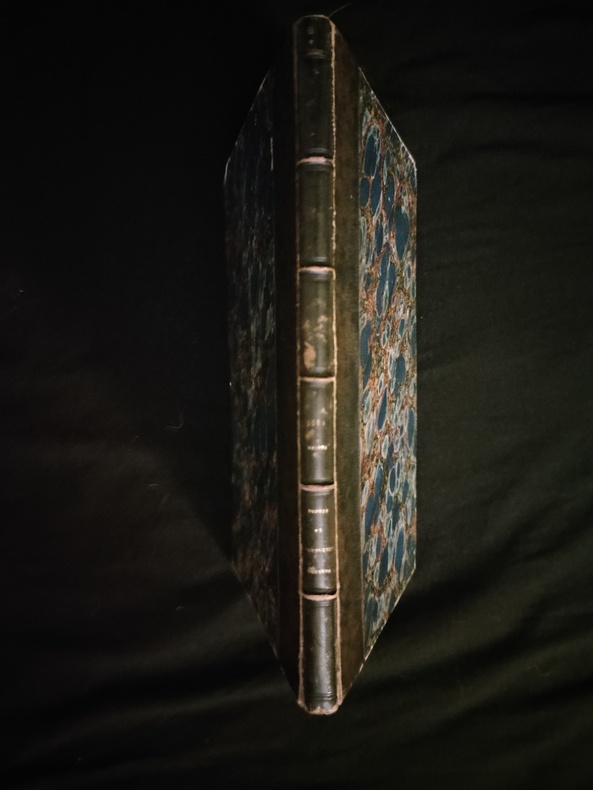
1561GEJ-10Paris, apud Gilles Corrozet, 1561, [1], 40, [1] pp, 8°. Book in Latin. RARE AND UNCOMMON ON THE MARKET FIRST PARISIAN PRINTING! 17/18 century full calf binding, gold lettered spine, marbled endpapers, owner's ex libris of Emeric Bigot (?) on title page. Good antiquarian condition, woodcut printers device to title, woodcut initials. Few stains and discolorations. Complete. Published in Paris by Gilles Corrozet in 1561, this rare edition of Ulrich Molitor’s Tractatus de lamiis et pythonicis stands as a definitive cornerstone of early occult literature and a fascinating, skeptical counterpoint to fanatical witch-hunting manuals like the Malleus Maleficarum. Written by a prominent German jurist, the treatise is historically significant for its early skepticism, as Molitor boldly argued that supernatural acts like shape-shifting or flying to sabbaths were merely illusions and dreams induced by the Devil rather than physical realities. This text is equally famous for containing the earliest printed depictions of witches, establishing the modern iconography of the occult through striking woodcut imagery that includes scenes of witches brewing storms in cauldrons, a wizard riding a wolf, and the Devil corrupting a woman. Composed as a direct response to Europe's rising witchcraft hysteria, this treatise introduces cold legal logic and canonical jurisprudence into a debate previously dominated by religious fanaticism. Moving away from dry academic lecturing, the text adopts the dynamic structure of a scholarly dialogue between three real historical figures: Archduke Sigismund of Austria, the ruler of Tyrol, who acts as the voice of skepticism by raising logical doubts and challenging the validity of witch trials; Conrad Schatz, the magistrate of Constance, who champions the strict, traditional view by defending the physical reality of witchcraft and demanding harsh punishments; and Ulrich Molitor himself, the author, who serves as the impartial arbiter utilizing Roman and Canon law to systematically resolve the disagreements between his interlocutors. Ulrich Molitor (c. 1442–1507) was a pioneering German jurist, humanist, and diplomat who shaped early modern legal thought. After studying humanities in Basel, he earned a prestigious doctorate in civil and canon law from the University of Pavia, positioning him at the forefront of Renaissance jurisprudence. He spent the pinnacle of his career as a trusted legal advisor to Archduke Sigismund of Austria in Innsbruck and later served as chancellor to the Bishop of Worms. Molitor’s enduring legacy is his 1489 masterpiece, Tractatus de lamiis et pythonicis, which stands as one of history's earliest legal critiques of witch-hunt fanaticism. By utilizing rigorous Roman and Canon law to argue that witchcraft was largely a demonic illusion, he became a vehement opponent of judicial torture, forever marking his place as a trailblazer of European rationalism. Provenance: Emeric Bigot (?) - Ex Libris: Emeric Bigot (1626–1689) was a prominent French humanist, bibliophile, and a central figure in the 17th-century European intellectual network known as the Respublica Literaria (Republic of Letters). Born and based in Rouen, he used his substantial wealth to amass one of the most legendary private libraries in Europe, renowned for its rare Greek and Latin manuscripts and early printed books. Though he published little under his own name—focusing primarily on editing early Christian texts—Bigot served as an indispensable international scholarly coordinator. He maintained a vast correspondence with major thinkers like John Milton and Nicolas Heinsius, utilizing his unparalleled bibliographic expertise to source texts, verify translations, and generously assist scholars across the continent in preparing their own monumental works for print. Bibliography: Herbert M. Adams, M 1573; USTC, 153205; Pettegree i Walsby, 153205, only found in one US institution (Yale University, Beinecke Library), Not in VD 16, Yve-Plessis, Dorbon-Aîné and Bibliotheca Esoterica; Caillet, II, 7641; Grässe, p. 55; Bibliotheca Daemonologica (Robbins).
1555GEJ-11Pescia: Lorenzo Torrentino, 1555, 4to, [13] 18-126 [1] of colophon 1 blank. Book in Italian. 1st Italian Edition (2nd overall) of this rare demonology tratise. Later (18/19 .century) later half morocco with gold lettered spine and blank pages. Marbled endpapers. Architectural woodcut border on title-page with a small view of Florence and with Medici coat of arms. Woodcut initials, woodcut vignette on verso of A4. Colophon leaf at end. Very ginuine interior, clean, without marks, annotations, stamps and ex libris. No foxing and stains. Complete. First Italian edition and the first translation from the 1523 Latin original by Turino Turini, marking the earliest book on witchcraft printed in the Italian vernacular. While the dialogue format reinforces the grim theological framework of the Malleus Maleficarum and contemporary inquisitorial manuals regarding sabbaths and demonic pacts, it stands apart for its erudition. By sophisticatedly weaving classical and pagan citations into medieval scholastic precepts, Pico della Mirandola effectively pioneered the "humanistic literature of witchcraft," bridging Renaissance intellectualism and counter-reformation demonology. The work embodies the Renaissance approach to demonology, demonstrating how a humanist could substantiate the reality of witchcraft, transvection, and the sabbath using classical sources alongside scripture and inquisitorial manuals. Ultimately, the early modern obsession with demonology is presented not as an irrational residue of a rational age, but as a foundational conceptual nexus essential to understanding sixteenth-century philosophy. Bibliography: Censimento 16 CNCE 34704; Riccardi II, 281; Moreni, Annali della tipografia di Lorenzo Torrentino, s. 394; Sander 5688; Graesse V, 283; USTC No. 848435; Caillet 8654; Encyclopaedia of Witchcraft 2006.
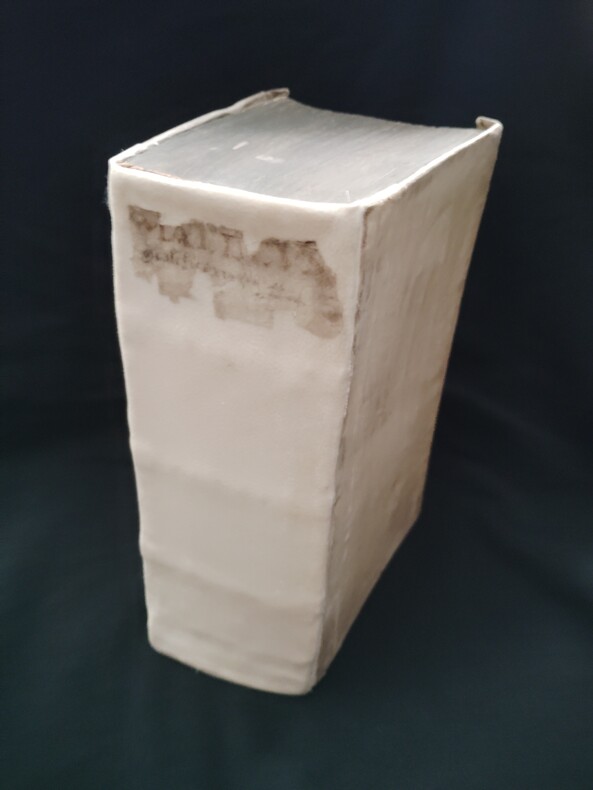
1620GEJ-1France, Lyon, Claude Landry, 1620. In-8. Text in Latin. 2 volumes of 3 complete itself. Last part dated 1621 under title: Daemonomastix sive Vniversi operis adversus daemones et maleficos ad vsum praesertim exorcistarum concinnati, is not included. Colation: V 1: title page in black and red, indexes and 544 p.: Henricus Institoris & Jakob Sprenger - Malleus maleficarum : maleficas et earum haeresin framea conterens... 2. Fr. Ioannis Nideri - Formicarum de maleficis, & earum praestigiis ac deceptionibus... V2.1: title page in black and red, indexes and 317 p.: 3. Bernhardi Basin - Opusculum de artibus magicis ac magorum maleficiis. 4. Vlrici Molitoris - Dialogus de lamiis, & Pythonicis mulieribus. 5. Ioannis de Gerson - Libellus de triale spirituum. 6. Thomas Murner - Libellus de Pythonico contractu.7. Bartholomaei de Spina - Quaestio de strigibus seu maleficis. 8. Io. Franciscum Ponzinbium - De lamiis, apologia prima [-quarta]. V2.2: title page in black and red, indexes and 506 p.: 9. Joan. Laurentii Ananiae - De Natura daemonum. 10. R.P.F. Bernardi Comensis - Tractatus de strigibus, cum notis Franc. Pennae. 11. Ambrosii de Vignate - Elegans ac utilis quaestio de lamiis seu strigibus. 12. Joan. Gersonii - Tractatus de erroribus circa artem magicam et articulis reprobatis. 13. Joan. French Leonis - Libellus de sortilegiis. 14. Jacobi Simancae - Titulus unicus de lamiis. 15. Alphonsi a Castro, Zamorensis - de Impia sortilegarum. 16. Pauli Grillandi - Tractatus de sortilegiis eorumque poenis. A collected edition of the most famous book about witches ever written including other works dedicated to occult topic. 16 extremely rare treatises on demonology and witchcraft in a single binding in three parts! Over 1,300 pages, 3 separate title pages, tables of contents, and indexes. Complete 1620 edition itself. Internal condition: very good. Binding: good. Professionaly restored parchment on the spine. Solid antiquarian condition. Bibliography: The Encyclopedia of Witchcraft and Demonology, Robbins, 1964; Not in Caillet, Dorbon, Yve-Plessis or Bibliotheca esoterica; USTC 6902887. Provenance: XVII c. - Chistophori Solarij U.I.D. & Bibliothecae Slacoverdensis Scholarum Piarum.
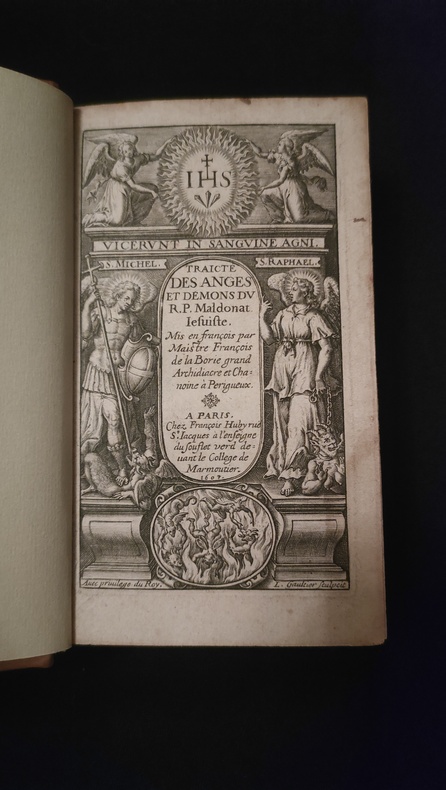
1607GEJ-7A Paris: chez Francois Huby, 1607. Book in French. In-12. Engreved title page in black, 7 sheets unnumbered and 242 numbered sheets. Later XIX c. full brown blind stamped calf. Gold lettering and ornamenting spine, red lables. Red paper edges. Clean ecrue endpapers. Nice ornameting and lettering, initial letters, some light browning and few water stains inside. Otherwise very clean without any anotations, marks or stamps. Complete. 2nd rare edition (First, 1605) of interesting and influential work on demonology and angelology. Very uncommon issue on the market. Rare in any edition. Tratise deals with the angels' names, their immortality, movement and the power by Spanish Jesuit theologian Juan de Maldonado (1533-1583). Juan Maldonado was a scholar and demonologist known for his profound knowledge of ancient languages. "Traicté des anges et demons" is a translation of some lectures of Maldonado, collected and translated by Canon Fr. Arnault de La Borie (1525?-1607) in 1605 and published in the same year in French. Bibliography: Coumont M:11.8., Wellcome I:3996., Not in Caillet (other ed. 7042), USTC No. 6024485. Provenance: No markings (?).
13464La philosophie Occulte.Divisée en trois livres et traduite du latin. Deux tomes en deux volumes in 8 (185x110mm) plein cuir fauve glacé d’époque, à nerfs, titre, roulette, tomaison, filets,caissons, palmettes dorés, roulette dorée sur les coupes. Tome premier : titre avec figure gravée, XX, 427 pages. Tome deuxième titre avec figure gravée, 317 pages, tranches rouges Nombreux tableaux et figures cabalistiques gravés, dans le texte et 12 planches gravées hors texte certaines dépliantes, nombreux bandeaux et fleurons gravés. Première édition de la traduction française par A.A Levasseur. A Lahaye chez R.Ch Alberts 1727. Très bon état. Fort rare. Caillet 95. « capital pour l’étude de la science occulte » DORBIN
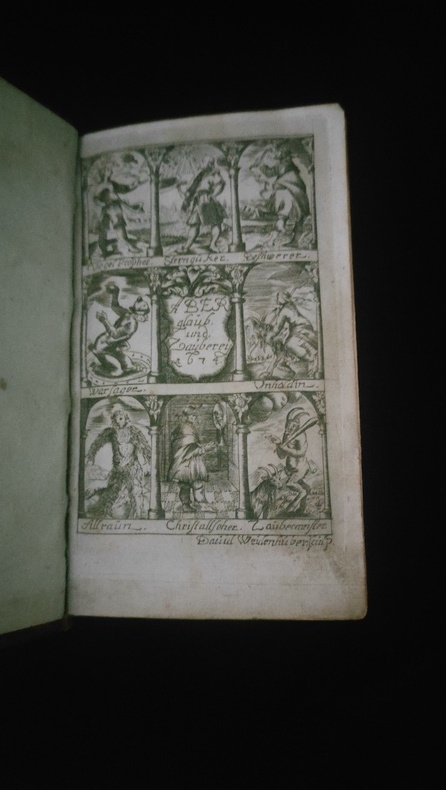
1674GEJ-2Basel, Getrukt bey Johann Heinrich Meyer, 1674. In-8. Latin & German text. 1 volume complete itself. 1107 p. Colation complete. First edition of kind of warning against sorcery by the XVII c. Swiss Protestant pastor Bartholomäus Anhorn. Contains chapters on dreams, palmistry, duelling, witches, alchemy, and charming. Very rare book including an introductory eulogy by Johannes Tonjola. Internal condition: original gold ornamented brown calf binding. Rubbed, bumped, with minor defects on the spine with missing the closure ribbons. Title page and engraved title printed in black. Slightly browned due to paper, dampstained in places and few corners bent with XIX c. unknown bookplate on the endpaper. Red paper edges. Rare first edition. Bibliography: VD17 3:600284P. Graesse, BMP, 51. Goedeke III, 241, 22. Por. Faber du Faur 1265 and Jantz 378. Hayn-Gotendorf III, 172. USTC 6144407. Faber du Faur 1265: "Anhorn believed in devils and witchery, but advocated caution as regards such phenomena as the bleeding of corpses in the presence of their murderers, and thought that no one should be imprisoned and questioned under torture on such kind of evidence alone". Jantz 378: "A partially critical survey of occult phenomena and popular superstitions". Provenance: Unknown, probably XIX c. coat of arms bookplate on the first endpaper.
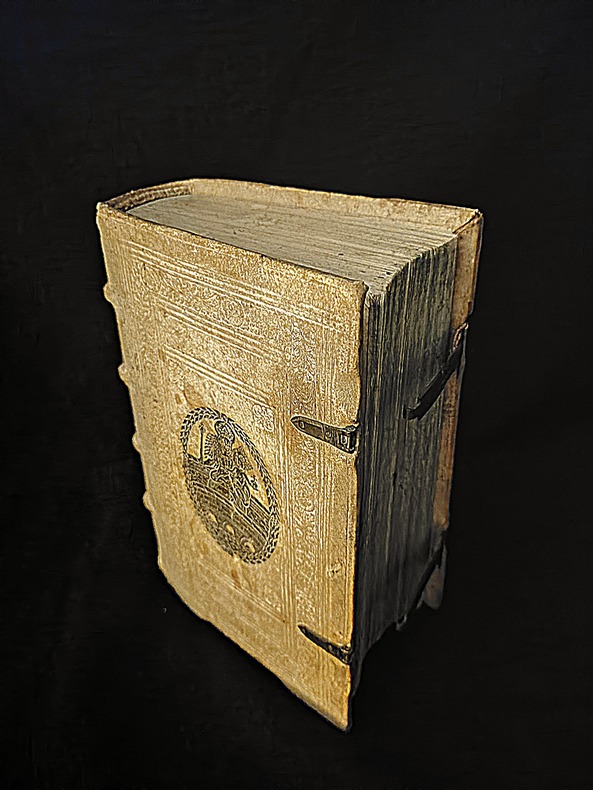
1581GEJ-8Ingolstadt, apud Davidem Sartorium, 1581. pp. [80] 542 p. Book in Latin. In-8. Beautifull ornamented white blind stamped calf. Additionally black engreved to front cover. Two original clasps. Fist and last blank leaf missing. Title page in black. 80 unnumbered and 542 numbered pages. Blue paper edges. Clean endpapers with small pencil annotation on the first back cover. Nice ornameting, wide margins and initial letters. Very clean and bright interior. Franziskaner Kloster Dettelbach stamp and hand-written anotations on the title page. Complete. Very good condition. 2nd rare edition (First, 1580) of interesting and influential work on heresy. Very uncommon issue on the market. Rare in any edition. "Hammer of Heretics" is a Catholic counter-reformation text by Georg Eder, published in Ingolstadt, that defends Catholicism against Protestant doctrines, particularly Lutheranism and Anabaptism. It is distinct from the 1487 Malleus Maleficarum (witch-hunting manual), focusing instead on combating heresy through theological argumentation. Eder was a lawyer and Catholic theologian (1523 - 1587), Imperial Court Councillor and advisor to Emperors Ferdinand I, Maximilian II, and Rudolf II. Best known for his theological polemical writings. "His oratorical and literary talent, the decidedly Catholic orientation from his Bavarian homeland, which deepened in Cologne and, in Vienna, where he immediately sought contact with the Jesuits, manifested itself in tireless activity, making Eder a champion of Catholicism struggling for its existence in Austria" (NDB IV, 311 f.). "Eder's writings from this period all deal with the question of church confession with regard to the differing and opposing positions of the Protestants" (ADB V, 318). Bibliography: USTC No. 674751, VD16 E 541, Stalla 1413, Adams E 64. Provenance: Franziskaner Kloster Dettelbach.
18563début du XXe siècle..
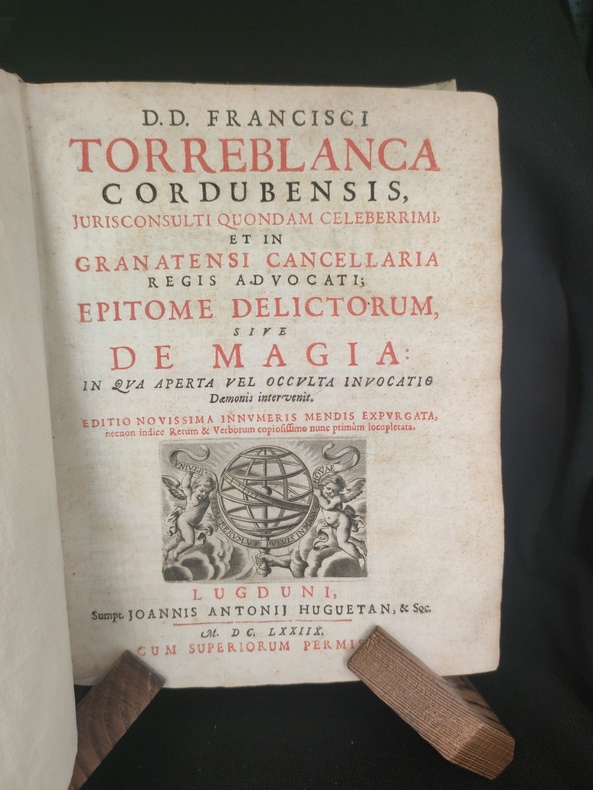
1678GEJ-9Lugduni (Lyon), sumpt. J. A. Huguetan, 1678. Book in Latin. In-4. Collation: [8], 576, [104]. Original full vellum, ink title on the spine. Title in red & black. Armorial bookplate of the Prince of Lichtenstein on the front pastedown. First and last blank endpapers intact. Some wear and soiling to vellum. Foxing. Overall Very good. Complete. 3rd edition of Summary of Crimes, or On Magic: In which open or hidden invocation of the demon intervenes, is a comprehensive legal guide on defining, identifying, and prosecuting acts of magic, witchcraft, and sorcery, heavily influenced by the Spanish Inquisition and demonological theory. The work categorizes different types of magic—distinguishing between "open" (explicit pacts) and "hidden" (implicit/superstitious) invocation of demons. It was a standard reference for canon law and criminal issues related to magic in the 17th century, including its use in Spanish and Portuguese colonial contexts. Book is devided into 4 parts + "Defensa". Pages 514-76 contain the author's "Defensa de los Libros Católicos de la Magia". Bibliography: Caillet 10764; Cornell Witchcraft Collection 53; Graesse (Magica) 53; Palau 334.827; Thorndike VII, 326-30; USTC No. 6080367; Coumont T.33.3; Goldsmith T-444; Crowe 551; OCLC: 11407716; Robbins 1026. "The work is divided into four books devoted to divining magic, operative magic, and its punishment in the forum exterior and juridical, and in the interior tribunal of the soul and confessional. Magic is defined after Proclus and Psellus as an exacter knowledge of secret things in which, by observing the course and influence of the stars and the sympathies and antipathies of particular things, they are applied to one another at the proper time and place and in the proper manner, so that marvels are worked. Torreblanca turns to diabolical magic and the extent of the powers of the devil to make it possible. Torreblanca has jumbled together natural and diabolical magic almost inextricably, but his remaining chapters are on witchcraft, with the two last on natural and divine remedies against it." (Thorndike VII, A History of Magic and Experimental Science). Provenance: Old Ex libris - (library ?) Lichtensteinianis (Armorial bookplate of the Prince of Lichtenstein?).
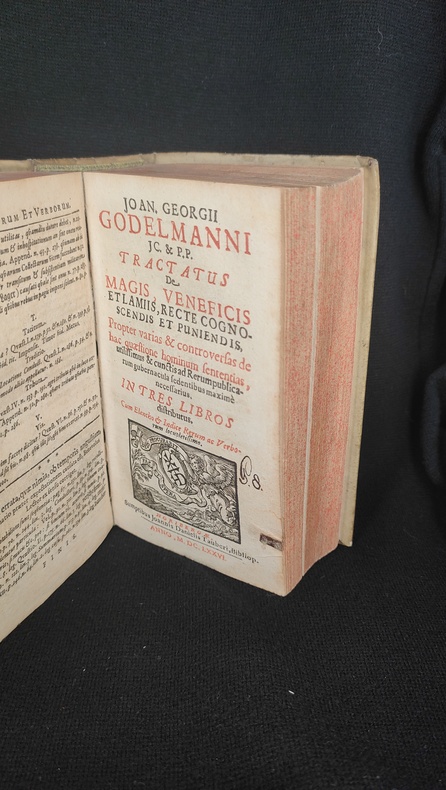
1676GEJ-5Nuremberg: Johann Daniel Tauber, 1676. Book in Latin and German. In-8. [12], 162; 102; 256, [73] pages, including errata leaf at end. Contemporary vellum, ink title on the spine, occasional light foxing. Title in red & black. Later edition of this work on magic and witchcraft by J.G. Godelmann (1559-1611), German diplomat and professor of law at Rostock University. Book contains 3 parts. The 1st and 2nd part contains information on magic, sorcerers, and witches, the 3rd part dedicates to legal procedures in witchcraft cases. The book was placed on the Index of prohibited books in 1601. Bibliography: Ref. VD-17 1:0629512, Caillet 4226, Coumont G 43.5., Thorndike VI, 535-37. USTC 2589027. Not in BL London. Coumont G 43.5. - "Godelmann's greatest achievement lies in his, for this time, exceptionally decisive stance against the belief in witches". Provenance: From the library of André Lambert, with ex-libris. Ownership sticker: Oskar Gershel, Buchhandlung Stuttgart, Kronprinzstrasse 32. bound with Law book by MEVIUS (David) titled: Considerationes juridicae super Sex diversis punctis, indeque resultantibus Quaestionibus, in Causis Proprietariorum Pensionariorum subinde occurrentibus. Hall. Saxon.[Halle-sur-Saale], Sumptibus Simon. Joh. Hubneri, 1675.
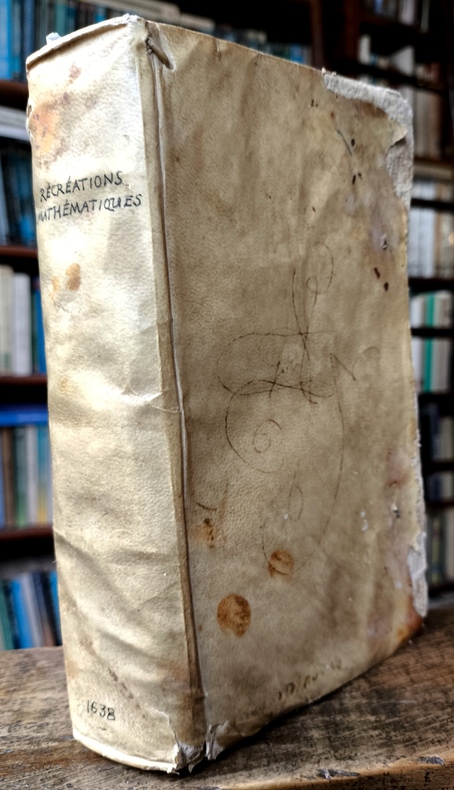
16380032951638 A Paris, Chez Rolet Boutonne, 1638. Quatre parties en un volume in-12 (107 X 163) vélin rigide à coutures apparentes, titre calligraphié à l'encre noire en tête du dos (reliure de l'époque) ; (1) f. blanc, titre, (7) ff., 280 pages, 63 pages (dont titre), (1) page blanche, titre, (1) f. « Au lecteur », 67-106 pages, (5) ff. de table, (1) f. blanc, 39 pages (dont titre), (1) page blanche, (1) f. blanc. Tache brune sur le premier plat.
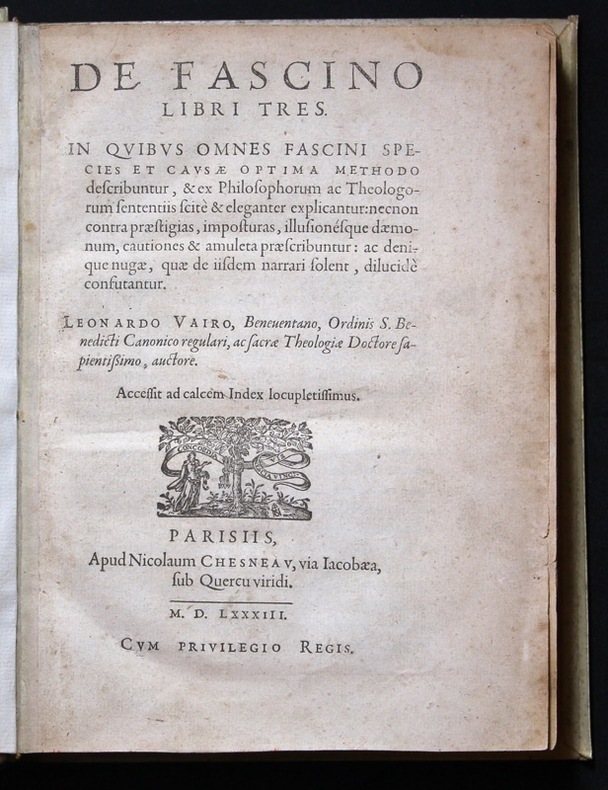
158312463Paris, Nicolas Chesneau, 1583. In-4 de [8]-275-[37] pages, plein vélin à rabats, dos lisse. Reliure fin XIXe, 2 ex-libris modernes. Note manuscrite sur un feuillet blanc XIXe, citant Yve-Plessis.
1932027073London 1932 Macmillan & Co Hardcover Very Good
104082Paris, Chez la Vefue Guillaume Cauvellat, au mont S. Hilaire, au Pelican 1597 - 1598, 115x85mm, reliure basane. Reliure plein veau blond. Auteur, tomaison et filets dorés au dos à 4 nerfs. Double encadrement doré sur les deux plats. Bordure triple filets dorés. Toutes tanches dorées. Garde papier marbré. Format elzévirien. Reliure du XIXème siècle en bon état, hormis charnières usées. Intérieur propre - hormis noirceurs avec petits trous sur les pages 52, 53 et 54 du tome sixième, sans atteinte de texte. Erreur de typographie à la numérotation de la page 22 du tome sixième marquée comme 62. Brunet, I, pages 982-983. Yve-Plessis, réf. 236 : “Cette édition comporte 109 charmantes figures finement gravées et certainement par les artistes qui ont exécuté les figures des Epistres d’Ovide en français, de la Métamorphoses d’Ovide figurée, etc. M. Didot croit y reconnaître le dessin de Jean Cousin.” Bel exemplaire.
FDC-14Paris, Rolet Boutonné, 1638, in-8 de 3 parties de 8 ffnch, 280 pp., 106 pp. SUIVI : HENRION (Denis) - D.H.P.E.M. Notes sur les récréations mathématiques, en la fin de divers problèmes servant à l’intelligence des choses difficiles & obscures. Paris, Rolet Boutonné, 1638 de f. blanc, 38 pp., vélin rigide d’époque.
20024Paris, Charles Hulpeau, 1629 pour les 3 premiers textes, S.l.n.d., s.n pour le dernier. 4 ouvrages en 1 vol. in-16, [14]-103 pp. + [8]-152 pp. + 63 pp. + 39 pp., parchemin rigide de l'époque, tranchefile à passe, dos long (exemplaire défraîchi mais solide, annotations).
167814608Lyon, Pierre André, 1678. In-4 de [40]-1108-[24] pages, pleine basane brune du temps, dos à nerfs orné de filets et fleurons dorés.
352141Chez Antoine De Sommaville Paris 1636 In-12 ( 170 X 110 mm ) de 3ff.-417 pages, veau blond granité, dos lisse richement orné d un décor de petits fers dorés en croisillons formant caissons, pièce de titre anthracite, triple filet doré d'encadrement sur les plats, roulettes dorées sur les coupes et les chasses, tranches dorées. Edition originale de cet ouvrage rare, dans une belle reliure du XVIIIe siècle. Réfutation de l'ouvrage de GAFFAREL sur les talismans, dont l'auteur, qui s'était caché sous le pseudonyme de DE L'ISLE, n'est autre que Charles SOREL, sieur de SOUVIGNY ( vers 1582-1674 ). ( Dorbon, 4625 ). Ouvrage très rare et des plus curieux contenant une infinité de recettes et des formules magiques pour la confection des talismans, et des secrets mystérieux pour la guérison des maladies même les plus graves. ( Caillet I, 2944 et III, 10270 ). Le Traité de l'unguent sympathique est étrange et vraiment intéressant. ( Guaita, 985 ).Des talismans, ou figures faites sous certaines constellations pour faire aymer respecter les hommes, les enrichir, guérir leurs maladies, chasser les bestes nuisibles, destourner les orages, accomplir d autres effets merveilleux. Avec des observations contre le livre des Curiositez Inouyes de M.I. GAFFAREL et un traicté de l'unguent des armes ou unguent sympathetique constellé, pour sçavoir si l'on peut guérir une playe l ayant appliqué seulement sur l'épée qui a fait le coup, ou sur un baston ensanglanté, ou sur le pourpoint la chemise du blessé. Le tout tiré de la seconde partie de la science des choses corporelles par le sieur de L'ISLE. Quelques mouillures claires marginales, rousseurs sans gravité, mention manuscrite ( compagnonnage ? ) datée 1739 sur une garde, bel exemplaire, de toute rareté.
024837Paris, chez LESCLAPART, 1788 (pour les trois premiers volumes), Bruxelles, veuve Dujardin, et à Paris, chez Defer et Maisonneuve, 1789 (pour le quatrième et dernier volume) 0 Cinq ouvrages en quatre volumes petits in-8° (100 x 171mm), demi-percaline à coins rouge, dos lisses ornés de l'auteur, du titre et de petits fers dorés (reliure de la fin du xixe). ( dos insolés et légèrement salis, exemplaires très rognés avec la perte de quelques lettres, la plupart des feuillets des quatre volumes sont uniformément et fortement roussis, trace de brûlure au feuillet 89-90 du volume du Codicille et au feuillet 121-122 du volume des Petites Aventures, SONT MANQUANTS : les frontispices, le portrait, les feuillets 125-126 et 127-128 du volume de la Magie blanche dévoilée, les feuillets d'explication (8 pp.) et d'éclaircissements (32 pp.) ainsi que 2 planches du volume de Supplément à la Magie). VOLUME 1 : La Magie Blanche dévoilée, ou Explication des Tours surprenans qui font depuis peu l'admiration de la Capitale & de la Province, avec des réflexions sur la Baguette divinatoire, les Automates joueurs d'Échecs, &c. Seconde édition corrigée par l'auteur. Paris, chez LESCLAPART, 1788. XXIV 124 pp. (sont manquants les deux derniers feuilllets). Une figure page 117.; Relié à la suite du même : Supplément à la Magie Blanche dévoilée, Contenant l'explication de plusieurs Tours nouveaux, joués depuis peu à Londres, Avec des éclaircissements sur les artifices des Joueurs de profession. Les Cadrans sympathiques, le Mouvement perpétuel, les Chevaux savans, les Poupées parlantes, les Automates dansans, les Ventriloques, les Sabots élastiques, &c. Paris, LESCLAPART, 1788. VII 287 (1) pp. 2 planches de 2 figures chaque (homme enchaîné) et 29 figures; VOLUME 2 : TESTAMENT de JEROME SHARP, Professeur de Physique amusante, où l'on trouve parmi plusieurs tours de subtilité, qu'on peut exécuter sans aucune dépense, des préceptes et des exemples sur l' Art de faire des chansons impromptu ; pour servir de suite à la magie blanche dévoilée. Paris, LESCLAPART, 1788. XX 328 pp. 2 planches repliées (musique) et 69 figures. Bandeaux et vignettes; VOLUME 3 : CODICILE de Jérôme Sharp, Professeur de Physique amusante ; Où l'on trouve, parmi plusieurs Tours dont il n'est point parlé dans son Testament, diverses Récréations relatives aux Sciences & Beaux-Arts ; pour servir de troisième suite à la Magie blanche dévoilée ; avec 64 figures. Paris, LESCLAPART, 1788. 286 pp. (2) pp. (approbation). Nombreuses figures au feuillet 31-32, 64 figures et deux tableaux dépliants reliés en fin de volumes; VOLUME 4 : Les Petites Aventures de Jérôme Sharp, Professeur de Physique amusante ; ouvrage contenant autant de tours ingénieux que de leçons utiles, avec quelques petits portraits à la manière noire ; par l'auteur de la Magie Blanche. Bruxelles, chez la veuve DUJARDIN, et à Paris, chez Defer de Maisonneuve, 1789. 386 pp. 17 figures. Cachet d'ex-libris. Henri Decremps (1746-1826) publia en 1784 " La Magie blanche dévoilée " afin de démasquer charlatans et escrocs dont le plus fameux d'entre eux à la veille de la Révolution Joseph Pinetti, prétendu physicien et magicien de la cour de Louis XVI qui publiait la même année ses Amusements physiques. Decremps, le premier, démystifia l'escamoteur par l'explication de toutes ses expériences (tours de cartes, gobelets et gibecières etc.) et dressa la liste des techniques de tricherie, comme les faux mélanges, les sauts de coupe, la donne en second, etc. RARE
9367A La Haye [et] A Tourcoing, chez Jean van den Bergh [et] sans nom, 1739 [et] 1752. 2 tomes en un volume in-16 de [6]-256; de 2 à 102 pages (manque p. 3/4), plein veau marbré fauve, dos lisse orné de filets et 4 alérions dorés, double filet doré encadrant les plats, simple sur les coupes, armes d'Anne Léon (Ier) de Montmorency avec la devise: Dieu aide au premier baron chretien, ainsi que la devise grecque. Mors frottés et légèrement fendus, tampon rose répété deux fois sur chaque page de titre, restauration à la première, avec une cote de bibliothèque à l'encre bleue.
120553aafLondon, Luzac and Co, 1900, lg. in-8vo, XVII + 85 plates + 30 p. (publ. ads) / XCI (+1) + 1 leaf + 147 p., full publisher’s clothbound, spine richly gilt with titles, series and author, first cover with gilt impression of series, light stains on both volumes. In all a desirable copy.
520931Chamuel - Bibliothèque Chacornac Paris 1897 Fort in-8 ( 215 X 145 mm ) de 808 pages, demi-basane fauve marbrée, dos à nerfs janséniste, couvertures conservées. Nombreuses illustrations dans et hors-texte. EDITION ORIGINALE à la bonne date de 1887, exemplaire de remise en vente avec une nouvelle couverture ( Bibliothèque Chacornac ) et papillon collé sur la page de titre "Bibliothèque Chacornac" sur la mention Chamuel. Bel exemplaire. De la bibliothèque Gilbert TAPPA ( Ex-Libris ).Caillet, 4809. - R.Y Plessis, 894.
20449Anvers, Hevdrick Connix, 1584. In-4, [12]-653-[23] pp. (*4, **2, a-z4, A-Z4, Aa-Zz4, Aaa-Qqq4; Qq4 est 1 f. bl.), parchemin souple ivoire, dos long, titre manuscrit au dos, traces de liens (liens manquants, restaurations, taches, importantes mouillures sans dommage pour la lecture, taches).
117953aafs.n. (Würzburg ?, Herbipolis), s.d., (1665?), kl. in-4to, 2 ll. (Drucktitel + Candido lectori, (without engraved front) + 363 p. (+ 1 blanc, page 71 with some staines) + 4 ll. Index + 22 engraved plates, ‘Tréah’ & name ‘Nolent 1902’ on fly, 19th century boards (XIX c.),
19050041551905 Paris, Hachette, sans date [1905]. Grand in-quarto (270 X 328 mm) reliure à la Bradel cartonnage papier crème illustré en couleurs, tête dorée (reliure de l'éditeur); (2) ff. blancs, (2) ff. de faux-titre et titre illustré imprimé en rouge et noir, 380 pages, 41 planches sous serpente, (2) ff. blancs.