8 475 résultats
1952C99675Brussel, 1952 250pp., in de reeks "Koninklijk Belgisch Koloniaal Instituut. Sectie voo morele en politieke wetenschappen. Verhandelingen in-8" boek 24 afl.1, 24cm., gebroch., goede staat, C99675
ODEPI. 1976. In-16 Carré. Broché. Etat d'usage. Couv. légèrement pliée. Coiffe en tête abîmée. Intérieur acceptable. 185 pages.
br. Questo classico della critica dantesca rappresenta una delle più felici interpretazioni esoteriche della Divina Commedia. Canto per canto sono messi in luce tutti i più complicati apparati simbolici ed allegorici che ne sostengono l'architettura poetica. Attraverso essi è così possibile penetrare le cause più profonde del fascino della grande opera.
Valerio Zecchini Alchimia, la chiave dell'immortalità. , Demetra 2000, Libro usato in buone condizioni, Pagine ingiallite lievemente con sottolineature a matita ed evidenziatore, finemente illustrate. Tagli regolari impolverati, Copertina flessibile cartonata con segni d'uso Buono (Good) . <br> <br> <br> 159<br>
cm. 18 x 25,5, vi-342 pp. Studi e testi per la storia religiosa del Cinquecento Con il ?De praestigiis daemonum?, Johann Wier per primo intese distendere il filo per far uscire l?umanit? dal labirinto degli incantesimi demoniaci. Attraverso argomentazioni teologiche e scientifiche, ebbe come obiettivo prioritario quello di far cessare la caccia alle streghe, proponendo la rieducazione o l?esilio per quelle che, ai suoi occhi, erano solo delle povere vecchiette. Si avvi? cos? quel lungo processo critico che avrebbe portato, alla fine del Seicento, Balthasar Bekker a decretare la morte del diavolo. Johann Wier, with ?De praestigiis daemonum?, was the first to throw a lifeline to free mankind from the labyrinth of demoniacal enchantment. By means of theological and scientific argumentation his main objective was to put an end to witch-hunting, proposing rehabilitation or exile for those who, in his opinion, were only poor old maids. This started up that long critical process which, at the end of the 17th century, brought to Balthasar Bekker decreeing the death of the devil. 694 gr. vi-342 p.
2000201312000 Editions Soleil - 2000 - In-4, cartonnage illustré sous jaquette illustrée de l'éditeur - 128 p. - Très nombreuses illustrations in et hors texte en couleurs
2017LFA-126744426Un ouvrage de 91 pages, format 145 x 205 mm, illustré, broché couverture couleurs, publié en 2017, Editions De Vecchi, collection "Entrez Dans", bon état
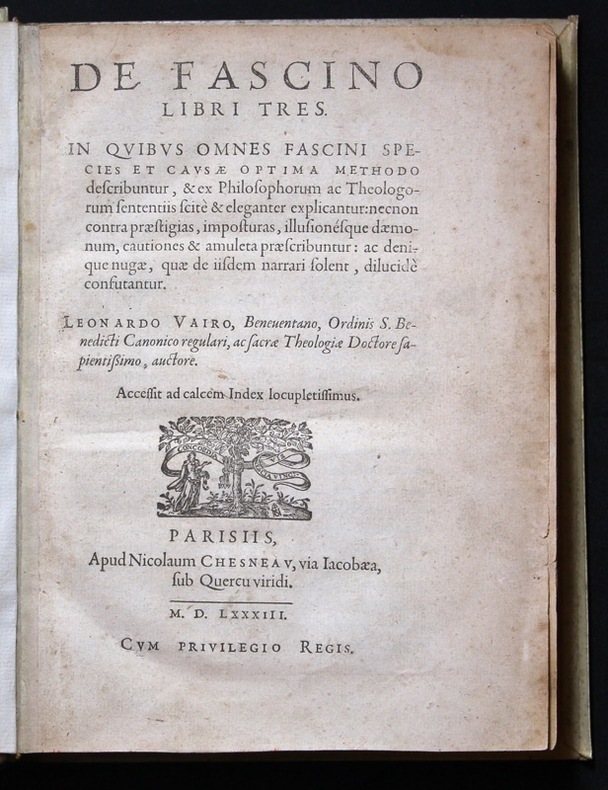
158312463Paris, Nicolas Chesneau, 1583. In-4 de [8]-275-[37] pages, plein vélin à rabats, dos lisse. Reliure fin XIXe, 2 ex-libris modernes. Note manuscrite sur un feuillet blanc XIXe, citant Yve-Plessis.
Mm 142x220 Collana "Bibliothéque des Idées". Brossura originale con copertina a stampa, 490 pagine. Buona copia, spedizione in 24 ore dalla conferma dell'ordine.
In-8 p., tela editoriale figurata a colori, pp. 271,(2), con 62 tavv. d’ill. in b.n. f.t. Testo in cirillico. Ben conservato.
188415305Paris, Hachette, 1884 ; in-8 ; demi-chagrin vert foncé, dos à nerfs, caissons à froid, titre doré (reliure de l'époque) ; (4), XV, (1 bl.), 400, (2) pp., (1) f. blanc.
206 pages. Contains 28 short tales. Numerous illustrations including 7 in colour. Hairline opening at each hinge. Moderate foxing to contents. Average soiling and wear to colour-illustrated boards. A child has neatly coloured in the horns of the bull on back board. Slight lean to spine. A worthy copy of this charming early Uttley work. Book
brossura Questo libro è costituito da cinque conferenze scritte da Ouspensky e destinate a essere lette in Russia, poi a Londra e a New York, a coloro che erano interessati alle idee di Gurdjieff. Partendo dall'idea fondamentale che l'uomo non è un essere compiuto, Ouspensky studia l'uomo così com'è, dal punto di vista di ciò che può divenire, precisando le condizioni e gli sforzi necessari al suo sviluppo interiore.
brossura In quest'opera scritta negli anni 1913-1929 P.D. Ouspensky esamina alcune delle scuole tradizionali di pensiero, appartenenti alle aree culturali sia dell'Oriente che dell'Occidente. Collegandole alle idee nuove e moderne, egli le spiega alla luce delle recenti scoperte e ricerche nel mondo delle scienze fisiche e filosofiche. In un'ampia disamina comparata, l'autore tratta della relatività, della quarta dimensione, del simbolismo cristiano, dei tarocchi, dei sogni, estendendo i suoi interessi fino allo yoga, l'ipnosi, il mito dell'eterno ritorno e le varie teorie psicologiche. Il volume si conclude con una analisi del sesso considerato da un punto di vista del tutto nuovo, ponendolo in relazione con l'evoluzione dell'uomo verso il superuomo.
Ursula Lewis Farsi l'oroscopo. Roma, Casa editrice Anthropos 1986, Copertina cartonata, sporca. Tagli sporchi con fioriture, pagine leggermente ingiallite, con fioriture. Mediocre (Poor) . <br> <br> <br> 202<br>
2005271067[München] : Cygnus-Verl., 2005. 199 Seiten. Mit zahlreichen farbigen Abbildungen. 21 x 24 cm Originalbroschur.
1979503499Verlag des Antiquariats Rainer G. Feucht, Allmendingen 1979. 21 x 14,7 cm. Originalbroschur mit illustriertem Umschlag. 62 Seiten vier schwarzweissen Textabbildungen. Der Umschlag stark randgebräunt, sonst gutes Exemplar.
1903KRIM0100bMünchen und Wien, Mickl (1903). Titel, 84 S., 1 Bl. OHln., Vorderdeckel etwas ausgebleicht, leicht braunfl., angestaubt, Ecken u. Kanten berieben, Rü. leicht schleissig, am vord. Innendeck. Besitzerstemp., Innentit. u. Vors. (verso) m. Besitzerstemp., einige winzige Braunfl. am Seitenschn., Kopfschn. angestaubt. Mayer 2773. (= Collection rätselhafte Naturen; 5).
199119635München : Erd, 1991. 226 S. 8°. OPpbd. mit SU.
Umberto Visani UFO: i casi perduti. , Segno 2019, Libro in condizioni molto buone sia per la copertina che l'interno Molto buono (Very Good) . <br> <br> Copertina flessibile <br> <br> 8893184761
come nuovo
196563271Preetz, Verlag J. M. Hansen, ca. 1965. 8°; 39 Seiten, mit schwarzweiß-Abbildungen; Orig.-Broschur Einband stark berieben und angeschmutzt; Seitenränder teils stockfleckig; 1 Seite am Rand mit Fehlstelle (ohne Textverlust) Manege. Eine Schriftenreihe für Cirkusfreunde
1561GEJ-10Paris, apud Gilles Corrozet, 1561, [1], 40, [1] pp, 8°. Book in Latin. RARE AND UNCOMMON ON THE MARKET FIRST PARISIAN PRINTING! 17/18 century full calf binding, gold lettered spine, marbled endpapers, owner's ex libris of Emeric Bigot (?) on title page. Good antiquarian condition, woodcut printers device to title, woodcut initials. Few stains and discolorations. Complete. Published in Paris by Gilles Corrozet in 1561, this rare edition of Ulrich Molitor’s Tractatus de lamiis et pythonicis stands as a definitive cornerstone of early occult literature and a fascinating, skeptical counterpoint to fanatical witch-hunting manuals like the Malleus Maleficarum. Written by a prominent German jurist, the treatise is historically significant for its early skepticism, as Molitor boldly argued that supernatural acts like shape-shifting or flying to sabbaths were merely illusions and dreams induced by the Devil rather than physical realities. This text is equally famous for containing the earliest printed depictions of witches, establishing the modern iconography of the occult through striking woodcut imagery that includes scenes of witches brewing storms in cauldrons, a wizard riding a wolf, and the Devil corrupting a woman. Composed as a direct response to Europe's rising witchcraft hysteria, this treatise introduces cold legal logic and canonical jurisprudence into a debate previously dominated by religious fanaticism. Moving away from dry academic lecturing, the text adopts the dynamic structure of a scholarly dialogue between three real historical figures: Archduke Sigismund of Austria, the ruler of Tyrol, who acts as the voice of skepticism by raising logical doubts and challenging the validity of witch trials; Conrad Schatz, the magistrate of Constance, who champions the strict, traditional view by defending the physical reality of witchcraft and demanding harsh punishments; and Ulrich Molitor himself, the author, who serves as the impartial arbiter utilizing Roman and Canon law to systematically resolve the disagreements between his interlocutors. Ulrich Molitor (c. 1442–1507) was a pioneering German jurist, humanist, and diplomat who shaped early modern legal thought. After studying humanities in Basel, he earned a prestigious doctorate in civil and canon law from the University of Pavia, positioning him at the forefront of Renaissance jurisprudence. He spent the pinnacle of his career as a trusted legal advisor to Archduke Sigismund of Austria in Innsbruck and later served as chancellor to the Bishop of Worms. Molitor’s enduring legacy is his 1489 masterpiece, Tractatus de lamiis et pythonicis, which stands as one of history's earliest legal critiques of witch-hunt fanaticism. By utilizing rigorous Roman and Canon law to argue that witchcraft was largely a demonic illusion, he became a vehement opponent of judicial torture, forever marking his place as a trailblazer of European rationalism. Provenance: Emeric Bigot (?) - Ex Libris: Emeric Bigot (1626–1689) was a prominent French humanist, bibliophile, and a central figure in the 17th-century European intellectual network known as the Respublica Literaria (Republic of Letters). Born and based in Rouen, he used his substantial wealth to amass one of the most legendary private libraries in Europe, renowned for its rare Greek and Latin manuscripts and early printed books. Though he published little under his own name—focusing primarily on editing early Christian texts—Bigot served as an indispensable international scholarly coordinator. He maintained a vast correspondence with major thinkers like John Milton and Nicolas Heinsius, utilizing his unparalleled bibliographic expertise to source texts, verify translations, and generously assist scholars across the continent in preparing their own monumental works for print. Bibliography: Herbert M. Adams, M 1573; USTC, 153205; Pettegree i Walsby, 153205, only found in one US institution (Yale University, Beinecke Library), Not in VD 16, Yve-Plessis, Dorbon-Aîné and Bibliotheca Esoterica; Caillet, II, 7641; Grässe, p. 55; Bibliotheca Daemonologica (Robbins).