Stanislas de GuaitaMareMagnum

8 477 résultats
In 8°. Pagine 552; 808. Rarissimo testo di magia del celebre esoterista francese Stanislas De Guaita, ricco di illustrazioni e splendidamente conservato. Bella e pregiata legatura coeva in mezza pergamena con titoli su tasselli in oro al dorso. All'interno annotazioni di antica mano anche in lingua ebraica. Introvabile.
PP. 224, CM. 18X11, BROSS.
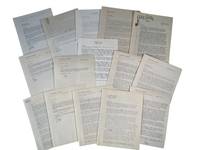
1959214711959. Gloye Eugene E. Archive of Autograph letters on Magic late 1950s to mid 1960s document the working methods technical experimentation and intellectual framework of a mid twentieth century American magician engaged in both performance and psychological analysis of illusion. Written primarily to fellow magician Don Tanner these letters provide direct evidence of how tricks were conceived refined and communicated within professional networks revealing the intersection of apparatus design sleight of hand and audience perception. Gloye's dual role as performer and psychologist situates the correspondence within broader developments in performance theory and applied psychology supporting research into the history of magic entertainment culture and the study of deception. Eugene Gloye authored 23 magic books including "For Magicians Only" "Fantastic Tricks with Plastic Cups" and "Theatrical Magic" <br /> <br /> Archive of sixteen letters spanning approximately the late 1950s through the mid 1960s containing detailed discussions of trick construction performance strategy and experimentation with materials and methods.Throughout the letters Gloye discusses numerous tricks he devised or refined often providing detailed explanations of their mechanics and performance nuances. His correspondence reveals a deep engagement with magical apparatus sleight of hand and psychological deception. One of the more detailed discussions in the letters revolves around Gloye's development of Fan-Ta-Cups which evolved from an earlier trick he had devised Fan-Ta-Bill. On September 5 1961 he describes how the trick was born: "I first got the idea for this cup trick about 14 years ago when I was experimenting with a bill trick which I eventually put on the market. The bill trick also uses a celluloid gimmick and was an adaptation of Liquid Appear. Since I thought of the cup trick at the time of my Fan-Ta-Bill I decided it was fitting to call it 'Fan-Ta-Cups.'" He further explains that while the idea had been percolating in his mind for years he hadn't developed a complete routine for it until recently. Inspired by the classic three-shell game he worked out a performance structure that he believed would make it more engaging.<br /> <br /> In a letter from July 11 1961 Gloye excitedly shares his thoughts on using hollow plastic golf balls for new magic tricks: "I am convinced that this new golf ball will open up many new trick possibilities. The fact that they come in several colors is also interesting." This suggests that Gloye was experimenting with different materials for manipulation tricks possibly related to vanishing or color-changing effects. Gloye also played with magical history concocting a hoax to see how the magic community would react. In the September 5 1961 letter he reveals his plan: "Last December I got an idea for a variation on the Tip-Over Box. It's just a slightly different way of building it. At first I was going to put it in my 'New Look' series but then as we were talking about it I commented that this trick should have been in Hoffmann. This led to the devilish idea of writing it up in Hoffmann style and publishing it in Genii as a lost page from the original book." He notes that Bill Larsen and another friend were in on the plan and they wanted to see if the trick would be accepted as a legitimate discovery.<br /> <br /> Another standout trick mentioned in the letters is Gloye's adaptation of Billy McComb's routine using a flap slate and a force deck. On January 31 1961 he explains: "My version which I tried for the first time several days ago with huge success uses one deck and a flap slate. The deck is made like a peek deck but with two cards only. All faces are the same and all concealed cards are the same. Cards which audience sees are trimmed and glued at one end to a second group of 26 duplicates." This approach ensured that the spectator would believe they had freely chosen a card when in fact the outcome was predetermined.<br /> <br /> Gloye describes modifications he made to a Head Chopper Illusion a prop widely used in stage magic in a February 23 1961 letter: "My version does not retain the Chinese theme. My blade is a simple black affair with a couple of brass stripes across it to make it look more solid. I spent a long time trying to figure out a good lock for the blades Abbott's want you to remove a couple of tacks which hold the blade and this is simply not workable. I ultimately did come up with a practical idea only to abandon it in my current routine." He explains that his routine involved swapping out the real blade for a fake setting up a comedic climax where "carrots fly in all directions" as the blade seemingly falls.<br /> <br /> This archive is a rare window into the intellectual and technical world of a magician who bridged academia and performance. Gloye's detailed notes on illusion mechanics reflections on the state of magic and collaboration with figures like Bill Larsen and Frances Marshall make this a significant collection for magic historians and collectors alike.<br /> <br /> Produced during a period of active exchange among professional magicians through correspondence and publications such as The Linking Ring these letters document how knowledge circulated within specialized communities and how innovation often emerged through incremental modification of established techniques. Gloye's attention to apparatus construction coded deception and audience management reflects broader mid century interest in performance psychology while his references to collaborators and publication strategies illustrate the role of print culture and informal networks in shaping the field. As a cohesive manuscript archive the letters preserve the technical language and creative process underlying stage magic offering a detailed record of mid twentieth century illusion practice. Light wear and handling consistent with age with legible manuscript throughout; overall condition very good. unknown
194989547Tübingen, J. C. B. Mohr, 1949. 160 S. 8° Oktav, Softcover/Paperback
Sponzilli Osvaldo e Luciani Angelo Iniziazione alla guarigione esoterica. Floriterapia e fiori di Bach. , Edizioni Mediterranee 2002, Ottimo (Fine) . <br> <br> Copertina flessibile <br> 158<br> 9788827214473
br. Un manuale sintetico per imparare a difendersi dalla magia nera. L'autore si propone infatti di fornire al lettore tutti gli strumenti per riconoscere con certezza e tempestività gli effetti di fatture e malocchio, e per neutralizzare ogni operazione di magia nera. Si parte dalle tecniche classiche con cui viene attuata un'azione negativa occulta e si procede poi offrendo le informazioni utili per distinguere i segni e i sintomi del maleficio. Sono suggeriti infine i mezzi più funzionali nella lotta contro sortilegi e iettature: preghiere, pentacoli, simboli di difesa, formule di scongiuro e tradizionali rituali d'esorcismo.
53 pages, illustrated, includes articles on Max Maven and on women in magic. eng
199552231Löhne/ Westf., Literatur privat Verlag, 1995. Gr.8°; 122 Seiten mit Zeichnungen und Schwarzweiß-Bildtafeln; 1. Auflage Orig.-Broschur geringe Gebrauchsspuren
PP. 232, CM. 18X11, BROSS.
PP. 218, CM. 18X11,5, BROSS.
PP. 207, CM. 19,5X13, CART., SOVRACOPERTA, DEDICA A PENNA.
1976OKKU2153Berlin, Schikowski o.J. [1976]. 385 S. m. einigen Textill., OKart., leichte Lagerspuren.
grand in-8, 213 pp., broché, couverture illustrée. Très bel exemplaire. [MI-22]
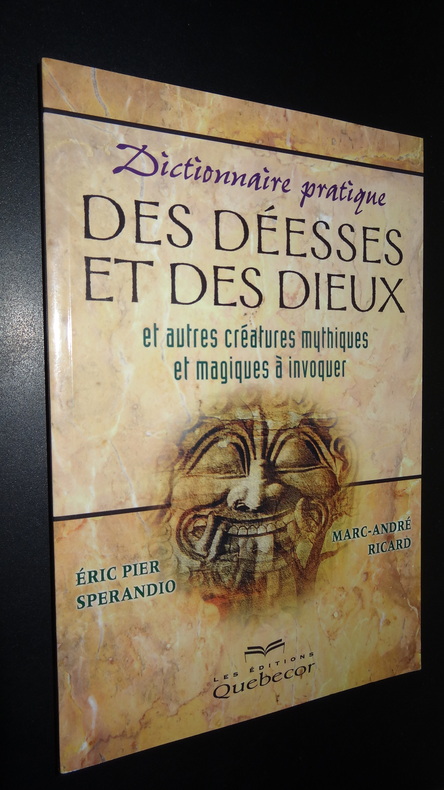
2001JC3274Éditions Quebecor, 1 volume broché de format 23 x 15,5 cm, 144 pages, très bon état. Frais de port en supplément.
br. Quella che prevede l'utilizzo delle candele nella pratica della magia bianca è indubbiamente una delle tecniche più semplici e veloci da applicare nel campo; attraverso una quantità minima di materiale, una buona dose di visualizzazione e una elementare preparazione personale, ogni appassionato di arti magiche potrà riuscire a svolgere i propri rituali con successo. Se si desidera ardentemente qualcosa basta visualizzare questo desiderio e dirigerlo verso un punto preciso. La nostra volontà diventerà l'elemento scatenante della energia delle candele e ogni sogno diventerà realtà.
2001206756Couverture souple. Broché. 192 pages.
br. Come avremo occasione di ripetere spesso in questo libro, dovrete dare prova di immaginazione e di tolleranza. Servitevi della creatività: è il solo modo di riuscire a creare un mondo migliore in cui tutti i valori spirituali potranno convivere armoniosamente, senza che qualcuno tenti di distruggere gli altri per provare che è superiore. Mantenete uno spirito aperto, ma non lasciatevi trascinare in pratiche che considerate equivoche. Diffidate di coloro che vi diranno di possedere la verità, che la loro vita è la migliore possibile. Procedete da soli ai vostri esperimenti, siete i soli giudici di ciò che è adatto a voi e alla vostra coscienza. Con l'aiuto di questo libro, celebrate la gioia di essere, la gioia di vivere, la bellezza della natura. In altre parole, rendete grazie al pianeta per tutte le bontà che vi concede.
br. Come si apprendono le quattro grandi qualità del mago? Come si sviluppano la potenza personale, il carisma e il potere di agire sugli avvenimenti? Per celebrare rituali, occorre seguire regole precise utilizzando oggetti come bottiglie, scatole dei desideri o calderoni magici. Per ognuno di tali oggetti, questo grimorio fornisce rituali d'invocazione ereditati da alchimisti, druidi e stregoni.
1999101382Mineola, Dover Publishing Inc., 1999. VIII + 198 S. Gr.-8° Groß-Oktav, Softcover/Paperback
Mm 140x215 Collana "Storici antichi e moderni" - Brossura editoriale di 359 pagine. Dorso incollato con minime lacune ai margini, piccola firma al piatto, peraltro buona copia con pagine pulite. SPEDIZIONE IN 24 ORE DALLA CONFERMA DELL'ORDINE.
1947907103Speyer: Verlag des Historischen Museums Pfalz. 1947. 19; 4 Tafeln. 21cm. Zustand: Gut gering bis leicht gebräunt (Innen); Einband (Außen) hat geringe bis leichte Gebrauchsspuren; Ist etwas stellenweise gebräunt, min. bis gering fleckig; Schnitt oben leicht, restlicher gering fleckig; Broschiert
Sources Orientales Les Songes et leur interpretation. , Editions du Seuil 1959, Copertina flessibile scolorita e con segni d'uso ai margini; Dorso usurato e con mancanze; Tagli bruniti; Frontespizio con scritta a penna; Pagine ingiallite. Mediocre (Poor) . <br> <br> <br> 331<br>
ill., br. Questo testo di magia moderna guida il lettore nel processo di creazione di immagini planetarie, zodiacali e cabbalistiche da usare per la meditazione, i rituali e la magia. Perfezionato e rifinito da una loggia ermetica operante nella tradizione della Golden Dawn, presenta innumerevoli tecniche magiche per l'uso individuale. Attraverso oltre 150 illustrazioni e diagrammi, rivela l'antico simbolismo numerico degli adepti insegnando al lettore a costruire mandala e talismani personali basati sulla saggezza della Qabalah e dell'Astrologia. Svela inoltre i misteri legati ai simboli magici quali i sigilli planetari, mostrando in che modo utilizzare questi antichi strumenti per ottenere risultati pratici nella vita. Contiene 16 tavole a colori.
cm. 18 x 25,5, 266 pp. Biblioteca dell'?Archivum Romanicum? - Serie I: Storia, Letteratura, Paleografia Nel 1518 Machiavelli si dedic? allo studio del linguaggio comico, in vista della composizione della Mandragola, e compose il Discorso o dialogo intornoalla nostra lingua, affrontando la questione dal punto di vista del motteggiare fiorentino. La Mandragola rivelerebbe competenza di medicina e magia. 585 gr. 266 p.