507 résultats
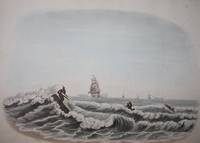
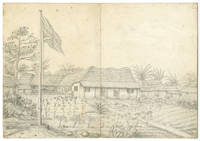
1836WRCAM52991N.p. but near present-day Prampram Ghana 1836. Three pencil sketches on wove paper each approximately 7 x 10 inches. Central vertical crease to each drawing the first two titled in a contemporary hand in pencil to verso the third similarly titled below the image. Very good. An attractive set of skillfully-executed original pencil sketches featuring British colonial structures in Prampram Gold Coast present-day Ghana likely between 1819 and 1836. The sketches are titled in pencil as follows: "Commandant's Residence Pam Pram Gold Coast" "Lower Town Pam Pram from the Upper Town" and "Abandoned Fort at Appolonia from the Beach." <br> <br> The Union Jack flies proudly in the foreground of the sketch of the Commandant's residence. Officially Great Britain colonized the Gold Coast region from 1867 until the independence of Ghana in 1957 though the British had maintained and controlled forts along the West African coastline since long before 1867. Fort Appolonia in the extreme southwestern corner of the country had been a British trading and military outpost from 1691 until 1819 and then again from 1836 onwards when it changed hands from the British to the Dutch then back to the British again. As such if the artist here labeled Fort Appolonia as "Abandoned" he or she must have sketched the fort during the period it was shuttered between 1819 and 1836. <br> <br> A fascinating trio of original sketches offering unique views from a rarely- visualized period in British colonial affairs in West Africa. unknown books
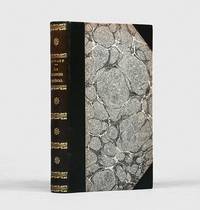
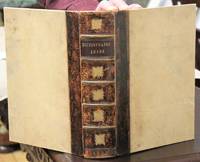
181726835London: Printed by McMillan Sold By T. Egerton / John Murray Albemarle Street 1817. Book. Very Good. Hardcover. First Edition / Revised and Enlarged. Octavo. 2 Volumes bound in one: 1 A NARRATIVE OF OCCURRENCES IN THE INDIAN COUNTRIES OF NORTH AMERICA SINCE THE CONNEXION OF THE RIGHT HON. THE EARL OF SELKIRK WITH THE HUDSON'S BAY COMPANY AND HIS ATTEMPT TO ESTABLISH A COLONY ON THE RED RIVER; WITH A DETAILED ACCOUNT OF HIS LORDSHIP'S MILITARY EXPEDITION TO AND SUBSEQUENT PROCEEDINGS AT FORT WILLIAM IN UPPER CANADA. London: Printed by B. McMillan Sold by T. Egerton 1817. First Edition. Attributed to Samuel Hill Wilcocke - The Macmillan Dictionary of Canadian Biography / W. Stewart Wallace. Attributed also to Simon McGillivray or to Edward Ellice the elder - National Union Catalog pre-1956 imprints. Pp. xiv 152 iv 87 - Appendix. Volume 2 STATEMENT RESPECTING THE EARL OF SELKIRK'S SETTLEMENT UPON THE RED RIVER IN NORTH AMERICA; ITS DESTRUCTION IN 1815 AND 1816; AND THE MASSACRE OF GOVERNOR SEMPLE AND HIS PARTY. WITH OBSERVATIONS UPON A RECENT PUBLICATION ENTITLED "A Narrative of Occurrencies in the Indian Countries" &c. London: John Murray 1817. A new revised and enlarged edition with the added "Observations Upon a Recent Publication ." published the same year. Pp. viii 194 ii i - xcx - Appendix 4 - publ. adverts dated July 1817. With a frontispiece map of Part of Hudsons Bay Company's Territory. Drawn and engraved by A. Arrowsmith London 12th February 1817. Bound together in half red morocco and comb-marbled boards gilt titles direct to spine top edge gilt others deckled matching marbled endpapers with binders' ticket T.W. Taylor Winnipeg. Covers scuffed front free endpaper splitting near gutter some offsetting to text and map else very good copy. Printed by McMillan, Sold By T. Egerton / John Murray, Albemarle Street Hardcover
18020009162BETHEL TOWNSHIP LEBANON COUNTY PENNSYLVANIA. Good. 1802. On offer is an interesting document of early 19th century education an original handwritten note book covering a myriad of subjects related to mathematics. The owner and creator of this book was a man named Henry Snevely also written as Snavely and the book dates from 1802 - 1803. It seems Snevely was born in the United States and lived his whole life in Southeastern Pennsylvania. At the time of the creation of the book Snevely was almost 50 years old an established land owner in Bethel Township Lebanon County. Why he had a book of mathematics is unknown however I have found records of a Henry Snavely who taught at a school in Bethel Township from 1797 onwards. It may be likely that this book is actual not for Henry himself but for the instruction of his students. Either way the book presents a fantastic overview of early 18th century knowledge. The book covers a very large range of topics however Math pertaining to financial matters is dominant throughout. As well there are conversions of Irish and British currency. The primary immigrants to the area at the time of the book were indeed Scotch-Irish so teaching Irish and British currency conversions wouldnt be too far off. Currency exchange in particular is a primary focus owing to the large amount of immigrants to the area. Individual page headings in the book include Exchange many pages Exchange of Arbitrations Barter Profit and Loss Fellowship Fellowship with Time Allegation Media Alternate Partial and Total Square Root Cube Root Arithmetical and Geometric Progression Compound Interest Single and Double Position Reduction Addition Subtraction Multiplication and Division of Fractions and Vulgar Fractions Rule of Three in Fractions and Questions for Exercise. There is a later manuscript memorandum on rear endpaper dated 1829 bearing the names of additional members of the Pennsylvania Snavely clan Molly George and John. The name Martin Rupp also appears in memorandum and our research confirms various Martin Rupps residing in southeastern Pennsylvania during this time. The book is in fair to good condition. The volume is bound in the original stiff paper wraps. The cover is very worn and the spine is torn and partially detached. There is mild age-toning and occasional staining but the internal pages are generally clean. The black ink is still bold and easily legible throughout. The book contains about 85 pages of manuscript entries and the book itself is approximately 90 pages. It measures 12.5 x 8 inches. Biography: Henry Snavely was born on August 2 1755 in Bethel Township Lebanon County Pennsylvania. .Henry Snavely was a Lutheran. At that time he was considered a good scholar and is said to have been a hard student obtaining his knowledge principally by his own exertion. He taught the school from 1797 to 1807.; A report from 1773 shows his farm had 150 acres 5 horses 4 cattle and no servants. OVERALL: G; Manuscript; Folio - over 12" - 15" tall; KEYWORDS: HISTORY OF HENRY SNEVELY HENRY SNAVELY EARLY 19TH CENTURY KNOWLEDGE SCIENTIFIC REVOLUTION MATHEMATICS GEOMETRY TRIGONOMETRY FINANCIAL CALCULATIONS BARTERING INTEREST TEACHER'S BOOK BETHEL TOWNSHIP LEBANON COUNTY SOUTHEASTERN PENNSYLVANIA COMPLEX MATHEMATICS ALGEBRA MARTIN RUPP PRACTICAL MATH FOR FARMERS 19TH CENTURY AMERICA EARLY 1800S IN THE MID-ATLANTIC STATES CYPHER BOOK AMERICANA HANDWRITTEN MANUSCRIPT DOCUMENT LETTER AUTOGRAPH WRITER HAND WRITTEN DOCUMENTS SIGNED LETTERS MANUSCRIPTS HISTORICAL HOLOGRAPH KEEPSAKE WRITERS AUTOGRAPHS PERSONAL MEMOIR MEMORIAL ARCHIVE DIARY DIARIES JOURNAL LOG ANTIQUITÉ CONTRAT VÉLIN DOCUMENT MANUSCRIT PAPIER ANTIKE BRIEF PERGAMENT DOKUMENT MANUSKRIPT PAPIER OGGETTO D'ANTIQUARIATO ATTO VELINA DOCUMENTO MANUSCRITTO CARTA ANTIGÜEDAD HECHO VITELA DOCUMENTO MANUSCRITO PAPEL . paperback
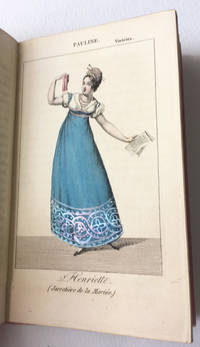
1818Flo136<p>Very rare complete set of all 8 volumes of this review of French theatre in the years 1818-1824.</p><p>All eight years of publication complete with 8 handcolored engraved title pages and over 90 finely handcolored engraved portraits of actors actresses opera singers ballet dancers and comedians in costumes of their famous roles.</p><p>"Very interesting almanac attributed to Charles Malo or Francois-Adolphe Loeve-Weimars giving a summary of Parisian and provincial theaters reviews on the plays and their performers notes on debuts repertoires etc." Grand-Carteret<em> Les almanachs français</em></p><p>Includes portraits of sopranos Mme. Gavaudan and Angelica Catalini tenors Jean-Blaise Martin and Simon Cheard ballet dancers Emilie Bigottini Genevieve Gosselin Antoine Paul and Mlle. Clotilde child actress Leontine Fay actors Francois-Joseph Talma and Charles-Gabriel Potier and many more. Odd volumes turn up occasionally but it is very rare to find the complete set of this intriguing anecdotal overview of Parisian theatre from the first quarter of the 19th century.</p><p>Condition: All volumes in their pastel card slipcases paper bindings holding some spots of foxing to a few plates but overall very good with tissue guards. Complete with all engravings and calendars at end.</p><p>Charles Malo 1790-1871 was a French author editor and translator whose books included a series of gift books for women illustrated by Pancrace Bessa almanacs city guides battlefield guides etc.</p> Louis Janet paperback
1806004050London: G. and W. Nicoll spelled on the plates with one "l". Printed by Bunney and Co. 1806. Half Leather Marbled Boards. Very Good Minus. Folio 34.5 by 27.5 cm. Only 25 of 49 hand-colored aquatint plates but including several of the most interesting of plates including the Cattamarans -- possibly the earliest depiction of surfing -- a Gentoo Zealot Snake-Men Plates are watermarked 1798 to 1801. A few bear no date. Abbey Travel 428. Rebacked with most of original spine preserved and laid on missing lower compartment. The surviving spine is rubbed cracked and dry but nonetheless a plus to have. Marbled boards are rubbed and worn. Corners are heavily rubbed and abraded. Hinges restored. Scattered light soiling and a few minor closed tears. <br/><br/> G. and W. Nicoll (spelled on the plates with one "l"). Printed by Bunney and Co. hardcover books
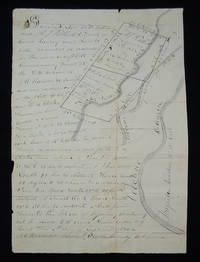
185268368Placer County California 1852. GOLD RUSH. Gold Rush Map Manuscript. Being a Survey for the adjoining plots of land belonging to H.H. Watson and A.J. Polhill. Placer County California: 1852.<br> <br> Two pages on a single sheet 17 1/8 x 10 7/8 in.; 438 x 275 mm. Manuscript document with map dated variously between 4-24 September 1852 and signed by H.H. Watson A.J. Polhill and others. Sheet with some mild staining and ink blots. Some minor chipping at edges and some separations at the creases. Creases reinforced with nearly invisible tape. Overall a very interesting piece of gold rush history. We could not find any other California mine surveys at auction in the past 50 years.<br> <br> "Survey for H.H. Watson and A.J. Polhill. A Tract of land laying near ville bounded as described in the annex plot commencing point as the S.W. corner of J.H. Hancock survey." "Survey made by N.O. Hinman County Surveyor."<br> <br> "In the present survey the tracts of land being issued to Watson and Polhill are bounded on the right by the Volcano Mining Company Ditch and Volcano Canion sic with the Todds sic Valley Company Ditch running through each plot. The Volcano Gold Gravel Mining Company was one of the most extensive gravel mines during the Gold Rush and hundreds of acres of valuable mining lands were drained by its enterprises. Placer County falls in both the Sacramento Valley and Sierra Nevada regions in what is known as the Gold Country. The discovery of gold in this region in 1848 brought tens of thousands of miners from around the world and thousands more settled in the area to provide goods and services to them. The name "Placer" is taken from the Spanish word for gravel or sand deposits containing gold." From Sotheby's.<br> <br> HBS 68368.<br> <br> $3500. Placer County, California unknown
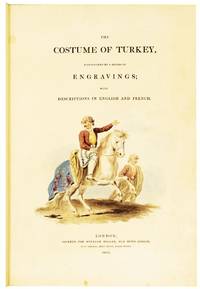
18026160<p>"ONE OF THE BASIC WORKS ON TURKISH COSTUME" ATABEY</p><p>Folio 35 x 24.4 cm. Hand-colored vignette title-page in English followed by title-page in French; preface in English and French 8 pp; table of contents in English and French 2 pp.; and 60 hand-colored stipple engravings many on paper with watermarks dated 1796 after Octavian Dalvimart and engraved by John Dadley or William Poole the title-page vignette by R. Jones; each engraving always printed on the verso with facing description page English on recto and French on verso. Occasional light spotting and off-setting from plates to the facing description; plate 1 and tissue guard bound at the beginning preceding English title-page. Early 20th-century red straight morocco by Bayntun-Rivière their stamp in upper left-hand corner of front flyleaf blind- and gilt-stamped tooling on boards turn-ins and spine marbled endpapers; some rubbing but generally excellent.</p><p>First edition with watermarks dated 1796 of "one of the basic works on Turkish costume which has provided the prototypes for numerous other illustrative material" Atabey. Dalvimart's vivid plates primarily depict the vibrant attire of the ruling classes and their servants but they also showcase traditional garments—especially those worn by women—from the extensive territories of the Ottoman Empire at the time encompassing regions such as Bosnia Albania Greece Syria and Egypt.</p><p>Octavian Dalvimart remains a somewhat enigmatic figure. He appears to have been active as an artist and engraver in England and France in the early 19th century. According to the preface he traveled to Athens in 1797 and Turkey in 1798 where he created the original drawings for the plates consistently sketching from life. The characters are precisely drawn and handsomely depicted in vivid colors. The accompanying descriptive text is sometimes attributed to William Alexander drawing heavily from the published accounts of Turkey by James Dallaway 1797 Baron de Tott who resided in Constantinople for many years until 1790 and other sources. This first edition was followed by subsequent editions in 1818 and 1820.</p><p>Little is known about the two engravers John Dadley 1767–after 1807 who worked in London and William Poole active 1803-1807. R. Jones active early 19th century exhibited at the Royal Academy from 1780 to 1812.<br /><br /> Abbey Travel 370; Atabey 312; Blackmer 444 ca. 1820 impression Colas 782; H. Hiler Bibl. of Costume 1939; Lipperheide 1422; Vinet 2337; Bénézit III p. 317 Dadley III p. 335 Dalvimart and VI p. 95 Jones no entry for Poole.</p> London, Printed for William Miller, Old Bond Street, by T. Bensley, Bolt Court, Fleet Street hardcover
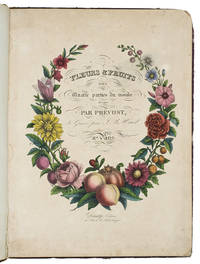
1837ABC_47224Paris 1837. Folio ca. 35 x 26.5 cm. Dauty Contemporary half sheepskin maroon watered silk sides title in gold on the front board. With an engraved title-page and 11 of 23 engraved botanical prints: 4 showing 5 kinds of fruits each 3 showing 9 types of flowers each and 4 showing flower bouquets. All prints are stipple engravings and coloured by a contemporary hand some parts glazed with egg white. 12 ll. Extremely rare botanical print series showing both European and exotic fruits and flowers engraved by Jean-Baptiste Huet the younger 1772-1852 after designs of Benoît-Louis Prévost 1735-1804 or Jean-Louis Prévost 1760-1810. It also includes four plates showing bouquets from Europe America Asia and Africa. Only one complete copy is known at the Bibliothèque nationale de France we have traced no copy in sale or auction records and it is not mentioned in the usual botanical bibliographical works. The BnF copy is described in the Inventaire du fonds français après 1800 where the series consists of 23 prints issued all together under this title. The BnF and the IFF date the work ca. 1837-1839 but it is more likely that it is ca. 1837-1838 as Dauty died in 1838 and he printed at Rue de Bibliothèque no. 16 only in 1827 and 1835-1838. The BnF ascribes the designs for the prints to Benoît-Louis Prévost but Jean-Louis Prévost remains a possibility for he produced another famous print series of flowers and fruits in the same style of stipple engravings Collection des fleurs et fruits 1805.With a contemporary inscription "A M.elle Vincent" on the first free endleaf dedicating it to or belonging to the famous French 19th-century botanical painter Henriette Vincent 1786-1834 who was a student of Gerard van Spaendonck and Pierre-Joseph Redouté. Head and foot of the spine damaged and spine slightly worn boards a little rubbed edges slightly worn corners bumped. Some light browning and foxing throughout title-page a little more browned and with a light marginal water stain. Lacking 12 plates according to IFF. Otherwise in good condition. An extremely rare botanical print series vividly hand-coloured.l BnF FRBNF40503621; IFF Inventaire du fonds français après 1800 Huet p. 518; not in Nissen BBI; Pritzel; Stafleu & Cowan. hardcover
185128441New York: Nagel & Weingaertner 1851. Hand-coloured lithograph after Hanson titled below the image. Expert restoration closing tears. The first America's Cup: a rare hand coloured lithographed view of the winning yacht which gave its name to the cup.<br/> <br/> In 1851 the Royal Yacht Squadron proposed a race around the Isle of Wight. A group of New York Yacht Club members led by Commodore John Cox Stevens built a yacht designed to compete in such races. Designed by Steers and Co. and captained by Richard Brown the yacht America would win the race by eighteen minutes giving its name to one of the oldest and best-known trophies of the sport: the America's Cup. This lithograph and lithographer are not recorded by Harry T. Peters; we find no other extant examples of this rare print.<br/> <br/> For Nagel and Weingaertner see Peters America on Stone pp. 291-294. Nagel & Weingaertner unknown
185128441New York: Nagel & Weingaertner 1851. Hand-coloured lithograph after Hanson titled below the image. Expert restoration closing tears into the image. The first America's Cup: a scarce hand coloured lithographed view of the winning yacht which gave its name to the cup.<br/> <br/>In 1851 the Royal Yacht Squadron proposed a race around the Isle of Wight. A group of New York Yacht Club members led by Commodore John Cox Stevens built a yacht designed to compete in such races. Designed by Steers and Co. and captained by Richard Brown the yacht America would win the race by eighteen minutes giving its name to one of the oldest and best-known trophies of the sport: the America's Cup. This lithograph and lithographer are unrecorded by Harry T. Peters; we find no other extant examples of this rare print.<br/> <br/>On Nagel and Weingaertner see Peters America on Stone pp. 291-294. Nagel & Weingaertner unknown books
1837626988Philadelphia: The Liberal Union 1837. xvii 2 20-118 pp. missing page 119 1. Black leather spine with gilt titling and marbled endpapers; "Printed at the Office of the National Laborer". Heavy wear and chipping to spine; boards no longer extant. Front free endpaper and first blank page detached but still extant with some chipping to corners. Some staining to bottom corner at gutter of first few pages. Some mild foxing throughout. Final page 119 no longer extant with bottom quarter of following blank missing as well. Some discoloration smoke to tail of final pages. Gatherings still held together quite securely although with some cocking to the top half of the spine. Appears to be a good candidate for recasing or rebinding with a facsimile copy of the final page. Originally published in eight parts under the title "Equality-- A Political Romance" in the Philadelphia deist magazine "The Temple of Reason" this utopian fantasy is commonly accredited to be the first utopian novel written and published in the United States. According to the historian Richard J. Twomey "Equality." marks a turning point in social critique in how it marks private property itself as the root of "social evil" rather than inherited privilege or property. Faherty and White. This scarce edition of 1837 is preceded only by the 1802 serialization. . Hard Cover. Fair. The Liberal Union Hardcover
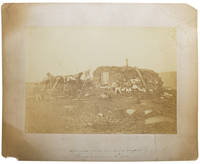
1872303445London 1872. Albumen print measuring 11-5/8 x 16-1/4 in 295 x 412 mm. Laid down on thick cream card with manuscript caption measuring 17 x 21 in. Image slightly faded card chipped with some minor soiling one tear not affecting image. Albumen print measuring 11-5/8 x 16-1/4 in 295 x 412 mm. A rare survival. This image appears in William Bradford's fabled book of photographs Arctic Regions. It was taken by either Dunmore or Critcherson the two professional photographers from Boston who accompanied Bradford on his 1869 expedition to the Arctic on the steamship Panther. It was probably taken at Upernavik a settlement on an island off Greenland's west coast or Godhavn.<br /> <br /> Arctic Regions included 141 albumen prints in addition to Bradford's account of the voyage. The title of the photograph here varies from the printed caption in the book where it reads: "Plate Number: 116 Esquimaux igloe or winter hut made of turf and stones. The entrance is to the left through a door which is about three and a half feet high. The length of the passage is about twelve or fifteen feet and at the farther end is another door through which one almost has to crawl on his hands and knees. After passing through there is then room to stand erect but one is forced to leave very soon owing to the bad air." <br /> <br /> This photograph is slightly larger than the one in the book which is 277 x 365mm. Furthermore the image in the book is cropped closer on the right and left margins. <br /> <br /> The New York Public Library has a folio of 26 images of near identicle size mounted on card. The portfolio was donated to the library in 1892 as part of the Robert Stuart Collection. According to Horch originally all of these images were captioned in manuscript though were later remounted with typed captions as "the original ink-written captions for the photographs had badly faded by 1940." It's interesting that the caption on their duplicate of this image is the same as ours and the image itself has not been cropped. Horch writes that Bradford probably not only selected these images himself but "closely directed the actual taking of the photographs." <br /> <br /> It's entirely likely that Bradford would have had extra prints made to distribute to friends repay favors and most of all to solicit subscribers to what was a very expensive book to publish. Given how it conforms to the examples in the Robert Stuart portfolio this particular image is probably one of them. Horch Frank. "Photographs and Paintings by William Bradford". American Art Journal 5.2 1973: pp 61-70; cf Parr and Badger I p31Prm/photo unknown
1872303445London 1872. Albumen print measuring 11-5/8 x 16-1/4 in 295 x 412 mm. Laid down on thick cream card with manuscript caption measuring 17 x 21 in. Image slightly faded card chipped with some minor soiling one tear not affecting image. Albumen print measuring 11-5/8 x 16-1/4 in 295 x 412 mm. A rare survival. This image appears in William Bradford's fabled book of photographs Arctic Regions. It was taken by either Dunmore or Critcherson the two professional photographers from Boston who accompanied Bradford on his 1869 expedition to the Arctic on the steamship Panther. It was probably taken at Upernavik a settlement on an island off Greenland's west coast or Godhavn.<br/><br/>Arctic Regions included 141 albumen prints in addition to Bradford's account of the voyage. The title of the photograph here varies from the printed caption in the book where it reads: "Plate Number: 116 Esquimaux igloe or winter hut made of turf and stones. The entrance is to the left through a door which is about three and a half feet high. The length of the passage is about twelve or fifteen feet and at the farther end is another door through which one almost has to crawl on his hands and knees. After passing through there is then room to stand erect but one is forced to leave very soon owing to the bad air." <br/><br/>This photograph is slightly larger than the one in the book which is 277 x 365mm. Furthermore the image in the book is cropped closer on the right and left margins. <br/><br/>The New York Public Library has a folio of 26 images of near identicle size mounted on card. The portfolio was donated to the library in 1892 as part of the Robert Stuart Collection. According to Horch originally all of these images were captioned in manuscript though were later remounted with typed captions as "the original ink-written captions for the photographs had badly faded by 1940." It's interesting that the caption on their duplicate of this image is the same as ours and the image itself has not been cropped. Horch writes that Bradford probably not only selected these images himself but "closely directed the actual taking of the photographs." <br/><br/>It's entirely likely that Bradford would have had extra prints made to distribute to friends repay favors and most of all to solicit subscribers to what was a very expensive book to publish. Given how it conforms to the examples in the Robert Stuart portfolio this particular image is probably one of them. Horch Frank. "Photographs and Paintings by William Bradford". American Art Journal 5.2 1973: pp 61-70; cf Parr and Badger I p31Prm/photo unknown books
1872ST17640-G121872-1921. 60 different editions in 61 volumes. <br/> Most items in their original publisher's bindings mostly cloth or wrappers and a few in limp suede; one in half morocco. Condition ranging from very good to very fine; many of the cloth items with light shelfwear rubbing to edges mild soiling fraying to head and tail of spine and minor condition issues internally light scattered foxing and browning a handful of items with more noticeable condition issues spine partially lost rubbed joints moderate browning etc. but on the whole an excellent group.<br/> <br/> Amassed over the course of many years by a passionate collector of the Rubaiyat this is a very substantial and wide-ranging group of 60 works that attest to the work's enduring popularity more than 150 years after Edward FitzGerald introduced it to the West. Son of a wealthy Irish landowner FitzGerald had enough money to pursue a rather desultory literary career as a "genteel gipsy" in Terhune's words before beginning to study languages in middle age. He started his translation of the quatrains "rubáiyát" in Persian attributed to "Umar Khayyam" in 1856; according to DNB about half of FitzGerald's final work paraphrases rather than directly translates portions of the 11th century poem while the rest is original verse inspired by Omar. "The result is generally seen as being in some ways an original English poem one that is much better known than Omar's poem is in Persian." DNB In Jewett's opinion it certainly earned FitzGerald "a prominent place among the immortals of English literature." In 1858 FitzGerald submitted 25 of the "less wicked" verses to "Fraser's Magazine" only to be rejected. He had 250 copies published anonymously at his own expense but had no luck selling them. Admitting defeat he gave 200 copies to Quaritch; these sold so poorly that they were relegated to the penny bin where Potter says they were discovered--and soon celebrated--by Dante Gabriel Rossetti and Algernon Swinburne. Those copies that remained unsold when Quaritch moved to Piccadilly in 1860 were either lost or destroyed but by 1861 Rossetti and his Pre-Raphaelite brethren along with Celtic scholar Whitley Stokes were evangelizing for the work embracing the lush lyrical verse that would move English poetry away from Victorian orthodoxy and convention. According to Day by the end of the 19th century "a copy of the 'Rubaiyat' upon an Oxford table was a symbol of sophistication. Today . . . it remains the most popular single poem of the Victorian era." The present collection is especially strong in illustrated editions with more than 25 artists represented including Edmund Dulac Elihu Vedder Willy Pogany Adelaide Hanscom Gilbert James Edmund J. Sullivan Arthur Szyk René Bull and Abanindro Nath Tagore. Notable text editions in this group include a Third Edition of FitzGerald's translation; a First Published American Edition; and a signed and inscribed copy of Eben Francis Thompson's translation. There is also a small group of fine press printings including examples by the Gregynog Press Thomas Mosher and Elbert Hubbard. There are no duplicated editions in this collection and there are no trade paperbacks. A full list of the collection's contents is available upon request. unknown
1806145411Paris: Barba 1806. A beautiful copy Scarce first edition of this essential culinary encyclopaedia the most popular work published by a professional cook in the 19th century. Viard a worthy competitor to Carême in terms of celebrity dedicated his book to the famed gourmand and restaurant reviewer Grimod de La Reynière praising Grimod and his fellow food enthusiasts for having elevated culinary discourse. "To judge from his practical knowledge Viard must have been a professional cook at one time thought to have been chef de cuisine to Louis Philippe comte de Ségur and Francis Egerton 8th Earl of Bridgewater but he described himself simply as an homme de bouche food expert probably someone in charge of catering for a large household. Despite his book's impressive title Viard declared he was writing for 'all levels of fortune' in this egalitarian society of citoyens and indeed the polished text includes such basics as pea soup quick-cooked rabbit and salt cod provençale. At a higher level he was the first cook to describe the classic puffy soufflé flavoured with chestnuts frangipane white coffee vanilla or potato still a novelty that became such a symbol of France. The book did well even when the restoration of the French monarchy required a hasty title change to Le cuisinier royale and the 'year of revolutions' in 1848 precipitated another change this time to Le cuisinier national. only to revert to impérial once more under Emperor Napoleon III. The text too underwent hundreds of additions first by Viard and later by colleagues allowing it to remain in print until 1875" Willan running to at least thirty-two editions. Food scholar Darra Goldstein notes that Le cuisinier impérial also contains the first published recipe for apple charlotte. Hector Dubois d'Enghien was a trade bookbinder son of the prominent Brussels binder Joseph-François Dubois d'Enghien 1841-1923. He took over his father's workshop c.1918 and partnered with Edmond Dooms a gilder from De Samblanx in 1923. An accomplished scholar Hector Dubois d'Enghien wrote a history of bookbinding in Belgium published in 1954. The first edition of Le cuisinier impérial is rare both institutionally and commercially. WorldCat Library Hub and KVK locate just six copies institutionally: three copies in Germany Badische LB LB Rheinland-Pfalz Sächsische LB two in the US Harvard Schlesinger Indiana and one in France BnF. We can trace four copies at auction since the 1920s only one of which is dated from within the last 45 years. Octavo 192 x 122 mm. Beautifully bound by Dubois d'Enghien-Dooms in early 20th-century dark green straight-grain half morocco smooth spine lettered in gilt separated into compartments with gilt scrollwork rolls and double fillets floral motifs to first third fourth and fifth compartments marbled boards edges sprinkled blue. Bound like Cagle without the first leaf half-title verso a publisher's advertisement. Fine externally; binder's stamp to front pastedown contents evenly browned and generally clean central gatherings foxed and single stain to sig. 7.7 small spot to p. 387 partly obscuring one word a few ink marks to Index. An excellent copy. Cagle 433; Vicaire 860; Willan pp. 258-9. Not in Bitting see note on p. 478 for later editions. Darra Goldstein The Oxford Companion to Sugar and Sweets 2015. hardcover
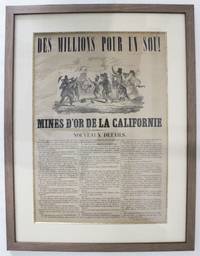
18495043Paris: Typ. Schneider Rue d'Erfurth 1 1849. Very good. Broadside approximately 18 x 13 inches. Matted and framed. A pair of short closed tears repaired at lower edge. Even toning and light creasing. Contemporary manuscript annotation under caption title. A wonderful illustrated faux news broadside published in Paris as gold fever coursed through Europe in 1849. The headline promises "nouveaux détails" of the gold mines in California but the text is in fact a humorous description and light-hearted admonishment of the multitudes thoughtlessly giving up their livelihoods for the hardscrabble life of a gold digger in the California wilderness. The first section runs through a litany of types who are abandoning their lives for adventure and advises them not to consider the difficulties of the journey:<br /> <br /> "En route pour les mines d'or de la Californie! Partez! Il n'est pas néccessaire que vous preniez de lourds baggages : une cassette et une bonne pioche vous suffriont. Ne vous laissez pas décourager par la peur d'une navigation de cinq mois. elle sera peut-être périlleuse. mais le résultat est si consolant : de l'or!. toujours de l'or!. Qu'importent la colique et les fièvres doublées d'un mal de mer brutal. de l'or!. toujours de l'or!. Qu'importe d'être noir ou jaune en mourant du moment qu'on se repose dans un linceul d'or pour l'éternité! Partez!"<br /> <br /> The remainder of the text somewhat sardonically describes life in California and warns prospective travelers not long for the comforts of home but rather to concentrate on their sought-after riches:<br /> <br /> "Par example ne vous attendez pas à jouir de toutes les douceurs de la vie. Vous n'y trouverez ni biftecks au beurre d'anchois ni dinde truffées; car les aliments y sont rares. Mais les racines y sont en grande abondance. Vous vivrez un peu à la manière des anachorètes pour un temps. seulement vous déterrerez de l'or. ce qu'ils ne faisaient pas que l'on sache."<br /> <br /> The illustration which occupies approximately the top third of the broadside depicts men and women from all walks of life carrying pickaxes on their shoulders and racing for a ship about to depart. The image carries the printed signature of "B. Netter;" a contemporary manuscript note under the caption identifies the publication date as February 17 1849. The Bibliothèque Nationale de France estimates that as many as 40000 French men and women made their way to California between 1848 and 1856. The present broadside is an excellent document of California gold fever in France and the pervasive interest in gold rush news in Europe during the mid-19th century. Rare we locate just four copies at Berkeley UCSD California Historical Society and the BNF. Typ. Schneider, Rue d'Erfurth, 1 unknown
1849B5668Marseille: Carnaud c.1849. A fine example of this rare book. Binding: Contemporary vellum boards rebacked expertly with five raised bands compartments blind and gilt horizontal fillets with elaborate central arabesque gilt motif and gilt lettered morocco title on two. Notes: Text in Arabic. Preface in French Text in Arabic. Germanos Farhat was appointed Maronite Archbishop of Aleppo by Pope Pius IX. He served in this capacity from 1725 until his passing in 1732 as well as a skilled grammarian writer and religious poet. He was an important figure of the so-called Arab Renaissance. A statue in his honour remains erected in Aleppo. His work was revised edited and expanded considerably by the well known historian and commentator Rochaid de Dahdah elevated to knighthood receiving the title of “Count†or Comte by Pope Pius IX. Size: thick quarto 260x185mm Illustration: Illustrated portrait of the author Archbishop Farhat of Aleppo and illustrated gilt lettered title both in Arabic with captions in French. Provenance: Two ex libris stamps on French title: ‘Beirut library’ in blue ink and other unrecognizable. Pages: Frontispiece illustrated title blind Arabic text 723 preface summary French 3 printer’s note title in French. Category: Book Asia Middle East General; Book Literature Carnaud hardcover
189833202-888St. Petersburg n.pr. 1898. Gold-enhanced chomolithographic Art Nouveau title in red with ms. presentation 2 chromolithogr. plates 3 wood-engraved plates and 1 engraved plate by W. W. Matthé. 272 pp. 1 leaf VI ff. plates. Large 4to 310 x 220 mm. Orig. white cloth richtly decorated and lettered richly in gold and black colored printed endpapers all edges decorated in gold and red with dark red book jacket. In orig. dark red box. St. Petersburg n.pr. 1898. First German edition limited to 100 copies. This is copy no. 51 with a handwritten presentation to "Herrn Medicinalrath Dr. Grödel". Isidor Maximilian Mayer Grödel 1850-1921 was a student of the Munich radiologist G. Rieder and pioneer in balneaolgy and cardiology. This is Vladimir Vasil'evich Stasov's 1824-1906 rare report on the most elaborate book production of Russia in the 19th century N. P. Kondakov's monumental publication on Byzantine Enamels Collection A.V. Zvenigorodskoi. His book appeared in 1892 and is an important document of technological capacity of Russian printing industries. Kondakov's book than cost 120'000 gold roubles by the exchange rate for 1892.- Splendid copy. GREECE; ART; GENERAL & APPLIED ; St. Petersburg, n.pr. hardcover
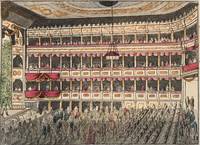
181210794Vienna: Maria Geisler 1812. Contemporary light green glazed paper boards with a ropework roll for an outer frame ochre endleaves gilt-ruled flat spine hinges rubbed gilt-lettered red paper label all edges gilt. The Austro-Hungarian capital in your pocket - her only view book. The prints include theaters opera houses the Imperial Riding School gardens parade grounds a swim club an obelisk coffee houses porcelain and weapons factories hospitals painting galleries the bustling Danube christoph de bac's famous hexadecagon circus building etc. The publisher's address 1200 Graben dates the suite. I have not located a set outside Austria. Individual prints were and are offered for sale. In good condition; two double-page views were likely issued later and are not present here. Two plates have been neatly mounted at the time of issue on the paper stock of the edition nos. 89 and 99. All but two views are in their first or only state.¶Nebehay & Wagner Bibliographie altösterreichischer Ansichtenwerke 193. Maria Geisler unknown books
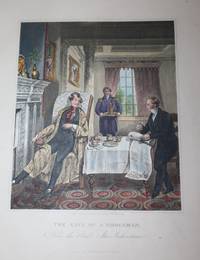
1825007994London: George Henderson. Printed by George Dawe who also was engraver 1825. First Edition. Full Morocco. Near Fine. Suite of nine hand-colored aquatint plates depicting the louche hedonistic and self-destructive life of a young aristocrat. Bound by Riviere & Son in full red morocco with ruled border raised bands other gilt decoration including turn-ins marbled endpapers. N.d. circa 1820s. 4to. 31 by 25 cm. No title page -- this was issued as a suite of plates not in a book form. A blank sheet in front two in back and tissue guards between plates. Each plate is depicting a scene and basically a step in the descent to self-destruction by the young buck aristocrat. Scenes are The Inheritance The First Party The Night House in other words the bordello The Betting Booth at the racetrack The Gambling House The Usurer The Mess Room clearly the dining room of an elite military unit The Duel and finally The Sick Room. We would note that the Usurer has the casual anti-Semitic trope so prevalent throughout history of the hook-nosed lender. The artwork has a pleasant slightly naive quality with the loosest of adherence to perspective. The settings are generally quite resplendent capturing Regency England grandeur perfectly. Scarce. Yale has several copies. Only two other complete sets held by institutions according to OCLC First Search one at Harvard and one somewhat later and published by Tegg at the Art Institute in Chicago. The Henderson version clearly the first was issued without color we would add. The Harvard Hollis catalogue gives no indication whether the copy at Houghton has hand-coloring -- something that Hollis generally will denote if it does. No copies found in commerce on date of this description was prepared. Light wear to binding. Light soiling in the margins of the plates. Pictorial elements consistently bright and attractive. George Henderson. Printed by George Dawe, who also was engraver unknown
1856B6046St. Petersburg;: Vasily Timm c. 1856 . Title leaf slightly soiled; but overall texts and plates are clean and crisp and in very good condition; tears to leaves # 27 28 29 33 have been expertly repaired. A very attractive example in full contemporary binding. . Edition: First 1856 Edition. Binding: Contemporary quarter morocco over marbled boards; spine with six flat gilt ruled bands forming five blind compartments with gilt lettered title on two and gilt date on four. Notes: Text in Russian. The Russian art periodical publication or gazette of printed collections of lithograph scenes was a chronicle of currents of the life of Russia published by leave of the Royal Family and by the artist himself - painter and draftsman - Georg Wilhelm Timm also known as Vasily Fyodorovich Timm or ВаÑилий Фёдорович Тимм 1820-1895 a Baltic-German painter lithographer and ceramic designer known for his genre and battle scenes; the period extending over 12 years from 1851 to 1862 in St. Petersburg. Having travelled extensively throughout Russia serving as a battle painter during the second phase of the Caucasian War he was chosen in 1852 to accompany the Tsar Nicholas I on a visit to Finland his main task continuing to faithfully share his impressions without criticism or analysis. Later he would make sketches of the Siege of Sevastopol at the height of the Crimean War of 1853-1856. In 1855 this earned him the title "Academician" conferred by the Imperial Academy. In 1860 the collection was compiled and an index of drawings prepared. The publication discontinued in 1862 due to the weakening condition of V.F. Timm's eyes. Scenes from Petersburg life portraits of popular figures reproductions from paintings cartoons etc accompanied by brief explanatory texts had been a great success with the public the complete series of having featured 432 illustrations with Timm referred to as the "Russian Gavarni" having primarily worked with lithography and woodcut engravings. Lithographs were printed in two tones along with a brief explanatory text authored by the Russian publicist and publisher N. I. Grech. and Timm's drawings executed by other artists with lithographs prepared in the workshop of A.E. Münster. <br>As of 2013 publications are estimated at 2-2.5 million rubels; in 2007 a reprint of the collection was made in St. Petersburg including three catalogs and three albums with 432 illustrations; publishers have tried to bring all illustrations as close as possible in color to the originals and leather bindings were chosen with covers gilt embossed.<br> Size: oblong folio 528x352mm. Illustration: Illustrated with 19 full-page 16 half-page and 24 smaller lithographs; and one map. Volume: Text leaves and lithogra Pages: 53 text leaves including one map plus 35 large oblong lithographed leaves. Category: Book Russia; Book Plate Books General; Vasily Timm, hardcover
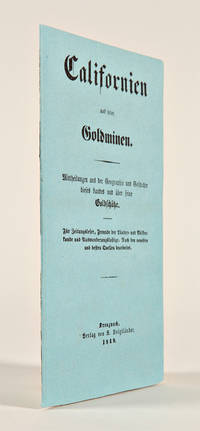
1849WRCAM52151Kreuznach: R. Voigtlander 1849. 32pp. Printed blue wrappers rear wrapper original front wrapper in facsimile. Small corner repairs to rear wrapper. Some foxing two ink stamps on titlepage. Else very good. In a half morocco slipcase and cloth chemise. The first edition of an exceedingly rare Gold Rush pamphlet printed in the hallowed year of that epochal event. "Like many guidebooks for Europeans this pamphlet gives general information on California's physical features history and 'Notes for Emigrants' on the gold discovery. The portion on California's gold riches consists primarily of an article reprinted from the KOELNER ZEITUNG of January 14 1849 which in turn summarizes R.B. Mason and others. The guide mentions the many German settlers in the Sacramento Valley and speaks proudly of Captain Sutter" - Kurutz. <br> <br> Only four institutions worldwide report a copy of this book: the California State Library the University of California at Berkeley Yale and the State Library in Berlin. It is even more difficult to encounter at auction this copy being the only one on record to pass through the rooms. COWAN II p.102. HOWES C43 "aa." KURUTZ 112. SABIN 9984. R. Voigtlander hardcover books
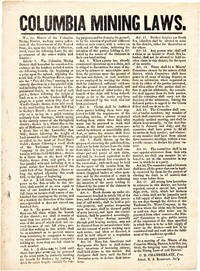
1853WRCAM46036Columbia Ca.: Gazette Print 1853. Broadside 10 3/4 x 8 inches. Printed in three columns. A bit of light foxing mostly in margins. Near fine. In a folding cloth clamshell case spine gilt. A rare broadside printing of the laws of the Columbia Mining District in California in 1853 created and enforced by the miners for their own self-government. The seventeen articles all deal with regulations for mining and claims. The first nine set out rules for making and operating claims. The next three address foreign ownership of claims. Article 10: "None but Americans and Europeans who have or shall declare their intentions of becoming citizens shall hold claims in this district." Article 11: "Neither Asiatics nor South Sea Islanders shall be allowed to mine in this district either for themselves or for others." Article 12 sets out a punishment for any miner who sells a claim to an Asian or a Polynesian. The final five articles set out rules for enforcing the laws including the creation of a Miners Committee and a system of binding arbitration. According to the text the laws were adopted "at a meeting of the Miners of the Columbia Mining District held Oct. 1st 1853." and the laws are signed in print by "C.H. Chamberlain Pres." and "R.A. Robinson Sec'y." <br> <br> "The item is of basic importance.as an example of how the California miners - or men beyond the reach of government anywhere else in our States and Territories for that matter - banded together and enacted and enforced codes of law for their own protection" - Eberstadt. The COLUMBIA GAZETTE which printed this broadside was according to Kemble the second newspaper to operate in Columbia starting operations in the fall of 1852. The first newspaper in the area the COLUMBIA STAR apparently printed only two or three issues in October-November of 1851 before the printing press was destroyed by vandals. <br> <br> Greenwood locates only three copies at the California Historical Society and the Bancroft Library and the Streeter copy which was sold at the Clifford sale in 1994. Rocq lists a copy at the Huntington Library. OCLC adds copies at Yale Library of Congress University of California at San Diego Stanford and DeGolyer Library at Southern Methodist University. A rare and interesting example of the search for order in the tumult of the gold rush. <br> <br> The Streeter copy sold to Howell for $550 in 1968. It later reappeared in the sale of California collector Henry Clifford in 1994. GREENWOOD 381. ROCQ 15427. EBERSTADT 131:105. STREETER SALE 2735. CLIFFORD SALE 26. OCLC 29876358. Gazette Print hardcover books
1897526<p>A collection of 50 albumen prints from the British Museum Series numerous manuscript captions slight age-related toning photographs mounted to album occasional light marginal foxing not affecting image original maroon cloth with quarter morocco spine retaining studs title gilt to spine slightly rubbed folio London: W.A. Mansell c.1897 </p><p><br /></p><p>The 50 photographs of antiquities in the British Museum covering Greek Roman and Etruscan Statues and Vases including 24 of the Parthenon Frieze. Many of the images are accompanied by manuscript captions. Other photographs include:</p><p>Horse of Selene Ilissos "Colossal Lion" The Piranesi Vase "Marble Vase found in the Villa of Hadrian at Tivoli" "Mercury" "Venus de Medici" "The "Townley" Venus" "Venus Entering Bath" "Apollo as a Player of the Lyre from Cyrene" "Hercules" Hercules found in Hadrian's villa at Tivoli Drum of Sculptured Column from Temple of Diana Artemision Ephesus "Casts from Balustrade of Temple of Wingless Victory - Athens -" Etruscan Sepulchral Monument in terracotta "Thalia"</p><p>T. Aurelius Fulvius Antonius Pius Aurelius Antoni Satyr Apollo Demeter Ceres and Sepulchral Rites at the Tomb of a Hero. </p><br /><p>The Elgin Marbles are a collection of statues and architectural decoration acquired by the Earl of Elgin during his time as Ambassador to the Ottoman Empire. He successfully petitioned the authorities to be able to measure draw and remove figures in various ruins. The most extensive work was on the Parthenon or Temple of Athena but he also received permission to remove sculptural and architectural elements from a number of other ruins including the Acropolis and the Temple of Nike Athena. </p><br /><p>The most famous of the Elgin Marbles are the Parthenon Sculptures a collection of different types of marble architectural decoration on the Parthenon. The Parthenon Frieze 75 metres in length depicts various scenes including the battle between the Lapitas and the Centaurs at the marriage feast of Peirithoos. Elgin originally intended on using the Frieze as decoration in his private home but due to the collapse of his marriage he sold them to the British Museum. There have been debates over the legitimacy of Elgin's excavation. After an investigation from a Parliamentary Select Committee in 1816 Elgin's actions were found to be entirely legal. Since 1983 Greece has formally requested the British Museum to return all the Parthenon Sculptures in the Museum's collection the British Museum states there are no current discussions with the Greek Government on this issue. </p><br /><p>Roger Fenton is one of the most celebrated figures in the history of photography. He was a creative and highly influential photographer in the mediums "golden age" of the 1850s. In his role as the British Museum's first official photographer Fenton demonstrated his sure sense as a 'photo artist'. He was initially engaged to photograph cuneiform tablets but that soon developed into taking pictures of other antiquities. As early as 1852 Fenton received permission from the Trustees to photograph antiquities within the museum establishing a small studio inside the museum the following year. He left in 1854 to serve as a photographer in the Crimean War for which he is most widely known but he was re-appointed on his return in 1856 until the termination of his contract in July 1859. The Trustees decided that photography was not cost effective and after they failed to negotiate the South Kensington Museum now the V&A as an alternative Fenton terminated his association with the British Museum. </p><br />References: The British Museum The Metropolitan Museum of Art Luminous-Lint. W.A. Mansell
1850List1929California 1850. With thirteen letters most multi-page written from Monterey in 1850 a 7 pp facsimile transcription of a 1834 Mexican land grant on cloth measuring 11 x 14 inches and and eleven page document on paper in Spanish relating to a Monterey land grant transcribing an 1841 document. Letters heavily worn with some loss at margins but mostly legible land grant in good to very good condition transcribed document in Spanish in fair condition with water damage to margins. Fair. An interesting archive of 1850s-era material relating to the life and career of the surveyor Edward Williams which recently surfaced in the central mother lode region. The group includes his personal letters from the California Gold Rush as well as well two interesting documents form his work for the Surveyor General J.W. Mandeville in 1858 where he transcribed two Mexican land grants. <br /> <br /> Lt. Edward Williams was a member of Company E New York Volunteers under Capt. Nelson Taylor. He came to California around 1847 and found employment as a deputy surveyor later working for the Office of the Surveyor General of the Unites States for California. In 1858 Surveyor General J.W. Mandeville commissioned a report on Mexican-era California Land Grants. Mandeville had Williams copy the original documents exactly - inclusive of an ink copy on linen that is an "exact tracing" of the original documents starting with 1834 up through about 1840. These "copies" were submitted to the Surveyor General in 1858 for use in the report. Williams continued the title work by copying other documents from about 1841 though this time not as a tracing but hand copied on the usual blue paper of the 1850s.<br /> <br /> The documents illustrate the length officials went to while they investigated Mexican Land Grant titles to California properties in the 1850s. The process was difficult and involved two distinctly separate cultures and legal systems that clearly conflicted. The Mexican Government granted rights for these large land parcels in California to various people but clearly stated they could not sell parts of the property. The wording was used many times in litigation of the period in both defense of the land grants and in opposition to how the land grants were handled. The issues were actually quite simple in that the Mexican legal standards for land grants was far different from those in the United States and the two differing forms of written land ownership and use clashed. <br /> <br /> These documents reflect a parcel of land granted to Francisco Mesa at "Corral de Tierra" a large parcel in Monterrey County California. Mesa had requested land for "his personal use and that of his family." In the Grant the title papers reflect "while the land is under Francisco's possession it cannot be divided mortgaged or a levy placed on it nor handed down." These original documents help illustrate the complex story of Mexican Land Grants in California. <br /> <br /> Also included are thirteen letters from Ed aka "Ned" to various family members primarily his mother and sister Alice and vice versa. About half are from Ed the other half are written to him. The dates of the letters are; 1850: February 10th April 15th April 16th April 28th June 10th July 30th October 11th and November 17th and 1851: September 9th. One undated letter with heavy loss is written from Panama. The letters are generally readable but the condition far from perfect with water stains throughout and chips abundant along edges and significant textual loss. The letters are generally at least two pages sometimes four or more inclusive of writing in the crossed line custom to save paper. Most are datelined at Monterrey where he discusses the people the customs setting and more. <br /> <br /> Despite the condition flaws there is much to be gleaned from his correspondence. In his April 15 1850 letter . he describes his trip to San Juan Bautista from Monterrey in detail while he was on his way to San Francisco. Williams writes of his great pleasure on tasting cooked beef by the Indians that he found was the best he ever tasted as they camped on the way to San Jose with the ultimate goal Mission Dolores in San Francisco: “this the beef they put on the embers of the fire and broiled it - I never tasted anything like it before so tender so juicy…†One of his first notes on San Francisco: "There are regular streets filled with all kinds of sorts of stores… The shipping covers the water as far as you can see. And those nearest the shore are converted into store houses the rigging being taken down and the and holes cut in the sides for doors.The best houses in town are occupied by gamblers . a large saloon filled with tables on which are played all kinds of games of chance - at some of the tables are displayed immense amounts of coin and gold in lumps worth from 1 to 5000 dollars which some poor infatuated fool of a miner has at some time lost to them."<br /> In his letter of April 16th he discusses both his difficulties with women in California and his lack of fitting in back east: “The Spanish Girls are very nice and all that sort of thing but the trouble is to find one that is educated. I can’t bear an uneducated wom an and I think I shall have to come to N.Y. and bring one out here… I know one or two in N.Y. but I don’t believe they would have such an uncouth specimen of an ‘hombre’ as me…†In his next letter he describes Carmel in detail. He states: “I haven’t been to the mines nor have I any inclination to go†though he intends to settle in California permanently. In his next letter he discusses the people he’s met and how he detests the anglophone community there: “How do I like the People Those of Spanish whom I call my friends I love with all my soul - there is not much society except among them… the Eng. and Am. population I detest from the bottom of my heart. This may sound strange but you will know the por que when you arrive.†He then praises the climate and scenery of Monterey. One letter written from Panama which has unfortunately sustained heavy losses at margins offers some details of the trip on the Chagres River. The replies to Williams from his family offer details on life in New York and are similarly compromised in condition but overall there is enough to glean from the group to provide a detailed example of family correspondence from the period. <br /> <br /> Overall a very interesting and unusual archive of a young professional who moved to California during the Gold Rush period and rejected the Anglophone mining community with particular interest to historians of Monterey and of the systems of land grants that shaped Mexican and American land policy in the nineteenth century. unknown