507 résultats
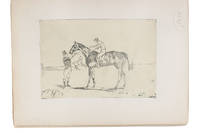
1835H1EFLHU1E5LWEngland and/or Sweden 1835. 4to 24.5 x 18 cm. Each drawing mounted on or occasionally drawn on a card loose in a Swedish blind-blocked textured red cloth portfolio ca. 1860 title in gold on front board decorated endpapers purple on white red cloth ties. 36 pencil drawings of English thoroughbred race horses 7.5 x 11.5 to 11 x 16 cm 1 finished in ink washes and a few touched up with white or light brown. 36 loose ll. A collection of 36 pencil drawings of famous English thoroughbred race horses by at least three artists including one signed "Harry Hall" and several others clearly based directly or indirectly on his paintings. Some horses appear in their stables or grounds sometimes with a stable boy groom or owner others are shown carrying a jockey during a race at a track. The earliest horses shown include a beautiful pencil and ink-wash drawing of Camel 1822-1844 who raced from 1825 to 1827 and won the 1826 Port Stakes at Newmarket. He is better known as the sire of Touchstone 1831-1861 also shown one of the most famous thoroughbreds of all time who raced from 1833 to 1837. In very good condition with only some minor wrinkles in one drawing and faint stains in another. Portfolio good. A charming collection of horse drawings mostly from the early 1850s. ABE CAT Art History hardcover
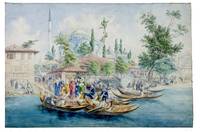
1840J37G5H5ISWE1Istanbul 1840. Mounted on a larger sheet of paper in a passe-partout. Watercolour drawing on wove paper 29.5 x 45 cm with highlights in shellac and a thin black border. A lively scene on the Tophane Quay in Istanbul with the background dominated by the dome and minaret of the 1580 Kilic Ali Pasha Mosque. The tip of a second minaret perhaps from a different mosque is visible in the distance. On the quay an opulently dressed black-bearded Ottoman a high official in the Emperor's court or a wealthy merchant stands in the centre of the scene with his entourage. He wears red robes trimmed with gold and with black decorations a white turban around a red fez and a gold waistband with the hilts of two guns sticking out and carries a walking stick in his left hand. His entourage includes a white-bearded Islamic holy man with a green turban around a red fez a Greek or Armenian man in a black hat a dark-skinned woman in green robes holding a bundle and several other men women and children. They appear to be preparing to depart in the boats that stand ready. Two more dark-skinned women in white robes with red and blue stripes follow the party deferentially. Several people appear in the boats in addition to their crews. Four more white-bearded Islamic holy men each again with a green turban around red fez sit in one with some women while two Ottoman infantrymen with bayonets stand in another one just stepping out. Other parts of the quay show various men busy with their trades or smoking long pipes. From the collection of Hooton Pagnell Hall in Yorkshire England. With a 1.5 cm tear in the water at the foot of the scene not approaching the boats and otherwise in very good condition. A lively and fascinating scene on a quay in Istanbul with the dome and minaret of Kilic Ali Pasha Mosque prominently shown.l For the King family: Debretts Peerage 1840 p. 423 & 1861 p. 338; Debretts Baronetage LXXV 1893 p. 127. unknown
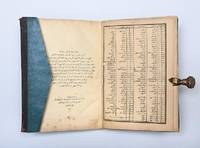
1872160588Istanbul: al-Matba'a al-Mahmudiyah 1289 H / 1872. Significant hajj texts by two distinguished scholars Rare first edition combining two important and complementary texts which outline the rites of hajj and umrah with descriptions of Mecca Medina and Jerusalem; an online institutional search locates five copies only: Library of Congress Stanford Ohio State Utah and University of Basel; included is the first printed edition of Majmu'at al-manasik by the eminent 16th century Hanafi scholar Rahmatullah al-Sindi. Rahmatullah al-Sindi d. 993 H/ 1585 CE was as his name implies born in Sind in modern day Pakistan. As a young man he fled with his father to Hejaz "frequently the destination for Sindhi scholars fleeing imperial unrest" Baig p. 63. Having completed his studies at Mecca under the Indian Sunni scholar al-Muttaqi he proceeded to Medina where he lectured in hadith literature. In 1574 he travelled to India accompanying Haji Begu empress consort of the Mughal emperor Humayun who had just completed the hajj. He visited Agra and read hadith with the distinguished historian and translator 'Abd al-Qadir Badayuni before teaching at Ahmadabad. Returning to Hejaz he "contributed to a new generation of Hanafi scholarship that was steeped in the hadith sciences and was intimately connected to political and intellectual developments in South Asia The vast oeuvre of Rahmatullah al-Sindi's work was on 'ilm al-manasik the discipline of the rites of pilgrimage. He wrote encyclopaedic tomes for scholars as well as abridgements as hajj guides for general pilgrims thus encompassing both scholarly and non-scholarly communities. Rahmatull h wrote his largest Jam' al-Manasik wa Naf' al-Nasik The Compilation of Rites and the Benefit of the Pilgrim in 950/1543 in Medina while still in his early twenties this is not to be confused with the work of the same name by Gümüshânevî. Though it initially attracted local opposition it became a landmark in the field that Hanafi scholars in South Asia and the Ottoman Empire consulted for centuries. Drawing upon more than 150 sources of Hanafi law Rahmatull h laid out in encyclopaedic detail the rulings of pilgrimage claiming to have produced an unprecedented compilation striving to synthesize the vast array of differences amongst Hanafi scholars" ibid. 65. Fittingly he died at Mecca. On the page Rahmatull h's text surrounds that of the Turkish mystic Ahmed Ziyauddin 1813-1893 known as Gümüshânevî or Kumushkhanawi. Gümüshânevî's text Jam' al-Manasik wa Naf' al-Nasik The Compilation of Rites and the Benefit of the Pilgrim was also published separately the same year. "Ziyauddin Gümüshânevî had been initiated into the Khalidiya a branch of Naqshbandiya Sufiism in 1847 by Shaykh Ahmad b. Sulaiman al-Arwadi After his initiation Gümüshânevî acquired a steadily expanding following which met under his guidance at the Fatma Sultan mosque in the Cagaloglu section of Istanbul. Numerous members of the Ottoman bureaucracy became his followers and the tekke religious lodge he established was visited several times by Sultan Abdulhamid II. In addition to activities conventionally associated with Sufi shaykhs Gümüshânevî was remarkable for enlisting with his murids Sufi novices to fight on the eastern front in the Russo-Ottoman War of 1877; for establishing a printing press to produce works written by himself and others; and for setting up public libraries in Trabzon Rize and Of" Gross p. 118. The present work may have been published by Gümüshânevî's own press in Istanbul. It is lithographed throughout in naskh script the first 16 leaves comprising a comprehensive index and the page preceding decorated with simple biomorphic motifs in the hatâyî style; the opening of the text is embellished with an intertwining foliate headpiece. Lithography was introduced to Ottoman Turkey in 1831 by Henri Cayol a Marseille printer who established a press at Istanbul under the patronage of the admiral and statesman Koca Hüsrev Mehmed Pasha. Lithography proved a very popular medium as it "reproduced the beauty of the handwritten Arabic script in a way which the type-face of the letterpress could not equal" Flemming p. 153. Octavo 240 x 176 mm. Contemporary envelope-flap binding of black quarter sheep green pebble-grain paper boards. A little wear to edges occasional foxing and browning yet this remains a very good copy. Sohaib Baig Indian Hanafis in an Ocean of Hadith: Islamic Legal Authority between South Asia and the Arabian Peninsula 16th to 20th Centuries UCLA doctoral dissertation 2020; Carl Brockelmann Handbook of Oriental Studies Section One: The Near and Middle East vol. 11 7/S2 2018; Barbara Flemming Essays on Turkish Literature and History 2018; Jo-Ann Gross Muslims in Central Asia: Expressions of Identity and Change 1992. hardcover
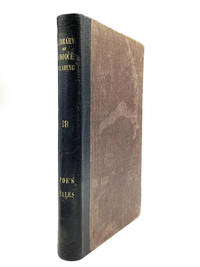
184578404New York: Wiley and Putnam 1845. First Edition. Hardcover. First edition third issue with the three-line copyright notice naming Wiley and Putnam and the Library of American Books half-title. Octavo: vi 228 4 ads pp. In the publisher's black gilt-stamped black morocco over plum cloth binding which has been expertly rebacked. The contents are clean and bright. Some general toning and minor staining to the cloth; otherwise very good. BAL 16146.<br /> <br /> ".the first important book of detective stories the first and greatest the cornerstone of cornerstones.the highest of all high spots.contains for the first time in book form all three Dupin stories" Queen's Quorum 1. While the tales herein were not selected by Poe and he expressed reservations about the editor "whose taste does not coincide with my own" they are in the end perhaps the single best representation of his broad range and lasting influence. The 1845 Tales contains not only the invention of modern detective fiction but also his supreme handling of psychological horror and contributions to both science fiction and the adventure story. Wiley and Putnam hardcover
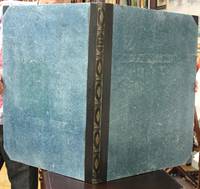
1802B5905Roma: : Work I: Roma: Niccola de Antoni; Work II: Roma: n.p. Work I: c. 1802; Work II: c.1770. . A handsome fine example. Prints are clean and crisp. . Binding: Skillfully rebacked half calf preserving contemporary blue speckled - marbled boards. Spine raised with six 6 bands; compartments elegantly gilt ornamented at borders corners and centres and gilt lettered title on two. Notes: Work I: Raphael 1483-1520 painted the ceilings walls and columns of the Vatican Logge over the two-year period before he would pass away. Together with Michelangelo and Leonardo da Vinci he forms the traditional trinity of great masters of that period. These particular images are renowned for their clarity and accessibility. Much of the subject matter on the columns is traced to Roman iconography. Such items as coins vases sarcophagi and various other items are done with stunning clarity and accuracy. Carlo Lasinio 1759 – 1838 was an Italian engraver who worked chiefly in Florence. Lasinio started as a painter at the Accademia di Belle Arti Venice. He quickly placed more emphasis on printmaking especially after moving to Florence in 1778. He established his reputation with two large series of etchings in 1787 and 1789. Lasinio also taught engraving at the Accademia in Florence becoming a Professor in 1800. <br><br>Work II: A collection of plates from this work with no title page. The Raphael fresco decorations in the Vatican's three-storied balconies known as the 'Logge' quickly became famous and various suites of plates were issued from the 17th century onward. However this set was the first to attempt to show all the decoration of the pilasters and pillars. A set of the present engravings stimulated Catherine the Great to have a replica of the Logge built at the Hermitage in St. Petersburg.<br><br> Size: Folio 621x478mm. Illustration: Illustrated with plates after Raphael: Work I: 14 decorative copper engraved plates; engraved title page by Giovanni Balzar; remaining by Carlo Lasinio after Raphael’s depictions of the Vatican’s loggia and columns. Work II: collection of 31 full page etchings amounting to thirteen 13 pairs or sets of engravings after the Vatican frescoes by Raphael. Volume: Two works in one volume Provenance: Upper pasted endpaper ex libris bookplate marked “Dampierreâ€. All leaves of the first work of wove paper contain the watermark “Pietro Miliani Fabriano.†References: Berlin Kat. 1048 Pages: Work I: illustrated half-title plates numbered figure: II No. I &II III No. III & IV IV No. V& VI V No. VII & VIII VI No. IX&X I No. I&II II No. III&IV III No. V&VI IV No.VII&VIII V No. IX&X dated 1802 VI No.XI&XII VII No.XIII&XIV VIII No.XI&XII ; Work II: plate I-XIII Num I-XIII I-V Category: Book Art Architecture & Design; Book Europe Italy; Book Plate Books General; Work I: Roma: Niccola de Antoni; Work II: Roma: [n.p.] hardcover
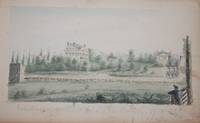
1828006534New York City 1828. Hardcover. Cloth spine. Marbled pastedown on boards. Leather centerpiece label on front board. Good. Original watercolors of rural Manhattan as it appeared in 1828. Among these and captioned are a farmhouse on Broadway and 8th Street; Kips Bay showing a boy sailing a small craft with a farmhouse in the background; a house in Bloomingdale the location of an early village now the Upper West Side along the river between 96th and 106th Streets; and a stately mansion surrounded by fields and less important buildings we would conjecture in or around Bloomingdale but captioned surely incorrectly the Battery. Most of the paintings are uncaptioned. Of these some are surely the Upper Hudson area or are scenes that we can't tell whether they are upstate or in the present day city. The artist also ventured away from the New York areas. Among the non-New York paintings are a depiction of the Cape Pogue Lighthouse on Martha's Vineyard which still stands; Fowey Harbour which is in Cornwall; and a few scenes which look very much like Scotland. Oblong 14 by 19.5 cm. 55 watercolors generally fully finished. Although the sketchbook has a label on its front board bearing the name of Walter Oddie who was a listed artist we believe a good amount of the artwork contained in this sketchbook is of his father-in-law Henry Meigs. Meigs had been a U.S. Congressman from New York and also held a number of other political positions in the city over the course of his career. More pertinently Meigs was known to be an amateur painter and as such an inspiration to Oddie. Given Oddies youth at the time -- he was 20 or 21 years old and from his diary for the years 1828 and 1829 now housed in the Winterthur Library we know he was just starting to paint we find it inconceivable that he would have had the skill yet to produce the sensitive and fine renderings of nature and buildings that typify this sketchbook. Further underlying our thinking about attribution is that some of captioning only makes sense if Meigs were the primary artist. We do consider it quite likely that Oddie may have done some of the sketchier work contained herein as well as contributing in bits and pieces to his father-in-laws work as well as perhaps copying some of it in this sketchbook. To us it isnt really so important who was responsible for particular paintings in the sketchbook. Rather the significance lies in the recording of New York City and its surroundings at the time we suspect that there may be no recording anywhere of some of the buildings and locations at this time. And of course not to be minimized is the beauty of the better paintings contained in the sketchbook.Whatever the degree of Oddies contribution the sketchbook does have something to say about his career and visa versa given that it contains the type of artwork for which he became known later. Oddie was born in Maryland Washington D.C. or possibly New Orleans but spent almost his entire life in New York and more specifically New York City Brooklyn or Long Island. In 1828 the year most of the watercolors in the catalogue were executed Oddie was spending much of his time in the city.Once Oddies interest in painting was sparked he was believed to have been largely self-taught but he did come to study art with Hudson River School painter Robert Walter Weir and Anthony Lewis De Rose a portrait and historical painter. From the diary we know that Oddie did work with De Rose in 1829; we believe that his tutelage with Weir came later. From the diary we know that Oddie was regularly going to art exhibits and critiquing what he saw. The diary also discloses or corroborates our prior sense that Oddie sometimes would work off of engraved prints. To what degree he was merely copying the prints as opposed to using the prints as a spur to his own imagination we can not determine with certitude. We tend to think the views of Scottish and Welsh castles contained in the Sketchbook were done by Meigs not Oddie and so they might well have been done from life.From the diary we know that Oddie had some day job that occupied him during the week and so he did most of his painting at that time on the weekends when he would often go for long hikes along the Hudson. Oddie also refers in the diary to having been in Hudson then and now the county seat of Columbia County and so it is very plausible that some of the upstate scenery is from around there. Again we think some of these paintings may have been done by Meigs.Oddie would become an associate member of the National Academy of Design where he frequently exhibited his artwork.One further note we spoke of questioning one caption referring to the Battery. In 1828 the urbanized part of the city didnt even reach 14th Street but the Battery as the oldest part of the city was thoroughly urbanized. Thus the painting could not be of the Battery. But the landscape is very consistent with the topography of Upper Manhattan. <br /> hardcover books
1828006534New York City 1828. Hardcover. Cloth spine. Marbled pastedown on boards. Leather centerpiece label on front board. Good. Original watercolors of rural Manhattan as it appeared in 1828. Among these and captioned are a farmhouse on Broadway and 8th Street; Kips Bay showing a boy sailing a small craft with a farmhouse in the background; a house in Bloomingdale the location of an early village now the Upper West Side along the river between 96th and 106th Streets; and a stately mansion surrounded by fields and less important buildings we would conjecture in or around Bloomingdale but captioned surely incorrectly the Battery. Most of the paintings are uncaptioned. Of these some are surely the Upper Hudson area or are scenes that we can't tell whether they are upstate or in the present day city. The artist also ventured away from the New York areas. Among the non-New York paintings are a depiction of the Cape Pogue Lighthouse on Martha's Vineyard which still stands; Fowey Harbour which is in Cornwall; and a few scenes which look very much like Scotland. <br /> <br /> <br /> Oblong 14 by 19.5 cm. 55 watercolors generally fully finished. <br /> <br /> Although the sketchbook has a label on its front board bearing the name of Walter Oddie who was a listed artist we believe a good amount of the artwork contained in this sketchbook is of his father-in-law Henry Meigs. Meigs had been a U.S. Congressman from New York and also held a number of other political positions in the city over the course of his career. More pertinently Meigs was known to be an amateur painter and as such an inspiration to Oddie. Given Oddie's youth at the time -- he was 20 or 21 years old - and from his diary for the years 1828 and 1829 now housed in the Winterthur Library we know he was just starting to paint we find it inconceivable that he would have had the skill yet to produce the sensitive and fine renderings of nature and buildings that typify this sketchbook. Further underlying our thinking about attribution is that some of captioning only makes sense if Meigs were the primary artist. We do consider it quite likely that Oddie may have done some of the sketchier work contained herein as well as contributing in bits and pieces to his father-in-law's work as well as perhaps copying some of it in this sketchbook. <br /> <br /> To us it isn't really so important who was responsible for particular paintings in the sketchbook. Rather the significance lies in the recording of New York City and its surroundings at the time - we suspect that there may be no recording anywhere of some of the buildings and locations at this time. And of course not to be minimized is the beauty of the better paintings contained in the sketchbook.<br /> <br /> Whatever the degree of Oddie's contribution the sketchbook does have something to say about his career and visa versa given that it contains the type of artwork for which he became known later. Oddie was born in Maryland Washington D.C. or possibly New Orleans but spent almost his entire life in New York and more specifically New York City Brooklyn or Long Island. In 1828 the year most of the watercolors in the catalogue were executed Oddie was spending much of his time in the city.<br /> <br /> Once Oddie's interest in painting was sparked he was believed to have been largely self-taught but he did come to study art with Hudson River School painter Robert Walter Weir and Anthony Lewis De Rose a portrait and historical painter. <br /> <br /> From the diary we know that Oddie did work with De Rose in 1829; we believe that his tutelage with Weir came later. From the diary we know that Oddie was regularly going to art exhibits and critiquing what he saw. The diary also discloses or corroborates our prior sense that Oddie sometimes would work off of engraved prints. To what degree he was merely copying the prints as opposed to using the prints as a spur to his own imagination we can not determine with certitude. We tend to think the views of Scottish and Welsh castles contained in the Sketchbook were done by Meigs not Oddie and so they might well have been done from life.<br /> <br /> From the diary we know that Oddie had some day job that occupied him during the week and so he did most of his painting at that time on the weekends when he would often go for long hikes along the Hudson. Oddie also refers in the diary to having been in Hudson then and now the county seat of Columbia County and so it is very plausible that some of the upstate scenery is from around there. Again we think some of these paintings may have been done by Meigs.<br /> <br /> Oddie would become an associate member of the National Academy of Design where he frequently exhibited his artwork.<br /> <br /> One further note - we spoke of questioning one caption referring to the Battery. In 1828 the urbanized part of the city didn't even reach 14th Street but the Battery as the oldest part of the city was thoroughly urbanized. Thus the painting could not be of the Battery. But the landscape is very consistent with the topography of Upper Manhattan. hardcover