64 résultats
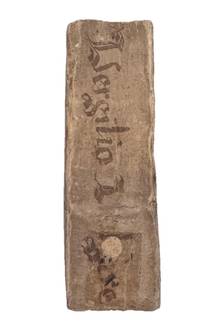
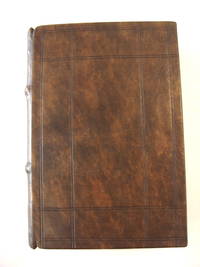
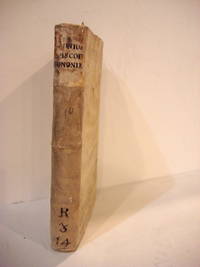
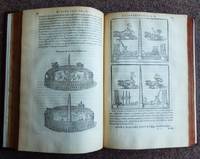
155252798<p>Lugduni apud Joan. Tornaesium 1552. TITLE CONTINUED: Accesserunt Gulielmi Philandri Castilionii civis Romani annotationes castigatiores & plus tertia parte locupletiores. Adiecta est Epitome in omnes Georgii Agricolae de mensuris & ponderibus libros eodem autoter cum Graeco pariter & Latino indice lucupletissimo. FIRST JEAN DE TOURNES EDITION OF VITRUVIUS 1552 Latin text. 4to approximately 235 x 155 mm 9¼ x 6¼ inches printer's device of vipers on title page a different De Tournes device on verso final page 83 woodcut illustrations 1 folding plate of an inscription portrait of Philandrier the editor on final page of prelims arabesque headpieces to the 10 books and historiated initials throughout pages: 16 447 57 - including index errata and Extrait du Privilege with last line: Achevé d'imprimer le huitieme février 1552 the last leaf with printer's device on verso bound in modern full blind panelled calf raised bands blind rules and gilt lettered morocco label to spine all edges red new endpapers. Small repair to inner edge of title page plus 2 ink names pages lightly age-browned tiny chip to fore-edge of 1 prelim page small closed tear to 1 margin repaired neatly some early mostly neat ink marginal notes some small corrections to text and a little neat underlining a couple of small ink stains and smudges text still easily legible very light foxing to a few margins. A good tight copy. This edition published in Lyon by Jean de Tournes was the second edited by Guillaume Philandrier the first was published in Strasbourg in 1550 as a 16mo. As the secretary to the bishop of Rodez the French humanist Philandrier friend of Rabelais had spent 10 years in Italy in Venice and Rome many of them studying Vitruvius and in 1544 he published his illustrated annotations separately in Rome. See: Laurence Hall Fowler The Fowler Architectural Collection of the Johns Hopkins University pages 318-319; Adams Books Printed in Europe 1501-1600 Volume II V908; Harvard French 16th Century Books Volume II No. 550. MORE IMAGES ATTACHED TO THIS LISTING ALL ZOOMABLE. FURTHER IMAGES ON REQUEST. POSTAGE AT COST.</p> Lugduni, apud Joan. Tornaesium, 1552. hardcover
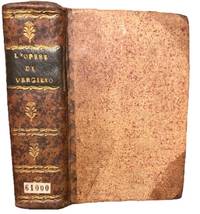
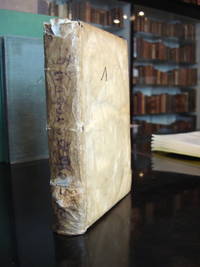
1586250702001Mantoua Italy: Francesco Osano 1586. Soft cover Ars Rustica. Very Good. Two works published separately in 1586 bound together: <br /> 1. La Bucolica et la Georgica di Vergilio<br /> <br /> The Bucolics and the Georgics of Virgil translated into blank verse. One by M. Andrea Lori: the other by M. Bernardino Danielli with the arguments. Newly corrected and reprinted. <br /> <br /> 2. L'Eneide di Virgilio del Commendatore Annibal Caro Virgil's Aeneid translated by and with commentary from Annibal Caro.<br /> <br /> A 435-year-old edition of Virgil's complete works in 17th to 18th century carta rustica thick paper binding. Collated and complete including most of the original blank flyleaves. Italian text. In VERY GOOD 16th century antiquarian condition. <br /> <br /> PROVENANCE <br /> <br /> From the Virgil Collection of Craig Kallendorf 1954 - 2023 who owned the largest private collection of antiquarian Virgil works 1150 editions not including Incunable books in the world. Only a handful of prominent institutions like the British Library had larger collections. Eighth-nine of the books in his collection were the only known surviving copies 71 only had one other known copy. He worked closely with Princeton University in helping to assemble supplement and catalog its Junius Spencer Morgan Virgil collection. Craig Kallendorf was Professor of English and Classics at Texas A&M University. He was the author or editor of 27 books and more than 170 articles book chapters and reference work entries. Among Kallendorf's groundbreaking monographs on the Virgilian tradition special note might be made of his Virgil and the Myth of Venice: Books and Readers in the Italian Renaissance Oxford: Clarendon Press 1999 which shows how the wide reading of the Aeneid accessed in both Latin and Italian editions contributed to Venetian ideology and the so-called "myth of Venice." With its publication according to reviewer Diana Robin Renaissance Quarterly 55.4 2002 p. 1394 Kallendorf is to be recognized as "the leading authority on the Virgilian tradition in early modern print culture in Italy." <br /> <br /> ABOUT THE BOOK <br /> <br /> Published in 1586 by Francesco Osana in Mantua modern Italy. Italian text. Rebound in 17th to 18th century carta rustica with its characteristic thick paper binding exposed cords on the joints and antiquarian spine writing. Wide-margined untrimmed paper. Octavo 6 1/8" x 3 1/2". Collated and complete: Book 1: 4 163 1 pp; Book 2: 4 original blank preliminary leaves for the Aeneid then 8 472 pp. followed by four original blank flyleaves. Woodcut printer's device on both Book 1 and Book 2 title page. Decorated woodcut initials. <br /> <br /> CONDITION REPORT: VERY GOOD <br /> <br /> Endpapers refreshed and without front blank flyleaf for Book 1. Both works are textually collated and complete. The Aeneid retains all of its original blank flyleaves scarce during a rebind. Exterior and binding - rubbed and soiled carta rustica thick antiquarian paper binding. Spine sun-darkened with the remnants of small round sticker adhered to it and what appears to be a tape stain. Rear board with some antiquarian ink writing. Bumped corners. Toned edges. Uncut/irregularly cut pages. Binding strained in a few areas with exposed cords in gutters and the text block pulling away from spine. Overall in remarkably good condition for a thick paper binding hundreds of years old. I<br /> <br /> Interior is VERY GOOD for a 435-year-old binding. Most of the text block is clean and bright white with mostly light foxing to margins. About 20% of text block shows a bit heavier foxing and/or is darkened. Pages are untrimmed and inconsistently cut with rough edges. Raggedy edges and a few leaves with tears or loss of margin corners not affecting text. A few old paper restoration repairs. Minimal worming mostly a few small holes to margins of first and last few leaves and pastedowns. Fore-edge margins browned in multiple places. A bit grubby and soiled endpapers. Former owner ink writing on title page for the Bucolic and Georgics and Kallendorf's ex libris sticker on FFEP. Francesco Osano unknown
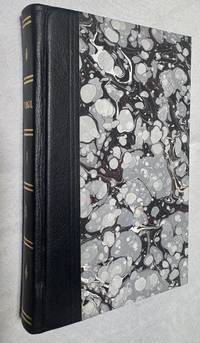
1540250506002Venice Venezia: Comin Da Trino & Niccolo Zoppino 1540. Hardcover. Very Good. I sei primi libri del Eneide di Vergilio tradotti piu illustri & honorate donne.Et tra l'altre la nobilissima & divina madonna Aurelia Tolomei de Borghesi cui ancho indirizzato tutto il presente volume<br /> <br /> The first six books of the Aeneid by Virgil translated to the most illustrious and honored ladies. And among others to the most noble and divine Madonna Aurelia Tolomei de Borghesi to whom also the present volume is addressed. <br /> <br /> NOTE: Incomplete. Missing Title page Book 1 and first 8 leaves of Book 2. Normally this scarce edition typically sells between $2000-2500 when found complete. <br /> <br /> PROVENANCE<br /> <br /> From the Virgil Collection of Craig Kallendorf 1954 - 2023 who owned the largest private collection of Virgil works 1150 editions not including Incunable books in the world. Only a handful of prominent institutions like the British Library had larger collections. Eighth-nine of the books in his collection were the only known surviving copies 71 only had one other known copy. He worked closely with Princeton University in helping to assemble supplement and catalog its Junius Spencer Morgan Virgil collection. Craig Kallendorf was Professor of English and Classics at Texas A&M University. He was the author or editor of 27 books and more than 170 articles book chapters and reference work entries. Among Kallendorf's groundbreaking monographs on the Virgilian tradition special note might be made of his Virgil and the Myth of Venice: Books and Readers in the Italian Renaissance Oxford: Clarendon Press 1999 which shows how the wide reading of the Aeneid accessed in both Latin and Italian editions contributed to Venetian ideology and the so-called "myth of Venice." With its publication according to reviewer Diana Robin Renaissance Quarterly 55.4 2002 p. 1394 Kallendorf is to be recognized as "the leading authority on the Virgilian tradition in early modern print culture in Italy." <br /> <br /> ABOUT THE BOOK<br /> <br /> Post-Incunable edition of the first six books of the Aeneid by Virgil. In Italian. Published in 1540 by Comin da Trino & Niccolo Zoppino in Venice. Each book translated into Italian from Latin by a different individual: A2 Hippolito de Medici A3 Bernardino Borghesi A4 Bartolomeo Carli Piccolomini A5 Aldobrando Cerretani and A6 Alessandro Piccolomini. Rebound in modern 1/4-calf over marbled paper and gilt tooled spine bordering lettering and compartment devices. Marbled endpapers. Six parts in one volume. Octavo 6 1/2" x 4 1/8". Foliation in leaves: 15 20; 19 1; 27 1; 25 7. Fifteen vignette woodcuts and separate engraved title pages for Books 3-6. <br /> <br /> CONDITION REPORT<br /> <br /> Missing Title page Book 1 leaves and first 8 leaves of Book 2 including its title page. 15/22 woodcuts.<br /> <br /> The exterior is in FINE condition. Fresh supple unfaded leather and unblemished marbled paper. A few areas of light dust. Square spine very firm hinges and joints sharp corners and tight pages. Foxing to text block edges. <br /> <br /> The interior condition - refreshed endpapers and blank flyleaves. Trimmed pages. Light foxing to margins. Heavier foxing to preliminaries and last few leaves of the volume. Signs of handling - a few smudges bent corners and some creasing. No marginalia or underlining. One corner clipped. A few minor spots of worming in the margins. Rear blank flyleaf with period one-line Latin inscription in faded antiquarian ink claiming that the possessor of the book was a heteronymous eunuch! Front pastedown with the ex libris sticker "from the Virgil collection of Craig W. Kallendorf." <br /> <br /> In excellent shape for a nearly 500-year-old book - a beautifully bound and scarce post-incunable mostly complete edition of the first 6 books of The Aeneid by Virgil. Comin Da Trino & Niccolo Zoppino hardcover
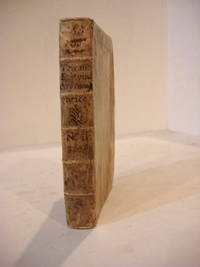
1586250509002Venice Venezia: Appresso Giacomo Cornetti 1586. Hardcover. Good. The works of Vergil namely the Bucolic Georgic & Aeneid again translated into blank verse by various most excellent authors.<br /> <br /> Uncommon copy. Missing the final leaf of the Aneid otherwise complete. <br /> <br /> RECENT PROVENANCE<br /> <br /> From the Virgil Collection of Craig Kallendorf 1954 - 2023 who owned the largest private collection of Virgil works 1150 editions not including Incunable books in the world. Only a handful of prominent institutions like the British Library had larger collections. Eighty-nine of the books in his collection were the only known surviving copies 71 only had one other known copy. He worked closely with Princeton University in helping to assemble supplement and catalog its Junius Spencer Morgan Virgil collection. Craig Kallendorf was Professor of English and Classics at Texas A&M University. He was the author or editor of 27 books and more than 170 articles book chapters and reference work entries. <br /> <br /> HISTORIC PROVENANCE<br /> <br /> Federico Caproni Born in Massone Italy a hamlet of the Trentino municipality of Arco and died in Vizzola Ticino a municipality in the Varese area. Founder together with his younger brother Giovanni Battista of the Caproni Aeronautical Industries. He was a scholar of agricultural sciences. In the 1930s he purchased a large estate near Vizzola Ticino undertaking an intense reclamation project that changed the uncultivated nature of the territory and allowed the construction of a modern agricultural company. His private library consisted of approximately 85000 works divided by subject. Caproni Aeronautical Industries 1908 - 1950 was a pioneering Italian aircraft manufacturer. Caproni was responsible for completing the first aircraft of Italian construction in 1911. During 1927 the Caproni Museum was established in Taliedo by Giovanni Caproni and his wife Timina Caproni. It is the oldest aviation museum in Italy. <br /> <br /> ABOUT THE BOOK<br /> <br /> Published in 1586 by Appresso Giacomo Cornetti in Venice. Text in Italian and in italic type. The Eclogues Bucolics are translated by Andrea Lori; the Georgics by Bernardino Daniello; each of the twelve books of the Aeneid has a different translator: Alessandro Sansedoni Cardinale Hippolito de' Medici Bernardino Borghesi Lodovico Martelli Thomaso Porcacchi Alessandro Piccolomini Giuseppe Betussi Leonardo Ghini Bernardetto Minerbetti Lodovico Domenichi Bernardino Daniello and Paolo Mini. Bound in 19th century 1/4 mottled calf over mottled paper covered boards. Five compartment spine with smooth gilt bands with a gilt lettered black morocco spine label in compartment two and tooled gilt fleurons in the other compartments. All edges stained red. Octavo 5.5" x 4" foliated 8 28; 67 1; 279 leaves. 25 half-page woodcuts some repeats. Cornetti's rose device on title page within scrolled cartouche encircled with motto "Dabo omnibus gratum odorem"; ornamental initials; head- and tail-pieces.<br /> <br /> CONDITION REPORT<br /> <br /> Missing the final leaf of the Aeneid otherwise textually complete. Renewed endpapers. Multiple leaves numbered incorrectly and a few leaves sans number by the printer as it is with other copies. <br /> <br /> Margins trimmed. Spine is square firm hinges and joints. Offsetting and darkened areas on board paper. Some minor rubbing and a nick along joints. Dusty top edge. Rubbed boards and edges. Corners gently bumped. An old cataloguing sticker at heel of spine. A few pages with professional paper restoration to a corner. Quite a bit of water dampening throughout with staining. Heavily darkened title page. Only a few pages with antiquarian marginalia. Signs of handling- a few pages with margin tears some smudges some creasing and a few bent corners. Front pastedown with the bookplate of Federico Caproni. FFEP affixed with the ex libris sticker "from the Virgil collection of Craig W. Kallendorf." Some pencil writing on the front endpapers. Appresso Giacomo Cornetti hardcover
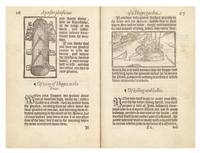
15386173Venice: Per Agostino de Bindoni 1538. Sm. 8vo. 344pp. Illustrated with a large woodcut vignette on title page verso of title and colophon with devices and 78 woodcuts of hands keyed to the text. Cont. vellum with manuscript spine lettering. Light browning and soiling including title page but overall a very nice copy in a contemporary binding. An early Italian language edition of one of the most popular works on chiromancy of the 16th century. Tricasso 1491-c.1550 was a disciple of Barthelemy Cocles. At variance with Cocles on a number of points he set out in this work to analyze the significance of 78 configurations of hands as well as to outline the supposed astrological implications. His work is frequently cited by many later writers on the subject. As with other copies cited in OCLC the date at the conclusion of the author's preface is misprinted "1635" it should be "1535" the date of the first Italian edition of this title. Brunet V:945; STC of Italian Books p. 680. Caillet 10830. Per Agostino de Bindoni hardcover books
15384474Venice: Per Agostino de Bindoni 1538. Sm. 8vo. 344pp. Illustrated with a large woodcut vignette on title page verso of title and colophon with devices and 78 woodcuts of hands keyed to the text. Nicely rebound in faux period calf gilt tooled spine in 3 compartments. Small chip and tear into blank upper margin of B1 and small printing flaw at bottom corner of A2 verso. An early Italian language edition of one of the most popular works on chiromancy of the 16th century. Tricasso 1491-c.1550 was a disciple of Barthelemy Cocles. At variance with Cocles on a number of points he set out in this work to analyze the significance of 78 configurations of hands as well as to outline the supposed astrological implications. His work is frequently cited by many later writers on the subject. As with other copies cited in OCLC the date at the conclusion of the author's preface is misprinted "1635" it should be "1535" the date of the first Italian edition of this title. Brunet V:945; STC of Italian Books p. 680. Caillet 10830. Per Agostino de Bindoni unknown books
15465968Venice: Cornelio Adelkind for Daniel Bomberg 1546. First edition. Very Good/First printed edition editio princeps of the 11th century commentary on portions of the pentateuch by the Bulgarian poet and Talmudist Tobiah ben Eliezer. Published by the house of the seminal printer of Hebrew books Daniel Bomberg under the supervision of his scholar-in-residence extraordinaire Cornelio Adelkind. Venetian law at this time limited Hebrew publishing to Gentile printers. Bomberg a protestant from Antwerp entered this lucrative market and with Adelkind's help became its prime exponent until his death in 1549. . Folio 32 cm; 93 leaves. Text in Hebrew. Title within architectural border reproduced in Amram "Makers of Hebrew Books in Italy" p. 215 also in the Jewish Museum's 1989 exhibition catalogue "Gardens and Ghettos: the Art of Jewish Life in Italy" page 50. Some section headings within ornamental borders. Bound in c19 or c20 dark red crushed morocco ruled in gilt and decorated with arabesques on both boards; spine with raised bands and compartments tooled and titled in gilt; green polished leather doublures with red crushed morocco dentelles bordered in pointillé accented with arabesques; green moiré free endleaves. Edges gilt. Binding not signed. Joints and crown adroitly reinforced with Japanese paper; corners somewhat worn down. Occasional contemporary notes in manuscript in text; brief stain on leaf mem-tet and lightly along the bottom edge of leaves nun-bet and nun-gimmel. Text otherwise pristine. Title page light possibly washed. Old library ink stamps from an institution in Warsaw on title page. Red morocco ex-libris of mining magnate and philanthropist Adolph Lewisohn 1849-1938. References: Adams T-766; BM Italian 674; Steinschneider 7304 #1; Amram 215 illustration and 222. Cornelio Adelkind for Daniel Bomberg hardcover books
15465968Venice: Cornelio Adelkind for Daniel Bomberg 1546. First edition. Very Good. Folio 32 cm; 93 leaves. Text in Hebrew. Title within architectural border reproduced in Amram "Makers of Hebrew Books in Italy" p. 215 also in the Jewish Museum's 1989 exhibition catalogue "Gardens and Ghettos: the Art of Jewish Life in Italy" page 50. Some section headings within ornamental borders. Bound in c19 or c20 dark red crushed morocco ruled in gilt and decorated with arabesques on both boards; spine with raised bands and compartments tooled and titled in gilt; green polished leather doublures with red crushed morocco dentelles bordered in pointillé accented with arabesques; green moiré free endleaves. Edges gilt. Binding not signed. Joints and crown adroitly reinforced with Japanese paper; corners somewhat worn down. Occasional contemporary notes in manuscript in text; brief stain on leaf mem-tet and lightly along the bottom edge of leaves nun-bet and nun-gimmel. Text otherwise pristine. Title page light possibly washed. Old library ink stamps from an institution in Warsaw on title page. Red morocco ex-libris of mining magnate and philanthropist Adolph Lewisohn 1849-1938. References: Adams T-766; BM Italian 674; Steinschneider 7304 #1; Amram 215 illustration and 222. <br /><br />First printed edition editio princeps of the 11th century commentary on portions of the pentateuch by the Bulgarian poet and Talmudist Tobiah ben Eliezer. Published by the house of the seminal printer of Hebrew books Daniel Bomberg under the supervision of his scholar-in-residence extraordinaire Cornelio Adelkind. Venetian law at this time limited Hebrew publishing to Gentile printers. Bomberg a protestant from Antwerp entered this lucrative market and with Adelkind's help became its prime exponent until his death in 1549. Cornelio Adelkind for Daniel Bomberg hardcover
155132892-1119Florence Lorenzo Torrentino 1551. With large historiated woodcut initial at the beginning. 90 pp. 1 blank leaf. Sm.-4to 193 x 138 mm. 17th-century polished calf gilt panelled spine red edges blind library stamps on first and last leaves back rep. From the collection of Charles Spencer 3rd Earl of Sunderland lot 10608 in his sale 1882. Florence Lorenzo Torrentino 1551. First edition. Probably originally published and later reprinted Palau: Se reimprimio en coleccion en la obras. as part of the larger work by the Spanish born Jesuit Torres 1509-1584 "De summi pontificis supra concilia auctoritate libri tres" 1551 against Ambrosius Catharinus Archbishop of Conza 1484-1553. Torres was professor at the Roman College and wrote more than seventy books principally polemical mainly against Protestants. "Can also exist independently": State Library Berlin transl. - Palau 33697 knows only the BN copy; FRBNF31481832; CNCE 48142 no copy in Florence; cf. Adams 1192; not in EDIT 16; not in STC Italian but cf. p. 687. Florence, (Lorenzo Torrentino) unknown
15548113Paris: Jacobum Kerver 1554. Second printing. Vellum. Very Good. 8vo. 64416pp. Woodcut portrait of the author on title. Orig. limp vellum somewhat soiled and spine a bit chipped at top. Some text soiling. Front free endpaper lacking. French legal scholar's 1488-1558 treatise on the aspect of Roman law pertaining to inheritance and succession. It was first printed in 1550. Jacobum Kerver hardcover books
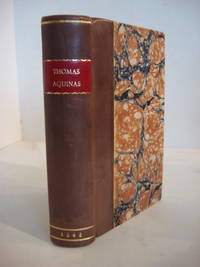
1595V67175Venice: Haeredem Hieronymi Scotus 1595. Hardcover. Very Good. Large woodcut portrait Aristotle over 50 diagrams in the text historiated woodcut intial capitals . Folio modern cream linen with red leather label with gilt title tips rubbed 16pp 316pp Tideline from waterstaining at the front but becoming marginal & faint by text page 13. Some gatherings with more or less paper tanning but paper always supple and strong. Part of an 18 volume collected edition of Thomas Aquinas. It is printed in double columns with side-notes and deals with Aristotelian physics not in Adams or STC. Haeredem Hieronymi Scotus hardcover
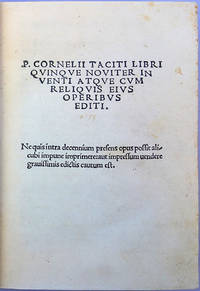
151742431Milan: Alessandro Minuziano 1517. <p>Tacitus Publius Cornelius ca. 56 - ca. 120 C.E. P. Cornelii Taciti libri quinque noviter in venti atque cum reliquis eius operibus editi. Small 4to. 20 233 3ff. Signatures H-K bound in reverse order in this copy. Milan: Ex officina Minutiana 1517. 192 x 127 mm. Full morocco tooled in gilt and blind in antique style. Occasional faint dampstaining but a fine copy. Engraved armorial bookplate of Count Dmitri Petrovich Boutourlin 1790-1849.</p> <p> First Minuziano Edition and the First Example of a Challenge to a Copyright. In 1508 Pope Leo X formerly Cardinal Giovanni de'Medici purchased the only surviving manuscript of the "lost" first six books of Tacitus's Annals which had earlier been stolen from the monastery of Corvey in Westphalia. Six year later Leo granted the Vatican librarian humanist Filippo Beroaldo the younger the exclusive right or privilegio to issue a printed edition the complete works of Tacitus including the previously unpublished "lost" books from the Corvey manuscript. Violators of the privilegio were threatened with excommunication. Beroaldo's Tacitus printed in Rome by Stephanus Guilleretus de Lotheringia was published in 1515.</p> <p> At the same time the Milanese printer Alessandro Minuziano undaunted by the fear of papal displeasure began preparing a word-for-word reprint of the Beroaldo Tacitus probably bribing one of Lotheringia's employees for sheets of the work as it was being printed. It is likely that Minuziano intended to issue his pirated edition around the same time as the legitimate one but the Pope got word of his scheme and the subsequent dispute over the privilegio forced Minuziano to suspend publication until the matter was resolved. The matter was serious especially as Leo X actively involved himself in issues of publication and censorship. The case was eventually resolved in Minuziano's favor and he added an appendix to the edition containing the key documents pertaining to the case. These included the papal privilege of November 14 1514 Minuziano's "supplication and prayers" to Leo X of March 30 1516 in which he defended himself remarkably by claiming ignorance of the Pope's privilegio and the papal letter of pardon dated September 7 1516 reiterating Minuziano's defense and granting Minuziano permission to publish his edition.</p> <p> This copy of the Minuziano Tacitus bears the bookplate of Dmitri Petrovich Boutourlin or Buturlin a Russian general statesman and military historian who became director of the Russian Imperial Public Library in 1843. A catalogue of Boutourlin's extensive private library was published in 1831.</p> . $12500 rebound by Sean Richards. Alessandro Minuziano unknown books
159866701598. 22 leaves including some blanks or pages ruled in ink for entries. Agenda format 315 x 100 mm. stitched as issued uncut. Nuremberg: 1598.<br/> <br/> A fascinating document of a type that rarely survives: the manuscript account book for the spring 1598 Leipzig fair of Hans Straub I or the Elder 1541-1610 the prominent Nuremberg gold- and silversmith alderman and son-in-law of Wenzel Jamnitzer the best-known German goldsmith of his time. The first leaf bears Straub’s hallmark interwined initials “HS†over an arrow pointing upward within a plain shield & also containing the inscription “No. 72â€. Our manuscript sheds important light on the business relations in the late 16th century between the Nuremberg goldsmiths and their trade at the Leipzig fairs.<br/> <br/> Our account book is a list of sales orders and expenditures of Nuremberg goldsmith Hans Straub the Elder during the Leipzig Easter fair held in May 1598. While Straub is not expressly named he can be identified by his hallmark on the first leaf. At the fair trade was done in goblets rings knife-sheaths cutlery jewelry gemstones etc. Several business partners are named including the Nuremberg goldsmiths Heinrich Hahn Haan David Lauer and Paulus Koch. As an example of a transaction we see that the council of Halle paid over 33 florins for a goblet.<br/> <br/> In 1596 Straub was elected Alderman of the Artisans the most elevated and honorable office to which a Nuremberg artisan could aspire. Straub retained this position until his death in 1610. In 1569 he married Anna daughter of the famous goldsmith Wenzel Jamnitzer. On his father-in-law’s death in 1585 Straub inherited his casting molds and used them extensively in his own creations. Despite his long period of activity relatively few pieces made by Hans Straub have survived see Nürnberger Goldschmiedekunst 1541-1868 2007 ed. by Karin Tebbe et al. Vol. I p. 409.<br/> <br/> In fine condition.<br/> <br/> ⧠The mark is similar to Marc Rosenberg Der Goldschmiede Merkzeichen Frankfurt 1925 Vol. III no. 3969. unknown
15557297Strassburg: Wendelinus Rihelius 1555. First edition. 17th century boards. Very Good. Folio. ff.44691. Final leaf a blank. Colophon at bottom of f.469. Large woodcut device on title page. 18th century red boards morocco spine label spine and extremities somewhat rubbed but quite sound. Front free endpaper lacking. Old rubber stamp at lower blnk margin of title. Some minor marginal worming. Some early marginal annotations in a few sections. The scarce first edition of this famous history of the German Reformation. It was immediately controversial. The Schaff-Herzog RELIGIOUS ENCYCLOPEDIA states "Storms of protest arose against it on every side both Roman Catholic and Protestant." There are 2 issues of this work VD S6668 ours and VD S6669 which differs in having the last leaf numbered 470 and leaf 463 has an errata printed on the recto. In VD S6668 there are 469 numbered leaves and leaf 463 is blank without errata and not numbered. Wendelinus Rihelius hardcover books
15867398Bologna: Per Alexandrum Benatium 1586. First edition. Hardbound. Very Good. 4to. 42 blank leaves2602 blank leaves64pp. Index. With a beautiful title page illustrated with a large woodcut depicting St. Petronius the patron saint of Bologna and 2 smaller woodcuts of the arms of the city and of a bishop. Cont. limp vellum some light soiling hand lettered paper spine label chipped some old library lettering at foot of spine. Old private library bookplate on front pastedown. This book by the historian Sigonio 1524-1584 gives short biographies of the bishops and archbishops of Bologna from St. Zama 270 to Gabriele Paleozzi 1566. Not in Adams. BL Italian STC p. 627. Per Alexandrum Benatium hardcover books
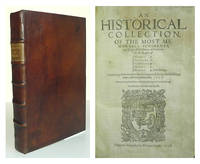
1598001041London: Thomas Creede 1598. First English language edition. . Hardcover. See Description. Small folio. Lacking preliminary blank leaf thus pp. 10 310 292 4. Page numbering is erratic. Leaf Ee3 is mis-signed as F3 but all leaves are present and in order. The title page contains a woodcut vignette/device. Each chapter begins with a woodcut decorative head piece and an initial. Bound in full dark brown modern calf with blind tooled borders and stamps after an early period style. The upper part of the title page is age-toned / tanned; a professionally sealed 7 cm. tear runs from the gutter part way across the upper portion of the title and is difficult to detect on first sight; a couple of tiny chips on the top edge are restored. Interior pages are generally attractive but with occasional mild age-toning and periodic faint marginal damp staining. A small repair patch is present on the inner margins of leaves A6 and V6. A tear on leaf V6 also carefully sealed extends vertically about 8.5 cm from the lower gutter and part way into the text but causing almost no obscuration. Printed by Thomas Creede who is best known for issuing dramatic works including some of Shakespeares plays. The book is divided into two parts. The first part is a translation of "Recueil des choses mémorables avenues en France sous le règne de Henri II François II Charles IX Henri III et Henri IV." This work is generally attributed to either Simon Goulart or Jean de Serres and was first printed in French no place or publisher in 1595 and again in 1598 expanded to include the reign of Henri IV up to the year 1597. See Brunet IV 1161-1162. The second part with new pagination provides translated selections from Pierre Matthieus 4 part "Histoire des derniers troubles de France" first published in Lyons 1594-95. A section at the end is titled "a brief recitall of the most memorable things which came to passé in Fraunce under the raigne of Henry the fourth until the middle of the Yeare 1598" which if written by Matthieu may possibly represent the first printing of some amendments which Matthieu later added to the second edition of his "Histoire" printed in 1600. This collection provides interesting testaments to the wars of religion in France during the 16th century. A separate 4 page tract at the end is titled: "A true discourse concerning the deliverie of Brittaine in the yeare 1598." ESTC S121331; USTC 513796; Lowndes p. 831; Hazlitt Biblio. Collections 2nd Series p. 231. <br/> <br/> Thomas Creede hardcover
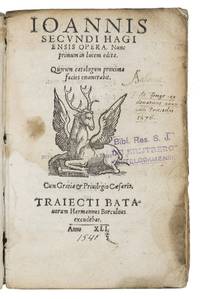
1541M23NGJ7IKRQ5Utrecht: Herman van Borculo 1541. Contemporary vellum wrapper straight-sewn on 3 tanned calf straps laced through the wrapper with the authors name in large textura lettering reading up the spine. Small 8vo 16 x 10.5 cm. With Van Borculos winged stag couchant regardant and book device on the title page and another salient regardant with 2 books on the verso of the otherwise blank last leaf; and 3 vine-leaf ornaments Vervilet 7 8 & 43. Set in an Aldine-style italic type with upright capitals; 92 mm/20 lines with roman capitals for occasional words phrases and 2-line initials. Rare first edition in the original Latin of the collected poetic works of the humanist and neo-Latin poet Janus or Joannes Secundus Jan Everaerts 1511-1536 who "ranks among the foremost poets of the world" as "the only famous 16th-century Dutch poet" Guépin p. 231: "one of the most significant and enduring poets of the Renaissance" and "the outstanding Latin love poet of the northern Renaissance" Price p. 1. Although not quite twenty-five when he died he published numerous poetic works from 1532 to 1536 but left most of his work unpublished at his premature death. Much of his poetry appeared for the first time in the present posthumous edition. Janus is most famous for his "Basia" kisses: 19 lyric love poems influenced by Catullus. Janus's three books of elegies especially the first book comprising 11 love poems to his possibly fictional first love Julia are also masterpieces of neo-Latin poetry.Although revered internationally in his own century and influential throughout the 17th and 18th centuries among his avid readers were Ronsard Fleming Huygens Milton and Goethe Janus's name has been eclipsed in the Netherlands by those of Cats and Vondel in part because they wrote in Dutch.Janus Secundus was born in The Hague. His father was a lawyer at the leading courts of the Low Countries and the family moved to Maastricht when Janus was sixteen. He studied law there and later studied at Bourges and at the University in Louvain. Though a native Dutch speaker and fluent in French Janus had learned Latin with his older brothers at an early age and corresponded with them in Latin.With 3 French verses in a near contemporary hand on the endleavesFurther with a near contemporary donation inscription on the title-page; a 19th-century bookplate on the inside front wrapper and blue ink stamp on the title-page. With the title-page somewhat worn and with stains in its margins plus a water stain in the first 10 leaves and a fainter marginal one some of the last few leaves but otherwise in good condition. The sewing supports have broken at the front hinge and the velum wrapper is somewhat soiled with a small corner of the back wrapper lost. Rare first edition of a seminal work of neo-Latin poetry by the first great Dutch poet Janus Secundus.l Adams S837 1 copy; BMC STC Dutch p. 185; G. Joos Uitgaven van Janus Secundus 10; Netherlandish books 27713 10 copies; USTC 421142 same 10 copies; Valkema Blouw Typ. Batava 2673 13 copies; not in Oberlé Poètes néo-Latins; for Secundus: J.P. Guépin "Tres fratres Belgae: brothers poets and civil servants in the sixteenth century" in: The Low Countries 8 2000 pp. 231-238; David Price Janus Secundus 1996. Herman van Borculo, hardcover
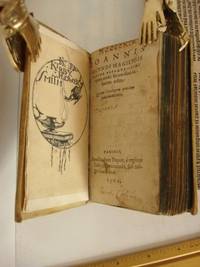
15617610Paris: Jacobum Dupuis 1561. Second edition. Vellum. Very Good. 16mo. ff.172. BOUND WITH: Marullo Michele or Marullo Tarcaniota Michele. EPIGRAMMATA & HYMNI. Paris: Jacobum Dupuis. 1561. ff.92. Title with outer margin restoration 1/2" vertical strip of later paper with a few letters of title & imprint in manuscript. 2 pages of cont. manuscript notes in German at back. Both works bound togetherin cont. vellum soiled. Large bookplate of American classical scholar Kirby Flower Smith 1862-1918. I: The second edition of the works of Secundus. Also found with the variant imprint of A. Wechelum as in both Adams S838 and BL French STC p. 397. II: Uncommon edition of the Greek scholar and Neo Latin poet Marullo 1458-1500. Not in BL French STC. Adams T145 under "Tarchaniota" and with the variant imprint of Wechelum. Jacobum Dupuis hardcover books
157665511576. Numerous woodcut illus. in the text. Largely printed in black letter. 7 p.l. first leaf blank except for signature mark 63 1 pp. Small 4to early 20th cent. polished mottled calf by Riviere triple gilt fillet round sides spine richly gilt red morocco lettering pieces on spine dentelles gilt a.e.g. London: H. Denham 1576.<br/> <br/> Second edition “nowe newly corrected and augmented†of the first English book on hops. The first edition appeared two years earlier; both editions are very rare. This is “an eminently practical treatise illustrating the various methods of setting the roots making the hills and ramming the poles tying the bine and its pulling up and preservation with a number of curious cuts. It was the work of a practical man written for practical men and in this respect is far in advance of most of Scot’s contemporaries who were still much interested in the superstitions of the time and the traditional pseudo-science of the Middle Ages.â€â€“Fussell I p. 12.<br/> <br/> Clinch in his English Hops a History of Cultivation and Preparation for the Market from the Earliest Times 1919 states that in many respects “the information is as useful today as it was nearly three-and-a-half centuries ago when it was published.â€<br/> <br/> Scot d. 1599 is most famous for his The Discoverie of Witchcraft 1584 in which he attacked the general belief in witchcraft and other forms of credulity and superstition including astrology alchemy and Catholicism. For more on Scot and his fascinating life see ODNB.<br/> <br/> Fine copy. Signature of T. Barling on first leaf.<br/> <br/> ⧠Henrey I p. 64 & no. 338. McDonald Agricultural Writers from Sir Walter of Henley to Arthur Young 1200-1800 pp. 34-36. unknown
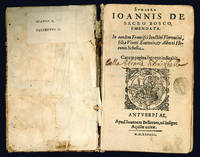
158273<p>COPY CONTAINING THE MINUTE OF A LETTER ADDRESSED BY GIORGIO RAGUSEO TO HIS COLLEAGE OF THE UNIVERSITY OF PADUA GIROLAMO PALLANTIERI</p><p>8vo 153x93 mm. 16 327 1 pp. and 1 folding plate with the movable parts to be cut out and the instructions on how to assemble them. Collation: †8 A-V8 X4. Printer's device on title page and several woodcut diagrams and illustrations in text. On the front pastedown label with the shelf mark "Scansia N. G10 Palchetto N.". On title page is the ownership's entry "Della libraria di Brisighella" and an old faded stamp. Contemporary binding made with a manuscript vellum leaf datable to the 12th-13th century inked title on spine and on the upper edge round worm holes and small losses to the panels heavier loss to the bottom part of the spine lacking ties and front flyleaf. Leaves †6 and †7 stained and with minor losses of paper and occasionally also of text small hole in the middle of quire M affecting a few letters other hole in the lower blank margin of ll. V3-X4 with no loss of text uniformly browned throughout first quire slightly loose. A genuine copy.</p><p>On back flyleaf recto is a manuscript note containing the minute of a letter presumably autograph by Giorgio Raguseo d. 1622 dated "Patavi ex academia nostra V. Non. Marti 94" 3 March 1594 and addressed to the "Admodum Rev.do ac Ecellentiss.o Patri Magistro Hieronimo Palanterio in almo Patavino Gimnasio theologiam publice proficienti" in which Raguseo thanks his colleague and professor of theology Girolamo Pallantieri 1533-1619 and asks his permission to print some not better specified academic "conclusiones ex variis doctoribus scholasticiis" which he thinks are worth publishing. It is also not clear which academy he is referring to in the letter.</p><p>On the verso of the same leaf is another note by the same hand quoting as a reminder the 1566 Giovanni Battista & Marchiò Sessa edition of <i>Le nuove teoriche de i pianeti</i> by Georg Peurbach in the translation by Orazio Toscanella.</p><p>RARE EDITION published in Antwerp of Sacrobosco's famous astronomical treatise accompanied by notes of Francesco Giuntini 1523-1590 Elie Vinet 1509-1587 and Albert Hero d. 1589 which appeared for the first time in the Lyon edition of 1562.</p><p>"Sacrobosco's <i>Sphaera</i> written in Paris around 1220 enjoyed a long popularity as the leading introduction to spherical astronomy. First printed in 1472 it went through at least a score of editions in the fifteenth century and something over 100 in the sixteenth … Publishing Sacrobosco entered a new and different phase in Wittenberg in 1531. Prior to that year all the editions were folio or quarto that is large often quite beautiful and presumably expensive volumes. In 1531 the Lutheran University of Wittenberg apparently sponsored a version cheap enough to become a required textbook for the astronomy course. It is fully illustrated with didactic figures and comes with a preface in praise of astronomy by Philipp Melanchthon … Demand for the small Sacrobosco textbook remained high at Wittenberg and a new edition was issued every few years. In 1538 a revised revision appeared: for the first time three of the diagrams incorporated moving parts. This proved to be such a popular feature that virtually every octavo Sacrobosco from the 1540s on – regardless of whether it was printed in Paris Antwerp Cologne or Venice – included these same identical volvelles. Incidentally these volvelles were not pre-cut and pasted by the printer. They were issued on ancillary sheets together with instructions for assembling them. Hence it is possible to find copies of these text books with no sign that the volvelles were ever in place and very occasionally the original sheet with the instructions and cutouts can still be found with the book" O. Gingerich <i>Sacrobosco as a Textbook</i> in: "Journal of History of Astronomy" 19 no. 4 Nov. 1988 pp. 269-273.</p><p>The letter contained in the present copy is particularly interesting as it connects two prominent figures of the University of Padua at the end of the 16th century highlighting their academic and professional ties. It is also worth noting that Raguseo wrote a commentary on Sacrobosco's <i>Sphaera</i> <i>Expositio super spheram Ioannis de Sacrobosco</i> Milan Biblioteca Ambrosiana manuscript N.207 sup. which has remained unpublished.</p><p>Giorgio di Ragusa or Raguseo as he was called after the name of his hometown today's Dubrovnik in Dalmatia was born on an unspecified date in the second half of the 16th century. He spent his youth in Venice where he was educated in mathematics by his father in the letters by L. Natali and in astrology his favourite discipline by Osvaldo da Gent and F. Barozzi. He then studied and graduated at the Studio of Padua first in the arts the exact date is not known then in 1592 in theology and in 1601 in medicine. In the meantime he took the minor orders and gained a certain reputation as an expert in Lull's art taking part in two public disputes over theological conclusions exposed according to R. Lull's method one in Venice in 1594 and the other in Padua in 1595. In 1599 he set off on a journey that kept him away from Venice for two years. In Pisa he met G. Mercuriale while in Naples he made the acquaintance of G. Della Porta. When he returned to Padua in the spring of 1601 he was appointed to the second ordinary chair of natural philosophy at the local Studio replacing C. Cremonini recently promoted to the first chair. In the following years he was deeply involved in all academic activities not only in teaching. His name in fact is one of those that most often appears in the commission that conferred the doctorate titles according to the practice of the Palatine counts and in this capacity on April 25 1602 he conferred the title of doctor in philosophy and medicine to W. Harvey. In 1613 in Venice he published twenty-four Aristotelian disputes under the title of <i>Peripateticae disputationes</i>. Around 1618 Raguseo took part in the discussions raised by the appearance of a comet. Despite his academic Aristotelianism he expressed an original position in the debate supporting the need for critical scrutiny by the senses and experience. From a letter of 1611 we also know that he used the telescope to verify some of discoveries announced by Galileo in the <i>Sidereus nuncius</i>. Raguseo died in Padua on 13 January 1622 cf. C. Preti <i>Giorgio da Ragusa</i> in: "Dizionario Biografico degli Italiani" LV 2001 s.v.; see also L. Thorndike <i>A history of magic and experimental science</i> VI New York 1941 pp. 198-202; M. Josipovic <i>Il pensiero filosofico di G. Raguseo</i> Milan 1985; and G.F. Tomasini <i>Gymnasium Patavinium</i> Udine 1654 pp. 309 and 445 for Ragueseo and p. 284 for Girolamo Pallantieri professor of theology from 1580 to 1603.</p><p>Bernardino Pallantieri was born in Castel Bolognese in 1533. In 1547 at the age of fourteen he entered the order of friars minor conventual taking the name of Girolamo. In Ferrara he studied philosophy with the theologian Filippo Braschi and the famous philosopher Vincenzo Maggio. He then continued his studies in Bologna under the guidance of Giovanni Antonio Delfini and Franceschino Visdomini. At first appointed regent of the Studio of Pavia in 1566 Pallantieri took up the chair of theology at that university. In 1568 he was called to Milan by St Charles Borromeo archbishop of that city who appointed him as preceptor of the candidates for priesthood and as his personal theologian. Pallantieri remained in Milan for 5 years then in 1573 he resumed his teaching in Pavia. Between 1575 and 1581 he was in Rome at the service of Cardinal Felice Peretti as his personal advisor and theologian. In 1581 he was called back to Bologna and in 1582 he was elected minister provincial of the friars minor of the province of Bologna. He was also a member of the Accademia degli Infiammati of Parma with the name of "Solingo". When his three-year mandate in Bologna expired in 1585 Pallantieri was called by the Reformers of the Studio of Padua to occupy the chair of theology and at the same time he was appointed superior of the convent of the Saint Anthony the patron of the city. Girolamo remained in Padua for ten years until about 1595. In 1603 he was appointed bishop of Bitonto by Pope Clement VIII but he moved to his diocese only in 1605. Pallantieri died in Bitonto in 1619 at the age of eighty-six cf. E. Papagna <i>Pallantieri Bernardino</i> in: "Dizionario Biografico degli Italiani" LXXX 2014 s.v.</p>Houzeau-Lamcaster no. 1658; L. Desgraves <i>Elie Vinet</i> Genève 1977 no. 125. Jean Bellère books
1566B6630Bononiae /Bologna: Alexandri or Alexander or Alessandro Benatii or Benatius or Benacci publisher c. 1566. . Edition: First Commandino edition. Binding: 17th century mottled calf; spine raised with six 6 bands compartments gilt gilt lettered title on two; all edges speckled red. Notes: First edition by Commandino. David Clement judges this edition of the first four books bound with the two books of Sereni on cones and cylinders to be extremely rare. Also footnote 32 states: in Bibliotheca Uilenbroukiana P.I. p. 55. Catal. duarum Bibliothecaruin Dom. N. B. & D. L. Hagae - Com. ap. Beauregard 1747. in 8vo. p. 9 Vogt Libror. rarior. p. 40. describes this Commandin edition surpassing that of Jean-Baptiste Memmius which was printed in Venice in 1537. It quotes Fabricius’ statement in the Bibliotheca Graeca about Memmius or Memus not having understood the subject at hand translated from a basically wanting manuscript with manifold thereby rendering his version weak. It also mentions that this didn’t mean Commandin’s was fault-free remaring the Greek manuscript he had drawn on was filled with failts. <br>Concerning Apollonius’s work Koudela states†Interest in ancient Greek knowledge increased gradually in the fifteenth and sixteenth centuries especially in Italy the leading country of Europe's culture and science of the time. Latin translations of Greek works on conic sections and other curves - Apollonius and Pappus in particular - appeared in several editions. Although some original works were also published in the sixteenth century no significant progress in the study of conic sections had been made until the work of Kepler. His contribution influenced the further development of projective geometry and can be regarded as the transition from ancient to modern geometry. The spread of Greek knowledge in the Renaissance The invention of conic sections is attributed to Menaechmus 4th cent. BC a member of Plato's Academy at Athens. Various species of conic sections were obtained by truncating an acute-angled right-angled and obtuse-angled cone by a plane perpendicular to the generator of the cone. Conic sections were also investigated by Aristaeus the Elder 4th cent. BC and by Euclid c. 325 - c. 265 BC. Their works on this subject are now lost. The works of Archimedes 287 - 212 BC contain some important results concerning the properties of conic sections especially parabolas. The greatest ancient writer on conic sections was Apollonius of Perga c. 262 - c. 190 BC. His famous work Conics consisted of eight books and contained 487 propositions. Apollonius introduced the terms ellipse parabola and hyperbola and showed that various sections of the cone can be obtained by varying the inclination of the intersecting plane. Among other ancient authors dealing with conic sections we should mention Pappus of Alexandria c. 290 - c. 350 AD the last of great Greek geometers. His main work known as Collection is valuable - among other things - because it provides an account and comments on the results obtained by his predecessors. Pappus introduced the notion of the focus and the directrix of a hyperbola Kline 1990 p. 128 .<br> <br>Apollonius’ work influenced the greatest scholars of the modern era such as Descartes and Newton. The Latin translation of the first four books of Apollonius by Gianbattista Memo appeared in Venice in 1537. The present edition of Apollonius’ Conics of the sixteenth century is based on the translation and important new edits by Federico Commandino 1506-1575 who published “classical Greek mathematical texts under the auspices of the Duke of Urbino.†Horblit: “The most influential early edition of this highly important text entirely superceding Memmo’s version of 1537â€. <br>Other sources state that in total the Conics consist of 387 not 487 propositions published in seven books with the eighth book remaining unconfirmed. <br> <br>References: Adams A-1310; Brunet I 347; David Clement Bibliothèque curieuse historique et critique: A-Aqvino 1750 p.415/6; Dibner 101; Honeyman 118; Horblit 4; Koudela L.: Curves in the History of Mathematics: The Late Renaissance 2005; Norman 57; Riccardi I/1 361 51; Commandino; Sotheran I 124.<br>Work II: Conicorum lib. V VI VII with Archimedis Assumptorum liber.<br> Pergaeus Apollonius c. 262-c. 190 B.C. author; Archimedes c. 287-c. 212 B.C author; Abu'l Fath of Isphahan or Bundari al-Fath ibn Ali c. 1190 - c. 1245 author; Borelli Giovanni Alfonso c. 1608-1679 editor; Abraham Ecchellensis 1605-1664 translator: <br>APOLLONII PERGAEI// CONICORVM LIB. V.VI.VII. // PARAPHRASTE // ABALPHATO ASPHAHANENSI // Nunc primum editi. // ADDITVS IN CALCE. // ARCHIMEDIS ASSVMPTORVM LIBER // EX CODICIBVS ARABICIS M.SS. // SERENISIMI // MAGNI DVCIS ETRVRIAE //ABRAHAMVS ECCHELLENSIS MARONITA // In Alma Vrbe Linguar. Orient. Professor Latinos reddidit. // IO: ALFONSVS BORELLVS // In Pisana Academia Matheseos Professor curam in Geometricis versioni // contulit & notas vberiores in vniversum opus adiecit. // AD SERENISSIMVM // COSMVM III. // ETRVRIAE PRINCIPEM. // FLORENTIAE // Ex Typographia Iosephi Cocchini ad insigne Stellae MDCLXI. // SVPERIORVM PERMISSV. <br> <br>Two parts in one.Text in Latin.<br>First edition. / Editio princeps <br>Florentiae / Florence: ex Typographia Iosephi Cocchini publisher; c. 1661. Folio 294x199mm.<br> <br>Illustrated with a red and black ink title decorative head- tail pieces and woodcut initials of varying sizes at openings a large number of mathematical in-text woodcut illustrations mainly diagrams throughout again of varying sizes; wide margined paper.<br> <br>Pagination: 36 415 bl. Collation: Ll: bl. half title red and black ink title 3-6 1-4 with index A1-Z4 Aa1-Zz4 Aaa1-Fff4 with errata bl. <br> <br>Very beautiful and rare work edited by Alfonso Borelli is the first edition of books<br>V VI and VII of the Conicorum of Apollonius. Concerning Apollonius Koudela states†Interest in ancient Greek knowledge increased gradually in the fifteenth and sixteenth centuries especially in Italy the leading country of Europe's culture and science of the time. Latin translations of Greek works on conic sections and other curves - Apollonius and Pappus in particular - appeared in several editions. Although some original works were also published in the sixteenth century no significant progress in the study of conic sections had been made until the work of Kepler. His contribution influenced the further development of projective geometry and can be regarded as the transition from ancient to modern geometry. The spread of Greek knowledge in the Renaissance The invention of conic sections is attributed to Menaechmus 4th cent. BC a member of Plato's Academy at Athens. Various species of conic sections were obtained by truncating an acute-angled right-angled and obtuse-angled cone by a plane perpendicular to the generator of the cone. Conic sections were also investigated by Aristaeus the Elder 4th cent. BC and by Euclid c. 325 - c. 265 BC. Their works on this subject are now lost. The works of Archimedes 287 - 212 BC contain some important results concerning the properties of conic sections especially parabolas. The greatest ancient writer on conic sections was Apollonius of Perga c. 262 - c. 190 BC. His famous work Conics consisted of eight books and contained 487 propositions. Apollonius introduced the terms ellipse parabola and hyperbola and showed that various sections of the cone can be obtained by varying the inclination of the intersecting plane. Among other ancient authors dealing with conic sections we should mention Pappus of Alexandria c. 290 - c. 350 AD the last of great Greek geometers. His main work known as Collection is valuable - among other things - because it provides an account and comments on the results obtained by his predecessors. Pappus introduced the notion of the focus and the directrix of a hyperbola Kline 1990 p. 128.<br> <br>While Koudela mentions 487 propositions in total for eight books comprising the Conics other sources mention 387 published in seven books only with an eighth book announced but its publication unconfirmed/ elusive. Apollonius’ work influenced the work of great scholars such as Descartes and Newton. A Latin translation of Conicorum’s first four books appeared in Venice in 1537 and it was not until 1661 for the present work - Conicorum’s books V to VII - to be published; the present work constitutes the most innovative or original part of the work of Apollonius. Translated from the Arabic manuscript of Abu'l Fath of Isphahan c. 1190 - c. 1245 purchased by the Medici’s during the first half of the 17th century the text of had survived only in the Arabic language. Norman states: “This was a valuable addition to the mathematical knowledge of the time for whereas Books I-IV of the Conics dealt with information already known to Apollonius’s predecessors Books V-VII were largely original. Book V discusses normals to conics and contains Apollonius’s proof for the construction of the evolute curve; Book VI treats congruent and similar conics and segments of conics; Book VII is concerned with propositions about inequalities between various functions of conjugate diametersâ€. Cajori states: “The fifth book reveals better than any other the giant intellect of its author. Difficult questions of maxima and minima of which few examples are found in earlier works are here treated most exhaustively. The subject investigated is to find the longest and shortest lines that can be drawn from a given point to a conic. Here are also found the germs of the subject of evolutes and centres of osculation.†<br>Cajori A history of mathematics 40; Brunet I: 347; D.B.I. XII 546; De Vitry 29; DSB I 191re: Apollonius & II 308 re Borelli ; III 364. Honeyman 119; Koudela L.: Curves in the History of Mathematics: The Late Renaissance 2005; Norman 58; Riccardi I /1 158 Borelli.<br><br> Size: Folio 294x199mm. Illustration: Text in Latin.<br>Illustrated with numerous decorative historiated woodcut initials of varying sizes at openings; hundreds of in-text illustrations mainly diagrams of varying sizes. Volume: Two parts in one. Pages: Pagination: Bl. 4 114 2 36 bl. Collation: Ll:1-6 1 -4 with index A1-Z4 a1-f2; 2 a1-i4. Category: Book Europe Italy; Book Science & Technology; Alexandri or Alexander or Alessandro Benatii or Benatius or Benacci, publisher unknown
15646012<p>8vo. 112 ff pages 2 and 110-112 are blank. Bound in modern paneled calf with gilt-stamped fleurons on front and back covers raised bands. Generally good.<br /></p><p>The first edition of this plague treatise by Paracelsus Theophrastus Bombastus von Hohenheim 1493-1541 the "Luther of Medicine" and one of the key figures in the history of medicine. Written originally in Nördlingen in 1529-1530 it remained unpublished during Paracelsus' lifetime and subsequently taken up and edited for publication by the Paracelsian scholar Adam von Bodenstein 1528-1577. The latter dedicated it to Johann Rudolph Stör von Störenberg Abbot of Murbach and Luders. In addition to the study on pestilence the text includes two short works by Paracelsus: "Vom Preservatiff durch den Schwebel" and "Von der Mummia."</p><p>In the primary tract Paracelsus for the first time presents his complex theory on the origins of the plague which he believed were the result of astrological and corporeal events set in motion by human sins. "This anthropocentric view of an individual disease is in harmony with Paracelsus' whole philosophy and indeed with Renaissance philosophy in general" Pagel p. 179. Paracelsus also postulates the importance of the principle of sulphur the corresponding agent of the planet Mars in pestilence's causation. He believed that sulphur hidden in three minerals—antimony arsenic and marcasite—affected three corresponding organs: the groin the axillae and the ears.</p><p>The chapters on causation are followed by sections on remedies. The doctor must cure the agent causing the disease rather than the symptoms of the disease Paracelsus writes. Humoral pathology and its insistence on diet is of no use. "Paracelsus' plague remedies include sulphur spirit of vitriol sulphur sublimate and metals also—for external treatment of boils—toads and decoctions of beetles designed to remove the evil of magnetic attraction but herbs and drugs as prescribed by Ficino and Agrippa are greatly amplified and still appear in a prominent place" Pagel pp. 180-181 n. 151.</p><p>The editor of this volume Adam von Bodenstein was one of the key figures in the revival of Paracelsian ideas in the German lands in the middle of the sixteenth century. A son of a radical reformer he believed in transmutation of metals into gold and played a key role in the publication of over 80 works by Paracelsus. For his Paracelsianism he was excluded from the faculty and council of Basel University.</p><p>OCLC records US copies at NYAM NLM Wash. U and UMn.</p><p>Karl Sudhoff <i>Bibliographia Paracelsica</i> Berlin 1894 60; Walter Pagel <i>Paracelsus: An Introduction to Philosophical Medicine in the Era of the Renaissance</i> Boston 1982 2nd revised edition; Georgiana D. Hedesan "Alchemy Potency Imagination Paracelsus's Theories of Poison" in John Arrizabalaga Ole Peter Grell Andrew Cunningham eds. <i>It All Depends on the Dose: Poisons and Medicines in European History. The History of Medicine in Context Series</i> New York 2018 pp. 81-102; Peter J. Forshaw "'Paradoxes Absurdities and Madness:' Conflict over Alchemy Magic and Medicine in the Works of Andreas Libavius and Heinrich Khunrath" <i>Early Science and Medicine</i> vol. 13 no. 1 2008 pp. 53-81.</p> Paul Messerschmidt hardcover
15439601Paris: Joannis Boulle 1543. Full calf. Very good. 8vo. ff.82394. 20th century tan calf with red morocco spine label over modern boards. The first 4 leaves have an old round embossed stamp of a seminary in Granby Mass. Title page also with an inked Catholic stamp of some order otherwise a nice clean copy. This work has been falsely attributed to Saint Thomas Aquinas. Apparently the author/editor is Nicolaus de Gorra or spelled Nicolas de Corran. Adams B1852. Joannis Boulle unknown books
157033006-178Ingolstatt Alexander Weissenhorn 1570. Title printed in red and black within woodcut-border. 16 232 8 leaves. 8vo. Contemporary blind-ruled vellum 1 of 2 metal claps small old library stamp and owner's ms. entry on title. Ingolstatt Alexander Weissenhorn 1570. Fourth issue of one of the many polemics written by Johann Nas 1534-1590 a Franciscan monk and counter-reformation preacher and controversialist notably at the court of the Archduke Ferdinand in Innsbruck where he followed Petrus Canisius. In 1580 he became Bishop of Brixen. - VD 16 N 102; STC German 643. GERMANY ; RELIGION ; Ingolstatt, Alexander Weissenhorn hardcover
15984716Cologne: In Officina Birckmannica 1598. 12mo. 725895pp. 17th cent. vellum soiled. Two paper labels on spine. Popular handbook edition of this often reprinted work of religious instruction containing meditations for the seven days of the week. It first appeared in 1554 in Salamanca under the title LIBRO DE LA ORACION Y MEDITACION. The first Latin edition appeared in Cologne in 1586. Not in Adams or BL German STC. VD16 #L3244. Palau 107537. In Officina Birckmannica hardcover books