69 résultats
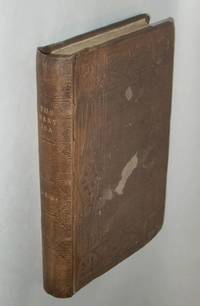
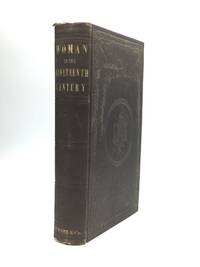
185572334Boston: John P. Jewett & Company 1855. Hardcover. Very good. Third Thousand. Widely regarded as the founding text of the women's rights movement in the United States as well as an important influence on many of the movement's leaders including Elizabeth Cady Stanton and Susan B. Anthony. Edited by Arthur B. Fuller. Introduction by Horace Greeley. Frontispiece portrait. Octavo. Original brown cloth binding with gilt titles and decorative blind stamping. Some foxing to the frontispiece and the opposing leaves. Period previous owner's ink signature to the front flyleaf. A bit of wear to the corners and tips; otherwise very good. John P. Jewett & Company hardcover books
18374940London: Longman Rees Orme Brown Green & Longman 1837. First edition. References: Ibrahim-Hilmy i 310; Kalfatovic 0338. Fine/Living in Luxor in 1836 Hoskins traveled with Robert Hay and Frederick Catherwood to the oases of Libya where he ran into Joseph Bonomi. "A good account" Kalfatovic illustrated with maps and engravings from Hoskins's own drawings. 22 cm; xvi 338 i.e. 341 pages map and 20 engraved plates 3 of them folding. Bound in recent half leather over marbled boards in period style. Marbled edges. Ownership inscription of W. Cushman of Watertown. Longman, Rees, Orme, Brown, Green & Longman, unknown books
1866WRCAM50657Washington 1866. 6pp. Folio gathered signatures. Mild soiling and toning. Very good. After the Civil War the government moved quickly to control the western Indian tribes and this treaty is one of the first actions taken. The treaty was concluded Oct. 19 1865 at Fort Sully Dakota Territory amended and proclaimed March 17 1866. The treaty calls for the Sioux's subjugation to the U.S. government the ceasing of Sioux attacks on whites and their withdrawal from overland routes made through their country. The government agrees to pay them $7000 annually for twenty years for allowing free travel on these routes. The treaty is signed in print by Brig. Gen. Sibley among others. EBERSTADT 130. unknown books
1866WRCAM26697BWashington 1866. 6pp. Folio. Gathered signatures. Mild toning. Very good. One of the Fort Sully treaties. "These famous treaties were concluded at Fort Sully Dakota Territory by Newton Edmunds E.B. Taylor and Generals S.R. Curtis and H.H. Sibley. They stipulate a cessation of hostilities and depredations by the various bands and their withdrawal from the overland routes established or to be established through their country etc. Among the witnesses is Hezeiah L. Hosmer Chief Justice of Montana Territory" - Eberstadt. EBERSTADT INDIAN TREATIES 130. unknown books
1866WRCAM26697AWashington 1866. 6pp. Folio. Gathered signatures. Mild toning. Very good. One of the Fort Sully treaties. "These famous treaties were concluded at Fort Sully Dakota Territory by Newton Edmunds E.B. Taylor and Generals S.R. Curtis and H.H. Sibley. They stipulate a cessation of hostilities and depredations by the various bands and their withdrawal from the overland routes established or to be established through their country etc. Among the witnesses is Hezeiah L. Hosmer Chief Justice of Montana Territory" - Eberstadt. EBERSTADT INDIAN TREATIES 130. unknown books
1866WRCAM26697Washington 1866. 6pp. Folio. Disbound leaves. Minor chipping staining. Very good. One of the Fort Sully treaties. "These famous treaties were concluded at Fort Sully Dakota Territory by Newton Edmunds E.B. Taylor and Generals S.R. Curtis and H.H. Sibley. They stipulate a cessation of hostilities and depredations by the various bands and their withdrawal from the overland routes established or to be established through their country etc. Among the witnesses is Hezeiah L. Hosmer Chief Justice of Montana Territory" - Eberstadt. EBERSTADT INDIAN TREATIES 130. unknown books
1866WRCAM26696Washington 1866. 7pp. Folio. Dbd. Minor chips tears. Very good. One of the famous Sioux treaties of Fort Sully. "These famous treaties were concluded at Fort Sully Dakota Territory by Newton Edmunds E.B. Taylor and Generals S.R. Curtis and H.H. Sibley. They stipulate a cessation of hostilities and depredations by the various bands and their withdrawal from the overland routes established or to be established through their country etc. Among the witnesses is Hezekiah L. Hosmer Chief Justice of Montana Territory" - Eberstadt. EBERSTADT INDIAN TREATIES 130. unknown books
1866WRCAM50657AWashington 1866. 6pp. Folio gathered signatures. Mild soiling and toning. Very good. After the Civil War the government moved quickly to control the western Indian tribes and this treaty is one of the first actions taken. The treaty was concluded Oct. 19 1865 at Fort Sully Dakota Territory amended and proclaimed March 17 1866. The treaty calls for the Sioux's subjugation to the U.S. government the ceasing of Sioux attacks on whites and their withdrawal from overland routes made through their country. The government agrees to pay them $7000 annually for twenty years for allowing free travel on these routes. The treaty is signed in print by Brig. Gen. Sibley among others. EBERSTADT 130. unknown books
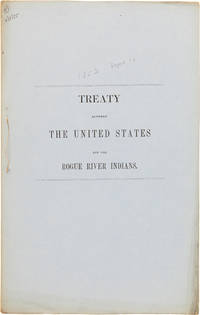
1855WRCAM50640Washington 1855. 7pp. Printed on blue paper. Folio stitched as issued. Gatherings loose. Edges toned internally clean. Very good. Concluded September 10 1853 proclaimed February 5 1855. Concluded by Joel Palmer at Table Rock in Oregon Territory. The Rogue River tribe agrees to sell their lands between Rogue River and Siskiyou Mountains in return for $60000. EBERSTADT 109. unknown books
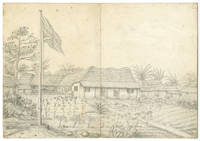
1836WRCAM52991N.p. but near present-day Prampram Ghana 1836. Three pencil sketches on wove paper each approximately 7 x 10 inches. Central vertical crease to each drawing the first two titled in a contemporary hand in pencil to verso the third similarly titled below the image. Very good. An attractive set of skillfully-executed original pencil sketches featuring British colonial structures in Prampram Gold Coast present-day Ghana likely between 1819 and 1836. The sketches are titled in pencil as follows: "Commandant's Residence Pam Pram Gold Coast" "Lower Town Pam Pram from the Upper Town" and "Abandoned Fort at Appolonia from the Beach." <br> <br> The Union Jack flies proudly in the foreground of the sketch of the Commandant's residence. Officially Great Britain colonized the Gold Coast region from 1867 until the independence of Ghana in 1957 though the British had maintained and controlled forts along the West African coastline since long before 1867. Fort Appolonia in the extreme southwestern corner of the country had been a British trading and military outpost from 1691 until 1819 and then again from 1836 onwards when it changed hands from the British to the Dutch then back to the British again. As such if the artist here labeled Fort Appolonia as "Abandoned" he or she must have sketched the fort during the period it was shuttered between 1819 and 1836. <br> <br> A fascinating trio of original sketches offering unique views from a rarely- visualized period in British colonial affairs in West Africa. unknown books
185315279London: Saunders & Stanford; Manchester: Simms & Diham 1853. Small 8vo. 40 pp. <br><br>In the society's series: "India reform" this being number 9. Library of Congress attributes authorship to John Sullivan. Condemnation of British assumptions that regarded native rule as evil and wrong. Uncommon. <br>Â Â Â Â <br>Â Â Â Â NSTC 2I1607 & 2I1608 for the series. Removed from a nonce volume. Good condition. Saunders & Stanford; Manchester: Simms & Diham unknown books
18072804London: Printed by T. Bensley for Payne and Mackinlay 1807. Lg. 4to. 8xl572pp. Cont. gilt tooled calf covers with a few old scrapes. Front hinge split but holding minor chips at extremities of spine. Bookplate on front pastedown. Printed by T. Bensley for Payne and Mackinlay unknown books
181719934New York: W.B. Gilley 1817. First American Edition. Hardcover. Good. 13 cm 180 pp. Contemporary marbled boards; spine recovered in black cloth tape. Some peeling to marbled paper one crack at center of binding where signature is partly sprung otherwise sound and clean. On oft-reprinted moral tale for children the "ornaments" are good manners and a well-regulated mind first published in London in 1815 by William Darnton Jr. This edition is scarce. Shaw & Shoemaker; 41095. W.B. Gilley hardcover books
185128441New York: Nagel & Weingaertner 1851. Hand-coloured lithograph after Hanson titled below the image. Expert restoration closing tears into the image. The first America's Cup: a scarce hand coloured lithographed view of the winning yacht which gave its name to the cup.<br/> <br/>In 1851 the Royal Yacht Squadron proposed a race around the Isle of Wight. A group of New York Yacht Club members led by Commodore John Cox Stevens built a yacht designed to compete in such races. Designed by Steers and Co. and captained by Richard Brown the yacht America would win the race by eighteen minutes giving its name to one of the oldest and best-known trophies of the sport: the America's Cup. This lithograph and lithographer are unrecorded by Harry T. Peters; we find no other extant examples of this rare print.<br/> <br/>On Nagel and Weingaertner see Peters America on Stone pp. 291-294. Nagel & Weingaertner unknown books
186740706London: T. Cautley Newy 1867. 324 pp. Sepia toned lithos. <br /><br />Narrative of a Journal of a Yachting Expedition from Auckland to the South Sea Islands and a pedestrian tour in a new district of New Zealand bush. Scarce yachting narrative. Not in Toy. "A slight account of Norfolk Island and the Pitcairners is found at pp. 73-95." - Hocken p. 250. Fergusson 12963. Bagnall 3578. Worldcat shows only six libraries holding copies - none in the US. Bound in publisher's blindstamped cloth. T. Cautley Newy hardcover books
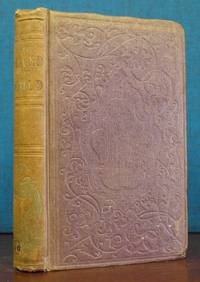
185525719.2Baltimore: Published for the Author 1855. 1st edition Bradford 2222; Cowan II p. 274; Graff 1848; Howes H-401; Kurutz 327; Rocq 15852; Sabin 31272. Brown cloth binding with eleborate blindstamped decorations. Gilt stamped lettering to spine with gilt illustration of a miner and pickax. Spine sunned as are board edges. Remnants of number label at base of spine. Prior owner signature to ffep. Withal a VG copy. xii 300 6 blank pp. 12mo signed in 6s. 7-3/4" x 5" <br/><br/>Per Kurutz "one of the most famous oft-quoted and entertaining books of the Gold Rush." Published for the Author hardcover books
1896010003NY: Wholesale Dry Goods Republican Club of New York 1896. Hardcover. Very Good. An address delivered by John Rhoades Presidnet of the Greenwich Savings Bank of New York befoer the Wholesale Dry Goods Republican Club of New York. Stiff paper printed covers 17 pages. A businessman's ringing endorsement of McKinley during oen of the most hostoric presidentail elections in US history: "Populism will not bring about progress. Communism will not produce it. Socialism will not creat eit. Anarchy will destory it.Vote for McKinley Wholesale Dry Goods Republican Club of New York hardcover books
188461664Cleveland OH: S. Brainard's Sons 1884. Second edition. 4to. 11 pp. Long introduction on the verso of the title page the music with printed notes indicating stages of the battle. Thomas "Blind Tom" Wiggins Bethune 1849-1908 an African-American autistic savant and musical prodigy was born a slave on a plantation in Harris County Georgia near Columbus and began his musical career at an early age on his master's piano. At eight Tom was hired out to a promoter who toured him extensively in the United States earning prodigious sums of money; his former master took him to Europe in 1866 for a successful tour there. A series of custodial battles and other problems essentially ended Blind Tom's career in the mid-1890s. "In the wave of euphoria after Manassas Tom turned his hypersensitive ear into the music of the big-mouthed guns. He then framed these sounds with the South's triumphant version of events before composing what many believed was his masterpiece . Tom's impressionistic musical description of the battle pits the harmony of the right hand against the discord of the left. An insistent bass conjures the trudge of marching columns tonal clusters evoke the roar of cannon and musketry. A brooding soundscape then ducks weaves and punches its way into a medley of popular and patriotic songs . discord tugging at the heels of melody until it finally explodes into the chaos of a harem-scarem finale" from Deidre O'Connell's "The Ballad of Blind Tom Slave Pianist America's Lost Genius". The first edition of "The Battle of Manassas" was published in 1866 by Root & Cady in Chicago; this second edition including a catalogue of other war related pieces of sheet music available from the publisher was issued by Brainard's in 1884. Both editions are uncommon in institutional holdings and in trade. Not in Dichter & Shapiro Levy or Wolf. OCLC locates 9 copies of the first edition and 8 for the one offered here Yale Columbus State Allen County Public Detroit Public Michigan Virginia SE Illinois Library of Virginia; it's unclear how many of those still retain the color illustrated front wrapper but at least two include it. Spine with tape repairs several marginal tears to interior leaves one leaf with tape repairs not extending into text old tidelines in upper margin of several leaves not extending into text lower front wrapper chipped a good copy of a scarce printing of Blind Tom's masterpiece. Original chromolithographic wrappers illustrated with a Civil War battle scene by Goes & Quensel Lith. Chicago. 8686. <br/><br/> S. Brainard's Sons unknown books
1814D1409Paris: Gide Fils 1814. Hardcover. Very Good. Red paper over boards ruled and lettered in gilt on spine; 4 volumes 8vo 5 x 8.25 inches; pp. lxxx 432; 4 494; 4 434; xv 1 139 104 tables; all volumes with half-title page and title-page. Spine tips and corners lighly chipped; boards faintly rubbed; a little faint foxing but overall nice and clean. An excellent working set. <br/><br/> Gide Fils hardcover books
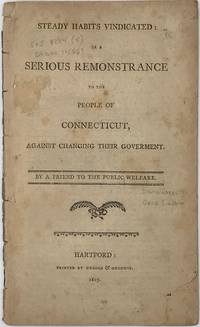
180565766Hartford CT: Printed by Hudson & Goodwin 1805. First edition. 8vo. 20 pp. Sabin 15859. American Imprints 8284. Disbound pamphlet. Bottom corner of title leaf chipped a good copy. <br/><br/> Printed by Hudson & Goodwin unknown books
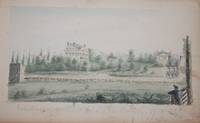
1828006534New York City 1828. Hardcover. Cloth spine. Marbled pastedown on boards. Leather centerpiece label on front board. Good. Original watercolors of rural Manhattan as it appeared in 1828. Among these and captioned are a farmhouse on Broadway and 8th Street; Kips Bay showing a boy sailing a small craft with a farmhouse in the background; a house in Bloomingdale the location of an early village now the Upper West Side along the river between 96th and 106th Streets; and a stately mansion surrounded by fields and less important buildings we would conjecture in or around Bloomingdale but captioned surely incorrectly the Battery. Most of the paintings are uncaptioned. Of these some are surely the Upper Hudson area or are scenes that we can't tell whether they are upstate or in the present day city. The artist also ventured away from the New York areas. Among the non-New York paintings are a depiction of the Cape Pogue Lighthouse on Martha's Vineyard which still stands; Fowey Harbour which is in Cornwall; and a few scenes which look very much like Scotland. Oblong 14 by 19.5 cm. 55 watercolors generally fully finished. Although the sketchbook has a label on its front board bearing the name of Walter Oddie who was a listed artist we believe a good amount of the artwork contained in this sketchbook is of his father-in-law Henry Meigs. Meigs had been a U.S. Congressman from New York and also held a number of other political positions in the city over the course of his career. More pertinently Meigs was known to be an amateur painter and as such an inspiration to Oddie. Given Oddies youth at the time -- he was 20 or 21 years old and from his diary for the years 1828 and 1829 now housed in the Winterthur Library we know he was just starting to paint we find it inconceivable that he would have had the skill yet to produce the sensitive and fine renderings of nature and buildings that typify this sketchbook. Further underlying our thinking about attribution is that some of captioning only makes sense if Meigs were the primary artist. We do consider it quite likely that Oddie may have done some of the sketchier work contained herein as well as contributing in bits and pieces to his father-in-laws work as well as perhaps copying some of it in this sketchbook. To us it isnt really so important who was responsible for particular paintings in the sketchbook. Rather the significance lies in the recording of New York City and its surroundings at the time we suspect that there may be no recording anywhere of some of the buildings and locations at this time. And of course not to be minimized is the beauty of the better paintings contained in the sketchbook.Whatever the degree of Oddies contribution the sketchbook does have something to say about his career and visa versa given that it contains the type of artwork for which he became known later. Oddie was born in Maryland Washington D.C. or possibly New Orleans but spent almost his entire life in New York and more specifically New York City Brooklyn or Long Island. In 1828 the year most of the watercolors in the catalogue were executed Oddie was spending much of his time in the city.Once Oddies interest in painting was sparked he was believed to have been largely self-taught but he did come to study art with Hudson River School painter Robert Walter Weir and Anthony Lewis De Rose a portrait and historical painter. From the diary we know that Oddie did work with De Rose in 1829; we believe that his tutelage with Weir came later. From the diary we know that Oddie was regularly going to art exhibits and critiquing what he saw. The diary also discloses or corroborates our prior sense that Oddie sometimes would work off of engraved prints. To what degree he was merely copying the prints as opposed to using the prints as a spur to his own imagination we can not determine with certitude. We tend to think the views of Scottish and Welsh castles contained in the Sketchbook were done by Meigs not Oddie and so they might well have been done from life.From the diary we know that Oddie had some day job that occupied him during the week and so he did most of his painting at that time on the weekends when he would often go for long hikes along the Hudson. Oddie also refers in the diary to having been in Hudson then and now the county seat of Columbia County and so it is very plausible that some of the upstate scenery is from around there. Again we think some of these paintings may have been done by Meigs.Oddie would become an associate member of the National Academy of Design where he frequently exhibited his artwork.One further note we spoke of questioning one caption referring to the Battery. In 1828 the urbanized part of the city didnt even reach 14th Street but the Battery as the oldest part of the city was thoroughly urbanized. Thus the painting could not be of the Battery. But the landscape is very consistent with the topography of Upper Manhattan. <br /> hardcover books
18681375640th Cong. 2d Sess.: HED265. 1868. 166pp Disbound persistent light dampstain. Good. HED265. unknown books
186364926Austin TX 1863. 4to. One page approximately 125 words in part: "Gents I am as a military board constituted by the authority of the state submitted to me for sale . thirty four United States Bonds Texas Indemnity with coupons attached . and I sold the same about the 10th of January 1863 to James Thorpe of the state of Louisiana for 85 cents on the dollar in Confederate notes . handed over to you with this report." Murrah a native of Alabama eventually read law and settled in Texas in the late 1840s opening an office in Marshall for his practice. He served in the Texas house before the war then in administrative offices before succeeding Lubbock as Governor in November 1863. Fleeing Texas at the end of the war he died in Mexico in August 1865. Very good. Folded for mailing. 11144. <br/><br/> unknown books
185016916London: J. & D. A. Darling 1850. First edition. 8 handcolored plates by Alfred Ashley. 196 pp. 1 vols. 8vo. Original rose cloth covers framed in blind with gilt lozenge of officer on horseback on upper cover spine lettered and decorated in gilt. Some spotting and discoloration of cloth without the two inserted leaves of publisher's advertisements mentioned by Wolff else a very good copy with the bookplate of James George Robarts. First edition. 8 handcolored plates by Alfred Ashley. 196 pp. 1 vols. 8vo. Sadleir 1223; Wolff 3294 J. & D. A. Darling unknown books
1897WRCAM43100Circle City Alaska and on a steamer between Juneau and Seattle 1897. 12pp. typed on folio sheets of onion-skin paper plus three hand-drawn maps. A total of some 6750 words. Stapled at upper edge. Three horizontal folds. Near fine. A very interesting pair of typed letters from a young man in Alaska during the Klondike Gold Rush. The anonymous author wrote these two letters to his parents describing his journey overland and by water to the Birch Creek mining district his experiences mining for gold and his decision to go into business as a merchant. The letters are written in a detailed style that indicates an educated author. They include three manuscript sketches showing the routes traversed in Alaska and provide a great deal of information about the writer's experiences in the Klondike. These letters are typed but they were likely originally handwritten by the author who later typed them and included his manuscripts maps and sketch in order to send them to his family when he arrived in Seattle or San Francisco. <br> <br> The letter dated Nov. 10 begins with a description of the writer's boat journey from Juneau to Dyea which was a popular disembarkation point for the Chilkoot Trail to Dawson City a center of the gold rush. He arrived at Dyea on April 23 and notes that "dinner at the Dyea post was the last square meal I have had up to the present date November 10." After dinner he loaded his equipment on horses for the journey inland: <br> <br> "My outfit consisted of about 1000 lbs. of provisions guns amunition sic tools for boat building a whip-saw jack-plane cross- cut saw hand saw rip saw hatchet hammer draw knife brace and bits square etc. and clothing blankets tent sheet-iron stone and in fact I think I had about every thing that ever went down the Yukon. Altogether my outfit weighed about 1302 pounds which is much more than is usually taken into the interior." <br> <br> The author spent the next several days transporting his provisions between Dyea and Lake Linderman and he includes in his letter a sketch of the route from Dyea through the valley to the lake noting several camps along the way as well as a sketch of his sled. <br> <br> The second letter dated Feb. 17 1897 was written on board the steamer Al Ki between Juneau and Seattle. He continues the narrative of his trip inland explaining that he arrived at Lake Linderman on May 14. A month later on June 14 the author and a partner their canoe loaded with provisions departed for Circle City which they reached on June 29. There they stored most of their provisions and headed for the mines in the Birch Creek region. Mining was at its height in the middle of the summer but rather than seek out a claim on their own the author and his companion Jim Wishard decided to work for other miners earning some $10 a day. He describes working at mining from 7 p.m. until 6 a.m. the long days making the task of working at night possible. In August the author bought a claim in the Harrison Creek region but decided to forego mining in favor of establishing himself as a merchant: <br> <br> "From what I could see the miners are poorly supplied with food by the two companies and there is always a great demand for luxuries; that is something out of the ordinary and even the necessaries of life. I made up my mind last summer that I could do as well bringing in some food - in other words being something of a merchant - as in any other way to start and having a good knowledge of the country and keeping my eyes open I would undoubtedly have many good chances for speculation. It is a conceded fact that one cannot lose money taking in such an outfit. Everything brings in an average profit of 400 per cent. over the original cost and whatever any one has to sell in the 'grub' line is in demand." <br> <br> The author then describes his construction of a small cabin in Circle City and his decision soon afterward to leave Alaska for the winter. He describes the trip to Dyea undertaken in January and the hardships of winter overland travel in Alaska. Included are some very practical tips: <br> <br> "In crossing water when it is thirty or forty degrees below zero one should dip his moccasins into the water very quickly taking them out before the moccasin is wet through. They will then freeze in a mass on your feet and will serve the same purpose as rubber boots. You can then walk right through water though I would not advise any one to tempt Providence too much." <br> <br> The letter concludes with a description of a recently discovered gold strike called "Bonanza" not far from the Forty Mile camp. The author describes the high hopes around the strike and includes a manuscript map of the region indicating the location of a claim in which he himself has invested. He hopes that his mine will bring him some wealth but reiterates his belief that the way to wealth in the Yukon Gold Rush is by supplying miners with goods and that he is on his way to Seattle and San Francisco to buy provisions to resell. hardcover books