424 résultats
187132070London. Burns & Oates Ltd. (1871). OLn., kl.8°, (VI) 128 S., Zustand gut. 2 Seiten geringfügig stockfleckig.
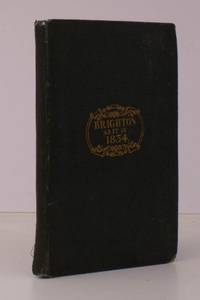
183428019The Booksellers Brighton 1834. 12mo. with lithographed frontispiece woodcut title-vignette 5 lithographed plates one folding numerous woodcut illustrations in the text and full-page engraved map signature on front paste-down some negligible dust-soiling to page edges; original pattered green cloth upper board blocked and lettered in gilt short split in lower joint but binding entirely sound else an unusually clean firm copy. THIS COPY MAY BE MISSING A FOLDING MAP WHICH IS PRESENT IN AT LEAST THE 1836 EDITION. The leading guide to Brighton during the 1830s and 1840s variously attributed to James or Edward Wallis. The earliest edition we have been able to trace was published in 1831; the latest in 1846. EXTREMELY SCARCE. Anderson p.208 records only the 1836 1840 and 1846 editions. The Booksellers, Brighton hardcover
1818369192Calcutta: Printed by Philip Pereira at the Hindoostanee Press 1818. Text in Persian in double columns. Title pages in Persian and English. Preliminaries in English with list of subscribers and Persian. 4 vi 10 4 subscribers; 1090 12 12 2 pp. 1 vols. 4to. Contemporary tan calf spine extra gilt boards with quadruple fillet border. Bookplate of Sir Gore Ouseley. Front joint repaired. Nice copy of a key work. Text in Persian in double columns. Title pages in Persian and English. Preliminaries in English with list of subscribers and Persian. 4 vi 10 4 subscribers; 1090 12 12 2 pp. 1 vols. 4to. Thomas Roebuck was a captain in the Madras Native Infantry and teacher of Hindustani Persian Arabic and other languages at the East India Company College of Fort William which subscribed for 40 copies of this dictionary. This copy with the bookplate of Sir Gore Ouseley 1770-1844 British ambassador to Persia who negotiated the Gulistan treaty between Russia and Persia which ceded to the Russians a first foothold in the Caucasus; his brother William 1767-1842 was a noted Orientalist.<br /> <br /> A monumental accomplishment of the early Calcutta press and the standard nineteenth-century dictionary.<br /> <br /> UNCOMMON AND WITH OUTSTANDING PROVENANCE. OCLC: 7538099 5 locations Printed by Philip Pereira, at the Hindoostanee Press unknown
1853H10700New York: Stearns and Company 1853. First printing. Hardcover. Very Good. Original plum cloth gilt spine very good spine a little faded owner's name and stamp on flyleaf light soil to outer pages. 432 pp. Rare in commerce fairly well represented in institutions. The author 1802-1885 was a Methodist and ardent abolitionist and anti-slavery polemicist who also dabbled in mesmerism phrenology and spiritualism some of that is the subject of this book and occult phenomena but was critical of mesmerism and its claims as well as phrenology etc. earning the wrath of many of the pseudo-scientists of his time. He was however interested in the place of trances and hypnotism in American revivalist theology and coined a term "pathetism" to describe the possible beneficial effects of the trance state in revival meetings and prayer groups. An interesting descendant of 19th century fringe medical theories who marched to his own beat. Stearns and Company hardcover
1836ST14728eLondon 1836-50. Various editions. 224 x 137 mm. 8 3/4 x 5 1/2". 16 volumes. <br/> FINE CONTEMPORARY FULL CALF MOST EITHER TREE OR POLISHED CALF see below raised bands spines intricately gilt in compartments morocco labels marbled endpapers and edges. Some works with frontispiece portraits. Front pastedowns with engraved bookplate of Edward Nicholas Hurt see below. A LOVELY COLLECTION--WITH VIRTUALLY NO SIGNS OF USE.<br/> <br/> Handsomely bound with beautifully gilt spines and just about uniform in size these volumes make an impressive appearance on the shelf. The six titles here include:<br /> <br /> 1 DE SAUMAREZ JAMES. ROSS JOHN. "MEMOIRS AND CORRESPONDENCE OF ADMIRAL LORD DE SAUMAREZ." 1838 Two volumes. Polished calf.<br /> <br /> 2 ELDON JOHN LORD CHANCELLOR. TWISS HORACE. "THE PUBLIC AND PRIVATE LIFE OF LORD CHANCELLOR ELDON." 1844 Three volumes. Polished calf. <br /> <br /> 3 HORNER FRANCIS. "MEMOIRS AND CORRESPONDENCE OF FRANCIS HORNER M. P." 1843 Two volumes. Tree calf.<br /> <br /> 4 STANHOPE PHILIP DORMER. "THE LETTERS OF PHILIP DORMER STANHOPE EARL OF CHESTERFIELD." 1845; 1853 Five volumes. Tree calf.<br /> <br /> 5 TAYLOR WILLIAM. "THE LIFE AND WRITINGS OF THE LATE WILLIAM TAYLOR OF NORWICH." 1843 Two volumes. Tree calf. <br /> <br /> 6 WARD ROBERT PLUMER. PHIPPS EDMUND. "MEMOIRS OF THE POLITICAL AND LITERARY LIFE OF ROBERT PLUMER WARD ESQ." 1850 Two volumes. Polished calf. <br /> <br /> The bookplate here is that of notable bibliophile and barrister Edward Nicholas Hurt 1795-1867 of Derbyshire and Marylebone London. He married Caroline Strutt daughter of the immensely wealthy philanthropist and social reformer Joseph Strutt 1765-1844 who was twice Mayor of Derby. As the Strutt arms are incorporated into the escutcheon of Hurt's ornate bookplate the plate can be dated to no earlier than their wedding in 1828. unknown
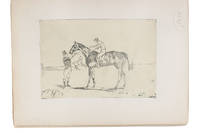
1835H1EFLHU1E5LWEngland and/or Sweden 1835. 4to 24.5 x 18 cm. Each drawing mounted on or occasionally drawn on a card loose in a Swedish blind-blocked textured red cloth portfolio ca. 1860 title in gold on front board decorated endpapers purple on white red cloth ties. 36 pencil drawings of English thoroughbred race horses 7.5 x 11.5 to 11 x 16 cm 1 finished in ink washes and a few touched up with white or light brown. 36 loose ll. A collection of 36 pencil drawings of famous English thoroughbred race horses by at least three artists including one signed "Harry Hall" and several others clearly based directly or indirectly on his paintings. Some horses appear in their stables or grounds sometimes with a stable boy groom or owner others are shown carrying a jockey during a race at a track. The earliest horses shown include a beautiful pencil and ink-wash drawing of Camel 1822-1844 who raced from 1825 to 1827 and won the 1826 Port Stakes at Newmarket. He is better known as the sire of Touchstone 1831-1861 also shown one of the most famous thoroughbreds of all time who raced from 1833 to 1837. In very good condition with only some minor wrinkles in one drawing and faint stains in another. Portfolio good. A charming collection of horse drawings mostly from the early 1850s. ABE CAT Art History hardcover
187336697Leipzig, Verlag von Arthur Felix, 1873. 8°, 444 S. 8 Klapptafelanhänge hier: mit zahlreichen s/w Zeichnungen, Grafiken, Schaubildern, Bibl.Ex., Bezahlung per PayPal möglich, we accept PayPal, Stempel u. Nr. a. Vorsatz od. u. Titel, Nr. a. Rücken bzw. Einband, Einb. ger. beschabt u. ger. bestoßen u. min. angeschmutzt, altersbed. Bräunungen, ger. Gebr.sp., Halbleinen
187715773Leipzig. Verlag von Arthur Felix. 1877. Titelblatt, 507, (1) Seiten u. 54 Seiten "Neue Literatur). Mit 12 doppelblattgroßen, lithographierten Tafeln. (So komplett). Bibl.-Halbleinwand-Einband der Zeit. (Einband etwas berieben.Papier vereinzelt etwas fleckig u. knittrig). 28x22 cm
1851401629London : Longman Brown Green and Longmans 1851. 1st edition. Hardcover. Very good copy in the original paper-covered boards with paper labels. Spine bands and panel edges slightly dulled and dust-toned as with age. Remains particularly well-preserved overall. Physical description; 594 pp. Subjects; Royal houses Europe ; Registers. Nobility Great Britain. Aristocracy Social class. Public officers. Officials and employee. Directories. London : Longman, Brown, Green, and Longmans hardcover
1848262661Istanbul: Dar üt-tibaat ül-Âmire 1848. 5 136 pp. 1 vols. 8vo. Contemporary olive green leather tooled in blind. Spine repaired in dark leather new endsheets. A few marginal annotations internally clean. 5 136 pp. 1 vols. 8vo. Guide to the Muslim pilgrimage and related topics. OCLC: 312349404 Tübingen Dar üt-tibaat ül-Âmire unknown
18717912San Francisco: A. L. Bancroft & Company 1871. First Edition. Hardcover. Good . 12mo. 256 pp. original green cloth lettered in gilt index to advertisers advertisements i-lvii. -- Moderate wear to the extremities some fraying to the spine tips & corner edges corners bumped. Blank paste-down and first free end-paper paper a little separated but hinges still strong. Rear hinges strong. Rear paste-down has an advertisement pasted on and a small stamp at bottom near the gutter of "H. K. Van Siclen Bibliophile 133 Nassau St. Ny". --. "This tourist guide for visitors of San Francisco and the Yosemite Valley offers a look at travel and accommodations in the late 19th century".-googlebks. A. L. Bancroft & Company hardcover
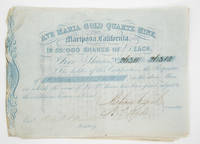
1851101023London: Ave Maria Gold Quartz Mining Association ca. 1851. Oblong 8vo 6-1/2 x 9 inches printed on light blue onionskin paper scalloped left edge with ms insertions and authorizing signatures of Secretary and two committee members description of the Ave Maria Gold Quartz Mining Association printed on verso; light creasing Evidence of London investment in the California Gold Rush 9 certificates 7 for 5 shares each and 2 for 10 shares each of the London-based Ave Maria Gold Quartz Mining Association. A total of 50000 shares were issued at £1 each. The company held half the rights to the Ave Maria Gold Quartz Mine in the Mariposa District California which was worked under a lease with the owner of the other half. Today the Ave Maria River is known as the Stockton Creek. Ave Maria Gold Quartz Mining Association unknown
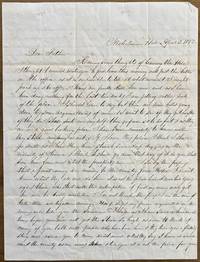
18524789Mokilomni Hill Ca: April 3 1852. Very good. 2pp. plus integral address leaf. Quarto on a folded folio sheet. Old fold lines minor wear. In a highly legible script. An interesting letter from a disillusioned fortune-seeker in Calaveras County advising his father not to come west as all the easy pickings are gone. He writes "Times are pretty dull here now and as I have been doing nothing for the last two weeks I am getting rather sick of the place. I should leave today but there are some holes going down by some acquaintance of mine & I want to see if they get anything. If they do I shall sink one myself they go from 50 to 60 feet & as they are in a good looking place I have some curiosity to know whether they strike anything or not. If I leave this place I think I shall go south as I hear they have struck some deep diggings in the vicinity of Sonora & think I shall go down that way. I see by the papers that a great many are coming to the country from Boston. I do not know what they all will do here it is not the place here it was two years ago & those who start with the anticipation of finding money easily got here will be badly mistaken. April 3 unknown
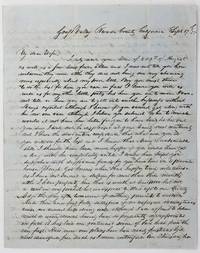
18554791Grass Valley Ca: September 17 1855. Very good. 4pp. on a folded folio sheet. Old fold lines minor wear. An intimate letter from a gold seeker in Nevada County California. Theodore Shaw writes to his wife about mixed luck in California a terrible fire his concern for their children and his great anxiety about the future. He writes in part: "I have property here that is worth at least $1000 but not a cent in my pocket but we expect to start up to our quartz ledge the day after tomorrow if nothing prevents to errect a mill up there. And now our plans have been nearly frustrated by a most dreadful fire such as I never witnessed. On Thursday last about 11 o'clock p.m. an alarm of fire was heard and by about half past 12 some 350 stores dwellings and buildings were consumed with a large portion of their contents our hotel included. . The entire business part of the town is in ruins.we have been sleeping under an old shed in the suburbs. This fire has injured us in this way several who had taken stock in our company have lost their means still we intend going on in a smaller way. We had formed a company with a Capital Stock of $50000 divided into 50 shares of $1000 each. Do you know Lydia I have more anxiety about your health than anything else as I know you work hard; only think what would happen to our dear children if anything serious should happen to your health and I away here in California. September 17 unknown
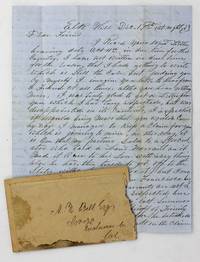
18534788Elk Hill Ca: December 17 1853. Very good. 3pp. on a folded folio sheet. Old folds light wear and soiling. With original mailing envelope. An informative letter sent from a miner in Gold Rush-era California to a friend in Tuolumne County primarily concerning a mining claim but also providing many interesting local details. The author writes "I managed to keep a claim for you which is joining to mine in this way it is one that my partner sold to a speculator who laid a land warrant on it." He discusses the process of the land warrants and how he made the man title the claim properly in San Francisco. "This claim was jumped last summer by W.H. Dixon first sheriff of Trinity City who died the day before he intended to occupy the house he built on the claim. He shot himself accidentally and never spoke." The author immediately stepped in and nabbed it for his friend but it was short-lived. "The claim is cheap at $2000 as soon as I made it known that I should not administer it was jumped by 3 in one day before 9 o'clock. So much for your not coming as I told you I could not keep them off any longer and you would not come if I had." He further mentions that he is digging potatoes which he deems the finest in the world discusses issues with the crop and further talks about new arrivals in the area. December 17 unknown
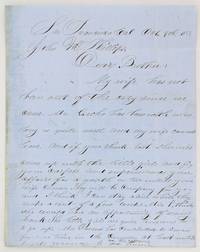
18522473San Francisco: October 4 1852. Very good. 2pp. with integral address leaf. Old folds mild staining and soiling three-inch closed tear to address leaf. An interesting letter documenting the family side of the California Gold Rush in which a San Francisco man writes to his brother offering to send his wife and daughters to Placerville as helpers. Interestingly at first Phillips addresses the letter to his brother in Ohio then scratches it out and writes in "Cal;" this most likely indicates the Phillipses hailed from Ohio and trekked to California along with scores of others in hopes of untold riches in the California gold fields. In his letter Phillips writes that his wife who has long been in San Francisco looking after a sick friend can now leave as he is better "And if you think best she will come up with the little girls and fix your carpets and superintend your affairs for a month or two untill your wife comes." The formerly sick friend Mr. Gardner could also accompany them apparently as "He is coming up to P. and he wants you to give him work for a short time. Mr. G. is a good sailsman sic having been in the dry goods business." While not overtly concerned with gold mining the correspondence is nevertheless interesting for providing details on family routines during the Gold Rush era when numerous families uprooted their lives and moved not only to places like San Francisco and Placerville but between such locations during the years of speculation. A nice example of history from below particularly notable for its domestic implications during the time of the great California Gold Rush. October 4 unknown
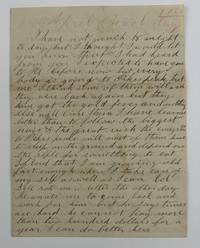
18604105Missouri: April 1 1860. Very good. 4pp. on a single folded sheet. Original mailing folds minor toning. An informative letter written by Charles H. Cram in Missouri to a friend in New England dated "April Fools Day 1860" in red pencil at the top of the first page. Cram mentions hoop skirts Pike's Peak and slavery while trying to decide whether to continue westward during the latter years of the California Gold Rush. Cram's letter reads in part: "Everybody is going to Pikes Peak but me. I think some of them will wish they were back again but they have got the gold fever and nothing else will cure them. I have learned better than to follow the biggest nois and the great rush. The emigrants to Pikes Peake will most of them will have to sleep on the ground and depend on the rifle for something to eat. I may start for Santa Fe about the first of June. I can git 15 dollars a month to drive a teem to Santa Fe. If I do cross the plains I shall go to California but if I have good health I shall stay here though I do not like to live in a slave state."<br /> <br /> In another portion of his letter Cram addresses his correspondent's question of whether slaves and freedpersons wore hoop skirts in Missouri. Cram writes: "You wanted to know if niggers wore hoops. Some do and some don't some slaves in broadcloth and silk and some go nearly naked. Slaves have there stent to do so much & if they do more they are payed for it. Most of them have a piece of ground that they call their own. What time they get they work on it. That is how they git their fine cloths. There is not a nigger in Missouri that works as hard as I do but I have consolation that I can work only when I am a mind to. You tell Albert not to start out among strangers as I did for he will find the people different in the country from them in New England."<br /> <br /> Cram then speaks to the emigrant populations he encounters out west as well as the agricultural bounty and animal life of Missouri: "The greatest difficulty I had was to learn the French and German language. I have been for weeks where I could not understand a word but now I can understand anything that comes along. But now for something else. The peach trees are in flower and the woods look green. Cattle and horses pick their living here the year round. I have not seen a barn in the country. The way to feed a horse is to tie him up to a tree and throw him a few ears of corn on the ground. I cannot rite to day much for there is half a dozen in the room talking about pikes peak or some young lady and how many negroes her father owns etc."<br /> <br /> Cram ends his letter with some advice for his friends back east: "Tell Mr. Bosworth that if he can rais $500 that he had better go to Cansas Kansas and go to farming. If you can persuade Andrew Marshall to go west it will be a good lesson for him."<br /> <br /> A mid-19th century manuscript letter with informative observations on the clothing of slaves and with notable observations of western life in Missouri. April 1 unknown
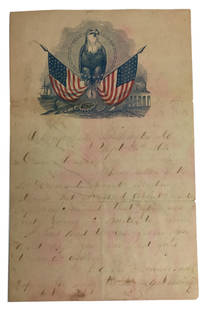
1862916131862. Poor. 20 cm x 25 cm single sheet folded to make 4 handwritten pages. Large patriotic color Illustration of a bald eagle with 2 U.S. flags occupies top third of first page of stationery. Two horizontal fold mark. Split halfway across on a fold on the last two pages. Pinkish color to much of the letter suggesting old damping. Ink quite faded and generally difficult to read. Many words are so indistinct that it was impossible for us to read them and some other words or phrases are just gone. Her letter is addressed to an otherwise unidentified cousin. Jones does not seem to show on standard lists of Civil War Nurses but the information in this letter suggests that she should. Here is our effort to transcribe this difficult-to-decipher letter: "Your letter of the 21st came to hand in due time but I had about made my mind that you was not going to write to me. I was glad to hear from you and hope that you will not fail to write again. I am well. Hoping you enjoy the same good blessing. We are situated on the same ground we occupied a part of last Fall and Winter. We have been here about four weeks. After spending the summer on the peninsula we are very glad to obtain old ground which seems almost like home. You want to know why I am in the hospital. It is not because I am sick but because others are sick and need care. I am what is termed nurse. My wages are $26.50 per month. The business is by no means delightful but I get along very well. We have got one fellow who is very sick I fear he will not recover. On the Peninsula my health became very poor but now I am well. I wish that I could hear that Grandmother is on the gain but fear I never shall. Tell hear I think of her nearly all of the time and and want to see but if I fail to see her I expect to see her in Heaven. I have wrote to your father. I presume he has received my last letter before now. I do not know that I can tell you anything about the war that would amount to anything more than you already know. As we are at present we are retired from the active field I am not as well posted as when we were aamid the turmoils of battle. I have not heard a battle sound since we came across the river. Apparently all seems quiet which seems good. top two lines at top of 4th page too indistinct to decipher My hospital service is every other day. Every other day and night. I have to work taking care of the sick of our regiment then I am idle twenty-four hours. . several lines gone or indistinct here and the I will have a chance to eat army rations wear army cloths and a few moremostly indistinct lines ." She ends the letter by requesting that her cousin write to her at Hospital 50th NY Engineer Regiment Washington D.C. Online information reports that the regiment composed mostly of men from New York and a small number from Pennsylvania lost by death 10 killed in action 7 from wounds received and 214 from disease and other causes. unknown
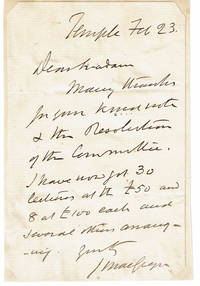
186096259Temple London February 23 circa 1860's 1860's. Very good. - Approximately 30 words penned on 6 inch high by 3-7/8 inch wide creamy white paper. MacGregor writes thanking the recipient for her "note & the Resolution of the Committee". He goes on to outline the numerous lectures he is scheduled to give at the price of 50 pounds and 100 pounds each. Signed "J. MacGregor". Once folded for mailing the corners are clipped and the note has been mounted with glue from the verso onto a slightly larger sheet of paper. Very good. <p>Nicknamed "Rob Roy" after his famous relative John MacGregor 1825-1892 was a Scottish sportsman explorer and travel writer. He is said to have practically invented the "sport" of kayaking then known as canoeing through his travels books and magazine articles. MacGregor worked as a barrister in London specializing in patent law and pursued his passion to travel throughout several parts of the world. Introduced to canoeing while visiting the U.S. and Canada MacGregor designed a double-ended canoe decked in cedar covered with rubberized canvas. Much as with modern kayaks MacGregor's canoe has an open cockpit in the center and was propelled by a double-bladed paddle. He named his canoe the "Rob Roy" after his famous or infamous relative. He undertook canoe trips through Scandinavia Jordan Egypt and the Baltic some of which he featured in his book "A Thousand Miles in the Rob Roy Canoe on Rivers and Lakes of Europe". A gifted artist he illustrated his own books. MacGregor founded the British Royal Canoe Club in 1866 and the American Canoe Association in 1880. Temple, (London), February 23, circa [1860's] unknown
18756056031875. "Faithfully yr friend Joaquin Miller Nov. 2 1875" in black ink on small leaf 4 7/8" x 2 1/2". Very good old tape in top margin from previous mounting. Together with a vintage sepia photograph. 3 3/4" x 5 1/4". Signed by Authors. No Binding. Very Good. unknown