511 résultats
186932728Virginia City California 1869. Paper. Very good. Approx. 8" x 3" check with printed green borders information and 2 stamps. Check is drawn on the account and signed by Isaac L. Requa. The information printed on the check is "Gould & Curry Silver Mining Company W. C. Ralston Treasurer. Agency of the Bank of California Virginia City. The written date is Aug 3 1869. <br /> <br /> Requa was a mining engineer early Oakland pioneer and later President of Oakland Bank and Savings. unknown
18670001244SS ALEPPO EUROPE MT. VESUVIUS ITALY. Good. 1867. Full-Leather. On offer is an original manuscript travel diary of a young woman who travels from America to Ireland on the S.S. Aleppo and then spends time in London and Paris before going to Italy. Stating "Bought at Dublin 12 Nov. 1867" then a later hand in pencil on the fep suggests the names of Julia L. Hale or Julia de Rubignir. Entries range from 1867 to 1868 and our diarist does a great job describing the journey from America to Ireland on the ship as well as all the places she visits. The passages of her witnessing the eruption of Mount Vesuvius and their attempt to be 'tourists' of the lava flow while in Italy are great. She adds further dimension by drawing a lovely folk art picture of the volcano in action. She also sees the Prince and Princess of Italy shortly after their marriage. Here are some snippets: We first caught sight of Vesuvius an hour and a half or two hours before we reached Naples it was then quite light and we could just see a silvery white cloud hanging over it but it became brighter and showed the fire as the day grew darker and we drew nearer. The first night at Naples we went to the Hotel Washington. I shall never forget the scene as we drove up to the door there was Vesuvius black as night except where the volcanic fires rose and fell while above the mountain a cloud hung even darker but a little on the right the full moon was just rising at first we could not see it but only its effects in the silver edges of the clouds and a lovely silver light which seemed to float up from a cloud then gradually it rose into sight flooding the whole city with light gleaming on the water in strange contrast to the reflection of the Red lights on the volcano. We could scarcely tear ourselves away from the windows that night and were very sorry to leave the Hotel the next morning but there was an odor which could not be explained away so we walked away We went ashore and went to the ruin of the temple of Jupiter we went to the amphitheatre which is believe the most perfect one in the world we killed quite a large snake which was nearly at the very top then all the others except John and I went to Solfatara which is a mountain called the back door of Vesuvius. First we went to Vesuvius and drove up as far as we could then walked about two mils till we came to the lave which was thrown up or down or both as Mary wrote. It looks something like as if very thick black or brownish mush had been boiling furiously and suddenly congealed or like a storm raging at sea. We only went about half way up but it was not considered safe to go farther but we could see the mountain perfectly of course and had a good idea of the lava. Here another accident happened while we were in the tunnels there was so much smoke and steam that the engineer was poisoned by it and first fainted and then had convulsions very badly but they fanned them with branches and after an hour or two he was well enough to go on. We then went to San Lazzaro an island about a mile and a half from Venus there is a learned and celebrated Armenian convent there the monks are all so handsome and look so intelligent we had such a lovely monk to go around with us he was very small but quite handsome he had large bright black eyes and such a merry pleasant expression he had curly black hair and wore spectacles and was very restless indeed we could scarcely glance at a thing before he would say No we will go. The most interesting things we saw were the autographs of Byron his portrait which was very handsome and the room which he occupied for three months while studying the Armenian language. Thursday morning the Prince and Princess and attendants came into town about half past ten there was a rope drawn across the grand canal just above the depot and none but private gondolas were allowed to go inside of it and our gondola was just outside and when the rope was taken away the jam was so great that no one could move scarcely the men shouted agua agua and there was the greatest hubbub and confusion and I really never saw anything so exciting in my life. Many of the hired gondolas go way ahead of the private ones ours was next but one to the prince's just before they landed so we could see them splendidly. The gondola or rather barge was finely ornamented there were a great many rowers the boys took off their hats and bowed the prince did the same to them he looked very tired and dusty he had a melancholy look as usual but we all liked him. The princess looked very pretty as usual she was dressed in a very handsome suit of dove colored silk. There were also several ladies of honor and two celebrated generals one has the highest position in the army or rather the command of the army I believe." Included is a CDV of Will Morgan who is talked about throughout the diary and was traveling with her although their connection is not fully explained in a casual reading. The spine is gone for the most part but otherwise overall G.; English; 12mo - over 6¾" - 7¾" tall; VOLCANO ERUPTIONS VESUVIUS ITALY TRAVEL EUROPE GENDER STUDIES WOMEN'S STUDIES antiquité contrat vélin document manuscrit papier Antike Brief Pergament Dokument Manuskript Papier oggetto d'antiquariato atto velina documento manoscritto carta antigüedad hecho vitela documento Manuscrito HANDWRITTEN MANUSCRIPT DOCUMENT LETTER AUTOGRAPH DIARY JOURNAL LOG KEEPSAKE WRITER HAND WRITTEN DOCUMENTS SIGNED LETTERS MANUSCRIPTS HISTORICAL HOLOGRAPH WRITERS DIARIES JOURNALS LOGS AUTOGRAPHS PERSONAL MEMOIR MEMORIAL PERSONAL HISTORY Monte Vesuvio Mons Vesuvius Pompeii Herculaneum. . hardcover
1866286043New York 1866. unbound. very good. located in the Nevada District of the Colorado Territory with beautifully engraved vignettes of a miner working by torchlight and a group of miners sending ore from the mine shaft to the surface by way of an bucket-brigade. Signed by the Secretary and President of the Corporation whose main office was located in New York City. This certificate bears two uncancelled 25 cent Internal Revenue Certificate stamps applied to the certificate in their designated spaces. The stock certificate appears not to have been redeemed. Scarce. Very good<br/><br/> Folds are very light and the steel engravings are clearly printed. There is a small chip to the top margin above the printed border.<br/><br/> unknown books
1855007164Sacramento California 1855. Two manuscript letters in ink both on ruled paper with folding creases the 1855 letter 8" x 12 1/2" with single spaced writing both sides approx. 500 words. The 1856 letter 15" x 10" folded in half to make 4 pp. approx. 300 words with small blindstamp top left corner depicting an eagle. The earlier letter is headed "September 18th 1855 Naperville Dupage County Illinois" and ends "Michael direct your letters Nevada County Nevada post office California". George writes to his brother Michael in Naperville that he has "seen a good dele sins i rote you they last letter" including a hundred "inshins" and some "Buffellow". He adds that "we had good luck all they way of may we left Council Bluff" and that he is not home sick yet. He then talks of the gold mines river mining what they are paying and the cost of things such as board "from five to ten dollars a week" "Beaf" "wors 15 to 20 cents" and "potato" "4 cent per pound". He adds that he intends to have some gold before he comes home and that "girls are not so plenty here as they are in state". He closes by asking his brother to write him and to remain at home in Illinois to care for their parents. The 1856 letter headed Sacramento august 3th 1856 informs his brother that he is well and "down to Sacramento now" working on a farm feeding a "schrasing" thrashing machine and that "they times is verry hard in California now". He adds that he had some money "stole" while he was in the mountains but since coming down into the valley he was making money and will send some home soon. The letter ends with George wishing to see them all soon and that he is not home sick. The third page of the letter bears a drawing of a wing or leaf eleven smaller versions of the same image interspersed on page 2. A fascinating testimonial on California during the gold rush written in a strong hand and in a wonderful vernacular style by a good observer. . HOLOGRAPH LETTER SIGNED. Manuscript. Very Good. books
1855007164Sacramento California 1855. Manuscript. Very Good. No Binding. HOLOGRAPH LETTER SIGNED. Two manuscript letters in ink both on ruled paper with folding creases the 1855 letter 8" x 12 1/2" with single spaced writing both sides approx. 500 words. The 1856 letter 15" x 10" folded in half to make 4 pp. approx. 300 words with small blindstamp top left corner depicting an eagle. The earlier letter is headed "September 18th 1855 Naperville Dupage County Illinois" and ends "Michael direct your letters Nevada County Nevada post office California". George writes to his brother Michael in Naperville that he has "seen a good dele sins i rote you they last letter" including a hundred "inshins" and some "Buffellow". He adds that "we had good luck all they way of may we left Council Bluff" and that he is not home sick yet. He then talks of the gold mines river mining what they are paying and the cost of things such as board "from five to ten dollars a week" "Beaf" "wors 15 to 20 cents" and "potato" "4 cent per pound". He adds that he intends to have some gold before he comes home and that "girls are not so plenty here as they are in state". He closes by asking his brother to write him and to remain at home in Illinois to care for their parents. The 1856 letter headed Sacramento august 3th 1856 informs his brother that he is well and "down to Sacramento now" working on a farm feeding a "schrasing" thrashing machine and that "they times is verry hard in California now". He adds that he had some money "stole" while he was in the mountains but since coming down into the valley he was making money and will send some home soon. The letter ends with George wishing to see them all soon and that he is not home sick. The third page of the letter bears a drawing of a wing or leaf eleven smaller versions of the same image interspersed on page 2. A fascinating testimonial on California during the gold rush written in a strong hand and in a wonderful vernacular style by a good observer. unknown
184974700Boston 1849. Original stampless ms. letter from agent E. P. Pratt to Company Secretary Guy. R. Phelps. The letter on typical blue paper is dated March 13 1849 and concerns policies on two very well known California '49ers; Augustus Elliott and John Webber Jr. Red circular date stamp on verso of March 14. Some age blurring but still extremely legible.Much of the letter concerns a plea for multiple copies of the company's Annual Report but at the top we read - Augustus Elliot ins'd by Policy No. 2660 goes to Calif in Barque Sangrange. At the end of the letter just prior to the salutations we read - John Webber Jr. ins'd by Pol. No. 1401 is going to California overland and wants a Permit; he is in a hurry for it as he starts shortly."A year after Elliott reached California he organized his Atlantic and Pacific Express Company to carry mail and packages between the east and west coasts of America personally accompanying each shipment by steamer across the Isthmus from San Francisco to New York and back again a “superior advantage†especially for those who wished to send gold dust to eastern banks. Offering such illustrious references as the US Senators from Massachusetts and the first federal official in San Francisco he soon added the service of assisting emigrant families to make the trip “on most favorable termsâ€. This was more than a year before Henry Wells organized the Wells Fargo Company to extend his eastern Express service to California.Unlike Elliott who soon sailed for the Isthmus of Panama Captain John Webber Jr. a heroic veteran of the Mexican-American War was selected to lead the 50 men of the “California Mutual Protection Association†overland to the Gold Fields. Well-equipped with a dozen other military veterans in uniform four musicians “two black servants and six dogs†they left Boston on March 19 a week after this letter was written their six month journey on the Oregon Trail recorded in a diary now held by the Bancroft Library. By the time Webber – portrayed as a U.S.Grant-type soldier in the Discovery Channel dramatization “Gold Fever†– reached Utah on July 31 only four of his group remained. They did not reach Sacramento until September"B. McMakin. unknown
18020009162BETHEL TOWNSHIP LEBANON COUNTY PENNSYLVANIA. Good. 1802. On offer is an interesting document of early 19th century education an original handwritten note book covering a myriad of subjects related to mathematics. The owner and creator of this book was a man named Henry Snevely also written as Snavely and the book dates from 1802 - 1803. It seems Snevely was born in the United States and lived his whole life in Southeastern Pennsylvania. At the time of the creation of the book Snevely was almost 50 years old an established land owner in Bethel Township Lebanon County. Why he had a book of mathematics is unknown however I have found records of a Henry Snavely who taught at a school in Bethel Township from 1797 onwards. It may be likely that this book is actual not for Henry himself but for the instruction of his students. Either way the book presents a fantastic overview of early 18th century knowledge. The book covers a very large range of topics however Math pertaining to financial matters is dominant throughout. As well there are conversions of Irish and British currency. The primary immigrants to the area at the time of the book were indeed Scotch-Irish so teaching Irish and British currency conversions wouldnt be too far off. Currency exchange in particular is a primary focus owing to the large amount of immigrants to the area. Individual page headings in the book include Exchange many pages Exchange of Arbitrations Barter Profit and Loss Fellowship Fellowship with Time Allegation Media Alternate Partial and Total Square Root Cube Root Arithmetical and Geometric Progression Compound Interest Single and Double Position Reduction Addition Subtraction Multiplication and Division of Fractions and Vulgar Fractions Rule of Three in Fractions and Questions for Exercise. There is a later manuscript memorandum on rear endpaper dated 1829 bearing the names of additional members of the Pennsylvania Snavely clan Molly George and John. The name Martin Rupp also appears in memorandum and our research confirms various Martin Rupps residing in southeastern Pennsylvania during this time. The book is in fair to good condition. The volume is bound in the original stiff paper wraps. The cover is very worn and the spine is torn and partially detached. There is mild age-toning and occasional staining but the internal pages are generally clean. The black ink is still bold and easily legible throughout. The book contains about 85 pages of manuscript entries and the book itself is approximately 90 pages. It measures 12.5 x 8 inches. Biography: Henry Snavely was born on August 2 1755 in Bethel Township Lebanon County Pennsylvania. .Henry Snavely was a Lutheran. At that time he was considered a good scholar and is said to have been a hard student obtaining his knowledge principally by his own exertion. He taught the school from 1797 to 1807.; A report from 1773 shows his farm had 150 acres 5 horses 4 cattle and no servants. OVERALL: G; Manuscript; Folio - over 12" - 15" tall; KEYWORDS: HISTORY OF HENRY SNEVELY HENRY SNAVELY EARLY 19TH CENTURY KNOWLEDGE SCIENTIFIC REVOLUTION MATHEMATICS GEOMETRY TRIGONOMETRY FINANCIAL CALCULATIONS BARTERING INTEREST TEACHER'S BOOK BETHEL TOWNSHIP LEBANON COUNTY SOUTHEASTERN PENNSYLVANIA COMPLEX MATHEMATICS ALGEBRA MARTIN RUPP PRACTICAL MATH FOR FARMERS 19TH CENTURY AMERICA EARLY 1800S IN THE MID-ATLANTIC STATES CYPHER BOOK AMERICANA HANDWRITTEN MANUSCRIPT DOCUMENT LETTER AUTOGRAPH WRITER HAND WRITTEN DOCUMENTS SIGNED LETTERS MANUSCRIPTS HISTORICAL HOLOGRAPH KEEPSAKE WRITERS AUTOGRAPHS PERSONAL MEMOIR MEMORIAL ARCHIVE DIARY DIARIES JOURNAL LOG ANTIQUITÉ CONTRAT VÉLIN DOCUMENT MANUSCRIT PAPIER ANTIKE BRIEF PERGAMENT DOKUMENT MANUSKRIPT PAPIER OGGETTO D'ANTIQUARIATO ATTO VELINA DOCUMENTO MANUSCRITTO CARTA ANTIGÜEDAD HECHO VITELA DOCUMENTO MANUSCRITO PAPEL . paperback
18713975AG1871. altkolorierte Lithographie, Bll. 42 x 32,2; Mittelknick unterklebt, stark vergilbt. Auf Wunsch Digitalaufnahme in jpg-Format erhältlich- photo in jpg-format available. Je nach Versandart können die Portokosten bis zu 2 ? weniger als angegeben betragen.+
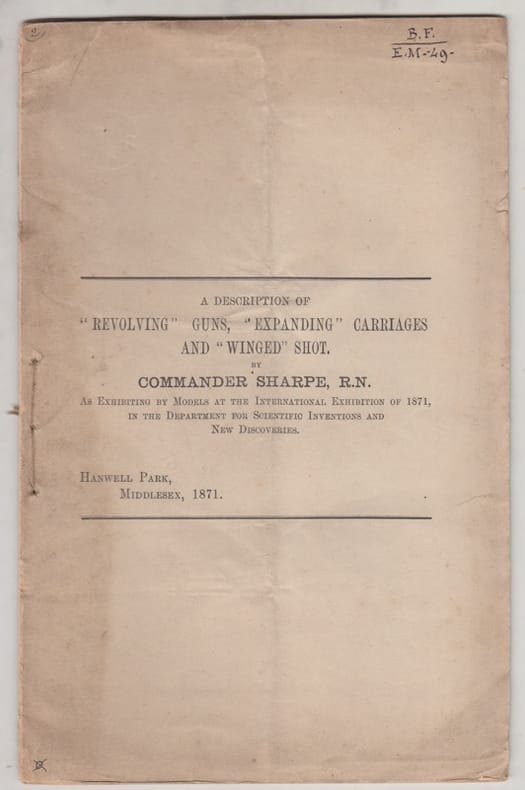
1871281811871 1871;26p.; ill,rare
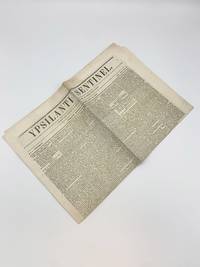
1859403850Ypsilanti MI: C. Woodruff 1859. Newspaper 22 x 16 inches. 4 pp. In fine folded condition. A fine and lengthy report from the west providing details on the gold resources of the country descriptions of the various diggings the amounts of gold taken by various companies and individuals the Gregory Diggings the abandonment of the Platte River washings the constitution convention etc. <br/><br/> C. Woodruff unknown books
18480008767circa 1848-9. Fine. 8.5 x 14.5 cm / 11 x 17.5 cm; <br/><br/>Having already accepted Texas as its 29th state in 1845 the U.S.A. in The Treaty of Guadalupe Hidalgo 2 February 1848 acquired 6 additional territories including Californa which eventually acquired statehood. This map was the recto of leaf 378/379 in probably a then-new history textbook. It is the same map with the identifier DLMW148 on the ImageBase of Virginia Tech University. This hand-colored in outline map shows the old boundaries and the new boundaries of Texas Upper California and Mexico and eastward to the Mississippi River and the Gulf of Mexico. unknown