5 882 résultats
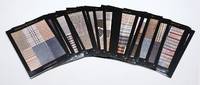
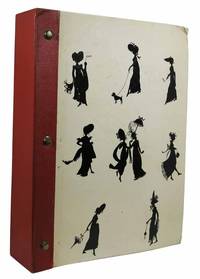
195842919Paris: Societe Paritys / Lebotys 1958. Post binder with 3 brass posts. Publisher's pictorial glazed boards red cloth joints. Light extremity wear to boards; bumping to upper corner of front board; short split to front and rear joints. Page block lightly foxed foxing/spotting scattered throughout. Few white nylon fabric samples discolored by paste beneath. Fabric samples otherwise clean and bright with only minor occasional creasing/fraying. Overall VG. 80 pp. 12 color fashion drawings; ~590 pasted and tipped-in fabric samples 16-1/8" x 12-1/8" <br/><br/>A mid-century salesman's sample catalogue from the winter collection of Parisian firm Société Paritys a haberdashery and fabric supplier established in 1946 and still in operation today. The fabric samples have been supplied by Lebotys a couture design firm in its own right and highly regarded for the quality of its textiles. As we find record of Lebotys having issued catalogues of its own collections in both the 1930s and 1960s we speculate that the two firms collaborated for a limited time possibly due to continuing post-war shortages and the need to adapt to the rapidly changing clothing market of the 1950s. The late 1950s saw a revolution in French fashion — and by extension Western fashion in general — due in no small part to the influence of material factors underlying the purely aesthetic side of the industry: availability of fabric continuing technological advances in synthetics and the surging post-war economies of America and Europe. The reluctant expansion of haute couture into the ready-to-wear market during the latter half of the century and the increasing reliance on synthetic fabrics to meet the demand would ultimately spell a major shift in the industry one that would impact fashion trends for decades to come. Some fashion houses like Dior whose “New Look” revitalized fashion at the beginning of the decade successfully managed to adapt by issuing couture ready-to-wear lines. Some however even long-established houses survived the war only to be undone by the prosperity that followed. The collaboration here of Société Paritys and Lebotys as well as the fabrics offered and styles displayed leads us to infer that the two firms were likely targeting the growing ready-to-wear market. The fabrics include a variety of silks cottons wools mohair etc. as well as nylon fibranne rayon Rhodia tergal crylor lurex viscose imitation fur and other “Matieres Synthètiques” often in blends and advertising their washable and/or antiwrinkling qualities. The styles in the illustrations still heavily influenced by the “New Look” emphasize wasp-waisted dresses hourglass silhouettes etc. No copies located on OCLC nor the major French institutions as searched on KVK. Societe Paritys / Lebotys hardcover books
195942920Paris: Societe Paritys / Lebotys 1959. Post binder with 3 brass posts. Publisher's pictorial glazed boards white cloth joints. Light extremity wear to boards; short split to rear joint. Page block lightly foxed occasional foxing/spotting to margins throughout. Few white nylon fabric samples discolored by paste beneath. Fabric samples otherwise clean and bright with only minor occasional creasing/fraying. Overall VG. 108 pp. 16 color fashion drawings; ~800 pasted and tipped-in fabric samples. 16-1/4" x 12" <br/><br/>A mid-century salesman's sample catalogue from the summer collection of Parisian firm Société Paritys a haberdashery and fabric supplier established in 1946 and still in operation today. The fabric samples have been supplied by Lebotys a couture design firm in its own right and highly regarded for the quality of its textiles. As we find record of Lebotys having issued catalogues of its own collections in both the 1930s and 1960s we speculate that the two firms collaborated for a limited time possibly due to continuing post-war shortages and the need to adapt to the rapidly changing clothing market of the 1950s. The late 1950s saw a revolution in French fashion — and by extension Western fashion in general — due in no small part to the influence of material factors underlying the purely aesthetic side of the industry: availability of fabric continuing technological advances in synthetics and the surging post-war economies of America and Europe. The reluctant expansion of haute couture into the ready-to-wear market during the latter half of the century and the increasing reliance on synthetic fabrics to meet the demand would ultimately spell a major shift in the industry one that would impact fashion trends for decades to come. Some fashion houses like Dior whose “New Look” revitalized fashion at the beginning of the decade successfully managed to adapt by issuing couture ready-to-wear lines. Some however even long-established houses survived the war only to be undone by the prosperity that followed. The collaboration here of Société Paritys and Lebotys as well as the fabrics offered and styles displayed leads us to infer that the two firms were likely targeting the growing ready-to-wear market. The fabrics include a variety of silks cottons wools mohair muslin cashmere and others as well as nylon fibranne rayon Rhodia tergal crylor acetate Albène and other “Matieres Synthètiques” often in blends and advertising their washable and/or antiwrinkling qualities. The styles in the illustrations although still influenced by the “New Look” also show the influence of Dior's successor the young Yves St. Laurent who debuted his "trapeze line" in 1958. No copies located on OCLC nor the major French institutions as searched on KVK. Societe Paritys / Lebotys hardcover books
195741355Paris: Societe Paritys 1957. 1st printing thus. Publisher's color pictorial glazed boards post binder; 3 brass posts decorative screw tops. Red cloth joints. Some general extremity wear to binder with slightly bumped corners. Occasional dust soiling. Minor foxing. Overall VG with cloth samples generally VG to Nr Fine with the occasional crease to the odd sample or two. 104 pp printed in red on stiff-stock paper. 16 color fashion drawings; 897 of 898 tipped-in fabric samples. Folio. 16-1/4" x 12-1/8" <br/><br/>A mid-century salesman's sample catalogue from the summer collection of Parisian firm Société Paritys a haberdashery and fabric supplier established in 1946 and still in operation today. The fabric samples have been supplied by Lebotys a couture design firm in its own right and highly regarded for the quality of its textiles. As we find record of Lebotys having issued catalogues of its own collections in both the 1930s and 1960s we speculate that the two firms collaborated for a limited time possibly due to continuing post-war shortages and the need to adapt to the rapidly changing clothing market of the 1950s. The late 1950s saw a revolution in French fashion — and by extension Western fashion in general — due in no small part to the influence of material factors underlying the purely aesthetic side of the industry: availability of fabric continuing technological advances in synthetics and the surging post-war economies of America and Europe. The reluctant expansion of haute couture into the ready-to-wear market during the latter half of the century and the increasing reliance on synthetic fabrics to meet the demand would ultimately spell a major shift in the industry one that would impact fashion trends for decades to come. Some fashion houses like Dior whose “New Look” revitalized fashion at the beginning of the decade successfully managed to adapt by issuing couture ready-to-wear lines. Some however even long-established houses survived the war only to be undone by the prosperity that followed. The collaboration here of Société Paritys and Lebotys as well as the fabrics offered and styles displayed leads us to infer that the two firms were likely targeting the growing ready-to-wear market. The fabrics include a variety of silks cottons wools mohair etc. as well as nylon fibranne rayon Rhodia tergal crylor acetate and other “Matieres Synthètiques” often in blends and advertising their washable and/or antiwrinkling qualities. The styles in the illustrations still heavily influenced by the “New Look” emphasize wasp-waisted dresses hourglass silhouettes etc. Of particular note are the designs and fabrics for wedding dresses. No copies located on OCLC nor the major French institutions as searched on KVK. Societe Paritys hardcover books
1912145871912 P., Collection Pierre Corrard, 1912, 1 vol. petit in-4° (290 x 192 mm) en feuilles sous chemise à rabats illustrée d'un pochoir, de 9 ff. (Texte de Pierre Corrard) - XII planches au pochoir protégées par des serpentes - (2) ff. (justificatif de tirage monogrammé par Georges Lepape et achevé dimprimer). Manque les lacets de fermeture, petites rousseurs en couverture, parfait exemplaire par ailleurs.
1980140454Milan: Styling Consulting Service 1980s. Rare visual reference for patterned textiles First and only edition of this visually beguiling and historically informative collection. The title leaf reports that "this photographic publication composed of pictures of original fabrics from 1903 up to 1925 taken from private files has been created to offer a proof of art and culture in the evolution of costume". We have been unable to trace any other copies. There is no indication of a printer or publisher anywhere in either volume or in the custom boxes nor any other hints as to the origin of this fascinating collection of pin-sharp colour photographs of fabric swatches. The work however is clearly of Italian origin and there is a hint of FMR in the thematic and in the precision of execution and presentation. The first volume concentrates on wool weaves; tweeds herringbones plaids and checks in a wide range of weights and colourways; the second is filled an even wider selection of patterned cottons a fabulous array encompassing design trends from the early decades of the 20th Century with inevitable hints at art deco art nouveau and sometimes brasher "jazz" influences; all kinds of stripes gingham tartans textiles suggestive of ties cravats suit linings waistcoats figured fabrics for dresses or skirts women's coats or jackets even upholstery or blinds. A painstaking and no doubt costly exercise the precision in the execution of the photography and processing bespeak a seriousness of purpose which makes the anonymity of the project even more extraordinary. 2 vols folio 297 x 210 mm. Black rough-weave cloth solander boxes with drop sides title gilt to spines and front boards explanatory title leaf to vol. I gold printed on glossy black medium card-stock the boxes containing respectively 50 and 100 loose sheets of similar card-stock each with mounted high-quality colour photographs c.180 x 180 mm to c.228 x 172 mm of fabric swatch composites between 3 and 8 samples to each lettered and numbered in gold. Slightly rubbed and a little dusty spines sunned corners bumped small neatly repaired tear at foot of spine of volume II card leaves with the occasional minor scuff but remains very good. hardcover
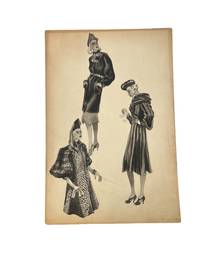
1951200661951. Fashion Women's fashion design sketches dated 1951 document the rapid transformation of female dress following the end of wartime rationing and the international adoption of Christian Dior's "New Look" silhouette. These drawings show designers experimenting with narrow waists structured bustlines wide skirts and dramatic outerwear styles that defined postwar femininity and reshaped global fashion culture in the late 1940s and early 1950s. Such instructional sketches provide visual evidence of how couture aesthetics circulated through design schools and professional training environments during a moment when fashion industries in Europe and the United States were rebuilding after World War II.<br /> <br /> Archive of fifteen original women's fashion design sketches executed on nine illustration boards measuring approximately 11 x 14 inches. Drawings are rendered in pencil ink watercolor and collage techniques and depict coats dresses trench coats and daywear ensembles characteristic of early 1950s style. Several boards include multiple designs including sheath dresses with high necklines and plunging backs bell sleeved coats trimmed with fur and children's pinafore dresses worn over blouses. One design shows a woman wearing a flight jacket cravat and pleated trousers recalling mid century women adopting traditionally masculine tailoring. One board bears the signature "Reindel" on the verso.<br /> <br /> Designs prominently feature hourglass silhouettes associated with Dior's New Look including cinched waists sloped shoulders and flared skirts. Other garments incorporate menswear inspired coats and tailored outerwear reflecting the hybridization of wartime practicality and postwar luxury. Boards show light foxing and minor handling marks. Very good condition. A visual teaching archive illustrating postwar fashion design practice during the early Cold War era. unknown
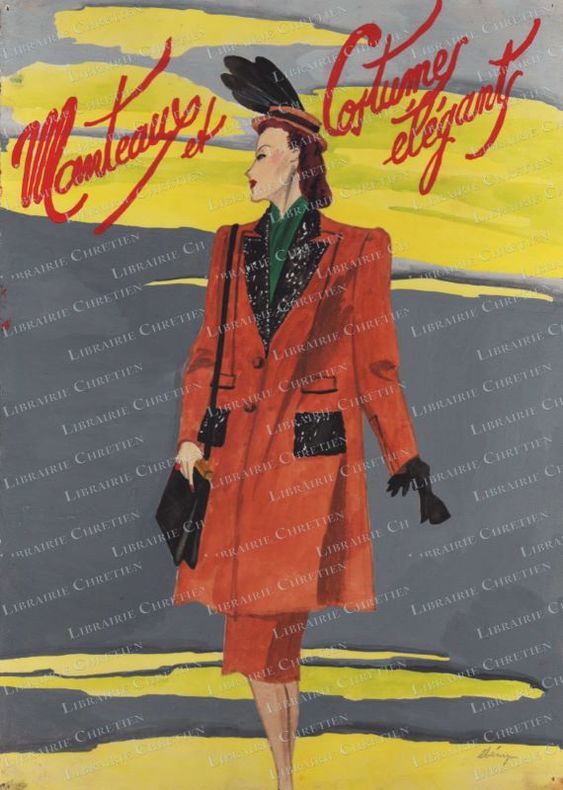
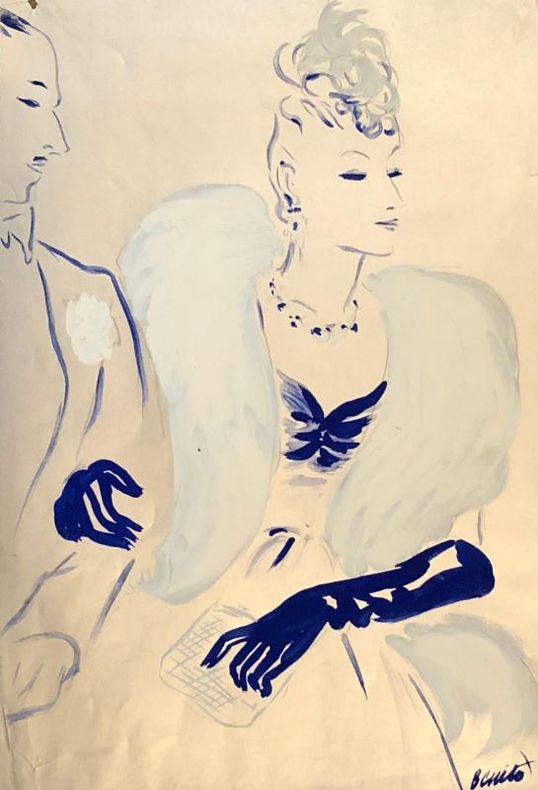
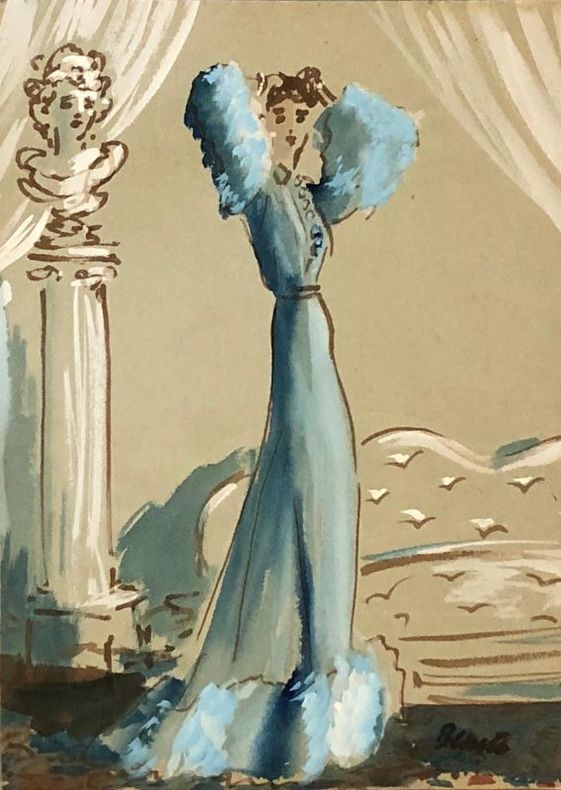
1940192151940 Gouache et mine de plomb, sur papier cartonné, signée en bas à droite, (1940-1950), 37.8 x 27 cm, encadré.
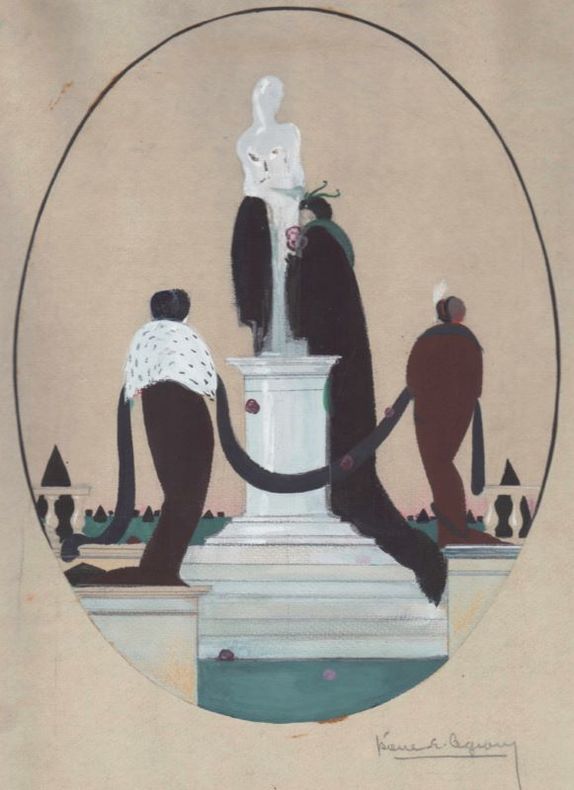
1920210741920 Gouache et mine de plomb sur papier gris contrecollé, signée en bas à droite sous le dessin, (1920), titre et signature au dos du carton d'origine, 31.5 x 24 cm.
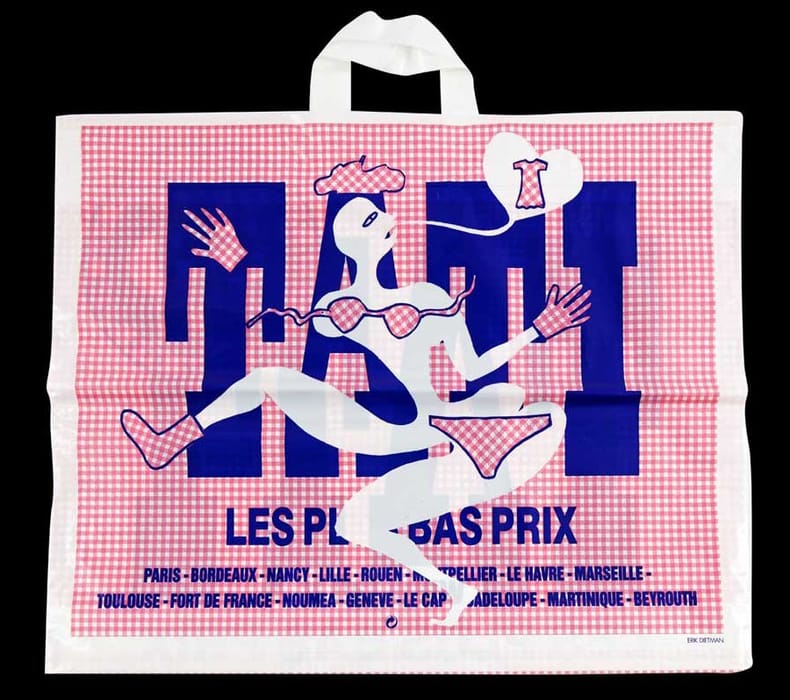
1998104504Paris Cyrille Putman / Flux Production-Diffusion 1998 1 vol. en feuilles 12 sacs en plastique illustrés (47 x 47 cm) présentés sous emboîtage cartonné de papier kraft (24 x 58 cm) avec vignette de l'éditeur contrecollée et justification à la main 18/50, lacet de fermeture. Tirage hors commerce limité à 50 exemplaires, sans doute réservés aux collaborateurs. Après la fermeture de sa galerie en 1997, Cyrille Putman monte l'agence de communication "Flux" dont l'objectif est de faire pénétrer l’art dans la communication d’entreprise. A l'occasion du cinquantenaire de la marque Tati, Putman propose à Fabien Ouaki de réaliser 12 sacs commémoratifs dessinés par des artistes contemporains. Chaque mois un nouveau sac est imprimé, dessiné par César, Erik Dietman, Mathieu Laurette, Alain Jacquet, Jean-Luc Moulène, Benoît Fougeirol, Hervé Di Rosa, Andrée Putman, Fabrice Hybert, Seydou Keïta, Garance Dindeleux & Stéphanie Gattlen (Stefou & Gargou) et Huang Yong Ping. Réunion de toute rareté.
1998104504Paris Cyrille Putman / Flux Production-Diffusion 1998 1 vol. en feuilles 12 sacs en plastique illustrés (47 x 47 cm) présentés sous emboîtage cartonné de papier kraft (24 x 58 cm) avec vignette de l'éditeur contrecollée et justification à la main 18/50, lacet de fermeture. Tirage hors commerce limité à 50 exemplaires, sans doute réservés aux collaborateurs. Après la fermeture de sa galerie en 1997, Cyrille Putman monte l'agence de communication "Flux" dont l'objectif est de faire pénétrer l’art dans la communication d’entreprise. A l'occasion du cinquantenaire de la marque Tati, Putman propose à Fabien Ouaki de réaliser 12 sacs commémoratifs dessinés par des artistes contemporains. Chaque mois un nouveau sac est imprimé, dessiné par César, Erik Dietman, Mathieu Laurette, Alain Jacquet, Jean-Luc Moulène, Benoît Fougeirol, Hervé Di Rosa, Andrée Putman, Fabrice Hybert, Seydou Keïta, Garance Dindeleux & Stéphanie Gattlen (Stefou & Gargou) et Huang Yong Ping. Réunion de toute rareté.
194995082Paris: Lucien Lelong 1949. First edition of this notably rare spectacular promotional brochure for Lelong's fragrances with no other copies traced. Largely forgotten today apart from amongst the couture cognoscenti Lelong 1889-1958 was enormously influential. After the First World War Lelong took charge of his parents' small fashion house which was noted for its espousal of the modern look - the chic autobiographical heroine of Colette's 1908 novella Les Vrilles de la vigne is dressed by Lelong - and continued their tradition of innovation advancing the concept of the "kinétique" clothes "constructed in such a way that their true shape would emerge in movement not at rest". Not a designer himself he employed a number of young designers who were later to strike out on their own. Christian Dior Pierre Balmain and Hubert de Givenchy all spent time developing collections for Lelong. His contribution to the success of the house was in his vision and his marketing brilliance: he redesigned his parents' salon decorating entirely in black so that it was said to resemble a black-lined jewellery box he offered discounts to society women who agreed to be photographed in his dresses and was early into the branded perfume market. The first fragrances offered by Lelong were enigmatically named A B C J and N intending to evoke a sense of mystery and romance. The artfully designed bottles were largely the work of Lelong himself. Over 30 years he created a total of 27 different fragrances. This superbly produced catalogue features ten suitably mysterious and evocative plates by Cassandre né Adolphe Jean-Marie Mouron the Ukrainian-born French painter illustrator poster designer and typographer probably best-known for his imposing poster for the great CGT liner Normandie. Octavo. With 10 chromolithographic plates after illustrations by Cassandre and similarly printed plates from photographs of the perfume bottles themselves by Réné Messager. Original plain boards in cream wrapper front panel with company device embossed within debossed cartouche. Wrappers a little rubbed and irregularly toned spine slightly chipped at ends repair to short split at head of front joint contemporary gift inscription to front free endpaper else very good. hardcover
1919nc1418Corrard Pierre Modes et manières d'aujourd'hui, Sélection Abraxas-libris Inconnu 1919 "Magnifique exemplaire de cette chemise de la collection ""Modes et manières d'aujourd'hui"", la publication du meilleur de la mode du début du XXe siècle, par les artistes l'ayant faite, au plus haut de leur art. Le projet est porté par Pierre Corrard, écrivain et éditeur de grand talent. Afin d'accompagner la révolution artistique et vestimentaire des années folles, il publie, en 1912, une première chemise, avec des illustrations de Georges Lepape. Devant l'accueil fait à cette première publication, il décide, chaque année, de proposer une chemise identique, avec des auteurs et des artistes différents. En 1919, donc, il demande à A. E. Marty de réaliser un volume couvrant à la fois le retour des soldats et la folie, immédiatement postérieure, qui va animer les arts sous toutes leurs formes : ce sont les fameuses Années Folles. Cette chemise se présente comme toutes les autres de la série : sous un cartonnage fort, dont le premier plat est frappé des seuls titres et années, avec, en son centre, une illustration couleurs, les planches prennent place dans un ensemble de quatre rabats fait du même papier que celui illustrant la contre garde, et dont le motif a été dessiné par l'artiste réalisant les 12 planches intérieures. L'ouvrage, en feuilles, débute par une page de titre reprenant l'illustration de couverture. Puis viennent les pages proposant le texte, et, après le colophon, les 12 planches illustrées. Un soin tout particulier est apporté à la réalisation de ces planches, de la gravure au passage des pochoirs. La provenance de notre exemplaire est exceptionnelle: il provient directement de la famille Corrard. Stocké dans leur résidence, notre exemplaire est dans un état strictement parfait, tel que sorti de chez l'imprimeur. Il est même encore sous son papier cristal d'origine, intouché. Il est bien complet des rubans et des rabats de chemise (qui, hélas, très fragiles, manquent ou sont très abîmés sur les exemplaires courants). Les nôtres sont intacts, parfaits et magnifiques. Bien qu'il date de plus de 100 ans, il est proprement comme neuf, mise à part l'évolution du papier. Notre exemplaire est un des 271 exemplaires numérotés sur Japon des Manufactures de Shidzuoka (sur un tirage total à 300 exemplaires). Livraison a domicile (La Poste) ou en Mondial Relay sur simple demande."
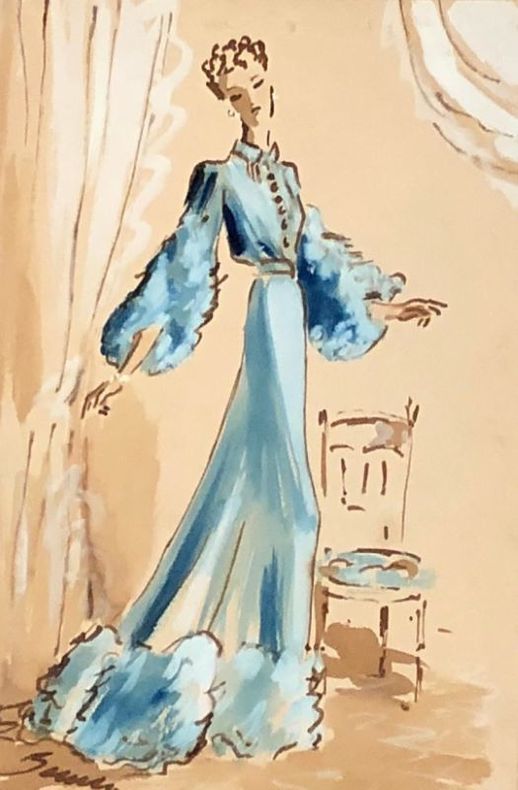
1947192141947 Gouache et mine de plomb, sur papier cartonné, signée en bas à droite, datée, 1947, 38 x 30.4 cm., encadrée.
1930225831930 1 Gouache sur fond argent, signée en bas à droite, (1930), 43 x 29,5 cm., encadrée.
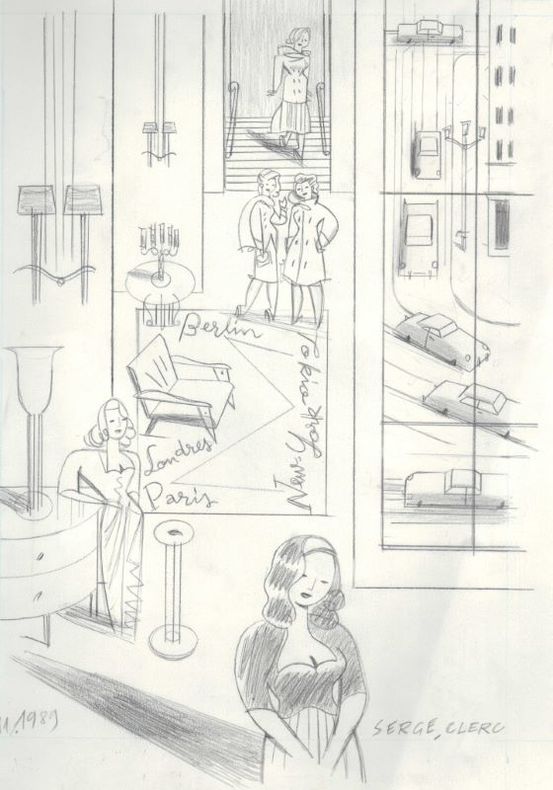
1990221191990 Mine de plomb sur papier, 1989, titrée en haut au milieu, datée en bas à droite, signée en bas à gauche.
1919bf5442Corrard Pierre Modes et manières d'aujourd'hui, Sélection Abraxas-libris Inconnu 1919 "UN ÉTAT PARFAIT. UNE PROVENANCE EXCEPTIONNELLE. UN EXEMPLAIRE SANS ÉQUIVALENT. ABSOLUTELY PERFECT CONDITION. AN EXCEPTIONAL ORIGIN. AN UNPRECEDENTED COPY. Magnifique exemplaire de cette chemise de la collection ""Modes et manières d'aujourd'hui"", la publication du meilleur de la mode du début du XXe siècle, par les artistes l'ayant faite, au plus haut de leur art. Le projet est porté par Pierre Corrard, écrivain et éditeur de grand talent. Afin d'accompagner la révolution artistique et vestimentaire des années folles, il publie, en 1912, une première chemise, avec des illustrations de Georges Lepape. Devant l'accueil fait à cette première publication, il décide, chaque année, de proposer une chemise identique, avec des auteurs et des artistes différents. Arrêtée pendant la guerre, la publication reprend en 1919, et c'est à nouveau Georges Lepape qui va composer des illustrations montrant sa vision de ces années de guerre, sur un texte de Henry-Jacques. L'illustrateur va en effet proposer, dans ce qui s'apparente à douze ""stations"" (la mobilisation, la permission, les alertes, la victoire), la vie quotidienne de la femme, restée à l'arrière alors que son mari est au front. Cette chemise se présente comme toutes les autres de la série : sous un cartonnage fort, dont le premier plat est frappé des seuls titres et années, avec, en son centre, une illustration couleurs, les planches prennent place dans un ensemble de quatre rabats fait du même papier que celui illustrant la contre garde, et dont le motif a été dessiné par l'artiste réalisant les planches intérieures. L'ouvrage, en feuilles, débute par une page de titre reprenant l'illustration de couverture. Puis viennent les pages proposant le texte, et, après le colophon, les planches illustrées. Un soin tout particulier est apporté à la réalisation de ces planches, de la gravure au passage des pochoirs. La provenance de notre exemplaire est exceptionnelle : il provient directement de la famille Corrard. Stocké dans leur résidence, notre exemplaire est dans un état strictement parfait, tel que sorti de chez l'imprimeur. Il est même encore sous son papier cristal d'origine, intouché. Il est bien complet des rubans et des rabats de chemise (qui, hélas, très fragiles, manquent ou sont très abîmés sur les exemplaires courants). Les nôtres sont intacts, parfaits et magnifiques. Bien qu'il date de quasiment 100 ans, il est proprement comme neuf. Notre exemplaire est un des 271 exemplaires numérotés sur Papier Japon des Manufactures de Shidzuoka (sur un tirage total à 300 exemplaires). Livraison a domicile (La Poste) ou en Mondial Relay sur simple demande."
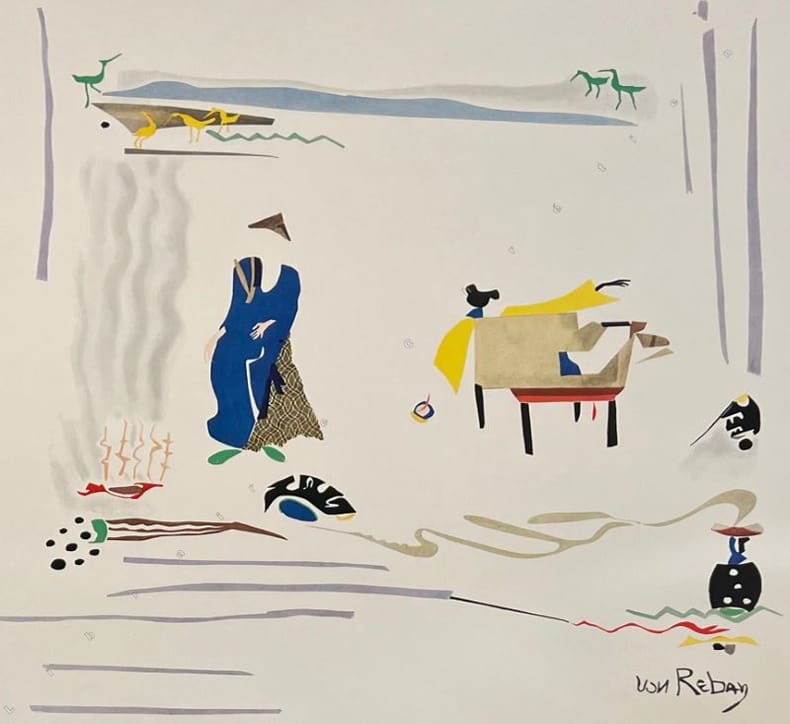
192524661Rudolf Bauer 1925 Illustrations de Hilla Rebay. Rudolf Bauer, (1925), in-folio (62 x 43.5 cm.), en feuilles, sous portfolio crème à rabats, 13 planches.
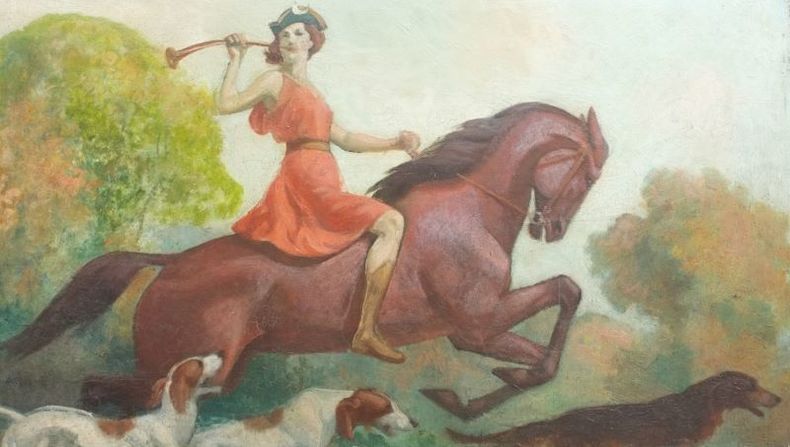
1920193481920 1 Huile sur panneau de bois, dos renforcé, (1920), 51.5 x 88 cm.
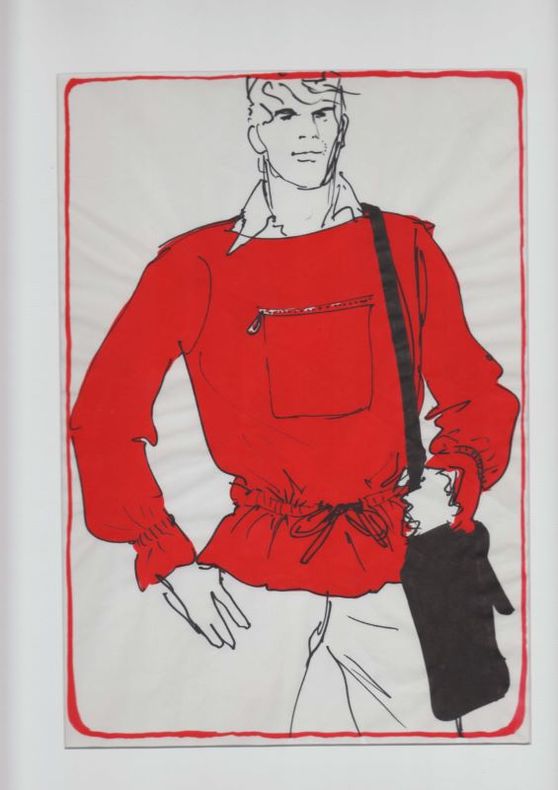
1965199171965 1 Encre de Chine, encre-feutre et gouache, (1965), 36 x 24 cm.
192960768Paris, Albert Godde, Bedin 1929. mit je einer auf der Vorderdecke montierten pochoir-kolorierten Abbildung und je 28 bis 40 unpaginierten Seiten (das Dez- (Noél) Heft mit 68 Seiten) mit unzähligen s/w Werbeanzeigen überwiegend aus dem Mode-, Textil-, Schmuck- und Kosmetikbereich. Daneben mit zahlreiche farbigen, teils montierten Illustrationen, einige davon in Original-Pochoir-Kolorierung in prächtiger Farblichkeit. Den meisten Heften liegen auch zusätzliche lose Blätter mit Abonnement-Formularen und Werbe-Broschüren bei. Jedes Heft mit individuell gestalteten Vorsatzpapier. 31,5 x 24 cm, helle farbig illustrierte OBroschur in Original-Kordelbindung
1930225801930 1 Gouache et aquarelle, signée en bas à droite, (1930), 37,3 x 27 cm., encadrée.
1930225811930 1 Gouache et aquarelle, signée en bas à gauche, (1930), 41,5 x 28 cm., encadrée.
1970D6222Istanbul c. 1970s. Very Good. Red card wrappers with "Gunal Erkose" stamped in gilt on front cover; two volumes 4to; unpaginated with b/w photographs 27 in one 23 in the other tipped-onto black leaves with printed frames and handwritten prices below e.g. Fob Istanbul US $34. Covers a bit scuffed; slight wave to text block. A fun time capsule of early 1970s Turkish leather fashions for men and primarily women modelling outer wear and jackets dresses and pant suits. <br/><br/> hardcover books
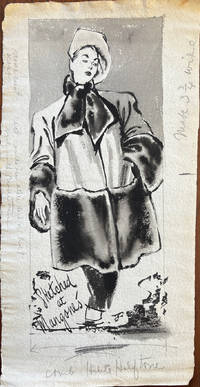
194261064Brooklyn NY: Barbara Duffy ca. 1942-1945. Seven pieces of original pen & ink art and gouache colouring and overpainting sized from 10 x 15 in. 3 up to 15 x 20 in. 3 on “Winsor & Newton’s Illustration Board 30 x 40†while the 7th piece is 9 x 17 in. executed on textured thick laid-paper pencil annotations in MS on fore-edges all pieces signed in thick black pen on versos some dustsoiling staining to fore-edges to a couple bumping to corners edgewear still a VG set of well-done exemplars. These original fashion design illustrations encompass women’s dresses hats fur coats evening wear and a post-War design by Mangone. The two dresses drawn by Duffy are reminiscent of the Claire McCardell easy to wear and comfortable dresses which emerged at the end of the War and featured a cinched-in waist floppy collars and padded shoulders retaining the influence of men’s tailoring on women’s fashions during the War. The “Toppers†are splendid examples of box or swagger coats often made in light wool cotton or rayon blends and in this case with fetching hats and cinched-in waists. The two smaller designs with mink or beaver coats include one with a matching purse and the other with a pillbox hat. The two “Paris†style Cloche hats are nicely drawn and one is fitted with a mesh veil. The exceptional Mangone design indicates it was “Sketched at Mangone’s†which was probably one of the frequent sessions the designer would put on fashion shows at the Fashion Institute or local boutiques in and around New York following World War II and features a coat trimmed in beaver fur with Cloche hat and according to Duffy was available in light and dark wool along with an ascot. Mangone 1884-1957 was not only a significant Italian-American designer who quickly adapted Paris fashion trends into his own American style and was very popular from before World War I until after World War II. Strikingly he also was a survivor of the Hindenburg disaster who managed to leap from the Zeppelin at Lakehurst NJ with his daughter and grand-daughter looking on suffering significant burns and after shock and hospitalization spent considerable time recovering. Duffy b. 1919 taught at the Jacob Gould Vocational School for girls in Prospect Park Brooklyn NY from the time she left college until after World War II after which she worked as designer in local department stores and then disappears from census and public records. Barbara Duffy, unknown
1985247471985 Estampe affiche impression sérigraphique en couleurs signée en bas à droite dans la planche, 1985, 54 x 68 cm., encadrée.