[ Fashion ]Biblio.com
740 résultats
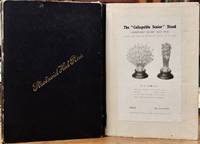
191016878Birmingham England: Stratnoid later Stratton & Co. n.d. ca. 1910. Three board panels with two cloth spines connecting boards. Bound in dark blue leather with gilt title. . Folding triptych display 8" x 11". With thirteen original Stratnoid silver hatpins nickel-plated eight with attached printed paper labels "Stratnoid Untarnishable heads". Also with three mounted illustrated advertisements for hatpin stands and sets of pins: the Collapsible Junior Stand the Collapsible Senior Stand and the De Luxe Collapsible Stand. A paper strip labeled in manuscript identifies which pins are part of the Junior Senior or De Luxe Stand sets. With spaces for the fifteen other hat pins in the set not present. Cracking and wear to joints and some chipping to leather. Some rubbing to extremities. Pins stuck into blue velvet pad with sheet of protective felt. Some foxing to felt and some light toning inside. A very good copy of a rare item. Stratnoid or Stratton and Company after 1920 was founded in 1860 as a producer of knitting needles. By the twentieth century the company was a major producer of powder compacts lipstick holders jewelry hat pins and other metal accessories. Business boomed in the late Victorian and early Edwardian eras as actresses like Lillie Langtry and Lillian Russell began wearing large elaborate hats secured with pins. b b b The hatpins in the present item feature the special Stratnoid Untarnishable heads which were warrantied for ten years and were designed in a variety of shapes like a stylized golf club an acorn and more. The collapsible stands would have been used to display the pins in women's stores and millinery shops. Stratnoid (later Stratton & Co.), hardcover
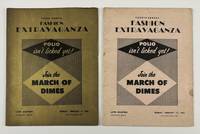
19574585Detroit: Bolar Printing & Publishing 1957. Good plus. 20; 36pp. Original printed wrappers stapled. Moderate soiling and wear. A pair of rare programs issued for the 1956 and 1957 benefits for the March of Dimes Fashion Extravaganza at the Latin Quarters in Detroit. The programs include information on the organization's committee hostesses sponsors and more. The event itself is titled "Fashion in Colorama" in the earlier program and "Spring Fashions in Symphony" in the latter with a schedule of events listed in both cases. Each program is profusely illustrated with photographs pertaining to the event itself but also in the numerous advertisements which populate both throughout. The ads feature a wide variety of local Detroit businesses providing critical information on commercial entities both owned by African Americans in and around Detroit and also those friendly to the local African American community. The only institutional holdings for these programs in OCLC reside at the Detroit Public Library. Bolar Printing & Publishing unknown
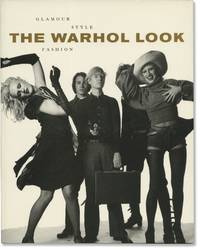
1997166527Boston: Bulfinch Press 1997. First Edition. Softcover. First Edition. Illustrated with 650 color 405 halftone and 150 duotone illustrations. <br /> <br /> Published in conjunction with a traveling exhibition which opened on November 8 1997 at the Whitney in New York and closed at the Andy Warhol Museum in spring of 1999. <br /> <br /> Near Fine in perfect-bound wrappers. Bulfinch Press unknown
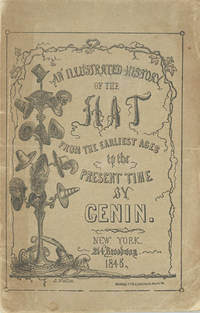
28934New York: 214 Broadway 1848 2141. First edition. Wrappers a little worn and soiled and chipped at the spine but sound and complete; very good copy. Small 8vo original pictorial wrappers 54 pages. Four full-page illustrations and about depending on how you count them 35 vignettes in the text; illustration of the Genin Hatter store in Manhattan on the lower wrapper. An attractive promotional pamphlet for the Genin Hatter business on the subject of the hat and its history by the proprietor of the firm John Nicholas Genin 1819-1878 one of the most famous hatters of his generation. "Like P. T. Barnum his neighbor on Broadway Genin had a remarkable knack for using publicity to boost his business" - Wikipedia. The imprint of 214 Broadway was the address of the Genin Hatter store. New York: 214 Broadway, 1848 unknown
1930D4922likely America c. 1930s. Fine. Group of 10 original costume studies on heavy cardstock mounts ranging in size from about 9.5-by-10.5 inches to 13-by-18 inches in pen-and-ink or grey wash heightened in white. Circa 1930s America. Presumably created by S. C. Cavanagh Ltd. with the firm's name in pencil along the bottom edge of many of the studies. Expertly carried out illustrations of elegant women in long coats or evening jackets pinky fingers held delicately aloft. All cards a little rubbed and smudged along the edges but overall nice and bright suitable for display. A wonderful collection for the classic or vintage stylist. <br/><br/> unknown
1940D12397America c. 1940s. Group of approximately 30 costume and fashion designs for women; on a variety of papers or board ranging in size from about 8x10 to 15x21 inches; using chalk crayon watercolor ink and even a bit of collage. Includes dresses hats and gowns -- many possibly for Advance Patterns Fashions and Fabrics. Some dated all signed by the artist. Some a little worn along the edges but condition is VG or better overall suitable for display. <br/><br/>Much of Teed's original artwork is now in the collection of the Museum of Fine Arts in Boston. This diverse group shows glamorous fashion in a variety of illustrative styles from spare line drawings on black paper to gowns trimmed in paper doily to finished and highly detailed watercolors. unknown
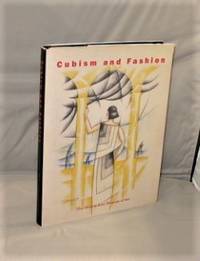
199827481<p>New York:: Metropolitan Museum of Art 1998. First Printing of the First US Edition. A Fine copy in a Fine dust jacket. Cubism and Fashion demonstrates how the fundamental traits of Cubist art were translated into fashion during the critical years from 1908 into the early 1920s and how Cubism has continued to influence designers even to the present. This volume by juxtaposing art and fashion shows how many of the most glittering and elegant dresses of the teens and twenties benefited from Cubist concepts. Significantly this book does not extol rudimentary drawings for apparel by Cubist artists but rather presents a critical study of the most accomplished creations by Poiret Vionnet Chanel and other premier designers who assimilated Cubist principles. Here their work is shown next to art works by Georges Braque Robert Delaunay Juan Gris Fernand Leger Pablo Picasso and other seminal artists of the early twentieth century. Martin argues that the influence of Cubism has been at least as powerful for fashion as it has been for bringing about a new way of seeing in the fine arts. During the teens fashion made its transformation from a full rounded static and exaggerated shell built on the human body to a soft dynamic cylinder revealing the body and reveling in flatness. Includes 147 illustrations of which 132 are in color.</p> Metropolitan Museum of Art, hardcover
191548533Paris & Chicago: Geo. F. Crowley & Co. 1-3 West 37th St. 1915. Oblong folio bifolium portfolio 14.5 x 7 in. when closed 14.5 x 14 in. when opened. 54 original silk sample swatches including silk velvet & velveteen with all of them attached at upper-fore-edge each w/ printed label at lower corner identifying inventory no. printed price-list below samples. Purple cloth decorative gilt lettering & decoration inside above and below the samples slight wear minor dustsoiling to fore-edges still VG copy w/ silk braid to hang the advertising piece. First edition of this very scarce and beautiful Edwardian silk salesman sample advertising piece. This sample catalogue offers an incredible historical reference for the vibrancy and tremendous variety of silk velvets velveteens and rich fabrics before World War I for American fashion. Most of these silks and silk velvets were intended for the high fashion industry at the time encompassing dresses gowns capes scarves hats ties and much more. No copies located in Worldcat. Geo. F. Crowley & Co., 1-3 West 37th St., hardcover
11683Without place or date late eighteenth century. 1p. 12mo. On one side of a piece of 18 x 10 cm paper laid down on leaf removed from commonplace book with a clue to provenance on the reverse provided by the part of a family tree of James Carmichael laid down there including 'Carmichael of Balmedy' 'Tho. Graeme of Balyowan' and 'Mr Ja. Smyth of Aitherny'. Fair on aged paper. A delightful poem apparently unpublished and a valuable piece of social history containing a couple of manuscript emendations. A total of fourteen lines of verse with the first ten relating to the lady's portmanteau beginning: 'With Linen and stocking and shoes first begin / Then your night-cloaths and petticoat neatly put in / Next your Dresses compleat for each part of the Day / With your handkerchiefs Caps all in Gala array / Then your Ribbons fans flowers & Gloves long & Short / With your combs & your brushes of every sort'. The four-line poem on the gentleman's portmanteau begins 'Coats Waiscoates sic and breeches short stocking & shoes / With Hankerchiefs sic Nightcap & Gown'. Without place or date [late eighteenth century?]. unknown
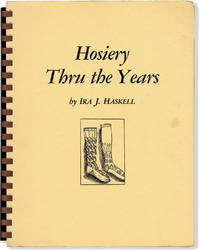
195664146Lynn MA: Privately Published 1956. First Edition. Quarto. Comb-bound heavy card wrappers; iv124pp; illus. Printed from typescript rectos only. Clean unmarked copy about Fine. Illustrated throughout from photographs halftones and reproduced line drawings. Includes bibliography glossary and chronology.<br /> <br /> A privately-published treatise by Ira J. Haskell a hosiery specialist at the T.W. Rogers Company Department Store in Lynn Mass. From the title page: "Mr. Haskell's unusual activities as a private collector of hosiery are well-known to readers of the Underwear and Hosiery Review through articles previously published." Frontispiece portrait of the author at the opening of an exhibition of Mr. Haskell's collection "Stockings on Parade" at the Commercial Museum of Philadelphia May 23-30 1945. Scarce in commerce. Privately Published unknown
191152192Paterson NJ Allentown PA Williamsport PA Dundee Lake NJ: National Silk Dyeing Company 1911. 8vo. 4 leaves of thick card stock bound in accordion-style format which fold out into 9 x 25.5 in panorama with 178 tipped-in colour skein silk samples in rainbow of colours a few discontinued colours removed along with their inventory numbers. Black cloth gilt lettering on front cover metal snap closure minor shelfwear some rubbing still G reference copy. First edition thus of this excellent sample catalogue filled with dyed silk thread samples including such Edwardian colour names as Desdoux Aloes Salambo Eclipse Champignon Glycine Pistache Oseille Cuite Myrthe and Matelot. The National Silk Dyeing Company began life as the Auger & Simon Silk Dyeing Works which was moved to Paterson in 1884 and grew quickly during the Victorian era but in 1908 Charles Auger chose to merge operations with five other Paterson NJ dye works forming the National Silk Dyeing Company. They would enter bankruptcy during the Great Depression. Worldcat locates 1 copy of 1913 Dyeing catalogue Brooklyn Museum. National Silk Dyeing Company, hardcover
194157736New York: Apparel Arts Esquire Inc. Esquire Building Madison at 46th March 1941. Folio. 10.75 x 14.25 in. 98 pp. Numerous colour plates many double-page colour photographs 23 of 30 fabric samples tipped-in photo illustrations colour photo illustrations. Quarter-blue cloth over colour-illustrated photo boards cover art of divers in swim suits from high dive platforms edgewear rubbing rubbing to corners some dustsoiling still VG- copy. First edition of this World War II-era trade magazine launched in 1931 in the depths of the Great Depression by Weintraub Smart & Gingrich from the Menswear Service Corporation. This issue features illustrations and advertisements by such artists as John Lagatta 1894-1977; Allen for Portis hats the modernist master Paul Rand’s 1914-1996 Summer 1941 poster the iconic fashion illustrator Laurence Fellows 1885-1964 and other mainstays. This installment features advertisements from such menswear brands as Botany Worsted Mills Jockey Manhattan Shirt Co. Dobbs Hats Hickok John Cyril Woolen Co. and even Pittsburgh Plate Glass Co. fashion displays. By the 1940’s the magazine was printed by Esquire Inc. issued 8 times a year continuing in print until replaced by Gentlemen’s Quarterly GQ in 1959. See: Marianne Brown Apparel Arts & Conde Nast May 10 2017. Apparel Arts, Esquire Inc., Esquire Building, Madison at 46th, hardcover
192262342New York: Edward J. Clode 1922. 12 vols. 12mo. 1184 pp all vols. separately paginated. With 100’s of text illustrations diagrams patterns. Brown cloth-backed cream-coloured softcovers illustrated in brown & brown lettering very slight shelfwear slight soiling to fore-edges still a NF set preserved in the original open case. First edition 2nd printing of this informative and well-illustrated set issued by Woman’s Home Companion intended as a Jazz Age “how-to†instructional sewing and tailoring course to properly instruct young aspiring fashion designers seamstresses and at home housewives how to craft the current Flapper-era fashions. These well-organized volumes include sections on selecting the proper clothes and colours simple stitches making their garments attractive trimmings to add a little extra to underwear; different types of blouses lingerie blouses kimono blouses “Smart†clothes drop waist dresses and the key of pattern making. This course helped to propel the idea of “Flapper Design Fashion†and reflected many of her own innovative artistic and graciously elegant designs. Conover Stadtmiller 1891-1968 was a Los Angeles fashion designer associate fashion editor of Woman’s Home Companion and after marrying noted Kennicott Copper Co. mining engineer Karl Stadtmiller 1893-1934 retired from her career until after her husband’s sudden death. Worldcat locates 4 sets FIT-NY Indiana U MFA Boston Toronto Public. Edward J. Clode, paperback
192047418Milwaukee WI: Adler Compay ca. 1920. Large image mounted on thick card stock 14 x 22 in. Colour lithograph decorative arts & crafts border nice colours varnished some minor edgewear lettering at borders slightly cropped in order for counter display to be cut to standard size very minor soiling lower fore-edge some yellowing from varnish still VG exemplar. A vivid and scarce counter advertising display for Adler Company Collegian men’s suits line. The Collegian line was for college men and any man who cared about perfect style with points of refinement. Although their advertising was not specifically collegiate their advertising campaigns often employed illustrations that conjured idealized college associations implying that if one were to buy their ready-to-wear suits then they too would be successful in college business and the appropriate middle class lifestyle. This advertisement offers a beautiful example of Jazz Age advertising. The Adler Company was founded in 1848 by Solomon Adler in Milwaukee Wisconsin and grew and thrived through the Civil War the Victorian era and eventually would employ over 900 people with nationwide sales in the 1920s over one and one-half million dollars. During the Jazz Age the Adler Company was synonymous with their Collegian line. The company was liquidated after the crash in 1929. See: Daniel Clark Creating the College Man American Mass Magazines and Middle-Class Manhood pp. 165-168; Historic Designation Study Report Emanuel D. Adler House pp. 5-6. Adler Compay, unknown
188054558Amsterdam: A. Jager ca. 1880. 12mo. 3.5 x 5.25 in. 12 hand-coloured albumen carte de visite images sized 2.25 x 3.5 in. mounted on thick 3 x 5 in. cards text in lower fore-edge of board bound in leporello accordion-style format linen hinges renewed. Original publisher’s decorated red cloth over beveled boards elaborate gilt decorated front cover and lettering minor rubbing edgewear minor bumping to corners still VG exemplar w/ most images retaining strong contrast and colour bookseller’s label of Joh. G. Stemler Cz. Algemeene Goekhandel Amsterdam on rear pastedown. Early printing of this charming photographic souvenir with hand-coloured albumen CDV photos illustrating the styles of folk costumes in different regions of the Netherlands. The villages and regions include Marken North Holland a fisherwoman carrying basket on her head from Scheveningen a fishing port a middle class orphan girl from Amsterdam a young girl wearing elaborate hat from Krommenie North Holland northeast of Haarlem. Jager 1825-1905 published many different series of these souvenir fashion photos as well as images of scenes in and around Amsterdam often as stereoviews some working with Dutch photographer Pieter Oosterhis. See: Maartje van den Heuvel The Rise of Dutch Landscape Photography. How a Vision of Painting Entered Photography Depth of Field Vol. 6 No. 1 July 2015. A. Jager, hardcover
192546331New York: Irving Samuels Hat Co. ca. 1925. 9 x 7.5 in. unused hat box label minor creasing to fore-edge otherwise an excellent bright sample. Scarce hat box label produced for the Samuels Hat company who supplied Plebe hats for the United States Naval Academy and other military academies across the United States in the 1920s and 1930s. Irving Samuels Hat Co., unknown
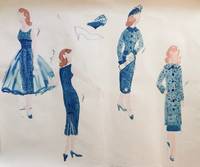
195562463New York NY Kansas City MO & Carmel Santa Barbara & San Francisco CA: Marian Ross Mizelle Madrigal 1955-1974. Four Vols. and original Store Sign for Carmel CA boutique. Folio. 2 - 12 x 15.25 in. & 2 - 13 x 19 in. 48; 48; 48; 48 pp unpaginated. all w/ mylar sleeves archival black paper insert backings with 151 original designs in gouache watercolour chalk and pen & ink 38 in pen & ink or pencil sized from 7 x 11 in. up to 10 x 15 in. and nearly all signed by Marian Ross three feature original fabric sample swatches affixed to them including one w/ pencil MS “Winner†and mimeographed description affixed to verso several of them are translucent pochoir stapled to backing paper many are on thick stiff studio board while others on assorted textured paper stock. In addition there are three newspaper and magazine clippings 1966 & 2013 a photostat copy of early Ross Mizelle “Mod†fashion designs and original black & white silver gelatin photo of young Marian Ross modeling a wedding dress. All are preserved in flexible vinyl portfolios printed labels on spines some minor scuffing & shelfwear to portfolios occasional very minor closed tears or edgewear to the designs a few w/ minor holes from removed staples still an exemplary archive of designs together with the original Madrigal signboard sized 16 x 27 in. from their Carmel CA store. This sensational archive of original fashion designs for Kansas City MO based department store suppliers by Marian Ross Mizelle before her move to California in the 1970’s to establish the Madrigal boutique with her husband Elliot A. Mizelle 1916-2007. These vividly reveal the Mid-20th-Century fashion trends following World War II. Many of the designs in this collection reflect the transition from the late 1950’s elegance and emphasis on Dior’s “New Look†highlighting femininity and opulent use of fabrics towards the more youthful designs emerging out of Swinging London which were a slimming down beginning to raise hemlines with short skirts bolero tops and increasing influence of Pierre Cardin Andre Courreges and Givenchy. The Mid-20th-Century saw a tremendous upsurge in marketing slimmer lines tighter fitting bodices and fashions emerging from such cultural events as Audry Hepburn in her iconic 1961 “Breakfast at Tiffany’s†film which heavily influenced a generation of young women.Young Marian Ross b. 1936 after completing her Fashion Academy certificate in 1955 free-lanced and worked in the New York fashion industry before landing with the influential and hot-selling Gay Gibson label with Gernes Garment Co. in 1961. The Gernes Garment Co. had been originally founded in 1928 by Sara Desaix Gernes 1896-1978 and her husband Alexander Gernes 1882-1947 to market her groundbreaking fashion designs targeting everyday fashion for young women juniors and teens. Her designs proved very popular as she initiated and fashioned sizing and dresses and clothing for teenagers through young college-age women and her designs proved very successful and were marketed through Chicago’s Marshall Field’s department store. By 1961 the Gernes Garment Co. moved their design and pattern making department to New York to capture young fashion designers such as Marian Ross as well as be closer to the influential couturier houses in New York & Paris. The Gay Gibson label was marketed in Mademoiselle Seventeen Glamour and Vogue magazines with Twiggy often modeling Gay Gibson dresses in the 1960’s. Marian’s designs were inventive playful and emphasizing movement as well as comfort. Many of the fashion patterns depict her models in flats ballet flats or even shoeless while dressed in elegant evening or formal dress. Also depicted are designs such as billowing harem pants modified and sleek upscale poodle skirts and Tartan patterned capes pockets dresses and accessories. Others encompass swimwear ski wear as well as the emphasized and often enforced domesticity of the late 1950’s to 1960’s with stylish plaid house-dresses in the kitchen and bar as well as frequent use of lace. The Gay Gibson label maintained a showroom at 1407 Broadway on the 39th Floor in New York ad held over 24 showings from 1961-1969 including Junior Dresses Summer Collections Spring Junior Collections as well as Holiday and Resort collections. By the early 1970’s the label was having financial difficulties and the popularity began to drop with the company run by Desaix Gernes her mother and husband Paul before folding a few years after Sara Desaix Gernes’ death. Marian and Elliot Mizelle established Madrigal Inc. name chosen because of the seductive chic of Manhattan’s Le Madrigal restaurant and grew into a legendary luxury boutique at one point operating store fronts in Santa Barbara downtown San Francisco and Carmel CA. In her 2015 interview for “Women in Business†with the Carmel Pine Cone Marian stated she “wanted to be an actress but it didn’t work out that way. I used to sketch a lot so I studied design instead. Everything I touched while was designing worked. I got a lot of jobs and was featured on a lot of Seventeen magazine covers.†This cataloguer could find not similar extant archive of original designs for the 1960’s period of the Gay Gibson label or for Marian Ross Mizelle; See: Interview with Desaix Gernes Garment Industry Oral History Collection The Kansas City Public Library Jan. 14 2005 SC229 Series 2 2024; Gay Gibson Vintage Fashion Guild 2025; Donnelly Garment Company vs. International Ladies Garment Workers Union et al Photographs Clothing Demonstration The Pendergast Years Kansas City in the Jazz Age & Great Depression 2025. Marian Ross Mizelle, Madrigal, hardcover
191056016New York & Tacoma: Samuel W. Peck & Co.; Dege & Milner Printed by Sherman & Bryan Inc. 1910. Sml. 4to. 16 pp unpaginated. Colour-illustrated borders & plates throughout with artwork reminiscent of children’s book illustrator Virginia Keep. Colour-illustrated softcovers cover art image of boys tossing down apples from a tree fine copy. First edition of this wonderfully illustrated fashion catalogue targeting the young boys in the decade before World War I. The illustrations depict young boys in knickers short coats and capes running carving Jack-o-Lanterns for Halloween playing with a dog and collecting chestnuts. This copy was printed for the Dege & Milner department store in downtown Tacoma which was operated from 1901-1915 by James H. Dege and his partner William Milner before Dege opened the James H. Dege Co. store. No copies located in Worldcat. Samuel W. Peck & Co.; Dege & Milner, (Printed by Sherman & Bryan, Inc.), paperback
190656017Tacoma WA: Dickson Bros. Co. 1120-1122 Pacific Ave. The Quick Print 1906. 8vo. 42 2 pp. With woodcut-engraved illustrations throughout. Pictorial light green softcovers front cover art rendering of the Dickson Bros. front facade before expansion and young college men wearing suits in Cornell dorm room minor toning to fore-edges minor curling to textblock 1 very small tear still a VG copy. First edition of this exceedingly scarce Washington department store catalogue for the Dickson Bros. Co. which expanded quickly at 1120-1144 Pacific Ave. in Tacoma WA during the first 30 years of the 20th Century. The company flourished by emphasizing ready-to-wear lines of clothing rather than tailored clothing selling Adler Bros. and Stein-Bloch suits and clothing based out of Rochester NY Stetson Hats and more. They also sold heavy denim work clothes such as Keystone railroad overalls and jackets trunks traveling bags boots shoes and more. George Dickson 1851-1935 was an active outdoorsman mountaineer and merchant in Tacoma. No copies located in Worldcat; See: George L. Dikcson’s Narrative Tacomian Jan. 7 1893. Dickson Bros. Co., 1120-1122 Pacific Ave., The Quick Print, paperback
188755685New Haven CT & Pittsburgh PA: L. Candee & Co. H. Childs & Co. 1887. 8vo. 28 pp. Decorated title page lithographed illustrations throughout. Embossed & decorated softcovers front cover decorated & illustrated in gilt & burgundy w/ peacock feather above lettering and nicely executed lithograph on back cover of young saleswoman standing next to a rack of rubber boots & shoes for sale minor toning shelfwear very slight tidemark at upper fore-edge front cover still a VG copy. First edition of this nicely printed Victorian catalogue for rubber boots and shoes. The nicely executed lithographs promote the Hip Boots hip waders thigh high sporting boots double thick Pebble Leg Boots and Fairy Boots reminiscent of cowboy boots as well as the rubber Duck or Canvas Boot for hunting. Also included are many different styles and varieties of rubber shoes for women and children including No Heel Imitation Sandals Gossamer Imitation Sandals Buskins with cotton flannel lining Opera Dew Drop Feather Weight and many others. The company also produced tennis rubber soled shoes croquet shoes as well as heavy duty Stalwart Lumbermen’s Shoe intended to fit over logger’s Wool Boots or German Socks. Leverett Candee 1795-1863 obtained early patent rights from Goodyear for manufacturing rubber shoes as early as 1844 and by 1852 had organized the large Candee Rubber Co. factory with the Hotchkiss Brothers in New Haven and Timothy Lester. No copies located in Worldcat; See: Davis The New England States Vol. I pp. 344-346 1897; Joseph Kane Famous First Facts 1950. L. Candee & Co., [H. Childs & Co.], paperback
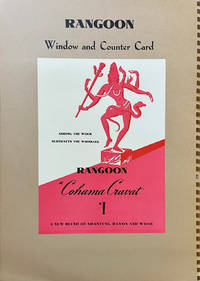
194061451New York: Cohama Cravats United Merchants & Manufacturers 1412 Broadway 1940. Atlas folio. 13 x 18 in. 34 pp unpaginated. printed on thick tan paper stock with 21 different tipped-in advertising promotional samples including camera-ready newspaper ads sample window & counter display cards and folded promotional brochures for mailing each to be imprinted with the retailer’s name order book tucked into rear pocket mounted on last leaf. Tan boards plastic-comb binding to spine minor bumping to couple corners some dustsoiling minor chipping to foot of spine still a VG bright exemplar. First edition of this exceedingly scarce sales and advertising catalogue designed to present the 1940 plan by the company for their $ 1.00 men’s cravat ties. Featured are the proposed newspaper ad lines for the six different Cohama Cravats in the Spring & Summer including the Briar Bahama Camelot Rangoon Gamester and Seminole. American tie manufacturing emerged as a significant force at the end of the Jazz Age and through the 1930’s as their popularity grew world wide for their heavy use of colours vivid patterns and breaking away from the more sedate colour palate of the British tie industry. Contributing to the explosion of tie manufacturing in the 1930s and 1940s were the need by many men during the Great Depression and then the War years to change their fashion look by adding a decorative tie rather than buying a new suit or set of clothes. The Duke of Windsor heavily influenced ties styles and wearers by not only developing the Windsor knot but also wearing them with many different types of clothing. Cohama was a trademark of United Merchants which was a textile firm originally founded in 1912 as the Cohn-Hall-Marx Co. merging with United Merchants in 1928 and later clothing chains across the East and South through World War II. No copies located in Worldcat; See: Gibbings The tie trends and traditions 1990. Cohama Cravats, United Merchants & Manufacturers, 1412 Broadway, hardcover
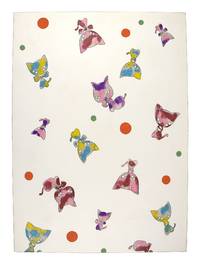
194033730Suzuka Japan et al. 1940. Very Good . Suzuka Japan: n.d. ca. 1940-1960. Nineteen original hand-stenciled designs ca 48x35cm; thirteen examples with rubber-stamp from two different craft shops the remaining six unattributed. Light wear and soil else a Very Good to Near Fine collection.<br /> <br /> Colorful multi-decade sampling of designs for the Japanese casual summertime cotton kimono known as yukata. The designs were almost certainly designed for children's outfits decorated as they are with baby birds puppies ducklings circus elephants bunnies musical instruments and teddy bears. The ten earliest examples all hail from the same shop and all use the same color scheme of navy blue slate blue and orange-brown. Later examples expand the color palate to much more vibrant and neon colors. One design in particular of a small child in a red bunny costume anticipates both the manga and the Hello Kitty aesthetic that became a global phenomenon beginning in the 1970s and 1980s. unknown
195358213Seattle WA: Nancy Paine ca. 1953-54. Twenty-one original fashion design watercolour paintings all oblong folio 9 sized 15 x 12 in.; 12 sized 18 x 15 in. 1 is painted title only many of them signed by Nancy down in lower corner 1 graded and reviewed by teacher several with neat cursive annotations some curling minor edgewear to corners some toning still VG set with the 2nd set retaining the original portfolio cover sheet. These original watercolour fashion designs reflect the 1950’s emphasis on full circle skirts swing skirts pencil skirts tea length dresses and fitted tight waist blouses reflecting the influence of Christian Dior towards increased femininity in the post-World War II era. For the College Coed portfolio our young artist has included designs for Capri pants lingerie fitted wool dresses flowing “poodle†skirts bathing suits tennis outfit ice skating clothing riding outfits and evening wear. The second portfolio incorporates diamond pattern one-piece bathing suits terrycloth robes different evening weather and nighttime negligee. Although young Miss Paine would not go onto becoming a commercial artist she did work as office manager for many years for the Simpson Lumber Company. Nancy Paine, hardcover
192447496Dayton OH: The Comer Manufacturing Co. 1924. Tall 8vo. 5.5 x 10.5 in. 36 pp. Numerous illustrations 4 colour plates 4 sepia-tinted plates 64 wool wool blend canvas linen leather cotton and patterned fabrics some treated w/ coating tipped-in occasional offsetting from samples either surrounding the sample or on facing leaves. Dark red printed softcovers decoration & lettering in orange & blue minor soiling some creasing still a VG- copy. First edition of this scarce salesman sample catalogue for men and women’s Jazz Age raincoats and overcoats in the mid-1920s. The company was founded before World War I by Charles E. Comer b. 1887 who quickly established the company as one of the largest manufacturers in Ohio of raincoats. The colour fashion plates are quite striking for the period and offer invaluable historical reference for the styles and weight of raincoats sold during the Flapper Era. Comer produced rubber-lined coats offered deals if you ordered two coats at once and also offered Mackinaws General Purpose coats Rubber rain slickers reversible coats and even waterproof aprons for housewives. This catalogue notes that they had just completed their new 40000 square foot and even offered waterproof luggage and garment bags. They were well known for advertising in labor magazines trade magazines and professional magazines constantly promoting their product and recruiting new salesmen. Worldcat locates only 1 copy Vol. 166. The Comer Manufacturing Co., paperback
188546789Auburn NY: L. Marshall ca. 1885. Tall 8vo. One colour chromolithograph card 6.75 x 11.75 in. very slight toning to fore-edges very slight bumping to couple corners still a VG bright copy. First edition thus of this advertising card for L. Marshall who were a very successful and popular Victorian clothing and furnishing store in Auburn New York. They were particularly well known for their beautiful colour advertising cards sent out as promotions and were at their height of popularity at the end of the 19th century. L. Marshall, hardcover