Livre Rare Book

221 résultats
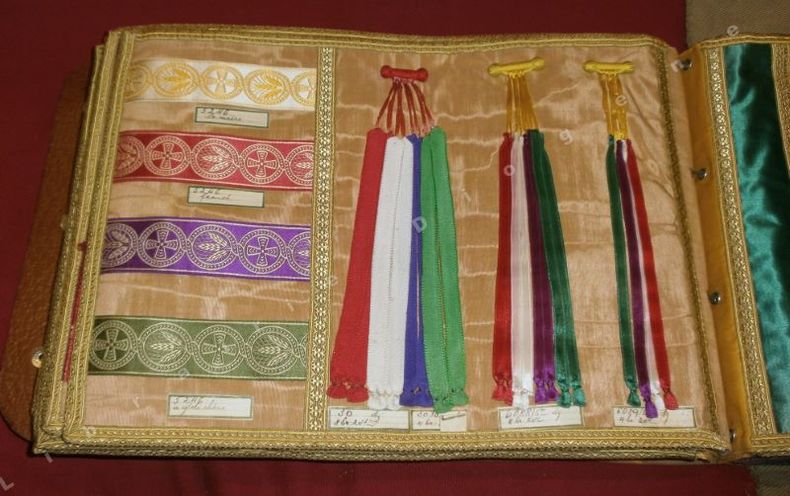
957571 Catalogue d'Echantillons, 1 volume in-8 de 245x155 mm environ contenant près de 189 échantillons de tissus pour . Signets pour Missels et première Communion, Rubans pour signets de Missels et signets confectionnés, Rubans pour Congrégations, Insignes, Brassards, etc, Cordon Moiré, Ceintures Enfants de Choeur, Ceinture Evêque, Etoles etc. présentés sur 20 pages, dans un cartonnage noir avec dos cousu, étiquette de papier sur le premier portant titres manuscrits : Province, Ceintures e Prêtres-Signets. Il manque quelques échantillons sur 2 pages, frottements sur les bordures des plats, sinon bon état.
034255512X.Ghardcover. Good. Access codes and supplements are not guaranteed with used items. May be an ex-library book. hardcover
20229781743798201-2025Hardie Grant 2022. Paperback. New. <p><strong>Author:</strong> Daisy Braid</p><p><strong>Publisher:</strong> Hardie Grant</p><p><strong>Binding:</strong> Paperback</p><p><strong>ISBN:</strong> 9781743798201</p><p><strong>Release Date:</strong> 2022</p><p><strong>Number Of Pages:</strong> 208</p><p><strong>Details:</strong> If you're looking to dive into the world of sewing without breaking the bank this guide by Daisy Braid is your perfect companion. Designed for all skill levels from complete novices to seasoned tailors this book offers a vibrant collection of projects that emphasize creativity and self-expression. It covers everything essential to get you started including the tools of the trade materials and foundational techniques all presented through clear step-by-step instructions complemented by helpful illustrations and photographs. <br /><br />With a focus on inclusivity the book features a variety of projects that don't rely on standard sizing—just your personal measurements. You'll find 10 small accessory projects and 10 more intricate clothing designs each adaptable for your unique style. Importantly the projects are designed with sustainability in mind encouraging minimal waste and the use of leftover fabric. Whether you're sewing for a casual day at home or a special outing this edition empowers you to create stylish comfortable pieces that reflect your personality. Get ready to unleash your inner designer and enjoy the therapeutic process of sewing with Sew It Yourself with DIY Daisy.</p> Hardie Grant paperback
170235Música y ballet . Este cuidado método para aprender a tocar la guitarra ha sido diseñado para ser utilizado con o sin profesor cualquiera que sea la experiencia o el estilo del estudiante. Presenta toda la técnica para las manos derecha e izquierda desde la posición básica de los dedos hasta los arpegios o la amortiguación de las cuerdas las ligaduras y los vibratos. Se explican también nociones básicas de música como las notas claves movimiento escalas y matices.Por eso el Curso completo de guitarra clásica permite desarrollar a la vez la habilidad musical y la tecnica unknown
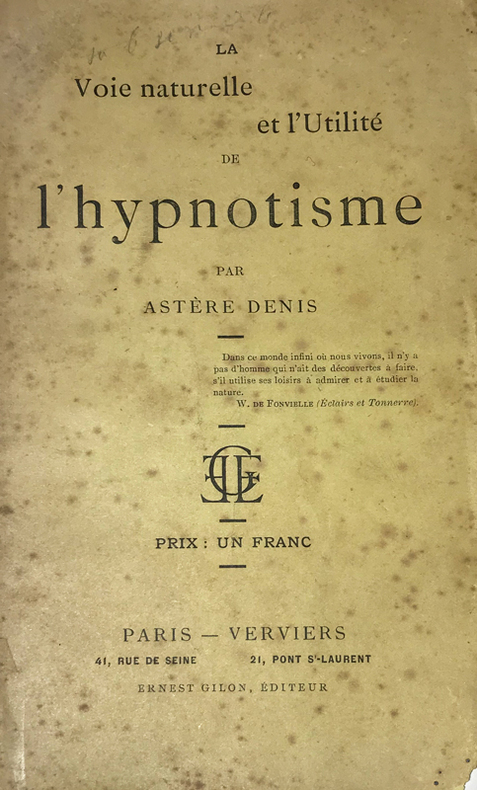
189215348Paris-Verviers (Belgique), Ernest Gilon éditeur-imprimeur, sans date (circa 1892-1893) ; in-16, broché ; 112 pp., (8) pp. de catalogue, couverture jaune paille.
61693George Redway. London. 1899. . pp. xii 380. Original cloth spine faded otherwise a very good copy. George Redway. London. 1899. hardcover
Q-9996267636Boston Music Co 1946-06-01. Hardcover. New. In shrink wrap. Looks like an interesting title! Boston Music Co hardcover
Contents: Nice color Nash car ad inside front cover; Great color ad for Packard cars; Color ad for White trucks; Szilard and Oppenheimer scoff at plans to keep the atomic bomb secret; J. Edgar Hoover foresees biggest crime wave; Fascinating story about U.S./Arab political machinations re: support for a Jewish commonwealth in Palestine; Photo of Maryland man legally flogged for beating his wife; Money for Spies; Runaway inflation turns clock of Europe back to Barter Age - cigarette becomes medium of exchange in the large cities; Brass says yes, Braid says no in fight over merging services - navy prefers independence; Centerfold Buick auto ad; Death in the streets of Caracas; Spurtin production foreshadows hottest sales rivalry in history; Truman forgets he's President - has Capital newsmen in a dither; Excellent color Caterpillar Diesel ad - 'Mountain Moving Done Here'; Motorola radio ad. Average wear. Unmarked. Address label atop front cover. A sound copy. Magazine
190812220Philadelphia: George W. Jacobs & Co. Very Good with no dust jacket. 1908. First Edition. Hardcover. Inner hinges are just starting to crack although the book still feels very tight. The paint has flaked off the white title on the spine. Slight mottling along the bottom edge silverfish . Owner's name on the title page dated 1908. The contents are very fine. ; 8vo 8" - 9" tall; 322 pages . George W. Jacobs & Co. hardcover
1994172855Alabama: Gryphon Editions 1994. First Edition; First Printing. Hardcover. AS NEW in shrinkwrap. Leather bound Accented in 22kt gold. Printed on archival paper with gilded edges. The endsheets are of moire fabric with a silk ribbon page marker. Smyth sewing and concealed muslin joints. This book is in full leather with hubbed spines. A Limited Edition. ; The Classics of Psychiatry & Behavioral Sciences Library.; First Gryphon Edition. Gryphon Editions hardcover
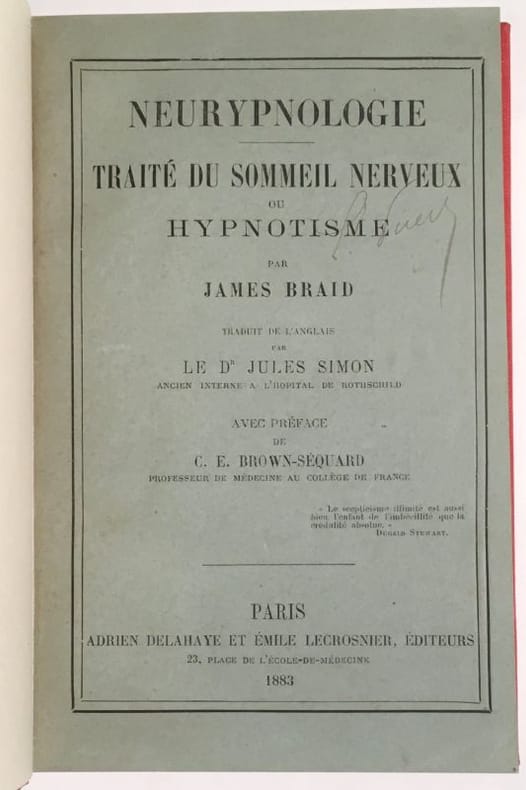
18832971883 Paris, Delahaye et Lecrosnier, 1883 ; in-12 de xv-272 pp., [1] f., bradel toile rouge moderne.
846P., Delahaye, 1883, un volume in 8 relié en pleine toile noire, titre en lettres dorées au dos (reliure e l'époque), 15pp., 272pp., (1-errata)
Pages 253-292 plus xxiv pages of great vintage ads. Many great black and white photos. Features: The Campaign Against the Housefly; Homes of American Artists - "Red Oaks," the Summer House of John M. Carrere, Esq., White Plains, NY; The Wild Mushrooms; A Reclaimed Dwelling - how a farmhouse at Stokes Pogis, Villa Nova, PA, was Reclained and Transformed into a Habitable Dwelling; Curtains for the Summer Home; The Healthiest House in the World - designed by Milton Dana Morrill, of Washington; Trimming Old Trees; The Garden Gate - wonderful photos; Forest Conservation at Biltmore, the North Carolina estate of George W. Vanderbilt; Small Houses of Small Cost - from $3,500 to $5,500, belonging to Mssrs Cowle, Smith, Morrini, and Mrs.Turner; "Glenbrook," A Naturalistic Garden Designed by its Owner at Newburgh, NY; "The Lindens," The Summer Home of E.S. Williams, Esq., at Nahant, MA; The Profitable House - A House for a guaranteed cost; One-page vintage illustrated ad for the Electric Renovator, an early vaccum cleaning system; One-page ad for Wm. Knabe & Co. pianos; Ad for the Steinway Art Piano; Travel Ad for Muskoka Lake; Great two-color back page ad for Mennen's Borated Talcum Toilet Powder features lady at medicine cabinet; and more. Printed on glossy stock. Complete and unmarked with average wear. Covers and some pages loose but all present. A worthy copy of this great vintage issue. Magazine
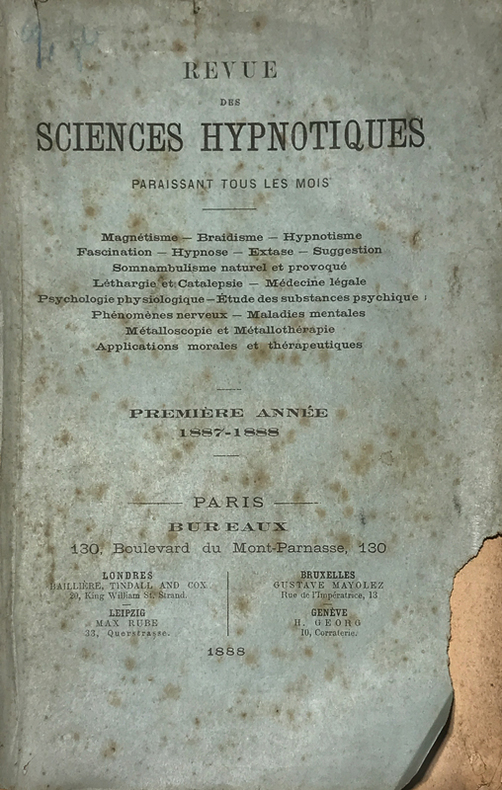
15418Paris, Bureaux (Imprimerie Mersch, puis Ch. Noblet des numéros 2 à 5 ; Amiens, Imprimerie Nouvelle, N°6-7 ; Paris, A. Lamier et Fils N°8, 9, 10 ; Bordeaux, Gounouilhou), juillet 1887 à juillet 1888, en un volume in-8, broché ; (4) faux-titre et titre général, 472 pp., premier plat de couverture.
95758Catalogue de près de 700 échantillons de rubans et signets de soie, 30 feuillets de tissus encadrés d'un galon reliés par deux cordonnets passant dans 4 oeillets métalliques, présentant des échantillons numérotés et étiquetés, dans un portefeuille à rabats en maroquin cognac, fermé par 3 boutons pression. Il manque quelques échantillons, le galon doré de 2 feuillets est un peu effiloché, frottements sur le cuir et les rabats, sinon bon état.
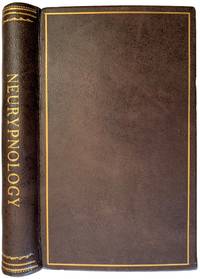
1843M14219London:: John Churchill; Edinburgh: Adam & Charles Black 1843. 1843. 12mo. iii-xxii 265 1 pp. Note: mispaginations: iv for vi 233 for 238. Errata; lacks half-title. Modern full calf leather spine label. Penciled notes covering errata faint. Fine. First edition. 'Braid introduced the term 'hypnosis' in his book Neurypnology 1843. He was mainly interested in the therapeutic possibilities of hypnosis and reported successful treatment of diseased states such as paralysis rheumatism and aphasia. He hoped that hypnosis could be used to cure various seemingly incurable 'nervous' diseases and also to alleviate the pain and anxiety of patients in surgery. / Braid's findings met with violent opposition at first but they soon provided a major impetus to the development of the French school of neuropsychiatry.' - Encyclopaedia Britannica. / 'The first full-length scientific treatise on what is now known as hypnotism. When he published Neurypnology Braid did not yet have a full understanding of the psychological processes involved in hypnosis believing that hypnotic phenomena were produced by functional changes in the nervous muscular circulatory and respiratory systems. However he did recognize as the Abbe Faria and Bertrand had before him that hypnosis was a subjective phenomenon dependent entirely on the state of mind of the hypnotized and not on any mystical fluid or occult magical power wielded by the hypnotizer. As Braid continued to investigate hypnotic phenomena his ideas of what caused them underwent several radical changes which are demonstrated in his later works. Braid's methods of hypnosis were published in France circa 1860 where they exerted an important influence on the work of Broca Charcot Liebeault and Bernheim whose teachings in turn influenced the work of Sigmund Freud.' - Haskell F. Norman 324. / James Braid born in Scotland was a Manchester physician who showed innovative treatments of clubfeet curvature of the spine bandy legs and strabismus. He is sometimes called the 'Father of modern hypnotism' Kroger Clinical and Experimental Hypnosis in Medicine 2008 p.3 though hypnotism is much older than with his introducing the field to western thought. PROVENANCE: J. Wayne Cooper M.D. no markings. REFERENCES: Bramwell pp. 21-27; Crabtree Animal Magnetism Early Hypnotism and Psychical Research 1766-1925 465; Fulton & Stanton The Centennial of Surgical Anesthesia I.17; Garrison and Morton 4993; Hunter & Macalpine Three Hundred Years of Psychiatry pp. 906-10. John Churchill; Edinburgh: Adam & Charles Black, 1843. hardcover
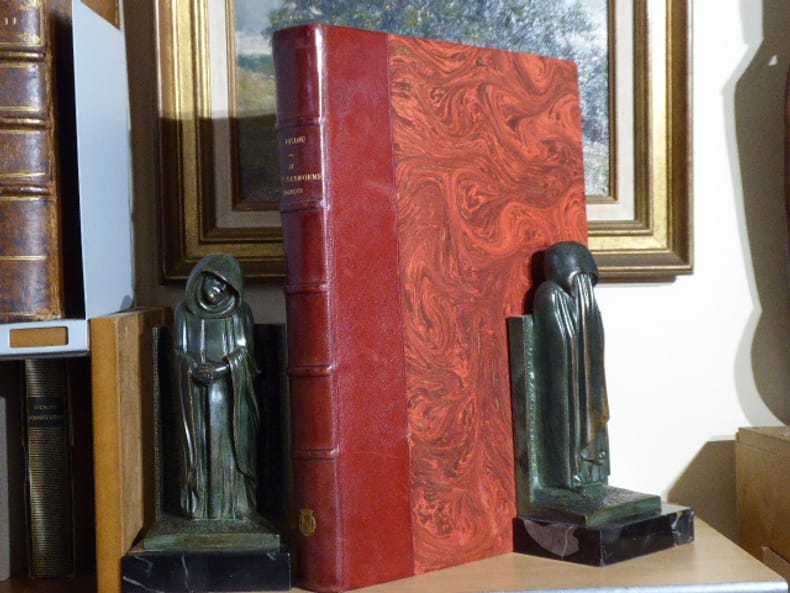
659784"La Giberne" Colombes 1915 In-folio ( 385 X 290 mm ) de 327 pages, demi chagrin rouge, dos à nerfs orné des armes dorées du Marquis DES ROYS en queue, tête dorée, couvertures conservées. 10 planches hors-texte d'uniformes en couleurs par Maurice ORANGE et 3700 dessins de Jacques HIPERT dans le texte. EDITION ORIGINALE limitée à 315 exemplaires numérotés, celui-ci N°23, justifié et signé par l'auteur. Très bel exemplaire du "Maître-Livre" sur le sujet, de la bibliothèque du Marquis DES ROYS ( Ex-libris ).
184313447FIRST SCIENTIFIC WORK ON HYPNOTISM <br />first edition 8vo. xxii 265pp. original blind stamped blue-grey cloth 1.5 cm. split at head of front joint and spine shade faded. Nice copy of this classic. <br /><br />GARRISON & MORTON 4993 OSLER 1384<br />"Braid inaugurated modern hypnotism the word itself being introduced by him" Garrison & Morton.Braid a Manchester doctor was stimulated by his attendance at a local seance to investigate carefully the phenomena he had observed. His careful sceptical and physiologically oriented experiments led him to the "apparently new laws of nervous sleep . soon to be accepted throughout the world as Hypnotism and Hypnosis the names he proposed in this book" Hunter & Macalpine <i>Three Hundred Years of Psychiatry</i>. John Churchill hardcover
1843030273London: John Churchill 1843 8vo. original blindstamped green cloth gilt neat cloth repairs hinges reinfored with binders cloth a little rubbed & bumped some marks & tears to leaves prev. owner's name to title page occ. pencil underlining and marginalia; pp. ii half-title last blank xxii 266 last 'Errata et Addenda'. A very good copy of a rare book especially signed. Inscribed on FFE to prev. owner by the author 'To Captn. Brown with the author's respects kind regards 7th July 1843'. James Braid 19 June 1795 - 25 March 1860 was an important figure in nineteenth century medicine and considered a significant pioneer in hypnotism and hypnotherapy. . Signed by Author. First Edition. Hard Cover. VG-. John Churchill hardcover
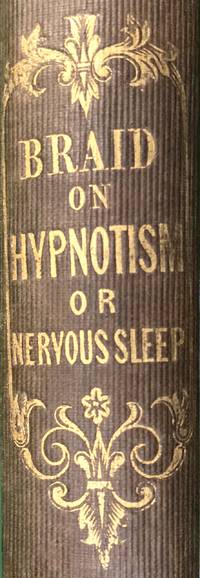
1843152778London: John Churchill London; Adam & Charles Black Edinburgh 1843. From the occult to the scientific First edition of the book that established hypnotism. Expanding on Franz Mesmer's theories of animal magnetism Braid argued that mesmeric trances were not caused by channelling an occult fluid but were a psycho-physiological state caused by manipulating the nervous system. The medical practices developed as a result of Braid's work constitute a major development in the history of psychology and psychotherapy. Braid's 1795-1860 interest in mesmerism stemmed from his attendance at a demonstration by French mesmerist Charles Lafontaine 1803-1892 in November 1841. The mesmerist movement had been established by the publication of Mesmer's 1734-1815 book Mémoire sur la découverte du magnétisme animal 1779 which detailed the discovery of a "universal fluid" that responded to magnetic forces and could be manipulated within patients to cure illness. The fluid could be transmitted inside people animals and objects first through magnets and later through sheer will. The theory although pervasive was controversial; Mesmer's detractors condemned him as a theatrical showman and many viewed mesmerism as a type of dangerous mind control that had contributed to the political crises of the late 18th century including the French Revolution. Braid was amazed by Lafontaine's demonstration but was sceptical of its causes. He did not share the view that it was merely an elaborate hoax nor did he believe an occult magnetic fluid truly caused it. To get to the truth of the matter Braid began experimenting with putting himself into a mesmeric trance by visually fixating on small bright dots of light. Just a week after attending Lafontaine's demonstration Braid delivered a lecture refuting animal magnetism and demonstrating his own techniques. Braid argued that the fact he was able to achieve similar effects on himself proved that there was no need for an operator to channel the fluid within him and that therefore the mesmeric effects were solely caused by manipulating the psycho-physiological state of the subject. He coined the term "neurypnology" from the Greek for "nervous" and "sleep" but was keen to stress that although "sleep" was the closest analogy to a state of hypnosis the prefix "nervous" distinguished it from natural sleep. He proposed various abbreviated forms of the term including the one that is most common today: hypnotism. Details of Braid's experiments were delivered at five public lectures which were reported in detail in the Manchester Guardian and the Manchester Courier. He then published a pamphlet "Satanic Agency and Mesmerism Reviewed" 1842 outlining a brief statement of his discoveries. The present work is Braid's only full-length definitive exposition of hypnotism. At the time of writing it Braid "did not yet have a full understanding of the psychological processes involved in hypnosis believing that hypnotic phenomena were produced by functional changes in the nervous muscular circulatory and respiratory systems. However he did recognize that hypnosis was a subjective phenomenon dependent entirely on the state of mind of the hypnotized and not on any mystical fluid or occult magical power wielded by the hypnotizer" Norman. Neurypnology was key to the transformation of animal magnetism into a psychological practice; although Braid did not believe that hypnotism could provide a "universal cure" for ailments as Mesmer had he promoted its use as a therapeutic tool in conjunction with medical treatments. "Braid's methods of hypnosis were published in France circa 1860 where they exerted an important influence on the work of Broca Charcot Liébeault and Bernheim whose teachings in turn influenced the work of Sigmund Freud" ibid. Provenance: blindstamp of occult collector Dr Michael H. Coleman 1928-2011 on the front free endpaper. A chemist by training Coleman applied scientific methodology to his psychical experiments and compiled an extensive library of books on the supernatural spiritualism and magic. Small octavo. Original brown cloth spine lettered in gilt covers panelled with centrepieces in blind yellow coated endpapers. Ink bookseller's marking and ownership initials to front pastedown. Spine sunned ends a little worn a couple of marks to cloth soiling to endpapers cords occasionally visible but holding: a very good copy. Bibliotheca Osleriana 1384; Garrison & Morton 4993; Hunter & MacAlpine Three Hundred Years of Psychiatry pp. 906-10; Norman 324. hardcover
1842317078Manchester 1842. Ink on paper 22 lines. 1 vols. 8vo. Old folds. Ink on paper 22 lines. 1 vols. 8vo. "My Dear Sir / I called yesterday but you were out. I wished to invite you to a conversazione at my house this evening at 7 oC where besides exhibiting explaining my modes of inducing the phenomena I expect a number of patients to be present who have been cured or relieved by the Neuro Hypnotic operations. I wish to afford those present an opportunity of judging for themselves as to the real facts of the cases free from all partiality or bias on my part as the offering of this new agency. / . to be / very respectfully / yours / Jas Braid"<br/><br/>The present letter dates from a period of active discovery and public debate about the topic of Hypnotism a term coined by James Braid 1795-1860 "the founder of modern hypnotism" a couple of months earlier. It is here rendered as three distinct words "Neuro Hypnotic operation." <br/><br/>During magnetist Charles Lafontaine's English tour of 1841 Braid was allowed as a medical man to examine the magnetised subjects and he witnessed that the phenomena was not being faked determined to study the nature of the effects and their causes. Braid immediately began auto-experimentation at home that refuted the idea of an operator's 'magnetic influence' but confirmed that the process did indeed generate a 'particular physiological state.' Braid began a series of five public lectures to exhibit his findings just one week after Lafontaine's last demonstration. He was attacked as a necromancer and satanic agent in April 1842 in a well-attended and well-publicized sermon by the controversial cleric Hugh M'Neile. Braid wrote a personal response letter to M'Neile inviting him to an upcoming lecture but was met with silence. Braid's defense "a work of the greatest significance in the history of hypnotism" was a pamphlet entitled Satantic Agency and Mesmerism Reviewed in a Letter to the Rev. H. Mc. Neile.of Liverpool. of which only two copies are known published in June 1842. Braid first uses his new more scientific terms 'neurohypnotism' 'hypnotic sleep' and 'hypnotise' in the pamphlet. In 1843 Braid published his only full-length book Neurypnology; or the Rationale of Nervous Sleep Considered in Relation with Animal Magnetism. His writings were published in France after his death where they became an important influence on the work of Azam Broca Richet Charcot Liébeault and Bernheim as well as Freud whose "earlier works clearly reflect the magnetic-hypnotic tradition." For Braid see Crabtree 450 465 and Norman sale lots 951-953 unknown books