Transworld Art CorporationBiblio.com
1 839 résultats
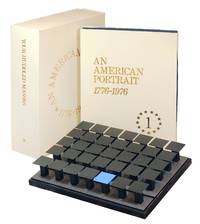
19751270241975. New York: Transworld Art Corporation 1975. <br /> <br /> Huge folio 711 x 540 mm: 98 unnumbered pages in 24 leaves and 1 sheet of Arches of which 10 leaves contain the 10 prints in a square-cut folder of Arches contained in a white leather-covered solander box with the title blocked in gold on the front and the subtitle with one star on the spine. The solander box and sculpture contained in a white leather-covered presentation case fastened with two metal studs with the title blocked in gold on the front and the subtitle on the spine. Condition: Prints and text leaves near-fine with very minimal off-setting and age toning; small blemish to one edge of the Soto sculpture; the presentation case with a touch of inevitable wear to the edges. Muriel Rukeyser's copy and evidently very rarely removed from the original cardboard shipping box together with her copy of the absurdly small trade edition with her ownership inscription on the half title.<br /> <br /> § One of 25 copies not intended for sale with the ten original prints numbered "H.C. 20/25" and signed in pencil by the artists together with a signed multiple by Jesus Soto. <br /> <br /> A lavish celebration of the United States bicentennial combining original artworks and literary extracts with an introduction by Muriel Rukeyser. Incredibly this monumental construction was only part one of the project and two similar compendia followed published and issued separately.<br /> <br /> The portfolio contains the following:<br /> <br /> JESUS SOTO "Homenaje al Humano"<br /> Multiple sculpture made by Atelier Tosi Milan Italy 1975<br /> <br /> HENRY MOORE "Two Women Bathing Child"<br /> Lithograph printed by Curwen Press London England 1975.<br /> <br /> PIERRE ALECHINSKY "Central Park"<br /> Lithograph printed by Clot Bramsen et Georges Paris France 1975.<br /> <br /> GRACIELA RODO BOULANGER "Le Dimanche Matin"<br /> Lithograph printed by Mourlot Paris France 1975.<br /> <br /> ALEXANDER CALDER "Flies in the Spider Web" <br /> Lithograph printed by Mourlot Paris France 1974.<br /> <br /> ROMARE BEARDEN "The Family"<br /> Etching printed by The Printmaking Workshop New York City 1975.<br /> <br /> PAUL JENKINS "Phenomena Franklin's Kite"<br /> Lithograph printed by Mourlot Paris France 1974.<br /> <br /> MARK TOBEY 'The Scroll of Liberty"<br /> Lithograph printed by Mourlot Paris France 1973.<br /> <br /> RICHARD ANUSZKIEWICZ "New Glory"<br /> Serigraph printed by New York Institute of Technology Old Westbury New York 1975.<br /> <br /> SALVADOR DALI "The Glory That Was Spain's"<br /> Etching hand colored printed by Atelier Rigal Fontenay aux Roses France 1975.<br /> <br /> NANCY GROSSMAN "The Road to Life"<br /> Lithograph printed by Styria Studios New York City 1975.<br /> <br /> The literary extracts are by John F. Kennedy Abraham Cahan Horace Traubel Jane Addams William Faulkner Jacob Riis Gustavus Vasa José Martí Charles Dickens Gottlieb Mittelberger Nathaniel Hawthorne Willa Cather Morris Shloss O. E. Rölvaag Stephen Crane John Wise Emma Lazarus Benjamin Franklin and anonymous authors.<br /> <br /> The full edition consisted of 175 regular sets numbered 1-175 50 deluxe sets numbered I-L 25 sets numbered H.C. 1-25 "reserved for exhibition purposes and gifts to those who made this project possible" and 25 sets numbered E.A. or A.P. 1-25 reserved for the artists. In total 275 sets.<br /> <br /> Despite the relatively large edition number there are almost no records of this portfolio in institutional catalogues or at auction suggesting either that the full edition was never issued or that copies were immediately broken up for their splendid prints both is likely true. The sole institution that appears to have any of the portfolios is ironically the National Library of Quebec which has all three. <br /> <br /> The Transworld Art Corporation was a New York-based company which published contemporary art prints and portfolios in deluxe formats. The 33 artists involved in the three volumes of the American Portrait project were commissioned and corralled over four years prior to the bicentennial and the result was celebrated with a travelling exhibition which opened at the Graphic Eye Gallery in July 1976. A reviewer for the New York Times while critical of the razzmatazz surrounding the exhibition praised the artists' contributions: "Quality is not in short supply. Not only are the physical properties of the prints of an estimable worth-quality of paper intensity and intricacy of color tones and sharpness of design-but the prints themselves are also among some of the artists' most distinguished achievements." <br /> <br /> Most striking today perhaps is the portfolio's internationalism and open celebration of multi-cultural America. The volume subtitled "Your Huddled Masses" is dedicated to a "nation of immigrants" and Muriel Rukeyser's introduction and the literary extracts are all on the theme of migration to America. The artists themselves are of many nationalities: the seven Americans joined by a Belgian a Venezuelan a Bolivian a Spaniard and an Englishman. <br /> <br /> Alexander Calder in a statement accompanying his lithograph writes "An American Portrait 1776-1976 portrays America and its many peoples as they really are - a contrasting melting pot of peoples and opinions. This project which features the work of many of the world's greatest artists will help to explain America to its people on its 200th Anniversary.". unknown
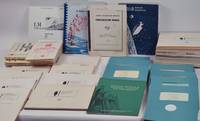
196929710various: various 1969. various. Very Good. Our consignor's father was an aeronautical engineer working for Boeing and assigned to work with NASA on the Apollo program. He did a significant favor for a member of the astronauts office while living in Houston. They asked him what they might do in return. He requested "a full set of Apollo astronaut training manuals" the result of which you see here - 34 items in total. They have remained in the family since. A list of the manuals follows. Many are by the sub-contractors responsible for building the particular systems involved. A remarkable archive. In addition to a letter of provenance from the consignor the archive includes a 1968 Nassau Telephone book showing the previous owner as well as a goodly number of astronauts.<br /> <br /> GRUMMAN MANUALS: The following manuals all state "For training purposes only: In support of LM-5 & Subsequent Subsystem Briefings." and are part of "Contract NAS 9-1100 Exhibit E: Paragraph 3.7.4 Type III Document." They are all three hole punched and held together with dual post "prestong" brand adjustable metal straps with robin blue colored Grumman binder paper with cut-outs for the titles. The metal straps are rusted to varying degrees the paper still bright and clean.<br /> 1 LSG 770-154-6 - LM-5 & Sub. June 1969. "Abort Guidance Section Study Guide Lunar Module LM-5 & Subsequent." Light green paper. No copies OCLC.<br /> 2 LSG 770-430-40 LM-5 & Sub. April 1969. "Instrumentation Subsystem Study Guide Lunar Module LM-5 & Subsequent." Yellow paper. No copies OCLC.<br /> 3 LSG 770-154-7 - LM-5 & Sub. April 1969. "Control Electronics Section Study Guide Lunar Module LM-5 & Subsequent" Light green paper. No copies OCLC.<br /> 4 LSG 770-154-5 - LM-5. April 1969. "Radar Section Study Guide Lunar Module LM-5" Blue paper. No copies OCLC.<br /> 5 LSG-770-154-9-LM-5 & Sub. May 1969. "Propulsion & RCS Subsystem Study Guide Lunar Module LM-5 & Subsequent" Dark green paper. No copies OCLC.<br /> 6 LSG 770-154-4-LM-5 & Sub. May 1969. "Electrical Power Subsystem Study Guide Lunar Module LM-5 & Subsequent" Yellow paper. No copies OCLC.<br /> 7 LSG-770-154-3-LM-5 & Sub. May 1969. "Environmental Control Subsystem Study Guide Lunar Module LM-5 & Subsequent" Tan/orange paper. No copies OCLC.<br /> 8 LSG 770-154-10-LM-5. May 1969. "Lunar Module Structures Handout LM-5" Light grey ash paper. No copies OCLC.<br /> Wikipedia note on the LM-5: "Lunar Module Eagle LM-5 is the spacecraft that served as the crewed lunar lander of Apollo 11 which was the first mission to land humans on the Moon. It was named after the bald eagle which was featured prominently on the mission insignia. It flew from Earth to lunar orbit on the command module Columbia and then was flown to the Moon on July 20 1969 by astronaut Neil Armstrong with navigational assistance from Buzz Aldrin. Eagle's landing created Tranquility Base named by Armstrong and Aldrin and first announced upon the module's touchdown. The name of the craft gave rise to the phrase "The Eagle has landed" the words Armstrong said upon Eagle's touchdown."<br /> <br /> The Grumman manuals below have different wrapper colors but the same metal strap binding.<br /> 9 LSG 770-430. Nov 1967. "Orientation Study Guide Lunar Module" White printed wrappers have ink stamp of "Mutter H.P." White paper internally. No copies OCLC.<br /> 10 LSG 770-430-48 -LM-3. "August 1967. Propulsion and RCS Study Guide Lunar Module LM-3" White printed wrappers. Green paper internally. Inked "Oscar Bernard" on top wrapper. No copies OCLC.<br /> 11 LMA790-1. LMA790-01001C. October 15 1965. Superceeds LMA790-1 dated March 15 1965. "Lunar Excursion Module Familiarization Manual" Exhibit E Paragraph 10.2 NAS 9-1100. Type II Document. Inked in red "Crew Systems" at head of top wrapper with small piece of top wrapper excised. two copies this title OCLC<br /> 12 "Lunar Module Subsystem Assembly and Installations". 52 pages. Printed green wrappers. What appears to be a commercial advertising item rather than a training manual. No copies OCLC.<br /> <br /> GENERAL MOTORS CORPORATION manuals<br /> 1 "Apollo CM Primary Guidance Navigation and Control System Student Study Guide". CSM Digital Autopilots. DAP 2100. June 2 1969. Perfect bound with light blue paper. 3 copies this title OCLC<br /> 2 "Apollo Lunar Module Primary Guidance Navigation and Control System Student Study Guide." LM PGNCS Level III System Mechanization Course SM31000. Dates January 27 1967 Oct 1 1967 and finally Jan 30 1969. Bound with blue plastic comb binding. Blue paper. No copies OCLC.<br /> <br /> NASA MANUALS:<br /> 1 FLIGHT CONTROL DIVISION manual NASA. FC027. 3/15/68. "Lunar Module Systems Handbook Vehicle LM-3" MSC8305-68. 5 hole punched. Not bound. No copies OCLC.<br /> 2 MSC Internal Note MSC-CF-E-68-12. "Photo Equipment for Manned Space Flight Handbook" June 20. 1968. 5 hole punched. Stapled. "Oscar Bernard x-5821" inked on top wrapper and a few inked notes on the bottom wrapper. No copies OCLC.<br /> <br /> NORTH AMERICAN ROCKWELL CORPORATION SPACE DIVISION MANUALS. All note "For Training purposes only". All 11 x 8 1/2 inches.<br /> 1 CSM Logistics Training : Guidance and Control System - Block II May 15 1969. Prefect bound white and blue paper No copies OCLC.<br /> 2 CSM Logistics Training: Sequential Systems EDS SECS LES ELS Course No A-318 Handout No. 1. June 15 1969. Perfect bound light yellow paper. No copies OCLC.<br /> 3 Apollo CSM Logistics Training. Apollo Operations Handbook Subsections 2.2 and 2.3. Guidance and Control. May 1 1969. Perfect Bound blue paper. No copies OCLC.<br /> 4 Apollo CSM Logistics Training. Apollo Operations Handbook Subsection 2.8 Telecommunications. May 1 1969. Perfect bound dark brown paper. No copies OCLC.<br /> 5 Apollo CSM Logistics Training. Apollo Operations Handbook Subsection 2.6 Electrical Power System May 1 1969. Perfect bound yellow paper. No copies OCLC.<br /> 6 Apollo CSM Logistics Training. Apollo Operations Handbook Subsection 2.9 Sequential Systems May 1 1969. Perfect bound tan paper. No copies OCLC.<br /> 7 Apollo Training. Apollo Operations Handbook CSM Preliminary Subsection 2.9 Sequential Systems June 26 1968 Perfect bound light yellow paper some folding on "fax" paper. Ink stamp "Mutter H.P." on top wrapper and spine.<br /> 8 Apollo Training. Structures and Mechanical Subsystems Course Number A-5125. June 13 1969. Perfect bound grey paper. No copies OCLC.<br /> 9 Apollo Training. Block II CSM Propulsion Subsystem. Dec 12 1968. Perfect bound pale green paper. No copies OCLC.<br /> 10 Apollo Training. Electrical Power Subsystem Block II CSM. Nov 1 1968. Perfect bound oblong yellow paper. No copies OCLC.<br /> 11 Apollo Training. CSM/LM Docking and Crew Transfer Block II handout. Apr 15 1968. Perfect bound oblong pale brown paper. Stamp "Mutter H. P." on top wrapper and spine. No copies OCLC.<br /> 12 Apollo Training. Environmental Control System Block II. Apr 1 1969. Perfect bound oblong orange sherbert paper. No copies OCLC.<br /> 13 Apollo Training. Crew Equipment Course A512 C. Jan 1 1969. Perfect bound pink paper. No copies OCLC.<br /> 14 Apollo Training. Crew Equipment Course A512C. June 26 1968. Perfect bound pink paper. No copies OCLC.<br /> #7-14 above show "Apollo Logistics Training" logo on the top wrapper with little or no mention of Rockwell in the document although we believe it is clearly their output given the names physical addresses to use for questions about the documents and production details of the various manuals.<br /> Wikipedia note on the CSM: "The Apollo command and service module CSM was one of two principal components of the United States Apollo spacecraft used for the Apollo program which landed astronauts on the Moon between 1969 and 1972. The CSM functioned as a mother ship which carried a crew of three astronauts and the second Apollo spacecraft the Apollo Lunar Module to lunar orbit and brought the astronauts back to Earth."<br /> <br /> <br /> NORTH AMERICAN AVIATION Inc. SPACE AND INFORMATION SYSTEMS DIVISION manuals<br /> 1 SID 64-1613A GFE Command and Service Module - Manned Space Flight Network Signal Performance and Interface Specificaiton Block II. NAS 9-150 Revised Nov 22 1966. Copy made on "fax" style paper three hole punched with two aluminum screw posts holding the pages together. Another stamp unclear if on the original or here stamped notes Recorded Jul 18 1967 by the Saturn V Data management at the Boeing C. Technical Data Central. Note on orginal document notes 60 8 1/2 x 11 and 20 11 x 17 foldouts presumably. No copies OCLC.<br /> 2 SID 64-1389 GFE NASA Furnished Crew Equipment Performance and Interface Specification Block II. NAS 9-150. Revised Feb 22 1965 Copy made on "fax" style paper three hole punched with two aluminum screw posts holding the pages together. Another stamp unclear if on the original or here stamped notes Recorded Aug 2 1967 by the Saturn V Data management at the Boeing C. Technical Data Central. Note on orginal document notes 164 pages. No copies OCLC.<br /> 3 SID 64-1388. GFE Scientific Equipment Performance and Interface Specification Block II - CM. NAS9-150. Revised Feb 22 1965. Note on original document indiates 51 pages. Stamped upper left rusted one page loose in rear. No copies OCLC.<br /> 4 SID 64-1866. GFE Command and Service Module - Manned Space Flight Network Signal Performance and Interface Specification - Block 1. NAS9-150. January 5 1965. Exhibit I Paragraph 4.1. "Fax" style paper three hole punched with two aluminum screw posts for binding. No copies OCLC.<br /> NOTE: GFE stands for Government Furnished Equipment - where the government would provide equipment to the contractor to assist in their work<br /> <br /> NOTE: The # in the lists above are included solely for convenience of reference. Identifying numbers on the documents if any follow that number.<br /> <br /> Provided with a letter of provenance and the Sept 1968 Nassau Bay TX Telephone Co directory with the consignor's father listed in it as well as a fair number of well known astronauts. various. A remarkable archive of training manuals only a few of which appear in OCLC and only one of which we've seen in the last 20 years. various unknown
195444702London: The Patent Office 1954. <p>ENIAC. Patent specification 709407 . . . Electronic numerical integrator and computer. 188pp. 65 diagrams all but 1 folding. London: The Patent Office 26 May 1954. 275 x 191 mm. Library buckram. First edition. </p> <p> First Printed Edition of the Patent for the the Electronic Digital Computer and the first comprehensive description of the first general purpose electronic computer the ENIAC. Because the U.S. version of the patent was not granted until 1964 the English version of the patent with text and illustrations virtually identical to the U.S. patent was published nearly ten years before the U.S. patent. Since no prior patent on an electronic computer existed the ENIAC patent was a general patent which included the first description in legal language of the design and operation of an electronic computer. The description was extremely thorough and illustrated on 65 remarkable diagrams many of which had multiple images. Extremely Rare—this is the first copy we have handled in our five-plus decades in the trade despite our strong interest in the history of computing.</p> <p> The ENIAC Electronic Numerical Integrator and Computer commissioned by the U. S. Army's Ballistics Research Laboratory was designed by Pres Eckert and John Mauchly and constructed at the University of Pennsylvania's Moore School of Engineering during the last years of World War II. The ENIAC came on line in the spring of 1945 just as the war was ending and for the next three years it remained the only operational electronic digital computer in the world. Eckert and Mauchly the machine's creators would go on to found the Electronic Control Company the world's first electronic computer manufacturing firm which produced the first electronic digital computers sold commercially in the United States.</p> <p> The ENIAC was not a stored-program machine but in January 1944 Eckert came up with what he later called his "big idea": "the idea of the stored instruction sequence or program using a single fast memory for both data and instruction with no distinction between registers used for many purposes" quoted in Origins of Cyberspace p. 535. In August 1944 while still working on the ENIAC Eckert and Mauchly proposed the construction of a stored-program machine the EDVAC based on Eckert's new design. In March 1946 just before construction began on the EDVAC Eckert and Mauchly parted ways with the Moore School over a dispute about intellectual property claims retaining patent rights to the ENIAC. The next year Eckert and Mauchly filed for a patent on the ENIAC that included the stored-program concept; this essentially represented "a general patent on the stored-program electronic digital computer" Origins of Cyberspace p. 55. </p> <p> The British patent on the ENIAC was granted on 26 May 1954 nearly a decade before the American patent issued on 4 February 1964. On 19 October 1973 after a six-year legal battle Judge Earl R. Lawson invalidated the ENIAC patent on the grounds that Eckert and Mauchly had derived their ideas from an earlier computer pioneer John Atanasoff who invented a special-purpose electronic computer in the 1930s. This landmark decision placed the concept of the electronic stored-program computer into the public domain with enormous positive consequences for the computer industry.</p> <p>. The Patent Office unknown books
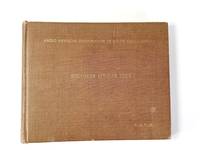
1955410891Johannesburg 1955. Foxing to prelims and postlims light spotting to text leaves photographs clean and well-preserved. 8 x 9.5 inches 203 x 242 mm. Preliminary text leaf: "Visit of British Educationists to Southern Africa December 28 1954––January 12 1955." 48 black-and-white photographic prints mounted back-to-back; interleaved with text leaves all mounted on guards. Light-brown cloth gilt-lettered on front cover. Provenance: G. H. G. Harris a member of the tour gilt initials on front cover pencil signature on title typed letter from the Harry Oppenheimer 27 June 1955 mounted on front pastedown. The letter on the pastedown from Harry Oppenheimer Deputy Chairman presents the volume to Mr. Harris: "After your visit to Southern Africa. it occurred to us that you might care to have some photographs to remind you of the places and people you encountered here. We have accordingly had a selection of photographs assembled in the form of an album. It is as you are aware our hope that as a result of your visit more young men from the British Isles may be interested in making their careers with us."<br /> <br /> The opening text describes the trip made during December 1954 and January 1955 on which "twenty educationists–University Professors Careers Masters and Headmasters from the United Kingdom–visited South Africa and the Rhodesias as guests of Anglo American Corporation of South Africa Limited."<br /> <br /> In South Africa they visited the gold mine of South African Land and Exploration Company Ltd.; the uranium and sulphuric acid plants of Daggafontein Mines Ltd.; the Orange Free State Goldfields Welkon and Allanridge; Premier diamond mine at Cullinan near Pretoria; the diamond mines at Kimberley; and the Cornelia Colliery near Vereeniging. They went to Victoria Falls and in the Rhodesias they visited the copper mines of Nchanga Consolidated Copper Mines Ltd and Rhokana Corporation; the research labs of Rhoanglo Mine Services Ltd at Kitwe; and the mining towns of Chingola and Nkana. <br /> <br /> The names of the twenty members of the party are listed on the preliminary text leaf. The photos start at the company's headquarters in Johannesburg and then follow the course of the trip. A number show The Ernest Oppenheimer Hospital at Welkom and others show the De Beers facilities including dogs trained to attack intruders. Each photo faces a printed caption detailing the subject in the image. <br /> <br /> The Anglo American Corporation of South Africa was founded in 1917 by Ernest Oppenheimer with financial backing from the American bank J.P. Morgan & Co. The AAC became the majority stakeholder in De Beers in 1926. In the late 1940s and 50s the AAC focused on the development of the Free State goldfields and the Vaal Reefs mine. Ernest Oppenheimer died in 1957 and the company continued under his son Harry the author of the letter to Mr. Harris that is found on the pastedown of this album. The company has at least one connection to the literary world: they loaned a diamond to artist Richard Chopping to use as a model for the paintings he made for Ian Fleming's James Bond series’ dust jackets.<br /> <br /> Rare: given the presentation of this volume it is likely that twenty albums were compiled and distributed to the educationists. We trace no copies in WorldCat/OCLC nor any at auction. A very scarce piece of corporate promotion. unknown
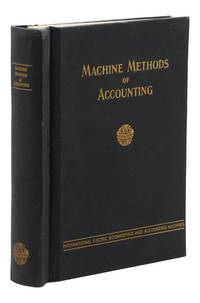
1936140948176New York: International Business Machines Corporation 1936. First Edition. Near Fine. First edition of IBM's manual published while the company dominated the punch-card tabulator calculating and data-processing machine market while standing just on the cusp of the dawn of the electronic computer. In 23 separately paginated sections with black and white diagrams and illustrations of IBM's patented accounting machines with the first section on IBM's history. Bound in publisher's black cloth pressure binder stamped in gilt. Near Fine with light wear and trivial soiling to covers. A lovely copy. International Business Machines Corporation unknown
193611036New York: IBM 1936. First Edition Revised/With Additions. Hardcover. Very Good. First Edition Revised/With Additions. Hardcover. 24 separately paginated pamphlets plus 8pp. preliminaries and including the 1942 pamphlet 19A 'Automatic Reproduction Punch / Type 513' not indicated on 24 pamphlet list all bound together as provided to the customer. This copy issued to the Amicable Life Insurance Company founded in Waco TX. 1910. 1936 copyright for all pamphlets except 20A 1940 and 19A 1942 Includes numerous illustrations and diagrams. <br /> This book was one of the "key publications from IBM". Cortada Before the Computer 307<br /> "Primarily this book was written to provide a single volume from which employees of International Business Machines Corporation may thoroughly familiarize themselves with the complete list of bookkeeping and accounting machines manufactured by their Company and with the operation of such machines of furnishing figure-facts automatically" from preliminaries p 6 <br /> The first section 14 pages is devoted to the history of IBM and sections 2 through 8 provide background on principles the punch card codes organization supervision training and controls. The remaining sections illustrate and explain numerous machines and their operation. Originally issued with 23 sections; this version was updated in 1940 and 1942 with two additional sections 19a and 20a bringing the volume current.<br /> Uncommon generally scarcce as nice as is found here. Light shelf/edge wear gilt toned ownership signature at bastard title page else tight bright and unmarred. Black pebbled cloth boards gilt lettering and decorative elements stiff black endpages. 4to. var. pag. Illus. b/w plates. IBM hardcover
19702090502126801266Japan Broadcasting Publishing Association 1970. Soft Cover. Fine. Number of pages: 78 pages Size: B5 size Number of books: 7 separate volumes Japan Broadcasting Publishing Association paperback
198728705Arlington Heights IL: Creative Sales Corporation. As New. 1987. Spiral Bound. FREE UPGRADE to Courier/Priority Shipping Upon Request - IN STOCK AND IMMEDIATELY AVAILABLE FOR SHIPMENT - -- with a bonus offer-- . Creative Sales Corporation unknown
198137357General Foods Corporation. As New. 1981. Paperback. FREE UPGRADE to Courier/Priority Shipping Upon Request IN STOCK AND IMMEDIATELY AVAILABLE FOR SHIPMENT - TEXT PRISTINE Discoloration to cover and fore-edge not affecting text. Text in English and Hebrew. -- with a bonus offer-- . General Foods Corporation paperback
198137354General Foods Corporation. As New. 1981. Paperback. FREE UPGRADE to Courier/Priority Shipping Upon Request IN STOCK AND IMMEDIATELY AVAILABLE FOR SHIPMENT - AS NEW THE TEXT BLOCK IS PRISTINE CLEAN UNMARKED AND IN EXCELLENT CONDITION - Text in English and Hebrew. -- with a bonus offer-- . General Foods Corporation paperback
196959206Berlin Germany: Museum Fur Vor- Und Fruhgeschichte; Mead Corporation. As New. 1969. Paperback. FREE UPGRADE to Courier/Priority Shipping Upon Request IN STOCK AND IMMEDIATELY AVAILABLE FOR SHIPMENT - AS NEW THE TEXT BLOCK IS PRISTINE CLEAN UNMARKED AND IN EXCELLENT CONDITION - - Text in German. 66 pp. With 13 ills. 2 looseleaf 23 x 17 cm. -- with a bonus offer-- . Museum Fur Vor- Und Fruhgeschichte; Mead Corporation paperback
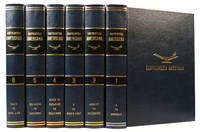
1966162281New York: Americana Corporation 1966. International edition. Hardcover. Near Fine in boards. Americana Corporation hardcover
195989623San Diego CA : United States Air Force 1959. Revision B. Single sheet printed on one side. Good. This very large training chart has been folded multiple times. The format is approximately 42 inches by 10 feet. It has many illustrations and captions. The title of the primary graphic on this training chart is View of Launcher Mechanism in Firing Position. There are a number of component diagrams with captions. There is in red a notation of Butler Field and a number in red. Convair Division of General Dynamics Corporation USAF F-106A Delta Dart related. Training Section - Interceptor Armament System Missile Bay & Missile Launcher Detail Marked CONFIDENTIAL; Chart No. 15 4 of 4 3/30/59. Convair Division 1959. Revision B. This very large chart printed on a .flexible backing material has been folded but presents no hard creasing significant crease/fold wear or. discoloration or tearing. The chart has of a number of captioned illustrations pertaining to the armament system of the USAF F-106A Delta Dart nuclear capable jet interceptor. There is a notation in red of “Butler Field†perhaps this was what is now Butler-Municipal in Georgia. This chart came from the Estate of Convair engineer who worked on the Armament Control aspects of the F-106A in the late '50s and ' 60s. Illustrations include the overall location of the armament system within the F-106A a cutaway view of the interceptor showing the mounting of the MB-1 rocket and GAR missiles weapons load this is the primary graphic of the chart and is labeled “View of Launcher Mechanism in Firing Position†and a number of close-ups of system details. The F-106 Delta Dart was an all-weather interceptor aircraft designed and produced by the American aircraft manufacturer Convair. The interceptor had no provisions for guns or bombs instead carrying the MB-1 Special Weapon and AIM-4 Falcon air-to-air missiles within an internal weapons bay which presented a clean exterior beneficial to supersonic flight. On 26 December 1956 the prototype performed its maiden flight. After flight testing demonstrated lesser performance gains than anticipated the USAF ultimately only ordered 350 of the planned 1000 F-106s. Becoming operational in June 1959 the F-106 was the primary all-weather interceptor aircraft of the USAF through much of the Cold War era. The F-106 was gradually withdrawn from USAF service during the 1980s as the arrival of newer air superiority fighters particularly the McDonnell Douglas F-15 Eagle had made the role of dedicated interceptors obsolete. The all-missile armament housed internally in a ventral weapons bay consisted of a single Douglas MB-1 AIR-2A or 2B Genie unguided rocket equipped with a 1.5 kt W25 nuclear warhead plus four Hughes GAR-3 Falcon radar-homing or GAR-4 infrared-homing air-to-air missiles. The MB-1 was an unguided timer-detonated rocket relying on its 1.5 kt nuclear warhead to ensure a kill. Launch weight was 822 pounds and maximum velocity was Mach 3.3. Snap-out fins gave the missile stability during flight. Range was about 8 miles flight time to target was about 12 seconds and the effective blast radius was about 1000 feet. The Genie rocket was ejected from the weapons bay by gas pressure generated when 5 impulse cartridges fired on the special weapons rack kicking the rocket down and away from the aircraft. Good. Single sheet printed on one side. United States Air Force unknown
195989624San Diego CA : United States Air Force 1959. Revision B. Single sheet printed on one side. Good. RARE SURVIVING COPY. This large training chart has been folded multiple times. The format is approximately 42 inches by 10 feet. It has illustrations and captions. The title of the primary graphic on this training chart is View of Launcher Mechanism in Firing Position. There are a number of component diagrams with captions. There is in red a notation of Butler Field and a number in red. Convair USAF F-106A Delta Dart related. Training Section - Interceptor Armament System Missile Bay & Missile Launcher Detail Marked CONFIDENTIAL; Chart No. 15 3 of 4 3/30/59. Convair Division 1959. Revision B. This very large chart printed on a strong flexible backing material has been folded multiple times but presents no hard creasing significant crease/fold wear or tearing or discoloration. The chart consists of a number of illustrations with captions pertaining to the armament system of the USAF F-106A Delta Dart nuclear capable jet interceptor. The primary graphics of the chart pertain to the Trunnion and the Uplock Mechanism with a number of close-ups of system details. There is a notation in red of “Butler Field†perhaps this was what is now Butler-Municipal in Georgia and a number in red. This chart came from the Estate of Convair engineer who worked on the Armament Control aspects of the F-106A in the late '50s and ' 60s. The F-106 Delta Dart was an all-weather interceptor aircraft designed and produced by the American aircraft manufacturer Convair. The interceptor had no provisions for guns or bombs instead carrying the MB-1 Special Weapon and AIM-4 Falcon air-to-air missiles within an internal weapons bay which presented a clean exterior beneficial to supersonic flight. On 26 December 1956 the prototype performed its maiden flight. After flight testing demonstrated lesser performance gains than anticipated the USAF ultimately only ordered 350 of the planned 1000 F-106s. Becoming operational in June 1959 the F-106 was the primary all-weather interceptor aircraft of the USAF through much of the Cold War era. The F-106 was gradually withdrawn from USAF service during the 1980s as the arrival of newer air superiority fighters particularly the McDonnell Douglas F-15 Eagle had made the role of dedicated interceptors obsolete. The all-missile armament housed internally in a ventral weapons bay consisted of a single Douglas MB-1 AIR-2A or 2B Genie unguided rocket equipped with a 1.5 kt W25 nuclear warhead plus four Hughes GAR-3 Falcon radar-homing or GAR-4 infrared-homing air-to-air missiles. The MB-1 was an unguided timer-detonated rocket relying on its 1.5 kt nuclear warhead to ensure a kill. Launch weight was 822 pounds and maximum velocity was Mach 3.3. Snap-out fins gave the missile stability during flight. Range was about 8 miles flight time to target was about 12 seconds and the effective blast radius was about 1000 feet. The Genie rocket was ejected from the weapons bay by gas pressure generated when 5 impulse cartridges fired on the special weapons rack kicking the rocket down and away from the aircraft. Good. Single sheet printed on one side. United States Air Force unknown
195043541New York: United States Plywood Corporation n. d. ca 1950. 1950. PLYWOOD TRADE CATALOGUE ARCHITECTURAL. First edition of this very scarce post-World War II salesman sample catalogue for the Weldwood Plywood assembled from domestic and imported hardwoods for interiors and furniture which would heavily influence Mid-Century Modern designs. Plywood had first become a successful and durable product after the development of waterproof adhesive by Dr. Nevin in 1934 and within a few years the United States Plywood Corporation was establishing plywood as a strong durable and versatile architectural material. This is a salesman's sample catalogue filled with plywood sample leaves for architects designers and contractors. 9" x 9 1/2" x 1 1/2" plywood front and rear covers with a cloth covered spine titles stamped in black on the front cover and spine with a leather clasp for closure and to hold the catalogue intact. Before the World War II plywood was primarily produced from Pacific Northwest Douglas Fir but scientists in several companies had developed methods of using other softwoods and hardwoods which set off the plywood boom following World War II. These samples of Weldwood Plywood include veneers from such wood varieties as Avodire Red Gum Brazilian and East Indian Rosewood American Sycamore Bubinga Zebrawood Curly Maple and many others which were employed in a wide range of interior architectural designs furnishings and more by Mid-Century designers. The United States Plywood Corp. was founded in 1937 in a consolidation of three smaller plywood companies and by 1967 they merged with Champion Papers Inc. and eventually changed their name to Champion International later sold to UPM in 2000. See: History of APA Plywood and Engineered Wood Engineered Wood Association 2017. A small 1" ink or paint stain to mid-spine else a fine well-preserved example of a salesman's plywood sample binder. United States Plywood Corporation, n. d. (ca 1950). hardcover
19491522British Guiana 1949. Very good. Two volumes. 6633 photographs on 3311pp. Images vary in size most 4.5 x 4.5 or 3.5 x 2.5 inches with some larger. Oblong octavos. Original black paper albums string-tied. Cover of first volume detached wear around edges of covers on each volume. Internally clean and fresh. Some images with light silver mirroring. Captioned throughout. Two photograph albums of the Tikwah gold mine in British Guiana likely compiled by an operative of the company. A Who's Who of British Guiana for 1945-1948 lists Samuel Hirsh Holzman as the mine owner and managing director as well as the vice president of the Mining Association of British Guiana. Gold was discovered in Guiana in the 1880s in the area around the Essequibo River. Crude mining efforts through the next few decades resulted in minimal extraction though there was a renewed effort with technological advancements in mining in the 1940s as shown herein. The present albums document the region as well as the mining camp and its operations much of it with a keen sense of detail. In addition to captions the author has annotated many of the photos in pencil to point out relevant features. For example a photograph captioned "New Winze L. & General View of Mine Looking N.W." has pencil annotations identifying individual buildings such as the Clerk's Quarters and the Tikwah Shaft Building. An image of the foreman's shack and laborers' quarters notes the construction and materials used to build them; roads and rivers used by the company are pictured with complaints about the rough condition as are aerial views of the camp and surrounding area. There are images of the shafts and miners at work; interior shots of the mills and other buildings; and the latter portion of the first volume contains numerous group portraits of the workers and office staff each person identified by name and position. This includes the "Tikwah Ladies" mostly the wives of foremen which shows eight Black women standing together in the mining camp one holding an infant and another holding the hands of a toddler. In addition to images of the camp's operations there are many photographs documenting the difficulties involved with mining in the jungle. A series of images from 1948 shows workmen transporting equipment on the Puruni River. Captions read "Reloading boats to proceed up Puruni ballyhoo in front towed by 'Caroline' to be used at Thomas Island Falls for blasting"; "Pulling 'Caroline' over rapids at mouth"; "Pulling 'Caroline' through part of big falls." All of these images show the difficulty of transporting equipment and supplies in the region with laborers in shorts and loincloths pulling the boat with a rope over difficult terrain. Another series shows the boat caught up on rocks in the river at Kaburi Falls and the workmen endeavoring to dislodge it without capsizing. An altogether fascinating look at life in a mining camp in the jungles of Guiana full of rich detail about those working in the camp and their living environs. unknown books
1965151335New York 1965. Originally printed for the Camden Society 1871- 96. Vols. 58 onwards by Longmans Green and Co. 1898-1901. Reprinted from copies in the collections of The New York Public Library. Hardcover. ex library-very good. New Series. I - LXII. 62 vols. of varying lengths between 68 and 593 p. 24 cm. Some b&w illustrations. Blue cloth. Ex library with labels on spines and rear pastedowns ink stamps on top edges and title versos. Vol. 18 has small piece of paper stuck on front. Vols. 55 and 60 have white marks on front. <br/><br/>I: The Fortescue Papers; Consisting Chiefly of Letters Relating to State Affairs Collected by John Packer ed. by Samuel Rawson Gardiner. 2: Letters and Papers of John Shillingford Mayor of Exeter 1447-50 ed. by Stuart A. Moore. 3: The Old Cheque-Book or Book of Remembrance of The Chapel Royal From 1561 to 1744 ed. Edward F. Rimbault. 4: A True Relation of the Life and Death of The Right Reverend Father in God William Bedell ed. by Thomas Wharton Jones. 5: The Maire of Bristowe is Kalendar by Robert Ricart Town Clerk of Bristol 18 Edward IV ed. by Lucy Toulmin Smith. 6: Debates in the House of Commons in 1625 ed. by Gardiner. 7: Military Memoir of Colonel John Birch Sometime Governor of Hereford in the Civil War Between Charles I and the Parliament; Written by Roe His Secretary with an Historical and Critical Commentary Notes and Appendix by Rev. John Webb ed by his son Rev. T. W. Webb. 8 & 9: Letters Addressed From London to Sir Joseph Williamson while Plenipotentiary at the Congress of Cologne in the Years 1673 and 1674 ed. by W. D. Christie 2 vols. 10: Account of the Executor of Richard Bishop of London 1303 and of the Executors of Thomas Bishop of Exeter 1310 ed. by Ven. W. H. Hale and Rev. H. T. Ellacombe. 11: A Chronicle of England During the Reigns of the Tudors by Charles Wriothesley Windsor Herald ed. by William Douglas Hamilton. Vol. 12: The Quarrel Between The Earl of Manchester and Oliver Cromwell ed. by David Masson. Vol. 13: The Autobiography of Anne Lady Halkett ed. by John Gough Nichols. 14: The Camden Miscellany Volume the Seventh. 15: Letters of Humphrey Prideaux Sometime Dean of Norwich to John Ellis Sometime Under-Secretary of State 1674-1722 ed. by Edward Maune Thompson. 16: A Common-Place Book of John Milton and a Latin Essay and Latin Verses Presumed to be by Milton ed. by Alfred J. Horwood. 17: The Historical Collections of Citizen of London in the Fifteenth Century. Containing: I. John Page's Poem on the Siege of Rouen. II. Lydgate's Verses on the Kings of England. III. William Gregory's Chronicle of London ed. by James Gairdner. 18: Documents Relating to the Proceedings Against William Prynne in 1634 and 1637. With a Biographical Fragment by the Late John Bruce ed. by Gardiner. Vol. 19: Christ Church Letters. A Volume of Mediaeval Letters relating to the affairs of the Priory of Christ Church Canterbury ed. by J. B. Sheppard. Vol. 20: A Chronicle of England During the Reigns of the Tudors Vol. II. 21: A Treatise on The Pretended Divorce Between Henry VIII. and Catharine of Aragon by Nicholas Harpsfield now first printed from a collation of Four Manuscripts. by Nicholas Pocock. 22 & 23: Correspondence of the Family of Hatton Being Chiefly Letters Addressed to Christopher First Viscount Hatton A.D. 1601-1704 ed. by Edward Maunde Thompson Vols. I & II. 24: Notes of the Debates in the House of Lords Officially Taken by Henry Elsing Clerk of the Parliaments A.D. 1624 and 1626 ed. by Gardiner. 25: The Oeconomy of the Fleete: Or An Apologeticall Answeare of Alexander Harris ed. by Augustus Jessopp. 26: Documents Illustrating the History of St. Paul's Cathedral ed. by W. Sparrow Simpson. 26: The Hamilton Papers: Being Selections from Original Letters in the Possession of His Grace the Duke of Hamilton and Brandon ed. by Gardiner. 28: Three Fifteenth-Century Chronicles with Historical Memoranda by John Stowe ed. by James Gairdner. 29: The Register of the Visitors of the University of Oxford From A.D. 1647 to A.D. 1658 ed. by Montagu Burrows. 30: Catholicon Anglicum an English-Latin Wordbook Dated 1483 ed. by Sidney J. H. Herrtage with preface by Henry B. Wheatley. 31: The Camden Miscellany Volume the Eighth. 32: The Voyage to Cadiz in 1625. Being a Journal written by John Glanville from Sir John Eliot's mss. at Port Eliot ed. by Rev. Alexander B. Grosart. 33: Letter-Book of Gabriel Harvey A.D. 1573-1580 ed. by Edward John Long Scott. 34: The Lauderdale Papers ed. by Osmund Airy. Vol. I 1639-1667. 35: The Political Memoranda of Francis Fifth Duke of Leeds ed. by Oscar Browning. 36: The Lauderdale Papers ed. by Osmund Airy. Vol. II 1667-1673. 37: Troubles Connected with the Prayer Book of 1549 ed. by Nicholas Pocock. 38: The Lauderdale Papers ed. by Osmund Airy. Vol. III. 1673-1679. 39: Reports of Cases in the Courts of Star Chamber and High Commission ed. by Gardiner. 40: The Nicholas Papers. Correspondence of Sir Edward Nicholas Secretary of State ed. by George F. Warner. Vol. I. 1641-1652. 41: Custumals of Battle Abbey in the Reigns of Edward I. and Edward II ed. by S. R. Scargill-Bird. 42: The Travels Through England of Dr. Richard Pococke ed. by James Joel Cartwright Vol. I. 43: Visitations of the Diocese of Norwich A.D. 1492-1532 ed. by the Rev. A. Jessopp. 44: The Travels Through England of Dr. Richard Pococke etc. by James Joel Cartwright. Vol. II. 45: Documents Illustrating the Impeachment of the Duke of Buckingham in 1626 ed. by Gardiner. 46: Memoirs Relating to The Lord Torrington ed. by John Knox Laughton. 47: Essex Papers ed. by Osmund Airy Vol. I 1672-1679. 48: Visitations and Memorials of Southwell Minster ed. by Arthur Francis Leach. 49: The Clarke Papers. Selections from the papers of William Clarke ed. by C. H. Firth Vol. I. 50: The Nicholas Papers. Correspondence of Sir Edward Nichols Secretary of State ed. by George F. Warner. Vol. II. 51: Accounts of the Obedientiars of Abingdon Abbey ed. by R. E. G. Kirk. 52: Expeditions to Prussia and the Holy Land made by Henry Earl of Derby Afterwards King Henry IV. In the Years 1390-1 and 1392-3. ed. by Lucy Toulmin Smith. 53: The Camden Miscellany Volume the Ninth. 54: The Clarke Papers Ed. by C. H. Firth. Vol. II. 54: Visitations of Churches Belonging to St. Paul's Cathedral in 1297 and in 1458 ed. by W. Sparrow Simpson. Vol. 55: The Archpriest Controversy. Documents relating to the dissensions of the Roman Catholic clergy 1597-1602 ed. from the Petyt mss. of the Inner Temple by Thomas Graves Law. Vol. I. 56: The Nicholas Papers ed. by George F. Warner Vol. III. 58: The Archpriest Controversy Vol. II. 59: A Narrative of the Changes in the Ministry 1765-1767 told by the Duke of Newcastle in a series of letters to John White M.P. ed. by Mary Bateson. Vol. 60: The Narrative of General Venables ed. by C. H. Firth. Vol. 61 & 62: The Clarke Papers ed. by C. H. Firth Vols. III & IV. hardcover
1928181621Northhampton Mass: not identified 1928. Softcover. VG wear to portfolio pages of text booklet are chipped plates are very clean and clear. Missing one plate from Part One Plate 11. Oversized tan cloth portfolio boards 4 page text including title page and list of the plates for part one and part two. Part one consists of 17 plates plate 11 missing. Part two consists of 34 plates complete. "Of this volume twenty five copies have been printed of which this is number 12" - rear of the four page text booklet. Published under the auspices of Smith College and of the Carnegie Corporation of New York. Volume 1 consists of Part one: Three Greek Bronzes and Part Two: The Erechtheion. Photographsy by Clarence Kennedy. [not identified] unknown books
19922091202133106312Published by Japan Broadcasting Corporation 1992. Soft Cover. Fine. Volume: 1 Published by Japan Broadcasting Corporation paperback
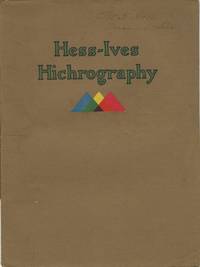
191754427Philadelphia: Hess-Ives Corporation 1917. This collection once owned by George H. Holt contains the following: HESS-IVES HICHROGRAPHY. 8vo. 12 pp. illustrations from b&w photographs. String-tied decorative stiff wrappers. Faint dampstain; owner's name on the front wrapper which is creased at the lower front corner. A three page price list is laid-in with holograph corrections. Very good. with HESS-IVES HICHROGRAPHY. Philadelphia: Hess-Ives Corporation February 1916. 8vo. 31 pp. b&w and color illustrations. Decorative stiff wrappers. Previous owner's neat signature on the front wrapper. Faint dampstain and wrinkling. A near very good copy. with A folded typed two-page detailed instructions for exposing developing and printing the "Hicrome" color prints. with A folded one-page typed letter signed and dated June 27 1917 by F. E. Ives on Hess-Ives Corporation letterhead addressed to Mr Holt whose signature is on the printed catalogues. with Two folded recto printed single sheet advertisements each picturing two of the four different Hicro cameras with prices. The catalogue dated December 1915 is the introductory catalogue for the ingenious camera that was capable of producing direct color photographs Hichrography from three negatives simultaneously exposed as well as conventional b&w. The camera available in 3 sizes another was introduced three months later is pictured and priced. This process was awarded the first United States patent in color photography. The laid-in price list also includes plate holders film paper and chemicals. <br /> <br /> The February 1916 catalogue is the second issued by the manufacturer and increased the number of camera sizes to four.<br /> <br /> In his June 1917 letter to Mr. Holt F.E. Ives states that he will be sending additional Hipacks as well as his 5 x 7 camera for the Hiblock process an adaptation of Ducos du Haron's tripack along with holders which should be returned for processing. Ives' further writes that he is almost ready to demonstrate his "moving picture color process" on which he held three pending patents; tipped to the letter is a 2 1/4 frame sample. Hess-Ives Corporation unknown
196783576Wilmington DE: Holotron Corporation 1967. One of only a few original copies believed to have been produced. Stiff boards legal style binder. Very good. Format of the sheets is 8.5 by 11 inches. Binder is 9 inches by 11.75 inches. Binder has some wear and soiling. Some of the gilt lettering has faded. The name Blumberg's is in lettering at the bottom of the spine. This volume contains: Certificate of Incorporation of Holotron Corporation notarized filed with the state and accepted on May 3 1966 . The business was primarily related to "all types of optical electronic electrical and mechanical equipment and devices and parts and accessories therefor and other articles and property of every character and description." Pencil notations to the effect that articles four that thirteen were amended in 1970. The founders were S. H. Lievsay; F. J. Obara Jr. and A. D. Grier. This initial portion is then followed by the Holotron Corporation By-Laws. This is followed by Minutes of Meeting of Incorporators. Obara was chosen as Chairman and Mrs. A. D. Grier was chosen as secretary of the meeting. Election Inspectors were appointed and initial members of the Board of Directors selected. The copy of these minutes bear the original signature of A. D. Grier. There is a Waiver of Notice Meeting Of Incorporators with original signatures by Livesay Obara and Grier. There is a copy of Inspectors' Oath with original signatures by M.A. Thorpe and L. M. Consono and by A. Dana Atwell Notary. This is followed by the Inspectors' Certificate with the original signatures of Thorpe and Consono. This is followed by the Ballot for Director of Holotron Corporation with original signatures of Livesay Obara and Grier. This is followed by the Minutes of the First Meeting of the Board. Continued from Description of Directors includes an impression of the corporate seal. The minutes refer to a Pre-incorporation Agreement leading to the formation of the Holotron Corporation executed by Scientific Advances Incorporated and E. I. du Pont de Nemours and Company on May 2 1966. The Minutes were signed original signature by Robert S. Banks Acting Secretary. There follows a page where approval of the minutes were signed in the original by Edwin A. Gee Russell W. Peterson John L. Gray and Richard L. Nelson. This is followed by a Waiver of Notice Meeting of Board of Directors signed by all four aforementioned. This is followed by Minutes of Meeting of the Board of Directors on June 2 1966. The minutes were signed by Robert S. Banks Assistant Secretary. This is followed by an originally signed Wavier of Notice Meeting of Board of Directors for the June 2 1966 meeting. This is followed by an approval of the minutes originally signed by the four Board members. This is followed by a Consent of Board of Directors with signatures of the four Board Members obtained in July and August 1966 for a major capital acquisition and an agreement for research with The Battelle Development Corporation. This is followed by Minutes of Meeting of the Board of Directors held on September 15 1966. There was a discussion on reaffirming Holotron's position in holography. There was also discussion of work with NASA. The minutes bear the original signature of Robert S. Banks Assistant Secretary. The approval of the minutes bear the original signatures of the four Board members. This is followed by Minutes of Meeting of Board of Directors on November 29 1966 pursuant to written notice of November 11 1966. There was substantial discussion of corporate financing and arrangements with Scientific Advances Incorporated and E. I. du Pont de Nemours and Company. The minutes were signed by Robert S. Banks Assistant Secretary. This is followed by an approval of the minutes originally signed by the four Board members. This is followed by a Consent of Board of Directors originally signed by each in January 1967 regarding a contract with the University of Michigan for research in holography. This is followed by Minutes of Meeting of the Board of Directors held on March 2 1967 pursuant to written notice. There was substantial discussion of corporate financing and arrangements with Scientific Advances Incorporated and E. I. du Pont de Nemours and Company. The minutes were signed by Robert S. Banks Assistant Secretary. This is followed by an approval of the minutes originally signed by the four Board members. This is followed by the 1967 Annual Stockholders" Meeting Consent of Stockholders. The meeting was held by written consent and bears original signatures. This is followed by Minutes of Meeting of the Board of Directors held June 1 1967. There was substantial discussion of corporate financing and arrangements with Scientific Advances Incorporated and E. I. du Pont de Nemours and Company. The minutes were signed by Robert S. Banks Assistant Secretary. This is followed by an approval of the minutes originally signed by the four Board members. The final portion of this material is the Minutes of Meeting of the Board of Directors held on August 14 1967. There was substantial discussion of corporate financing and arrangements with Scientific Advances Incorporated and E. I. du Pont de Nemours and Company. The minutes were signed by Robert S. Banks Assistant Secretary. This is followed by an approval of the minutes originally signed by the four Board members. A copy of the certificate of Incorporation with some original signatures laid in. Throughout the minutes there are discussions of research relationships with universities and industrial organizations patents potential hiring and annual programs of research and investment. This is probably the only surviving copy of these corporate records and offer unique insights into the business aspects of the development of holography in the mid-1960s and the involvement of du Pont in this field. The development of the laser enabled the first practical optical holograms that recorded 3D objects to be made in 1962 by Yuri Denisyuk in the Soviet Union and by Emmett Leith and Juris Upatnieks at the University of Michigan. Holotron Corporation hardcover
19922110502150900598Japan Broadcasting Corporation 1992. Soft Cover. Fine. Volume: 1 Japan Broadcasting Corporation paperback
19922110502150901884Japan Broadcasting Publishing Association 1992. Soft Cover. Fine. Volume: 1 Japan Broadcasting Publishing Association paperback
19922110502150900880Japan Broadcasting Publishing Association 1992. Soft Cover. Fine. Volume: 1 Japan Broadcasting Publishing Association paperback
197585081Los Angeles CA: Twentieth Century-Fox Film Corporation 1975. Presumed First Edition First printing. Single sheet printed on one side. Good/No dust jacket issued. Format is approximately 27 inches by 40 inches. The title The Rocky Horror Picture Show is in blood red ink and appears to be bleeding/dripping. The subtitle is in white. The text is against a black background. At the top of the image is a set of red lipsticked lips with some teeth showing. At the bottom it states Style A and 75127. Restricted rating is at the lower left. Copyright statement is at the bottom. Statement of the Property of National Screen Service Corporation statement at the bottom. "The Rocky Horror Picture Show" title at the bottom right corner. Poster has been folded down to approximately 10.25 inches by 14 inches. A film poster is a poster used to promote and advertise a film. Studios often print several posters that vary in size and content. They normally contain an image with text. Prior to the 1980s illustrations instead of photos were far more common. The text on film posters usually contains the film title in large lettering and often the names of the main actors. Film posters are displayed inside and on the outside of theaters. Film posters have been used since the earliest exhibitions of film. They began as placards listing the program of films to be shown inside the hall or movie theater. By the early 1900s they began to feature illustrations of a film scene or an array of overlaid images from several scenes. Other posters have used artistic interpretations of a scene or even the theme of the film. Film posters have become increasingly coveted by art collectors in recent years due to their known relative rarity condition artist and art historical significance. The Rocky Horror Picture Show is a 1975 musical comedy horror film by 20th Century Fox produced by Lou Alder and Michael White and directed by Jim Shaman. The screenplay was written by Shaman and actor Richard O'Brien who is also a member of the cast. The film is based on the 1973 musical stage production The Rocky Horror Show with music book and lyrics by O'Brien. The production is a tribute to the science fiction and horror B movies of the 1930s through to the early 1960s. Along with O'Brien the film stars Tim Curry Susan Saran don and Barry Bostwick and is narrated by Charles Gray with cast members from the original Royal Court Theater Roy Theater and Bales Theater productions including Nell Campbell and Patricia Quinine. The story centers on a young engaged couple whose car breaks down in the rain near a castle where they seek a telephone to call for help. The castle or country home is occupied by strangers in elaborate costumes celebrating an annual convention. They discover the head of the house is Dr. Frank N. Further an apparently mad scientist who actually is an alien transvestite from the planet Transsexual in the galaxy of Transylvania who creates a living muscle man named Rocky in his laboratory. The film was shot in the United Kingdom at Bray Studios and on location at an old country estate named Okay Court best known for its earlier use by Hammer Film Productions. A number of props and set pieces were reused from the Hammer horror films. Although the film is both a parody of and tribute to many kitsch science fiction and horror films costume designer Sue Blaine conducted no research for her designs. Blaine has claimed that her creations for the film directly affected the development of punk rock fashion trends such as torn fishnet stockings and colorfully dyed hair. Initial reception was extremely negative but it soon became a hit as a midnight movie when audiences began participating with the film at the Wavily Theater in New York City in 1976. Audience members returned to the cinemas frequently and talked back to the screen and began dressing as the characters spawning similar performance groups across the United States. At almost the same time fans in costume at the King's Court Theater in Pittsburgh began performing alongside the film. This "shadow cast" mimed the actions on screen above and behind them while lip-syncing their character's lines. Still in limited release in 2022 some 47 years after its premiere it is the longest-running theatrical release in film history. In many cities live amateur shadow-casts act out the film as it is being shown and heavily draw upon a tradition of audience participation. The film is most often shown close to Halloween. Today the film has a large international cult following and has been considered by many as one of the greatest musical films of all time. In 2005 it was selected for preservation in the United States National Film Registry by the Library of Congress as being "culturally historically or aesthetically significant." Twentieth Century-Fox Film Corporation unknown