BARBER, BarbaraBiblio.com
1 499 résultats
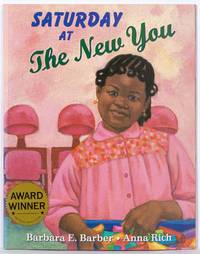
1994599908New York: Lee & Low Books 1994. Softcover. Fine. Later printing. Illustrated wrappers. Illustrated by Anna Rich. Fine. Inscribed by the author on a note affixed to the verso of the front wrapper. From the library of Charlotte Zolotow editor and publisher at Harper’s celebrated children’s books department and acclaimed author of over 65 children’s books. She is credited for her contributions to the Children’s Liberation Movement which believed the rights and emotional concerns of children be recognized and treated as the equal of adults. Lee & Low Books unknown
1994Q-1880000067Lee & Low Books 1994. Hardcover. New. In shrink wrap. Looks like an interesting title! Lee & Low Books hardcover
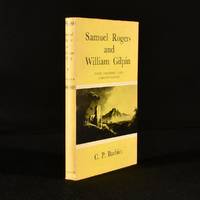
1959777P44London: Oxford University Press 1959. First edition. Cloth. Near Fine/Very Good Indeed. 8.5" by 5.5". Various. A scarce first edition work by Carl Paul Barbier studying the friendship and correspondence between Samuel Rogers and William Gilpin illustrated throughout. The scarce first edition of this work.In the original price-clipped dustwrapper.A study into the friendship between Samuel Rogers and William Gilpin looking through examples of their extensive correspondence.Rogers was a celebrated English poet. Gilpin was a priest and author whose travel writings helped to originate the idea of the picturesque.Illustrated with a frontispiece seven plates and in-text illustrations.Collated complete.By Carl Paul Barbier. In the original publisher's cloth binding in the original price-clipped dustwrapper. Externally smart with a very light touch of bumping to the spine. Bookseller's label to the front paste down. A little discolouration to the pastedowns. Dustwrapper is a little edgeworn with some marks and discolouration. Internally firmly bound. Pages are bright and clean. Near Fine Oxford University Press hardcover
19971-0793564263G. Schirmer 1997. Sheet music. New. 8 pages. 11.80x8.70x0.50 inches. G. Schirmer unknown
190718174DACPPNew York: Doubleday Page & Company 1907. 32 pp. Original blue paper covered boards w/ tan cloth spine. Title in git. Title on spine lightly rubbed. Covers lightly soiled and rubbed. Natural toning to endpapers. Previous owner's name in pencil on front endpaper. Illust. w/ b/w plates. . Hard Cover. Good/No Dust Jacket. 8vo - over 7¾" - 9¾" tall. Doubleday, Page & Company Hardcover
1985Q-0025068202Macmillan Pub Co 1985-01-01. Hardcover. New. In shrink wrap. Looks like an interesting title! Macmillan Pub Co hardcover
1950H4061Sacramento Book Collectors Club. Very Good with no dust jacket. 1950. Limited Edition. Hardcover. Limited to 300 copies; covers have very slight bow some rubbing to edges of covers w/couple tiny tears little bit of rubbing to couple gilt letters on spine library's name embossed on title page light glue residue from pocket removal inside front cover pages lightly toning; illustrated; 135 pages . Sacramento Book Collectors Club hardcover
1989Q-087213024xLoizeaux Brothers 1989-10-01. Hardcover. New. In shrink wrap. Looks like an interesting title! Loizeaux Brothers hardcover
199066361Suomalainen Kirjakerho 1990-01-01. Very Good. Very Good with no dust jacket; Hard Cover; Suomalainen Kirjakerho; 1990; 0 Suomalainen Kirjakerho hardcover
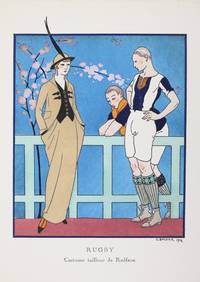
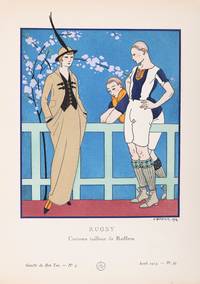
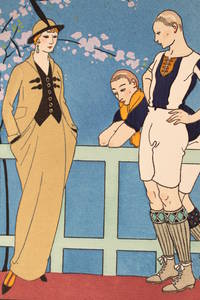
191484721Paris: Lucien Vogel éditeur 1914. Fine. Lucien Vogel éditeur Paris Avril 1914 19 x 24.50 cm une feuille Original color print on laid paper signed at lower right of the plate. Original engraving created for the illustration of La Gazette du bon ton one of the most beautiful and influential fashion magazines of the 20th century celebrating the talent of French creators and artists at the height of the Art Deco movement. The famous fashion magazine founded in 1912 by Lucien Vogel La Gazette du bon ton was published until 1925 with an interruption during the War from 1915 to 1920 due to the mobilization of its editor-in-chief. It consisted of 69 issues printed in only 2000 copies and was illustrated notably with 573 color plates and 148 sketches representing models by great couturiers. From their publication these luxurious publications ""were aimed at bibliophiles and worldly aesthetes"" Françoise Tétart-Vittu ""La Gazette du bon ton"" in Dictionnaire de la mode 2016. Printed on fine laid paper they used a typeface specially created for the magazine by Georges Peignot the Cochin character adopted in 1946 by Christian Dior. The prints were created using the metal stencil technique enhanced in colors and some highlighted in gold or palladium. The adventure began in 1912 when Lucien Vogel a man of society and fashion - he had already participated in the magazine Femina - decided to found with his wife Cosette de Brunhoff sister of Jean the father of Babar the Gazette du bon ton whose subtitle was then ""Art modes et frivolités."" Georges Charensol reports the editor-in-chief's words: ""In 1910 he observed there was no truly artistic fashion journal representative of the spirit of its time. I was therefore thinking of creating a luxury magazine with truly modern artists . I was certain of success because for fashion no country can rival France."" ""Un grand éditeur d'art. Lucien Vogel"" in Les Nouvelles littéraires n°133 May 1925. The magazine's success was immediate not only in France but also in the United States and South America. Originally Vogel assembled a group of seven artists: André-Édouard Marty and Pierre Brissaud followed by Georges Lepape and Dammicourt; and finally his friends from the École des beaux-arts including George Barbier Bernard Boutet de Monvel and Charles Martin. Other talents quickly joined the team: Guy Arnoux Léon Bakst Benito Umberto Brunelleschi Chas Laborde Jean-Gabriel Domergue Raoul Dufy Édouard Halouze Alexandre Iacovleff Jean Émile Laboureur Charles Loupot Maggie Salcedo. These artists mostly unknown when Lucien Vogel called upon them would subsequently become emblematic and sought-after artistic figures. These same illustrators created the drawings for the Gazette's advertisements. The plates highlighted and sublimated the dresses of seven creators of the period: Lanvin Doeuillet Paquin Poiret Worth Vionnet and Doucet. The couturiers provided exclusive models for each issue. Nevertheless some of the illustrations featured no real model but only the illustrator's idea of contemporary fashion. La Gazette du bon ton was a decisive step in the history of fashion. Combining aesthetic demands and plastic unity it brought together for the first time the great talents of the worlds of arts letters and fashion and imposed through this alchemy an entirely new image of woman elegant independent and bold also carried by the new generation of couturiers Coco Chanel Jean Patou Marcel Rochas. Taken over in 1920 by Condé Montrose Nast La Gazette du bon ton would largely inspire the new composition and aesthetic choices of the ""dying little journal"" that Nast had purchased a few years earlier: Vogue magazine. Lucien Vogel éditeur unknown
191489440Paris 1914. Fine. Paris Avril 1914 19 x 24.50 cm une feuille Original colour print printed on laid paper and signed in the plate lower right. Original engraving produced for the illustration of La Gazette du Bon Ton one of the most beautiful and influential fashion journals of the 20th century celebrating the talent of French designers and artists at the height of the Art Deco era. A celebrated fashion magazine established in 1912 by Lucien Vogel La Gazette du bon ton appeared until 1925 with a hiatus from 1915 to 1920 due to the war the editor-in-chief having been called up for service. It consisted of 69 issues printed in only 2000 copies each and notably illustrated with 573 color plates and 148 sketches of the models of the great designers. Right from the start this sumptuous publication “was aimed at bibliophiles and fashionable society” Françoise Tétart-Vittu “La Gazette du bon ton” in Dictionnaire de la mode 2016 and was printed on fine vergé paper using a type cut specially for the magazine by Georges Peignot known as Cochin later used in 1946 by Christian Dior. The prints were made using stencils heightened in colors some highlighted in gold or palladium. The story began in 1912 when Lucien Vogel a man of the world involved in fashion he had already been part of the fashion magazine Femina decided with his wife Cosette de Brunhoff – the sister of Jean creator of Babar – to set up the Gazette du bon ton subtitled at the time: “Art fashion frivolities.”  Georges Charensol noted the reasoning of the editor-in-chief: “’In 1910’ he observed ‘there was no really artistic fashion magazine nothing representative of the spirit of the time. My dream was therefore to make a luxury magazine with truly modern artists…I was assured of success because when it comes to fashion no country on earth can compete with France.’” “Un grand éditeur d’art. Lucien Vogel” in Les Nouvelles littéraires no. 133 May 1925. The magazine was immediately successful not only in France but also in the United States and Latin America. At first Vogel put together a team of seven artists: André-Édouard Marty and Pierre Brissaud followed by Georges Lepape and Dammicourt as well as eventually his friends from school and the School of Fine Arts like George Barbier Bernard Boutet de Monvel and Charles Martin. Other talented people soon came flocking to join the team: Guy Arnoux Léon Bakst Benito Boutet de Monvel Umberto Brunelleschi Chas Laborde Jean-Gabriel Domergue Raoul Dufy Édouard Halouze Alexandre Iacovleff Jean Émile Laboureur Charles Loupot Chalres Martin Maggie Salcedo. These artist mostly unknown when Lucien Vogel sought them out later became emblematic and sought-after artistic figures. It was also they who worked on the advertising drawings for the Gazette. The plates put the spotlight on and celebrate dresses by seven designers of the age: Lanvin Doeuillet Paquin Poiret Worth Vionnet and Doucet. The designers provided exclusive models for each issue. Nonetheless some of the illustrations are not based on real models but simply on the illustrator’s conception of the fashion of the day.   The Gazette du bon ton was an important step in the history of fashion. Combining aesthetic demands with the physical whole it brought together – for the first time – the great talents of the artistic literary and fashion worlds; and imposed through this alchemy a completely new image of women: slender independent and daring which was shared by the new generation of designers including Coco Chanel Jean Patou Marcel Rochas and so on… Taken over in 1920 by Condé Montrose Nast the Gazette du bon ton was an important influence on the new layout and aesthetics of that “little dying paper” that Nast had bought a few years earlier: Vogue. unknown
191454653Paris: Lucien Vogel éditeur 1914. Fine. Lucien Vogel éditeur Paris Avril 1914 19 x 24.50 cm une feuille Original color print printed on vergé paper signed in the plate. An original print used to illustrate the Gazette du bon ton one of the most attractive and influential 20th century fashion magazines featuring the talents of French artists and other contributors from the burgeoning Art Deco movement. A celebrated fashion magazine established in 1912 by Lucien Vogel La Gazette du bon ton appeared until 1925 with a hiatus from 1915 to 1920 due to the war the editor-in-chief having been called up for service. It consisted of 69 issues printed in only 2000 copies each and notably illustrated with 573 color plates and 148 sketches of the models of the great designers. Right from the start this sumptuous publication was aimed at bibliophiles and fashionable society Françoise Tétart-Vittu La Gazette du bon ton in Dictionnaire de la mode 2016 and was printed on fine vergé paper using a type cut specially for the magazine by Georges Peignot known as Cochin later used in 1946 by Christian Dior. The prints were made using stencils heightened in colors some highlighted in gold or palladium. The story began in 1912 when Lucien Vogel a man of the world involved in fashion he had already been part of the fashion magazine Femina decided with his wife Cosette de Brunhoff the sister of Jean creator of Babar to set up the Gazette du bon ton subtitled at the time: Art fashion frivolities. Georges Charensol noted the reasoning of the editor-in-chief: 'In 1910' he observed there was no really artistic fashion magazine nothing representative of the spirit of the time. My dream was therefore to make a luxury magazine with truly modern artists I was assured of success because when it comes to fashion no country on earth can compete with France.' Un grand éditeur d'art. Lucien Vogel in Les Nouvelles littéraires no. 133 May 1925. The magazine was immediately successful not only in France but also in the United States and Latin America. At first Vogel put together a team of seven artists: André-Édouard Marty and Pierre Brissaud followed by Georges Lepape and Dammicourt as well as eventually his friends from school and the School of Fine Arts like George Barbier Bernard Boutet de Monvel and Charles Martin. Other talented people soon came flocking to join the team: Guy Arnoux Léon Bakst Benito Boutet de Monvel Umberto Brunelleschi Chas Laborde Jean-Gabriel Domergue Raoul Dufy Édouard Halouze Alexandre Iacovleff Jean Émile Laboureur Charles Loupot Chalres Martin Maggie Salcedo. These artist mostly unknown when Lucien Vogel sought them out later became emblematic and sought-after artistic figures. It was also they who worked on the advertising drawings for the Gazette. The plates put the spotlight on and celebrate dresses by seven designers of the age: Lanvin Doeuillet Paquin Poiret Worth Vionnet and Doucet. The designers provided exclusive models for each issue. Nonetheless some of the illustrations are not based on real models but simply on the illustrator's conception of the fashion of the day. The Gazette du bon ton was an important step in the history of fashion. Combining aesthetic demands with the physical whole it brought together for the first time the great talents of the artistic literary and fashion worlds; and imposed through this alchemy a completely new image of women: slender independent and daring which was shared by the new generation of designers including Coco Chanel Jean Patou Marcel Rochas and so on Taken over in 1920 by Condé Montrose Nast the Gazette du bon ton was an important influence on the new layout and aesthetics of that little dying paper that Nast had bought a few years earlier: Vogue. Lucien Vogel éditeur unknown
195818733Winnipeg 1958. 129 pages with numerous fold out maps and charts and a map in pocket on inside back cover. Square solid copy with small bumps and fraying on corners of covers. small bumps on top and bottom of spine and covers show light wear. Signed by most of the authors of the report and by the then Premier of Manitoba Duff Roblin. Also includes a typewritten and signed letter from Roblin thanking the original owner McDowell for his work on the report and a copy of a speech given by Sterling Lyon on the opening of a bridge. This report later led to the construction of the Red River floodway diversion project from 1965 to 1969. Signed by Authors. First Edition. Hard Cover. Very Good/No Jacket. 4to - over 9¾" - 12" tall. hardcover
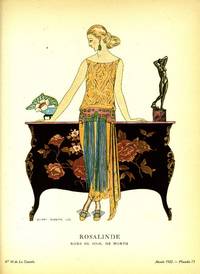
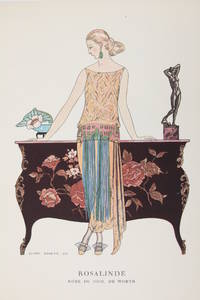
192213538Paris 1922. Print. Woman standing in front of a chinoiseries bureau with art deco sculpture and ceramics flanking her. Lithograph print with pouchoir color an intensive process that uses stencils to apply the vibrant color. 7 1/4 x 9 1/2". The "Gazette du Bon Ton" was a leading fashion magazine published from 1912 to 1925 the highlight of which were 10 colored plates in each issue. The magazine signed exclusive contracts with seven of Paris's top couture houses Cheruit Doeuillet Doucet Paquin Poiret Redfern and Worth so that the designers' fashions were shown only in the pages of the Gazette. An annual subscription was 100 francs the equivalent of over $400 today. unknown
192284726Paris: Lucien Vogel éditeur 1922. Fine. Lucien Vogel éditeur Paris 1922 18 x 24 cm une feuille Original color print heightened in gold printed on laid paper signed at bottom left of the plate. Original engraving created for the illustration of La Gazette du bon ton one of the most beautiful and influential fashion magazines of the 20th century celebrating the talent of French creators and artists in the full flourishing of Art Deco. Famous fashion magazine founded in 1912 by Lucien Vogel La Gazette du bon ton was published until 1925 with an interruption during the War from 1915 to 1920 due to the mobilization of its editor-in-chief. It consists of 69 issues printed in only 2000 copies and is illustrated notably with 573 color plates and 148 sketches representing models by great couturiers. From their publication these luxurious publications ""address bibliophiles and worldly aesthetes"" Françoise Tétart-Vittu ""La Gazette du bon ton"" in Dictionnaire de la mode 2016. Printed on fine laid paper they use a typeface specially created for the magazine by Georges Peignot the Cochin character adopted in 1946 by Christian Dior. The prints are created using the metal stencil technique heightened in colors and some highlighted in gold or palladium. The adventure begins in 1912 when Lucien Vogel man of the world and fashion - he had already participated in the magazine Femina - decides to found with his wife Cosette de Brunhoff sister of Jean the father of Babar the Gazette du bon ton whose subtitle was then ""Art modes et frivolités."" Georges Charensol reports the editor-in-chief's words: ""In 1910 he observes there existed no fashion journal that was truly artistic and representative of the spirit of its time. I was therefore thinking of making a luxury magazine with truly modern artists . I was certain of success because for fashion no country can rival France."" ""Un grand éditeur d'art. Lucien Vogel"" in Les Nouvelles littéraires n°133 May 1925. The magazine's success is immediate not only in France but also in the United States and South America. Originally Vogel thus brings together a group of seven artists: André-Édouard Marty and Pierre Brissaud followed by Georges Lepape and Dammicourt; and finally his friends from the École des beaux-arts who are George Barbier Bernard Boutet de Monvel or Charles Martin. Other talents quickly come to join the team: Guy Arnoux Léon Bakst Benito Boutet de Monvel Umberto Brunelleschi Chas Laborde Jean-Gabriel Domergue Raoul Dufy Édouard Halouze Alexandre Iacovleff Jean Émile Laboureur Charles Loupot Charles Martin Maggie Salcedo. These artists unknown for the most part when Lucien Vogel calls upon them will subsequently become emblematic and sought-after artistic figures. It is these same illustrators who create the drawings for the Gazette's advertisements. The plates highlight and sublimate the dresses of seven creators of the period: Lanvin Doeuillet Paquin Poiret Worth Vionnet and Doucet. The couturiers provide exclusive models for each issue. Nevertheless some of the illustrations feature no real model but only the illustrator's idea of contemporary fashion. La Gazette du bon ton is a decisive step in the history of fashion. Combining aesthetic demand and plastic unity it brings together for the first time the great talents of the world of arts letters and fashion and imposes through this alchemy a completely new image of woman slender independent and bold also carried by the new generation of couturiers Coco Chanel Jean Patou Marcel Rochas. Taken over in 1920 by Condé Montrose Nast La Gazette du bon ton will largely inspire the new composition and aesthetic choices of the ""dying little journal"" that Nast had bought a few years earlier: Vogue magazine. Lucien Vogel éditeur unknown
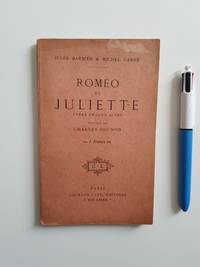
1934LRB742Paris: Calmann-Lévy éditeurs 1934 Titre : Roméo et Juliette - Opéra en cinq actesAuteur : Barbier Jules ; Carré Michel ; Gounod Charles musiqueÉdition : Nouvelle édition conforme à la représentationLieu : ParisÉditeur : Calmann-Lévy éditeursDate : 1934 impr. 12-34Reliure : Broché couverture imprimée dorigine en papier saumon dos titréLangue : FrançaisDescription : Livret complet de lopéra de Gounod daprès Shakespeare texte de Jules Barbier et Michel Carré. Page liminaire rappelant les principales dates de représentation à Paris : création au Théâtre-Lyrique le 27 avril 1867 reprises à lOpéra-Comique le 20 janvier 1873 et à lOpéra le 28 novembre 1888. Monogramme C-L au plat. Adresse de léditeur : 3 rue Auber. Prix dépoque indiqué au premier plat : 5 francs. Lexemplaire présente un papier uniformément bruni petites marques au plat supérieur dos bien solide. Nouvelle édition conforme à la représentation. Softcover. Good. Calmann-Lévy, éditeurs paperback
19281208291928. First Edition. BARBIER George LE GALLIENNE Richard. The Romance of Perfume. New York and Paris: Richard Hudnut William Edwin Rudge 1928. Slim octavo original illustrated white paper boards uncut; original cardboard slipcase. $950.First edition of this beautiful color-illustrated volume on perfume with a laid-in pamphlet advertising Richard Hudnuts Paris perfumery.Doubtless published to commemorate the opening of Richard Hudnut's perfumery in Paris this lovely book is accompanied by a special pamphlet in pocket at rear entitled ""At 20 Rue de la Paix"" advertising Hudnut's shop. Le Gallienne's delightful text celebrates the cultural and ceremonial uses of perfume throughout the ages. Both the book and pamphlet contain color plates by famous Art Deco artist and costume designer George Barbier. Renowned for his fashion plates in leading contemporary magazines including the Gazette du Bon Ton and Vogue Barbier's artistic style is readily identifiable by his elegant stylized line. ""He was the most sought-after costume designer in Paris recognized as the theatrical artist who better than any other had captured the mood of the age"" Gordon Ray. ""It will just take a few drawings of Barbier to revive the taste and spirit of our time"" Edmond Jaloux. With original slipcase often not present; without scarce original box. Interior clean and fine small stain to rear board spine mildly toned. Some wear and repairs to slipcase typically not present. A near-fine copy of this lovely production. hardcover
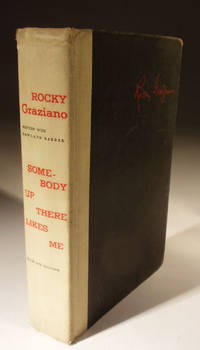
195526090UP/2/4New York: Simon & Schuster 1955 Rocky Graziano Middleweight Champion of the World 1947-48. Real name Thomas Rocco Barbella 1919-1990 although the book states his birth date as New Years Day 1921.375pp with numerous black and white pics.Book size 220x150mm Simon & Schuster hardcover
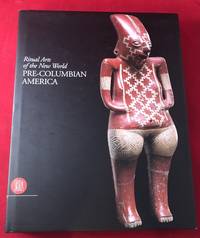
20004371Milano Italy: Skira 2000. First Edition. Hardcover. Near Fine/Near Fine. 9 1/4 X 12 Inches. 407 PP. Stated "First Edition" on the copyright page. Profusely illustrated pictorial history of Mexican art. Hint of scuffing to DJ. Skira hardcover
1987053745Armory Pubns. very nice copy; larger-format . Fine. Hardcover. 1st Edition. 1987. Armory Pubns hardcover
1987OVB12421Tacoma: Armory Publications. Very Good in Very Good- dust jacket. 1987. First Edition. Hardcover. 0960498265 . First edition. Hard cover published by Armory Publications in 1987. Blue covers with gilt lettering on spine. Upper corners of covers have some rubbing. Book is in very good condition. Dust jacket has a tear at bottom in front by spine has slight edge wear and is in very good minus condition. 4to 221 pages 2.4 lb.; 4to 11" - 13" tall; 221 pages . Armory Publications hardcover
1987027148Armory Pubns 1987. Hardcover. Fine. FINE clean hard cover first edition. Large or heavy book. No amazon international order on this title. Size: 4to - over 9¾" - 12" tall Armory Pubns hardcover
1990106411Mcfarland & Co Inc Pub. Very Good with No dust jacket as issued. 1990. Hardcover. 0899505252 . 9 X 6 X 1 inches; 244 pages . Mcfarland & Co Inc Pub hardcover
19904525Jefferson NC: McFarland 1990. Hardcover. No statement of edition. 236 pp. Index. As New hardcover no markings / No dust jacket as issued. Clean and fresh. A new copy. <br/><br/> McFarland hardcover