239 résultats
1927255532Paris: Editions Albert Levy 1927. First Edition. Typographie L. Kaldor rue d'Hautville.Heliogravure de la Societe de Gravure et d'Impression d'Art a Cachan Seine. 72 Full page plates. 2 vols. Folio. Loose in he original cloth and board portfolios as issued. Fine. First Edition. Typographie L. Kaldor rue d'Hautville.Heliogravure de la Societe de Gravure et d'Impression d'Art a Cachan Seine. 72 Full page plates. 2 vols. Folio. Editions Albert Levy unknown books
1831D8879Rome: Cuccioni 1831. Paperback. Good. Original printed wrappers; oblong 8vo; with engraved title page and 58 plates. Wraps and first two leaves with significant edgewear; otherwise corners a little dog-eared and some light spotting. Sold as is. <br/><br/> Cuccioni paperback books
1987148509N.p.: N.p. 1987. Vintage script for the 1988 Broadway play which premiered on May 3 1988 at the Royal Theatre and ran for 279 performances. <br/><br/>David Mamet's incendiary take on the world of Hollywood movie-making a black comedy that stands alongside Nathanael West's "The Day of the Locust" in the subtlety and accuracy of its indictments. Nominated for three Tony Awards including Best Play and Best Direction of a Play for Gregory Mosher and winning one for Best Actor in a Play for Ron Silver. Revived on Broadway in 2008. <br/><br/>Pink titled wrappers with credits for playwright David Mamet on the front wrapper dated June 1987. Title page present with a credit for Mamet dated June 1987. 146 leaves with last page of text numbered 141. Xerographic duplication rectos only. Pages Near Fine wrapper Very Good plus lightly foxed to the fore edge and bottom edge of the front wrapper bound with two gold brads. N.p. unknown books
JC11787n.p.: n.p. 19th century. Ephemera. Near Fine. Unadorned wraps a kind of dos-a-dos. For lack of a title we've named this one "Schnozollas" a curious example of a 19th century transformation book featuring 10 chromolithograph plates of caricatures with very large exaggerated noses. Images fold out from a framed window at the center. Closed 84x115mm; open 240x325mm. No printing information. Fragile and presumably very scarce. <br/><br/> n.p. unknown books
19311082434to. Milwaukee: Pittsburgh Plate Glass Co. 1931. 4to. 5 pp. 15 pp. 117 pp. 24 pp. 38 pp. with inlaid paint stain enamel varnish and bronze powder samples color and b&w illustrations and text printed in black and red. Embossed green cloth boards with title embossed in gilt joints and board edges are weak and fraying in some spots otherwise very good. The original salesman’s business card and a card advertising Christmas gift certificates are both slipped in. § First edition. “A wealth of authentic data for Architects is embodied in this book on the Paint Varnish and Lacquer Pittsburgh “Proof†Products manufactured by the Pittsburgh Plate Glass Company. Each major product is fully described. Specifications and directions are given for every practical use. Wherever a line is available in a variety of colors actual color chips are inserted.†Pittsburgh Plate Glass Co hardcover books
1806100895The frontispiece engraved by Blake after Joshua Reynolds. London: Richard Phillips 1806. The frontispiece engraved by Blake after Joshua Reynolds. § The book has always been scarce I sold my last copy in 1995 for $850 and this is the only example of the frontispiece available as a separate plate that I have seen. Bentley 474. Essick William Blake’s Commercial Book Illustrations XLVIII. Richard Phillips unknown books
181837090Buenos Ayres: Imprenta de Los Expòsitos 1818. First edition. A near fine copy light edgewear faint toning. Broadside. 4to. Dated and signed in print: Quartel general en Santiago abril 8 de 1818 -Exmo. Sr. José de San Martin. San Martin's second and conclusive report on the success of the Battle of Maipu on the 5th of April which won the Chilean stuggle for independence. San Martin and his rebels completely destroyed the Spanish forces led by General Mariano Osorio. The Spaniards were so completely overrun with nearly 3000 prisoners taken and 2000 dead that San Martin soon swept through and liberated Peru. "Despues de mis repetidos avisos del resultado de la batalla del 5 en el llano de Maypú tengo el honor para mayor esclarecimiento de V.E. de incluir los partes originales que he recibido añadiendo que à la fecha pasan de mas de 2500 prisioneros con 170 oficiales. Los enemigos habian dexado en Talca sus grandes despositos parque equipages y caja militar: yo estoy seguro que todo caera en nuestro poder." The broadside ends: "Hoy salen para esa ochocientos prisoneros americanos y manana de quinientos a seiscientos; es muy buena gente especialmente los Chilotes." Quite scarce. OCLC shows only a single copy at JCB. Not in BN Chile. Zinny: BibliografÃa histórica p. 216 No. 18. BibliografÃa del General Don José de San MartÃn IV p. 135. Imprenta de Los Expòsitos unknown books
191713957Cleveland: J. H. Jansen 1917. First edition. Loose Sheets. Very Good . 8vo. Book consists of a title page with index of plates on verso along with 45 loose colour plates 7 by Maxfield Parrish and the remainder by Jules Guerin all laid in to a hard folder with decorated printed paper label to front cover. Tie lacking. N.D. but likely form 1917. Folder shows some light wear. Contents all present and in very good or better condition. Each plate measures 9 x 6.5" wide. Quite scarce as a complette set. Prior owner name to front cover. J. H. Jansen unknown books
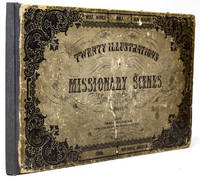
1855264534Mainz: Joseph Schulz 1855. First edition. 20 hand-colored tinted lithographs. 3-23 1 pp part I only LACKING TITLE PAGE. Oblong 8vo. Original printed paper-covered boards rebacked in cloth. Corners worn light toning to text and plates. First edition. 20 hand-colored tinted lithographs. 3-23 1 pp part I only LACKING TITLE PAGE. Oblong 8vo. Twenty hand-colored lithographs depicting interactions between Christian missionaries and natives in ancient Briton the Amazon Africa India New Zealand North America and China. The unconverted are often depicted as savage violent and wild undoubtedly meant to scare the children who were this book's intended audience. Abbey notes the "carefully drawn and in some cases remarkably powerful illustrations." A second part was published with an additional 20 plates though the two parts are rarely found together. Abbey Travel 10 Joseph Schulz unknown books
LD11903n.p. likely Paris 17th century. Paperback. Near Fine. Eighteenth century vellum; oblong 278x190mm; contains 78 plates by Le Pautre from different sources 10 of them are on paper watermarked Gaudriault a late-17th century paper. Just a little wear to the binding but sturdy and in custom cloth slipcase. Most plates are numbered in the margin ink early hand coming close to the image but rarely infringing upon it. A remarkable collection of scenes architectural details and exuberant designs featuring amorini swags arabesques cartouches mer-people some cool dragons and some menacing birds. <br/><br/> paperback books
73918vo 235 x 168 mm. orig. blue semi-stiff wrappers modern stitching. Japan: 1853-54.<br /> Silver was mined at the Ikuno Ginzan Ikuno Silver Mine from the 9th century until 1973 and was an important source of income for the central government. Lead copper zinc and gold were extracted along with silver. There were a number entrances to the mine and more than 20000 local residents were in some way involved in the mining industry.<br /> In the 19th century the mines were running deficits as they were not producing enough silver. This is a fascinating official record maintained by Chudayu or Chiwaki Shiraishi 1817-87 of the loans made by the bakufu to the Ikuno and nearby Ase silver mines to improve their efficiency and production levels. Shiraishi was at this time working for the bakufu employed as deputy officer of the two silver mines overseeing their operations and finances. Later during the Meiji Restoration Shiraishi became well known as a scholar of Wagaku Japanese studies and as a journalist.<br /> This manuscript written in a very beautiful hand contains detailed accounts of the series of loans made by individual members of the bakufu to each mine with names of lenders size of loans interest rates purpose of the loans apparently most of the money went to pay the salaries of the miners etc. The signature of Shiraishi appears on the first and final leaves.<br /> In fine condition; some well-repaired worming touching text. Preserved in a chitsu. Stamp with release stamp of the Nagoya Eirin Kyoku the Forest Management Division of the Nagoya City government. unknown books
1867879541867. SILVER J.M.W. SKETCHES OF JAPANESE MANNERS AND CUSTOMS. London:Day and Son 1867. First Edition. 4to viii 51pp errata red cloth gilt 29.5 x 21.8 cm. Chromolithographed title page and 27 chromolithographed plates. Original gilt-pictorial brick colored cloth a.e.g. Expertly rebacked with original cloth laid down occasional light scattered foxing. Complete. The covers are bright and clean. Silver was a Lieutenant in the Royal Marines who spent a good deal of time in Japan. "The text in twelve brief chapters comments on a wide range of subjects from religious festivals games pastimes and domestic life to the Imperial and Shogunal systems criminal justice and he Takaido. It also touches on Japanese characteristics." Blomber The West's Encouter with Japanese Civilization 1800-1840. An appealing copy of a lovely book. unknown books
177097Birmingham or Sheffield 1770. Oblong folio. 390 x 220 mm. 15 1/4 x 8 3/4 inches. Vellum spine over decorative blue paper wrappers paper label with title in Italian on upper board and ink title in Italian on spine. Paper stock toned with age a few leaves with staining in the margin otherwise in good condition. Silversmith model book containing 80 full-page engravings of candles sticks and holders candelabra pitchers plates salt and pepper shakers serving utensils silverware and other household pieces. Each image is beautifully and careful engraved with rich detail and ornamentation. Each includes a printed product number as well as one in ink with a different item number and a price. Although there is no title-page or signatures of engravers this large sales catalogue appears to be English as some of the engravings have English words of explanation engraved in the text. The binding is definitely Italian and the paper label is in an Italian hand. The watermark is a "fleur de lis" pattern suggesting an international company manufacturing the silver. There were only a few English companies with the capacity to export at this time including silver works in Sheffield and Birmingham both of which by 1770's had established networks of dealers selling their wares across the continent. This catalogue with specific Italian connections is very unusual and suggests the scope of the business had reached export capacity by the third quarter of the century. The most important Italian silver makers at this time were Giardini of Rome and Venuti of Naples. unknown books
7024Japan: 1816 or after. A fine complete and uncommonly well-illustrated set of scrolls concerning the famous gold silver and copper mine on Sado Island illustrating all the steps from mining to refining to minting along with the administrative and commercial activities associated with the mines. We have had several sets of "Sado Island Scrolls" and this is by far the finest in terms of the quality of the illustration completeness and richness of detail. The skilled artist of these scrolls has provided an enormous amount of valuable factual content by labeling each depicted person's role in the production of gold silver and copper. For a really excellent account of the history of mining on Sado Island and the scrolls produced there see Hamish Todd "The British Library's Sado Mining Scrolls" in The British Library Journal Vol. 24 No. 1 Spring 1998 pp. 130-43. Our description is largely based on this wonderful and beautifully researched article. Gold silver and copper mining on Sado Island just off the coast of Niigata Prefecture had its beginnings in ancient times. With the discovery in 1601 of the rich Aikawa gold and silver mine Sado experienced an economic boom. The Edo shogunate assembled miners and slave laborers mostly the homeless from throughout Japan and sent them to Sado to exploit the Aikawa mine and three other principal mines. It soon became the largest gold and silver mine in Japan attracting a population of 200000 and to a very large degree financed the Edo shogunate for several hundred years. A series of unique mining smelting and minting technologies developed at Sado were disseminated to other mines within Japan. Today the Sado complex of mines is on the "Tentative List" of Unesco World Heritage Sites. The Aikawa mine was one of the few mines at the time to be based on kodobori mine-digging. A series of pre-modern mine management systems and mining-related technologies ranging from mining to smelting were developed at Sado including methods for extracting gold from silver such as the Chinese haifuki cupellation method brought in from the Iwami Ginzan Silver Mine Shimane Prefecture; the yakikin method; as well as manufacturing-based operational formats such as the yoseseriba. It is particularly important to remember that the entire series of processes from mining and smelting to ultimately the production of gold coinage were carried out at this single mine and its environs. The finely drawn scrolls depict every process of extraction refining and minting. Each scroll has a title on a label on the outside: "Sado kozan saikutsu jikkei" "Actual View of Sado Mining". As we unroll the scroll we find another title "Sashu kingin saisei zenzu" "Sado Gold & Silver Extracted & Processed Illustrated" and a grand index of the pictorial contents of the three scrolls. The first scroll begins with a map showing the Aikawa mountain and the numerous entrances to the mining complex with names and locations of refining buildings. This is followed by wonderful paintings of the main entrance to the mine and the surrounding buildings; miners entering and working in the shafts; the ladders made from logs into which steps have been cut; lamps made of iron dishes to hold oil and attached to long iron handles; buckets and pulleys to remove water; baskets to carry ore; government officials the mine operator and surveyors discussing the best location for a new tunnel; carpenters constructing support beams; etc. Each person has a label so we know his exact title and function. The remainder of the scroll takes place outside of the mine: blacksmiths making tools; women removing waste material from the ore and placing the ore in sieves to be washed under the watchful eye of government supervisors; the administrative center for the mine where the ore is graded for sale to the smelters with a bookkeeper recording all the transactions; a back office where managers senior administrators of the mine and accountants are meeting; a room where the ore is examined once again; the ore sewn into sacks and carried out to be loaded onto oxen to be transported to the smelting works; a storage area with big locks; another government office where mine workers turned in their ID cards at the beginning of their shifts; the building known as Kanaba where the ore was pulverized to win the precious metals; a horsetail sieve to separate the ore into various constituents; grinding of the ore using ishiusu grindstones; the process of nekonagashi which used cotton cloth in wooden troughs to extract the very smallest particles using the gravimetric principle etc. The second scroll depicts the smelters called fukidaiku with men operating the bellows all watched by a guard. The gold/silver/lead alloy was then taken to an area called the Haifukidoko where the alloy was subjected to roasting in a cupel. The following scene shows the government office where the gold sujimengane and silver yamabukigin samples are examined. Now we shift to the scenes showing the processing of copper. We see the pulverizing and winning of the copper using methods similar to those for gold and silver with the addition of extensive smelting scenes employing large smelting furnaces nibukidoko mabukidoko and nanbandoko. There are a number of processing scenes including daifukisho which are not present in the BL set of scrolls. From the copper works we move to the coast of Sado where we see the extraction of alluvial gold and silver from the sand of the beaches by means of a technique called sluicing or nekonagashi. An Archimedes screw is used to draw water up to form a flow that could be used for sluicing. The material is then taken to a building called the Hamanagashi no seriba for further processing. The third scroll is devoted to minting in the Kobandokoro where small coins called koban were produced. Using the cementation process called shioyaki the partly refined gold is further refined. Above is a criss-cross construction of wooden planks known as a senryodana designed to trap any gold dust mixed with smoke from the smelting. The workers are wearing only loin cloths to prevent theft. The powdered gold is then mixed with salt and shaped into cones. Then the cones are burned slowly for seven or eight hours. Further processing steps are shown finally resulting in balls of gold called yosegane suitable for minting. Next the silver by-product is shown being processed and refined in a series of scenes. The following series of scenes show the gold being formed into metal strips called nobegane which were then polished by salt before being sent to the office run by the Goto family the Goto Yakusho. We see Sanemon Goto 2nd d. 1845 in his office. He succeeded to running the Goto Yakusho in 1816 and this is the basis for dating these scrolls. In this office the strips were tested for purity before being cut into small sections. In fine condition. There is minor marginal worming in the beginning of the second and third scrolls. hardcover books