(DRINK HISTORY)Biblio.com
4 070 résultats
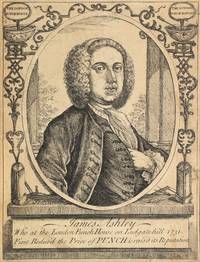
267079London: Thomas Worlidge mid-18th century. Engraved portrait of James Ashley in cartouche flanked by ornate pedestals supporting two punch bowls with engraved caption as above by Thomas Worlidge. 7-9/16 x 5-3/4 in. A strong impression with very slight rubbing and discoloration. Engraved portrait of James Ashley in cartouche flanked by ornate pedestals supporting two punch bowls with engraved caption as above by Thomas Worlidge. 7-9/16 x 5-3/4 in. Scarce trade card of James Ashley proprietor of the London Coffee House and Punch-House 1731-1776 who was "London's leading purveyor of Punch in the eighteenth century" Wondrich Punch p. 65 and "the world's first celebrity mixologist the first man to become famous for compounding and selling a mixed drink" ibid p. 172. Ashley a former cheese merchant opened his Punch-House in 1731 in Ludgatehill London. Extensive advertising in London papers as well as the distinct ornate pedestals surmounted by iron punch bowls which flanked its entrance made the London Punch-House one of the most well-known drinking establishments in the city. Clientele included Hogarth Boswell Oliver Goldsmith and Benjamin Franklin. A large sign outside of the Punch-House echoes the caption on this trade card "Pro bono publico. James Ashley in 1731 first reduced the price of punch raised its reputation and brought it into universal esteem." Ashley did indeed reduce the price of punch - from 8 shillings for punch made from a quart of arrack to 6 shillings - but his great innovation was to offer punch in smaller portions in servings as small as two ounces. These small servings made to order for the customer were the precursor to the modern cocktail. <br /> This trade card is engraved by Ashley's friend Thomas Worlidge 1700-1766 dubbed "the English Rembrandt" who also engraved portraits of Ashley's wife and one Mrs. Graywood the bar-keep at the London Punch-House. Not in ESTC Thomas Worlidge unknown
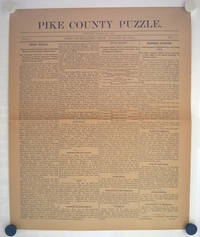
1894WRCLIT74696Camp Interlaken Penn. 1894. 4pp. Folio leaflet 15" x 12 1/8" ; 38 x 31 cm. Text printed in four columns. Horizontal fold with small break at margin at fold slight tanning at edges and along fold faintly in excess of the uniform tan tone of the wove paper stock faint tidemark at extreme lower corner of top sheet otherwise an unusually nice copy of a very fragile item. One of the black tulips of Crane collecting being his second separate publication albeit with some likely contribution by L. C. Singer Jr. The .PUZZLE . is a 4 page mock newspaper formatted as a parody of a small town newspaper written by Crane at an adult camp Twin Lakes where he spent part of the summers of 1894 and 1895. The text is based on the experiences Crane and his cohorts had while at the camp and during their return trip. The paper was set up and printed for them by the staff of the PORT JERVIS UNION. On September 7th THE PORT JERVIS UNION printed an appreciative notice of the PIKE COUNTY PUZZLE's appearance and content. An account of the circumstances is contained in THE CRANE LOG. Much of the content is jocular in nature including Crane's identification of himself as "office boy" and in an advert on the last page as "Drink Mixer." Among the other content is a "stenographic" report of "Dinner-Time Conversations": "Miss Pronk with a sudden rush of courage. - 'Mr. Crane dont you like the Lays of Ancient Rome I think they are awfully sweet. Crane:- 'My uncle had a hen named Ancient Rome once and her eggs were popular all over the county. Yes Miss Pronk you are undoubtedly right.'" Personal advertisements "Telegraphic News" from other locales and similar tongue-in-cheek texts round out the mix. Until a clearly identified facsimile was published in 1967 by THE STEPHEN CRANE NEWSLETTER in an edition of 300 copies including 70 on white laid paper this original edition was the sole printing in this format. While not an absolute rarity in the strictest sense -- OCLC locates 19 copies at institutions not likely to have commingled entries for the facsimile with entries for the real thing -- it is scarce in the market place. WILLIAMS & STARRETT 43. Wertheim and Sorrentino THE CRANE LOG pp.109-113. BAL 4069. OCLC: 8523158 etc. unknown books
In-8 gr. (mm. 259x185), 2 volumi, preziosa legatura in pieno marocchino blu realizzata dal celebre rilegatore parigino Emile Mercier (al risguardo è impresso “Mercier S.r de Cuzin”), sottili cornici dorate e delicate decoraz. di foglie ai piatti, dorso a cordoni con decoraz. e titolo oro; ricche dentelles dorate ai risguardi marmorizzati, tagli dorati, conservate le brossure orig., pp. (4),XXVIII,176; (4),387 (numeraz. continua),(4). Magnifica edizione illustrata da 36 “compositions” di C. Delort, “gravés au burin et a l’eau-forte” da L. Boisson: 1 vignetta ai 2 frontesp., 1 ritratto della “Duchesse du Maine” sulle 2 bross. anter., il ritratto di Madame de Staal, 1 tavola f.t. (alla fine del 2° volume), 15 testatine e 15 culs-de-lampe. Cfr. Carteret,IV, p. 366: “Très belle pubblication très cotée, à rechercher sur japon ou vélin avec les états. C’est à la suite du succés et du prix d’honneur décerné (par un concours) aux "Mémoires du comte de Grammont", que l’éditeur confia cette nouvelle publication aux memes artistes” - Benezit,IV, p. 417: “Charles Delort (1841-1895), célèbre artiste: peintre d’histoire, sujets typiques, aquarelliste, dessinateur, illustrateur. ” - Benezit,II, p. 479: “Léon Boisson (1854-1941), graveur, obtint le Grand Prix de Rome de Gravure en 1876”. Cfr. Alastair Duncan “Art Nouveau and Art Deco bookbinding. The French masterpieces”, p. 194: “Emile-Philippe Mercier (1855-1910), bookbinder and gilder, in 1869 was apprenticed to Charles Magnier père, under whom, and with the tutelage of the master gilder, Francisque Cuzin, he developed into the foremost gilder of his time. By 1890, when he succeeded Cuzin, his studio on the rue Séguier was producing a wide range of bindings which, though classical in inspiration, could not be juged merely as copies of past works..” - Devauchelle “La reliure en France”,III, p. 65-67. “Edition de grand luxe, imprimé par Georges Chamerot, en caractères elzéviriens”, in tiratura di 600 esemplari numerati. Il ns., “imprimé pour M. Le Comte de l’Aigle”, fa parte di una tiratura di 30 “sur Japon ou sur papier vélin, avec trois états des planches (eau-forte pure, avant la lettre et avec la lettre)”. Esemplare in perfetto stato, con bell’ex-libris nobiliare.
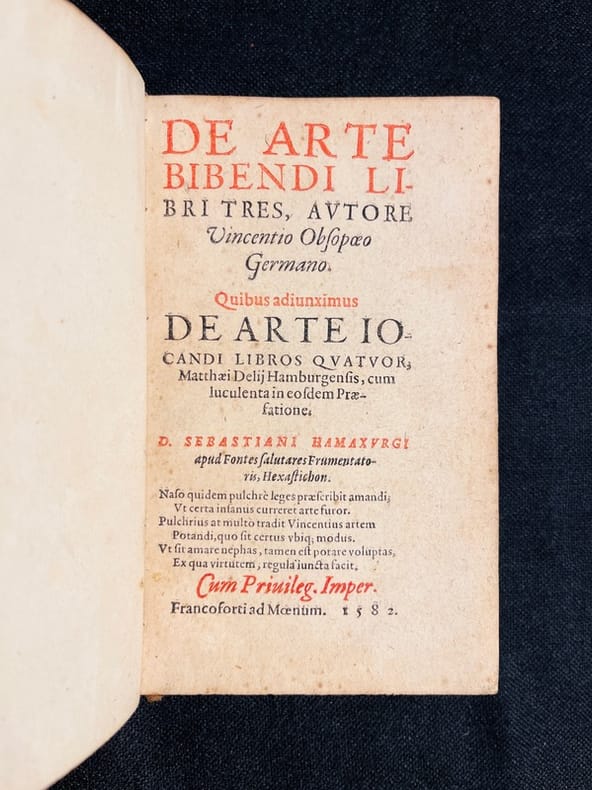
20889Francoforti ad Moenum, héritier de Christian Egenolff, Coloniae, Konrad Bütgen, 1582 - 1611. In-12 de 208 [et] [16]-189 pages, plein veau marbré marron, dos lisse orné de filets et fleurons dorés, pièce de titre en maroquin rouge, roulette dorée sur les coupes, tranches rouges.
New edition, [2], ii, 3, [1], xxiii, [1], 271, [1], 46pp., 'On distilling in general' has separate pagination, handsomely bound in half calf by Trevor Lloyd of Ludlow, marbled boards, five raised bands to spine with red morocco title label and tooled in gilt, a very nice copy. It was not until the publication of this new edition that the "Ingenious Foreigner", responsible for the 1770 and 1771 editions, revealed himself as "Mr. Borella, now head confectioner to the Spanish Ambassador in England." All three edition are rare with ESTC recording 7 copies of the first 1770 edition, 1 of the second edition of 1771, and 8 copies of this new and last edition. Maclean, pp. 10-11; Oxford, p. 102; Bitting, p. 49-50; Simon, 227; Cagle, 572.
267136London: Thomas Worlidge n.d. ca mid-18th century. Engraved portrait of James Ashley in cartouche flanked by ornate pedestals supporting two punch bowls with engraved caption as above by Thomas Worlidge. 1 vols. 7-9/16 x 5-3/4 in. A strong impression laid down light creases from prior folding small pin hole near engraved caption. Engraved portrait of James Ashley in cartouche flanked by ornate pedestals supporting two punch bowls with engraved caption as above by Thomas Worlidge. 1 vols. 7-9/16 x 5-3/4 in. Scarce trade card of James Ashley proprietor of the London Coffee House and Punch-House 1731-1776 who was "London's leading purveyor of Punch in the eighteenth century" Wondrich Punch p. 65 and "the world's first celebrity mixologist the first man to become famous for compounding and selling a mixed drink" ibid p. 172. <br /> <br /> Ashley a former cheese merchant opened his Punch-House in 1731 in Ludgatehill London. Extensive advertising in London papers as well as the distinct ornate pedestals surmounted by iron punch bowls which flanked its entrance made the London Punch-House one of the most well-known drinking establishments in the city. Clientele included Hogarth Boswell Oliver Goldsmith and Benjamin Franklin. <br /> <br /> A large sign outside of the Punch-House echoes the caption on this trade card "Pro bono publico. James Ashley in 1731 first reduced the price of punch raised its reputation and brought it into universal esteem." Ashley did indeed reduce the price of punch - from 8 shillings for punch made from a quart of arrack to 6 shillings - but his great innovation was to offer punch in smaller portions in servings as small as two ounces. These small servings made to order for the customer were the precursor to the modern cocktail. <br /> <br /> This trade card is engraved by Ashley's friend Thomas Worlidge 1700-1766 dubbed "the English Rembrandt" who also engraved portraits of Ashley's wife and one Mrs. Graywood the bar-keep at the London Punch-House. Not in ESTC Thomas Worlidge unknown
13017Used; Like New/Used; Like New. An interesting collection of six posters related to the theme of food and conservation during WWI including two by Frederick Cooper. As follows:  Cooper Fredrick G. Save a Loaf a Week Help Win the War. No. 3. W.F. Powers Co.: New York 1917. Measures 23 x 29.5 in.  Cooper Fredrick G. Save and serve the cause of Freedom. No. 2. W.F. Powers Co.: New York 1917. Measures 21 x 29 in. <br>The illustrator Frederick Cooper popularized lower case lettering instead of the traditional all uppercase in his posters and his clean style graced the cover of many Life magazines and produced iconic images that captured the spirit of his time. Like many illustrators at the time he contributed his art to the war effort in his modern-style posters created for the U.S. Food administration.The second of his posters offered in the lot especially exemplifies his clean style and use of text.<br style=""> Fight World Famine enroll in The Boys Working Reserve. Thomsen-Ellis Company: Baltimore 1914-1918. Measures 19 x 28.9 in.  A dramatically illustrated poster produced for the U.S. Department of labor that depicts a young man wielding a pitchfork and his fist in front of an illuminated hill of wheat fighting against a hoard of angry vultures.   Raleigh Henry. Hunger / For Three years America has fought starvation in Belgium. Will you Eat less-wheat meat- fats and sugar that we may still send food in ship loads poster. Edwards & Deutsch Litho. Co.: Chicago 1917. Measures 21 x 29 in.  Put out Waste Bones- they make glue for Aircraft. J Weiner Ltd.: London 1940s. Measures 10 x 15 in.  Put out Waste Paper- it is used for Ammunition and other vital needs. J. Weiner Ltd.: London 1940s. Measures 10 x 15 in. <br style="">Condition:  Save a Loaf a Week: Very good  Fight World Famine: the top left corner is missing and there is a tear on the center bottom. Save and serve the cause of freedom: brittle edge on the left bottom side.  Put out Waste Paper and Bones: linen backed in very good condition. unknown books
64988aafLugduni Batavorum (Leiden), apud Gerardum Potvliet, 1733, in-8vo, 8 Bll., Titelbl. in Rot u. Schwarz + 481 SS. + 13 SS. (Index) + 6 (5 mehrf. gefalt.) Kupfertaf., auf etwas gutem Papier gedruckt, marmor. Lederband mit Rverg. u. Rsch., vord. Spiegel teils hs. bezeichnet, beide mit Wurmspuren, Rücken stärker betroffen, Fehlstellen an den Kapitalen, Rotschnitt. Hübsches Exemplar.
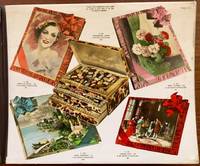
194053482Kingston upon Hull UK: Needler Ltd. ca. 1940. Oblong folio. 13.5 x 10.25 in. 14 leaves unnumbered. with 14 hand-coloured silver gelatin photographs sized 10 x 11.75 in. mounted on thick card stock leaves hinged with black cloth printed sales information on facing leaves each photo w/ War Restrictions Notice printed in upper fore-edge and supplementary product information in negative below each product. Original black pebbled cloth spine stiffened w/ wood spacers covered in black cloth minor bowing to leaves very minor wear to corners front outer hinge just starting still a VG copy w/ pencil date of 1940 on front pastedown. First edition of this scarce and exceptional photographic sample catalogue filled with the styles of Needler chocolate box assortment and chocolate packaging in the first years of World War II. Initially chocolates had been packed as unwrapped bars in the Victorian era with paper labels displayed on the counter. Later gold printing and metal foils repeated the luxury message of chocolate. Inspired by the innovations of Cadbury the designs for many British fancy chocolate boxes were prized by the British as special gifts to be used as trinket or button boxes and even cut out and saved in scrapbooks. The chocolate boxes in this catalogue include mixed assortments in faux 3-drawer cabinets decorated with fancy ribbons chromolithograph and colour-printed covers featuring historic scenes pets flowersArt Deco designs gold foil and more. Of special interest are the wonderful Needler’s figurine bowls and boxes featuring porcelain figurines dressed in silk fabrics atop bowls or boxes as well as a splendid pair of porcelain bookends “Sweet & Twenty†to hold up the customer’s chocolate boxes. Needler’s began as Fred Needler Ltd. in 1902 when established in Hull by Fred Needler 1865-1932 who began as a confectioner’s assistant in the 1880s. The company was a pioneer in fair treatment of his workforce incorporated profit-sharing for the staff from the beginning and covered sick pay retirement benefits and even established holiday homes in British seaside resort towns. By 1940 the company was one of the largest businesses in Hull with over 2000 employees. The company continued to operate until acquired through multiple buyouts by several different corporations until the label was acquired by Ashbury Confectionary and the factory was closed in Hull in 2002. No copies located in Worldcat; See: Chocs away: Needler of Hull History of Needlers Confectionary Let’s Look Again: A History of Branded Britain 2015. Needler Ltd., hardcover
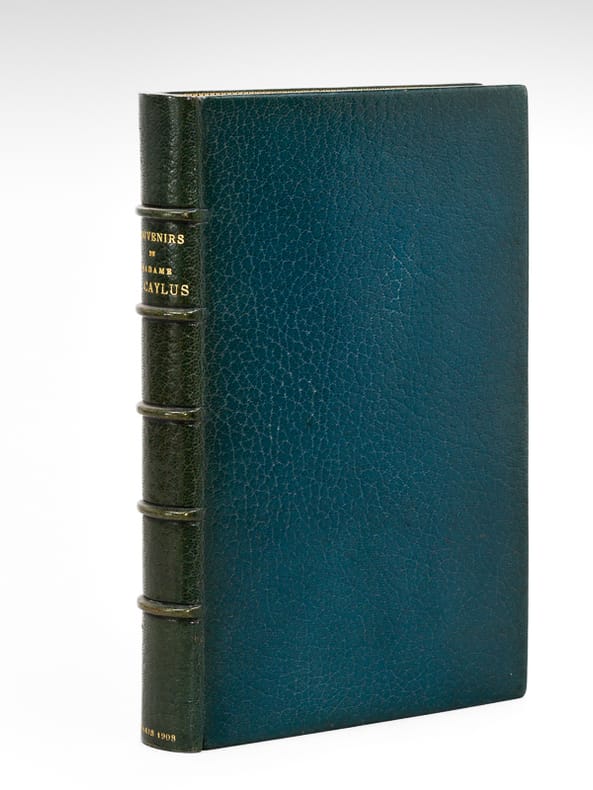
190863514Préface par Voltaire - Notice de M. de Lescure, Nouvelle édition illustrée par Lionel Péraux, gravures au burin et à l'eau-forte par Léon Boisson, Un des 150 exemplaires de grand choix sur papier du Japon et vélin du Marais (exemplaire 137 sur papier du Japon contenant 2 états des illustrations), 1 vol. in-8 reliure plein maroquin turquoise, dos à 5 nerfs, tête dorée, double filet doré sur coupes, chasses richement ornées, couvertures et dos conservés, date en queue, reliure signée de Champs Stroobants, L. Carteret, Ancienne Librairie L. Conquet, Paris, 1908, XXXX-264 pp. avec frontispice, 4 planches hors-texte, 4 en-têtes et 4 culs-de-lampe, tous en 2 états (pour le frontispice : avec la lettre et avant la lettre avec remarque, et pour les autres : avant la lettre et avec remarques)
2016__1783476052Edward Elgar Pub 2016. Hardcover. New. 1344 pages. 9.75x6.75x3.00 inches. Edward Elgar Pub hardcover
Third edition, 8vo (197 x 125 mm), [6], 89, [3], 93-150, [2]pp., engraved frontispiece of the distilling room showing the apparatus, occasional minor staining, cont. full calf, old reback. The standard eighteenth-century manual of distillation first published in 1725, dealing with general theory and practice, and the production of distilled cordials. Gabler, pp. 263-4; Maclean, pp. 135-6; Cagle, 998 (first edition of 1725).
0138050 Reliure Dédicacé par l'auteur
1900118687A. romagnol, dix 1900 art déco, aussourd Paris, Librairie de la Collection des dix, A. Romagnol, 1900, 1 volume in-4 de 170x275 mm environ, frontispice, (2) ff. (faux-titres), page de titre, 240 pages, (1) f. Exemplaire sur papier Japon, complet du frontispice et des 7 hors-texte. Il manque la page de justification du tirage et notre exemplaire ne contient pas les trois états des illustrations normalement présent dans les 20 exemplaires sur papier Japon. Élégante reliure au dos mosaïqué, d'inspiration Art déco, signée par René Aussourd. Demi-maroquin à coins orangé dans son étui bordé assorti, dos à quatre nerfs portant titres dorés, caissons de tête et de queue ornés d'un scarabée noir et vert, papyrus stylisés dans les tons crème et vert dans une composition au centre du dos, fers floraux dorés, tranche de tête dorée, gardes marbrées. Un petit frottement sur une aile de scarabée, sinon très bel exemplaire, bon état.
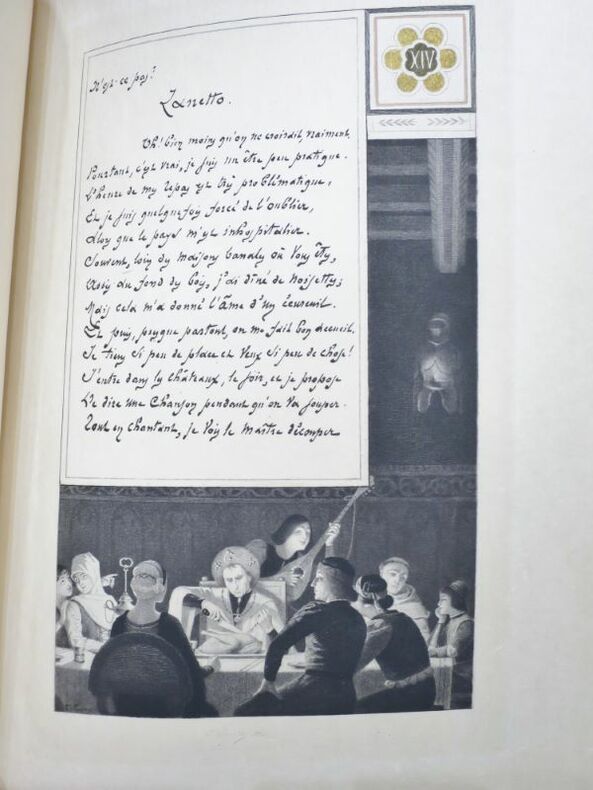
108955Paris, Armand Magnier Editeur, Collection des Dix, 1897, 1 volume in-4 de 285x205 mm environ, luxueuse reliure plein maroquin bleu marine, dos à 5 nerfs portant titres dorés, double filet doré sur les coupes, contreplats de maroquin encadré d'une frise mosaïquée à fleurs, double garde en papier marbrée et soie à motifs, reliure signée Marius Michel, sous étui recouvert de papier marbré bordé en maroquin assorti, tranches dorées, couvertures et dos conservés. Exemplaire N°8, un de 12 exemplaires sur papier des Manufactures impériales du Japon avec une quadruple suite des 47 compositions de Louis Edouard Founier, gravées à l'eau-forte par Léon Boisson, d'un tirage limité à 300 exemplaires. Reproduction en fac-similé du manuscrit de l'auteur et d'une page de musique de JM Massenet. Dos légèrement insolé avec frottements sur les nerfs, étui frotté avec début de fente sur l'ouverture, mouillure sur les gardes de soie.
First English edition, 12mo (194 x 110mm) xx, [4], 164, [2, explanation of the plate]pp., with half-title, engraved folding plate depicting instruments for corking bottles (lightly spotted), orig. boards, corners rubbed, later printed title label to spine, uncut. The first English edition, the French edition being published a year earlier, of the first book to deal with canned foods. Appert, a Parisian confectioner and manufacturer of cordials, invented the process for the conservation of food by heat in hermetically sealed containers?an invention which was to revolutionise catering technique up to the present day. Includes canning instructions for meat, vegetables and fruits. Bitting, p. 14; Oxford, p. 141; Simon, 135; Cagle, 545.
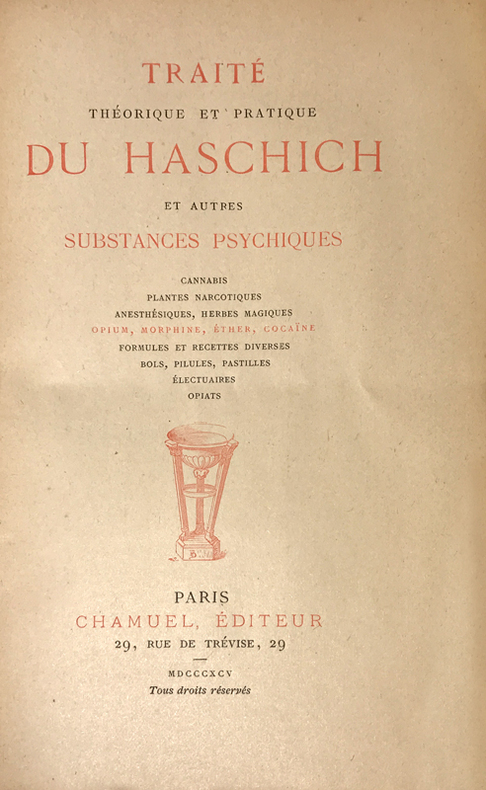
189515352Paris, Chamuel, 1895 ; in-12, broché ; 177 pp., (1 bl.), (2) pp. de catalogue, couverture crème rempliée, illustrée, imprimée en vieux-rose et noir, petites figures.
17811099761781 Un volume In-16 (9,5 x 16cm environ), reliure pleine peau, filets, et fleurons dorés au dos, tranche marbrées en couleurs, reprenant le motif des gardes - Cinq ouvrages reliés en un volume intitulé "Recueil II" à l'aide d'une pièce de titre au dos, répartis comme suit : (1) A Amsterdam; et se trouve à Paris, Chez Méquignon l'aîné, Librairie, rue des Cordeliers - M. DCC. LXXIX. 1779 - 46 pages - (2) A Berlin, et se trouve, à Paris, Chez l'Auteur , Barrière de Reuilly; Fauxbourg Saint-Antoine. Et Chez Belin, Librairie, rue Saint-Jacques - M DCC LXXIX. 1779 - 35 pages - (3) A Paris, Chez l'Auteur, rue Croix des Petits-Champs, Maison de M. Bourdet, Chirurgien-Dentiste du Roi. et Chez Blaizot, Librire du Roi, rue Satory, à Versailles - Avec Approbation et Permission - M. DCC. LXXXI. 1781- 139 pages - Cul-de-lampe - (4) A Amsterdam; et se trouve à Paris, Chez Bastien, Libraire, rue du Petit-Lion, Fauxbourg Saint-Germain - M. DCC. LXXIV. 1774 - 56 pages - (5) A Paris, Chez Saugrain, Libraire, Quai des Augustins, près de la rue Pavée - M. DCC. LXXXI. 1781 - 116 pages
179843Japan: mid-20th century. A collection of five maekake bearing the logos of famous companies including Asahi and Kikkoman. Alongside beer and soy sauce these aprons advertise Mitsuuroko's line of coke and coal briquettes the chicken served at an izakaya called Yamauchi Nojo and the shuroku brand of sake from the Otsuka brewery closed in 2011. These aprons would have been worn either by workers at the restaurants and breweries themselves or at other locations that served those products. Similar apron designs are worn by restaurant workers to this day. Five machine-woven cotton aprons in various colours 580 x 460 mm to 710 x 460 mm. Company logos to each; text in Japanese. Top edges with red orange and white striped cotton waist ties 1935 to 2540 mm bottom edges with tassels lettered and decorated in white 2 with metal 2 two with open pockets. Some soiling fraying and sunning consistent with use a few minor holes: a very good collection. unknown
First Irish edition, 8vo (203 x 126 mm), viii, 82, [2]pp., with the final advert leaf, hand-coloured engraved folding frontispiece of the tea tree (close-trimmed at fore margin just affecting image, re-guarded), publisher's list at end, a little light toning, endpapers renewed, contemporary tree calf, rebacked, a little rubbed. Based on Lettsom's original Latin M.D. thesis published in Leyden in 1769, this being the first Dublin edition, printed in the same year as the first London edition. One of the three "books with which he burst upon the medical and scientific world in 1772... This contained a coloured folding plate of the tea tree, reproduced from a painting by J. Miller, made for Dr. John Fothergill. The tree from which it was taken was one that flowered in the garden of the Duke of Northumberland at Sion House in October 1771. It was the first that ever flowered in Europe, and from it Lettsom was able to correct the mistake made by the great Linnaeus, who, working from dried specimens, thought it was monogynous instead of trigynous."?Abraham. Henrey, 967; Abraham, Lettsom, 1933. p.70 & 112.
First edition, xv, [1], 240pp., with half-title, orig. brown patterned cloth, lightly stained, spine repaired with minor tears and rubbing to extremities. Provenance: Ownership signature to front-free endpaper "Wm. Theakston, 1860." Gabler, G33930; Bitting, p. 391.
191661117Mount Pleasant Westmoreland County PA: Bryce Brothers Company 1916. Oblong folio. 19 x 12.25 in. 6 389 1 pp. Illustrated in sepia & black throughout. Brown-cloth-backed decorated tan softcovers decorative borders brown lettering minor creasing & thumbing at corners very minor edgewear rubbing still a VG bright copy. First edition of this famed glassware catalogue which represented the height of the noted Pittsburgh area glass manufacturing firm just a couple years prior to Prohibition which after repeal of Prohibition it would later be augmented twice in the 1936 & 1938 in smaller format with supplements. This catalogue filled with 100’s of full-size illustrations offers essential reference for cocktail glassware and stemware including Whiskey Tumblers Cut glass Whiskey Tumblers Wine glasses for Burgundy Rhine Port & Champagnes Toddy tumblers over 20 pp. devoted entirely to cocktail classes and a substantial array of beer glasses. Included as well are fancy cut glassware monogrammed glassware specialized items such as Oyster Cocktails Oyster Glasses Decanters Ice Cream Dishes Fruit Salad Dishes Hat Pin Holders Horse Radish glasses and so much more. The company was originally founded by James S. Bryce together with his brothers Frederick & James McKee Bryce in 1850 succeded by his son James S. Bryce Jr. becoming one of the most significant glass manufacturers in the United States. The company’s clients included Curtiss-Wright Corporation the Hotel San Diego Wesley Memorial Hospital the Top of the Needle Restaurant and hotels country clubs social clubs and restaurants across the country. In 1965 Lenox Inc. acquired the Bryce Brothers Co. to manufacture and market glassware with their china market creating the Lenox Crystal booklet and high-end glassware. Worldcat locates 6 physical copies Rakow Lib. Winterthur McKinley Mem. Lib. Carnegie Lib. Heinz Hist. Center US Patent Office. Bryce Brothers Company, paperback
188640862Sous étui. Reliure plein maroquin bleu nuit. Dos à nerfs. Toutes tranches dorées. Couverture conservée.Papierd'une très grande fraicheur. Illustré d'un portrait de Balzac en frontispice, gravé par Boisson d'après Julien, et de 6 compositions de Delort gravées par Boisson, dont un en-tête, un cul-de-lampe et 4 hors-texte.
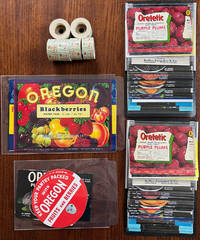
195561665Salem OR: Oregon Fruit Products Co. 1955. Oblong 4to. Sales kit archive: 1st - Oblong 4to. 11 x 6.75 in. Two sales counter displays w/ 25 mylar louvered leaves for with nearly all featuring inserted labels catalogue and Real Photo Postcard of company products; 2nd - 31 separate can and fruit box labels sized from 4 x 5 in. up to 7 x 10.5 in. large 12 oz. can labels folded in half; 3rd - two circular mountable clips 5.25 in. round for removing fruit can lids w/ adhesive and instructions on verso still intact; 4th - 5 unused rolls of adhesive labels marking Oregon Fruit Products Co. items. Preserved in original Dubl-Frunt File Pocket printed label for Oregon Fruit Products at upper fore-ede expandable sized 9.5 x 11.5 in. minor edgewear couple minor closed tears in the folds still a VG exemplar. First edition of this exceedingly scarce original salesman sample kit for the Oregon Fruit Products Co. in the Mid-20th-Century featuring over 50 different labels used on fruit crates canned fruit and frozen fruit packages two promotional photo postcards showing off their new frozen product line as well as touting their latest offering of Sucaryl-packed fruit products for the dieter or diabetic. Their locally Pacific Northwest-sourced fruit offerings included BlackberriesBoysenberries Royal Anne Cherries dark Sweet Cherries Purple Plums Strawberries Gooseberries Loganberries Peaches and whole Apricots. A wide variety of packing options included water pack light syrup heavy syrup and frozen offerings which were packed into 10 oz. metal and paper fibre cans. Oregon Fruit Products was one of the many U.S. Companies to quickly expand their offerings with Abbot Laboratories notorious artificial sweetener Sucaryl Calcium Cyclamate which was marketed towards those dieters and customers with diabetes or other metabolic disorders wishing for sweet-tasting foods. However within 12 years after the “Oretetic†brand products were introduced in 1969 the FDA banned cyclamates due to two 1968 studies tracing links to bladder cancer. Gehlhar 1886-1969 originally purchased 10 acres in the West Side Fruit Farm district of Salem OR in 1910 and began farming and by 1920 was operating 160 acres producing cherries & prunes and later built the Gehlhar prune dryer in 1926. In 1931 he served as the first Oregon State Director of Agriculture and after a 1935 fire destroyed his fruit dryer the cannery remained and he chose to instead focus on canning and marketing canned fruit products for distribution in the Pacific Northwest. Although originally focused on canned fruits and then later frozen products by the late 1980’s and early 1990’s the company began diversifying their product line. In 2011 the Gehlhar family sold the company to Ed Maletis who have now expanded to a new location in Salem OR. No similar copies of this collection located in Worldcat 1 WWII-era fruit label located at Wolfsonian several 1950’s labels located at OHS in Portland. Oregon Fruit Products Co., unknown
190019386Compositions de Paul-Albert Laurens. Gravures à l'eau-forte de Léon Boisson.Tirage limité à 300 Exemplaires numérotés à la presse. Celui-ci (N°55) sur vélin de cuve d'Arches contenant 2 états (dont 1 avec remarques) des 50 illustrations dans le texte, et 3 états des 7 hors texte (dont 1 avec remarques).Enrichi d'un portrait signé par l'artiste et une LAS (Lettre Autographe Signée de F. Ferroud (1934), au sujet de cet exemplaire qui est pour lui une énigme!).Spécimen de l'édition illustrée relié in fine.Paris, Librairie de la Collection des Dix, A. Romagnol - 1900 - 240 pages.Très belle reliure à la bradel, demi-maroquin rouge à coins signée E. Carayon. Dos lisse avec décor floral en couleurs mosaïqué. Titre, auteur et date en pied dorés. Filet doré bordant les plats. Non rogné. Couverture et dos illustrés conservés. Pas de rousseur. Parfait état. Format in-4°(27x19).