122 150 résultats
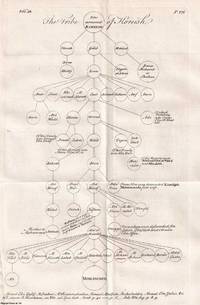
1748372009Printed for T. Osborne in Gray's Inn; A. Miller in the Strand; and J. Osborn in Paternoster Row London 1748. Unframed Print. Very Good Condition. 1 folding plate. The Quraysh traced their lineage back to Ismail the son of Prophet Ibrahim who established his presence in the Makkah valley approximately 2000 BCE. By the 6th century the Quraysh had emerged as a prominent tribe recognized for their established legal practices and commercial traditions. Size: 19 x 29 cms. Category: Universal History; PRINTS : Antiquarian Interest; Printed before 1800; Special Features. This item may require more postage than the rates shown for delivery outside the UK. If extra postage is required we will contact you before processing your order and you will be given the details and option to decline the extra cost. Printed for T. Osborne, in Gray's Inn; A. Miller, in the Strand; and J. Osborn, in Paternoster Row unknown
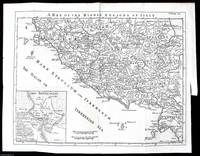
1748372027Printed for T. Osborne in Gray's Inn; A. Miller in the Strand; and J. Osborn in Paternoster Row London 1748. Unframed Print. Very Good Condition. The map focuses on central Italy with a particular emphasis on Rome which was historically referred to as Urbs Septicollis meaning the "Seven-Hilled City." The engraving illustrates the seven hills of Rome a defining feature of the ancient city. It was printed 1748 in London by T. Osborne A. Miller and J. Osborn1 folding plate. A rare map from the 18th century depicting Italy with a focus on Rome featuring an inset of Urbs Septicollis the historical name for Rome. This map illustrates the location of the seven hills with the Latin term Civitas Septicollis meaning "Seven-Hilled City" referencing the city of Rome. Size: 28 x 36 cms. Category: Universal History; Unframed Prints : Old; Printed before 1800; PRINTS : Antiquarian Interest; Special Features. This item may require more postage than the rates shown for delivery outside the UK. If extra postage is required we will contact you before processing your order and you will be given the details and option to decline the extra cost. Printed for T. Osborne, in Gray's Inn; A. Miller, in the Strand; and J. Osborn, in Paternoster Row unknown
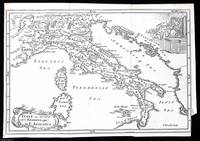
1748372038Printed for T. Osborne in Gray's Inn; A. Miller in the Strand; and J. Osborn in Paternoster Row London 1748. Unframed Print. Very Good Condition. This map provides a detailed representation of Italy during the reign of Augustus showing how the Roman emperor divided the peninsula into administrative regions. This division was crucial for governance taxation and military organization in the early Roman Empire. The engraving was printed 1748 in London by T. Osborne A. Miller and J. Osborn.1 folding plate. Close cropped at the right margin. Size: 20 x 30 cms. Category: Universal History; PRINTS : Antiquarian Interest; Printed before 1800; Special Features. This item may require more postage than the rates shown for delivery outside the UK. If extra postage is required we will contact you before processing your order and you will be given the details and option to decline the extra cost. Printed for T. Osborne, in Gray's Inn; A. Miller, in the Strand; and J. Osborn, in Paternoster Row unknown
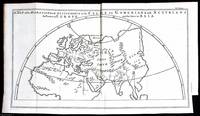
1748372029Printed for T. Osborne in Gray's Inn; A. Miller in the Strand; and J. Osborn in Paternoster Row London 1748. Unframed Print. Very Good Condition. This 1748 engraved map illustrates the migration patterns of the Celts or Gomerians in Europe and the Scythians in Asia reflecting historical theories about the movement of ancient peoples. Japheth's descendants were believed to have spread across Europe Anatolia and parts of Central Asia influencing various civilizations. In medieval and early modern European tradition Japheth was considered the progenitor of European peoples. The map provides insights into how scholars of the time understood the dispersal of these groups across continents. The engraving was printed in London by T. Osborne A. Miller.1 folding plate. Rather untidily folded at the centre. Size: 20 x 36 cms. Category: Universal History; PRINTS : Antiquarian Interest; Printed before 1800; Special Features. This item may require more postage than the rates shown for delivery outside the UK. If extra postage is required we will contact you before processing your order and you will be given the details and option to decline the extra cost. Printed for T. Osborne, in Gray's Inn; A. Miller, in the Strand; and J. Osborn, in Paternoster Row unknown
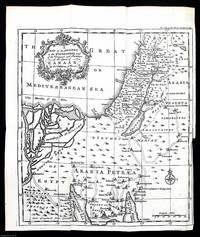
1748372058Printed for T. Osborne in Gray's Inn; A. Miller in the Strand; and J. Osborn in Paternoster Row London 1748. Unframed Print. Very Good Condition. The map illustrates the biblical journey of the Israelites led by Joshua through the wilderness and into Canaan the land promised to them. It marks key locations associated with their travels and conquests reflecting the narrative found in the Hebrew Bible. The engraving was printed 1748 in London by T. Osborne A. Miller and J. Osborn.1 folding plate. Small tear to the right margin neatly repaired to the rear. Size: 26 x 30 cms. Category: Universal History; PRINTS : Antiquarian Interest; Printed before 1800; Special Features. This item may require more postage than the rates shown for delivery outside the UK. If extra postage is required we will contact you before processing your order and you will be given the details and option to decline the extra cost. Printed for T. Osborne, in Gray's Inn; A. Miller, in the Strand; and J. Osborn, in Paternoster Row unknown
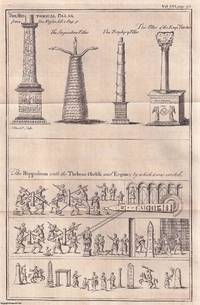
1748372012Printed for T. Osborne in Gray's Inn; A. Miller in the Strand; and J. Osborn in Paternoster Row London 1748. Unframed Print. Very Good Condition. This 1748 engraving depicts several monumental structures located in the Hippodrome of Constantinople modern-day Istanbul a grand arena used for chariot racing and public ceremonies. Among the notable features illustrated are The Serpent Column originally erected at Delphi to commemorate the Greek victory over the Persians at Plataea 479 BCE later moved to Constantinople by Emperor Constantine. The Porphyry Pillar A column made of red porphyry believed to have been erected by Constantine the Great. The Pillar of Emperor Marcian a 5th-century monument honouring Emperor Marcian known for its Corinthian-style capital. The Theban Obelisk also known as the Obelisk of Theodosius originally from Egypt brought to Constantinople by Emperor Theodosius I. The engraving was printed in London by T. Osborne A. Miller and J. Osborn.1 folding plate. Size: 17 x 26 cms. Category: Universal History; Unframed Prints : Old; Printed before 1800; PRINTS : Antiquarian Interest; Special Features. This item may require more postage than the rates shown for delivery outside the UK. If extra postage is required we will contact you before processing your order and you will be given the details and option to decline the extra cost. Printed for T. Osborne, in Gray's Inn; A. Miller, in the Strand; and J. Osborn, in Paternoster Row unknown
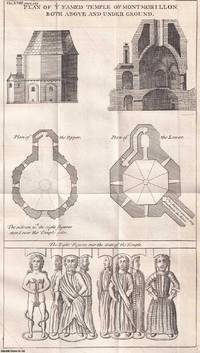
1748372016Printed for T. Osborne in Gray's Inn; A. Miller in the Strand; and J. Osborn in Paternoster Row London 1748. Unframed Print. Very Good Condition. 1 folding plate. Size: 17 x 28 cms. Category: Universal History; PRINTS : Antiquarian Interest; Printed before 1800; Special Features. This item may require more postage than the rates shown for delivery outside the UK. If extra postage is required we will contact you before processing your order and you will be given the details and option to decline the extra cost. Printed for T. Osborne, in Gray's Inn; A. Miller, in the Strand; and J. Osborn, in Paternoster Row unknown
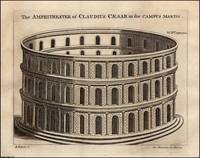
1748351251Printed for T. Osborne in Gray's Inn; A. Miller in the Strand; and J. Osborn in Paternoster Row London 1748. Unframed Print. Very Good Condition. The engraving depicts the Amphitheatre of Claudius Caesar located in the Campus Martius an important area in ancient Rome used for military training public gatherings and entertainment. The amphitheatre was likely designed for gladiatorial contests public spectacles and possibly naval battles as some Roman amphitheatres were temporarily flooded for staged sea battles. The engraving was printed 1748 in London by T. Osborne A. Miller and J. Osborn.1 folding plate. Size: 15 x 20 cms. Category: Universal History; Unframed Prints : Old; Printed before 1800; PRINTS : Antiquarian Interest; Special Features. This item may require more postage than the rates shown for delivery outside the UK. If extra postage is required we will contact you before processing your order and you will be given the details and option to decline the extra cost. Printed for T. Osborne, in Gray's Inn; A. Miller, in the Strand; and J. Osborn, in Paternoster Row unknown
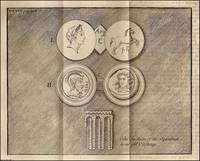
1748351246Printed for T. Osborne in Gray's Inn; A. Miller in the Strand; and J. Osborn in Paternoster Row London 1748. Unframed Print. Very Good Condition. 1 folding plate. Size: 18 x 15 cms. Category: Universal History; PRINTS : Antiquarian Interest; Printed before 1800; Special Features. This item may require more postage than the rates shown for delivery outside the UK. If extra postage is required we will contact you before processing your order and you will be given the details and option to decline the extra cost. Printed for T. Osborne, in Gray's Inn; A. Miller, in the Strand; and J. Osborn, in Paternoster Row unknown
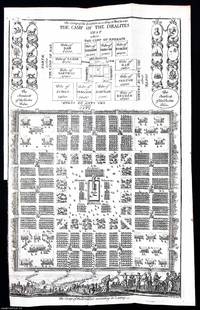
1748372017Printed for T. Osborne in Gray's Inn; A. Miller in the Strand; and J. Osborn in Paternoster Row London 1748. Unframed Print. Very Good Condition. This 1748 engraving presents a detailed depiction of the Israelite encampment based on interpretations by Reyherus and Lamy. It illustrates the standards of the Twelve Tribes showing how the Israelites were arranged during their journey through the wilderness. The tribal banners of the Twelve Tribes of Israel were significant symbols representing each tribe's identity heritage and role within the Israelite community. These banners known as "degel" in Hebrew were used to organize the encampment of the Israelites during their journey through the wilderness as described in the Book of Numbers. The image reflects biblical scholarship and cartographic traditions of the time. Engravings like this were used as visual aids in theological studies helping scholars and readers understand the structure and symbolism of the Israelite encampment. Engravings such as this one contributed to the broader effort of documenting and interpreting biblical events in historical and artistic contexts and was printed in London by T. Osborne A. Miller and J. Osborn.1 folding plate. Close cropped at the left margin and a couple of tears neatly repaired from the rear. The exodus of the Israelites from Egypt represents a pivotal moment in Jewish history as recounted in the Old Testament's book of Exodus. The narrative reveals that the Israelites endured years of enslavement in Egypt until God appointed Moses to guide them out of bondage and return them to the land promised to their forefathers. Following a series of plagues and miraculous events Pharaoh initially consented to their departure but subsequently reneged on his decision and pursued them with his forces. At the Red Sea God miraculously parted the waters enabling the Israelites to cross safely while the Egyptian army was engulfed as the waters returned. This escape signifies the commencement of the Israelites' journey toward the Promised Land and their emancipation from servitude. Size: 20 x 33 cms. Category: Universal History; Unframed Prints : Old; Printed before 1800; PRINTS : Antiquarian Interest; Special Features. This item may require more postage than the rates shown for delivery outside the UK. If extra postage is required we will contact you before processing your order and you will be given the details and option to decline the extra cost. Printed for T. Osborne, in Gray's Inn; A. Miller, in the Strand; and J. Osborn, in Paternoster Row unknown
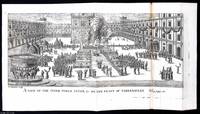
1748372019Printed for T. Osborne in Gray's Inn; A. Miller in the Strand; and J. Osborn in Paternoster Row London 1748. Unframed Print. Very Good Condition. 1 folding plate. The design of the porch and altar is reminiscent of the structure of the ancient Temple. The porch was situated at the front of the sanctuary leading to the entrance of the Holy Place. Beyond the porch lay the Inner Court which housed the large altar. The area between the porch and the altar served as the location where priests interceded for the people of God who were gathered in the outer court just outside the walls. Size: 15 x 33 cms. Category: Universal History; PRINTS : Antiquarian Interest; Printed before 1800; Special Features. This item may require more postage than the rates shown for delivery outside the UK. If extra postage is required we will contact you before processing your order and you will be given the details and option to decline the extra cost. Printed for T. Osborne, in Gray's Inn; A. Miller, in the Strand; and J. Osborn, in Paternoster Row unknown
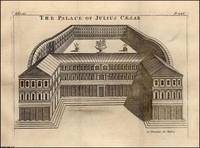
1748351255Printed for T. Osborne in Gray's Inn; A. Miller in the Strand; and J. Osborn in Paternoster Row London 1748. Unframed Print. Very Good Condition. This 1748 engraving depicts the Horti Caesaris or Gardens of Caesar which were part of Julius Caesar's grand estate in ancient Rome. The palace buildings shown surrounding the gardens were known for their lavish design fountains and sculptures reflecting the wealth and influence of Caesar. The engraving was printed in London by T. Osborne A. Miller and J. Osborn.1 folding plate. Size: 15 x 20 cms. Category: Universal History; PRINTS : Antiquarian Interest; Printed before 1800; Special Features. This item may require more postage than the rates shown for delivery outside the UK. If extra postage is required we will contact you before processing your order and you will be given the details and option to decline the extra cost. Printed for T. Osborne, in Gray's Inn; A. Miller, in the Strand; and J. Osborn, in Paternoster Row unknown
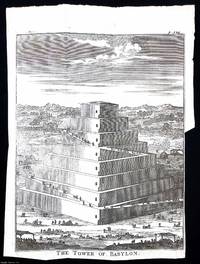
1748372018Printed for T. Osborne in Gray's Inn; A. Miller in the Strand; and J. Osborn in Paternoster Row London 1748. Unframed Print. Very Good Condition. This 1748 engraving visually represents the Tower of Babel a structure described in the Book of Genesis as an ambitious attempt by humanity to build a tower reaching the heavens. According to the biblical account God intervened by confusing human language leading to the dispersion of people across the world. The image reflects 18th century interpretations of the story incorporating architectural elements inspired by Mesopotamian ziggurats such as Etemenanki a temple dedicated to Marduk in Babylon. The engraving was printed in London by T. Osborne A. Miller and J. Osborn.1 folding plate. Close cropped at the right margin and a couple of tears neatly repaired from the rear. In the Book of Genesis it is stated that the Babylonians sought to establish their reputation by constructing a grand city and a tower that reached the heavens. However God intervened by causing such confusion among the workers' language that they were unable to communicate effectively with each other. Size: 21 x 28 cms. Category: Universal History; PRINTS : Antiquarian Interest; Printed before 1800; Special Features. This item may require more postage than the rates shown for delivery outside the UK. If extra postage is required we will contact you before processing your order and you will be given the details and option to decline the extra cost. Printed for T. Osborne, in Gray's Inn; A. Miller, in the Strand; and J. Osborn, in Paternoster Row unknown
Harald MoeIn Pristine Condition. unknown
Kural, RenéIn Pristine Condition. unknown
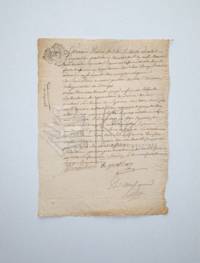
17560010147France. Good with no dust jacket. 1756. Ephemera. On offer is fascinating manuscript from 1756 detailing a significant financial transaction with the document's author Germain Pierre Blanchebarbe the Lord of Grandbourgone who was one of France's leading noblemen in the mid-18th century. The document describes an agreement to pay for wood provided by one Francois Blanche. An excerpt from the document follows: Nous mandons de payer a francois Blanche . La somme de sept cent une livres trois sols neufs deniers . Du prix de bois. Translation: We mandate to pay to francois Blanche . The sum of seven hundred and one livres three sols nine cents remaining . Of the price of wood. The price is a significant sum equal to approximately three years ordinary wages so the amount of wood cut must have been substantial. The importance of the document is the author. Blanchebarbe was a French nobleman who also served as Grand Master of Waters and Lands of Blois under Louis XV. This was a purchased position and to hold it meant that Blanchebarbe was indeed a wealthy man. Of significance is that he sold this position to Jacques-Donatien Le Ray de Chaumont Jacques-Donatien. Le Ray de Chaumont was one of the wealthiest and most powerful aristocrats in all of France. He made a fortune in shipping and in ceramic manufacturing. In 1750 he acquired the Château de Chaumont as a country home. He served Louis XVI at the Court at Versailles as the Governor of Les Invalides in Paris and as Grand Master of Waters and Lands of Blois the position he purchased from Blanchebarbe. Le Ray de Chaumont was very sympathetic to the American cause for independence and used his powerful position to sway the King and the powerful administrators of the French government to provide huge loans to the nascent American government. Le Ray also provided a fully staffed mansion for Benjamin Franklin. Le Ray's support for the American cause also involved having his shipyards refit a merchant vessel into a warship that he then gifted to America under the name USS Bonhomme Richard for use by Captain John Paul Jones named after the character in Franklins book Poor Richards Almanac. As a result of his efforts he is often referred to as the French Father of the American Revolution. Unfortunately his support for the Americans led to the bankruptcy of the French government. When crops failed in France in the 1780s there was no money to purchase grain to stave off mass starvation and the population rose in revolt. As such Le Ray can also be considered a Father of the French Revolution. For a historian especially of American history this document connects directly with two of the most significant revolutions in modern western history. Such a simple page would be a prize in any library due to its connections. The manuscript is a one-page single-sided document measuring 9.75 inches by 7.25 inches. The edges show feathering and staining that would be appropriate to its age. The page bears a printed seal. The wording is obscured but there is a clear image of a sailing ship. The handwriting is generally very legible. ; Manuscripts; 8vo 8" - 9" tall; 1 pages; Signed by Author .
195424772WVMorgantown WV: The Monongalia Historical Society 1954. 454 pp. Original black cloth covers w/ gilt title on spine. Bottom of spine and bottom corner of front cover bumped. Illust. w/ b/w photos and maps. Contents very nice. First Edition. Hard Cover. Very Good/No Dust Jacket. 8vo - over 7¾" - 9¾" tall. The Monongalia Historical Society Hardcover
19641119259Tuscson AZ: Board of Regents of the University and State College of Arizona. Good paper copy ex. catalog 119 pp 2 pp fwd by E.P. Richardson 10 pp essay lists 106 works almost all illus. in B/W 3 pp index 1 4/C plate. One page inscription on first fly leaf . Good. Paper. 1964. Board of Regents of the University and State College of Arizona unknown
Kristian Jakobsen, HelleIn Pristine Condition. unknown
77585With brown halfpenny postal mark stamped thereon. Very Good Condition. unknown
Finn Andersen and Ian OIn Pristine Condition. unknown
1777BTETM0002432London: Printed for Fielding and Walker 1777. 1st Edition. Hardcover. Good/No Jacket. quarto 4to 9 12 × 12 in 241 × 305 mm . Please email for Photographs or further information. Good - No dust jacket as issued. Complete: half-title; title with engraved vignette; list of plates; contents; preface; 4 full-page engraved plates; engraved ornaments; Errata p. 332 and Index present; terminal blanks present. Text/plates: scattered spotting/foxing see photos. Binding: contemporary speckled calf; gilt-decorated spine with red morocco title label; rubbed/worn to extremities. Upper board detached but presentclean split at the front joint/hinge; textblock and sewing sound. Paper note: final text leaf pp. 331/332 on thicker stock comparable to the plate paper integral and sewn in. Collation: 4 1 1 2 1340 3 pp. incl. terminal blanks. Prelims: half-title; title engraved vignette; list of plates; contents; preface. Illustrations: 4 full-page engraved plates engraved ornaments often described as additional head/tailpieces/vignettes. Rear matter: Errata Index present. Please see Photos as part of condition report. 1777 1st Edition THE HISTORY OF THE FLAGELLANTS or the Advantages of Discipline; Being a Paraphrase and Commentary on the Historia Flagellantium of the Abbe Boileau Doctor of the Sorbonne Canon of the Holy Chapel &c. By Somebody Who is Not Doctor of the Sorbonne Jean-Louis De Lolme Author Bio: Jean-Louis de Lolme 1740 16 July 1806 was a Genevan and British political theorist and writer on constitutional matters born in the then independent Republic of Geneva. As an adult he moved to England and became a British subject. Synopsis: A fine example of Delolmes provocative English adaptation of Abbé Boileaus highly controversial history of flagellation first published 1700. It traces the practice throughout history and literature with its uses as punishment religious self-discipline private atonement or erotic practice. The illustrations include devils whipping men Henry II's penitance for the death of Thomas Becket and Bernadine of Sienna whipping a bare-breasted woman to extinguish her ardour. Format: Hardcover quarto 4to 9 12 × 12 in 241 × 305 mm Note: Binding/size selection follows standard bibliographic conventions and is approximate; exact measurements may vary. Language: English Published By: Printed for Fielding and Walker London Condition Report: Dust Jacket: No Jacket Dust Jacket Condition: No Jacket Good - No dust jacket as issued. Complete: half-title; title with engraved vignette; list of plates; contents; preface; 4 full-page engraved plates; engraved ornaments; Errata p. 332 and Index present; terminal blanks present. Text/plates: scattered spotting/foxing see photos. Binding: contemporary speckled calf; gilt-decorated spine with red morocco title label; rubbed/worn to extremities. Upper board detached but presentclean split at the front joint/hinge; textblock and sewing sound. Paper note: final text leaf pp. 331/332 on thicker stock comparable to the plate paper integral and sewn in. Collation: 4 1 1 2 1340 3 pp. incl. terminal blanks. Prelims: half-title; title engraved vignette; list of plates; contents; preface. Illustrations: 4 full-page engraved plates engraved ornaments often described as additional head/tailpieces/vignettes. Rear matter: Errata Index present. Please see Photos as part of condition report. SKU: BTETM0002432 Shipping Info: Approximate Package Dimensions H: 12.5 L: 30 W: 25 Units: cm W: 2Kg Tracked Shipping Insurance Coverage as per Customer Request Printed for Fielding and Walker hardcover
178200TP08Paris France 1782. On June 13th 1782 'Docteur rege de la Faculte de Medecine en L'Universite de Paris ancien Proffesseur de les Ecoles.' Etienne Pourfour-de-Petit first hired by the University in 1732 writes the Faculty beseeching that the Faculty honor and uphold his 1760 retirement 'edict'. Superbly interesting document that highlights the struggles of the revolutionary period and transition of power. The Professor obviously a monarchist and of the 'ancien regime' is faced with a new board made up of the rebels. Easily read is a certain disdain to the new Faculty members his deep respect for the Monarch but also an embracing of the new revolutionary ideas. Biographical Notes: SIR THOMAS PHILLIPPS 1792-1872. Born in 1792 Sir Thomas Phillipps from childhood was obsessed with the idea of obtaining virtually anything written or printed on paper including cartloads of documents from wastepaper merchants and the entire inventories of booksellers. "I wish to have one copy of every book in the world" he declared to a friend. He very nearly succeeded. His collection ultimately grew to more than 100000 books and at least 60000 manuscripts. As a result of his extravagant purchases Sir Thomas was permanently on the verge of bankruptcy and was constantly pursued by creditors. So many books arrived at his house that it was impossible to unpack his acquisitions much less keep pace with them. Visiting scholars driven to distraction would spend days hunting for an elusive text in the dusty heaps that filled every room. Because Sir Thomas has a morbid dread of fire most of his collection was housed in coffinlike boxes that could be carted away quickly. Visitors to Middle Hill were struck too by the presence of numerous logs a ploy he used to lure beetles away from his books. As Sir Thomas relentlessly pursued his passion the house itself began to crumble and its floors started to sag under the cast weight of hundreds of tons of paper. His neglect of Middle Hill was partly deliberate however. Sir Thomas's chief enemy in life James Halliwell had married his daughter against his wishes. It appears that Halliwell was in Sir Thomas' eyes the worst kind of criminal a book thief who had stolen valuable works from university libraries and even from his father-in-law. Having no sons Sir Thomas was unable to prevent Halliwell from inheriting his estate. To ensure that his detested heir would never receive anything of value Sir Thomas's solution was to allow Middle Hill to fall unto complete disrepair. He even went so far as to chop down and sell for lumber the centuries-old oak trees that lined the majestic mile-long drive to his home. In 1863 Sir Thomas decided to move - in order to accommodate his books. With the aid of 160 men 103 wagonloads of books and papers drawn by 230 horses the books were lumbered from Middle Hill top their new estate in nearby Cheltenham. It is said that for years afterwards the countryside was littered with the remains of carts that had collapsed under the sheer weight of the Phillipps collection. Sir Thomas continues to add to his library until his death in 1872. After Sir Thomas's death his immediate family had no room for his collection. So vast was the library that although individual items and large sections were sold privately or through numerous auction sales the Phillipps collection is still being sold more than a century after the death of its owner. In the course of its sales many treasures have come to light. As late as 1964 part of the long-lost and unique medieval manuscript of the Roman poet Ovid's Metamorphoses appeared and was subsequently reunited with its other half at Magdalen College Oxford. Once destined for destruction as worthless wastepaper this and many other priceless works were saved by the single-minded obsession of the greatest bibliomaniac of all time. Autograph. Manuscript. Very Fine. Folio - over 12" - 15" tall. Paperback
Donald Kuspit and Ida LorIn Pristine Condition. unknown
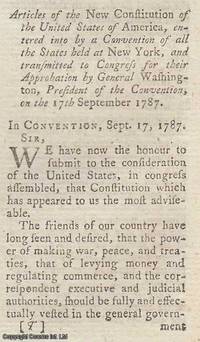
1787358416Annual Register London 1787. Booklet - Unbound Pages. Very Good Condition. 11 pages. An authentic standalone article extracted from a larger volume. Not a reprint or reproduction but an original work in its own right. Preserved in a modern card cover prepared for practicality - an unassuming but serviceable presentation that favours function over finery. Size: 13 x 20 cms. Category: Annual Register; Printed before 1800; New Arrivals; This item may require more postage than the rates shown for delivery outside the UK. If extra postage is required we will contact you before processing your order and you will be given the details and option to decline the extra cost. Annual Register unknown