2 085 résultats
Borja-Villel, Manuel, JeaIn Pristine Condition. unknown
Askeland, JanIn Pristine Condition. unknown
Feuk, DouglasIn Pristine Condition. unknown
Gunnarsson, TorstenIn Pristine Condition. unknown
Nadolny, JilleenIn Pristine Condition. unknown
Nittve, Lars, Olle GranatIn Pristine Condition. unknown
Firmenich, AndreaIn Pristine Condition. unknown
18112111902160200327Igaya Kanemon board 1811. Soft Cover. Fine. Number of pages: 70 pages Size: 18cmx13cm 70p Number of books: 1 Igaya Kanemon board paperback
19802083002115701564Hyoron-sha 1980. Soft Cover. Fine. Number of pages: 1 book Size: 31 cm Number of books: 1 book Hyoron-sha paperback
2092902138101104Not Available N.A. Soft Cover. Fine. Size: 25.5cmx36.5cm Number of books: 1 Not Available paperback
2092902138101272Not Available N.A. Soft Cover. Fine. Size: 32.5cmx48.5cm Number of books: 1 Not Available paperback
2092902138101112Not Available N.A. Soft Cover. Fine. Size: 25.5cmx37.5cm Number of books: 1 Not Available paperback
2092902138100429Not Available N.A. Soft Cover. Fine. Size: 33cmx49.5cm Number of books: 1 Not Available paperback
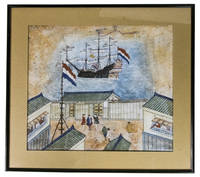
1800ABC_48559Japan 1800. In a passepartout and framed. Drawing size ca. 34 x 39.5 cm; frame size ca. 46 x 51 cm. Oil painting on leather. Late 18th-century painting on leather depicting everyday life on the island of Deshima in Japan created by an anonymous artist who seems to be of Japanese origin possibly originating from the Nagasaki school of painting: the faces of most human figures show remarkable Japanese features despite their reddish-brown hair and Dutch clothing.Judging by a woodcut map of Deshima published in 1780 by Toshimaya Bunjiemon the south-eastern part of the island is shown in the present illustration. On the left the warehouse masters residence next to a tall flagpole with the Dutch flag at top; in the centre the important watergate through which cargo was brought in via ship with four Dutch merchants one seen from behind and two Javanese servants in front of the gate; on the right the warehouse "De Lelie" The Lily. In the background lying in the bay of Nagasaki a Dutch three-master has been depicted with fourteen hoisted Dutch flags and several sailors on deck and in the rigging. This ship closely resembles a transom return ship in Dutch: "spiegelretourschip" which was used by the Dutch East India Company VOC during its whole existence.Based on the depicted style of clothing of the Dutch merchants we assume that this painting could have been made during the second half of the 18th century.The artificial island of Deshima was a small fan-shaped island used as trading post initially by the Portuguese until 1639 and subsequently by the Dutch from 1641 until 1858. During the Tokugawa Shogunate the military government of Japan in the Edo period of 1603-1868 foreigners were not allowed to enter the Japanese territory and the island of Deshima was the only place where initially only the Portuguese and later only the Dutch were admitted.With some flaking of the paint off the leather slightly affecting the image but mainly affecting the upper outer corners. Otherwise in good condition.l H. Paul Nederlanders in Japan 1600-1854. De VOC op Desjima pp. 106-107. unknown
19892081502112303111New Japan Publishing Company 1989. Soft Cover. Fine. Number of books: 1 New Japan Publishing Company paperback
19712111902154609596Jitsugyo no Nihonsha 1971. Soft Cover. Fine. The book is in fine condition. Jitsugyo no Nihonsha paperback
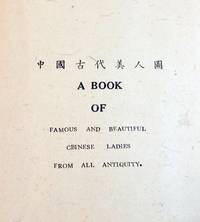
190022170China: n.p. 1900. Hardcover. Near fine. 8vo. 22 unnumbered pages using verso only. Accordion book bound in Asian style. Wooden boards the upper board carved with the character for Good Luck. Top and bottom edges gilt.<br /> <p><br /> This is followed by 11 sets of two pages the right hand page with the story of a particular lady in Chinese and English and the left hand with a painting on silk illustrating the story and bordered in brocade. The silk paintings are bright and unfaded showing vibrant pigmentation and artistically executed with lovely shading effect Includes the story of Mu Lan basis for the Disney film.<br /> <br /> <p><br /> The typesetting and spelling of the English translation are poorly accomplished the word 'Cbinese' in the title being perhaps the most glaring example. Misspellings misuses of quotation marks and unusual word separations lead us to believe this is the first issue of a title preprinted into the 1930's. <br /> <p><br /> A fine example.<br /> <p><br /> Scarce. n.p. hardcover
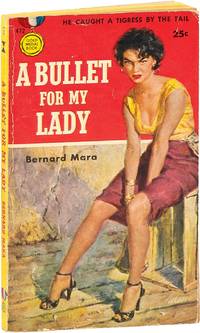
195584581New York: Fawcett Publications Inc. / Gold Medal Books 1955. First Edition. First Printing softcover Gold Medal Book 472. Octavo 18cm; pictorial wrappers; all edges yellow; 45-1564pp. Light crinkle to rear cover with rubbing and creases to spine ends and cover edges and front cover lightly worn at hinge with cover paper lightly adhered to front endpaper; Good. Mara's suspense novel focuses on Josh Camp as he travels to Barcelona Spain in hopes of debunking news of his best friend's death. 84581. Fawcett Publications, Inc. / Gold Medal Books unknown
194563891San Francisco CA: Carl Frederick Hobby 1211 Jackson Street ca. 1945. One large oil painting on canvas sized 13 x 18 in. preserved as original stretched canvas within the frame as presented to the artist’s niece and with the original green & gilt frame now professionally cleaned and w/ artist’s business card mounted on verso of frame along with numbering & size. Signed in lower corner this painting was presented by the artist following the War to his niece and held in the family until 2025. This original oil painting depicts a young Chinese-American mother and child buying an orange with fruit crates stacked beside in front of the mirror and pedestrian walking by as well as the advertising signage in the doorway in Chinese painted by Hobby. The sign reads 油糖èœèˆ– You tang chai pu — oil and sugar vegetable shop and produce in the crates below the window in the foreground appear to be cabbages oranges and possibly mangoes. Hobby wrote in his 1936 illustrated book “Chinatown San Francisco†that there were a variety of vegetable and produce “Chinese Food Shops†situated from Washington to Jackson Street selling blue-green melons mustard greens water chestnuts and more.Hobby 1886-1964 was the son of an Iowa City IA ophthalmologist and moved with the family as a teenager to San Diego CA about 1900 where he began working at 14 as a sketch artist and later published a book in San Diego in 1919 with his artwork. He studied art at the Cumming School of Art in Des Moines the Art Students League in New York and became portrait and landscape painter in San Diego until 1923. After a divorce from Plooma Crowther he settled in San Francisco in Chinatown where he became an instructor at the Art Center while also painting and sketching the densely populated area publishing “The Street of Dragon Lanterns Chinatown of San Francisco†in 1936 while contracting with the Madison & Burke Agency through World War II. Exhibits of his paintings and pen & ink sketches were displayed at the Oakland Art Gallery in 1928 and the Society for Sanity in Art in 1945. See: Maud McB. Maywood Palm City The Chula Vista Star July 9 1937 p. 6; Sketches of San Diego 1919. Carl Frederick Hobby, 1211 Jackson Street, unknown
19802082702114907599Iwasaki shoten 1980. Soft Cover. Fine. Number of pages: 78p Size: 22cm Iwasaki shoten paperback
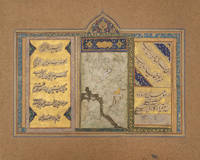
108953Qajar Persia nineteenth century. . Single card board composite panel comprising two sections of nasta'liq calligraphy and an illuminated miniartue total 330 x 200 mm; opaque pigments on paper heightened with gilt bordered with calligraphic panels in nastaliq the Fatiha to the left attributed on reverse to Mir Imad and a couplet by Ahmad al-Husayni to the right laid on gold sprinkled ground bright and attractive condition.<br /> <br /> Qajar Persia, nineteenth century. unknown
19832091502133534389Japan Museum of Modern Literature 1983. Soft Cover. Fine. Number of books: 1 Japan Museum of Modern Literature paperback
19972111902154700344Living Techosha 1997. Soft Cover. Fine. Number of pages: 109p Size: 26cm Living Techosha paperback
653830 fine color paintings & 24 black ink drawings of various parts of the bamboo. 50 leaves. 4to 275 x 206 mm. modern bright silk brocade wrappers stitched as issued. Probably Japan: late Edo.<br/> <br/> A beautiful album of finely rendered drawings of bamboo accompanied by explanatory text. There has been a long tradition in both China since the eighth century and Japan of illustrating bamboo with much thought given to composition and the painting of the stems knots branches and leaves. A number of treatises were written on the subject.<br/> <br/> This handsomely painted manuscript contains many illustrations all finely painted or brush-drawn of bamboo. Following the title there are two leaves which are somewhat soiled illustrating the yin and yang of the three variations of bamboo painting. They include how to place the brush on the drawing surface and how to maneuver the brush and lift it at just the right moment the calligraphy techniques are named. These are followed two fine calligraphic illustrations using black ink of bamboo branches again the calligraphy methods are named followed by a leaf of instructions.<br/> <br/> Next there are 18 pages of illustrations of leaves with each illustration becoming increasingly more complex.<br/> <br/> Then the manuscript text turns to the botanical aspects of bamboo: where it grows the genera and uses appearance how to propagate etc. Both Chinese and Japanese names are given with references to the classic botanical guide Ben cao gang mu Compendium of Materia Medica. Next we have 28 fine full-page illustrations of many genera of bamboo some pages contain multiple images each preceded by text describing the examples depicted. They are very vividly colored and finely painted using many techniques including the application of mica. Among the elaborate and richly colored illustrations are cross-sections roots sprouts leaves and fruits. Some of the examples are very exotic.<br/> <br/> Now we come upon two full-page color illustrations of tools for cutting and trimming bamboo and for the extraction and preparation of medicines with two pages of explanatory text.<br/> <br/> Finally we have a section with six artistic renderings of bamboo in art and literature. They include various iconic Chinese scenes including variations of literati in bamboo groves and the Seven Sages of the Bamboo Grove. Each painting is preceded by a leaf of text with a description and historical background of the scene.<br/> <br/> In fine condition. A contemporary reader has made some neat annotations in red ink. Final leaf has the artist’s pen name written “Seigetsu an.†Several minor and marginal wormholes. Preserved in a chitsu. unknown
26053301N.p. ca 1900 n.p. A matted Chinese paintingca.25.5 x 32 cm. overall including silk brocade borderactual painting is ca. 20 x 25.5 cm. wood frame glare-free glass double mat- ted ready for display very good flawless. R A R E ! A lovely painting of a Mandarin. the verso of this painting has a small sticker at lower left with "Made in China" prin- ed on it. The painting was done with a skilled and steady hand with attention to detail using a very fine brush typical of the time. The Mandarin wears a blue silk gown with delicate gold wave pattern embroidered on it. On the chest is a black silk embroidery with a white crane and the rank badge typical furry "cravat" or neck decoration. He also wears the typical Imperial Mandarin's hat. In order to exalt ancestors it was common to execute such paintings posthumously to elevate relatives of or to offic- ialdom. This piece of unique and original hand-painted art work is ready for library display. BIBLIOGRAPHY: 1. Worshipping the Ancestors issued by the Smithsonian 2. Jan Stuart & Evelyn S. Rawski: Worshipping the Ancestors: --Chinese Commemorative Portraits. unknown