[studio portraits; photography]Biblio.com

8 977 résultats
1900D11289Brooklyn c. 1900. Hardcover. Very Good. Contemporary green morocco gilt-stamped lettering and ornament in spine compartments 5 raised bands; 3 volumes 120 x 190 mm; containing a total of 37 silver prints 92 x 140 mm mounted to the recto only of grey heavy cardstock leaves with the name of the studio blindstamped in the lower right corner of the mount. Features one mustachioed gentleman "trying on" different postures identities and costumes in the studio including businessman's attire tuxedos ethnic costume sombrero! swimming costume behold the Speedo!. He flexes his biceps he smokes a cigar -- he WORKS IT for the camera. Spine somewhat sunned; some light scuffing along edges of boards. One leaf detached otherwise internally bright and clean. <br/><br/> hardcover
19160005542Oxford: University Press 1916. First edition. Hardcover. Very Good. engravings. Quarto 231pp. three quarter blue crushed morocco marbled endpapers; scuffed with top joint repaired coat of arms in gilt on top cover. <br/><br/>"The nucleus of the Welbeck collection of miniatures consists of portraits of members and connexions of the families of Cavendish and Holles which were inherited by the Lady Henrietta Cavendish Holles wife of Edward Harley second Earl of Oxford and Earl Mortimer. To them were added miniatrues of the Harley family into which she married and those painted for and acquired by her husband he being the son of Robert Harley who was successively Speaker Secretary of State Chancellor of the Exchequer and Lord High Treasurer in the reign of Queen Anne and who was created Earl of Oxford and Earl Morimer in 1711." 29 plates of portraits - most multiple images including British royalty Shakespeare Inigo Jones Abraham Cowley and European royalty. Laid-in is a sheet of stationery from Welbeck Abbey presenting this volume "With the Duke of Portland's Compliments" in holograph. University Press hardcover
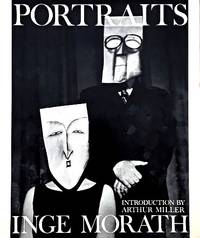
1986094295New York: Aperture 1986. Cloth 95 pages chiefly illustrations; 30 cm. SIGNED by both Inge Morath and Arthur Miller on the title page. A near-fine copy with very light dust spotting on the top edge. Dust jacket protected in a mylar cover. A famous Magnum photographer Morath was the third wife of playwright Arthur Miller. Profusely illustrated. SIGNED. Hardcover. Near Fine/Fine. 4to. Collectible. Aperture Hardcover
1900D11289Brooklyn c. 1900. Hardcover. Very Good. Contemporary green morocco gilt-stamped lettering and ornament in spine compartments 5 raised bands; 3 volumes 120 x 190 mm; containing a total of 37 silver prints 92 x 140 mm mounted to the recto only of grey heavy cardstock leaves with the name of the studio blindstamped in the lower right corner of the mount. Features one mustachioed gentleman "trying on" different postures identities and costumes in the studio including businessman's attire tuxedos ethnic costume sombrero! swimming costume behold the Speedo!. He flexes his biceps he smokes a cigar -- he WORKS IT for the camera. Spine somewhat sunned; some light scuffing along edges of boards. One leaf detached otherwise internally bright and clean. <br/><br/> hardcover books
1620851AGO.J. (um 1620). Kupferstich. Bild- und Blattgrösse: 18,5 x 12,5 cm.
19301105DG(1930) Ölkreide auf Karton. 67 x 50 cm.
1839199CG(1839). Lithographie von Dewasme-Plétinckx nach Charles Baugniet (1814-1886). Bildgrösse: 38,5 x 31 cm. Blattgrösse: 58 x 42 cm.
50774Leroy & Schmid.Paris.1912.In-4,couverture cartonnée avec miniature coloriée sur le 1er plat.Texte et reproductions de créations de mode signées Martin,Vincent,Barbier,Drian.Photos de l'époque.BE.intérieur.Couverture usagée.
185032915ABDarmstadt, G. G. Lange, [um 1850]. Quer-2°. 42,5 x 47 cm. Stark gebräunt, angestaubt u. etwas fleckig, ein Einriss hinterlegt. Knapp beschnitten, Rand hinterlegt, wohl ausgerahmt.
188628446AB[1886- ca. 1900]. 4° (ca. 27 x 21 x 7 cm). 16 Blätter aus starkem Karton mit Goldprägung und dreiseitigem Goldschnitt für Fotografien verschiedener Formate. Original-Leder-Einband mit Schliesse u. wappenförmigem Metallbeschlag auf Vorderdeckel, Rücken u. hinterer Deckel mit Blindprägung, Deckelinnenkanten mit Goldbordüren. Bätter gebräunt u. teils braunfleckig, Ränder teils etwas abgegriffen oder fleckig, wenige Einrisse an den Fototaschen. Fotos teils etwas braunfleckig, eine Fotografie gebrochen, die lose beiliegenden geknickt. Einband etwas berieben oder leicht bestossen
1885GF58181885 Paris - Galerie Contemporaine des Illustrations Françaises - (vers 1885) - Photographie tirée en photoglyptie de 23 x 18,5 cms environ, contrecollée sur carton fort -
Format (Bildbereich): ca. 200 x 190 mm. Blattgröße: 590 x 430 mm. *Aloys Nikolaus Ambros Graf von Arco-Stepperg (geb. 6. Dezember 1808 auf Schloss Stepperg; gest. 10. September 1891 in Anif) war ein bayerischer Gutsbesitzer, Offizier und Politiker. Abgeorneter der Bayerischen Patriotenpartei. Seiner Familie gehörte eines der größten Privatvermögen in Bayern. Der Lithograph Franz Seraph Hanfstaengl (1804-1877) war ein deutscher Maler, Lithograf und Fotograf. Er studierte 1819-25 an der Akademie der Bildenden Künste in München und wurde in Lithographie ausgebildet. Als Porträtlithograf der Münchner Gesellschaft erfreute sich Hanfstaengl großer Beliebtheit, was ihm den Spitznamen „Graf Litho“ eintrug. 1833 gründete er in München die berühmt gewordene lithografische Anstalt Hanfstaengl, die er selbst bis 1868 leitete. - Sehr seltenes und spätes lithographisches Bildnis von Hanfstaengl auf großem Papier. Zu dieser Zeit hate Hanfsaengl seine Tätigkeit schon schon längs fast ausschließlich auf die Photographie umgestellt. - Gebhardt (Werkverzeichnis) kennt lediglich ein frühes Bildnis des Alois Arco von 1829. Das vorliegende von 1860 ist sehr seltenes und wohl nur für den privatimen Gebrauch des Auftraggebers gedrucktes Bildnis. Maillinger II, 703. - Sehr gut erhalten. Graphiken de
Format (Platte): 52 x 37 cm. Blatt: 56 x 41 cm. *Johann Arnold von Clermont (* 24. Mai 1728 in Aachen; † 5. Dezember 1795 in Vaals, Niederlande) war ein deutscher Tuchfabrikant, Industrieller und Bauherr. Johann Arnold von Clermont stammte aus einer traditionsreichen Patrizierfamilie, deren Ursprünge im Bereich des heutigen Belgiens liegen. Sie ließ sich etwa im 15. Jahrhundert in Aachen und Burtscheid nieder, wo sich ihre Angehörigen als Tuch- und Nadelfabrikanten und Tuchhändler betätigten sowie politische Ämter im Stadtrat übernahmen. - Großformatiges Patrizierportrait. - Außenränder gering angestaubt und ein geschlossener Einriß links im Außenrand (außerhalb des Bildbereichs). Graphiken de
Format (Bildbereich): ca. 290 x 240 mm. Blattgröße: 390 x 300 mm. *Gebhardt: Hanfstaengl Werkverzeichnis, S. 249 (Gebhardt kennt das Bildnis nur aus Privatbesitz). Maximilian von Leuchtenberg war der zweite Sohn von Eugene de Beauharnais und seiner Ehefrau Prinzessin Auguste von Bayern. 1839 heiratete er in Sankt Petersburg die Großfürstin Maria Nikolajewna Romanowa, die älteste Tochter des russischen Zaren Nikolaus I. - Der Lithograph Franz Seraph Hanfstaengl (1804-1877) war ein deutscher Maler, Lithograf und Fotograf. Er studierte 1819-25 an der Akademie der Bildenden Künste in München und wurde in Lithographie ausgebildet. Als Porträtlithograf der Münchner Gesellschaft erfreute sich Hanfstaengl großer Beliebtheit, was ihm den Spitznamen „Graf Litho“ eintrug. 1833 gründete er in München die berühmt gewordene lithografische Anstalt Hanfstaengl, die er selbst bis 1868 leitete. - Seltenes Blatt. Die weißen Ränder minimal gebräunt, insgesamt sehr gut erhalten. Graphiken de
Incisione tratta dalla celebre raccolta Icones principum, virorum, doctorum, pictorum, chalcographorum, di Anton van Dyck, edita per la prima volta ad Anversa verso il 1640. Opera celebre ed importante, vero monumento dell’arte incisoria fiamminga del sec. XVIII, contiene le biografie ed i ritratti degli uomini illustri che Van Dyck aveva conosciuto e con i quali aveva avuto importanti rapporti. L’artista ne eseguì le effigi in numerosi dipinti e disegni che poi decise di pubblicare, affidandone la trasposizione calcografica ai migliori incisori del suo tempo, come Bolswert, Pontius, Vorsterman, de Jode, Hollar, molti dei quali aveva avuto come condiscepoli nell’atelier di Rubens. "Sir Anthony Van Dyck stands out as the solitary great etcher of the school. Portrait etching had scarcely had an existence before his time, and in his work it suddenly appears at the highest point ever reached in the art" (Hind, p. 165). "The plan of this publication took shape after Van Dyck returned from Italy (1626) and before he went to England (1632). He made careful preparatory drawings in chalk and brush for the publication. He directed and revised the work of the engravers, the best of the Rubens circle; he collaborated with his etching needle in some of the plates and himself etched the most beautiful set, mainly portraits of artists. One of the most brilliant in human characterization is the portrait of Peter Brueghel the Younger, son of the great Peasant Brueghel. It is remarkable that the etching appeared in this sketchy form in the book, proving that the master regarded it as finished. All interest is focussed on the wonderful had. The first edition was published in Antwerp in 1635-1636. Yet it was not complete, and the title-page did not appear before the Gillis Hendricx edition of 1645, engraved by Jacob Neels" (Benesch, Artistic and Intellectual Trends, p. 32.) Hofer, Baroque Book Illustrations 132. Acquaforte con ritocchi al bulino, stampata su carta vergata coeva, filigrana del “giullare”, con margini, in ottimo stato di conservazione. Etching and engraving, circa 1645, signed on plate at lower edge. A fine impression, printed on contemporary laid paper, with margins, very good condition. From Icones principum, virorum, doctorum, pictorum, chalcographorum by Anton van Dyck, printed for the first time in Antwerp, 1645. A famous and important work, a real monument of the Flemish engraving art of the XVIII century, containing the biographies and portraits of the famous artists Van Dyck had met and with whom he had worked. Following the success of his portrait paintings and in the tradition of Italian and Flemish portrait series, Van Dyck decided to organise a print publication containing portraits of the most prominent men during his lifetime, divided into three categories: princes, politicians and soldiers (16), statesmen and scholars (12), artists and art connoisseurs (52). The initial idea could have been that Van Dyck would etch the faces (a process possibly learnt from Vorsterman) while others would finish the plates in engraving. Designs were needed for the plates and several drawings and oil sketches (grisailles, sometimes in different versions) have survived. Van Dyck only etched 17 plates himself, while he commissioned others to complete the set, overseen by Lucas Vorsterman I (especially after Van Dyck settled in England in the Spring of 1632). Although this project was started by Van Dyck around 1630, he never saw it completed. The Antwerp publisher Maarten van den Enden may have been involved from the start as eighty early impressions bear Van den Enden's address. They are engraved by Paulus Pontius (30 plates), Lucas Vorsterman I (22), Pieter de Jode II (12), Schelte a Bolswert (7), Robert van Voerst (4), Willem Hondius (2), Willem Jacobsz Delff (1), Cornelis Galle (1), and Nicolaes Lauwers (1). It is known that Van den Enden was in debt to Gillis Hendricx around 1644, the Antwerp publisher who must have obtained Van den Enden's plates which he published in 1645 in the first edition of these plates (containing between 100 and 104 portrait plates). Hendricx continued to publish these plates until his death in 1677 when they were auctioned off by the St Luke guild (keeping the Iconography plates together). It is not clear who bought these plates but they re-appeared around 1720 when they were published by Hendrick and Cornelis Verdussen in Antwerp.
Incisione tratta dalla celebre raccolta Icones principum, virorum, doctorum, pictorum, chalcographorum, di Anton van Dyck, edita per la prima volta ad Anversa verso il 1640. Opera celebre ed importante, vero monumento dell’arte incisoria fiamminga del sec. XVIII, contiene le biografie ed i ritratti degli uomini illustri che Van Dyck aveva conosciuto e con i quali aveva avuto importanti rapporti. L’artista ne eseguì le effigi in numerosi dipinti e disegni che poi decise di pubblicare, affidandone la trasposizione calcografica ai migliori incisori del suo tempo, come Bolswert, Pontius, Vorsterman, de Jode, Hollar, molti dei quali aveva avuto come condiscepoli nell’atelier di Rubens. "Sir Anthony Van Dyck stands out as the solitary great etcher of the school. Portrait etching had scarcely had an existence before his time, and in his work it suddenly appears at the highest point ever reached in the art" (Hind, p. 165). "The plan of this publication took shape after Van Dyck returned from Italy (1626) and before he went to England (1632). He made careful preparatory drawings in chalk and brush for the publication. He directed and revised the work of the engravers, the best of the Rubens circle; he collaborated with his etching needle in some of the plates and himself etched the most beautiful set, mainly portraits of artists. One of the most brilliant in human characterization is the portrait of Peter Brueghel the Younger, son of the great Peasant Brueghel. It is remarkable that the etching appeared in this sketchy form in the book, proving that the master regarded it as finished. All interest is focussed on the wonderful had. The first edition was published in Antwerp in 1635-1636. Yet it was not complete, and the title-page did not appear before the Gillis Hendricx edition of 1645, engraved by Jacob Neels" (Benesch, Artistic and Intellectual Trends, p. 32.) Hofer, Baroque Book Illustrations 132. Acquaforte con ritocchi al bulino, stampata su carta vergata coeva, filigrana del “giullare”, con margini, in ottimo stato di conservazione. Etching and engraving, circa 1645, signed on plate at lower edge. A fine impression, printed on contemporary laid paper, with margins, very good condition. From the Icones principum, virorum, doctorum, pictorum, chalcographorum by Anton van Dyck, printed for the first time in Antwerp, 1645. A famous and important work, a real monument of the Flemish engraving art of the XVIII century, containing the biographies and portraits of the famous artists Van Dyck had met and with whom he had worked. Following the success of his portrait paintings and in the tradition of Italian and Flemish portrait series, Van Dyck decided to organise a print publication containing portraits of the most prominent men during his lifetime, divided into three categories: princes, politicians and soldiers (16), statesmen and scholars (12), artists and art connoisseurs (52). The initial idea could have been that Van Dyck would etch the faces (a process possibly learnt from Vorsterman) while others would finish the plates in engraving. Designs were needed for the plates and several drawings and oil sketches (grisailles, sometimes in different versions) have survived. Van Dyck only etched 17 plates himself, while he commissioned others to complete the set, overseen by Lucas Vorsterman I (especially after Van Dyck settled in England in the Spring of 1632). Although this project was started by Van Dyck around 1630, he never saw it completed. The Antwerp publisher Maarten van den Enden may have been involved from the start as eighty early impressions bear Van den Enden's address. They are engraved by Paulus Pontius (30 plates), Lucas Vorsterman I (22), Pieter de Jode II (12), Schelte a Bolswert (7), Robert van Voerst (4), Willem Hondius (2), Willem Jacobsz Delff (1), Cornelis Galle (1), and Nicolaes Lauwers (1). It is known that Van den Enden was in debt to Gillis Hendricx around 1644, the Antwerp publisher who must have obtained Van den Enden's plates which he published in 1645 in the first edition of these plates (containing between 100 and 104 portrait plates). Hendricx continued to publish these plates until his death in 1677 when they were auctioned off by the St Luke guild (keeping the Iconography plates together). It is not clear who bought these plates but they re-appeared around 1720 when they were published by Hendrick and Cornelis Verdussen in Antwerp. "Sir Anthony Van Dyck stands out as the solitary great etcher of the school. Portrait etching had scarcely had an existence before his time, and in his work it suddenly appears at the highest point ever reached in the art" (Hind, p. 165). "The plan of this publication took shape after Van Dyck returned from Italy (1626) and before he went to England (1632). He made careful preparatory drawings in chalk and brush for the publication. He directed and revised the work of the engravers, the best of the Rubens circle; he collaborated with his etching needle in some of the plates and himself etched the most beautiful set, mainly portraits of artists. One of the most brilliant in human characterization is the portrait of Peter Brueghel the Younger, son of the great Peasant Brueghel. It is remarkable that the etching appeared in this sketchy form in the book, proving that the master regarded it as finished. All interest is focussed on the wonderful had. The first edition was published in Antwerp in 1635-1636. Yet it was not complete, and the title-page did not appear before the Gillis Hendricx edition of 1645, engraved by Jacob Neels" (Benesch, Artistic and Intellectual Trends, p. 32.) Hofer, Baroque Book Illustrations 132.
Incisione tratta dalla celebre raccolta Icones principum, virorum, doctorum, pictorum, chalcographorum, di Anton van Dyck, edita per la prima volta ad Anversa verso il 1640. Opera celebre ed importante, vero monumento dell’arte incisoria fiamminga del sec. XVIII, contiene le biografie ed i ritratti degli uomini illustri che Van Dyck aveva conosciuto e con i quali aveva avuto importanti rapporti. L’artista ne eseguì le effigi in numerosi dipinti e disegni che poi decise di pubblicare, affidandone la trasposizione calcografica ai migliori incisori del suo tempo, come Bolswert, Pontius, Vorsterman, de Jode, Hollar, molti dei quali aveva avuto come condiscepoli nell’atelier di Rubens. "Sir Anthony Van Dyck stands out as the solitary great etcher of the school. Portrait etching had scarcely had an existence before his time, and in his work it suddenly appears at the highest point ever reached in the art" (Hind, p. 165). "The plan of this publication took shape after Van Dyck returned from Italy (1626) and before he went to England (1632). He made careful preparatory drawings in chalk and brush for the publication. He directed and revised the work of the engravers, the best of the Rubens circle; he collaborated with his etching needle in some of the plates and himself etched the most beautiful set, mainly portraits of artists. One of the most brilliant in human characterization is the portrait of Peter Brueghel the Younger, son of the great Peasant Brueghel. It is remarkable that the etching appeared in this sketchy form in the book, proving that the master regarded it as finished. All interest is focussed on the wonderful had. The first edition was published in Antwerp in 1635-1636. Yet it was not complete, and the title-page did not appear before the Gillis Hendricx edition of 1645, engraved by Jacob Neels" (Benesch, Artistic and Intellectual Trends, p. 32.) Hofer, Baroque Book Illustrations 132. Acquaforte con ritocchi al bulino, stampata su carta vergata coeva, filigrana del “giullare”, con margini, in ottimo stato di conservazione. Etching and engraving, circa 1645, signed on plate at lower edge. A fine impression, printed on contemporary laid paper, with margins, very good condition. From the Icones principum, virorum, doctorum, pictorum, chalcographorum by Anton van Dyck, printed for the first time in Antwerp, 1645. A famous and important work, a real monument of the Flemish engraving art of the XVIII century, containing the biographies and portraits of the famous artists Van Dyck had met and with whom he had worked. Following the success of his portrait paintings and in the tradition of Italian and Flemish portrait series, Van Dyck decided to organise a print publication containing portraits of the most prominent men during his lifetime, divided into three categories: princes, politicians and soldiers (16), statesmen and scholars (12), artists and art connoisseurs (52). The initial idea could have been that Van Dyck would etch the faces (a process possibly learnt from Vorsterman) while others would finish the plates in engraving. Designs were needed for the plates and several drawings and oil sketches (grisailles, sometimes in different versions) have survived. Van Dyck only etched 17 plates himself, while he commissioned others to complete the set, overseen by Lucas Vorsterman I (especially after Van Dyck settled in England in the Spring of 1632). Although this project was started by Van Dyck around 1630, he never saw it completed. The Antwerp publisher Maarten van den Enden may have been involved from the start as eighty early impressions bear Van den Enden's address. They are engraved by Paulus Pontius (30 plates), Lucas Vorsterman I (22), Pieter de Jode II (12), Schelte a Bolswert (7), Robert van Voerst (4), Willem Hondius (2), Willem Jacobsz Delff (1), Cornelis Galle (1), and Nicolaes Lauwers (1). It is known that Van den Enden was in debt to Gillis Hendricx around 1644, the Antwerp publisher who must have obtained Van den Enden's plates which he published in 1645 in the first edition of these plates (containing between 100 and 104 portrait plates). Hendricx continued to publish these plates until his death in 1677 when they were auctioned off by the St Luke guild (keeping the Iconography plates together). It is not clear who bought these plates but they re-appeared around 1720 when they were published by Hendrick and Cornelis Verdussen in Antwerp.
Format (Platte): 370 x 274 mm (bis zum Bildrand beschnitten). *Emmanuel Théodose war der Sohn des Herzog von Bouillon. Bereits im Alter von 25 Jahren wurde er 1669 von Papst Clemens IX zum Kardinal der Titelkirche San Lorenzo in Panisperna ernannt. 1700 bis 1715 wurde er schließlich Kardinalbischof von Ostia und Velletri und Dekan des Hl. Kollegiums. - Der Kupferstecher Johann Martin Preissler,(1715-1794) war ein deutscher Kupferstecher aus einer Nürnberger Maler- und Kupferstecherfamilie. Von 1739 bis 1744 arbeitete er bei Laurent Cars (1699–1771) in Paris. - Am Ende dieser Zeit entstand der vorliegende Kupferstich nach einem der beiden Gemälden des berühmten Malers Rigaud. - Schöner kräftiger Abzug in guter Erhaltung, die Ecken rückseitig mit leichten Montagespuren. Graphiken de
Format (Bildbereich): 210 x 170 mm. Blattgröße: 510 x 360 mm. *Brücke war ein bedeutender Physiologe preussischer Herkunft an der Wiener Universität. Er gehörte neben Helmholtz und Du Bois-Reymond zu den führenden Vertretern der neuen antivitalistischen Physiologie-Schule. Seine Arbeiten waren bahnbrechend. Sigmund Freud verbrachte von 1876-82 sechs Jahre in dessen Physiologischen Institut und sagte später von Brücke, daß dieser Lehrer die größte Autorität gewesen sei, die je auf ihn gewirkt habe. - Sauber und sehr gut erhalten. Graphiken de
1840171BGO.J. (um 1840). Lithographie von Ch. Motte nach Achille Devéria (1800-1857). Bildgrösse: 22 x 20 cm. Blattgrösse: 37 x 31 cm. + Wichtig: Für unsere Kunden in der EU erfolgt der Versand alle 14 Tage verzollt ab Deutschland / Postbank-Konto in Deutschland vorhanden +, 171BG
Acquaforte, firmato in lastra in basso. Da un dipinto di J. Vanloo.Bellissima prova, impressa su carta vergata coeva, rifilata al rame ed applicata su antico supporto di collezione, in ottimo stato di conservazione. Etching, signed on lower plate. After a painting by J. Vanloo.Magnificent work, printed on contemporary laid paper, trimmed to platemark and laid on antique collector’s paper, in perfect condition. Lucy Peltz, ‘Chatelain , John-Baptist Claude (1710–1758).
19101375AGO.J. (um 1910). Photographie (Brustbild) von Mac Walten. Format: Postkarte. + Wichtig: Für unsere Kunden in der EU erfolgt der Versand alle 14 Tage verzollt ab Deutschland / Postbank-Konto in Deutschland vorhanden +
Incisione tratta dalla celebre raccolta Icones principum, virorum, doctorum, pictorum, chalcographorum, di Anton van Dyck, edita per la prima volta ad Anversa verso il 1640. Opera celebre ed importante, vero monumento dell’arte incisoria fiamminga del sec. XVIII, contiene le biografie ed i ritratti degli uomini illustri che Van Dyck aveva conosciuto e con i quali aveva avuto importanti rapporti. L’artista ne eseguì le effigi in numerosi dipinti e disegni che poi decise di pubblicare, affidandone la trasposizione calcografica ai migliori incisori del suo tempo, come Bolswert, Pontius, Vorsterman, de Jode, Hollar, molti dei quali aveva avuto come condiscepoli nell’atelier di Rubens. Acquaforte con ritocchi al bulino, stampata su carta vergata coeva, filigrana del “giullare” con margini, in ottimo stato di conservazione. Etching and engraving, circa 1645, signed on plate at lower edge. A fine impression, printed on contemporary laid paper, with margins, very good condition. From Icones principum, virorum, doctorum, pictorum, chalcographorum by Anton van Dyck, printed for the first time in Antwerp, 1645. A famous and important work, a real monument of the Flemish engraving art of the XVIII century, containing the biographies and portraits of the famous artists Van Dyck had met and with whom he had worked. Following the success of his portrait paintings and in the tradition of Italian and Flemish portrait series, Van Dyck decided to organise a print publication containing portraits of the most prominent men during his lifetime, divided into three categories: princes, politicians and soldiers (16), statesmen and scholars (12), artists and art connoisseurs (52). The initial idea could have been that Van Dyck would etch the faces (a process possibly learnt from Vorsterman) while others would finish the plates in engraving. Designs were needed for the plates and several drawings and oil sketches (grisailles, sometimes in different versions) have survived. Van Dyck only etched 17 plates himself, while he commissioned others to complete the set, overseen by Lucas Vorsterman I (especially after Van Dyck settled in England in the Spring of 1632). Although this project was started by Van Dyck around 1630, he never saw it completed. The Antwerp publisher Maarten van den Enden may have been involved from the start as eighty early impressions bear Van den Enden's address. They are engraved by Paulus Pontius (30 plates), Lucas Vorsterman I (22), Pieter de Jode II (12), Schelte a Bolswert (7), Robert van Voerst (4), Willem Hondius (2), Willem Jacobsz Delff (1), Cornelis Galle (1), and Nicolaes Lauwers (1). It is known that Van den Enden was in debt to Gillis Hendricx around 1644, the Antwerp publisher who must have obtained Van den Enden's plates which he published in 1645 in the first edition of these plates (containing between 100 and 104 portrait plates). Hendricx continued to publish these plates until his death in 1677 when they were auctioned off by the St Luke guild (keeping the Iconography plates together). It is not clear who bought these plates but they re-appeared around 1720 when they were published by Hendrick and Cornelis Verdussen in Antwerp.
Incisione tratta dalla celebre raccolta Icones principum, virorum, doctorum, pictorum, chalcographorum, di Anton van Dyck, edita per la prima volta ad Anversa verso il 1640. Opera celebre ed importante, vero monumento dell’arte incisoria fiamminga del sec. XVIII, contiene le biografie ed i ritratti degli uomini illustri che Van Dyck aveva conosciuto e con i quali aveva avuto importanti rapporti. L’artista ne eseguì le effigi in numerosi dipinti e disegni che poi decise di pubblicare, affidandone la trasposizione calcografica ai migliori incisori del suo tempo, come Bolswert, Pontius, Vorsterman, de Jode, Hollar, molti dei quali aveva avuto come condiscepoli nell’atelier di Rubens. "Sir Anthony Van Dyck stands out as the solitary great etcher of the school. Portrait etching had scarcely had an existence before his time, and in his work it suddenly appears at the highest point ever reached in the art" (Hind, p. 165). "The plan of this publication took shape after Van Dyck returned from Italy (1626) and before he went to England (1632). He made careful preparatory drawings in chalk and brush for the publication. He directed and revised the work of the engravers, the best of the Rubens circle; he collaborated with his etching needle in some of the plates and himself etched the most beautiful set, mainly portraits of artists. One of the most brilliant in human characterization is the portrait of Peter Brueghel the Younger, son of the great Peasant Brueghel. It is remarkable that the etching appeared in this sketchy form in the book, proving that the master regarded it as finished. All interest is focussed on the wonderful had. The first edition was published in Antwerp in 1635-1636. Yet it was not complete, and the title-page did not appear before the Gillis Hendricx edition of 1645, engraved by Jacob Neels" (Benesch, Artistic and Intellectual Trends, p. 32.) Hofer, Baroque Book Illustrations 132. Acquaforte con ritocchi al bulino, stampata su carta vergata coeva, filigrana del “giullare”, con margini, in ottimo stato di conservazione. Etching and engraving, circa 1645, signed on plate at lower edge. A fine impression, printed on contemporary laid paper, with margins, very good condition. From Icones principum, virorum, doctorum, pictorum, chalcographorum by Anton van Dyck, printed for the first time in Antwerp, 1645. A famous and important work, a real monument of the Flemish engraving art of the XVIII century, containing the biographies and portraits of the famous artists Van Dyck had met and with whom he had worked. Following the success of his portrait paintings and in the tradition of Italian and Flemish portrait series, Van Dyck decided to organise a print publication containing portraits of the most prominent men during his lifetime, divided into three categories: princes, politicians and soldiers (16), statesmen and scholars (12), artists and art connoisseurs (52). The initial idea could have been that Van Dyck would etch the faces (a process possibly learnt from Vorsterman) while others would finish the plates in engraving. Designs were needed for the plates and several drawings and oil sketches (grisailles, sometimes in different versions) have survived. Van Dyck only etched 17 plates himself, while he commissioned others to complete the set, overseen by Lucas Vorsterman I (especially after Van Dyck settled in England in the Spring of 1632). Although this project was started by Van Dyck around 1630, he never saw it completed. The Antwerp publisher Maarten van den Enden may have been involved from the start as eighty early impressions bear Van den Enden's address. They are engraved by Paulus Pontius (30 plates), Lucas Vorsterman I (22), Pieter de Jode II (12), Schelte a Bolswert (7), Robert van Voerst (4), Willem Hondius (2), Willem Jacobsz Delff (1), Cornelis Galle (1), and Nicolaes Lauwers (1). It is known that Van den Enden was in debt to Gillis Hendricx around 1644, the Antwerp publisher who must have obtained Van den Enden's plates which he published in 1645 in the first edition of these plates (containing between 100 and 104 portrait plates). Hendricx continued to publish these plates until his death in 1677 when they were auctioned off by the St Luke guild (keeping the Iconography plates together). It is not clear who bought these plates but they re-appeared around 1720 when they were published by Hendrick and Cornelis Verdussen in Antwerp.
Incisione tratta dalla celebre raccolta Icones principum, virorum, doctorum, pictorum, chalcographorum, di Anton van Dyck, edita per la prima volta ad Anversa verso il 1640. Opera celebre ed importante, vero monumento dell’arte incisoria fiamminga del sec. XVIII, contiene le biografie ed i ritratti degli uomini illustri che Van Dyck aveva conosciuto e con i quali aveva avuto importanti rapporti. L’artista ne eseguì le effigi in numerosi dipinti e disegni che poi decise di pubblicare, affidandone la trasposizione calcografica ai migliori incisori del suo tempo, come Bolswert, Pontius, Vorsterman, de Jode, Hollar, molti dei quali aveva avuto come condiscepoli nell’atelier di Rubens. "Sir Anthony Van Dyck stands out as the solitary great etcher of the school. Portrait etching had scarcely had an existence before his time, and in his work it suddenly appears at the highest point ever reached in the art" (Hind, p. 165). "The plan of this publication took shape after Van Dyck returned from Italy (1626) and before he went to England (1632). He made careful preparatory drawings in chalk and brush for the publication. He directed and revised the work of the engravers, the best of the Rubens circle; he collaborated with his etching needle in some of the plates and himself etched the most beautiful set, mainly portraits of artists. One of the most brilliant in human characterization is the portrait of Peter Brueghel the Younger, son of the great Peasant Brueghel. It is remarkable that the etching appeared in this sketchy form in the book, proving that the master regarded it as finished. All interest is focussed on the wonderful had. The first edition was published in Antwerp in 1635-1636. Yet it was not complete, and the title-page did not appear before the Gillis Hendricx edition of 1645, engraved by Jacob Neels" (Benesch, Artistic and Intellectual Trends, p. 32.) Hofer, Baroque Book Illustrations 132. Acquaforte con ritocchi al bulino, stampata su carta vergata coeva, filigrana del “giullare”, con margini, in ottimo stato di conservazione. Etching and engraving, circa 1645, signed on plate at lower edge. A fine impression, printed on contemporary laid paper, with margins, very good condition. From Icones principum, virorum, doctorum, pictorum, chalcographorum by Anton van Dyck, printed for the first time in Antwerp, 1645. A famous and important work, a real monument of the Flemish engraving art of the XVIII century, containing the biographies and portraits of the famous artists Van Dyck had met and with whom he had worked. Following the success of his portrait paintings and in the tradition of Italian and Flemish portrait series, Van Dyck decided to organise a print publication containing portraits of the most prominent men during his lifetime, divided into three categories: princes, politicians and soldiers (16), statesmen and scholars (12), artists and art connoisseurs (52). The initial idea could have been that Van Dyck would etch the faces (a process possibly learnt from Vorsterman) while others would finish the plates in engraving. Designs were needed for the plates and several drawings and oil sketches (grisailles, sometimes in different versions) have survived. Van Dyck only etched 17 plates himself, while he commissioned others to complete the set, overseen by Lucas Vorsterman I (especially after Van Dyck settled in England in the Spring of 1632). Although this project was started by Van Dyck around 1630, he never saw it completed. The Antwerp publisher Maarten van den Enden may have been involved from the start as eighty early impressions bear Van den Enden's address. They are engraved by Paulus Pontius (30 plates), Lucas Vorsterman I (22), Pieter de Jode II (12), Schelte a Bolswert (7), Robert van Voerst (4), Willem Hondius (2), Willem Jacobsz Delff (1), Cornelis Galle (1), and Nicolaes Lauwers (1). It is known that Van den Enden was in debt to Gillis Hendricx around 1644, the Antwerp publisher who must have obtained Van den Enden's plates which he published in 1645 in the first edition of these plates (containing between 100 and 104 portrait plates). Hendricx continued to publish these plates until his death in 1677 when they were auctioned off by the St Luke guild (keeping the Iconography plates together). It is not clear who bought these plates but they re-appeared around 1720 when they were published by Hendrick and Cornelis Verdussen in Antwerp.