Lanner, Joseph (1801-1843):MareMagnum
LASNE MichelLivre Rare Book
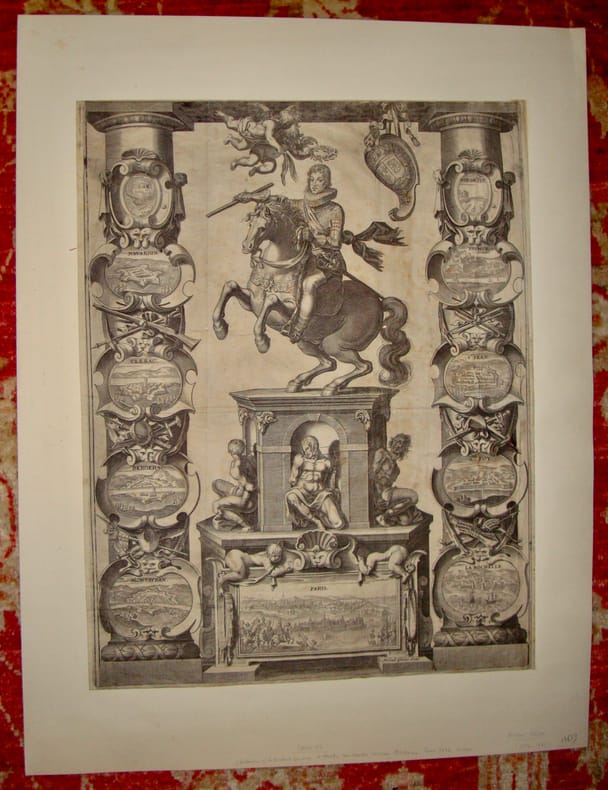
Portrait équestre de Louis XIII
162714659En feuille Très bon Paris tavernier 1627 50 x 71 cm
Librairie Seigneur · Voingt, France200,00 €
8 977 résultats
Blattgröße: 420 x 315 mm. Bildgröße: 170 x 170 mm. *Joseph Lanner (geb. 1801 in Sankt Ulrich bei Wien; gest. 1843 Döbling bei Wien) war ein österreichischer Komponist und Violinist. "Er gilt neben Johann Strauss (Vater) als Begründer des Wiener Walzers. Joseph Lanner war ein sehr produktiver Komponist [...] Sein musikalisches Erbe umfasst vor allem Walzer, Ländler, Galoppe, Potpourris und Tänze sowie Märsche. Seine bekanntesten Walzer sind der Pesther Walzer, Die Werber, Die Hofballtänze und Die Schönbrunner. Die Anzahl seiner Kompositionen geht in die Hunderte." (Wikipedia). - Sauber und gut erhalten. Graphiken de
162714659En feuille Très bon Paris tavernier 1627 50 x 71 cm
Format (Bildbereich): 265 x 210 mm. Blattgröße: 580 x 460 mm. *Adele von Latinovits, geborene Baronin von Geramb, eine ungarische Adelige (Lebensdaten unbekannt). Sie besaß ein Schloss in Katymár in der Nord-Batschka. Im gesellschaftlichen Leben Wiens muss sie eine gewisse Rolle gespielt haben, denn Johann Strauß widmete ihr den nach ihrem Vornamen benannten Adelaiden-Walzer und ein Jahr zuvor hatte ihr Joseph Lanner seinen Walzer Hoffnungs-Strahlen, op. 158 gewidmet. - Seltenes privates Bildnis ohne Bezeichnung und Namensnennung, das nicht in einem Verlag vertrieben wurde. Wurzbach 1204 (Werkverzeichnis Kriehuber). - Exemplar des Hauses Wittelsbach (Schloß Tegernsee), minimal begräunt, insgesamt sehr gut erhalten. Graphiken de
1910214AGBerlin, Breitkopf & Härtel, (um 1910). Photographie (Kniestück, sitzend). Format: Postkarte. + Wichtig: Für unsere Kunden in der EU erfolgt der Versand alle 14 Tage verzollt ab Deutschland / Postbank-Konto in Deutschland vorhanden +
Format (Platte): 393 x 300 mm. Blattgröße: 465 x 330 mm. *Catherine Macaulay oder Catherine Sawbridge Macaulay Graham (geb. 2. April 1731 in Wye, Kent; gest. 22. Juni 1791 in Binfield, Berkshire) war eine englische Historikerin, Frauenrechtlerin und republikanische Schriftstellerin, die großen Einfluss auf Persönlichkeiten der amerikanischen Revolution hatte. Sie gilt als erste englische Historikerin. Sie war zu ihrer Zeit schon sehr populär in der englischen wie in der amerikanischen Öffentlichkeit. Sie war eine der ersten Frauenrechtlerinnen und forderte die Gleichheit der Rechte für Frauen. Das Dictionary of National Biography (1893) charakterisiert sie wie folgt: "She is the woman of the greatest abilities that this country has ever produced, endowed with a sound judgment, and writing with sober energy and argumentative closeness Mary Wollestonecraft Vindication of the rights of woman". - Bei dem hier genannten "Bonnieu" als Zeichner handelt es sich vermutlich um den französischen Maler Michel-Honoré Bounieu (1740-1814), der Stecher Francois Hubert (1744-1809) war ein französischer Kupferstecher. - Schöner kräftiger Abzug des seltenen Bildnisses in sehr guter Erhaltung. Graphiken de
18801381AGParis, Chalot, (um 1880). Photographie (Brustbild). Format: Kabinettkarte. + Wichtig: Für unsere Kunden in der EU erfolgt der Versand alle 14 Tage verzollt ab Deutschland / Postbank-Konto in Deutschland vorhanden +
19104CGBarcelona, Mas, (um, 1910). Photographie (Kniestück, sitzend). Format: 19x10 cm. + Wichtig: Für unsere Kunden in der EU erfolgt der Versand alle 14 Tage verzollt ab Deutschland / Postbank-Konto in Deutschland vorhanden +
1910268AGBarcelona, Mas, (um 1910). Photographie (Portrait). Format: 23,6 x 17,8 cm. + Wichtig: Für unsere Kunden in der EU erfolgt der Versand alle 14 Tage verzollt ab Deutschland / Postbank-Konto in Deutschland vorhanden +
1910267AGBarcelona, Mas, (um 1910). Photographie (Kniestück, sitzend am Klavier). Format: 13,3 x 17,9 cm. + Wichtig: Für unsere Kunden in der EU erfolgt der Versand alle 14 Tage verzollt ab Deutschland / Postbank-Konto in Deutschland vorhanden +
Blattgröße 290 x 200 mm - Bildgröße: 268 x176 mm. Am linken Rand alt auf Untersatzkarton montiert. *Sehr seltenes Porträt, noch vor ihrer Freilassung aus dem Zuchthaus. Wohl eines der besten und frühesten Bildnisse. - Catharina Mulder (1723 -1798) war eine niederländische Muschelverkäuferin und Freiheitskämpferin aus der Arbeiterklasse in Rotterdam. In den Auseinandersetzungen und Kämpfen zwischen den Oraniern (Royalisten) und den Patrioten organisierte sie 1783 und 1784 in führender Rolle regelmäßig Demonstrationen und Unruhen gegen die patriotischen Regenten. Sie wurde zu 10 Jahren Zuchthaus verurteilt, nach der Intervention von Preußen 1787 wieder freigelassen. Sie gilt als eine Art Nationalheldin. Ihr Name ist noch heute sehr lebendig und lebt weiter in Liedern und Theaterstücken, in Namen von vielen Straßen, Booten, Drinks, Menues und Restaurants. Das Kürzel "Ka" wurde in den Niederlanden zum Synonym für eine aufrechte kämpferische Frau. - Sauber und sehr gut erhalten. Graphiken de
Maniera nera, monogrammata in lastra in basso a destra. Da un soggetto di Adriaen van Ostade. Magnifica prova, impressa su carta vergata coeva ed applicata su antico supporto di collezione, rifilata al rame o con sottili margini, in ottimo stato id conservazione. Mezzotint, circa 1750, signed at lower right. After a painting by Van Ostade.A great impression, with tone, on contemporary laid paper, laid down on antique mounting, small margins, perfect condition.Portrait of an elderly woman, bust directed to right, wearing a cap and smiling, open-mouthed; after Adriaen van Ostade.Lettered below the image with the title and 'Ostade Pinx.t // [monogram] PO ... fecit'. Wurzbach 2
Format (Platte): 250 x 170 mm. Blattgröße: 375 x 235 mm. *Blatt aus der berühmten "Iconographia" oder Iconographie, einer Sammelausgabe von ca. 100 der gemalten Bildnisse des Anthonis van Dyck (1599-1641) in Kupferstich. - Wibiral 43, IV. - Bazan war ein spanischer Admiral, 1631-32 wurde er Gouverneur der spanischen Niederlande. - Untere Ecke im Außenrand leicht fingerfleckig, insgesamt sehr gut erhalten. Graphiken de
Bildformat (Plattengröße): 523 x 356 mm (Blattgröße: 580 x 400 mm). *Die Pfinzing von Henfenfeld waren eine der ältesten Patrizierfamilien der Reichsstadt Nürnberg und im 14. Jahrhundert ein Machtfaktor in der weit gespannten Nürnberger Handelspolitik. - Das Bildnis bringt stolz den Reichtum der Familie Pfinzing von Henfenfeld zum Ausdruck. Die Henfenfelder Hauptlinie des Geschlechts starb jedoch mit dem hier abgebildeten Reichsschultheißen Johann Sigmund Pfinzing von Henfenfeld (1712–1764) aus. Erben waren die Haller von Hallerstein. Das Wappen der Pfinzing daher auf dem Kopf stehend. - Sehr guter gratiger Abzug, sauber und sehr gut erhalten. Graphiken de
Incisione tratta dalla celebre raccolta Icones principum, virorum, doctorum, pictorum, chalcographorum, di Anton van Dyck, edita per la prima volta ad Anversa verso il 1640. Opera celebre ed importante, vero monumento dell’arte incisoria fiamminga del sec. XVIII, contiene le biografie ed i ritratti degli uomini illustri che Van Dyck aveva conosciuto e con i quali aveva avuto importanti rapporti. L’artista ne eseguì le effigi in numerosi dipinti e disegni che poi decise di pubblicare, affidandone la trasposizione calcografica ai migliori incisori del suo tempo, come Bolswert, Pontius, Vorsterman, de Jode, Hollar, molti dei quali aveva avuto come condiscepoli nell’atelier di Rubens. "Sir Anthony Van Dyck stands out as the solitary great etcher of the school. Portrait etching had scarcely had an existence before his time, and in his work it suddenly appears at the highest point ever reached in the art" (Hind, p. 165). "The plan of this publication took shape after Van Dyck returned from Italy (1626) and before he went to England (1632). He made careful preparatory drawings in chalk and brush for the publication. He directed and revised the work of the engravers, the best of the Rubens circle; he collaborated with his etching needle in some of the plates and himself etched the most beautiful set, mainly portraits of artists. One of the most brilliant in human characterization is the portrait of Peter Brueghel the Younger, son of the great Peasant Brueghel. It is remarkable that the etching appeared in this sketchy form in the book, proving that the master regarded it as finished. All interest is focussed on the wonderful had. The first edition was published in Antwerp in 1635-1636. Yet it was not complete, and the title-page did not appear before the Gillis Hendricx edition of 1645, engraved by Jacob Neels" (Benesch, Artistic and Intellectual Trends, p. 32.) Hofer, Baroque Book Illustrations 132. Acquaforte con ritocchi al bulino, stampata su carta vergata coeva, filigrana del “giullare”, con margini, in ottimo stato di conservazione. Etching and engraving, circa 1645, signed on plate at lower edge. A fine impression, printed on contemporary laid paper, with margins, very good condition. From Icones principum, virorum, doctorum, pictorum, chalcographorum by Anton van Dyck, printed for the first time in Antwerp, 1645. A famous and important work, a real monument of the Flemish engraving art of the XVIII century, containing the biographies and portraits of the famous artists Van Dyck had met and with whom he had worked. Following the success of his portrait paintings and in the tradition of Italian and Flemish portrait series, Van Dyck decided to organise a print publication containing portraits of the most prominent men during his lifetime, divided into three categories: princes, politicians and soldiers (16), statesmen and scholars (12), artists and art connoisseurs (52). The initial idea could have been that Van Dyck would etch the faces (a process possibly learnt from Vorsterman) while others would finish the plates in engraving. Designs were needed for the plates and several drawings and oil sketches (grisailles, sometimes in different versions) have survived. Van Dyck only etched 17 plates himself, while he commissioned others to complete the set, overseen by Lucas Vorsterman I (especially after Van Dyck settled in England in the Spring of 1632). Although this project was started by Van Dyck around 1630, he never saw it completed. The Antwerp publisher Maarten van den Enden may have been involved from the start as eighty early impressions bear Van den Enden's address. They are engraved by Paulus Pontius (30 plates), Lucas Vorsterman I (22), Pieter de Jode II (12), Schelte a Bolswert (7), Robert van Voerst (4), Willem Hondius (2), Willem Jacobsz Delff (1), Cornelis Galle (1), and Nicolaes Lauwers (1). It is known that Van den Enden was in debt to Gillis Hendricx around 1644, the Antwerp publisher who must have obtained Van den Enden's plates which he published in 1645 in the first edition of these plates (containing between 100 and 104 portrait plates). Hendricx continued to publish these plates until his death in 1677 when they were auctioned off by the St Luke guild (keeping the Iconography plates together). It is not clear who bought these plates but they re-appeared around 1720 when they were published by Hendrick and Cornelis Verdussen in Antwerp.
Incisione tratta dalla celebre raccolta Icones principum, virorum, doctorum, pictorum, chalcographorum, di Anton van Dyck, edita per la prima volta ad Anversa verso il 1640. Opera celebre ed importante, vero monumento dell’arte incisoria fiamminga del sec. XVIII, contiene le biografie ed i ritratti degli uomini illustri che Van Dyck aveva conosciuto e con i quali aveva avuto importanti rapporti. L’artista ne eseguì le effigi in numerosi dipinti e disegni che poi decise di pubblicare, affidandone la trasposizione calcografica ai migliori incisori del suo tempo, come Bolswert, Pontius, Vorsterman, de Jode, Hollar, molti dei quali aveva avuto come condiscepoli nell’atelier di Rubens. "Sir Anthony Van Dyck stands out as the solitary great etcher of the school. Portrait etching had scarcely had an existence before his time, and in his work it suddenly appears at the highest point ever reached in the art" (Hind, p. 165). "The plan of this publication took shape after Van Dyck returned from Italy (1626) and before he went to England (1632). He made careful preparatory drawings in chalk and brush for the publication. He directed and revised the work of the engravers, the best of the Rubens circle; he collaborated with his etching needle in some of the plates and himself etched the most beautiful set, mainly portraits of artists. One of the most brilliant in human characterization is the portrait of Peter Brueghel the Younger, son of the great Peasant Brueghel. It is remarkable that the etching appeared in this sketchy form in the book, proving that the master regarded it as finished. All interest is focussed on the wonderful had. The first edition was published in Antwerp in 1635-1636. Yet it was not complete, and the title-page did not appear before the Gillis Hendricx edition of 1645, engraved by Jacob Neels" (Benesch, Artistic and Intellectual Trends, p. 32.) Hofer, Baroque Book Illustrations 132. Acquaforte con ritocchi al bulino, stampata su carta vergata coeva, filigrana del “giullare”, con margini, in ottimo stato di conservazione. Etching and engraving, circa 1645, signed on plate at lower edge. A fine impression, printed on contemporary laid paper, with margins, very good condition. From Icones principum, virorum, doctorum, pictorum, chalcographorum by Anton van Dyck, printed for the first time in Antwerp, 1645. A famous and important work, a real monument of the Flemish engraving art of the XVIII century, containing the biographies and portraits of the famous artists Van Dyck had met and with whom he had worked. Following the success of his portrait paintings and in the tradition of Italian and Flemish portrait series, Van Dyck decided to organise a print publication containing portraits of the most prominent men during his lifetime, divided into three categories: princes, politicians and soldiers (16), statesmen and scholars (12), artists and art connoisseurs (52). The initial idea could have been that Van Dyck would etch the faces (a process possibly learnt from Vorsterman) while others would finish the plates in engraving. Designs were needed for the plates and several drawings and oil sketches (grisailles, sometimes in different versions) have survived. Van Dyck only etched 17 plates himself, while he commissioned others to complete the set, overseen by Lucas Vorsterman I (especially after Van Dyck settled in England in the Spring of 1632). Although this project was started by Van Dyck around 1630, he never saw it completed. The Antwerp publisher Maarten van den Enden may have been involved from the start as eighty early impressions bear Van den Enden's address. They are engraved by Paulus Pontius (30 plates), Lucas Vorsterman I (22), Pieter de Jode II (12), Schelte a Bolswert (7), Robert van Voerst (4), Willem Hondius (2), Willem Jacobsz Delff (1), Cornelis Galle (1), and Nicolaes Lauwers (1). It is known that Van den Enden was in debt to Gillis Hendricx around 1644, the Antwerp publisher who must have obtained Van den Enden's plates which he published in 1645 in the first edition of these plates (containing between 100 and 104 portrait plates). Hendricx continued to publish these plates until his death in 1677 when they were auctioned off by the St Luke guild (keeping the Iconography plates together). It is not clear who bought these plates but they re-appeared around 1720 when they were published by Hendrick and Cornelis Verdussen in Antwerp.
177441110Leipzig Heinsius 1774. 815 Seiten + Register, Ex-Libris auf Vorsatzblatt Prgt, gebundene Ausgabe, Vollpergamentband, Rotschnitt, Exemplar in gutem Erhaltungszustand
Format (Platte): 235 x 153 mm. Blattgröße: 375 x 235 mm. *Blatt aus der berühmten "Iconographia" oder Iconographie, einer Sammelausgabe von ca. 100 der gemalten Bildnisse des Anthonis van Dyck (1599-1641) in Kupferstich. - Wibiral 62, II. - Rubens war ein bedeutender niederländischer Maler des Barock. - Unterrand leicht gebräunt, insgesamt gut erhalten. Graphiken de
Format: 400 x 267 mm (bis an den Bildrand beschnitten). *Der Dargestellte Georg Philipp Rugendas (1666-1742) war der Gründervater der bedeutenden Künstlerfamilie Rugendas des 18. und 19. Jahrhunderts. Er war spezialisiert auf Schlachten- und Pferdemalerei. Graphiken de
1580375CGO.J. (um 1580). Kupferstich (Brustbild). Bild- u. Blattgrösse: 28,5 x 19,5 cm. + Wichtig: Für unsere Kunden in der EU erfolgt der Versand alle 14 Tage verzollt ab Deutschland / Postbank-Konto in Deutschland vorhanden +, Abbildung
1840788AGO.J. (um 1840). Lithographie. Bildgrösse: 25 x 21 cm. Blattgrösse: 43 x 32,5 cm. + Wichtig: Für unsere Kunden in der EU erfolgt der Versand alle 14 Tage verzollt ab Deutschland / Postbank-Konto in Deutschland vorhanden +
1900362AGO. O., Rotary Photographic Series, (um 1900). Photographie (halbe Figur, stehend). Format: Postkarte. + Wichtig: Für unsere Kunden in der EU erfolgt der Versand alle 14 Tage verzollt ab Deutschland / Postbank-Konto in Deutschland vorhanden +
17471360AGLondon, J. & P. Knapton, 1747. Kupferstich (Brustbid in ovaler Umrahmung) von Jacobus Houbraken nach Sir Peter Lely. Bildgrösse: 34,5 x 22,5 cm (picture size). Blattgrösse: 38,5 cm x 25 cm (leaf size). + Wichtig: Für unsere Kunden in der EU erfolgt der Versand alle 14 Tage verzollt ab Deutschland / Postbank-Konto in Deutschland vorhanden +, bild
Bildgröße 326 x 278 mm. Blattgröße: 630 x 465 mm. *Schönes Bildnis im Stil des höfischen Biedermeier. Therese Charlotte Luise Friederike Amalie von Sachsen-Hildburghausen wurde durch ihre Heirat mit Ludwig I ab 1825 Königin von Bayern. Ihre Ehe war kein "Zuckerschlecken", ihr Mann König Ludwig trat öffentlich als großer Kunstmäzen auf und hielt sich kostspielige Mätressen, er stürzte schließlich über die bekannte Affäre mit der Lola Montez. - Vollrandiges Exemplar (mit dem Schöpfrand). Die weißen Außenränder geringfügig gebräunt. Insgesamt sehr gut erhalten (Exemplar aus Schloß Tegernsee). Graphiken de
Size (platemarks): 60,2 x 45,5 cm. Sheet: 84 x 60,5 cm. *Nagler, Bd. 30, S. 557, Nr. 4. - Thieme-Becker 33, S. 79. - Shows Lady Emily Harriet Wellesley-Pole (1792-1881) with her sisters Lady Priscilla Anne Wellesley-Pole, Countess of Westmorland (1793-1879) and Lady Mary Charlotte Anne Wellesley-Pole, Lady Bagot (d.1845) after Sir Thomas Lawrence (1769-1830), a leading English portrait painter and the fourth president of the Royal Academy. - A fine stipple engraving in very large size an in good confition. Graphiken en
Format (Bildbereich): ca. 420 x 340 mm. Blattgröße: 575 x 435 mm. *Gebhardt: Hanfstaengl Werkverzeichnis, S. 252. Slg. Maillinger III, 1356. - Ludwig Tieck war ein deutscher Dichter der Romantik. - Der Lithograph Franz Seraph Hanfstaengl (1804-1877) war ein deutscher Maler, Lithograf und Fotograf. Er studierte 1819-25 an der Akademie der Bildenden Künste in München und wurde in Lithographie ausgebildet. Als Porträtlithograf der Münchner Gesellschaft erfreute sich Hanfstaengl großer Beliebtheit, was ihm den Spitznamen „Graf Litho“ eintrug. 1833 gründete er in München die berühmt gewordene lithografische Anstalt Hanfstaengl, die er selbst bis 1868 leitete. - Ränder leicht angestaubt, am Unterrand mit Bleistift alt bezeichnet. Graphiken de


