548 résultats
192478249s. d. [1924] | 9.30 x 7.80 cm | autre
192478251s. d. [1924] | 9.30 x 7.80 cm | Une feuille
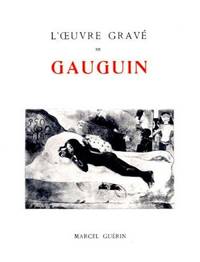
1988130334Galerie Kornfeld. As New. 1988. Hardcover. 3857730196 . - IN STOCK AND IMMEDIATELY AVAILABLE FOR SHIPMENT - THE TEXT BLOCK IS PRISTINE CLEAN UNMARKED AND IN EXCELLENT CONDITION - - with a bonus offer-- . Galerie Kornfeld hardcover
1924782481924. Fine. s. d. 1924 9.30 x 7.80 cm autre Diane et Actéon aux Marquises. Noa Noa. Unique proof of the woodcut drawn and engraved after Paul Gauguin by George-Daniel de Monfreidbetween 1904 & 1924 93 x 78 mm one sheetOriginal proof likely unique of this intermediate state of a woodcut drawn and engraved by George-Daniel de Monfreid after two works by Paul Gauguin. Print on Japan silk annotation by the artist in the left-hand margin. Woodcut drawn and engraved after two works the man holding a branch being a reproduction of a watercolor on page 37 of the Noa Noa manuscript while the full-length woman originally observed by this browser is presented here in bust with her hand to her face model reproduced on a woodcut engraved by Gauguin on page 4 of the manuscript and his original sketch pasted on page 51 evoking a similar scene. The final woodcut will serve as the head of chapter IV of the first true illustrated edition of Noa Noa published by Crès in 1924 the first illustrated work after Paul Gauguin and a majestic tribute to one of the precursors of modern art. Superb engraving synthesizing a watercolor from the original Noa Noa manuscript inspired by the myth of Diana and Actaeon engraved by Gauguin's closest friend and executor the artist George-Daniel de Monfreid heir to the album he would offer to the French State in 1927. A likely unique proof part of 17 known test woodcuts from the early project to publish Noa Noa all made on various fine papers and annotated by the artist. Woodcut engraved after a watercolor reinterpreting the myth of Diana surprised in the bath by Actaeon. In the engraving Monfreid took care to preserve the typical of deer antler shape of the branch seized by the indiscreet which evokes its metamorphosis by the goddess. A very rare work by Gauguin mixing ancient mythology and island exoticism whose subversive power seems entirely carried by the vahine Diana's expression of feint surprise. It is from the original illustrated manuscript of Noa Noa brought back from Tahiti by Segalen on the artist's death in 1903 that Monfreid began producing this fundamental work from as early as 1904. This is the second version of this to read and look at notebook. The first manuscript written on the return of his first voyage and entrusted by Gauguin to Charles Morice in 1893 responded to a different project. Gauguin had composed only the text interspersed with blank pages for Morice's poems. But after several years without news Morice preferred to publish a version entirely rewritten by himself in 1901. Gauguin therefore copied his manuscript and illustrated it during his second stay in Polynesia with sketches watercolors and collages. This album that the artist enriched and safely preserved until his death is preserved today at the Musée d'Orsay. It is therefore from this manuscript the only one illustrated that Monfreid composed the edition of Gauguin's Noa Noa. However although Monfreid's publication was forward it took more than twenty years to complete in part due to a copyright dispute with Charles Morice who wanted to be co-author of the forthcoming edition and whose poems would eventually be preserved. The result of several years of reflection and work the 1924 edition is both faithful to the watercolors and woodcut engravings illustrating the precious manuscript and to the whole of Gauguin's Tahitian work who died in indifference. Monfreid thus engraves several drawings from the original notebook and enriches it with woodcuts made from other works of which he is the custodian. Some of these compositions combine several paintings while scrupulously respecting the artist's line transforming the work into a true journey through the painter's works. The very choice of using wood engraving is a tribute to this technique prized by Gauguin who in Pont-Aven produced 10 woodcuts to illustrate his manuscript between his two Polynesian stays. The in unknown
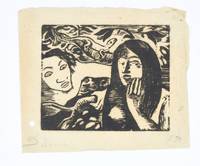
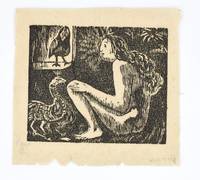
1924782471924. Fine. s. d. 1924 9.30 x 7.80 cm autre La Mémoire et l'Imagination. Noa Noa. Unique proof of the woodcut drawn and engraved after Paul Gauguin by George-Daniel de Monfreid between 1904 & 1924 93 x 78 cm one sheet Original proof likely unique of this intermediate state of a woodcut drawn and engraved by George-Daniel de Monfreid after a watercolor by Paul Gauguin. Print on fine cream laid paper annotation by the artist in the left-hand margin. Woodcut drawn and engraved after a watercolor from the Noa Noa manuscript pasted on a page of text of the famous album. The final woodcut will serve as the head of the first illustrated edition of Noa Noa published by Crès in 1924 the first illustrated work after Paul Gauguin and a majestic tribute to one of the precursors of modern art. Superb and significant engraving after a very specific watercolor from Paul Gauguin's manuscript a real breakthrough in text engraved by his closest friend and executor the artist George-Daniel de Monfreid heir to the album he would offer to the French State in 1927. The initial watercolor was cut out in waves around the female figure and pasted on the last chapter to prevent it from being read and thus get the story back on track. Gauguin had also added winding lines starting from the watercolor on the text page thus giving the impression of a cave breaking through the page by the psychic power of the sitting woman whose head diffuses the undulating rays. Monfreid decided to place it at the head of the work accompanied by two birds taken from other works to illustrate the power of the artist and his imagination. A likely unique proof part of 17 known test woodcuts from the early project to publish Noa Noa all made on various fine papers and annotated by the artist. Unique proof of a woodcut engraved after the mystical watercolor erasing the first ending of the story to allow the reader to graphically enter the painted album repeated in the printed version as the initiatory opening of the engraved story. It is from the original illustrated manuscript of Noa Noa brought back from Tahiti by Segalen on the artist's death in 1903 that Monfreid began producing this fundamental work from as early as 1904. This is the second version of this to read and look at notebook. The first manuscript written on the return of his first voyage and entrusted by Gauguin to Charles Morice in 1893 responded to a different project. Gauguin had composed only the text interspersed with blank pages for Morice's poems. But after several years without news Morice preferred to publish a version entirely rewritten by himself in 1901. Gauguin therefore copied his manuscript and illustrated it during his second stay in Polynesia with sketches watercolors and collages. This album that the artist enriched and safely preserved until his death is preserved today at the Musée d'Orsay. It is therefore from this manuscript the only one illustrated that Monfreid composed the edition of Gauguin's Noa Noa. However although Monfreid's publication was forward it took more than twenty years to complete in part due to a copyright dispute with Charles Morice who wanted to be co-author of the forthcoming edition and whose poems would eventually be preserved. The result of several years of reflection and work the 1924 edition is both faithful to the watercolors and woodcut engravings illustrating the precious manuscript and to the whole of Gauguin's Tahitian work who died in indifference. Monfreid thus engraves several drawings from the original notebook and enriches it with woodcuts made from other works of which he is the custodian. Some of these compositions combine several paintings while scrupulously respecting the artist's line transforming the work into a true journey through the painter's works. The very choice of using wood engraving is a tribute to this technique prized by Gauguin who in Pont-Aven produced 10 woodcuts to unknown
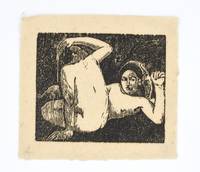
1924782491924. Fine. s. d. 1924 9.30 x 7.80 cm autre Les Odalisques aux mangues. Noa Noa. Unique proof of the woodcut drawn and engraved after Paul Gauguin by George-Daniel de Monfreidbetween 1904 & 1924 93 x 78 cm one leafOriginal proof likely unique of this intermediate state of a woodcut drawn and engraved by George-Daniel de Monfreid after Paul Gauguin. Print on fine cream laid paper annotation by the artist in the left-hand margin. Woodcut drawn and engraved after two different works. The back of the woman is an exact reproduction of an ink from page 92 of the Noa Noa manuscript while the woman lying down takes up the well-known theme of the woman with mangos Te Arii Vahine-Opoi that Gauguin represented in paint as well as with an engraving in 1898. The final woodcut will serve as the head of chapter V of the first true illustrated edition of Noa Noa published by Crès in 1924 the first illustrated work from Paul Gauguin and a majestic tribute to one of the precursors of modern art. Superb and significant engraving uniting two major themes of the Tahitian work including the central drawing of the Noa Noa manuscript faithfully engraved by Gauguin's closest friend and executor the artist George-Daniel de Monfreid. A likely unique proof part of 17 known test woodcuts from the project to prematurely publish Noa Noa all made on various fine papers and annotated by the artist. Woodcut engraved from two major original works. By uniting these two vahines with sensual postures Monfreid brings about a true synthesis of Gauguin's work all while using the traditional double figure of the artist's paintings. It is from the original illustrated manuscript of Noa Noa brought back from Tahiti by Segalen on the artist's death in 1903 that Monfreid began producing this fundamental work from as early as 1904. This is the second version of this to read and look at notebook. The first manuscript written on the return of his first voyage and entrusted by Gauguin to Charles Morice in 1893 responded to a different project. Gauguin had composed only the text interspersed with blank pages for Morice's poems. But after several years without news Morice preferred to publish a version entirely rewritten by himself in 1901. Gauguin therefore copied his manuscript and illustrated it during his second stay in Polynesia with sketches watercolors and collages. This album that the artist enriched and safely preserved until his death is preserved today at the Musée d'Orsay. It is therefore from this manuscript the only one illustrated that Monfreid composed the edition of Gauguin's Noa Noa. However although Monfreid's publication was forward it took more than twenty years to complete in part due to a copyright dispute with Charles Morice who wanted to be co-author of the forthcoming edition and whose poems would eventually be preserved. The result of several years of reflection and work the 1924 edition is both faithful to the watercolors and woodcut engravings illustrating the precious manuscript and to the whole of Gauguin's Tahitian work who died in indifference. Monfreid thus engraves several drawings from the original notebook and enriches it with woodcuts made from other works of which he is the custodian. Some of these compositions combine several paintings while scrupulously respecting the artist's line transforming the work into a true journey through the painter's works. The very choice of using wood engraving is a tribute to this technique prized by Gauguin who in Pont-Aven produced 10 woodcuts to illustrate his manuscript between his two Polynesian stays. The intermediate woodcuts until then unknown testify to the slow work of composition to restore the artistic richness of Gauguin's work by his most faithful artistic companion and first champion: When I saw Gauguin for the first time I was greatly disconcerted by the details of art that radiated from his works as well as from the conversati unknown
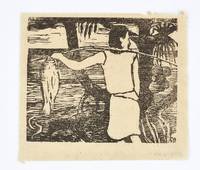
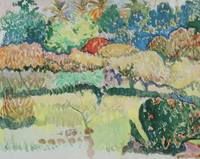
1924782511924. Fine. s. d. 1924 9.30 x 7.80 cm Une feuille Original proof likely unique of this intermediate state of a woodcut drawn and engraved by George-Daniel de Monfreid after a watercolor by Paul Gauguin. Print on fine cream laid paper annotation by the artist in the left-hand margin. Woodcut drawn and engraved from the first watercolor of the Noa Noa manuscript pasted on a page of text of the famous album. The final woodcut will serve as the head of chapter X of the first true illustrated edition of Noa Noa published by Crès in 1924 the first illustrated work from Paul Gauguin and a majestic tribute to this precursor of modern art. Superb and significant engraving of the work opening Paul Gauguin's manuscript engraved by his closest friend and executor the artist George-Daniel de Monfreid heir to the album he would offer to the French State in 1927. This likely unique proof part of 17 known test woodcuts from the project to prematurely publish Noa Noa all made on various fine papers and annotated by the artist. Woodcut engraved from the watercolor inaugurating one of the painter's most beautiful albums symbolizing the Tahitian art of living between the nourishing sea and earthly pleasures. It is from the original illustrated manuscript of Noa Noa brought back from Tahiti by Segalen on the artist's death in 1903 that Monfreid began producing this fundamental work from as early as 1904. This is the second version of this to read and look at notebook. The first manuscript written on the return of his first voyage and entrusted by Gauguin to Charles Morice in 1893 responded to a different project. Gauguin had composed only the text interspersed with blank pages for Morice's poems. But after several years without news Morice preferred to publish a version entirely rewritten by himself in 1901. Gauguin therefore copied his manuscript and illustrated it during his second stay in Polynesia with sketches watercolors and collages. This album that the artist enriched and safely preserved until his death is preserved today at the Musée d'Orsay. It is therefore from this manuscript the only one illustrated that Monfreid composed the edition of Gauguin's Noa Noa. However although Monfreid's publication was forward it took more than twenty years to complete in part due to a copyright dispute with Charles Morice who wanted to be co-author of the forthcoming edition and whose poems would eventually be preserved. The result of several years of reflection and work the 1924 edition is both faithful to the watercolors and woodcut engravings illustrating the precious manuscript and to the whole of Gauguin's Tahitian work who died in indifference. Monfreid thus engraves several drawings from the original notebook and enriches it with woodcuts made from other works of which he is the custodian. Some of these compositions combine several paintings while scrupulously respecting the artist's line transforming the work into a true journey through the painter's works. The very choice of using wood engraving is a tribute to this technique prized by Gauguin who in Pont-Aven produced 10 woodcuts to illustrate his manuscript between his two Polynesian stays. The intermediate woodcuts until then unknown testify to the slow work of composition to restore the artistic richness of Gauguin's work by his most faithful artistic companion and first champion: When I saw Gauguin for the first time I was greatly disconcerted by the details of art that radiated from his works as well as from the conversations of this extraordinary man. You immediately felt that he was the Master in L'Hermitage 1903. unknown
1981C86422Flammarion. As New. 1981. Hardcover. FREE UPGRADE to Courier/Priority Shipping Upon Request - IN STOCK AND IMMEDIATELY AVAILABLE FOR SHIPMENT - AS NEW THE TEXT BLOCK IS PRISTINE CLEAN UNMARKED AND IN EXCELLENT CONDITION - - Corresponds to ASIN: B001BIN0FC. 120 pages with 64 color plates and many black and white illustrations. Catalogue Raisonné Catalogue Raisonne Catalog Raisonnee uvre Oeuvre -- with a bonus offer-- - May be EITHER: out of print OOP and extremely rare in this pristine condition; signed by author or contributor; or a first or special edition; inquire for details . Flammarion hardcover
1980C86473AW Fine Arts. As New. 1980. Hardcover. 0915346370 . FREE UPGRADE to Courier/Priority Shipping Upon Request - IN STOCK AND IMMEDIATELY AVAILABLE FOR SHIPMENT - FLAWLESS COPY BRAND NEW PRISTINE NEVER OPENED -- - 272 pp. Illustrated. Reprint. Text in French. -- with a bonus offer-- - May be EITHER: out of print OOP and extremely rare in this pristine condition; signed by author or contributor; or a first or special edition; inquire for details . AW Fine Arts hardcover
1964C102695Faber and Faber Ltd. ; Et Al. As New. 1964. Hardcover. FREE UPGRADE to Courier/Priority Shipping Upon Request - IN STOCK AND IMMEDIATELY AVAILABLE FOR SHIPMENT - AS NEW THE TEXT BLOCK IS PRISTINE CLEAN UNMARKED AND IN EXCELLENT CONDITION - - 239 pages; well illustrated including over 30 illustrations in color. Catalogue Raisonne Catalog Raisonné Complete Works Life and Work Raisonnee -- with a bonus offer-- - May be EITHER: out of print OOP and extremely rare in this pristine condition; signed by author or contributor; or a first or special edition; inquire for details . Faber and Faber Ltd. ; Et Al hardcover
192478250s. d. [1924] | 9.30 x 7.80 cm | autre
198186422Flammarion. As New. 1981. Hardcover. FREE UPGRADE to Courier/Priority Shipping Upon Request - IN STOCK AND IMMEDIATELY AVAILABLE FOR SHIPMENT - AS NEW THE TEXT BLOCK IS PRISTINE CLEAN UNMARKED AND IN EXCELLENT CONDITION - - Corresponds to ASIN: B001BIN0FC. 120 pages with 64 color plates and many black and white illustrations. Catalogue Raisonné Catalogue Raisonne Catalog Raisonnee uvre Oeuvre Flammarion hardcover
198086473AW Fine Arts. New. 1980. Hardcover. 0915346370 . FREE UPGRADE to Courier/Priority Shipping Upon Request - IN STOCK AND IMMEDIATELY AVAILABLE FOR SHIPMENT - FLAWLESS COPY BRAND NEW PRISTINE NEVER OPENED -- - 272 pp. Illustrated. Reprint. Text in French. AW Fine Arts hardcover
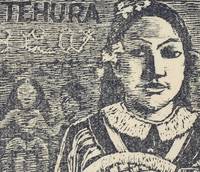
1924782501924. Fine. s. d. 1924 9.30 x 7.80 cm autre Tehura. Original proof engraved after the painting ""Merahi Metua no Tehamana"". Intermediate state for Noa Noabetween 1904 & 1924 93 x 78 cm one sheetOriginal proof likely unique of this intermediate state of Tehura wood drawn and engraved after Paul Gaughin's painting Merahi Metua no Tehamana by George-Daniel de Monfreid. Print on fine cream laid paper annotation by the artist in the left-hand margin. The definitive wood served as the head of chapter VI Le Conteur parle page 81 of the true first edition of Noa Noa published by Crès in 1924 the first illustrated work from Paul Gauguin and a majestic tribute to one of the precursors of modern art. A most important and very first woodcut of Gauguin's masterpiece engraved by his closest friend and executor artist George-Daniel de Monfreid to whom Gauguin offered the painting after two unsuccessful exhibitions. Likely unique proof part of 17 known test prints from the project to publish prematurely Noa Noa all made on various fine papers and annotated by the artist. Precious woodcut after Gauguin's masterpiece Merahi metua no Tehamana showing the painter's wife his main tahitian model. It is from the original illustrated manuscript of Noa Noa brought back from Tahiti by Segalen on the artist's death in 1903 that Monfreid began producing this fundamental work from as early as 1904. This is the second version of this to read and look at notebook. The first manuscript written on the return of his first voyage and entrusted by Gauguin to Charles Morice in 1893 responded to a different project. Gauguin had composed only the text interspersed with blank pages for Morice's poems. But after several years without news Morice preferred to publish a version entirely rewritten by himself in 1901. Gauguin therefore copied his manuscript and illustrated it during his second stay in Polynesia with sketches watercolors and collages. This album that the artist enriched and safely preserved until his death is preserved today at the Musée d'Orsay. It is therefore from this manuscript the only one illustrated that Monfreid composed the edition of Gauguin's Noa Noa. However although Monfreid's publication was forward it took more than twenty years to complete in part due to a copyright dispute with Charles Morice who wanted to be co-author of the forthcoming edition and whose poems would eventually be preserved. The result of several years of reflection and work the 1924 edition is both faithful to the watercolors and woodcut engravings illustrating the precious manuscript and to the whole of Gauguin's Tahitian work who died in indifference. Monfreid thus engraves several drawings from the original notebook and enriches it with woodcuts made from other works of which he is the custodian. Some of these compositions combine several paintings while scrupulously respecting the artist's line transforming the work into a true journey through the painter's works. The very choice of using wood engraving is a tribute to this technique prized by Gauguin who in Pont-Aven produced 10 woodcuts to illustrate his manuscript between his two Polynesian stays. The intermediate woodcuts until then unknown testify to the slow work of composition to restore the artistic richness of Gauguin's work by his most faithful artistic companion and first champion: When I saw Gauguin for the first time I was greatly disconcerted by the details of art that radiated from his works as well as from the conversations of this extraordinary man. You immediately felt that he was the Master in L'Hermitage 1903. unknown
1964102695Faber and Faber Ltd. ; Et Al. As New. 1964. Hardcover. FREE UPGRADE to Courier/Priority Shipping Upon Request - IN STOCK AND IMMEDIATELY AVAILABLE FOR SHIPMENT - AS NEW THE TEXT BLOCK IS PRISTINE CLEAN UNMARKED AND IN EXCELLENT CONDITION - - 239 pages; well illustrated including over 30 illustrations in color. Catalogue Raisonne Catalog Raisonné Complete Works Life and Work Raisonnee Faber and Faber Ltd. ; Et Al hardcover
190778777s. d. [1907] | 12.40 x 18.90 cm | une feuille
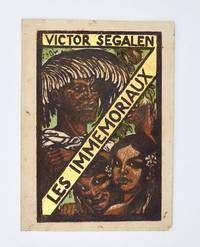
1907787771907. Fine. s. d. 1907 12.40 x 18.90 cm une feuille Original color proof of a woodcut inspired by the work of Gauguin and engraved by George-Daniel de Monfreid for a frontispiece project remaining unpublished of Victor Segalen's Les Immémoriaux. Only one other original color proof and one print run in black and white see below are known to date. Printed in two tones green and brown on old Japan and enhanced with gilt painting by the artist. This engraved woodcut was to illustrate as a frontispiece the original edition of Segalen's Les Immémoriaux an ethnographic novel directly inspired by his trip to Polynesia following in Gauguin's footsteps. Segalen therefore asked the painter's follower and closest friend to produce it to whom he also offered Noa Noa bought in Papeete during the auction sale of Gauguin's goods. A mutual friendship and admiration was then born between Segalen and Monfreid under the tutelary aegis of the late painter. It is also in constant reference to the Master that the two friends produce this frontispiece to which Segalen attached great importance but which he will be obliged to abandon due to publishing costs: This is a lot more interesting for me: what will you do for my plate If I dared to imagine something it would be a formidable full-face figure very plain very worn and of an androgyne with male tendences; in short the Maori type described by Gauguin in his Noa Noa and produced by him in the carved wood that remained in Tahiti face of a woman comparable to that which you possess and of which I gave you a photograph I believe. . Are you in favor of reserving your frontispiece for luxury and friends' copies or of prostituting it in current copies Allow me to renew a timid desire expressed at your Vollard exhibition: if you print some more proofs from your color engravings in pochoir do not forget me. Brest 2 November 1906. Monfreid's response 8 January 1907: I have started looking for your plate. Ah! I will not describe it to you yet: it does not come according to what your book should evoke. Besides I am not rich in imagination let alone in symbolism I remain as you have noticed a naturalist but not a realist and to summarize the impression of your Les Immémoriaux one would have to be Gauguin. Finally even so I am not losing hope of doing something; only that I need a little more time to study it.. Monfreid will produce two trial woodcuts whose sizes 22 x 12 cm and 23 x 16 cm were not adapted to the edition each time using the same formidable and frustrated figures Segalen wanted. Our woodcut seems to be the final version of these studies perfectly adapted to the in-12 format of Mercure de France. However the illustration includes the name of the author at the top yet Segalen a naval officer could not sign a novel and had to choose a pseudonym Max-Anély. This constraint may have contributed to this much-desired frontispiece being abandoned. However in all likelihood it was validated by the two trial woodcuts. Monfreid will also use the same male face to produce the ex-libris requested by Segalen. In his letter dated 2 November the poet already imagined a confidential print for Monfreid's work. In the end only two color copies of this proof enhanced in gold seem to have been preserved the second being today in the collections of the Musée Maurice Denis in Saint-Germain-en-Laye. The artist had likely printed one for himself and offered the other to Segalen who dreamed of owning etching of the one he called his ""Boss"" and to whom he would dedicate his collection of poems Peintures. unknown
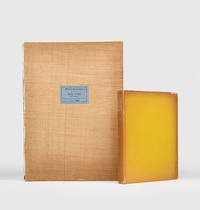
1926311648Munchen; Berlin: Marees-Gesellschaft. Verlag R. Piper & Co. Hersteller: Ganymed 1926. Number LVI of LXXX copies specially bound limitation notice on front pastedown. Collotype facsimile reproducing in color the artist's watercolors photographs line drawings and woodcuts. 4 204 i.e. 210 pp. 1 vols. 4to 12-1/4 x 9-1/4 in. Bound in original citron morocco rebacked. Some dustsoiling to covers internally clean. Without the very rare portfolio and without dust jacket. Number LVI of LXXX copies specially bound limitation notice on front pastedown. Collotype facsimile reproducing in color the artist's watercolors photographs line drawings and woodcuts. 4 204 i.e. 210 pp. 1 vols. 4to 12-1/4 x 9-1/4 in. Deluxe issue. The deluxe issue of this beautifully produced facsimile in color of Gauguin's original manuscript of his collaboration with the Symbolist poet Charles Morice. A version of the collaboration appeared in Gauguin's lifetime but "Gauguin recopied and amplified his manuscript adding watercolors woodcuts and an occasional photograph" and it is this manuscript now in the Louvre on which the present facsimile is based; Gauguin's "visual interpretation of this primitive culture in powerful rhythmic and totemic designs . represents an important project in book-making by this major artist" Garvey. Garvey The Artist and the Book 115; Castleman Century pp. 22-4 82-3 Marees-Gesellschaft. Verlag R. Piper & Co. Hersteller: Ganymed unknown books
1926311648Munchen; Berlin: Marees-Gesellschaft. Verlag R. Piper & Co. Hersteller: Ganymed 1926. Number LVI of LXXX copies specially bound limitation notice on front pastedown. Collotype facsimile reproducing in color the artist's watercolors photographs line drawings and woodcuts. 4 204 i.e. 210 pp. 1 vols. 4to 12-1/4 x 9-1/4 in. Bound in original citron morocco rebacked. Some dustsoiling to covers internally clean. Without the very rare portfolio and without dust jacket. Number LVI of LXXX copies specially bound limitation notice on front pastedown. Collotype facsimile reproducing in color the artist's watercolors photographs line drawings and woodcuts. 4 204 i.e. 210 pp. 1 vols. 4to 12-1/4 x 9-1/4 in. The deluxe issue of this beautifully produced facsimile in color of Gauguin's original manuscript of his collaboration with the Symbolist poet Charles Morice. A version of the collaboration appeared in Gauguin's lifetime but "Gauguin recopied and amplified his manuscript adding watercolors woodcuts and an occasional photograph" and it is this manuscript now in the Louvre on which the present facsimile is based; Gauguin's "visual interpretation of this primitive culture in powerful rhythmic and totemic designs . represents an important project in book-making by this major artist" Garvey. Garvey The Artist and the Book 115; Castleman Century pp. 22-4 82-3 Marees-Gesellschaft. Verlag R. Piper & Co. Hersteller: Ganymed unknown
1964C84541Les Beaux-Arts. As New. 1964. Hardcover. FREE UPGRADE to Courier/Priority Shipping Upon Request - IN STOCK AND IMMEDIATELY AVAILABLE FOR SHIPMENT - AS NEW THE TEXT BLOCK IS PRISTINE CLEAN UNMARKED AND IN EXCELLENT CONDITION - - Text in French. Pages: 10 282 4. 639 illustrations; small folio. First of a planned two volume set though as of early 2013 the second volume remains unpublished. Catalogue Raisonne Catalog Raisonné Complete Works La Vie et L'uvre Oeuvre Raisonnee -- with a bonus offer-- - May be EITHER: out of print OOP and extremely rare in this pristine condition; signed by author or contributor; or a first or special edition; inquire for details . Les Beaux-Arts hardcover
192652826München: R. Piper & Co 1926. Limited Deluxe edition. Hardcover. Very good condition. 42/80. Small Folio. 3 204 i.e. 208pp. Rebacked retaining the original gilt-stamped yellow leather backstrip with gilt-framed pebbled leather retaining original endpapers; housed in the original woodcut illustrated paper-covered slipcase. Top edge gilt. Publisher's colophon bookplate pasted to inside front cover reading: "Marees Gesellschaft MCMXXVI. VI. Druck. Herausgeber: Meier-Graefe. Verlag: R. Piper & Co. München. Hersteller: Ganymed GMBH. Berlin. Von den Stücken I-LXXX trägt dies Nr. XLII." Embossed Exlibris of Ernst Simon on free endpaper.<br /> <br /> Facsimile of Gauguin's original handwritten and illustrated journal. Richly illustrated with color and b/w reproductions of paintings in watercolor woodcuts drawings and the occasional photograph. This deluxe edition published by R. Piper & Co. in 1926 is still considered theto be the finest facsimile of Gauguin's original manuscript now kept in the Louvre.<br /> <br /> Paul Gauguin started to write his travel journal Noa Noa Fragrance in Paris after returning from Tahiti in 1893. He gave the text pages to the symbolist poet Charles Morice keeping the original pages with drawings prints watercolors and other visual material. <br /> <br /> Gauguin was a changed man after returning from Tahiti: 'Farewell hospitable land delicious land home of freedom and beauty! I leave after two years twenty years younger more uncouth therefore than on arrival and yet more educated. Yes the savages have taught many things to the old civilized man those illiterates about the science of living and the art of being happy.' Paul Gauguin<br /> <br /> Text in French. The slipcase has been expertly restored with original front and back panel woodblocks attached. Slipcase imagery with some water staining and imperfections along edges. The water staining to back cover and spine of the book has been professionally restored. Error in pagination of original numbering 38 and 39 twice and numbers of pages 60 and 61 omitted with following page numbered 61. Several blank pages as issued. Ernst Simon 1872-1945 was a German entrepreneur and engineer. He entered the company of his father Dölken & Co.GmbH at the age of twenty and was instrumental in the expansion of the venture. Simon invented a new recycling method and patented it selling the licenses to companies throughout Europe. After the death of his father he lead the compnay with his brother Otto. The company was admitted to the German Werkbund in 1913. The company grew due to a number of innovative steps Simon had undertaken and he became an active member in the cultural and political affairs in Essen Werden. Due to his Jewish ancestry the Nazis forced him to give up his business. His brother Otto emigrated to the Netherlands but was deported and killed in Bergen-Belsen in 1945. The comapny had been arienized in 1938 Ernst Ludwig taken into protective costody but was permitted to emmigrate to the Netherlands with his wife where he managed to leave for the USA in 1940. He died there penniless in 1945. R. Piper & Co hardcover
196484541Les Beaux-Arts. As New. 1964. Hardcover. FREE UPGRADE to Courier/Priority Shipping Upon Request - IN STOCK AND IMMEDIATELY AVAILABLE FOR SHIPMENT - AS NEW THE TEXT BLOCK IS PRISTINE CLEAN UNMARKED AND IN EXCELLENT CONDITION - - Text in French. Pages: 10 282 4. 639 illustrations; small folio. First of a planned two volume set though as of early 2013 the second volume remains unpublished. Catalogue Raisonne Catalog Raisonné Complete Works La Vie et L'uvre Oeuvre Raisonnee Les Beaux-Arts hardcover
1926157706Berlin: Ganymed Presse for Marees Gesellschaft 1926. Gauguin in Tahiti First edition thus number 22 of 80 copies of the deluxe issue rarely found with the portfolio which includes a previously unpublished original woodcut. This fine facsimile of Gauguin's autobiographical tale of his first two years in Tahiti 1891-3 was based on the Louvre manuscript and "represents an important project in book-making by this major artist" Garvey. Gauguin's arrival in Tahiti coincided with the funeral of Pomare V the last king "a symbolic marker of the demise of 'authentic' Polynesian culture. This overlap is enough to make Noa Noa apparently irresistible as a source of information about his life in Tahiti: through a series of intimate cross-cultural encounters it provides the script of his attempt at 'going native' He may have initially intended the publication of Noa Noa to coincide with the exhibition of his Tahitian work that was held at the Galerie Durand-Ruel in Paris following his return to France in 1893 but it remained incomplete when the exhibition opened in November 1893 At some point before returning definitively to Polynesia in July 1895 Gauguin enlisted Charles Morice who had written the catalogue essay for his exhibition to help develop the project and their collaboration led to the version that is now known as the Louvre manuscript" Goddard pp. 64-8. The conceit was that Gauguin and Morice would alternate chapters although the exact division of labour remains unclear. "What is clear however is that Gauguin did not spend his time passively awaiting Morice's revisions and additions. Instead he began actively to conceive of the text as part of a larger performative project that could serve to promote his image as an artist-savage. During gatherings in his Paris studio whose decorative scheme was in itself a 'visual manifesto' for his primitive persona he gave readings from his work in progress". The present edition had a total print run of 400 copies: 80 specially bound in citron morocco as here the remainder in a raffia binding. A significantly revised version of the text had been published in 1901 followed by another in 1924 although "that gives no sense of the physical appearance of the volume". During the inter-war years the Marees Gesellschaft 1917-1929 was among the finest European fine art printers issuing work by among others Van Gogh Matisse Max Beckmann and Oskar Kokoschka. It was founded "as a collaboration between influential art historian and critic Julius Meier-Graefe and avant-garde publisher Reinhard Piper named after the now largely forgotten German realist painter Hans von Marées 1837-1887 whom Meier-Graefe revered. As a special imprint they issued lavishly produced illustrated books and portfolios" MoMA. Portfolio and large quarto. Portfolio with 14 collotype reproductions of watercolours and original woodcut each with the blind stamp of Ganymed Press on image window-mounted on 13 card leaves. Quarto with many full-page and in-text collotype reproductions of watercolours drawings woodblock prints and photographs. Portfolio: original raffia blue printed label to front stiff card flaps with cloth mounts. Quarto: original citron morocco-grain skiver gilt-lettered spine gilt fillet frame to covers top edge gilt. Portfolio: some flaking of raffia largely to spine toning to flaps: very good. Quarto: signature on front free endpaper of Emil Oberholzer Jr d. 1981 authority on church history. Without pictorial dust jacket. Spine and periphery of covers toned extremities rubbed some minor stripping inner hinges partially cracked but sound: very good. Garvey The Artist and the Book 115. Linda Goddard Savage Tales: The Writings of Paul Gauguin 2019. hardcover