484 résultats
17-3473Greenwich Conn.: New York Graphic Society 1971. 4to. ca 160 pp. Hard cover. Very Good. Blue cloth covered boards. Dust Jacket Good. Some shelf wear. Three-inch loss on verso at top edge. In protective Mylar wraps. Color and B&W plates throughout. Extremely scarce.Heavy volume additional shipping fee may apply.From the Library of Pasquale Iannetti with book loan card and embossed stamp. Greenwich, Conn.: New York Graphic Society, 1971. paperback
197286244ABNew York, Dover 1972. Gr.-4°. XV, (3) S. u. 100 SW-Tafeln, illustr. OKt. (gering nachgedunkelt). Insges. gutes Exemplar. illustr. OKt. (gering nachgedunkelt). Insges. gutes Exemplar.
Folio 160p., illus. Artists in Context series Hardcover Very good condition good
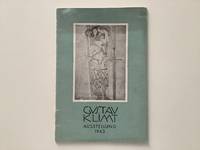
194319066AB1943. Vienna Der Reichsstatthalter in Wien 1943. 23 : 155 cm. 8 leaves 16 plates. Illustrated original boards. Rare exhibition catalogue for Klimt's 80ties birthday held in the Secession building during the occupation of Austria through the Nazies. Shown were 100 items from oil-paintings water-colours and drawing. Introduction by Fritz Novotny. hardcover
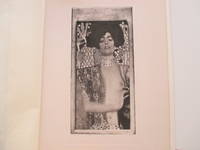
190115840AB1901. Vienna Herzig 1901. 45 : 34 cm. Original photoengraving in an gilt frame designed by Josef Hoffmann especially for Gustav Klimt. Contemporary beautiful photoengraving of Klimt's famous Judith. Published in the book 'Ars Nova' in 1901 shortly after Klimt finished the painting. In perfect condition and in a special frame designed by Josef Hoffmann especially for Gustav Klimt. Judith and the Head of Holofernes also known as Judith I German: Judith und Holofernesis an oil painting by Gustav Klimt painted in 1901. It depicts the biblical figure Judith holding the head of Holofernes after beheading him. The beheading and its aftermath have been commonly portrayed in art since the Renaissance. Judith was the biblical heroine who seduced and then decapitated General Holofernes in order to save her home city of Bethulia from destruction by the Assyrian army. When Klimt addressed the biblical theme of Judith the historical course of art had already codified its main interpretation and preferred representation. Many paintings exist describing the episode in a heroic manner especially expressing Judith's courage and virtuous nature. Judith appears as God's instrument of salvation but the violence of her action cannot be denied and is dramatically shown in Caravaggio's rendering as well as those of Gentileschi and Bigot. Other representations have depicted the subsequent moment when a dazed Judith holds Holofernes' severed head as Moreau and Allori anticipate in their suggestive mythological paintings. Klimt deliberately ignores any narrative reference whatsoever and concentrates his pictorial rendering solely on to Judith so much so that he cuts off Holofernes' head at the right margin. And there is no trace of a bloodied sword as if the heroine would have used a different weapon: an omission that legitimates association with Salome. The moment preceding the killing the seduction of Nebuchadnezzar's general seems to coalesce with the conclusive part of the story. unknown
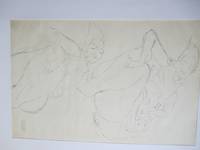
196420499AB1964. Graz Akademische Druck- und Verlagsanstalt 1964. 60 : 44 cm. With 25 reproductions after drawings by Gustav Klimt partly in colour loose as issued. Original cloth portfolio. Wonderful reproductions of 25 of the most famous drawings by Gustav Klimt. All drawings under passepartout and loose in original portfolio. A masterpiece of reproduction art. The portfolio of highlights his drawings. The scope and representative character of the collection offers works from all creative periods and studies on all of the artist's main works the numerous portraits of women from Viennese society and his major life themes such as love eros and Death as well as his erotic drawings with which he revolutionized the representation of the female naked body and paved the way for the expressionists Egon Schiele and Oskar Kokoschka. hardcover
198747620Frankfurt am Main : Fischer-Taschenbuch-Verlag, 1987. 87 S. : Ill. ; 19 cm broschiert
18910Lausanne / Paris, Bibliothèque des Arts, 1994 1 volume 23,5 x 27,5cm Cartonnage éditeur illustré couleurs en étui carton muet. 124p., 2 feuillets; nombreuses illustrations in texte, vignettes en noir et 60 planches couleurs. Très bon état.
Catalogue publié par l'Österreichische Galerie Belvedere ("Galerie autrichienne", musée d'art du Palais du Belvédère, à Vienne): 59 n°s avec reproductions couleurs à pleine page; précédé d'une note historique sur le Château du Belvédère et la "Galerie autrichienne" par son directeur Gerbert FRODL, et d'un texte sur "La Peinture autrichienne XIXè - début du XXè" par l'historien d'art autrichien Stephan KÖJA, conservateur de la collection de peintures du XIXè siècle de la "Galerie autrichienne", illustré de vignettes en noir; suivi de la présentation de 27 artistes avec portrait, notice biographique et bibliographie pour chacun d'eux, par Katja MIKSOVSKY; liste des 59 oeuvres exposées; bibliographie; photo couleurs du palais en frontispice. Titre précédé en couverture de "De Waldmüller à Klimt". Exemplaire bien complet de son étui. Français