KLIMT, GustavBiblio.com
73 résultats
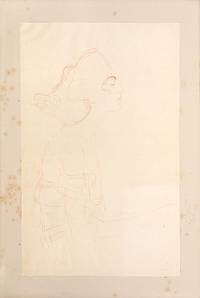
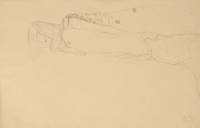
1919139054Vienna: Gilhofer & Ranschburg 1919. Edition of 500 and 10 proofs. Printed by The Art Institution Max Jaffé in Vienna and issued as one of 25 prints from the portfolio Fünfundzwanzig Handzeichnungen. Collotype on matt art paper tipped onto thin cream card with mount as issued. Sheet size: 34 x 51.3 cm. Excellent condition. unknown
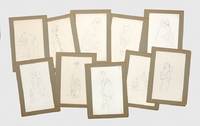
1922153802Vienna Berlin Leipzig Munich: Rikola Verlag 1922. First edition first printing of this scarce publication printed four years after Klimt's death. It is unlikely more than 1000 copies were printed due to the nature of printing collotypes. Rikola Verlag were advocates of the Vienna Seccession movement; they purchased all of Egon Schiele's original lithographic prints and etching plates in the same year and sold them as a collected portfolio. It is accompanied by a booklet edited by Gustav Glück director of the Gemäldegalerie Vienna 1916-31 who went so far as to say that the Austrian artist's work could only be understood through his drawings. Quarto. 8 pp booklet and 10 loose plates. 10 collotypes of portraits and nudes after drawings by Klimt on white wove paper approx. 23 x 14.9 cm tipped onto grey paper 27 x 20 cm as issued. Edges and corners of grey mount paper chipped not affecting the images otherwise all in very good condition. Lacking the original envelope. unknown
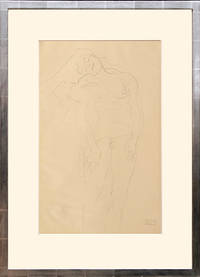
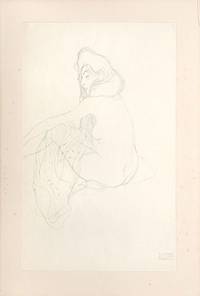
1919138284Vienna: Gilhofer & Ranschburg 1919. Edition of 500 and 10 proofs. Printed by The Art Institution Max Jaffé in Vienna and issued as one of 25 prints from the portfolio Fünfundzwanzig Handzeichnungen. Collotype on matt art paper tipped onto thin cream card with mount as issued. Sheet size: 51.5 x 33 cm. Framed size 70.8 x 51.2 cm. Excellent condition. Presented in a handmade white gold leaf frame with conservation acrylic glazing. unknown
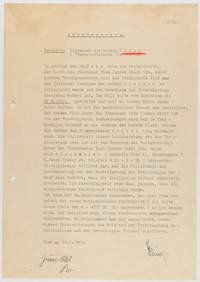
194027131940. Punched twice at the left edge. In fine condition. 1 page typed document. <p><br /> Important document about the Nazi-looted and subsequently privately sold Klimt’s masterpiece the Water Serpents II.<br /> <p><p><br /> Gustav Klimt’s Water Serpents II was painted between 1904 and 1907 and was originally commissioned for and owned by Jenny Eugenie Steiner neé Pulitzer; 1863–1958 the wife and at the time of the issue of the present document already the widow of a wealthy Viennese Jewish industrialist. The painting was apparently an asset of the late husband’s silk company “Brüder Steiner†as it is referred to in the document. In June 1938 after the Anschluss under the threat from the Nazis Jewish herself Jenny Steiner fled from Vienna and the painting together with several of her valuable tangibles including other works by Klimt and Egon Schiele was confiscated as Jewish property.<br /> <p><p><br /> In 1940 three of Steiner’s Klimt paintings including the Water Serpents II were offered on the sale of the leading Viennese auction house Dorotheum 458. Kunstauktion March 4–6.; the two other paintings were the Country House by the Atteree and the Portrait of Mäda Primavesi. Fleckner 2017 However by the intervention of Josef Bürckel then Gauleiter of Vienna the painting was withdrawn from the auction and sold privately to the Nazi filmmaker and alleged illegitimate son of Klimt Gustav Ucicky 1899–1961 through his second wife Inge Ingeborg Davis. The picture remained in Ucicky’s possession until his death in 1961 when his third wife Ursula née Kohn; b. 1922 inherited it. <br /> <p><p><br /> In 2013 Ursula Ucicky in agreement with the heirs of Jenny Steiner sold the Water Serpents II through Sotheby’s sharing the income 50/50. The painting reached the price of $112 million at the time the 6th most expensive painting in the world and the most expensive Klimt painting by then to be sold.<br /> <p><p><br /> The present typewritten and signed secretarial note Aktenvermerk. Betrifft: Ölgemälde des Malers Klimt “Wasserschlangenâ€Â was written on behalf of Hermann Drum 1911–1945 the administrative assistant Adjutant of Josef Bürckel the Gauleiter and later Reichsstatthalter too of Reichsgau Vienna in office as Gauleiter from 30 January 1939 as Reichsstatthalter from April 1 1940 until 2 August 1940 in regard the withdrawing from the auction and the private sale of Klimt’s Water Serpents II. See also in Lillie’s Was einmal war; note that in the book the intervener erroneously ascribed as Reichsstatthalter Baldur von Schirach in fact it was Gauleiter Bürckel. In the text Drum’s secretary summarizes how the painting ended up at the Dorotheum sale with the estimated value of 6000 Reichsmark states the wish of the Gauleiter that the painting should be sold privately to Mrs. Ucicky and delineates a plan developed together with dr. Deigelmaier an official from the local revenue service for withdraw and sell the painting out of the sale if an appropriate purchase offer would be made privately “ich halte einen Preis von 8–9000 RM für angemessen†/ “I think a price of 8–9;000 RM is reasonableâ€. The secretary misspells the name “Ucicki†and also mixes up the family relations claiming Mrs. Ucicky the descendant of Klimt.<br /> <p><p><br /> Rare and important document related to one of the most well-known Nazi-looted pictures. <br /> <p><p><br /> Literature: Fleckner U. et al. Markt und Macht Der Kunsthandel im »Dritten Reich«. De Gruyter 2017. pp. 304–9; Lillie S. Was einmal war: Handbuch der enteigneten Kunstsammlungen Wiens. Czernin 2003.<br /> <p>. unknown
1985DYTWW10415SMA 1985. Soft Cover. Fine. Number of books£º1 SMA paperback
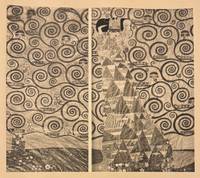
1931333711Vienna: Austrian State Printing Office 1931. Collotype print with chine colle 19 x 17 7/8 inches. Limited English edition.<br/> <br/> The Stoclet Frieze is a series of three mosaics 1905 - 1911 commission for the Stoclet Palace in Brussels Belgium. This image was in the first panel called 'The expectation'. Printed in 'Gustav Klimt Eine Nachlese An Aftermath' a portfolio of 30 collotypes prints 15 are multi-color and 15 are monochrome on chine colle paper laid down on heavy cream-wove paper with deckled edges; Max Eisler Editor-Publisher; Osterreichischer Staatsdruckerei Austrian State Printing Office Printer; in a limited edition of 500 numbered examples of which: 200 were printed in German 150 were printed in French and 150 were printed in English. Max Eisler 1881-1937 the publisher of the 1931 Aftermath portfolio was an art historian at Vienna University specializing in modern and contemporary arts and crafts whose 1920 book on Klimt was the first Klimt monograph. Some foxing and toning but otherwise in good condition. Gustav Klimt 1862-1918 was a celebrated Austrian symbolist painter and a leader of the Vienna Secession movement. His work which helped define Art Nouveau in Europe is known for its ornate style.<br/> <br/> Austrian State Printing Office unknown
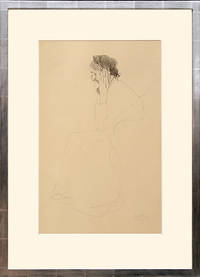
1919157501Vienna: Gilhofer & Ranschburg 1919. Edition of 500 and 10 proofs. Printed by The Art Institution Max Jaffé in Vienna and issued as one of 25 prints from the portfolio Fünfundzwanzig Handzeichnungen. Collotype on matt art paper tipped onto thin cream card with mount as issued. Sheet size: 52.3 x 33.5 cm. Framed size 70.8 x 51.2 cm. Foxing to mount otherwise in excellent condition. Presented in a handmade white gold leaf frame with conservation acrylic glazing. unknown
1919157499Vienna: Gilhofer & Ranschburg 1919. Edition of 500 and 10 proofs. Printed by The Art Institution Max Jaffé in Vienna and issued as one of 25 prints from the portfolio Fünfundzwanzig Handzeichnungen. Collotype on matt art paper tipped onto thin cream card with mount as issued. Sheet size: 51.4 x 33 cm. Framed size 70.8 x 51.2 cm. Excellent condition. Presented in a handmade white gold leaf frame with conservation acrylic glazing. unknown
1919138276Vienna: Gilhofer & Ranschburg 1919. Edition of 500 and 10 proofs. Printed by The Art Institution Max Jaffé in Vienna and issued as one of 25 prints from the portfolio Fünfundzwanzig Handzeichnungen. Collotype on matt art paper tipped onto thin cream card with mount as issued. Sheet size: 52.3 x 32.3 cm. Framed size 70.8 x 51.2 cm. Excellent condition. Presented in a handmade white gold leaf frame with conservation acrylic glazing. unknown
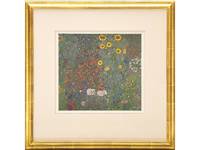
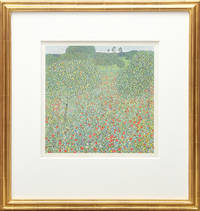
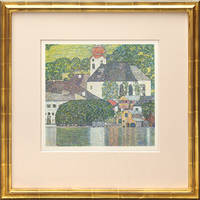
1931182243Vienna: Osterreichischen Staatsdruckerei 1931. One of 30 prints from the Eine Nachlese/Dernière gerbe/An Aftermath portfolio. The first reproduction of Klimt's original painting. Max Eisler 1881-1937 the publisher of this print was an art historian at Vienna University who published the first Klimt monograph in 1914. He intended Eine Nachlese to complement Das Werk the only folio set produced in Klimt's lifetime which was overseen by Klimt up to 1913. Fragile hand-printed collotype plates cannot be reused so the run must be completed on the first go and in only a limited number. The complicated lengthy process involves gelatin colloids mixed with dichromates. Thin 16-colour separation glass filters achieve the light-sensitive internegative images which capture the original tonal gradations. These are exposed to actinic light. Finally the delicate chine colle paper allows for greater colour saturation. Edition of 500. Collotype in colours on chine colle paper laid down on heavy cream wove paper with untrimmed deckled edges. Image size: 29.8 x 30.1 cm. Sheet size: 48 x 45.5 cm. Framed size: 59 x 56.3 cm. Small public library stamp lower left minor spotting to margins otherwise in excellent condition. Presented in a handmade gold leaf frame with conservation acrylic glazing. unknown
1919139055Vienna: Gilhofer & Ranschburg 1919. Edition of 500 and 10 proofs. Printed by The Art Institution Max Jaffé in Vienna and issued as one of 25 prints from the portfolio Fünfundzwanzig Handzeichnungen. Collotype on matt art paper tipped onto thin cream card with mount as issued. Sheet size: 33 x 51.5 cm. Excellent condition. unknown
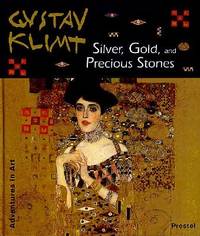
2000Q-3791323288Prestel Pub 2000-04-01. Paperback. New. In shrink wrap. Looks like an interesting title! Prestel Pub paperback
1995BN252673338 Abb. davon 208 farb.Hatje Cantz Verlag 1995. 1995. Sehnsucht nach Glück. Wiens Aufbruch in die Moderne: Klimt Kokoschka Schiele Marian Bisanz-Prakken Gottfried Friedl Gerbert Frodl <br/><br/>Sehnsucht nach Glück. Wiens Aufbruch in die Moderne: Klimt Kokoschka Schiele Marian Bisanz-Prakken Gottfried Friedl Gerbert Frodl Schulze Sabine Gustav Klimt und Egon Schiele 338 Abb., davon 208 farb.Hatje Cantz Verlag unknown
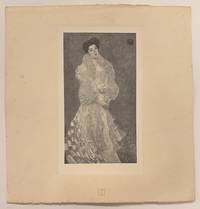
1908333530H.O. Miethke 1908. Collotype print with chine colle 18 x 18 inches. Limited edition subscription print.<br/> <br/> Wearing a shimmering dress made of translucent white chiffon Hermine Gallia appears almost to float. She was a patron of the arts in Vienna and commissioned Klimt to paint her portrait in 1904. This print after the painting is from a limited edition series called 'Das Werk Gustav Klimt'. The portfolio of 50 collotypes includes some on chine colle paper laid down on hand-made heavy cream wove paper with deckled edges. Under each of the 50 prints is a gold signet intaglio printed on the cream paper which Klimt designed for the publication relating to its corresponding image. Between 1908 and 1914 H.O. Miethke published a total of 5 installments of print folios of Klimt's painted work each comprising 10 prints available by subscription. Some foxing and toning slight creasing but otherwise in good condition. Gustav Klimt 1862-1918 was a celebrated Austrian symbolist painter and a leader of the Vienna Secession movement. His work which helped define Art Nouveau in Europe is known for its ornate style.<br/> <br/> H.O. Miethke unknown
1931187435Vienna: Österreichische Staatsdruckerei 1931. One of 30 prints from the Eine Nachlese portfolio. The first reproduction of Klimt's original painting. Max Eisler 1881-1937 the publisher of this print was an art historian at Vienna University who published the first Klimt monograph in 1914. He intended Eine Nachlese to complement Das Werk the only folio set produced in Klimt's lifetime which was overseen by Klimt up to 1913. The collotype produces fine tonal gradations sharp detail and a continuous-tone effect unmatched by most other photomechanical processes. However the surface of the gelatin-coated plate is extremely delicate and can break down under friction or over-inking. Plates wear out quickly giving a short print-run and maintaining consistent humidity during printing is crucial - even small fluctuations can ruin the plate. As a result collotype printing is slow exacting and vulnerable to failure but when successful it yields some of the finest printed images ever produced. Edition of 500. Collotype in colours on chine colle paper laid down on heavy cream wove paper with untrimmed deckled edges. Image size: 30.8 x 30.5 cm. Sheet size: 48 x 45.5 cm. Presented in a handmade gold leaf frame with conservation acrylic glazing. Support paper cleaned otherwise in excellent condition. unknown
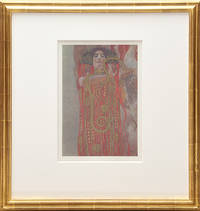
1931187438Vienna: Osterreichischen Staatsdruckerei 1931. One of 30 prints from the Eine Nachlese/Dernière gerbe/An Aftermath portfolio. Medizin was one of 16 original paintings by Klimt destroyed on 8 May 1945. The paintings were stored in the Schloss Immendorf a 16th-century castle in Lower Austria which was set on fire by a retreating tank division of the German army. Max Eisler 1881-1937 the publisher of this print was an art historian at Vienna University who published the first Klimt monograph in 1914. He intended Eine Nachlese to complement Das Werk the only folio set produced in Klimt's lifetime which was overseen by Klimt up to 1913. The collotype produces fine tonal gradations sharp detail and a continuous-tone effect unmatched by most other photomechanical processes. However the surface of the gelatin-coated plate is extremely delicate and can break down under friction or over-inking. Plates wear out quickly giving a short print-run and maintaining consistent humidity during printing is crucial - even small fluctuations can ruin the plate. As a result collotype printing is slow exacting and vulnerable to failure but when successful it yields some of the finest printed images ever produced. Edition of 500. Collotype in colours with metallic gold on chine colle paper laid down on heavy cream wove paper with untrimmed deckled edges. Image size: 31.4 x 21.2 cm. Sheet size: 48 x 45.5 cm. Framed size: 59 x 56.3 cm. Presented in a handmade gold leaf frame with conservation acrylic glazing. Support paper cleaned otherwise in excellent condition. unknown
1919139056Vienna: Gilhofer & Ranschburg 1919. Edition of 500 and 10 proofs. Printed by The Art Institution Max Jaffé in Vienna and issued as one of 25 prints from the portfolio Fünfundzwanzig Handzeichnungen. Collotype on matt art paper tipped onto thin cream card with mount as issued. Sheet size: 33.2 x 51.2 cm. Framed size: 53.3 x 69.7 cm. Excellent condition. Presented in a handmade white gold leaf frame with conservation acrylic glazing. unknown
1978C86530Rizzoli. As New. 1978. Hardcover. FREE UPGRADE to Courier/Priority Shipping Upon Request - IN STOCK AND IMMEDIATELY AVAILABLE FOR SHIPMENT - AS NEW THE TEXT BLOCK IS PRISTINE CLEAN UNMARKED AND IN EXCELLENT CONDITION - - 112 pages with 272 illustrations including 64 in color. Catalogue Raisonné Catalogue Raisonne Catalog Raisonnee Catalogo delle Opere L'Opera Completa Complete Works -- with a bonus offer-- - May be EITHER: out of print OOP and extremely rare in this pristine condition; signed by author or contributor; or a first or special edition; inquire for details . Rizzoli hardcover
197886530Rizzoli. As New. 1978. Hardcover. FREE UPGRADE to Courier/Priority Shipping Upon Request - IN STOCK AND IMMEDIATELY AVAILABLE FOR SHIPMENT - AS NEW THE TEXT BLOCK IS PRISTINE CLEAN UNMARKED AND IN EXCELLENT CONDITION - - 112 pages with 272 illustrations including 64 in color. Catalogue Raisonné Catalogue Raisonne Catalog Raisonnee Catalogo delle Opere L'Opera Completa Complete Works Rizzoli hardcover
199910987VB1999. Saur 1999. 770 S. Hardcover. Versand aus Deutschland / We dispatch from Germany via Air Mail. Einband bestoßen daher Mängelexemplar gestempelt sonst sehr guter Zustand. Imperfect copy due to slightly bumped cover apart from this in very good condition. Stamped. hardcover
200040983New Haven & Vienna: Yale / DuMont 2000. First American Edition. Folio 32cm.; publisher's boards in pictorial dust jacket; 256pp.; photographic portrait frontispiece color illus. throughout. Some light shelf wear else Very Good to Near Fine. Exhibition catalog. Yale / DuMont unknown
200085423Cologne; New Haven: DuMont; Yale University Press 2000. Hardcover. Fine copy in fine dust jacket; DJ is lightly edgeworn but there are no tears; o/w DJ is clean and bright; boards are clean and bright; pages are clean crisp bright and free of marks and creases; edges of pages are clean; binding is tight and square. Octavo in blue pictorial board in dust jacket of same illustration; illus. some color; 256 pp. 32 cm. In English. Contents: Gustav Klimt -- painter between the times / Gerbert Frodl -- Fin-de-siecle Vienna and the ambivalence of modernism / Heidemarie Uhl -- The Habsburg State and Gustav Klimt scenes from a fruitful relationship / Jeroen Van Heerde -- Of sweet young things and femmes fatales. Gustav Klimt and women around 1900. A path to freedom / Regine Schmidt -- Gender asymmetries in Viennese moderninsm / Lisa Fischer -- "Alma my Alma" -- Gustav Klimt and Alma Schindler / Hansjorg Krug -- Gustav Klimt and women's fashion / Angela Volker.Gustav Klimt and photography / Franz Eder -- Princesses without a history Gustav Klimt and "the community of all who create and all who enjoy" / Tobias G. Natter -- Gustav Klimt: female portraits / Tobias G. Natter -- Portrait and pose. On the representational image of the "feminine" at the Fin de siecle / Monika Pessler and Thomas Trummer -- Klimts studies for the portrait paintings / Marian Bisanz-Prakken -- Judith / Daniela Hammer-Tugendhat -- The compositional concept of "The Kiss" / Hans Bisanz. The two-fold woman water-snakes / Neda Bei -- The three stages of life / Alessandra Comini. DuMont; Yale University Press hardcover
1931181945Vienna: Osterreichischen Staatsdruckerei 1931. One of 30 prints from the Eine Nachlese portfolio. Max Eisler 1881-1937 the publisher of this print was an art historian at Vienna University who published the first Klimt monograph in 1914. He intended Eine Nachlese to complement Das Werk the only folio set produced in Klimt's lifetime which was overseen by Klimt up to 1913. The collotype produces fine tonal gradations sharp detail and a continuous-tone effect unmatched by most other photomechanical processes. However the surface of the gelatin-coated plate is extremely delicate and can break down under friction or over-inking. Plates wear out quickly giving a short print-run and maintaining consistent humidity during printing is crucial - even small fluctuations can ruin the plate. As a result collotype printing is slow exacting and vulnerable to failure but when successful it yields some of the finest printed images ever produced. Edition of 500. Collotype in colours on chine colle paper laid down on heavy cream wove paper with untrimmed deckled edges. Image size: 30.8 x 31 cm. Sheet size: 48 x 45.5 cm. Framed size: 59 x 56.3 cm. Presented in a handmade gold leaf frame with conservation acrylic glazing. Excellent condition. unknown
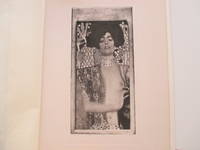
190115840AB1901. Vienna Herzig 1901. 45 : 34 cm. Original photoengraving in an gilt frame designed by Josef Hoffmann especially for Gustav Klimt. Contemporary beautiful photoengraving of Klimt's famous Judith. Published in the book 'Ars Nova' in 1901 shortly after Klimt finished the painting. In perfect condition and in a special frame designed by Josef Hoffmann especially for Gustav Klimt. Judith and the Head of Holofernes also known as Judith I German: Judith und Holofernesis an oil painting by Gustav Klimt painted in 1901. It depicts the biblical figure Judith holding the head of Holofernes after beheading him. The beheading and its aftermath have been commonly portrayed in art since the Renaissance. Judith was the biblical heroine who seduced and then decapitated General Holofernes in order to save her home city of Bethulia from destruction by the Assyrian army. When Klimt addressed the biblical theme of Judith the historical course of art had already codified its main interpretation and preferred representation. Many paintings exist describing the episode in a heroic manner especially expressing Judith's courage and virtuous nature. Judith appears as God's instrument of salvation but the violence of her action cannot be denied and is dramatically shown in Caravaggio's rendering as well as those of Gentileschi and Bigot. Other representations have depicted the subsequent moment when a dazed Judith holds Holofernes' severed head as Moreau and Allori anticipate in their suggestive mythological paintings. Klimt deliberately ignores any narrative reference whatsoever and concentrates his pictorial rendering solely on to Judith so much so that he cuts off Holofernes' head at the right margin. And there is no trace of a bloodied sword as if the heroine would have used a different weapon: an omission that legitimates association with Salome. The moment preceding the killing the seduction of Nebuchadnezzar's general seems to coalesce with the conclusive part of the story. unknown
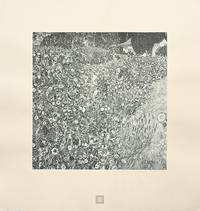
1931142901Vienna: Österreichische Staatsdruckerei 1931. Edition of 500. One of 30 prints from the Eine Nachlese portfolio. Max Eisler 1881-1937 the publisher of this print was an art historian at Vienna University who published the first Klimt monograph in 1914. He intended Eine Nachlese to complement Das Werk the only folio set produced in Klimt's lifetime which was overseen by Klimt up to 1913. Fragile hand-printed collotype plates cannot be reused so the run must be completed on the first go and in only a limited number. The complicated lengthy process involves gelatin colloids mixed with dichromates. Thin 16-colour separation glass filters achieve the light-sensitive internegative images which capture the original tonal gradations. These are exposed to actinic light. Finally the delicate chine colle paper allows for greater colour saturation. Dark blue grey monochrome collotype on chine colle paper laid down on heavy cream wove paper with untrimmed deckled edges. Image size: 30.9 x 31.1 cm. Sheet size: 48 x 45.5 cm. Excellent condition. unknown