PICASSO, PabloBiblio.com
5 351 résultats
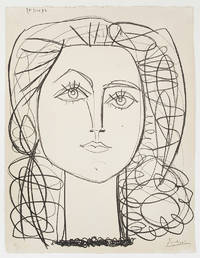
1225291946 . Lithograph 14 June 1946 on Arches wove paper signed in pencil by the artist numbered from the edition of 50 64 x 49.5 cm. 25¼ x 19½ in.<br /> Françoise Gilot was Pablo Picasso's muse and lover during the period 1943-1953. This decade spent together was to be one of the most transformative periods of Picasso's artistic career; Europe was emerging from World War II the artist left Paris for his first residence in the South of France at Vallauris and he and Gilot became parents to children Claude and Paloma. Françoise Gilot was just twenty-one years old and an art student in Paris when she first met Picasso presenting a forty-year age gap between the couple. Picasso had grown tired of his then mistress Dora Maar and swiftly became consumed with Gilot's striking beauty and vitality. He created numerous portraits of Gilot throughout their relationship often in a hyper-stylised abstract manner. In this lithograph Picasso uses his simplified mark-making to capture her characteristic dark arching eyebrows luscious locks and youthful doe-eyed face.<br /> Bloch 399; Mourlot 43; Reuße 150. 1946 unknown
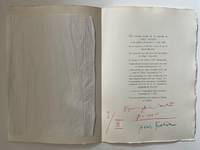
1950331546Paris: Fragrance 1950. Limited. unbound. fine. Picasso. Ten Poems by the West Indian Martinique poet Aime Cesaire together with an abundance of finely printed illustrations by Picasso: an etched title on the cover a fine original etching/drypoint portrait frontispiece 10 aquatints each illustrating a poem title and 20 drypoint engravings all on Montval wove paper with a "Corps Perdu" watermark. Folio. Folded sheets loose as issued in original white printed paper wrappers; housed in a vellum-backed orange board chemise and orange board slipcase. One skillfully mended repair on rear paper wrapper otherwise an immaculate copy in very fine condition.<br/> <br/> Limited first edition. From a total printing of 219 copies there are five distinct variants on different papers but this is perhaps the most special iteration of this unusual book -- not listed on the limitation page -- being number I of only III copies reserved for the artist himself; inscribed by Picasso in blue & red pencil on the limitation page to Felia Leal a close friend and the publisher of this edition and containing an entire extra suite of all 32 plates printed on Vieux Japon in a folder which Picasso has handwritten "Suite de Corps Perdu Picasso" in blue pencil. <BR> <BR> Cesaire was the "figurehead of the 1930s Negritude movement in France a group of writers who hoped to foster a sense of shared heritage throughout the African diaspora reasserting their identities in opposition to Western colonial perspectives" MoMA. Picasso became friendly with Cesaire when they met in Poland at the 1948 Communist-led World Congress of Intellectuals for Peace and they soon collaborated on this important book. Cesaire wrote the poems intertwined surrealistic pieces that explore themes related to dreams the unconscious and the irrational. A powerful surrealist exploration of the colonial legacy of dispossession and violence calling for a radical renewal of identity through the reclamation of the "lost body" of the black individual and collective and Picasso created the spare drawings a fusion of male and female sexual organs with plant and insect-inspired forms evocative of the Cuban painter Wilfredo Lam. -- Bloch 632-633; Baer 840-871; Cramer 56. <BR> <BR> "Crowned Poet" the excellent frontispiece was used for the poster for the first Congress of Black Writers and Artists organized by Presence Africaine at the Sorbonne in 1956.<br/> <br/> Fragrance unknown
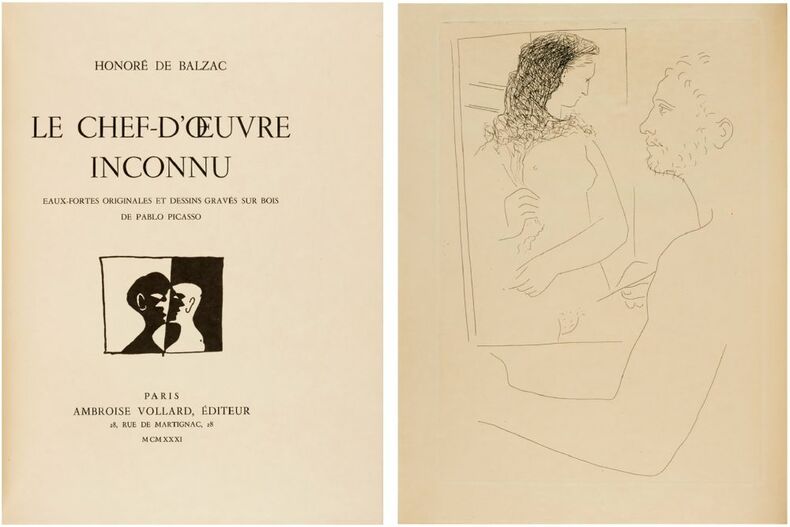
19313114Paris, Ambroise Vollard Éditeur, 1931. Un volume in-4 (32 x 24 cm). Remarquable reliure "sculptéee de Paul Bonet en plein box bleu nuit et décor polychome en relief, chemise et étui (signée et datée de 1944). - 12 EAUX-FORTES ORIGINALES EN HORS-TEXTE et 1 EAU-FORTE pour la "table des eaux-fortes" GRAVÉES PAR PABLO PICASSO. - UNE SUITE COMPLÈTE DES 12 GRAVURES HORS-TEXTE SUR VÉLIN DE RIVES. - Dessins de l'artiste gravés sur bois par Georges Aubert et tirés en in-texte. Une "préface" de 16 pages de dessins composés de points et de traits dessinés par Picasso en 1924 également gravés sur bois par Aubert. Tirage : 340 exemplaires (65 Japon + 240 vélin de Rives + 35 H.C.). Celui-ci 1 DES 65 EXEMPLAIRES SUR JAPON IMPÉRIAL, LES SEULS SIGNÉS AU PINCEAU PAR PICASSO et monogramés à la plume par Vollard, avec UNE SUITE COMPLÈTE DES 12 GRAVURES HORS-TEXTE SUR VÉLIN DE RIVES. - Dans une extraordinaire reliure "sculptée" de Paul Bonet, datée 1944 : "box bleu corbeau, un grand caisson ovale occupe presque chaque plat, encadrant un grand motif abstrait sculpté et couvert de veau de différentes couleurs vives" (Carnets, n°692), couverture conservée, chemise, étui. Bonet n'a réalisé qu'une poignée de ces fameuses reliures sculptées qui sont très recherchées. Celle-ci étant l'une des plus réussies et des plus élégantes. —— ENGLISH DESCRIPTION: Paris, Ambroise Vollard Éditeur, 1931. Illustrated with 12 original etchings by Pablo Picasso (and 1 for the plate "Table des eaux-fortes") and numerous woodcuts by G. Aubert after the drawings by Picasso. One of 65 NUMBERED ON JAPAN PAPER SIGNED BY PICASSO AND VOLLARD with an EXTRA SUITE of the 12 original etchings on Rives paper. Only the 65 numbered on japan paper are signed by Picasso and Vollard. Mint condition. Outstanding "sculptural" binding by Paul Bonet, dated 1944: "raven blue box, a large oval box occupies almost each cover, framing a large abstract motif carved and covered with calfskin in different bright colors" (Carnets, n°692), cover preserved, folder, case.
1955147884Paris: Galerie Louise Leires 1955. Signed by Picasso Edition of 50. Signed in pencil lower right by Picasso numbered lower left. Aquatint and drypoint on vélin d'Arches watermarked wove paper all edges untrimmed. Plate size: 64.6 x 49.7 cm. Sheet size: 76.5 x 57 cm. Framed size: 105 x 88 cm. Paper toned hinging tape to upper edge and corners of verso otherwise bright. Presented in a white gold frame with conservation acrylic glazing. Bloch 771; Baer 927. unknown
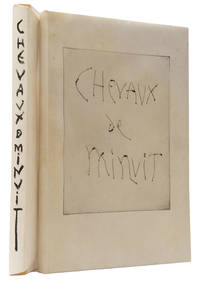
109080Cannes & Paris Degré Quarante et Un 1956. . Limited edition one of 52 copies on vieux Japon from a total edition of 68 signed by Picasso and Ililazd; folio 32 x 22 cm; with 12 engravings of which 2 are hors texte and 10 are in text; pages are folded in three with engraving in centre and text either side; in original vellum wrappers with a drypoint etching on the cover in a folded vellum sleeve with the spine imprinted with the title vellum wrappers slightly stained otherwise a fine copy.<br /> One of 52 copies Chevaux de minuit is one of Picasso and Iliazd's most successful collaborations. 'Picasso's stylistic range from the animals of the 1942 Buffon to these horses is a vast one. Here he has restricted himself to an extreme simplification of outline accented only by the drypoint burr yet vividly descriptive of movement. The typographic layout by Iliazd carefully balances and sometimes echoes the design of the plates' Artist and the Book<br /><br />The poem Chevaux de Minuit by Roch Grey pseudonym of Baroness Hélène Oettingen was edited by Iliazd after her death in 1950. The two had been friends and Ilia Zdanevich felt that the writer's work had been under-appreciated in her lifetime having not received recognition in either mainstream or avant-garde literary circles. It was his aim especially in the later part of his career to bring to light the work of marginal writers by collaborating with famous artists many of whom were his close companions.<br /> Cannes & Paris, Degré Quarante et Un, 1956. hardcover
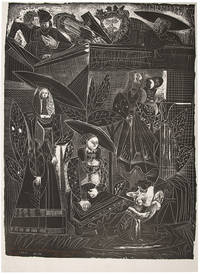
1120381949 . Lithograph 1949 on Velin Arches paper inscribed dated and signed lower left in red chalk 'Pour Geneviève Laporte épreuve unique 26.5.51 Picasso' a rare unique print dedicated to Geneviève Laporte his lover during the 1950s aside from the six artist's and printer's proofs image: 64.5 x 47.7 cm. 25.4 x 18.8 in. sheet: 70 x 50 cm. 27.5 x 19.7 in.<br /> This work is a unique proof gifted to Geneviève Laporte 1926-2012 Picasso's lover during the 1950s. In 1951 Picasso and Laporte began an affair which lasted for two years and during which time the artist presented her with a number of his works. A poet and writer herself Laporte published her book 'Sunshine at Midnight: Memories of Picasso and Cocteau' in 1973 in which she recounts Picasso giving her the current work: <br />'He Picasso also pulled out a lithograph to show me a David and Bethsabée after a painting by Cranach. The date on the first proofs appeared in reverse because for once said Picasso he had forgotten that it had to be written back to front on the zinc. The plate shows Bethsabée richly dressed seated in a garden and stretching out her foot to be washed by a serving woman while David peers down at her with lust in his eye from a terrace above The proof Picasso showed me was pulled on a sheet of paper which had a silken feel. 'It's Chinese paper' Picasso told me. They don't make much of it anymore. This is the only proof of this state.' He looked at me while I fascinated by the lithograph remained silent. Then Picasso said with a smile: 'Tell me as you used to do what you think of it.' I remained speechless tongue- tied by the beauty and force radiating from this black and white linear image he put it on the table took a red pencil and wrote: Pour Geneviève Laporte épreuve unique. Then he added the date and remarked: 'It's for you. Take care of it because your print is unique.' Then he disappeared into a cupboard and returned with a very simple white wooden frame. Picasso himself put the lithograph into this frame and Marcel brought it round to my apartment that evening.' Laporte Geneviève. Sunshine at Midnight: Memories of Picasso and Cocteau 1973 Weidenfeld ad Nicolson London p.89-90. <br /><br />In the late 1940s Picasso entered his 'old master period' spending the next decade studying and reworking masterpieces of the past to rewrite them in his own visual language. This work is based on a painting by the German Renaissance painter and printmaker Lucas Cranach the Elder and depicts the biblical King David gazing upon the beautiful Bethsabée as she bathes. Noted for the use of contour and absence of chiaroscuro in his works Cranach was a highly skilful and much revered printmaker. Picasso greatly admired the Master Printmakers who had come before him highlighting the importance of the medium in Picasso's own work.<br /> Mourlot 109 State 10a or 10 bis; Bloch 442; Hatje Cantz 214 1949 unknown
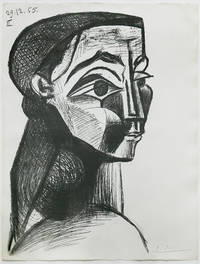
1070751955 . Lithograph 1955 on Arches wove paper signed in pencil by the artist numbered 25/50 from the edition of 50 printed by Mourlot Paris published by Galerie Louise Leiris Paris sheet: 66.4 x 50 cm. 26 x 19¾ in.<br /> This abstract three-quarter profile is of Picasso's second wife Jacqueline Roque. The couple met during the summer of 1952 whilst Roque was working at Georges and Suzanne Ramié's Madoura pottery works in Vallauris the studio where Picasso made his ceramics in the South of France. The couples love endured until the artist's death in 1973 Picasso adored Jacqueline so much so that for seventeen of the twenty years the couple spent together - the longest relationship of Picasso's life - Roque was the only female Picasso painted. When Picasso embarked on his late great period his biographer John Richardson succinctly defined and characterised as 'l'époque Jacqueline.' In this lithograph Picasso bestows Roque with an elegant sphinx-like appearance. The straight line of the nose which extends directly from the forehead to the tip is particularly evocative of these ancient Egyptian sculptures as well as in the calm gaze in her characteristically almond-shaped eyes.<br /> Bloch 780; Mourlot 272. 1955 unknown
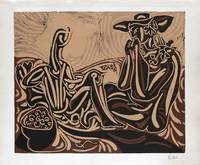
1959149973Paris: Galerie Louise Leiris 1959. Edition of 50. Signed in pencil lower right by Picasso numbered lower left. Linocut printed in black mauve brown and beige on Arches wove paper. Image size 53 x 63.8cm. Sheet size 62 x 75cm. Framed size: 85.5 x 95.3 cm. Small closed tear to extreme lower edge not affecting the image and hidden by the mount otherwise in excellent condition. Presented in a black gesso and gilt frame. Bloch 937; Baer 1241. unknown
1205161962 . Linocut in colours 1962 on Arches paper signed in pencil and numbered from the edition of 160 there were also approximately twenty artist's proofs published by Galerie Louise Leiris Paris sheet size: 61.2 x 75 cm. 24 x 29.5 in.<br /> <br /> B. 1098; Baer 1301. 1962 unknown
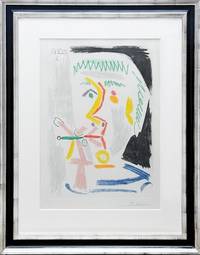
1964181688Paris: Galerie Louise Leiris 1964. Printed by Pennequin for Atelier Crommelynck. Edition of 50. Soft ground etching and aquatint in colours on Auverne Richard de Bas watermarked wove paper all edges untrimmed. Signed in pencil lower right by Picasso numbered lower left. Plate size 59.7 x 42.6 cm. Sheet size: 57.6 x 78.6 cm. Framed size: 98 x 78.5 cm. Presented in a black gesso and white gold frame with conservation acrylic glazing. Very minor spotting to margins otherwise a bright clean image. Baer 1168. Bloch 1168B. unknown
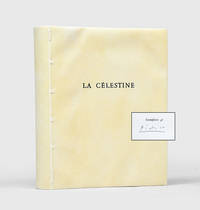
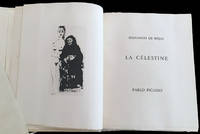
1971166837Paris: Éditions de l'Atelier Crommelynck 1971. 66 original Picasso etchings First edition first printing number 36 of 350 copies signed by the artist. La Celestina a major work of Spanish literature first printed in 1499 here translated by Pierre Heugas was illustrated by Picasso as part of the famous 347 series for which Picasso etched 347 plates between March to October 1968 all printed by the Crommelynck brothers. Octavo. With 66 full page original etchings and aquatints of varying sizes dated between 11 April and 18 August 1968 printed on Richard-de-Bas laid paper with La Célestine watermark. Original full parchment boards lettering to front cover in black. Parchment and paper dust jacket lettering to spine in black. Housed in a parchment covered slipcase. Housed in a black cloth flat-back box by the Chelsea Bindery. A fine copy in a fine slipcase. Cramer Illustrated Books No. 140; Bloch 1602. hardcover
in-4 (325x250 mm), pp. XIV, con 67 composizioni figurative astratte di Picasso incise in legno da Aubert , pp. 92 di testo, (8), 13 acquaforti originali di Picasso f.t. Artistica legatura d'amatore, firmata da René Kieffer in pieno marocchino marrone interamente decorata con giochi di filetti a secco, punteggiata in oro, bordura in marocchino grigio, titolo in oro al dorso, taglio sup. dorato., sguardie in seta grigia, in elegante astuccio. Copertina originale conservata. Precede una prefazione del pittore Albert Besnard. Tiratura a 340 esemplari complessivi: il presente è il n. 230 dei 240 sur "papier de Rives". è illustrata da 67 disegni di Picasso, xilografati da George Aubert e da 13 acquaforti originali di Picasso a piena pagina fuori testo, stupende, nelle quali Picasso sviluppa uno dei suoi temi favoriti, quello del pittore e della modella. Uno dei più significativi e riusciti livres d'artiste del Novecento, nel quale Picasso cominciò ad utilizzare il tratteggio donando forza all'orizzonte prospettico della scena grazie al chiaroscuro. "En 1927 Vollard, à chargé l'artiste d'illustrer une réédition spéciale d'une nouvelle de Balzac datant de 1837. L'histoire de Balzac se situe au 17e siècle dans un studio de la rue des Grands Augustins à Paris ... Dans les années ‘30, par un étrange coup du destin, il loua le numéro 7, rue des Grands Augustins que lui et d'autres croyaient être la maison dans laquelle l'histoire commence. C'est à cette adresse en 1937, exactement cent ans après la dernière version de Balzac, que Picasso a peint son célèbre chef-d'oeuvre, Guernica". Esemplare magnifico, a pieni margini.. Chapon, Le peintre et le livre, p.281: Le peintre et le livre, p.281: ''Picasso a multipié les manières de créer..il execute une série de variations constituées de droites, de courbes, de figures géometriques. Aux extrémités des points...''. Cramer n.20. Rauch n.53..
1950154025Paris & New York: L'Image Littéraire & R. Finelli-Feugère 1950. With an additional suite of Braque colour separations First edition first printing number 29 of 150 copies signed by all the artists and authors with each print numbered and signed by the respective artist and Robert Rey. This copy with an additional suite of 46 sheets with colour separations of Braque's print housed in separate wrappers lettered in black. The print titles included are: Braque "Nature morte au huitres"; Brianchon La neige a auteuil; Chagall La sirène; Desnoyer Liseuses au bord de mer; Dufy Le casino de la jetée a Nice; Laurencin Portrait de femme en rouge; Matisse Nature morte au magnolia; Picasso La cassarole Émaillée; Utrillo Le jardin de Montmagny; Van Dongen Tête de femme; Vlaminck Les blés dans la perche; and Waroquier Dolori sacrum. Folio. 12 colour woodcuts after each of the artists printed on Van Gelder Zonen wove paper with one edge untrimmed. Sheet sizes: 46.5 x 36 cm. Unbound sheets printed on Van Gelder Zonen wove paper in white wrappers titles to front cover in red. With glassine dust jacket. Housed in the publisher's blue morocco clamshell box titles to front cover and spine gilt. All contained in the original card packing box. Closed tear to front wrapper and glassine hinge of clamshell box split minor foxing in places otherwise a bright unfaded set. unknown
1971N - 2024 - 120<p>Paris Éditions de l'atelier Crommelynck 1971. La tragicomedia de Calisto y Melibea known as La Celestina novel attributed to Fernando de Rojas published in 1499 illustrated by Picasso with 66 etchings with aquatints dated in plate between April 11 and August 19 1968 unsigned. The etchings done for la Celestine are part of the 347 series Picasso worked to the etchings almost daily with Aldo and Pietro Crommelynck at their atelier in Mougins using different techniques. After the impressions were pulled 66 etchings were chosen by Picasso to illustrate La Celestine. The character of La Celestine was first portrayed by Picasso on a painting in 1903. Limited numbered editions in 400 copies on Richard de Bas laid paper watermarked La Celestine. Copy n 48 signed on justification page by Picasso in pencil. Bound in parchment board protective jacket and slipcase. Ref: Cramer 149. Complete and in very good condition.</p> Éditions de l'atelier Crommelynck hardcover
194048600Paris.: Le Degré Quarante et Un. 1940. Loose as issued in original publisher's printed parchment wrappers over card boards with title in black to upper cover original tan patterned paper board chemise and matching slipcase with label with 'ILIAZD / PICASSO' in blue ink to edge. Oblong 4to. 215 x 320 mm. Half-title original aquatint with 'arabesque' title leaf with justification in Russian verso leaf with justification in French leaf with title in French verso leaf with title in Russian leaf with original aquatint with second 'arabesque' and Iliazd's verse in Russian in double columns illustrated with 4 engravings with burin by Picasso final leaf with achevé d'imprimer in Russian. The first of Iliazd's beautiful and typographically inventive illustrated books and the first he produced with Picasso.From the edition limited to 64 copies on 'Montval à la cuve' signed by Picasso and Iliazd in pencil. 'Afat was the first of nine books Iliazd and Picasso collaborated on. All of them were published under the imprint of 'Degré Quarante et Un' a name Iliazd chose in memory of a school of futurist poetry called the 'University of the 41º' which he had founded in Tiflis in 1917 . Afat is a collection of 76 sonnets in Russian by Iliazd the majority of which were written between January and June 1938. In his poems Iliazd writes of love of feminine beauty of the poet's difficult métier and the hidden meaning of words. Three sonnets are about the poet's relationship to 'Pablo' Picasso.' Patrick Cramer.'Afat . contained features that would become signature elements of his work. The book was structured as a whole . The sequencing and number of pages were ordered by a mathematical scheme. The image was not linked to directly to the text thematically or physically and the interaction produced a dialogue rather than subordinating one to the other as illustration and / or caption. The sequence of blank sheets title half title and justification of the edition were laid out symmetrically so that the closing of the book echoed the opening . The typographic style was restrained and the pages produce subtle equilibrium instead of dynamic activity - no confusion no clamor no crowding no elaborate display faces. The sole decoration on the cover was the stamped title Afat a term that invokes unhappiness / and / or beauty that causes it rendered in kufic . With this work Iliazd's architectural approach to book structure with strong emphasis on symmetry and balance made its appearance.' Johanna Drucker.Cramer 33; see Johanna Drucker's 'Iliazd - A Meta-Biography of a Modernist' 2020 pp. 146 - 147. Le Degré Quarante et Un. hardcover
1960180667Paris: Atelier Crommelynck 1960. Printed and published by Atelier Crommelynck with their blind stamp lower right. Edition of 300. Signed in pencil lower right by Picasso. Etching and aquatint printed in colours on Arches wove paper all edges deckled. Plate size 32.5 x 43.7 cm. Sheet size: 50 x 66 cm. Framed size: 698 x 792 mm. Presented in a handmade black gesso and white gold frame with conservation acrylic glazing. Excellent condition. unknown
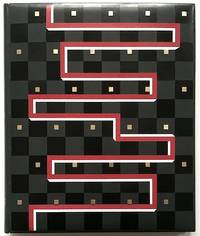
19312428Paris: Ambroise Vollard 1931. First edition. No. 217 of 240 copies on Rives paper of a total edition of 305. 13 original etchings by Pablo Picasso and 67 wood engravings after drawings by the artist engraved by George Aubert. Bound in gray calf by Renée Haas and collaborators Renaud Vernier and Claude Ribal. Front and back covers with a black and gray inlaid checkerboard pattern with alternating gold squares mounted each cover with inlaid red line vertically zigzagging with white mirrored line throughout lettered in gilt on the spine; all edges gilt; red suede doublures gray suede endleaves; morocco-tipped slipcase with suede-lined chemise spine mirroring volume spine text. Original wrappers bound in. An excellent copy. <br /> <br /> The binding dated 2008 is the work of three hands: the designer Renée Haas and Renaud Vernier and Claude Ribal executors of the binding. According to the Pierre Bergé catalogue description of the binding on Matisse's Jazz executed by the same trio in 1983 "Renée Haas reserved her talents only for a few lucky collectors hence the rarity of her bindings on the market today."<br /> <br /> In 1926 Ambroise Vollard commissioned illustrations from Picasso for The Unknown Masterpiece a formidable Balzacian reflection on pictorial creation in which his "text declares his aesthetic faith in artists and their search for inspiration despite their struggles to reach their goals." Johnson Artists' Books in the Modern Era. And as Strachan notes "who better than Picasso could understand and convey the restlessness of an artist battling with the inexpressible" "The diversity yet harmony of Picasso's genius is represented here by the inclusion of both abstract and classical styles in a single volume. The wood-engravings reproduce Cubist figures still-lifes and the sparkling 'constellation drawings' of 1926 while the etchings are classical in character combining pure line with cross-hatching." Garvey The Artist and the Book One of the most important livres d'artistes of the twentieth century; as Chapon notes "un des ouvrages qui fait le plus honneur à Vollard reste Le Chef-d'oeuvre Inconnu."<br /> <br /> Goeppert-Cramer Picasso no. 20; Hyza et. al. Picasso et le livre d'artiste pp. 56-57 ; Garvey The Artist and the Book 1860-1960 no. 225; Garvey & Wick The Arts of the French Book 1900-1965 no. 18; Johnson Artists' Books in the Modern Era no. 54; Mellby Splendid Pages p. 209; Coron De Goya à Max Ernst pp. 255-262; From Manet to Hockney 92; Skira Anthologie du Livre Illustré par les Peintures et Sculpteurs 293; Strachan The Artist and the Book in France pp. 60-62 339; Chapon Le Peintre et le Livre pp. 57 74-78 281. Carteret Le trésor du bibliophile: livres illustrés modernes 1875 à 1945 vol. 4 p. 51. Ambroise Vollard unknown
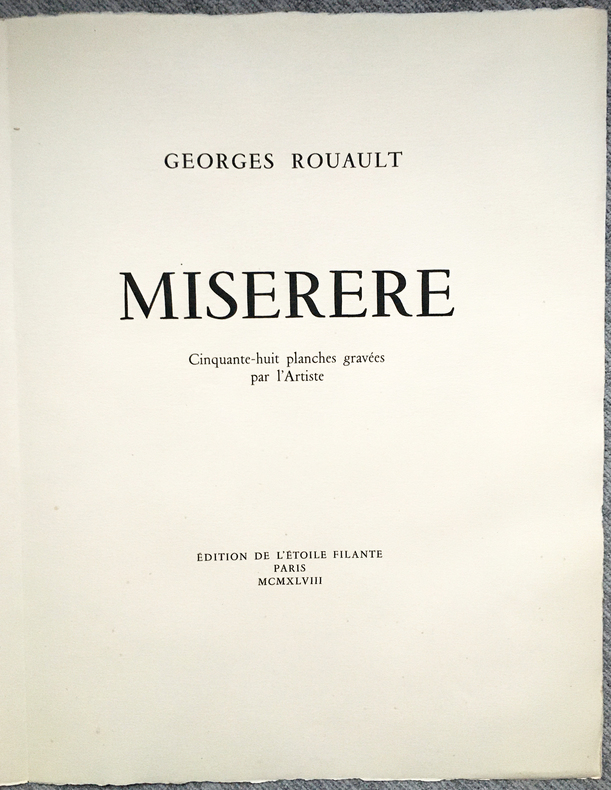
19481780Paris, Éditions de l’étoile filante, 1948, in-plano, sous emboitage titré avec attache métallique dorée (de l'éditeur). - LA SUITE COMPLÈTE DES 58 GRAVURES DU MISERERE, L'œuvre gravée capitale de Georges Rouault. - 4 planches supplémentaires en "hélios primitives", rayées, figurent dans cet exemplaire. Elles sont titrées et monogrammées à la plume par l'artiste, et certaines sont totalement inédites. Les 58 planches en aquatinte et héliogravure de cet suite monumentale ont été gravées par Georges Rouault de 1922 à 1927 et tirées à l'époque à l’initiative d’Ambroise Vollard et conservées par lui jusqu’à sa mort. Tirage : 450 exemplaires numérotés sur vélin filigrané "Ambroise Vollard". Exemplaire de Roger Passeron dont le tirage de chaque épreuve est parfait et celles-ci conservées à l'état de neuf. Provenance d'une collection exceptionnelle. Photographies sur demande personnalisée. ——— THE COMPLETE SUITE OF THE 58 ENGRAVINGS OF MISERERE, Georges Rouault's capital engraved work. - with 4 additional plates in "primitive helios", scratched, appear in this copy. They are titled and monogrammed in pen by the artist, and some are completely unpublished. The 58 aquatint and heliogravure plates of this monumental suite were engraved by Georges Rouault from 1922 to 1927 and printed at the time on the initiative of Ambroise Vollard and kept by him until his death. Edition: 450 numbered copies on "Ambroise Vollard" watermarked vellum. Copy of Roger Passeron whose printing of each proof is perfect and these preserved in new condition. From an exceptional collection. Photographs on personalized request. The artist's engraved masterpiece. Rouault engraves as he paints, with his soul, his faith, without hindsight. The copy, from a great provenance, is in perfect condition and enriched with 4 hand-signed plates, some unique, each signed in ink by the artist.
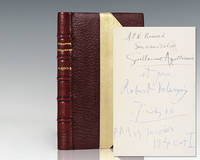
1913128083Paris: Mercure de France 1913. First edition of Apollinaire's first collection of poems signed by him and Pablo Picasso. Octavo bound in three quarter morocco with gilt titles and raised bands to the spine patterned endpapers frontispiece portrait of the poet by Pablo Picasso. Association copy inscribed by both Apollinaire and Pablo Picasso on front free endpaper "A A P.N. Roinard son admirateur Guillaume Apollinaire" and "et pour Robert Valançay Picasso Paris Janvier 1940 et I." Apollinaire has also made five corrections to the text in ink on pages 71 77 92 110 and 189. The recipient of Apollinaire's inscription Paul-Napoléon Roinard was a French libertarian painter and poet whom Apollinaire befriended in 1903 and considered "one of the most powerful precursors of the new poetry." Apollinaire dedicated his poem Le Brasier included in the present volume on p. 129 to Roinard. The recipient of Picasso's inscription Robert Valançay was a poet translator and literary critic who worked with and admired many of the artists and poets of the surrealist group. He published two major volumes of poetry but was most appreciated and sought after for his translations. He was considered the official translator of Max Ernst and Hans Arp. In near fine condition. Original wrappers bound in. A remarkable association copy linking four major figures of the literary and artistic avant-gardes of the 20th century. French poet playwright short story writer novelist and art critic Guillaume Apollinaire is considered one of the foremost poets of the early 20th century as well as one of the most impassioned defenders of Cubism and a forefather of Surrealism. At the turn of the 20th century he became one of the most popular members of the artistic community of Paris both in Montmartre and Montparnasse. His friends and collaborators in that period included Pablo Picasso Henri Rousseau Gertrude Stein Max Jacob André Salmon André Breton André Derain Faik Konitza Blaise Cendrars Giuseppe Ungaretti Pierre Reverdy Alexandra Exter Jean Cocteau Erik Satie Ossip Zadkine Marc Chagall Marcel Duchamp and Jean Metzinger. He is credited with coining the term "Cubism" in 1911 to describe the emerging art movement the term Orphism in 1912 and the term "Surrealism" in 1917 to describe the works of Erik Satie. Mercure de France hardcover
1969902981969. PICASSO Pablo. El Entierro del Conde de Orgaz. Three volumes. 12 XI 1 69 7 pp. Illustrated with one signed engraving and 12 etchings by Picasso and a preface by Rafael Alberti. Folio 370 x 470 mm bound loose as issued in the original wrappers and vellum-covered slipcase. The whole preserved in a cloth folding box. Barcelona: Gustavo Gili and Ediciones de la Cometa 1969. A Spanish production in every sense in this Picasso book Picasso illustrated his own poetry based upon his life and youth in Andalucia. The title bears reference to the painting by El Greco an artist very much admired by Picasso. Picasso began this poem in 1957 during a period of renewed interest in his Spanish heritage. Included in the work is a facsimile of Picasso's original manuscript of the poem written in coloured pencils. To illustrate his autobiographical poetry the artist selected one of his engravings from 1939 and etchings finished between 1966 and 1967. Printed and published by the publishing house Gustavo Gili of Barcelona with a prologue-poem by Rafael Alberti El Entierro del Conde de Orgaz includes a total of thirteen Picasso etchings of circus scenes and allegorical images infused with eroticism all echoing the artist's Spanish homeland and influences therefrom. One of an edition of 263 copies on Romani wove. It is notable that the present publication was the subject of a single exhibition at the Fundacion Picasso "Pablo Ruiz Picasso: El Entierro del Conde de Orgaz" May 2004. Goeppert 146. Bloch 1465-1477. Johnson Artists' Books in the Modern Era 1870-2000 No. 92. hardcover books
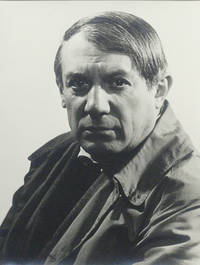
19322650<p>Paris: np 1932. Fine. MAN RAY CAPTURES PICASSO'S ESSENCE IN LEGENDARY PORTRAIT. AN ICONIC PHOTOGRAPH WITH IMPORTANT PROVENANCE: From the famous Sotheby's sale of 1995 of items from the "Estate of Juliet Man Ray The Man Ray Trust and the Family of Juliet Man Ray". The son of Russian-Jewish immigrants Emmanuel "Manny" Radnitzky 1890-1976 grew up in Brooklyn New York. He displayed creative abilities from a young age and studied to be a painter. He adopted "Man Ray" as his pseudonym and in 1915 formed the New York group of Dada artists with Marcel Duchamp. In the 1920s and 1930s Paris was the destination for the international avant-garde offering an exceptional number of galleries art dealers and wealthy patrons who promised artistic freedom. Man Ray sailed to the "City of Light" in 1921 joined Parisian Dada and Surrealist circles and became intimate associates with Pablo Picasso Max Ernst and other leading artists. He pursued fashion and portrait photography creating a pantheon of the city's cultural life. "As a photographer I was in demand" Ray explained to John Bainbridge a writer at The New Yorker. "I was like a doctor. Everybody needed me." Bolz To be photographed by Man Ray meant you had made it in the Parisian art world.<br /><br />Ray often said that Old Masters especially Hans Holbein the Younger Rembrandt and Vermeer inspired his portraits. "I. admired the respect with which they treated the proportions of human features" he wrote in an article published in Modern Photography magazine in November 1957. He also made considerable technological advancements in the field by creating "rayographs" photographic images composed of ordinary objects placed on photo sensitive paper exposed to light and developing solarization the process of tone reversal observed in cases of extreme overexposure. "I photograph the things that I do not wish to paint the things which already have an existence" Ray said. Schwarz 10 Ray sought to create a sense of drama and mystery believing that his photography could transcend the mechanical nature of a camera.<br /><br />When photographing his friends and colleagues Ray's emotional and psychological insights allowed him to expose the soul of each subject. One such subject and friend was Pablo Picasso. Man Ray and Picasso met in 1921 in Paris. They became friends through their connection to Surrealism spending holidays together and collaborating on creative pursuits. In his autobiography Man Ray described Picasso: "He gave me the impression of a man who was aware of all that was going on about him and in the world in general a man who reacted violently to all impacts but had only one outlet to express his feelings: painting." Man Ray 177 The intensity and awareness that Man Ray described is masterfully captured in his portraits of the painter.<br /><br />This photo we have on offer is from Man Ray's renowned series of Picasso portraits and coincided with the publication of the first volume of Picasso's catalogue raisonné reflecting the critical position Picasso's work occupied in the French artistic establishment. In this almost sculptural photograph from 1932 Man Ray unusually presented Picasso in an open trench coat over his jacket and tie. Picasso's dark hair is slicked down and his smooth face looks directly into the camera. Ray used light on the outlines of Picasso's face to create a contemplative image that showed him as a dark and shadowy figure juxtaposed against the light background. Picasso's riveting gaze also conveys a reflective and sober mood. This print has the Man Ray stamps M28 and M30 on the reverse and was lot 348 from the sale of the "Estate of Juliet Man Ray The Man Ray Trust and the Family of Juliet Man Ray" Sotheby's March 22 and 23 1995. <br /><br />Man Ray and Picasso remained close confidantes after this collaboration and during the summer of 1937 Man Ray filmed his friends including Pablo Picasso during a trip to the French Riviera. The result was On the French Riviera with Man Ray and Picasso a documentary film which portrayed the friendship of Picasso and Ray at the center of a close-knit community of artists.<br /><br />German occupation led Ray to leave Paris for the United States in 1940. He lived and worked in New York and Los Angeles returning to Paris in 1951 and resuming his friendship with Picasso and other artists. Ray died in Paris in 1976 yet his creativity and innovative techniques which demonstrate the distinctive cultural landscape of Paris during the interwar period had a substantial influence on contemporary art. Contributing to magazines like Vogue Vanity Fair and Harper's Bazaar he paved the way for Richard Avedon Annie Leibovitz and other artistic photographers. Ray achieved international recognition for his photography which he elevated to an art form. On May 14 2022 Man Ray's Le Violon d'Ingres 1924 sold for $12.4 million setting a new world record as the most expensive photograph ever sold at auction.<br /><br />He was a masterful portraitist renowned for capturing the essence of his subject's personality and mood. This collaboration between two of the most prolific creative and eclectic artists of the twentieth century had truly spectacular results.<br /><br />Provenance: Sotheby's London 22nd and 23rd March 1995 Lot 348: "Property of the Estate of Juliet Man Ray The Man Ray Trust and the Family of Juliet Man Ray."<br /><br />Image/Print Size: 9 x 11 3/4 in. Elegantly framed with wooden frame under UV-protecting museum glass to an overall size of 20 ½ x 24 ½ inches.<br /><br />Paris: 1932; printed later. Silver print. With Man Ray stamps on reverse: M28 and M30 - 'Man Ray 31 bis Rue Campagne Première Paris XIVe' and the copyright stamp ADAGP. Fine condition.<br /><br /><br />References:<br /><br />Diane M. Bolz. "Visual Moment: Man Ray in Paris." Moment Magazine. Winter Issue 2022.<br /><br />The Editors of Encyclopaedia Britannica. "Man Ray." Encyclopedia Britannica. 14 Nov. 2022.<br /><br />Arthur Lubow. Man Ray: The Artist and His Shadows. New Haven: Yale University Press 2021. <br /><br />Man Ray. Photographs by Man Ray: 1920 Paris 1934. Hartford: James Thrall Soby 1934. <br /><br />Man Ray. Self Portrait. London: Bloomsbury 1988.<br /><br />Man Ray and Jean-Hubert Martin. Man Ray Photographs. London: Thames and Hudson 1982.<br /><br />Arturo Schwarz. Man Ray: The Rigour of Imagination. London: Thames and Hudson 1977. <br /><br />Slate Photo. "Man Ray's Portraits." Slate Magazine. February 6 2013.<br /><br />Alden Whitman. "Man Ray is Dead in Paris at 86; Dadaist Painter and Photographer." The New York Times. November 19 1976.</p> np
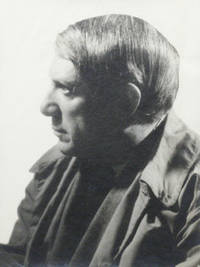
19322651Paris: np 1932. Fine. MAN RAY CAPTURES PICASSO'S ESSENCE IN LEGENDARY PORTRAIT. AN ICONIC PHOTOGRAPH WITH IMPORTANT PROVENANCE: From the famous Sotheby's sale of 1995 of items from the "Estate of Juliet Man Ray The Man Ray Trust and the Family of Juliet Man Ray". The son of Russian-Jewish immigrants Emmanuel "Manny" Radnitzky 1890-1976 grew up in Brooklyn New York. He displayed creative abilities from a young age and studied to be a painter. He adopted "Man Ray" as his pseudonym and in 1915 formed the New York group of Dada artists with Marcel Duchamp. In the 1920s and 1930s Paris was the destination for the international avant-garde offering an exceptional number of galleries art dealers and wealthy patrons who promised artistic freedom. Man Ray sailed to the "City of Light" in 1921 joined Parisian Dada and Surrealist circles and became intimate associates with Pablo Picasso Max Ernst and other leading artists. He pursued fashion and portrait photography creating a pantheon of the city's cultural life. "As a photographer I was in demand" Ray explained to John Bainbridge a writer at The New Yorker. "I was like a doctor. Everybody needed me." Bolz To be photographed by Man Ray meant you had made it in the Parisian art world.<br /> <br /> Ray often said that Old Masters especially Hans Holbein the Younger Rembrandt and Vermeer inspired his portraits. "I. admired the respect with which they treated the proportions of human features" he wrote in an article published in Modern Photography magazine in November 1957. He also made considerable technological advancements in the field by creating "rayographs" photographic images composed of ordinary objects placed on photo sensitive paper exposed to light and developing solarization the process of tone reversal observed in cases of extreme overexposure. "I photograph the things that I do not wish to paint the things which already have an existence" Ray said. Schwarz 10 Ray sought to create a sense of drama and mystery believing that his photography could transcend the mechanical nature of a camera.<br /> <br /> When photographing his friends and colleagues Ray's emotional and psychological insights allowed him to expose the soul of each subject. One such subject and friend was Pablo Picasso. Man Ray and Picasso met in 1921 in Paris. They became friends through their connection to Surrealism spending holidays together and collaborating on creative pursuits. In his autobiography Man Ray described Picasso: "He gave me the impression of a man who was aware of all that was going on about him and in the world in general a man who reacted violently to all impacts but had only one outlet to express his feelings: painting." Man Ray 177 The intensity and awareness that Man Ray described is masterfully captured in his portraits of the painter.<br /> <br /> This photo we have on offer is from Man Ray's renowned series of Picasso portraits and coincided with the publication of the first volume of Picasso's catalogue raisonné reflecting the critical position Picasso's work occupied in the French artistic establishment. In this monumental photograph from 1932 Man Ray unusually presented Picasso in an open trench coat over his jacket and tie. Choosing to shoot this portrait in profile he captured Picasso's pensive expression. Ray used a bold lighting effect and an unadorned background so as not to detract from the subject. Picasso is slightly out-of-focus creating a subtle softness. The print is also on thin tissue-like paper creating texture and depth. Man Ray was famous for experimenting with different types of paper for his prints. This 1932 Portrait of Picasso was selected for Man Ray's seminal 1934 album which included his most important photographs. This print has the Man Ray stamps M28 and M30 on the reverse and was lot 487 from the sale of the "Estate of Juliet Man Ray The Man Ray Trust and the Family of Juliet Man Ray" Sotheby's March 22 and 23 1995. <br /> <br /> Man Ray and Picasso remained close confidantes after this collaboration and during the summer of 1937 Man Ray filmed his friends including Pablo Picasso during a trip to the French Riviera. The result was On the French Riviera with Man Ray and Picasso a documentary film which portrayed the friendship of Picasso and Ray at the center of a close-knit community of artists.<br /> <br /> German occupation led Ray to leave Paris for the United States in 1940. He lived and worked in New York and Los Angeles returning to Paris in 1951 and resuming his friendship with Picasso and other artists. Ray died in Paris in 1976 yet his creativity and innovative techniques which demonstrate the distinctive cultural landscape of Paris during the interwar period had a substantial influence on contemporary art. Contributing to magazines like Vogue Vanity Fair and Harper's Bazaar he paved the way for Richard Avedon Annie Leibovitz and other artistic photographers. Ray achieved international recognition for his photography which he elevated to an art form. On May 14 2022 Man Ray's Le Violon d'Ingres 1924 sold for $12.4 million setting a new world record as the most expensive photograph ever sold at auction.<br /> <br /> He was a masterful portraitist renowned for capturing the essence of his subject's personality and mood. This collaboration between two of the most prolific creative and eclectic artists of the twentieth century had truly spectacular results.<br /> <br /> Provenance: Sotheby's London 22nd and 23rd March 1995 Lot 487: "Property of the Estate of Juliet Man Ray The Man Ray Trust and the Family of Juliet Man Ray."<br /> <br /> Image/Print Size: 6 3/4 x 9 3/8 in. Elegantly framed with wooden frame under UV-protecting museum glass to an overall size of 20 ½ x 24 ½ inches.<br /> <br /> Paris: 1932; printed later. Silver print on thin paper. With Man Ray stamps on reverse: M28 and M30 - 'Man Ray 31 bis Rue Campagne Première Paris XIVe' and with the copyright stamp ADAGP. Fine condition. <br /> <br /> <br /> References:<br /> <br /> Diane M. Bolz. "Visual Moment: Man Ray in Paris." Moment Magazine. Winter Issue 2022.<br /> <br /> The Editors of Encyclopaedia Britannica. "Man Ray." Encyclopedia Britannica. 14 Nov. 2022.<br /> <br /> Arthur Lubow. Man Ray: The Artist and His Shadows. New Haven: Yale University Press 2021. <br /> <br /> Man Ray. Photographs by Man Ray: 1920 Paris 1934. Hartford: James Thrall Soby 1934. <br /> <br /> Man Ray. Self Portrait. London: Bloomsbury 1988.<br /> <br /> Man Ray and Jean-Hubert Martin. Man Ray Photographs. London: Thames and Hudson 1982.<br /> <br /> Arturo Schwarz. Man Ray: The Rigour of Imagination. London: Thames and Hudson 1977. <br /> <br /> Slate Photo. "Man Ray's Portraits." Slate Magazine. February 6 2013.<br /> <br /> Alden Whitman. "Man Ray is Dead in Paris at 86; Dadaist Painter and Photographer." The New York Times. November 19 1976. np unknown
120103Paris Le degré quarante et un 1940. . Limited edition one of 50 copies from a total edition of 64 this numbered 42 oblong 4to; signed in red by Iliazd and pencil by Picasso on the Russian justification page with 6 illustrations total: 2 aquatints and 4 engravings with burin on Montval wove à la cuve paper some minor foxing more so to some leaves text in Russian; attached with string unbound in wrappers reinforced with grey cardboard and a sheet of Montval paper some pages uncut title in black kufic lettering on the front; brown paper-covered slipcase a very good copy.<br /> The first of nine books Iliazd and Picasso collaborated on. Afat is a collection of seventy-six classical sonnets in Russian written by Iliazd the majority of which were written between January and June 1938. <br />All of them were published under the imprint of 'Degré Quarante et Un' a name Iliazd chose in memory of a school of futurist poetry called the 'University of the 41º' which he had founded in Tiflis in 1917.Afat is a collection of 76 sonnets in Russian by Iliazd the majority of which were written between January and June 1938. In his poems Iliazd writes of love of feminine beauty of the poet's difficult métier and the hidden meaning of words. Three sonnets are about the poet's relationship to 'Pablo' Picasso.' Patrick Cramer.<br /><br />The sonnets are preceded by two Arabic titles in aquatint by Picasso both titles are written in kufic letters. Afat - the title is a Persian term signifying unhappiness in love. The second title 'madjusiya' means 'sorceress' and the illustrations Picasso produced were inspired by these two words. The first ten examples were reserved for close friends. Coco Chanel's copy number five included an extra sonnet dedicated to her.<br /> Paris, Le degré quarante et un, 1940. unknown
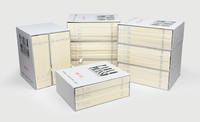
2013193398Paris: Cahiers d'Art 2013. The reference work for all of Picasso's paintings and drawings Revised and first English language edition number 207 of 1200 sets. Includes corrections to the original printing made in collaboration with the Picasso Administration. The most comprehensive catalogue raisonné on the works of Picasso the original volumes were prepared in partnership with Picasso himself and took Zervos over four decades to finish; the first volume published in 1932. 33 vols in 34. Original white stiff wrappers lettering to front covers and spines in black and red. With glassine dust jackets. All housed in the publisher's 9 grey linen slipcases. Illustrated with 16000 black and white images of paintings and drawings. A tear to the glassine of the spine of volume XXV otherwise a fine set. unknown
1120451925. . Lithograph 1925 on Japanese Imperial paper signed lower right an artist's proof gifted directly to Genevieve Laporte from Picasso's private collection aside from the edition of one hundred printed by Engelmann Paris published by D.H. Kahnweiler Galerie Simon Paris image: 12.7 x 11.8 cm. 5 x 4.6 in. sheet: 28 x 22.5 cm. 11 x 8.9 in.<br /> This work is a unique proof gifted to Geneviève Laporte 1926-2012 Picasso's lover during the 1950s. In 1951 Picasso and Laporte began an affair which lasted for two years and during which time the artist presented her with a number of his works. A poet and writer herself Laporte published her book 'Sunshine at Midnight: Memories of Picasso and Cocteau' in 1973.<br /><br />While Pablo Picasso never claimed to be a Surrealist his earlier Cubist works certainly laid the groundwork for such a movement to exist. By the time André Breton's 'Surrealist Manifesto' was published in 1924 Picasso was creating art with a similar surrealist style. The present work demonstrates Picasso's ceaseless desire to present an alternative to realism. The artist challenges our perception of portraiture and reality by capturing the woman's face in a simultaneous profile and frontal-facing perspective. As the viewer our eyes delight in the challenge to understand this surreal vision of a multifaceted woman made up of elegant curving intersecting lines.<br /> Bloch 73; Baer 240; Mourlot XX; Cramer Books 14 1925. unknown