André MalrauxLivre Rare Book
5 436 résultats
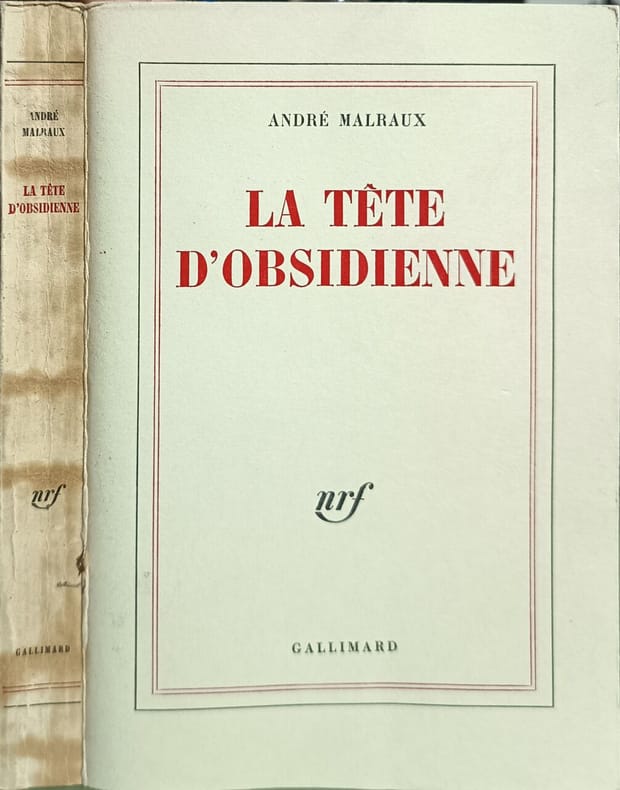
19748503Gallimard 1974 278 pages in8. 1974. Broché couverture rempliée. 278 pages. Dans 'La Tête d'obsidienne' André Malraux rend hommage à Pablo Picasso après sa mort en explorant les traces laissées par l'artiste à travers ses œuvres et les souvenirs de leurs rencontres. Le livre examine le combat de l'artiste contre la vieillesse et la mort et se présente comme une réflexion profonde sur l'art et la mémoire
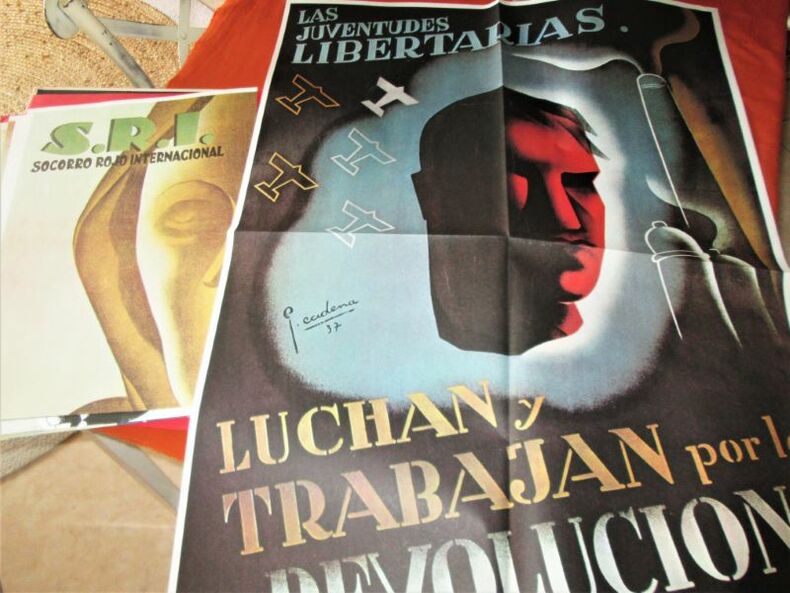
197530729ADAGP, Paris 1975. Portfolio au format 45 x 35,5 cm, pleine percaline avec un grand dessin de Picasso au premier plat, contient trois chemises rouges. 1. Cinq dessins reproduits en noir de André Masson tirées à part.- 2. Quatre fac-simile des dessins de Picasso.- 3. Sept "affiches républicaines de la guerre d'Espagne", reproduites en couleurs et pliées en quatre au format 86 x 60,5 cm.- Très bon état. Portfolio vendu seul, qui est à l'origine le complément des 5 tomes de texte.
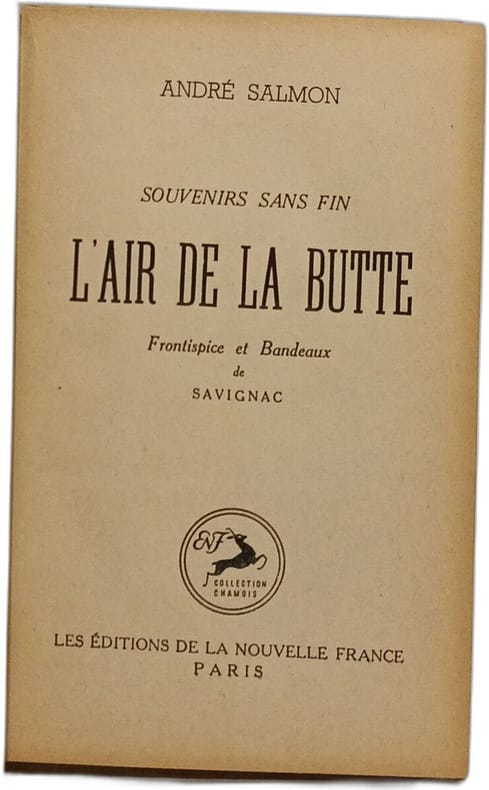
1945100151383LES ÉDITIONS DE LA NOUVELLE FRANCE 1945 in12. 1945. Cartonné. André Salmon poète et critique d'art évoque dans 'L'air de la Butte' ses souvenirs de la bohème montmartroise autour de 1900 une époque où Montmartre était un refuge pour de jeunes artistes talentueux mais désargentés. L'ouvrage publié en 1945 par les Éditions de la Nouvelle France est illustré par Savignac
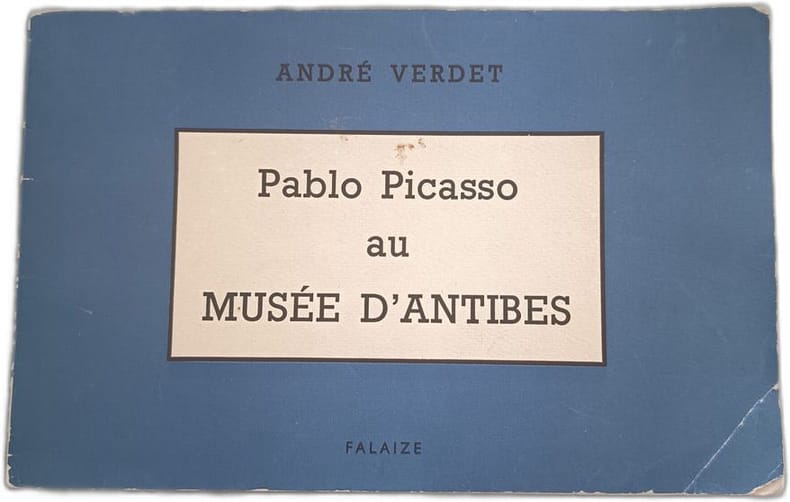
195115886FAlaIZE 1951 in8 oblong. 1951. reliure editeur. Ce livre est un catalogue d'exposition publié en 1951 par les Editions Falaize avec un texte d'André Verdet. Il documente les œuvres de Pablo Picasso exposées au Musée d'Antibes (aujourd'hui Musée Picasso) incluant de nombreuses illustrations en noir et blanc. L'ouvrage témoigne de la relation entre Verdet et Picasso ainsi que de la genèse du musée
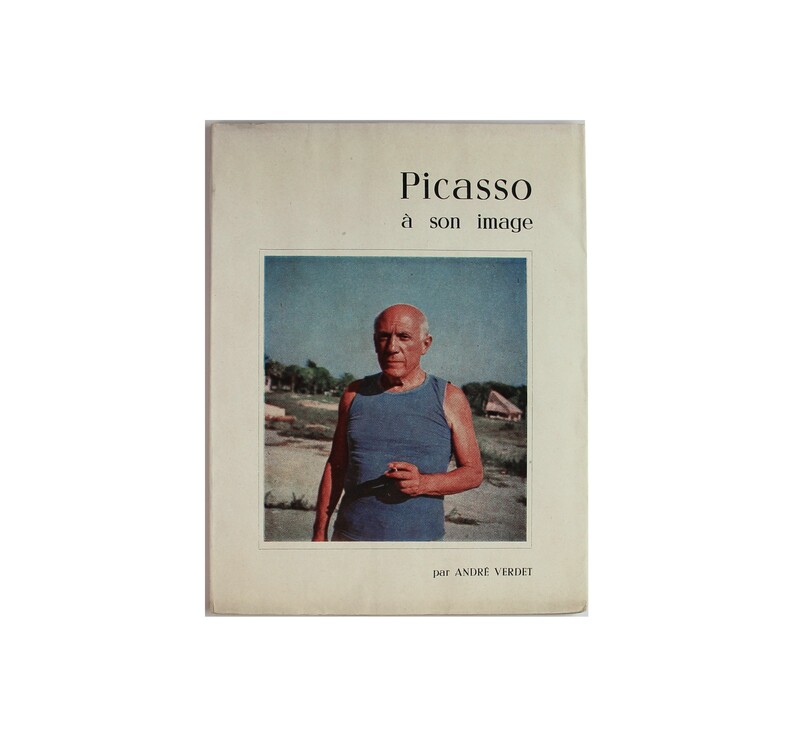
19563958Édition: 42/100 Picasso à son image. Par André Verdet. Galerie Matarasso éditeur. 1956. Broché. Nombreuses illustrations. Photographies d'Edward Quinn et André Villers. Un des 100 exemplaires de luxe signé par Picasso.
Ann Dumas; Emilia Philippot; William H. Robinson: Picasso and Paper. 1. Exhibition: London, Royal Academy, 2020. 328 pages. 400 full colour illustration. Hardback. 29 x 22cms. First exhibition entirely dedicated to Picasso's works on paper. A comprehensive chronological account of his experimental use of the medium, including etchings, prints and drawings, as well as his papier-collés of the 1910s and his revolutionary three-dimensional constructions, made of cardboard, paper and string. First exhibition entirely dedicated to Picasso's works on paper. A comprehensive chronological account of his experimental use of the medium, including etchings, prints and drawings, as well as his papier-collés of the 1910s and his revolutionary three-dimensional constructions, made of cardboard, paper and string. Text in English
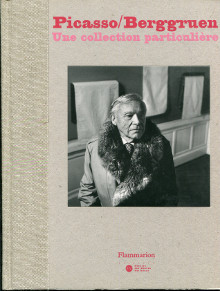
2521Editions Flammarion/Réunion des Musées nationaux, Paris, 2006. In-4, cartonnage éditeur illustrée en noir avec dos toilé, 202 pp. Picasso/Berggruen, une collection particulière, par Anne Baldassari - Heinz Berggruen et sa collection - Un miracle pour Berlin, par Peter-Klaus Schuster - Entretien avec Heinz Berggruen, avec Pierre Daix - Fac-similés : Heinz Berggruen éditeur de Picasso : des Dessins ...
20053000309872005 237 pages 2005. 237 pages.
20053000341022005 237 pages 2005. 237 pages.
20055000584262005 237 pages 2005. 237 pages.
20055000726442005 237 pages 2005. 237 pages.
201363895München, Verlag Antje Kunstmann GmbH, 2013. origi.Pappband mit Schutzumschlag, 8°, 207 Seiten.
Wear to cover extremities with surface rubbing and slight indentations. Lower corner of front cover creased.
No. 147 de la vente d'Arts Primitifs. Primitive Art Sale No.147. 19 page sale catalogue. Text in French and English. Top edge and corner of front cover bumped.
Comes with list of estimates. Crease to lower back cover corner.
1994ABE-1711021829469COLLECTION FOLIO ESSAIS N°254-TRADUIT DU CATALAN PAR EDMOND RAILLARD-PREFACE DE GEORGES RAILLARD-288 PAGES-FORMAT POCHE-(100N)
1956N - 2026 - 8<p>Au Vent d'Arles Paris 1956. Foreword by Antonina Vallentin. Limited numbered edition of 200 copies 26 H.C on Richard de Bas paper. Portfolio with 12 pochoirs of drawings after Picasso Guarded in the original pictorial cloth folder.</p> Au Vent d'Arles
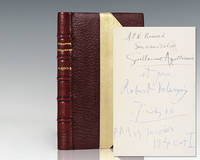
1913128083Paris: Mercure de France 1913. First edition of Apollinaire's first collection of poems signed by him and Pablo Picasso. Octavo bound in three quarter morocco with gilt titles and raised bands to the spine patterned endpapers frontispiece portrait of the poet by Pablo Picasso. Association copy inscribed by both Apollinaire and Pablo Picasso on front free endpaper "A A P.N. Roinard son admirateur Guillaume Apollinaire" and "et pour Robert Valançay Picasso Paris Janvier 1940 et I." Apollinaire has also made five corrections to the text in ink on pages 71 77 92 110 and 189. The recipient of Apollinaire's inscription Paul-Napoléon Roinard was a French libertarian painter and poet whom Apollinaire befriended in 1903 and considered "one of the most powerful precursors of the new poetry." Apollinaire dedicated his poem Le Brasier included in the present volume on p. 129 to Roinard. The recipient of Picasso's inscription Robert Valançay was a poet translator and literary critic who worked with and admired many of the artists and poets of the surrealist group. He published two major volumes of poetry but was most appreciated and sought after for his translations. He was considered the official translator of Max Ernst and Hans Arp. In near fine condition. Original wrappers bound in. A remarkable association copy linking four major figures of the literary and artistic avant-gardes of the 20th century. French poet playwright short story writer novelist and art critic Guillaume Apollinaire is considered one of the foremost poets of the early 20th century as well as one of the most impassioned defenders of Cubism and a forefather of Surrealism. At the turn of the 20th century he became one of the most popular members of the artistic community of Paris both in Montmartre and Montparnasse. His friends and collaborators in that period included Pablo Picasso Henri Rousseau Gertrude Stein Max Jacob André Salmon André Breton André Derain Faik Konitza Blaise Cendrars Giuseppe Ungaretti Pierre Reverdy Alexandra Exter Jean Cocteau Erik Satie Ossip Zadkine Marc Chagall Marcel Duchamp and Jean Metzinger. He is credited with coining the term "Cubism" in 1911 to describe the emerging art movement the term Orphism in 1912 and the term "Surrealism" in 1917 to describe the works of Erik Satie. Mercure de France hardcover
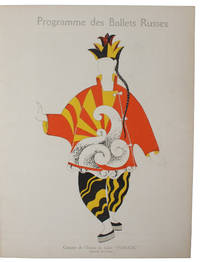
191760103Paris Mai 1917. Folio. Original illustrated extra wrappers with a picture by Picasso on the front and the décor for "Baba Iaga" on the back; original illustrated wrappers for "Théatre du Chatelet" drawing by André Marty on front and advertisements on back in grey and red; original illustrated coloured wrappers for "Programme des Ballets Russes" front wrapper illustrated by Picasso with the Chinaman-costume from "Parade". A bit of soiling to the extra-wrappers and small professional restorations to upper front cover and top of spine this barely noticeable as well as to blank margin of back wrapper. Apart from that an excellent and very well perserved copy with only slight browning to some leaves. Apart from the described wrappers and extra-wrappers there are in all 24 leaves with -mostly photographic- illustrations four of them with original hand-colouring on top and 6 leaves of text.With the original errata-leaf laid in loose stating also that the illustrations "Femmes de bonne humeaur" and "Parade" have been hand-painted by Carlos Socrate after the designs of Bakst and Picasso and that the front wrapper for "Parade" the Chinaman has been handpainted by Picasso himself. <br/><br/><em>Scarce original printing of this seminal avantgarde-publication the May 1917 "Théatre du Chatelet"- publication that presents Diaghilev's "Ballets Russes" in Paris - here containing the entire separate publication mainly devoted to Jean Cocteau's groundbreaking ballet "Parade" - being one of the most important publications in the history of modern art. It is here in his presentation-article to "Parade" that Apollinaire coins the term "surrealism" and thus lays the foundation for the seminal cultural movement that Bréton came to lead. Furthermore the ballet "Parade" represents a historical collaboration between several of the leading artistic minds of the early twentieth century: Erik Satie Jean Cocteau Pablo Picasso Léonide Massine and Serge Diaghilev and is famous not only for its contents and its music but also for its magnificent costumes designed by Picasso the drawings of which are presented in the present publication for the first time - most famously the front cover for the "Parade"-programme which depicts the "Costume de Chinois du ballet "PARADE"/ Aquarelle de Picasso" an etching with original stunning pochoir-colouring hand-painted by Picasso himself!.It is the 1917 ballet "Parade" - the first of the modern ballets - originally presented for the first time in the present publication that marks Picasso's entry into the public and bourgeois institutions of ballet and theatre and presents Cubism on the stage for the first time. The present publication constitutes an outright revolution in the history of art theatre and ballet.Several variants of this spectacular publication exist but the one we have here is as original and complete as it comes containing the entire contents of the different variants. We not only have the extremely scarce and fragile dust-wrapper and the equally scarce illustrated coloured double-wrappers front: "Peinture de Picasso"; back: Décor de Larionow pour le ballet "BABA IAGA"" but also the entire 1917 "Théatre du Chatelet"-programme in original illustrated wrappers with the entire separate "parade"-issue -also entitled "Programme des Ballets Russes"- also in original illustrated wrappers with more than 20 leaves of photographic illustrations containing pictures of the actors and actresses also in their spectacular avant-garde-costumes Bakst's portrait of Leonide Massine Picasso's portrait of Stavinski Bakst's portrait of Picasso Picasso and Massine in the ruins of Pompei Picasso's drawings of a scene from "Parade" and of Massine as well as several mostly humorous advertisements. But more importantly we have apart from the above-mentioned famous Chinaman by Picasso in original pochoir-colouring the other famous etching by Picasso "Costume d'acrobate du ballet "Parade"/ Aquarelle de Picasso" also in original pochoir-colouring bright blue the seminal presentation-article by Apollinaire which coins the term "surrealism" see bottom of description for full translation of this groundbreaking preface the two "Les Femmes de Bonne Humeur"-figures by Bakst Constanza and Battista printed and heightened in gold pochoir the printed costume by Larionow "Les contes russes" which is with original bright red and blue pochoir-colouring and the "Le Mendiant"-costume by Bakst for "Parade" and of course the texts by Bakst on choreography and décor Georges-Michel Ballets Russes after the War as well as the texts for the various ballets listing the actors and their rôles as well as a resume of the plot. " "Tact in audacity consists in knowing how far we may go too far." Jean Cocteau poet writer and arts advocate made this statement in his 1918 manifesto The Cock and Harlequin. Cocteau in collaboration with Erik Satie and Pablo Picasso discovered "how far" to "go too far" in the circus-like ballet Parade-one of the most revolutionary works of the twentieth century. Parade incorporates elements of popular entertainment and uses extra-musical sounds such as the typewriter lottery wheel and pistol combining them with the art of ballet. Cocteau wrote the scenario for the one-act ballet and contracted the other artists. Satie wrote the score to the ballet first in a piano four-hands version and then in full orchestration while Picasso designed the curtain set and costumes. Later Léonide Massine a dancer with the Ballet Russes was brought in as the choreographer. Serge Diaghilev's Ballet Russes premiered the ballet Parade on May 18 1917. The program notes for the ballet were written by the poet Apollinaire. They became a manifesto of l'esprit nouveau or "the new spirit" which was taking hold in Paris during the early twentieth-century. Apollinaire described the ballet Parade as "surrealistic" and in doing so created a term which would develop into an important artistic school." Tracy A. Doyle Erik Satie's ballet PARADE p. 1.When the French poet and army officer Guillaume Apollinaire wrote the program notes For "Parade" he created the manifesto of the "l'esprit nouveau" - "the new spirit". Cocteau had called the ballet "realistic" but Apollinaire took it an important step further and described it as "surrealistic" thus coining a term that would soon develop into an important artistic movement. With Picasso Apollinaire had established the aesthetic principals of Cubism and was considered a leader in the European avant-garde. ENGLISH TRANSLATION OF APOLLINAIRE'S PROGRAMME NOTES TO "PARADE": "Definitions of Parade are blossoming everywhere like the lilac bushes of this tardy spring.It is a scenic poem transposed by the innovative musician Erik Satie into astonishingly expressive music so clear and simple that it seems to reflect the marvelously lucid spirit of France. The cubist painter Picasso and the most daring of today's choreographers Léonide Massine have here consummately achieved for the first time that alliance between painting and dance between the plastic and mimetic arts that is a herald of the more comprehensive art to come. There is nothing paradoxical about this. The Ancients in whose lives music played such an important role were totally unaware of harmony which constitutes the very basis of modern music. This new alliance - I say new because until now scenery and costumes were linked only by factitious bonds - has given rise in Parade to a kind of surrealism which I consider to be the point of departure for a whole series of Manifestations of the New Spirit that is making itself felt today and that will certainly appeal to our best minds. We may expect it to bring about profound changes in our arts and manners through universal joyfulness for it is only natural after all that they keep pace with scientific and industrial progress. Having broken with the choreographic tradition cherished by those who used to be known in Russia under the strange name 'balletomanes' Massine has been careful not to yield to the temptation of pantomime. He has produced something totally new-a marvelously appealing kind of dance so true so lyrical so human and so joyful that it would even be capable if it were worth the trouble of illuminating the terrible black sun of Dürer's Melancholy. Jean Cocteau has called this a realistic ballet. Picasso's cubist costumes and scenery bear witness to the realism of his art. This realism - or this cubism if you will - is the influence that has most stirred the arts over the past ten years. The costumes and scenery in Parade show clearly that its chief aim has been to draw the greatest possible amount of aesthetic emotion from objects. Attempts have often been made to return painting to its barest elements. In most of the Dutch painters in Chardin in the impressionists one finds hardly anything but painting. Picasso goes further than any of them. This is clearly evident in Parade a work in which one's initial astonishment is soon replaced by admiration. Here the aim is above all to express reality. However the motif is not reproduced but represented-more precisely it is not represented but rather suggested by means of an analytic synthesis that embraces all the visible elements of an object and if possible something else as well: an integral schematization that aims to reconcile contradictions by deliberately renouncing any attempt to render the immediate appearance of an object. Massine has Adapted himself astonishingly well to the discipline of Picasso's art. He has identified himself with it and his art has become enriched with delightful inventions such as the realistic steps of the horse in Parade Formed by two dancers one of whom does the steps of the forelegs and the other those of the hind legs. The fantastic constructions representing the gigantic and surprising features of The Managers far from presenting an obstacle to Massine's imagination have one might say served to give it a liberating impetus. All in all Parade will change the ideas of a great many spectators. They will be surprised that is certain; but in a most agreeable way and charmed as well; Parade will reveal to them all the gracefulness of the Modern movements a gracefulness they never suspected. A magnificent vaudeville Chinaman will make their imaginations soar; the American Girl cranking up her imaginary car will express the magic of their daily lives whose wordless rites are celebrated with exquisite and astonishing agility by the acrobatin blue and white tights." </em> unknown
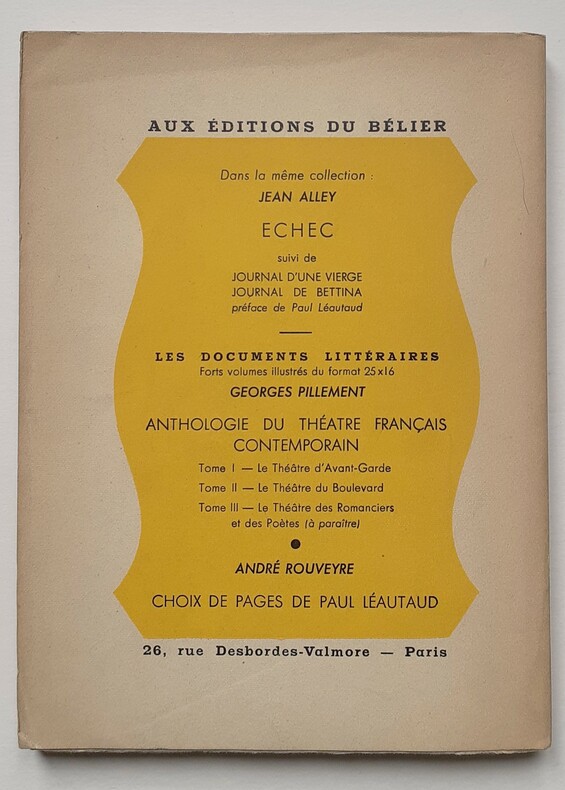
47755Bélier.1946.In-8 br.6 portraits par Picasso.88 p. BE.
1946GITa337Paris Editions du Bélier 1946. In-8 broché 88pp. Orné de 6 portraits inédits hors texte par Picasso.
41367Editions du Bélier.1946.Gd.in-12 br.88 p.6 portraits par Picasso. BE.intérieur.Couv.insolée.Appartenance en haut de la page de titre.
DQO-158Editions du Bélier, Paris, 1946. In-8, broché, 88 pages. Illustré de six portraits inédits de l'auteur par Picasso, gravés par Draeger.
1913007520Paris Eugène Figuière & Cie 1913 In-4 Reliure cartonnage décoré Edition originale
194831654Genève, Pierre Cailler, 1948, in-8, 171pp, broché, Exemplaire en parfait état, illustré d'un portrait d'Apollinaire par Picasso. 171pp