5 434 résultats
8800Genève, Skira, 1959. Coll. "Le Goût de notre temps", vol. 4. In-12 carré relié toile, sous jaquette ill. 1er plat : Etude pour "Bateleurs", (1905), / 2e plat : "Nature morte" (1924), 135 p. Illustrations contrecollées en couleurs : reproductions d'oeuvres de Picasso. 1 dessin reproduit : Diaghilev et Selisburg - 1917 - crayon. Très bon état (sauf petite déchirure en haut du 1er plat - recollée).
1921D1255Munchen: Delphin-Verlag 1921. Hardcover. Very Good. Illustrated paper over boards. Some very light rubbing and chipping and spine tips and corners. <br/><br/> Delphin-Verlag hardcover books
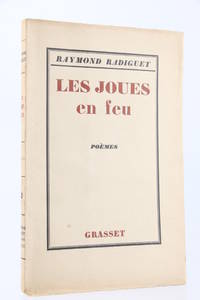
192579936Grasset | Paris 1925 | 12 x 19 cm | broché
192579936Paris: Grasset 1925. Fine. Grasset Paris 1925 12 x 19 cm broché Edition with some parts in first edition one of 1100 numbered copies on pure thread paper. Work illustrated with a portrait of the author by Pablo Picasso. Spine with a very slight lack at foot. Grasset unknown
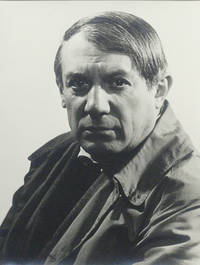
19322650<p>Paris: np 1932. Fine. MAN RAY CAPTURES PICASSO'S ESSENCE IN LEGENDARY PORTRAIT. AN ICONIC PHOTOGRAPH WITH IMPORTANT PROVENANCE: From the famous Sotheby's sale of 1995 of items from the "Estate of Juliet Man Ray The Man Ray Trust and the Family of Juliet Man Ray". The son of Russian-Jewish immigrants Emmanuel "Manny" Radnitzky 1890-1976 grew up in Brooklyn New York. He displayed creative abilities from a young age and studied to be a painter. He adopted "Man Ray" as his pseudonym and in 1915 formed the New York group of Dada artists with Marcel Duchamp. In the 1920s and 1930s Paris was the destination for the international avant-garde offering an exceptional number of galleries art dealers and wealthy patrons who promised artistic freedom. Man Ray sailed to the "City of Light" in 1921 joined Parisian Dada and Surrealist circles and became intimate associates with Pablo Picasso Max Ernst and other leading artists. He pursued fashion and portrait photography creating a pantheon of the city's cultural life. "As a photographer I was in demand" Ray explained to John Bainbridge a writer at The New Yorker. "I was like a doctor. Everybody needed me." Bolz To be photographed by Man Ray meant you had made it in the Parisian art world.<br /><br />Ray often said that Old Masters especially Hans Holbein the Younger Rembrandt and Vermeer inspired his portraits. "I. admired the respect with which they treated the proportions of human features" he wrote in an article published in Modern Photography magazine in November 1957. He also made considerable technological advancements in the field by creating "rayographs" photographic images composed of ordinary objects placed on photo sensitive paper exposed to light and developing solarization the process of tone reversal observed in cases of extreme overexposure. "I photograph the things that I do not wish to paint the things which already have an existence" Ray said. Schwarz 10 Ray sought to create a sense of drama and mystery believing that his photography could transcend the mechanical nature of a camera.<br /><br />When photographing his friends and colleagues Ray's emotional and psychological insights allowed him to expose the soul of each subject. One such subject and friend was Pablo Picasso. Man Ray and Picasso met in 1921 in Paris. They became friends through their connection to Surrealism spending holidays together and collaborating on creative pursuits. In his autobiography Man Ray described Picasso: "He gave me the impression of a man who was aware of all that was going on about him and in the world in general a man who reacted violently to all impacts but had only one outlet to express his feelings: painting." Man Ray 177 The intensity and awareness that Man Ray described is masterfully captured in his portraits of the painter.<br /><br />This photo we have on offer is from Man Ray's renowned series of Picasso portraits and coincided with the publication of the first volume of Picasso's catalogue raisonné reflecting the critical position Picasso's work occupied in the French artistic establishment. In this almost sculptural photograph from 1932 Man Ray unusually presented Picasso in an open trench coat over his jacket and tie. Picasso's dark hair is slicked down and his smooth face looks directly into the camera. Ray used light on the outlines of Picasso's face to create a contemplative image that showed him as a dark and shadowy figure juxtaposed against the light background. Picasso's riveting gaze also conveys a reflective and sober mood. This print has the Man Ray stamps M28 and M30 on the reverse and was lot 348 from the sale of the "Estate of Juliet Man Ray The Man Ray Trust and the Family of Juliet Man Ray" Sotheby's March 22 and 23 1995. <br /><br />Man Ray and Picasso remained close confidantes after this collaboration and during the summer of 1937 Man Ray filmed his friends including Pablo Picasso during a trip to the French Riviera. The result was On the French Riviera with Man Ray and Picasso a documentary film which portrayed the friendship of Picasso and Ray at the center of a close-knit community of artists.<br /><br />German occupation led Ray to leave Paris for the United States in 1940. He lived and worked in New York and Los Angeles returning to Paris in 1951 and resuming his friendship with Picasso and other artists. Ray died in Paris in 1976 yet his creativity and innovative techniques which demonstrate the distinctive cultural landscape of Paris during the interwar period had a substantial influence on contemporary art. Contributing to magazines like Vogue Vanity Fair and Harper's Bazaar he paved the way for Richard Avedon Annie Leibovitz and other artistic photographers. Ray achieved international recognition for his photography which he elevated to an art form. On May 14 2022 Man Ray's Le Violon d'Ingres 1924 sold for $12.4 million setting a new world record as the most expensive photograph ever sold at auction.<br /><br />He was a masterful portraitist renowned for capturing the essence of his subject's personality and mood. This collaboration between two of the most prolific creative and eclectic artists of the twentieth century had truly spectacular results.<br /><br />Provenance: Sotheby's London 22nd and 23rd March 1995 Lot 348: "Property of the Estate of Juliet Man Ray The Man Ray Trust and the Family of Juliet Man Ray."<br /><br />Image/Print Size: 9 x 11 3/4 in. Elegantly framed with wooden frame under UV-protecting museum glass to an overall size of 20 ½ x 24 ½ inches.<br /><br />Paris: 1932; printed later. Silver print. With Man Ray stamps on reverse: M28 and M30 - 'Man Ray 31 bis Rue Campagne Première Paris XIVe' and the copyright stamp ADAGP. Fine condition.<br /><br /><br />References:<br /><br />Diane M. Bolz. "Visual Moment: Man Ray in Paris." Moment Magazine. Winter Issue 2022.<br /><br />The Editors of Encyclopaedia Britannica. "Man Ray." Encyclopedia Britannica. 14 Nov. 2022.<br /><br />Arthur Lubow. Man Ray: The Artist and His Shadows. New Haven: Yale University Press 2021. <br /><br />Man Ray. Photographs by Man Ray: 1920 Paris 1934. Hartford: James Thrall Soby 1934. <br /><br />Man Ray. Self Portrait. London: Bloomsbury 1988.<br /><br />Man Ray and Jean-Hubert Martin. Man Ray Photographs. London: Thames and Hudson 1982.<br /><br />Arturo Schwarz. Man Ray: The Rigour of Imagination. London: Thames and Hudson 1977. <br /><br />Slate Photo. "Man Ray's Portraits." Slate Magazine. February 6 2013.<br /><br />Alden Whitman. "Man Ray is Dead in Paris at 86; Dadaist Painter and Photographer." The New York Times. November 19 1976.</p> np
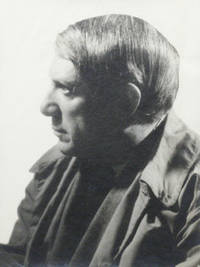
19322651Paris: np 1932. Fine. MAN RAY CAPTURES PICASSO'S ESSENCE IN LEGENDARY PORTRAIT. AN ICONIC PHOTOGRAPH WITH IMPORTANT PROVENANCE: From the famous Sotheby's sale of 1995 of items from the "Estate of Juliet Man Ray The Man Ray Trust and the Family of Juliet Man Ray". The son of Russian-Jewish immigrants Emmanuel "Manny" Radnitzky 1890-1976 grew up in Brooklyn New York. He displayed creative abilities from a young age and studied to be a painter. He adopted "Man Ray" as his pseudonym and in 1915 formed the New York group of Dada artists with Marcel Duchamp. In the 1920s and 1930s Paris was the destination for the international avant-garde offering an exceptional number of galleries art dealers and wealthy patrons who promised artistic freedom. Man Ray sailed to the "City of Light" in 1921 joined Parisian Dada and Surrealist circles and became intimate associates with Pablo Picasso Max Ernst and other leading artists. He pursued fashion and portrait photography creating a pantheon of the city's cultural life. "As a photographer I was in demand" Ray explained to John Bainbridge a writer at The New Yorker. "I was like a doctor. Everybody needed me." Bolz To be photographed by Man Ray meant you had made it in the Parisian art world.<br /> <br /> Ray often said that Old Masters especially Hans Holbein the Younger Rembrandt and Vermeer inspired his portraits. "I. admired the respect with which they treated the proportions of human features" he wrote in an article published in Modern Photography magazine in November 1957. He also made considerable technological advancements in the field by creating "rayographs" photographic images composed of ordinary objects placed on photo sensitive paper exposed to light and developing solarization the process of tone reversal observed in cases of extreme overexposure. "I photograph the things that I do not wish to paint the things which already have an existence" Ray said. Schwarz 10 Ray sought to create a sense of drama and mystery believing that his photography could transcend the mechanical nature of a camera.<br /> <br /> When photographing his friends and colleagues Ray's emotional and psychological insights allowed him to expose the soul of each subject. One such subject and friend was Pablo Picasso. Man Ray and Picasso met in 1921 in Paris. They became friends through their connection to Surrealism spending holidays together and collaborating on creative pursuits. In his autobiography Man Ray described Picasso: "He gave me the impression of a man who was aware of all that was going on about him and in the world in general a man who reacted violently to all impacts but had only one outlet to express his feelings: painting." Man Ray 177 The intensity and awareness that Man Ray described is masterfully captured in his portraits of the painter.<br /> <br /> This photo we have on offer is from Man Ray's renowned series of Picasso portraits and coincided with the publication of the first volume of Picasso's catalogue raisonné reflecting the critical position Picasso's work occupied in the French artistic establishment. In this monumental photograph from 1932 Man Ray unusually presented Picasso in an open trench coat over his jacket and tie. Choosing to shoot this portrait in profile he captured Picasso's pensive expression. Ray used a bold lighting effect and an unadorned background so as not to detract from the subject. Picasso is slightly out-of-focus creating a subtle softness. The print is also on thin tissue-like paper creating texture and depth. Man Ray was famous for experimenting with different types of paper for his prints. This 1932 Portrait of Picasso was selected for Man Ray's seminal 1934 album which included his most important photographs. This print has the Man Ray stamps M28 and M30 on the reverse and was lot 487 from the sale of the "Estate of Juliet Man Ray The Man Ray Trust and the Family of Juliet Man Ray" Sotheby's March 22 and 23 1995. <br /> <br /> Man Ray and Picasso remained close confidantes after this collaboration and during the summer of 1937 Man Ray filmed his friends including Pablo Picasso during a trip to the French Riviera. The result was On the French Riviera with Man Ray and Picasso a documentary film which portrayed the friendship of Picasso and Ray at the center of a close-knit community of artists.<br /> <br /> German occupation led Ray to leave Paris for the United States in 1940. He lived and worked in New York and Los Angeles returning to Paris in 1951 and resuming his friendship with Picasso and other artists. Ray died in Paris in 1976 yet his creativity and innovative techniques which demonstrate the distinctive cultural landscape of Paris during the interwar period had a substantial influence on contemporary art. Contributing to magazines like Vogue Vanity Fair and Harper's Bazaar he paved the way for Richard Avedon Annie Leibovitz and other artistic photographers. Ray achieved international recognition for his photography which he elevated to an art form. On May 14 2022 Man Ray's Le Violon d'Ingres 1924 sold for $12.4 million setting a new world record as the most expensive photograph ever sold at auction.<br /> <br /> He was a masterful portraitist renowned for capturing the essence of his subject's personality and mood. This collaboration between two of the most prolific creative and eclectic artists of the twentieth century had truly spectacular results.<br /> <br /> Provenance: Sotheby's London 22nd and 23rd March 1995 Lot 487: "Property of the Estate of Juliet Man Ray The Man Ray Trust and the Family of Juliet Man Ray."<br /> <br /> Image/Print Size: 6 3/4 x 9 3/8 in. Elegantly framed with wooden frame under UV-protecting museum glass to an overall size of 20 ½ x 24 ½ inches.<br /> <br /> Paris: 1932; printed later. Silver print on thin paper. With Man Ray stamps on reverse: M28 and M30 - 'Man Ray 31 bis Rue Campagne Première Paris XIVe' and with the copyright stamp ADAGP. Fine condition. <br /> <br /> <br /> References:<br /> <br /> Diane M. Bolz. "Visual Moment: Man Ray in Paris." Moment Magazine. Winter Issue 2022.<br /> <br /> The Editors of Encyclopaedia Britannica. "Man Ray." Encyclopedia Britannica. 14 Nov. 2022.<br /> <br /> Arthur Lubow. Man Ray: The Artist and His Shadows. New Haven: Yale University Press 2021. <br /> <br /> Man Ray. Photographs by Man Ray: 1920 Paris 1934. Hartford: James Thrall Soby 1934. <br /> <br /> Man Ray. Self Portrait. London: Bloomsbury 1988.<br /> <br /> Man Ray and Jean-Hubert Martin. Man Ray Photographs. London: Thames and Hudson 1982.<br /> <br /> Arturo Schwarz. Man Ray: The Rigour of Imagination. London: Thames and Hudson 1977. <br /> <br /> Slate Photo. "Man Ray's Portraits." Slate Magazine. February 6 2013.<br /> <br /> Alden Whitman. "Man Ray is Dead in Paris at 86; Dadaist Painter and Photographer." The New York Times. November 19 1976. np unknown
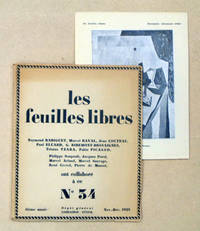
87797Paris Les feuilles libres 1923. Gr.8° S. 211 - 269 8 Taf. davon 2 montiert davon 1 lose Brosch. Etw. gebräunt eckknittrig u. tlw. randrissig innen allg. tadellos. Enth.: Raymond Radiguet: «Le prisonnier des mers»; Marcel Raval: «Raymond Radiguet» Jean Cocteau: «Pablo Picasso» Paul Eluard: «Ta foi» G. Ribemont-Dessaignes; «L’oeil couchant» Tristan Tzara: «Faites vos jeux» nur Teil 4; dazu Kritiken/Rezensionen. 7 Tafeln mit Werken von Pablo Picasso. - «Raymond Radiguet Marcel Raval Jean Cocteau Paul Eluard G. Ribemont-Dessaignes Tristan Tzara Pablo Picasso Philippe Soupault Jacques Porel Marcel Arland Marcel Sauvage René Crevel Pierre de Massot ont collaboré à ce No. 34». 010 Paris, Les feuilles libres, 1923 unknown
196566648Ffm., Hbg.: Frankfurter Kunstverein u. Kunstverein in Hamburg 1965. 36 nn. Bll., 152 Tfln., 10 nn. Bll. Kl.8°. Illustr. Kt. (leicht angestaubt, Rücken gebräunt u. min. fleckig).
20172-288915193XPPUR Presses Polytechniques 2017. Paperback. New. 254 pages. French language. 9.37x6.30x0.79 inches. PPUR Presses Polytechniques paperback
SLIVCN-9782889151936EPFL Press (1/2017)
198326990Frankfurt am Main ; Paris : Qumran 1983. 159 S. ; 21 cm, mit Schutzumschlag, Umschlag mit Randblessuren kart., Softcover/Paperback, sonst Exemplar in gutem Erhaltungszustand
198626991Frankfurt/Main ; New York : Edition Qumran im Campus-Verl. 1986. 207 S. : 16 Abb. ; 21 cm, mit Schutzumschlag kart., Softcover/Paperback, Exemplar in gutem Erhaltungszustand
191913090BBMünchen:, Delphin, 1919. Gr.-8°. 127 S., 30 sw-Abbildungen, broschiert 2., unveränderte Auflage. (Rücken repariert; Umschlag mit Randläsuren und kleinen Fehlstellen; leicht angestaubt; altersgemäss gut erhalten)
1985213808BBFkft., Ed. Qumran im Campus V., 1985. Mit zahlr. Abb. 158 S. OKt. - StaV., sonst gutes Ex.
1999104405Sociedad Editorial Electa España, Madrid, 1999. 17 cm ; kart.
194739474Paris-Barcelone Barcelona: Editions Albor 1947. Picasso. WITH FOUR ORIGINAL DRYPOINTS BY PICASSO IN A MASTER BINDING BY LUCIE WEILL. An outstanding livre d'artiste with four original full-page hors-texte drypoints by Pablo Picasso. Edition limited to 250 numbered copies all printed on fine Lana wove paper. Folio. ELEGANLY BOUND IN FULL BLACK MOROCCO BY LUCIE WEILL signed. Top edge gilt other edges uncut. Original wraps and backstrip preserved. Housed in custom-made slipcase also by Weill preserving the engraved front board of the original wooden chemise. FINE AND BRIGHT WITH NO DEFECTS. Goeppert 45. BEAUTIFUL AND IMPORTANT. <br/><br/> Editions Albor paperback
19471909200005Paris- Barcelona Editorial Albor 1947. First Edition. Hardcover. Very Good. Fine printing of Picasso Limited edition no. 104 of 250. Four dry point plates by Picasso with tissue guards. Title engraved in upper cover in red. 28 leaves. Folio 34 cm. Loose as issued. Housed in original wooden boards with cloth ties. Title-page half-titles l 10b initials etc. reproduced from Picasso's lettering. Mornand: Vingt artistes du livre 306. Cramer Picasso livres illustres 44; Bloch 468 471. Catalan. <br> Ramon Reventos was a Catalan writer and with his brother Conti long-time friend of Picasso who wrote one of the first articles published on Picasso's work. When Reventos passed away in 1923 his writings fell into obscurity. Many years later Picasso would write to Conti's son: "I loved your uncle so much that when it occurred to me to make him acknowledged here in Paris because this boy did not enjoy the success that he deserved it was during the war 1939-1945. I often went to the National Library on foot with all of the dangers that this entailed in order to copy these two stories and I copied them all by hand. Someday I will show you in my own handwriting" Reventos i Conti Picasso i els Reventos Barcelona 1972 p 20. <br> This is an oversized or heavy book which requires additional postage for international delivery outside the US. <br> Capvespre d'un faune. Paris- Barcelona, Editorial Albor hardcover
19859370Barcelona, Ediciones Polígrafia, 1985. 128 S. mit 223 Farbabbildungen. 4°. Orig.-Pappband mit Orig.-Umschlag (Umschlag lichtrandig).
In 8' gr. carre', t.ed. con sovrac., pp. 292, ill. in n. e col. n. t., sguardie ill; lacerazioni alla sovrac., altrimenti in buono stato, ordinari segni del tempo.Luogo di pubblicazione RomaEditore Editori RiunitiAnno pubblicazione 1974Materia/Argomento Arte, Ceramica, PicassoScaffale 44/8Autore Ramie, Georges
2024214077Solsona / Barcelona: Museu Diocesa i Comarcal de Solsona / Generalitat de Catalunya 2024. Hardcover. VG. Lightest touches of shelfwear. Octavo. Hardcover. Grey paper boards with black titles and b&w illustration. Texts in Catalan with Spanish translations. Catalog of an exhibition held at the Museu Diocesà i Comarcal de Solsona Solsona Spain March 14-July 15 2024./ Includes bibliographical references. Museu Diocesa i Comarcal de Solsona / Generalitat de Catalunya hardcover
c5990Paris, Grasset, 1925 ; petit in-8°, broché, couverture crème imprimée en brun et noir; 104pp., (1)f.(achevé d'imprimer)Quelques piqûres à la couverture , très petite tache rousse en marge externe de 2 feuillets. Portrait de Radiguet par Picasso en frontispice.
10496Bernard Grasset, éditeur. 1925. In-8° broché. 104 pages. Edition définitive et en partie originale. 1/175 sur hollande, avec un tirage supplémentaire sur chine du portrait par Picasso. [20 chine / 50 japon / 175 hollande / 1.100 vélin].
6961poèmes anciens et inédits 1917-1921,in 12 broché,faux-titre,titre, un portrait de l’auteur par Pablo PICASSO.Un poème de MAX JACOB un avant propos de l’auteur 104 pages, non coupé,Grasset éditeur 8 juillet 1925,un des exemplaires du service presse (SP)une carte hommage de l'éditeur, une publicité pour la sortie de ce livre. Très bon état
2132in 12 broché,faux-titre,titre,portrait de l’auteur par Pablo PICASSO,un poème de Max Jacob 104 pagesGrasset 1925 avec une mention de 7ème édition
1959010503Paris Club des Libraires de France - Les Libraires Assiciés Collection "Les Livres de toujours" 1959 brochés, couvertures rempliées, étui