PICASSO (Pablo). BACON (Francis). DIX (Otto). DE KOONING (Willem). SAURA (Antonio). SUTHERLAND (Graham). GUTTUSO (Renato).Livre Rare Book
5 433 résultats
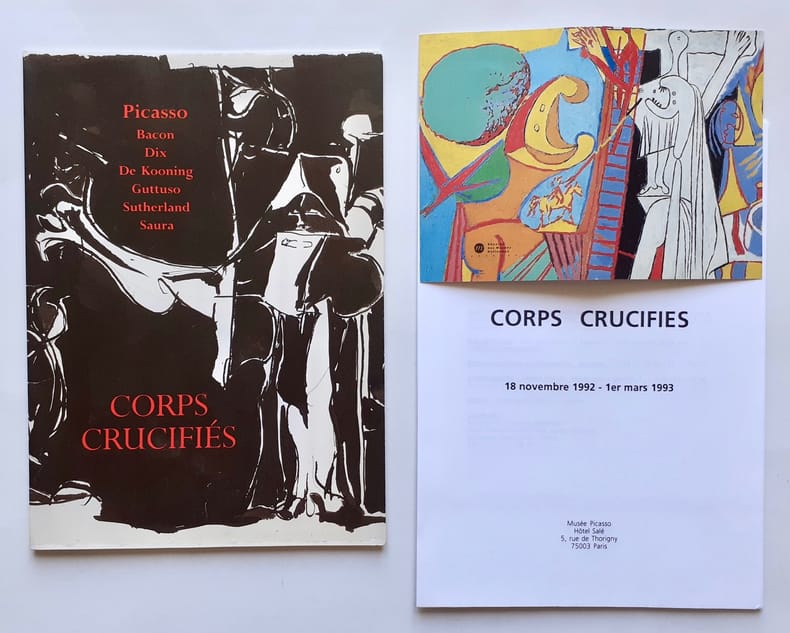
46667Carton d'invitation illustré en couleurs (10,5x15 cm) en 4 volets + dossier de presse de 42 pages imprimées au recto seul. Le tout sous chemise illustrée (21,5x30 cm). Ensemble complet en très bon état.
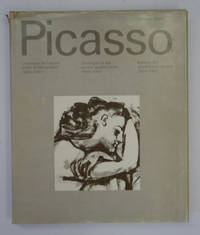
A clean, unmarked book with a tight binding. 8 1/4"w x 11 3/4"h. 100 pages.
1984RO80214084Ajuntament de Barcelona. 1984. In-8. Relié. Bon état, Couv. convenable, Dos satisfaisant, Intérieur frais. 847 pages. Jaquette défraichie avec petites déchirures . nombreuses gravures et photographies en noir et blanc dans et hors texte.. Avec Jaquette. . . Classification Dewey : 708-Galeries, musées, collections d'art
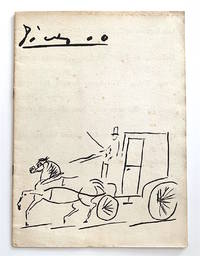
19361720London: Zwemmer Gallery 1936. First edition. Illustrated stapled wrappers. 8 pp. Attractive catalogue of a Picasso show printed letterpress on white blue and yellow paper with two mounted plates listing 57 items. Front and rear cover sheets foxed on both sides. Zwemmer Gallery
51-2890New York: Harry N. Abrams circa 1980. 4to. 4 pp. Lists original graphic works with prices by Agam Albers Alechinsky Appel Berarden Frankenthaler Motherwell Picasso Indiana Rauschenberg Newman et al. New York: Harry N. Abrams, circa 1980 unknown
68-2418New York NY: Perls Galleries 1947. 8vo. 16 pp. Stapled Wraps Very Good. Illustrated. The Perls Gallery in New York was founded in 1937 by Klaus Gunther Perls 1912-2008 and his brother Franz R. Perls1910-1975 after having worked at their mother's Galerie Kate Perls in Paris. Following his marriage to Amelia Blumenthal of Philadelphia in 1940 Klaus and Amelia B. Perls jointly ran the gallery. They specialized in modern French painting while Franz established the Frank Perls Gallery in Beverly Hills.He originally dealt in works by Maurice Utrillo Maurice de Vlaminck and Raoul Dufy that his mother sent from Paris until the Nazi occupation. When she was forced to flee France he began dealing in now little known contemporary American artists including Darrel Austin and in Mexican and South American art such as Mario Carreno. After the war Klaus again dealt in French art from the School of Paris.Artists in the Perls' stable included Rouault Picasso Léger Derain Dufy Matisse Modigliani Pascin Soutine and Vlaminck. The Perls Galleries closed in 1997. New York, NY: Perls Galleries, 1947. paperback
68-2420New York NY: Perls Galleries 1949. 8vo. 16 pp. Stapled Wraps Very Good. Illustrated.The Perls Gallery in New York was founded in 1937 by Klaus Gunther Perls 1912-2008 and his brother Franz R. Perls1910-1975 after having worked at their mother's Galerie Kate Perls in Paris. Following his marriage to Amelia Blumenthal of Philadelphia in 1940 Klaus and Amelia B. Perls jointly ran the gallery. They specialized in modern French painting while Franz established the Frank Perls Gallery in Beverly Hills.He originally dealt in works by Maurice Utrillo Maurice de Vlaminck and Raoul Dufy that his mother sent from Paris until the Nazi occupation. When she was forced to flee France he began dealing in now little known contemporary American artists including Darrel Austin and in Mexican and South American art such as Mario Carreno. After the war Klaus again dealt in French art from the School of Paris.Artists in the Perls' stable included Rouault Picasso Léger Derain Dufy Matisse Modigliani Pascin Soutine and Vlaminck. The Perls Galleries closed in 1997. New York, NY: Perls Galleries, 1949. paperback
68-2416New York NY: Perls Galleries 1945. 8vo. 16 pp. Stapled Wraps Very Good. Illustrated. The Perls Gallery in New York was founded in 1937 by Klaus Gunther Perls 1912-2008 and his brother Franz R. Perls1910-1975 after having worked at their mother's Galerie Kate Perls in Paris. Following his marriage to Amelia Blumenthal of Philadelphia in 1940 Klaus and Amelia B. Perls jointly ran the gallery. They specialized in modern French painting while Franz established the Frank Perls Gallery in Beverly Hills.He originally dealt in works by Maurice Utrillo Maurice de Vlaminck and Raoul Dufy that his mother sent from Paris until the Nazi occupation. When she was forced to flee France he began dealing in now little known contemporary American artists including Darrel Austin and in Mexican and South American art such as Mario Carreno. After the war Klaus again dealt in French art from the School of Paris.Artists in the Perls' stable included Rouault Picasso Léger Derain Dufy Matisse Modigliani Pascin Soutine and Vlaminck. The Perls Galleries closed in 1997. New York, NY: Perls Galleries, 1945. paperback
68-2419New York NY: Perls Galleries 1948. 8vo. 16 pp. Stapled Wraps Very Good. Illustrated.The Perls Gallery in New York was founded in 1937 by Klaus Gunther Perls 1912-2008 and his brother Franz R. Perls1910-1975 after having worked at their mother's Galerie Kate Perls in Paris. Following his marriage to Amelia Blumenthal of Philadelphia in 1940 Klaus and Amelia B. Perls jointly ran the gallery. They specialized in modern French painting while Franz established the Frank Perls Gallery in Beverly Hills.He originally dealt in works by Maurice Utrillo Maurice de Vlaminck and Raoul Dufy that his mother sent from Paris until the Nazi occupation. When she was forced to flee France he began dealing in now little known contemporary American artists including Darrel Austin and in Mexican and South American art such as Mario Carreno. After the war Klaus again dealt in French art from the School of Paris.Artists in the Perls' stable included Rouault Picasso Léger Derain Dufy Matisse Modigliani Pascin Soutine and Vlaminck. The Perls Galleries closed in 1997. New York, NY: Perls Galleries, 1948. paperback
68-2417New York NY: Perls Galleries 1946. 8vo. 16 pp. Stapled Wraps Very Good. Illustrated. The Perls Gallery in New York was founded in 1937 by Klaus Gunther Perls 1912-2008 and his brother Franz R. Perls1910-1975 after having worked at their mother's Galerie Kate Perls in Paris. Following his marriage to Amelia Blumenthal of Philadelphia in 1940 Klaus and Amelia B. Perls jointly ran the gallery. They specialized in modern French painting while Franz established the Frank Perls Gallery in Beverly Hills.He originally dealt in works by Maurice Utrillo Maurice de Vlaminck and Raoul Dufy that his mother sent from Paris until the Nazi occupation. When she was forced to flee France he began dealing in now little known contemporary American artists including Darrel Austin and in Mexican and South American art such as Mario Carreno. After the war Klaus again dealt in French art from the School of Paris.Artists in the Perls' stable included Rouault Picasso Léger Derain Dufy Matisse Modigliani Pascin Soutine and Vlaminck. The Perls Galleries closed in 1997. New York, NY: Perls Galleries, 1946. paperback
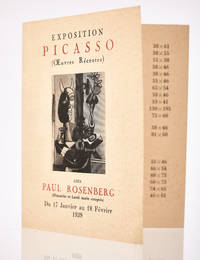
193989995Paris: Paul Rosenberg 1939. Fine. First presentation at the Paul Rosenberg Gallery in Paris of an artwork foreshadowing the bull of Guernica: The Negro Sculpture before the Window. Paul Rosenberg Paris 1939 11 x 13.5 cm Une feuille pliée 4 pp. Rare first edition of the catalogue for Picassos final exhibition at the Galerie Paul Rosenberg in Paris held from 17 January to 18 February 1939 at 21 rue La Boétie. The front wrapper is illustrated with a black-and-white photograph of the exhibitions centrepiece: La sculpture nègre devant la fenêtre now known as Buste de Minotaure devant une fenêtre Private Collection; see Zervos vol. VIII p. 360. Painted on 19 April 1937 the work is widely regarded as a precursor to the bull of Guernica executed only a few weeks later. An excellent well-preserved copy. The plaquette lists the 33 works exhibited arranged by year of execution- 1936 1937 and 1938. The verso carries the notice of the next exhibition Centenary of Cézanne dated 20 February 1939. These two events were followed only by a final show devoted to Georges Braque before the gallery closed and Paul Rosenberg left France for permanent exile in the United States. The event met with considerable success as reported by the American collector and sculptor Meric Callery to Alfred H. Barr the first director of the Museum of Modern Art in New York: ""R's Rosenberg present show of Picasso is surprising in that it is so pretty colorful and gay. They have had over 600 people per day to see it."" Making Modernism Michael C. FitzGerald 1996 The adjectives pretty colourful and gay may seem surprising given both Picassos style and the political context of 1939. Indeed the exhibition - comprising chiefly still lifes painted between 1936 and 1938 in the Tremblay-sur-Mauldre studio - appears at first sight to contrast sharply with the tragic contemporary events. From 1937 onwards the Nazis began confiscating over 20000 modern artworks to mount the notorious Entartete Kunst Degenerate Art exhibition. Circulated throughout Germanys major cities it culminated in June 1939 in a large-scale auction to finance the war preceded by the burning of more than 5000 paintings in the courtyard of Berlins main barracks. Fully aware of the ongoing tragedy Paul Rosenberg took measures to save as many works as possible organising in the same year the first retrospective of Picasso at the Museum of Modern Art where Guernica was displayed and preserved. In 1940 he took permanent refuge in New York opening his celebrated gallery on 79th Street while some 2000 works he could not take with him were looted by the Nazis. Belying its seemingly innocuous appearance the exhibition of recent works by the foremost representative of so-called Degenerate Art held by a Jewish dealer constituted a genuine act of resistance to the rise of Nazism. Yet it was above all through a single work prominently displayed in the main salon and reproduced on the catalogues front that Rosenberg and Picasso transformed the still-life exhibition into a profoundly political statement. Later known as Buste du Minotaure devant une fenêtre this transitional work as noted by the art historian Vérane Tasseau is highly symbolic: The bull does not stand for fascism but for brutality and darkness Picasso remarked in the autumn of 1944 during an interview with the young painter Jerome Seckler for the American Marxist journal New Masses. Seckler had hoped to elicit from him the assertion that the late 1938 series of still lifes with bull heads was a political statement in continuity with Guernica."" This first bulls head in the still-life series gradually evolved over the course of 1938 into a curious zoomorphic human visage. It is nevertheless still titled in the catalogue La sculpture nègre devant la fenêtre. Although this title was not retained in subsequent monographs it establishes a remarkable link between two major themes in Picassos oeuvre: th Paul Rosenberg unknown
1983143492Arti 1983. Bon Etat aspect 4e plat assez salie intérieur frais. in8. 1983. Broché. Arti unknown
13216Bern Editions Kornfeld u. Klipstein 1968. 4° 310 S. 1399 Abb. Fronti. OLwd. mit OU. OU randrissig u. unfrisch Lwd. an den Kapitalen etw. gebräunt Buch sonst tadellos. Bd. III des Kataloges des gesamten edierten graphischen Werkes von Picasso. Erstausgabe. Text frz. 010 Bern, Editions Kornfeld u. Klipstein, 1968 unknown
11414In-folio broché. Couverture rempliée. Nombreuses illustrations. 38 pages. Bon état.
1983143492Arti 1983 in8. 1983. Broché.
6618Picasso - Orangerie des Tuileries,Paris, Skira 1967, non pag., env. (200) pp., 1 vol. in 4 br. nombreuses illustrations in et hors-texte en noir et blanc et en couleurs
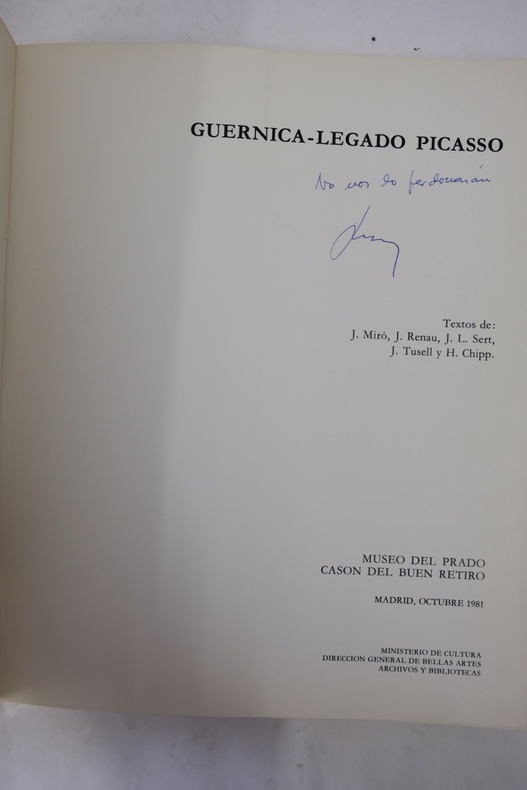
1981ART7244M1981, Ministerio de Cultura, Madrid. In-4 broché, 171 pages. Nombreuses gravures en couleurs hors texte. Avec invitations pour l'exposition du guernica en 1981 et l'antoligie de Picasso. Texte en espagnol 1981, Ministerio de Cultura, Madrid. In-4 tapa blanda, 171 paginas. Grabados en color fuera de texto. Con invitaciones para la exposicion del guernica en 1981 y la antologia de Picasso
1960829731960 The Arts Council of Great Britain, third edition (1960), grand in 8° broché, 63 pages de texte et 54 pages de reproductions en noir ; couvetrure illustrée.
015603Bern., Editions Kornfeld et Klippstein. Tome / Band I und II.; / Catalogue de l'Oeuvre gravé céramique 1949 - 1971. Katalog des graphischen Keramikwerkes 1949 - 1971. Tome / Band III.; Catalogue de l'Oeuvre gravé et lithographié 1970 - 1972 Suppléments Tome I + II. Katalog des graphischen Werkes 1970 - 1972 Nachträge Band I +II. Tome / Band IV. 1971 - 1979. 310, 344(3), 198, 253S. Komplett in vier Bänden, Band 1 in 2. Auflage, der Schutzumschlag des 2. und 3. Bandes hat Einrisse. 4°. H OLeinen mit OUmschlag.
1971183201971 Berne, éditions Kornfeld et Kllipstein, 1971. Seconde édition revue. In-4, 24,6 x 29,7 cm., 310 pp., 1399 références toutes illustrées en vignettes + reproductions en grands et moyens formats dont 16 en couleurs pleine page. Reliure de l'éditeur, pleine toile beige, jaquette illustrée. Jaquette un peu usagée en bordure avec un manque sur 2 cm. en coin de la coiffe inférieure. Le livre lui-même est en très bon état, bien solide et de bonne tenue. Texte trilingue français / anglais / allemand. Attention ce livre est lourd et volumineux, avec l'emballage > 2 kg, frais de port pour la France 17 euros, pour l'étranger 25 à 71 euros selon les destinations.
53994Berne Editions Kornfeld et 1968-1972 Ensemble 3 volumes in-4, bradels toile grise, impressions noires sur le premier plat et le dos carr; doublures et gardes de papier crme, jaquette de papier glac imprime en couleurs. Etui (cartonnages de l'diteur).Cette documentation indispensable dcrit les 148 gravures et lithographies ralises par Pablo Picasso pour des livres publis entre 1904 et 1969, et les 227 cramiques conues jusqu'en 1971. L'ouvrage est trs abondamment illustr de reproductions en couleurs ou en noir et blanc, pleine page ou in texte. Tirage non prcis. Sans le quatrime volume publi en 1979 et consacr aux gravures faites en 1970-1972 avec un supplment pour la priode antrieure.
ABE-153120496072072 PAGES-22 CM X 28 CM-NOMBREUSES ILLUSTRATIONS-(PRCV2)
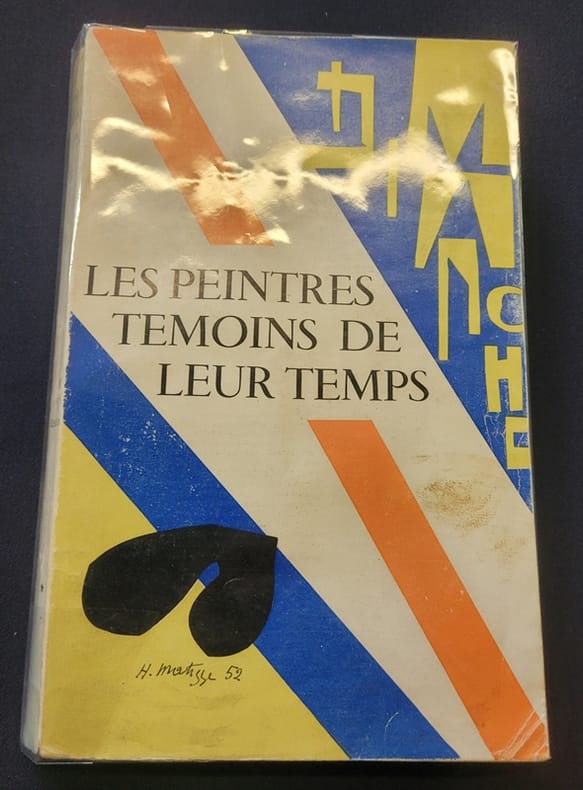
1953Arm1043Paris Editions du musée Galliéra 1953 [Picasso] Le Dimanche. Les peintres témoins de leur temps. II - Paris, Editions du Musée Galliéra, 1953 - In8 broché, dos fragile et brochage un peu lache - coiffe supérieure rognée - 1er plat illustré d'une composition originale en couleurs d'Henri Matisse - 219 pp + 64pp où les meilleurs artistes contemporains ont illustré les annonceurs de cet ouvrage. 13 écrivains, Henri Calet, Blaise Cendrars, Jean Giono entre autres ont écrit sur le thème du dimanche, et 100 peintres et sculpteurs, dont André Bauchant, Chagall, Dufy, Foujita, Marcel Grommaire, Jean Lurçat, Matisse, Georges Rouault, Utrillo, Van Dongen ... participent à ce catalogue. L'ouvrage est enrichi de signatures que le propriétaire de ce catalogue d'exposition est allé glaner auprès de 6 des artistes : Pail Braig (p50), André Hambourg (p111), Jules Lefranc (p125), Roger Montané (p143), Picasso (p157), Joseph Pressmane (p163).
1953Arm1043Paris Editions du musée Galliéra 1953 [Picasso] Le Dimanche. Les peintres témoins de leur temps. II - Paris, Editions du Musée Galliéra, 1953 - In8 broché, dos fragile et brochage un peu lache - coiffe supérieure rognée - 1er plat illustré d'une composition originale en couleurs d'Henri Matisse - 219 pp + 64pp où les meilleurs artistes contemporains ont illustré les annonceurs de cet ouvrage. 13 écrivains, Henri Calet, Blaise Cendrars, Jean Giono entre autres ont écrit sur le thème du dimanche, et 100 peintres et sculpteurs, dont André Bauchant, Chagall, Dufy, Foujita, Marcel Grommaire, Jean Lurçat, Matisse, Georges Rouault, Utrillo, Van Dongen ... participent à ce catalogue. L'ouvrage est enrichi de signatures que le propriétaire de ce catalogue d'exposition est allé glaner auprès de 6 des artistes : Pail Braig (p50), André Hambourg (p111), Jules Lefranc (p125), Roger Montané (p143), Picasso (p157), Joseph Pressmane (p163).
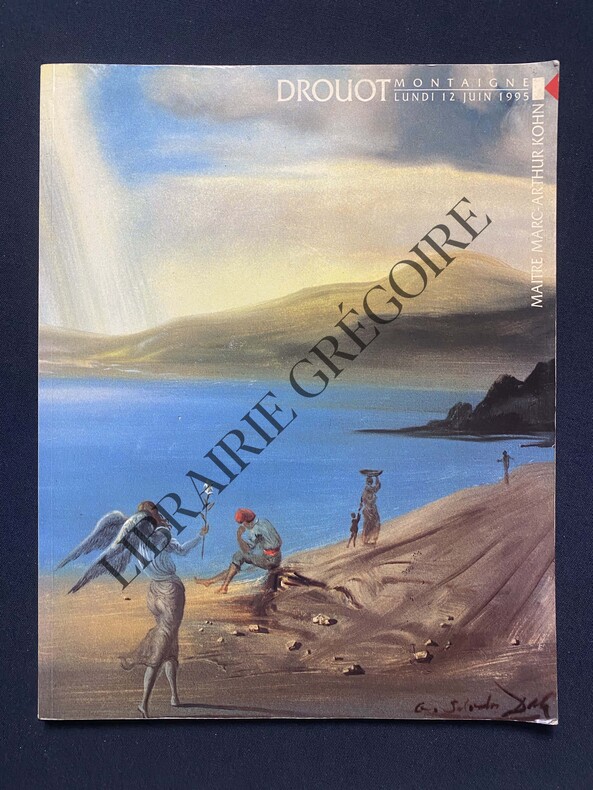
1995ABE-177185147892576 PAGES-23,7 CM X 30 CM-79 LOTS-PHOTO POUR CHAQUE LOT-(E25)